A screening of the feature documentary “Dissidents” will take place on Sunday, Feb. 2, 2025, at 2:00 p.m. EST. The event location is Firehouse Cinema, 87 Lafayette Street, New York. “Dissidents” tells the story of three Chinese dissidents who continue to fight for democracy against the Chinese Communist Party (CCP) through art, protest, and grassroots organizing despite being exiled from their own home and despite the CCP’s transnational attempts to threaten them with violence, criminal charges, and arson. The film features Juntao Wang, a primary organizer of the 1989 Tiananmen Square protests; Weiming Chen, a human rights artist whose sculpture criticizing Xi Jinping was burnt down; and asylum seeker Chunyan Wang, who was arrested for attempting to deliver a petition letter to Chinese vice premiers during the US-China trade talks.
After the film, there will be a panel discussion featuring: Yaqiu Wang, research director for China, Hong Kong, and Taiwan at Freedom House Joey Siu, Hong Kong activist and executive council member at the World Liberty Congress Weiming Chen, human rights artist known for the Liberty Sculpture Park in CaliforniaYi Chen, director of “Dissidents” at C35 FilmsPema Doma, Executive Director, Students For a Free Tibet The event is free and open to the public, but registration is required. Please be sure to RSVP on Eventbrite as soon as possible, as reservations are granted on a first come, first serve basis.
On 19 April 2024, the OHCHR published the story of Wendy Flores -Risking it all to stand up for human rights in exile
“I had to leave Nicaragua irregularly. I left with a backpack, my computer, and the feeling that I was leaving my country for having defended other victims, for having accompanied them. I felt like I had committed a crime, when what I had been doing was defending human rights,” said Wendy Flores, a human rights defender from Nicaragua.
Flores studied law and became motivated to defend human rights after observing the injustices occurring in her country. She later joined the non-profit organization Nicaraguan Centre for Human Rights (CENIDH) as an intern in April 2002.
“I began to realise that I was a human rights defender because I was working for the victims, for their rights and supporting them as they faced a series of obstacles in the country,” Flores said.
Flores is currently living in exile, after the government began to cancel the legal status of several civil society organisations dedicated to the defence of human rights, as well as detaining their members, following the protests of April 2018.
According to an Office report, in early April 2018, demonstrations led by environmental groups, the rural peasant population and students erupted in Nicaragua to denounce the slow and insufficient response of the Government to forest fires in the Indio Maíz Biological Reserve. After this, more dissatisfaction grew from among the public from social security reform to the reduction of pension payments, which led to even more protests. The people protesting were quickly seen as Government opponents, which resulted in the repression of the protests, the criminalization of demonstrators and their arrests.
“During the last five years, in Nicaragua more than 3,600 civil society organizations have been cancelled. In December 2018, CENIDH was one of the first 10 organisations to be cancelled,” Flores said. “And even when we said we would continue to defend human rights, unfortunately we didn’t manage to do so inside the country because detentions started happening and it was obvious that that was going to prevent me from doing my job as a defender.”
Flores had to leave Nicaragua because of the risk of being criminalised for defending human rights and putting her family in jeopardy. “Feeling that I was leaving behind, even temporarily, my almost newborn son and my daughter, was one of the hardest situations I’ve faced,” Flores said.
Leaving Nicaragua forced Flores to reinvent her work as a human rights defender and with other human rights defenders who were also in exile, she established the human rights collective Nicaragua Nunca Más (Nicaragua Never Again). The collective aims to support victims, denounce human rights violations, and sends a symbolic message that, despite many obstacles and the need to live in exile, they continue to fight against impunity for human rights violations in Nicaragua.
“We were emotionally broken, apart from our families, disjointed, but we had the strength to continue denouncing human rights violations. And that was the main motivation that we had and that I identified with. In February 2019, we held a press conference to announce that we would continue our work as defenders in exile,” Flores said.
“And since then, we’ve continued to document cases of displaced people in Nicaragua. We’ve managed to identify more than 1140 cases in these five years. We’ve documented the way in which acts of torture have been perpetrated against political prisoners,” Flores said. “We’ve identified more than 40 methods of torture used against political prisoners and their families. And we’ve also identified perpetrators within these documented cases.”
Flores knows that those who remain in Nicaragua face danger, but she points out that there are also extraterritorial risks.
“Those of us who are outside have also experienced acts of siege and surveillance by State forces or forces installed outside Nicaraguan territory to persecute and intimidate defenders. In addition, the denationalisation imposed by authorities, affected more than 317 people who are mainly outside Nicaragua,” Flores said.
“For us to be able to return to Nicaragua, we would need a country that complies with international obligations, that initiates a process of dialogue with international mechanisms for the protection of human rights and that shows evidence that the country is going to undertake a democratic process and respect human rights,” Flores said.
For Flores, some of this evidence would include allowing international organisms such as UN Human Rights and the Inter-American Commission on Human Rights to return to the country.
Our work for defenders in exile
Flores said the impact of UN Human Rights work for human rights defenders in exile has been vital for her as a human rights defender and the human rights movement in her country.
“The UN Human Rights Regional Office for Central America and the Caribbean (ROCA) supports the work of defenders in exile by providing technical assistance to facilitate their access to the human rights mechanisms of the UN and accountability at the international level, such as universal jurisdiction,” said Alberto Brunori, the Representative at ROCA.
Thanks to successive resolutions adopted since 2019, the Human Rights Council addresses the situation in Nicaragua at its sessions through oral updates and written reports submitted by UN Human Rights.
This way, the Office has succeeded in bringing the human rights violations that continue to occur in Nicaragua to the attention of the international community and has supported a solution to the crisis based on human rights principles and standards.
“The Office has advocated for host countries to provide defenders fleeing Nicaragua with the protection they need, as well as the necessary support for their work,” Brunori said.
“Human rights defenders who are forced to leave the country need international protection as they require a safe legal situation that allows them to continue promoting human rights without fear of being returned to Nicaragua,” Brunori said. “They also need their claims of insecurity in exile to be considered. Their work requires financial resources and the necessary political support to ensure that their work, their analysis, and their human rights proposals are included in the decisions that are made about Nicaragua at the international level. Supporting their work means contributing to a more democratic and human rights-based future for the country.”
For Flores, it is essential that the international community continues to keep an eye on Nicaragua.
“Networking and the work that other organisations can do, supporting human rights defenders, really becomes an action for life, because to live is not only to breathe and feed oneself, but to live has to be to live fully, and this has to do with the psychological, mental and physical conditions in which we can carry out our work,” Flores said.
On 22 February 2024, Human Rights Watch came with a study on governments reaching outside their borders to silence or deter dissent by committing human rights abuses against their own nationals or former nationals. Governments have targeted human rights defenders, journalists, civil society activists, and political opponents, among others, deemed to be a security threat. Many are asylum seekers or recognized refugees in their place of exile. These governmental actions beyond borders leave individuals unable to find genuine safety for themselves and their families. This is transnational repression.
Transnational repression looks different depending on the context. Recent cases include a Rwandan refugee who was killed in Uganda following threats from the Rwandan government; a Cambodian refugee in Thailand only to be extradited to Cambodia and summarily detained; and a Belarusian activist who was abducted while aboard a commercial airline flight. Transnational repression may mean that a person’s family members who remain at home become targets of collective punishment, such as the Tajik activist whose family in Tajikistan, including his 10-year-old daughter, was detained, interrogated, and threatened.
Transnational repression is not new, but it is a phenomenon that has often been downplayed or ignored and warrants a call to action from a global, rights-centered perspective. Human Rights Watch’s general reporting includes over 100 cases of transnational repression. This report includes more than 75 of these cases from the past 15 years, committed by over two dozen governments across four regions. While the term “transnational repression” has at times become shorthand for naming authoritarian governments as perpetrators of rights violations, democratic administrations have assisted in cases of transnational repression.
Methods of transnational repression include killings, unlawful removals (expulsions, extraditions, and deportations), abductions and enforced disappearances, targeting of relatives, abuse of consular services, and so-called digital transnational repression, which includes the use of technology to surveil or harass people. These tactics often facilitate further human rights violations, such as torture and ill-treatment.
This report also highlights cases of governments misusing the International Criminal Police Organization (Interpol)—an intergovernmental organization with 195 member countries—to target critics abroad.
Victims of transnational repression have included government critics, actual or perceived dissidents, human rights defenders, civil society activists, journalists, and opposition party members and others. Governments have targeted individuals because of their identity, such as ethnicity, religion, or gender. Back home, families and friends of targeted people may also become victims, as governments detain, harass, or harm them as retribution or collective punishment. Transnational repression can have far-reaching consequences, including a chilling effect on the rights to freedom of expression, association, and assembly among those who have been targeted or fear they could be next.
This report is not an exhaustive examination of cases of transnational repression. Instead, it outlines cases that Human Rights Watch has documented in the course of researching global human rights issues that point to key methods and trends of transnational repression.
Human Rights Watch hopes that by drawing attention to cases of transnational repression, international organizations and concerned governments will pursue actions to provide greater safety and security for those at risk. Governments responsible for transnational repression should be on notice that their efforts to silence critics, threaten human rights defenders, and target people based on their identity are no less problematic abroad than they are at home. This report provides governments seeking to tackle transnational repression with concrete recommendations, while raising caution against laws and policies that could restrict other human rights.
Human Rights Watch calls on governments committing transnational repression to respect international human rights standards both within and beyond their territory. Governments combatting transnational repression should recognize such abuses as a threat to human rights generally and act to protect those at risk within their jurisdiction or control.
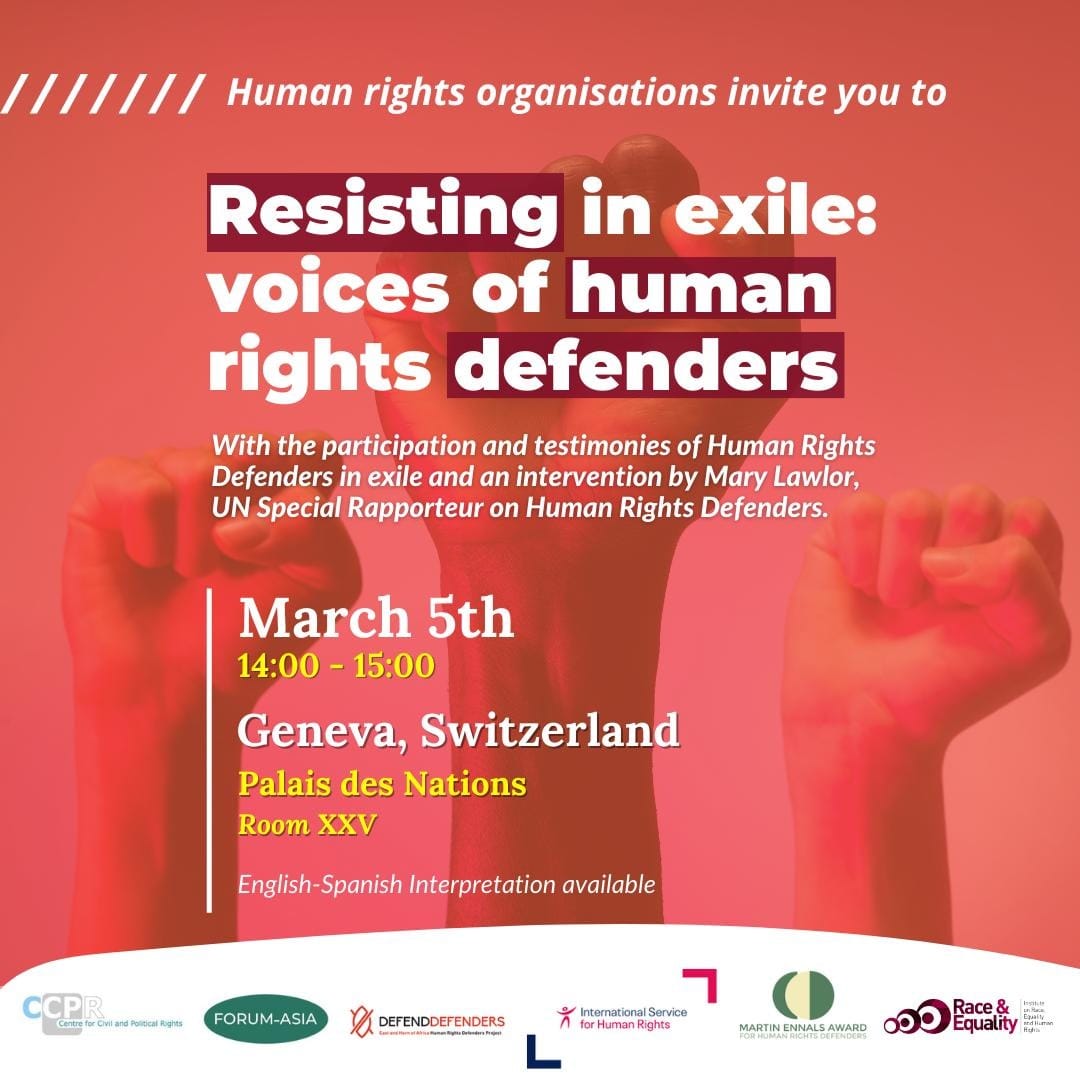
On Tuesday, 5th March, 2pm – at the Palais des Nations, Room XXV- will take place the side event Resisting in Exile: Voice of Human Rights Defenders
“I do not like the idea of being a refugee. I do not want to leave the country because I wanted to make it better.” Human rights defender quoted by the Special Rapporteur on Human Rights Defenders in A/HRC/37/51.
In ‘People Power Under Attack’ (2022), CIVICUS reports that the number of countries where civic freedoms are being curtailed and civil society is under severe attack is increasing… In such contexts and under such pressure, defenders can see leaving the country as their only option. These defenders, along with defenders expelled by their home governments, face the huge challenges of short or protracted exile, including economic insecurity and ongoing threats. Defenders in exile question if and how they can continue human rights work from abroad and how those who remain deal with a fractured human rights community.
In this event the four organisers [Centre for Civil and Political Rights (CCPR-Centre), International Institute on Race, Equality and Human Rights, (Race and Equality), International Service for Human Rights (ISHR), and DefendDefenders] will bring the voices of human rights defenders from around the world to the Council so that States, UN experts and officials and civil society colleagues can hear their voices. What is the experience of being in exile like? What is the impact on individual work and that of the community of defenders? What demands do exile defenders make to the Council?
This event aims to raise greater awareness about the phenomenon of defenders in exile and encourage discussion and action on how to support these defenders. It is also aimed at looking at what is needed to prevent exile becoming some defenders’ only feasible option.
During this event, defenders in exile from will speak of the impact of their experience of exile on their own lives, those of their families, and their communities. They will highlight the specific needs defenders in exile have in terms of legal guarantees, and political and financial support and of their ongoing work to defend rights from exile.
Defenders in exile will also send in testimonies, to be shown in video form or read out by fellow defenders. We aim to fill the room with the voices of those in exile who cannot be in Geneva to participate directly.
Recall the recommendations made by the previous Special Rapporteur on Human Rights Defenders, Michel Forst, in his 2018 report to the Council (A/HRC/37/51), including in regard to the prohibition of non-refoulement to persecution, relocation schemes, and access to protection measures for defenders in exile.
The conversation will take place during the Council session when the Special Rapporteur on Human Rights Defenders will be presenting her report to the Council. We hope that the Special Rapporteur will be available to, highlight the need for greater attention to, and investment in the prevention of, the closure of civic space so as to forestall the need for defenders to leave the country.
Scholars at Risk invites you to register for the 2024 Global Congress to be held June 25-27, 2024, in partnership with the European Humanities University (EHU) in Vilnius, Lithuania. Global Congresses are SAR’s largest network events, and bring together leading scholars, advocates, students and professionals to rethink issues of academic freedom and related values, to learn from each other, and to help shape SAR’s agenda for the coming years.
The 2024 Global Congress theme, “Sustainable knowledge: Lessons from universities, scholars and students in exile,” seeks to explore and capture the experience of current and prior generations of academic communities forced into exile by political unrest, repression, disaster and conflict. From Afghanistan to Ukraine, Belarus to Myanmar, Turkey to Sudan, Nicaragua to Israel/Palestine, and beyond. How can we help more scholars and students reach safety and re-establish their academic roles most effectively? How can we help institutions and systems persevere and ultimately build better, stronger, freer higher education communities, whether in exile or upon return home?
Preliminary program:
A detailed program will be provided in early 2024.
Pre-congress workshops (June 25-26) On June 25-26, EHU will host SAR members, partners, and SAR-assisted scholars participating in pre-Congress workshops and trainings on hosting at-risk scholars, academic freedom advocacy, promoting higher education values, and regional academic freedom policy-making, among other themes. Side meetings will be organized for SAR sections and partner projects and consortium partners.
Experts and representatives of civil society shared their assessments of the needs of human rights defenders in exile at an ODIHR event that took place in the margins of the 2023 Warsaw Human Dimension Conference. 6 October 2023. (OSCE/Piotr Dziubak) Photo details
The situation of human rights defenders forced to work outside their countries to avoid danger or persecution at home was the topic of an event organized by the OSCE Office for Democratic Institutions and Human rights (ODIHR) on 5 October 2023 in the margins of the Warsaw Human Dimension Conference.[see:https://humanrightsdefenders.blog/2023/10/03/osce-leaders-speak-the-right-language-about-hrds/ ]
“Human rights defenders play a legitimate and important role in our societies,” said Andrew Gardner, ODIHR’s Deputy Head of the Human Rights Department. “It is essential that they can operate in a free and safe environment when this does not exist in their own countries.”
Experts and representatives of civil society, some who had themselves relocated to safer countries, shared their assessments of the needs of human rights defenders in exile, including rapid access to safe third countries, overall safety and a secure legal status, and their ability to continue their human rights work.
Participants stressed the importance of being able to form associations, seek and receive funding and travel as part of their human rights work. They also discussed the impact of being uprooted on human rights defenders’ well-being.
“Defenders are determined to continue their human rights work,” said Tamar Beria of the International Partnership for Human Rights (IPHR). “But states and donor organizations must do more to make this work viable in the long term by tackling pervasive issues such as visa access, inflexible funding and a lack of institutional support.”
Participants stressed that decision-makers must address protection gaps which exist for exiled human rights defenders and ensure the fulfilment of their fundamental rights and freedoms.
Nicaragua has increased human rights violations and persecution of the opposition as it ratchets up its efforts to stifle dissent, a United Nations group of experts monitoring the country said on 12 September 2023.
The Group of Human Rights Experts on Nicaragua told the U.N. Human Rights Council in Geneva, Switzerland, that the government continues increasing pressure on human rights defenders to force them to leave the country.
That persecution has extended to the education sector, where the government has systematically cancelled the legal status of private universities and seized their campuses.
“We have observed the intentional and severe deprivation of economic and social rights, in particular the right to education and academic freedom,” said Jan-Michael Simon, chair of the group. “Today, the university sector of Nicaragua as a whole no longer has independent institutions. Nicaragua is being stripped of its intellectual capital and critical voices, leaving the country’s prospects and development on hold.”
Last month, the government confiscated the prestigious Jesuit-run University of Central America in Nicaragua. It was the latest in a series of actions by authorities against the Catholic Church, but also among some 27 higher education institutions that have been cancelled and confiscated.
The group noted that religious figures, in particular from the Catholic Church, are increasingly targets of attacks and some have been forced to leave the country. Once abroad they are sometimes stripped of their nationality and have their assets in Nicaragua confiscated.
The university and other education institutions were important centers of dissent during the popular protests in April in 2018 that became a referendum on President Daniel Ortega’s administration. Ortega was re-elected after jailing seven potential competitors in 2021.
The government’s pursuit of the opposition has continued and intensified. Students and other opposition figures have been imprisoned or forced into exile.
In February, the Nicaraguan government put 222 prisoners on a plane to the United States, declaring them traitors.
“The seriousness of these violations, in conjunction with the other crimes documented to date, perpetrated by reason of the political identity of the group targeted, leads the Group of Experts to conclude that these constitute prima facie the crime against humanity of persecution on political grounds,” the group said.
IDREAM: Capacity Building for Human Rights Defenders (HRDs) Living in Exile
CVT is accepting applications from Human Rights Defenders (HRDs) living in exile to participate in a dynamic capacity development and mentoring fellowship called “IDREAM.”
IDREAM (Incubator for Defenders Remaining in Exile to Advance Movements) is a collaborative and global capacity development project designed to help address the unique needs of HRDs living in exile. IDREAM will provide training and networking activities with the goals of: advancing advocacy efforts, promoting HRD’s psychosocial resilience and well-being, and improving exiled HRD’s physical and digital security. At the end of the selection process, 10 partner HRDs living in exile around the world will be invited to join IDREAM. The project’s main capacity building activities will take place from approximately April 2023 through November 2024. HRDs selected for IDREAM will receive up to $31,000 in financial assistance to support their work in the project.
The Call for Applications is available in English, French, Mandarin, Arabic, and Spanish. All activities of the IDREAM project will take place in English, and applicants must be proficient in English.
IDREAM invites interested HRDs living in exile outside of their home country or internally displaced within their home country to apply online for this fellowship before the deadline at 11:00 pm CST on 30 November 2022.
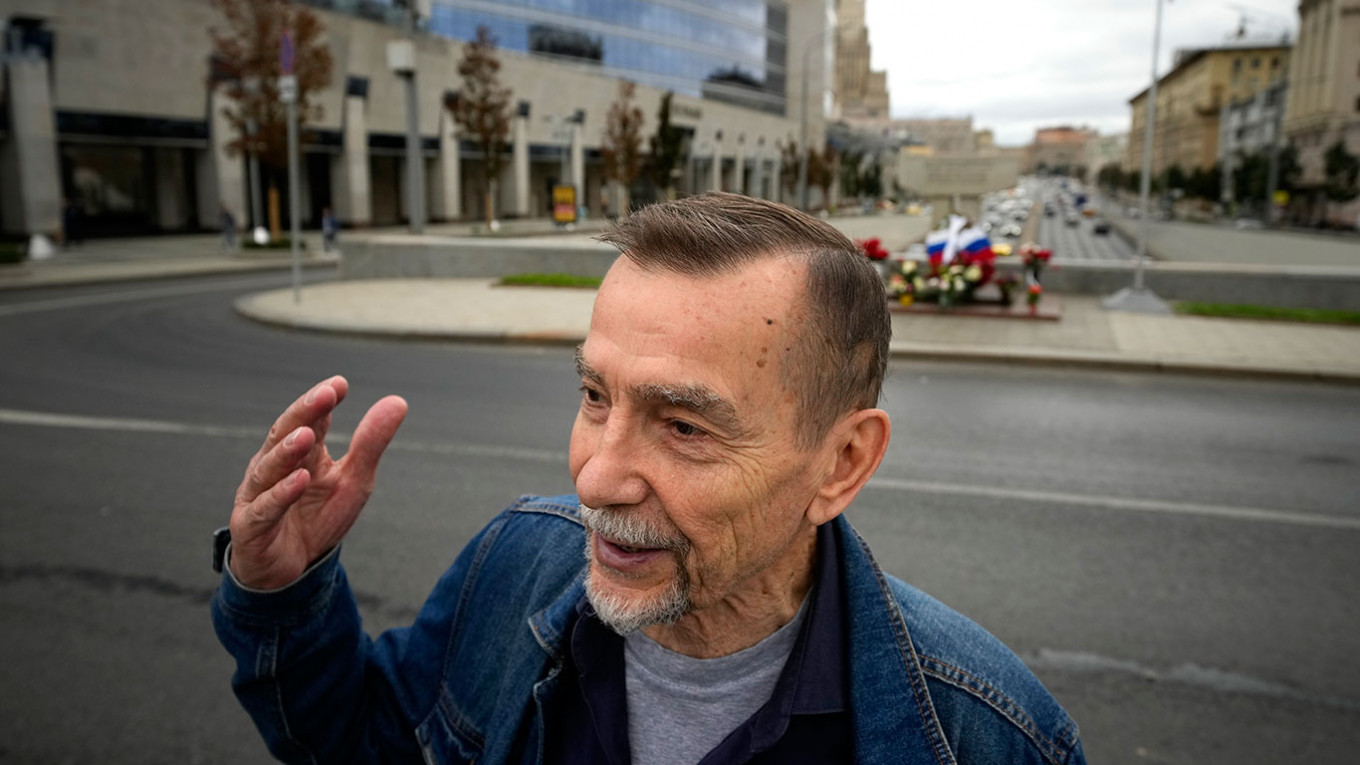
The 80-year-old former parliament member has been engaged in activism since the last years of the Soviet Union, helping create the now-dissolved Memorial organization in 1988. He said in a statement on Friday that worries about his personal safety, including “shadowy information about what they intended to do to me,” have forced him to take a break abroad.
“I doubt that my leave of absence will last long,” said Ponomarev, whose name has been added to Moscow’s list of “foreign agents” in Russia.
Ponomarev did not disclose his new location, saying only that he continued to closely follow the “worrying” news in Russia.
The charge, which falls under a new law introduced after Russia’s Feb. 24 launch of the campaign, could see Kara-Murza, 40, jailed for up to 15 years. Kara-Murza was due to appear in a Moscow court later Friday, Interfax said.
A recent case study by Freedom House focuses on programming that offers holistic protection, support, and services, tailored to the needs of human rights defenders in their host country. This case study focused on the most current wave of migration of HRDs and CSOs who were forced to flee after anti-government protests in April 2018.
The Nicaraguan government continues to violate freedoms of expression, assembly and information and thwart the work of HRDs, including journalists and CSOs. Ortega-Murillo’s recent actions against potential presidential candidates and opposition figures demonstrate that the country will continue to see an outpouring of critics, activists, and HRDs to Costa Rica, among other countries. Nicaraguans continue to flee based on the attacks and harassment they face as HRDs and members of CSOs that champion democracy and human rights. See also: https://humanrightsdefenders.blog/2022/02/21/nicaragua-death-in-detention-and-sham-trial/
Of those 20 Nicaraguan HRDs who were surveyed, almost 90% stated that harassment and surveillance was a primary reason for leaving Nicaragua, followed by violence (65%) and threats (50%). Costa Rica provides comparatively ample protection for migrants, and recently launched a new asylum category for those fleeing from authoritarian regimes in Venezuela, Cuba, and Nicaragua. The flow of migration since 2018 has persisted until March 2020 when the border shut due to the COVID-19 pandemic. Yet, migrant flows have begun to increase in recent months. However, Costa Rica is struggling to recover economically from the pandemic, particularly within the tourist, service, and commercial industries where most migrants and refugees find work. Most Nicaraguan refugees find themselves in a precarious economic situation, unable to find steady work, forcing many to resort to informal work with low salaries. HRDs are often not recognized as having different needs or characteristics from the larger refugee population, either by organizations or the Costa Rican population in general. Even for those who continue to work in human rights describe their ability to continue work is difficult, and many express experiencing severe trauma as an exile, with remorse for not being able to stay and remain fighting for human rights at home. [see also: https://humanrightsdefenders.blog/2021/12/24/vilma-nunez-human-rights-defender-who-stays-in-nicaragua/] However, many Nicaraguan HRDs try to carry out their work by investigating the laws and procedures in Costa Rica, accompanying their compatriots in their efforts, sharing knowledge, and giving advice. There are support and protection options for HRDs and CSOs in exile in Costa Rica, including a network of organizations and institutions facilitated by the United Nations High Commissioner for Refugees (UNHCR) that provide access to vital services.
All available support and protection options for Nicaraguan HRDs are operating at full capacity and cannot keep pace with the growing demand. We believe that it is necessary to seek support and accompaniment mechanisms for HRDs that facilitate their subsistence and enhance the implementation of their work to defend the human rights of exiles and other Nicaraguan migrants who lack mechanisms for complaint and demand for their rights in Costa Rica.




 Hans Thoolen on Human Rights Defenders and their awards