Hans Thoolen on Human Rights Defenders and their awards

share information on human rights defenders, with special focus on human rights awards and laureates


Posts Tagged ‘Europe’

« Older posts
Newer posts »

Turkey defies European Court on Kavala and undergoes UPR review

January 29, 2020

As Turkey underwent its third Universal Periodic Review (UPR) before the UN Human Rights Council in Geneva on Tuesday 28 January 2020, Human Rights Watch (HRW) issued a review of the situation in Turkey and the country’s dramatic erosion of its rule of law framework. [see: https://humanrightsdefenders.blog/2020/01/22/side-event-preparing-the-upr-process-on-turkey/]

Over the past four years, Turkish authorities have detained and prosecuted perceived government opponents, journalists, activists and human rights defenders on broad and vague terrorism and other charges for peacefully exercising their freedom of expression and other non-violent activities. The rights to assembly and association have been severely curtailed across the country, and the government has exerted heavy political control over the courts, whose judges have all too easily handed down convictions and harsh sentences in defiance of human rights norms, HRW said in a statement on Monday.

“The huge number of journalists, politicians, and perceived government critics in prison and on trial flies in the face of the Turkish government’s public statements about the state of human rights in the country,” said Hugh Williamson, Europe and Central Asia director at HRW. “Countries at the UN review should urgently press Turkey to address the sharp decline in respect for fundamental rights and freedoms and to carry out real reform.”

In the post-coup period, President Erdoğan has assumed greater powers with the introduction of a presidential system that removes checks and balances and brings the judiciary under executive control. HRW said UN member states participating in Turkey’s UPR review should urge President Erdoğan’s administration to end the arbitrary and prolonged detention of activists, politicians, human rights defenders, journalists and writers and prosecutions based on their non-violent activities instead of credible evidence of criminal activities; ensure an impartial judiciary; remove political pressure on judges and prosecutors and put laws in place that protect human rights; end the use of blanket bans to impose arbitrary and disproportionate restrictions on the right to peaceful assembly; carry out the European Court of Human Rights’ rulings that jailed businessman Osman Kavala (see more below) and jailed Kurdish politician Selahattin Demirtaş be immediately released from their prolonged and arbitrary detention; and review all articles of the Turkish Penal Code, the Anti-Terror Law and other laws that are used to restrict the rights to freedom of expression, association and assembly and the right to access to information, with a view to repealing or amending them to comply with international human rights standards.

“Turkey’s disregard of human rights is a disservice to its citizens, who deserve to live with dignity and freedom,” Williamson said.

———–

The same day – 28 January, 2020 – Dorian Jones for the Voice of America reports that an Istanbul court has defied the European Court of Human Rights, ruling in favor of the continued detention of philanthropist Osman Kavala. In December, the European Court demanded the immediate release of Kavala, who is on trial for sedition.
FILE - A journalist stands in front of a poster featuring jailed philanthropist Osman Kavala, during a press conference given by his lawyers, in Istanbul, Turkey, Oct. 31, 2018.
A journalist stands in front of a poster featuring jailed philanthropist Osman Kavala, during a press conference given by his lawyers, in Istanbul, Turkey, Oct. 31, 2018.

Kavala and 15 other civil society activists are accused of supporting anti-government protests in 2013 against then-Prime Minister Recep Tayyip Erdogan, who is now president. The protest action came to be known as the Gezi movement, named after an Istanbul park where the unrest started. Prosecutors are calling for life imprisonment without parole. The ECHR condemned the case, calling for an end to Kavala’s more than two years in prison and describing it as “arbitrary” and “politically motivated.”

The Istanbul court ruled Tuesday the ECHR decision was provisional because Ankara was appealing the verdict and that Kavala should remain in jail. The court’s decision is flawed because the European Court ruling was clear in its call for Kavala’s immediate release,” said Emma Sinclair Webb, Turkey researcher for New York-based Human Rights Watch.

“We saw multiple signs of how unfair this trial is,” said Webb, speaking after attending Tuesday’s court hearing. “The lawyers for Kavala raised many objections to the way witness evidence is used in this case. The court turns a deaf ear to all objections. It’s a shocking indication that once again, Turkey’s judiciary seems to be under heavy pressure of the executive.”

Tuesday’s court hearing was marred by chaos, with Kavala’s lawyers challenging the judge’s decision to hear some witnesses without their presence, prompting the lawyers to walk out of the room. Ankara strongly rejects the ECHR verdict, maintaining that the judiciary is independent. But observers note the case has strong political undertones. Three months ahead of Kavala’s prosecution, Erdogan accused him of “financing terrorists” and that Kavala was a representative for “that famous Jew [George Soros,] who tries to divide and tear up nations.” Erdogan did not elaborate on the comments about George Soros, who is an international philanthropist. Erdogan’s allegations against Kavala resemble the prosecution case against the jailed activist. Kavala is a pivotal figure in Turkey, using his wealth to help develop the country’s fledgling civil society after a 1980 military coup.

“Osman Kavala is very prominent within the civil society in this country,” said Sinan Gokcen, Turkey representative of Swedish-based Civil Rights Defenders. “He is not a man of antagonism; he is a man of preaching dialogue, a man of building bridges.”….

With the U.N. having few tools to sanction Turkey, the European Union is seen as offering the best hope by human rights advocates of applying pressure on Ankara. Turkey’s EU membership bid is already frozen, in part due to human rights concerns. But Ankara is seeking to extend a customs union, along with visa-free travel for its citizens with the EU. “It’s time all European countries should be speaking out very loud and clear on cases like this [Kavala],” said Sinclair-Webb. But even high-profile cases like Kavala’s have seen Brussels offer only muted criticism of Ankara. German Chancellor Angela Merkel’s visit to Istanbul Friday for talks with Erdogan saw little criticism of Turkey’s human rights record. Instead, discussions focused on Ankara’s recent deployment of soldiers to Libya and the upholding of an EU-Turkish agreement controlling migrants entering Europe. “There are many issues to talk about with Turkey,” said Sinclair Webb. “Syria, Libya, Turkey, hosting so many refugees from Syria, and this often takes priority over Turkey’s domestic human rights crisis. This means there isn’t sufficient clarity on cases like this. What we are seeing is Turkey defying Europe’s human rights court.” Some analysts suggest Brussels could yet be lobbying behind the scenes for Kavala’s release, tying Ankara’s calls for extra financial assistance for refugees to gestures on human rights.

https://www.forum-asia.org/?p=30836

HRW urges UN to address human rights violations in Turkey

https://www.voanews.com/europe/turkish-court-defies-europe-leaves-philanthropist-behind-bars

Posted in Civil Rights Defenders (NGO), HRW, human rights, Human Rights Council, Human Rights Defenders, UN | 3 Comments »
Tags: Civil Rights Defenders, EU, Europe, European Court of Human Rights, Hugh Williamson, Human Rights Watch, illegal detention, Osman Kavala, Sinan Gokcen, Turkey, UPR, VOA

International Migrants Day: the story of the Ocean Viking

December 18, 2019

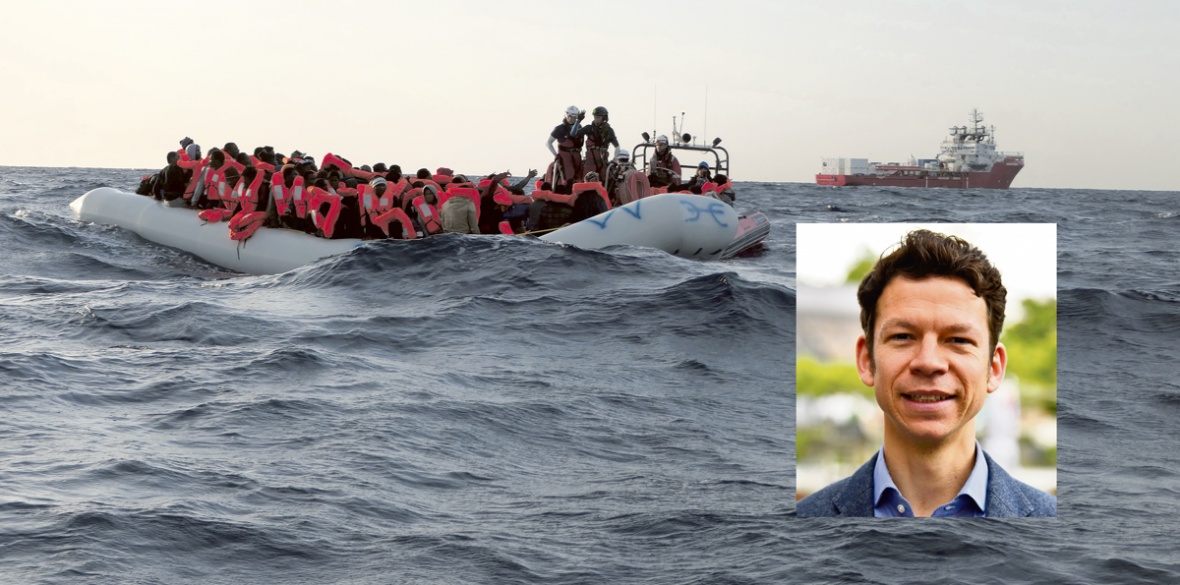
Ocean Viking completes another sea rescue and (insert) David Starke Photo: Avra Fialas/SOS Mediterranee
18 December was International Migrants Day and in honor of that a report from David Starke (general director of SOS Mediterranee Germany and Ben Cowles the Star’s web editor) in the Morning Star of 7 December 2019 arguing the case of rescuers as human rights defenders.

THE Ocean Viking, a refugee rescue ship operated jointly by SOS Mediterranee and Doctors Without Borders (MSF), saved the lives of 60 people from a watery grave in the Mediterranean last week. The European Union — having ignored the refugees’ initial distress calls as they attempted to escape war-torn Libya in an unseaworthy boat on the evening of November 28 — refused to provide the Ocean Viking with a port of safety. It wasn’t until Palermo mayor Leoluca Orlando called on Italian prime minister Giuseppe Conte to end the five-day standoff on Twitter that the ship was allowed to dock.,,,

SOS Mediterranee and MSF originally began operating refugee rescue missions in the central Mediterranean onboard the Aquarius. But after a series of legal threats from EU member states, the charities were forced to abandon it.

“In 2016-7 when we started operations, we were celebrated as heroes. The Aquarius rescued nearly 30,000 people,” Starke says. “But then in June 2018, the escalations started. We were the first ship to be refused access to harbours in Italy. We had to bring the rescued all the way from Italy to Valencia. That was the first really significant standoff, which by now has become the norm.”..

In November 2018, while the Aquarius was docked in Marseilles, the Panamanian government — under pressure from Italy — withdrew its flag from the ship. ….

“We tried Switzerland, Germany and France. These would have been robust flags — meaning that if there was political pressure then they would not give in so easily to the Italian government. But none of the governments granted them to us” and we had to give up.

—

“It’s maritime law to rescue people in distress at sea. All we do is follow existing laws. And according to those laws, a rescue is only completed once the rescued have reached land: once they’re put in a port of safety. “At the moment, it is European countries that have the nearest port of safety to our rescues and the only countries that can be considered safe. “The fact is our work is hampered by European governments.”

—

Despite abiding by refugee and maritime law, it is often the Ocean Viking’s crew (and the entire civil refugee rescue fleet in general) that are portrayed as the criminals or as human traffickers. “All we do is save people’s lives. We are human-rights defenders. However, if you talk to to some politicians, if you read some newspapers, if you read some of the nasty emails we receive, they say we smuggle people. They say we’re criminals.

—

Despite the EU’s willingness to allow refugees escaping Libya to die crossing the world’s deadliest border and the demonisation of those trying to prevent that, Starke says that he is optimistic. “I’m optimistic the situation will change, simply because it has to change.

See also: https://humanrightsdefenders.blog/2019/05/15/european-governments-should-stop-treating-solidarity-and-compassion-as-a-crime/

https://www.un.org/en/observances/migrants-day

https://morningstaronline.co.uk/article/w/it-shouldnt-be-civil-society-versus-european-governments

Posted in human rights, Human Rights Defenders | 4 Comments »
Tags: Ben Cowles, criminalisation, David Starke, EU, Europe, International Migrants Day, Libya, Mediterranean, migrants rights defender, Morning Star, Ocean Viking, refugees, rescue, SOS Mediterranee

Four jailed Iranian human rights lawyers win European Bar award

November 29, 2019
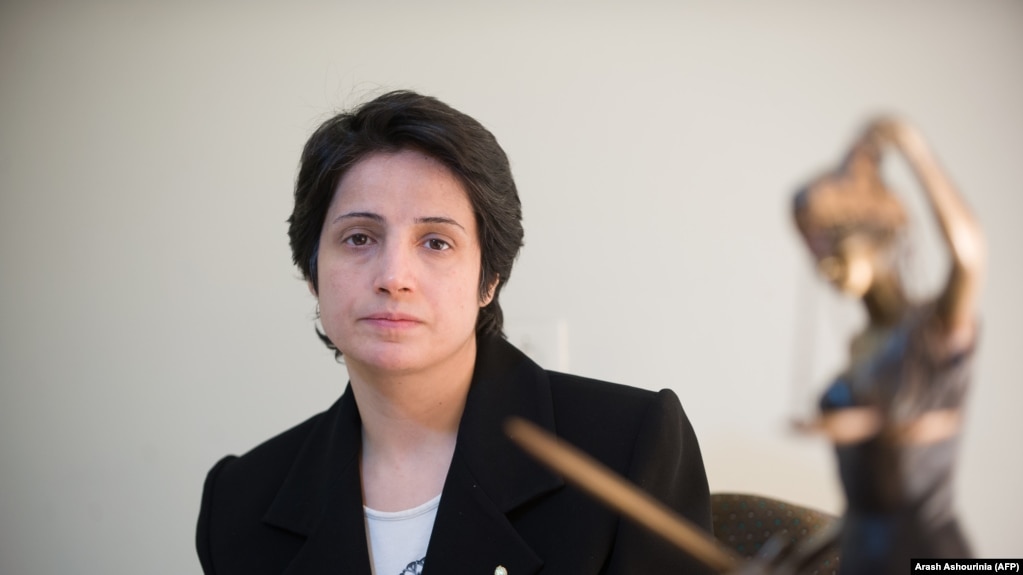
IRAN -- Iranian lawyer Nasrin Sotoudeh is seen in Tehran on November 1, 2008.

Iranian lawyer Nasrin Sotoudeh is seen in Tehran on 1 November 2008.

The Council of Bars and Law Societies of Europe (CCBE) has bestowed its annual Human Rights Award to four lawyers from Iran: Nasrin Sotoudeh, Addolfattah Soltani, Mohammad Najafi and Amir Salar Davodi. Shirin Ebadi will receive the award on behalf of the jailed lawyers from CCBE President José De Freitas.

The CCBE is a professional organization that represents Law Societies from 45 different countries and over one million lawyers. Previous recipients of the award include Avocats Sans Frontières (ASF) and Azerbaijani human rights lawyer Intigam Aliyev. For more on this and other awards for lawyers see: http://www.trueheroesfilms.org/thedigest/awards/ccbe-human-rights-award

Nasrin Sotoudeh is a human rights defender who has been in prison since summer of 2018 for her peaceful activities defending women’s rights to choose their dress style. Although there is no written law in Iran for compulsory hijab, the police and courts spend considerable resources to force women to use the veil. [see also: https://humanrightsdefenders.blog/2019/06/13/1-million-people-demand-that-iranian-government-release-nasrin-sotoudeh/]

Abdolfattah Soltani who co-founded the Defenders Of Human Rights Center along with his colleagues, Nobel Peace Prize laureate Shirin Ebadi and others served as the attorney defending the family of Iranian-Canadian photo journalist Zahra Kazemi. [see also: https://humanrightsdefenders.blog/2018/11/22/iranian-human-rights-defender-abdolfattah-soltani-released-from-jail/

Mohammad Najafi performed various human rights related work and defended protestors who were arrested during a mass uprising in early 2018.

Amirsalar Davoudi was sentenced to 30 years in prison, 111 lashses and substantial monetary fine for his work. One of the charges included “collaborating with the enemy sate” which was brought against Davoudi for doing an interview with the Voice of America’s Persian section.

A statement from the CCBE urges Iran “to take all the necessary measures to release these four human rights lawyers and to guarantee that all lawyers in the Islamic Republic of Iran are able to perform their professional duties without fear of reprisal, hindrance, intimidation or harassment.”

https://en.radiofarda.com/a/jailed-iranian-lawyers-win-human-rights-award/30297336.html

Posted in awards, Human Rights Defenders | Leave a Comment »
Tags: Abdolfattah Soltani, Amir Salar Davodi, Council of Bars and Law Societies of Europe (CCBE), Davoudi, detention, digest of human rights awards, Europe, human rights awards, Human Rights Defenders, human rights lawyers, Iran, Mohammad Najafi, Nasrin Sotoudeh

Six HRDs from Latin America on PBI’s European tour

November 18, 2019
Whilst the European Union continues to express concern for the increased impact of climate change on the planet, those defending their territories and the environment continue to be attacked for their activism across the world. This alarming trend is present in Latin America where the women defenders of land, territory and the environment are particularly vulnerable. [see e.g. https://humanrightsdefenders.blog/2019/08/06/environmental-human-rights-defenders-more-deadly-than-being-a-soldier-in-a-war-zone/] With this in mind, PBI will be accompanying five women and one man from Mexico, Guatemala, Honduras and Colombia to different parts of Europe in order to exchange experiences and perspectives about protection and self-protection from a holistic perspective. These defenders will share information about their own situation of risk, as well as the cases they are working on.

Sandra.png

Telma.png

Nora.png

Olga.png

Emily.png

Franklin.png

https://www.peacebrigades.org/en/news/women-human-rights-defenders-latin-america-come-europe

Posted in Human Rights Defenders | 1 Comment »
Tags: accompaniement, Emilie Dewolf, environmental defenders, Europe, Franklin Alvarez, Indigenous rights, Latin America, Nora Ramirez, Olga Aroujo, PBI, Sandra Camuec, Telma Perez, women human rights defenders

Human Rights HACKATHON in Kosovo: Equalitech

September 8, 2019

Hackathon in Kosovo

Civil Rights Defenders, in partnership with Innovation Centre Kosovo (ICK) is hosting the first ever regional hackathon to tackle human rights issues – ‘EqualiTECH 2019’ – on 27-29 September 2019.

..there is a clear shortage in the interplay of technological investments around human rights issues, frequently materialising as a roadblock for its advocates. In an effort to reduce this gap, the organisers invite participants with various backgrounds, skill sets, and creative abilities to form multidisciplinary teams and invent unique digital products to hack Human Rights challenges pertaining to 3 thematic areas:

1). Justice and Equality; 2). Freedom of Expression; 3). Access to Information.

This signature event challenges participants to place humanity at the forefront of design thinking and innovation. It aims to fuse the power of technological innovation with the generative capacities of human rights defenders and activists, in building ICT solutions as part of diverse teams, to support human rights work in the Western Balkan countries. Under expert mentoring, the competitors of different backgrounds will have 40 hours to design innovative products that will elevate the work for human rights protection and advocacy. ‘EqualiTech 2019’ kicks off on the 27- 29 September, taking place at ICK’s event hub. All interested candidates can apply here. The deadline for application is 17 September, 11:59 pm.

The challenges

Justice and equality

Design a solution that helps increase justice and equality. Conceptualize and develop a digital product that will help increase justice and equality as well as promote inclusiveness for all. For example, think of tools (i.e. platform) that can connect state bodies responsible for providing free legal aid, private pro-bono lawyers/law firms, legal aid organizations and citizens in need of legal aid and advice; or tools that can help identify public and private places of interest and service providers (bars, restaurants, hotels, parks, etc) that are friendly, inclusive and non-discriminatory, particularly to vulnerable and marginalized communities in the Western Balkans.

Freedom of expression To complete this challenge, you should design a tool that will help facilitate and/or increase freedom of expression and reduce various forms of online harassment. The objective is to invent digital products (i.e. platforms) that can enable citizens, activists and journalists from the Western Balkans to connect with each other; identify and report violations of human rights; enable user-friendly reporting mechanisms that help increase their safety and security, etc.

Access to information is increasingly limited in the Western Balkans. Proliferation of unprofessional media, increasing number of fake and manipulative information, limits citizens abilities to make informed decisions. Conceptualize and design a digital product that will help increase access to reliable and useful information sources. This product (i.e. platform) should support citizens, progressive media outlets and independent journalists, fact-checking and other issues relating to ‘fake news’.

(Please note that this is not an exhaustive list.

Competition eligibility criteria?

To participate, you must meet the following eligibility criteria:

  • All individuals must be between 18-35 years of age.
  • Must work (HR activists or advocates) or have an interest (tech candidates) in combating discrimination, upholding human rights for minorities and underrepresented groups, and ensuring freedom of expression.
  • Tech candidates must be skilled in using programming language or tools and/or graphic design software.
  • All candidates must be able to collaborate within a team.
  • Must have a passion for problem-solving and analytical thinking.
  • Preference will be given to individuals with proven experience or passion in combating human rights violations.

Awards for the winning products

We will award three cash prizes, each in the amount of 1000 euros for the winning product prototypes in the respective challenge category.

For a similar event see: https://humanrightsdefenders.blog/2016/02/24/diplohack-event-on-human-rights-to-be-held-in-geneva-on-26-27-february/

EqualiTECH 2019 Human Rights Hackathon to Launch in Kosovo

Posted in human rights | Leave a Comment »
Tags: Civil Rights Defenders, conference, Eastern Europe, Europe, hackathon, hackers, information technology, Innovation Centre Kosovo, Kosovo, training course, young

European governments should stop treating solidarity and compassion as a crime

May 15, 2019

Two recent cases of criminalization of human rights defenders in Europe helping people at sea:

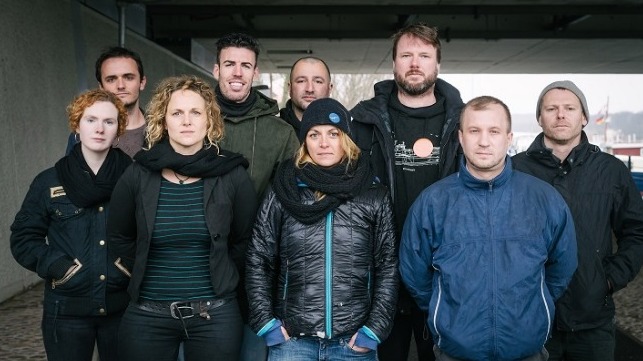
Iuventa crew
Iuventa crew

On 13 May 2019 MarEx  reported that the crew of the rescue ship Iuventa operated by the German NGO Jugend Rettet has received the Swiss Paul Grüninger human rights award for saving the lives of around 14,000 of men, women and children in the central Mediterranean. For more on this award, see: http://www.trueheroesfilms.org/thedigest/awards/paul-grueninger-award

The award is seen as a statement against the criminalization of those helping people at sea and comes whilst the crew is under criminal investigations in Italy for “aiding and abetting illegal immigration.” They face up to 20 years in prison and fines of 15,000 Euro ($16,900) per saved person. The prize money of 50,000 Swiss francs contributes to the defense.

The Iuventa was the first rescue vessel seized in Italy in August 2017. Captain Dariush was master of the Iuventa for three voyages off the Libyan coast: “We’re being charged for saving lives. This is absurd,” he said. “It is European politicians who block any safe way for people in need, so we had to act.”

The crew says: “Although we have to stand trial, it is us who accuses Europe. We accuse European politicians of turning their backs on people in need. We accuse the E.U. of collaborating with regimes who violate human rights.” The Italian public prosecutor’s office has been investigating the crew for almost two years. Covert investigators claim to have observed the Iuventa crew cooperating with smugglers. However, the NGO claims that scientists at Goldsmiths, University of London have said there is no evidence for this. “They have compared the accusations of the Italian police with all available data, meteorological measurements, logbooks and recordings of the Reuters agency. In their study for Forensic Architecture, they conclude that the allegations are false.” The trial is expected to begin in autumn, and it is expected that charges will be brought against the 10 crew members. It is a precedent for Europe, says lead lawyer Nicola Canestrini: “This trial will show whether Europe can continue to stand for fundamental rights and solidarity in the world.”

——–

On 15 May 2019, Amnesty International called for all charges to be dropped ahead of the trial of Tom Ciotkowski, a British human rights defender who documented police abuse against migrants and refugees and volunteers who were helping them in Calais. AI calls for all European governments to stop treating solidarity as a crime. The trial will start at on 15 May, at the Tribunal de Boulogne-sur-Mer.

Tom Ciotkowski is facing up to five years in prison and a fine of up to 7,500 Euros on trumped up charges. In July 2018, he was observing French riot police preventing volunteers from distributing food to migrants and refugees in Calais. He was charged with contempt and assault after he challenged the violent actions of a policeman against another volunteer. “Tom Ciotkowski is a compassionate young volunteer who was taking action to support migrants and refugees when he was arrested. He has committed no crime and is being unjustly targeted for documenting the abusive behaviour of the police in Calais,” said Amnesty International’s Senior Campaigner on Migration Maria Serrano.

“Tom’s case is sadly emblematic of the harassment, intimidation and attacks that human rights defenders supporting migrants and refugees face at the hands of police in Calais. His case also reflects a wider European trend of criminalizing acts of solidarity, as a way of discouraging others from standing up for human rights. We need courageous, compassionate people like Tom more than ever

[BACKGROUND At the end of July 2018, Tom Ciotkowski was observing French riot police ID-checking volunteers who were trying to distribute food to migrants and refugees. He recorded on his mobile phone an official pushing and kicking a volunteer. When Tom complained about the behaviour of the police, an officer approached him and another female volunteer, who he hit with a baton. When Tom asked the officer for his identification number and told the policeman not to hit women, he was pushed hard by an officer and fell backwards over a metal barrier separating the pavement from the road. As Tom fell backwards, a passing lorry narrowly missed him. He was then arrested, put in custody for 36 hours and charged with contempt and assault (“outrage et violence”). In May 2019, Tom filed a complaint against the police officer who pushed him and against other officers who provided reports stating false facts against Tom to support his arrest and prosecution.]

See also: https://humanrightsdefenders.blog/2018/12/02/un-experts-consider-human-rights-defenders-in-italy-under-threat/

https://www.maritime-executive.com/article/iuventa-crew-receives-human-rights-award-in-switzerland

https://www.amnesty.org/en/latest/news/2019/05/france-trumped-up-charges-against-human-rights-defender-must-be-dropped/

Posted in Amnesty international, awards, human rights, Human Rights Defenders | 6 Comments »
Tags: AI, criminalisation, digest of human rights awards, Europe, France, human rights awards, Italy, Iuventa, Jugend Rettet, migrants, Paul Grüninger human rights award, refugees, rescue, Tom Ciotkowski

New contact group among intergovernmental organisations to support human rights defenders in Europe

May 12, 2019

On 10 May 2019 the Fundamental Rights Agency (FRA) reported that from 7 to 8 May, representatives from intergovernmental organisations and EU institutions responsible for cooperation with civil society and for supporting human rights defenders in Europe and Central Asia met in Warsaw at the invitation of the FRA and the OSCE Office of Democratic Institutions and Human Rights (ODIHR). Others represented at the meeting were the Council of Europe, European Commission, European External Action Service, European Asylum Support Office (EASO), OSCE Chairmanship in Office, OSCE Representative for Freedom of the Media, the OHCHR Geneva and Brussels office, UNDP, UN Women, and the World Bank.

The press release did not elaborate what was discussed or achieved but only that “It served to establish ongoing, practical information exchanges to facilitate further cooperation between these organisations in supporting human rights defenders.”

The need for more action in support of HRDs in Europe has been often referred to in this blog. See also: https://humanrightsdefenders.blog/2018/01/27/human-rights-ngos-in-europe-no-longer-the-standard-to-follow/

https://fra.europa.eu/en/news/2019/new-contact-group-support-human-rights-defenders-europe-among-intergovernmental

Posted in Human Rights Defenders | Leave a Comment »
Tags: coordination, Europe, european region, Fundamental Rights Agency (FRA), Human Rights Defenders, meeting, ODHIR, OSCE, Warsaw

How anti-illegal migrants rules in the EU threaten human rights defenders

March 26, 2019
immigrants
An African at a temporary camp for immigrants seeking entry to Europe, in Melilla (Spanish autonomous city in North Africa), 12 October 2005 (EPA/Chema Moya)

Lizan Nijkrake published on 25 March 2019 an excellent piece under the title “Should it be a crime to help illegal immigrants?” She describes how European defenders of migrants are being prosecuted for aiding illegal immigrants. EU states had a choice to exempt humanitarian aid from criminal charges but most didn’t take it. And those who did are not always following the rules.

Take the UK as an example: The United Kingdom’s Institute for Race Relations, which has been tracking criminal cases, reported that 81 people were prosecuted for assisting immigrants in 2018, compared with 20 in 2017. “Things escalated in 2018,” says Anya Edmond-Pettitt, a researcher at the Institute of Race Relations. “People got charged with serious crimes, linked to terrorism and membership of a criminal organization.”

Why is this happening?

In 2002, the EU adopted a directive that requires all EU member states to impose sanctions on citizens who intentionally help illegal immigrants secure unauthorized entry into, transit across or residence within in the EU — thus making it illegal to offer aid in the form of free rides or overnight stays. The directive says its objective is to “combat the aiding of illegal immigration” to further the EU’s goal of creating “an area of freedom, security and justice.” But in a study for the European Parliament, the Centre for European Policy Studies (CEPS), a Brussels-based think tank, concluded that the EU rules are not in line with the United Nations Protocol against the Smuggling of Migrants by Land, Sea and Air.

The UN protocol stipulates that assisting a migrant can be a crime only when there is a clear aim of making money or other material gains. While the EU directive says offering overnight stays is illegal only if it is done for profit, CEPS reported last December  that 13 out of 28 member states have criminalized free sleepovers. Out of 28 EU countries, CEPS says that only four have laws that adhere fully to UN protocol: Germany, Ireland, Luxembourg and Portugal.

The EU directive allows member states to exempt individuals from sanctions for helping illegal immigrants enter or move across EU territory if done for reasons of “humanitarian assistance,” such as giving food, shelter and first aid to people in need. Nine member states have included some types of exemption in their national laws, according to the European Commission.

But the CEPS said states should be required to make such an exception. “And even in the European nations that have exempted humanitarian acts, we still see prosecutions happening, for example in Italy,” said CEPS researcher Lina Vosyliūtė.

Lizan Nijkrake’s piece gives concrete examples of how the laws and the application in practice are affecting those who try to help.

But no change is expected any time soon. The European Commission has consistently said there’s no need to change the law. In early 2018, Nijkrake wrote that it should be left to judges in the countries themselves to decide on a case-by-case basis whether or not to prosecute citizens. It has noted that few people have been convicted. While most of those charged have been acquitted, in the case involving Van Gestel and Berghe (in Belgium), seven of the defendants were convicted and given suspended sentences of 12 to 24 months.

More than 170 organizations have launched an initiative, “We are a welcoming Europe – let us help!” (#WelcomingEurope), with the goal of securing a million signatures on a citizens’ petition that calls for migration policy reforms, including the decriminalization of deeds of solidarity.

————

https://news-decoder.com/2019/03/25/eu-immigrants/

Later also: https://www.infomigrants.net/en/post/17319/amnesty-international-accuses-france-of-intimidating-people-who-help-migrants


Posted in EU | Leave a Comment »
Tags: #WelcomingEurope, Brussels, Centre for European Policy Studies (CEPS), CEPS, EU directive, Europe, huma rights defenders, human trafficking, illegal migrants, Lizan Nijkrake, Sea and Air, United Nations Protocol against the Smuggling of Migrants by Land

Nominations for the European Civil Society Prize 2018 closing soon

September 1, 2018

Although not a human rights award in the strict sense, I think that the current state of civil society in large parts of Europe does need a boost [see e.g. https://humanrightsdefenders.blog/2017/04/04/europe-also-sees-shrinking-space-for-human-rights-defenders/]. So the EESC Civil Society Prize 2018 on identities, European values and cultural heritage in Europe is most welcome and human rights groups and defenders should apply.

The European Economic and Social Committee (EESC) this year is promoting initiatives to do with European values, identities and cultural heritage. The deadline is 7 September 2018. The Civil Society Prize, now in its tenth edition, was launched by the EESC to reward and encourage by civil society organisations and/or individuals that have made a significant contribution to promoting the common values that bolster European cohesion and integration.

Prize money totals EUR 50 000 and will be awarded to a maximum of five winners and it will reward innovative initiatives which have made a significant contribution to:

  • raising awareness of the multiple layers and richness of European identities;
  • exploiting the full potential of Europe’s cultural wealth;
  • facilitating access to European cultural heritage; and
  • promoting European values such as respect for human dignity and human rights, freedom, democracy, equality and the rule of law.

The full list of requirements and the online application form are available on webpage – EESC Civil Society Prize 2018.

The EESC Civil Society Prize is open to all civil society organisations officially registered within the European Union and acting at local, national, regional or European level. It is also open to individuals.

The award ceremony will take place on 13 December 2018 in Brussels.

https://www.eesc.europa.eu/en/news-media/press-releases/eesc-civil-society-prize-2018-applications-closing-soon

Posted in awards, Human Rights Defenders | Leave a Comment »
Tags: awards, call for nominations, Civil society, civil society organisations, EESC Civil Society Prize, Europe, European Economic and Social Committee (EESC), european region, Human Rights Defenders, social economic and cultural rights

Council of Europe issues call for creative ideas: a logo to symbolize Civil Participation

June 22, 2018
Photo by Brad Neathery on Unsplash

Photo by Brad Neathery on Unsplash

The Council of Europe’s Democratic Governance Department has been working for some time to put into practice the recent Committee of Ministers Guidelines for civil participation in political decision-making . Now it is again turning to supporters of participatory democracy and to anyone with fresh ideas to help find a unifying visual symbol, an original design for a logo or emblem.

The logo should highlight, in a symbolic way, the importance of public/civil participation in decision-making at all levels of government. It should be very simple and expressive, while appealing to both sides in the democratic decision-making process – the public authorities and civil society. The logo is meant to appear on all that will be done by the partners – news items, video clips, reports, meeting programmes, etc. Ideally, people will gradually start associating it with our joint work on civil participation.

We are looking for a small graphic symbol, preferably without text. The logo of the No Hate campaign of the Council of Europe could serve – very approximately – for orientation.

Three winning entries will be selected by the group of partners involved in promoting civil participation. Modest prizes (but eternal glory) will be awarded to the winners. Please send your entries in a free format (a scanned drawing would also do) before 1 August 2018, together with your personal details including a mobile phone number, to the following e-mail: ellsworth.camilleri@coe.int

Background information: definitions according to the Guidelines for civil participation in political decision making

…“civil society at large”: the ensemble of individuals and organised, less organised and informal groups through which they contribute to society or express their views and opinions, including when raising issues regarding human rights violations, corruption and other misconduct or expressing critical comments. Such organised or less organised groups may include professional and grass-roots organisations, universities and research centres, religious and non-denominational organisations and human rights defenders;..

https://www.coe.int/en/web/ingo/-/original-ideas-for-a-logo-needed

Posted in human rights | Leave a Comment »
Tags: call for proposals, civil society organisations, Council of Europe, Council of Europe’s Democratic Governance Department, Europe, logo, social participation

« Older posts
Newer posts »
  • Enter your email address to subscribe to this blog and receive notifications of new posts by email.

    Join 1,807 other subscribers
  • Recent Posts

    • Journalist Halim Naim found safety through Canada’s Human Rights Defenders program and continues the fight for the truth
    • ProtectDefenders.eu Annual Report 2024–2025: 10 Years of Protection
    • ISHR submits 66 cases of reprisals across 24 States to UN
    • More than 110 Nobel laureates call on Iran to release Narges Mohammadi
    • Human rights defenders to benefit from new protection hub in Kenya
    • Surfshark joins forces with Amnesty International to train digital human rights defenders
    • Digital services alternatives on APC’s community network; better not bigger
    • 2 June 2026 film screening and discussion: “Water for Life” and the struggle of Berta Cáceres
Blog at WordPress.com.
Entries and comments feeds.Valid XHTML and CSS.
  • Subscribe Subscribed
    • Hans Thoolen on Human Rights Defenders and their awards
    • Join 434 other subscribers
    • Already have a WordPress.com account? Log in now.
    • Hans Thoolen on Human Rights Defenders and their awards
    • Subscribe Subscribed
    • Sign up
    • Log in
    • Report this content
    • View site in Reader
    • Manage subscriptions
    • Collapse this bar

Loading Comments...