This year’s theme is Exploitation and trafficking of children Applications are open to individuals or non-governmental organisations involved in one or more field projects based on a human rights approach and aimed at preventing and combating child trafficking and exploitation. Preference will be given to applications that, in accordance with children’s rights, aim to:
provide comprehensive support for young people;
implement transformative and restorative actions;
ensure the active participation of the children themselves in the project.
The projects submitted will focus on defending and protecting children against trafficking and exploitation through programmes such as:
raising awareness among the general public and the authorities;
identifying and referring victims;
receiving, supporting and rehabilitating child victims;
training for stakeholders (police, justice, medical and social services, education, etc.);
advocacy for the implementation of legal tools or the development of public policies to combat and prevent trafficking;
access to justice and reparations.
Award
The five prize winners will be invited to Paris for the official ceremony. They will receive a medal and share a total sum of 70.000 €, awarded by the CNCDH, to be used to implement their projects. They may introduce themselves as 2025 laureates of the Human Rights Prize of the French Republic.
Five runners-up will be awarded a “special mention” medal by the French ambassador in their country of origin. Runners-up will not receive any financial endowment.
The application must be written in French and include:
a) A letter of application presented and signed by the president or legal representative of the NGO concerned, or by the individual candidate;
b) The application form, which is attached to this call for applications and can be
c) A presentation of the NGO (statutes, operations, etc.), where appropriate.
d) The postal address and bank details (included IBAN and SWIFT Code) of the NGO or individual candidate.
Candidates must send their complete application by the deadline of 14 September 2025 to the Secretariat-General of the CNCDH:CNCDH – for the attention of Cécile RIOU-BATISTA, TSA 40 720 – 20 avenue de Ségur, 75 007 PARIS – France or by email to: prixdesdroitsdelhomme@cncdh.fr
Once the panel has announced the results, the 2025 Prize will be awarded in Paris by the Prime Minister, or another French minister, around 10 December 2025.
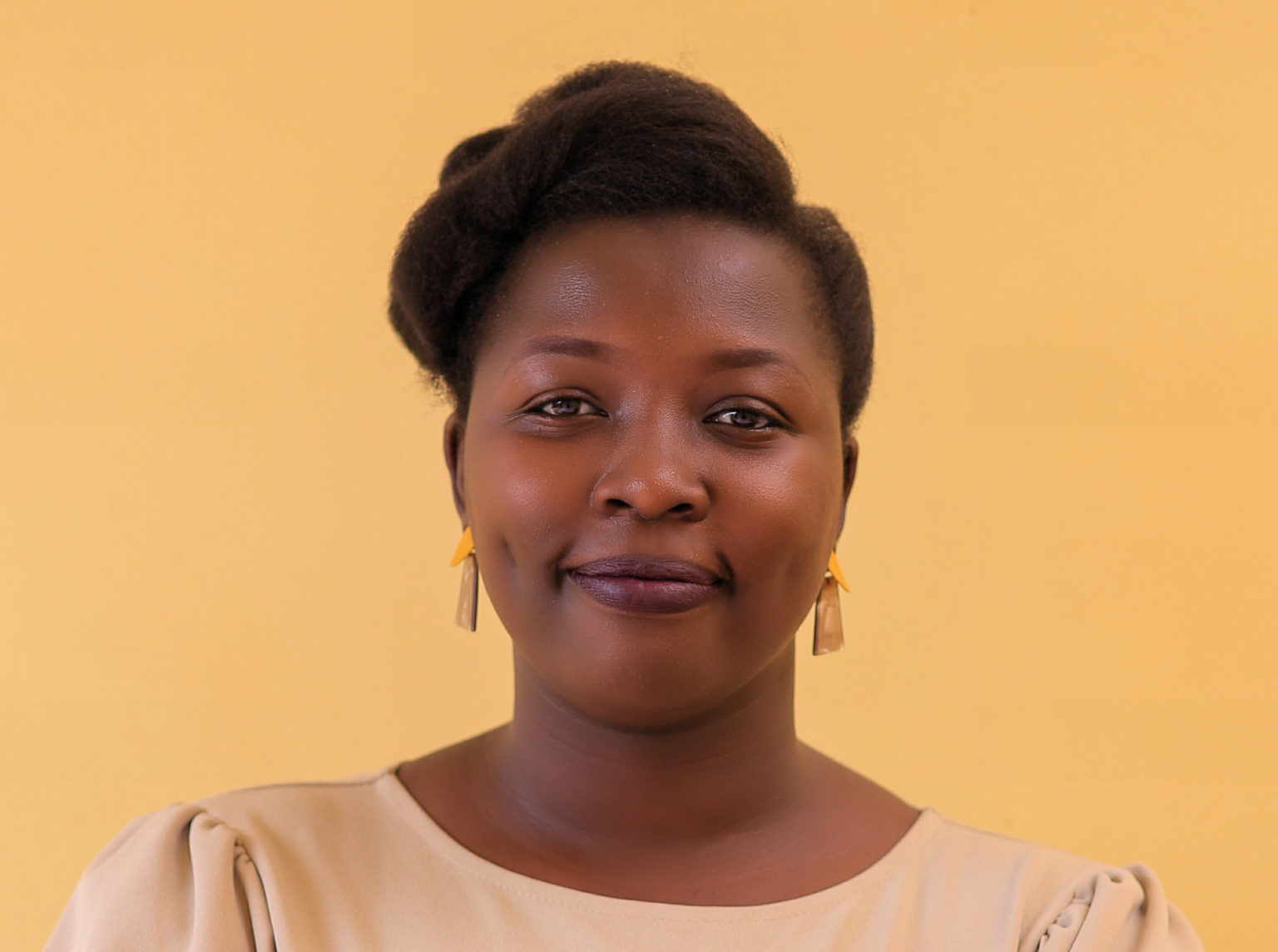
In February 2021 Defenddefenders announced Sandra Aceng as Human Rights Defender of the Month Sandra Aceng is an outspoken and energetic woman human rights defender (WHRD). She is a gender and ICT researcher and policy analyst for Women of Uganda Network (WOUGNET) where she coordinates the Women ICT Advocacy Group, advocating for internet access for all. In addition, she writes on various platforms such as Global Voices, Freedom House, and Impakter Magazine. Her regular contributions to Wikimedia Uganda often focus on profiling WHRDs, female politicians, and journalists. “After Uganda’s January [2021] elections, many female politicians joined parliament. We want to increase their online visibility. For example, most of the profiles on Wikipedia are on men, so we need to close the gender digital divide,” Sandra says.
After Uganda’s January [2021] elections, many female politicians joined parliament. We want to increase their online visibility. For example, most of the profiles on Wikipedia are on men, so we need to close the gender digital divide.
Having grown up in the digital age, the 27-year-old is a digital native and mainly focuses on defending women’s rights online. Her employer WOUGNET empowers women through the use of ICT for sustainable development. Their three main pillars are information sharing and networking, gender and ICT policy advocacy, and providing technical support to WOUGNET staff, beneficiaries, and members. As a Programme Manager, Sandra analyses internet and ICT policies to ensure that they are gender inclusive. She has noticed that oppressive patriarchal structures are shifting and perpetuating online. Part of her work is to document women’s rights violations and gather evidence, but she has also learned that it’s not enough to just talk about statistics. To truly understand the problems, it is important to talk to the victims and listen to find out what they face, she says.
Having experienced some forms of online gender-based violence (GBV) herself, she knows how stressful and draining it can be. On top of receiving non-consensual content, she also felt pressure to keep quiet, women are not supposed to complain, she says. As a WHRD, she is used to the subtle pressure that women not abiding by patriarchal gender norms experience. A continuous trickling of seemingly small questions can be rather stressful: “Why are you so loud and outspoken as a woman? When will you get married? How will you take care of your family if the authorities come for you? These kinds of questions make me feel uncomfortable, they make me wonder if I am doing the right thing,” Sandra shares, “but if we want online GBV to end we also need to end these harmful gender stereotypes. Establishing women’s rights is a slow process and keeping quiet won’t speed it up.”
Why are you so loud and outspoken as a woman? When will you get married? How will you take care of your family if the authorities come for you? These kinds of questions make me feel uncomfortable, they make me wonder if I am doing the right thing.
There is still a lot of work ahead of Sandra and her fellow Ugandan women’s rights activists. She recently researched digital rights violations during the COVID-19 pandemic and struggled to find female interviewees. Female journalists reporting on politically sensitive topics experienced reprisals like rape, but due to stigma and worries how this will affect their future, they were not willing to speak out. While male journalists on the other hand expressed themselves freely: men are often perceived as bold and brave, making it easier to speak out on reprisals and rights violations they endured.
But the more women speak out, the easier it gets, Sandra is convinced. “It really motivates me when I see that other women have faced the same kind of challenges with online violence, and they have dealt with it. Whatever I go through, it’s not the end of life. Hearing other stories helps me to keep working hard, to be a better version of myself and to go beyond the difficulties.” Fighting the digital gender divide is Sandra’s way to make sure that it gets easier for women to speak out and be loud.
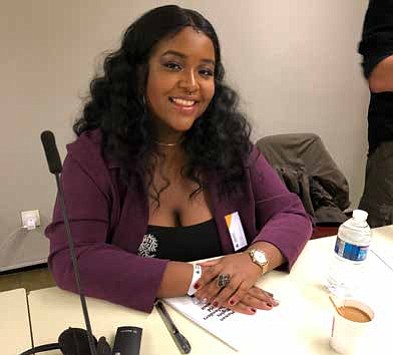
Eva Lewis, founder of the I Project. Photo Credit: Provided by Eva Lewis
Katherine Newman in the Chicago Citizen proudly profiles the young woman from Chicago Eva Lewis who – as only HRD from the USA almost represented “the United States At Human Rights Defenders World Summit” [https://humanrightsdefenders.blog/2018/07/24/announcement-of-the-human-rights-defenders-world-summit-in-paris-october-2018/].
A young activist, Eva Lewis, who grew up on the south side of Chicago recently traveled to Paris to participate in the Human Rights Defenders World Summit 2018. Lewis spoke on the Americas panel, alongside activists from Latin America, and discussed youth-led movements in the United States as well as the state of black and brown people in the country. “What the Summit aims to do is bring together representatives from each country to talk about the state of human rights defenders and to brainstorm ways that we can elevate our fight for human rights and create a direct action plan that can be implemented to protect human rights defenders internationally,” said Lewis.
Lewis was one representative in a diverse group of 150 human rights defenders from around the world that came to Paris for the three-day Summit. “I was on the Americas panel and I was the only US representative and also the youngest delegate at the Summit and I was the only English speaker on my panel. Everyone on the panel talked about their own fight for human rights and how it pertains to their country and the people that they were there to represent,” said Lewis.
“I set my self up to fulfill a specific agenda which was to bring human rights of black and brown folks in the U.S. to an international platform because we don’t talk about human rights violations against black and brown people in the US as a human rights issue. This was the first time anyone had that conversation at the Summit and I was happy to be able to be the one to present that conversation.”
Nineteen-year-old Lewis is an award-winning student, activist, and artist. She is also known for founding the I Project, a non-profit organization aiming to create equitable communities in Chicago.
“I really liked hearing about how people structure their organizations so what I think I gained the most from the Summit is good information about how to make the infrastructure of my own organization more sustainable. The I Project is relatively new and we’ve only had a fiscal sponsorship for about a year and we are not sustainable at all and I’m comfortable admitting that because the journey is important and part of the process,” said Lewis.
The last year or so there has been a lot soul-searching within the broader human rights movement, questioning its relevance or even survival at a time of resurgent ‘anti-human rights’ attitudes in the superpowers (regression in China, USA, and Russia, with the EU vacillating between careful diplomacy and trade interest). A number of smaller countries have also taken enthusiastically to human rights bashing (just to mention Turkey, Philippines, Hungary, Venezuela and Burundi). In all these cases the leadership seems to imply that human rights are niceties that no longer have the support of the majority of their population, which could well be true due to the extent that their control over the media and relentless whipping up of populist feelings make this self-fulling.This blog has tried to monitor – at least illustrate – this phenomenon on many occasions [too many to list]. Now comes along an interesting piece written by professor Samuel Moyn of Yale university under the provocative title “How the Human Rights Movement Failed” (published on 23 April 2018 in the New York Times). The piece is a must read (in full) and I give the text below in green. Even if I disagree with some important parts, it remains a coherent and thought-provoking article (once you get over feeling offended by the idea that you are a plutocrat).
The key notion is expressed in the following quotes:
“.those who care about human rights need to take seriously the forces that lead so many people to vote in majoritarian strongmen in the first place.”
and
“The truth is that the growth of international human rights politics has accompanied the very economic phenomena that have led to the rise of radical populism and nationalism today. In short, human rights activism made itself at home in a plutocratic world.”
Where I most disagree with the author is that there is lot more going on in the human rights movement than the defense of civil and political rights or playing along with elites. Either he does not know it or ignores it on purpose. The thousands of human rights defenders working in their own countries are fully aware of the realities on the ground and are often prioritizing social, economic, cultural and community rights [just a cursory sample of blog posts on environmental activists will show this: https://humanrightsdefenders.blog/tag/environmental-activists/]. International and regional NGOs mostly help and protect them! Also, the author seems to underestimate the potential attraction of the human rights cause in civil society (especially victims and young people), whose mobilization is still patchy. If the human rights movement can overcome its fragmentation and use media better this potential could turn tides. Say I!.
Here the piece in full/ judge for yourselves:
The human rights movement, like the world it monitors, is in crisis: After decades of gains, nearly every country seems to be backsliding. Viktor Orban in Hungary, Rodrigo Duterte in the Philippines and other populist leaders routinely express contempt for human rights and their defenders. But from the biggest watchdogs to monitors at the United Nations, the human rights movement, like the rest of the global elite, seems to be drawing the wrong lessons from its difficulties.
Advocates have doubled down on old strategies without reckoning that their attempts to name and shame can do more to stoke anger than to change behavior. Above all, they have ignored how the grievances of newly mobilized majorities have to be addressed if there is to be an opening for better treatment of vulnerable minorities.
“The central lesson of the past year is that despite considerable headwinds, a vigorous defense of human rights can succeed,” Kenneth Roth, the longtime head of Human Rights Watch, contended recently, adding that many still “can be convinced to reject the scapegoating of unpopular minorities and leaders’ efforts to undermine basic democratic checks and balances.”
That seems unlikely. Of course, activism can awaken people to the problems with supporting abusive governments. But if lectures about moral obligations made an enormous difference, the world would already look much better. Instead, those who care about human rights need to take seriously the forces that lead so many people to vote in majoritarian strongmen in the first place.
The truth is that the growth of international human rights politics has accompanied the very economic phenomena that have led to the rise of radical populism and nationalism today. In short, human rights activism made itself at home in a plutocratic world.
It didn’t have to be this way. The Universal Declaration of Human Rights, which was promulgated in 1948 amid the consolidation of welfare states in Europe and North America and which formed the basis of the human rights agenda, was supposed to enshrine social protections. But in the 1970s, when activists in the United States and Western Europe began to take up the cause of “human rights” for the victims of brutal regimes, they forgot about that social citizenship. The signature group of that era, Amnesty International, focused narrowly on imprisonment and torture; similarly, Human Rights Watch rejected advocating economic and social rights.
This approach began to change after the Cold War, especially when it came to nongovernmental advocacy in post-colonial countries. But even then, human rights advocacy did not reassert the goal of economic fairness. Even as more activists have come to understand that political and civil freedom will struggle to survive in an unfair economic system, the focus has often been on subsistence.
In the 1990s, after the Cold War ended, both human rights and pro-market policies reached the apogee of their prestige. In Eastern Europe, human rights activists concentrated on ousting old elites and supporting basic liberal principles even as state assets were sold off to oligarchs and inequality exploded. In Latin America, the movement focused on putting former despots behind bars. But a neoliberal program that had arisen under the Chilean dictator Augusto Pinochet swept the continent along with democracy, while the human rights movement did not learn enough of a new interest in distributional fairness to keep inequality from spiking.
Now the world is reaping what the period of swelling inequality that began in the 1970s through the 1990s sowed.
There have been recent signs of reorientation. The Ford Foundation, which in the 1970s provided much of the funding that made global human rights activism possible, announced in 2015 that it would start focusing on economic fairness. George Soros, a generous funder of human rights causes, has recently observed that inequality matters, too.
Some have insisted that the movement can simply take on, without much alteration of its traditional idealism and tactics, the challenge of inequality that it ignored for so long. This is doubtful.
At the most, activists distance themselves from free-market fundamentalism only by making clear how much inequality undermines human rights themselves. Minimum entitlements, like decent housing and health care, require someone to pay. Without insisting on more than donations from the rich, the traditional companionship of human rights movements with neoliberal policies will give rise to the allegation that the two are in cahoots. No one wants the human rights movement to be remembered as a casualty of a justifiable revolt against the rich.
If the movement itself should not squander the chance to reconsider how it is going to survive, the same is even truer of its audience — policymakers, politicians and the rest of the elite. They must keep human rights in perspective: Human rights depend on majority support if they are to be taken seriously. A failure to back a broader politics of fairness is doubly risky. It leaves rights groups standing for principles they cannot see through. And it leaves majorities open to persuasion by troubling forces.
It has been tempting for four decades to believe that human rights are the primary bulwark against barbarism. But an even more ambitious agenda is to provide the necessary alternative to the rising evils of our time.
—–
Samuel Moyn is the author of “Not Enough: Human Rights in an Unequal World.”
Human Rights Day was the occasion for the Indonesian Government – together with the National Commission on Violence Against Women (Komnas Perempuan) – to honor six women with posthumous Women Human Rights Defenders Awards for their fight against inequality and for the human rights of women. On 10 December 2016 officials from the Law and Human Rights Ministry and the National Development Planning Board handed the awards to the activists’ families, as part of the global 16 Days of Activism against Gender-based Violence Campaign:
Siti Latifah Herawati Diah
Lily Zakiyah Munir
Zohra Andi Baso,
Mientje DE Roembiak,
Darmiyanti Muchtar
Theresia Yuliawati Sitanggang.Komnas Perempuan chairman Azriana said the awards were presented to remind the nation that these women fought to promote gender equality. “They never once asked to be awarded, but they dedicated their lives to help Indonesian women”.
Bangor Daily News in Maine reports that Pat Ryan received in October the Roger Baldwin Medal (given in alternating years by the ACLU to US citizens) for her work in Maine, USA. “For over 40 years, Pat Ryan has been at the forefront of the movement for gender equality in Maine, working to ensure that all Maine women and girls are able to lead lives of dignity, free from violence and discrimination,” said Alison Beyea, executive director of the ACLU of Maine. The article gives rich details of how Pat Ryan was at the forefront of Maine’s fight for human rights, including 32 years as executive director of the Maine Human Rights Commission.
Former President Jimmy Carter (89 years old!!) has incredible stamina but his latest book – A Call to Action: Women, Religion, Violence, and Power– is remarkable not just because of that high age but because it is incredibly blunt in describing how religions have systematically denigrated women, leading to prejudice, infanticide and horrific violence. The highlights of the interview below with KERA’s vice president of news, Rick Holter, about “the human and civil rights struggle of our time”, in too interesting to try and summarize and the same goes for the long excerpt from the book following: Read the rest of this entry »
On 26 September 2013 many countries attended the first ministerial meeting held at the United Nations on the rights of lesbian, gay, bisexual and transgender (LGBT) individuals.
(UN Photo/Amanda Voisard)
Foreign ministers attending the meeting, held on the margins of the General Assembly’s annual high-level debate, adopted a declaration pledging not just to protect LGBT rights but also to counter homophobic and transphobic attitudes. UN High Commissioner for Human Rights Navi Pillay commended
On 18 September the Ford Foundation announced $6.25 million in grants to seven leading human rights organizations that will strengthen and diversify the global human rights movement. The 7 grants focus on human rights organizations that operate in numerous countries and international forums, underscoring the foundation’s long commitment to supporting collaboration. Combined with a five-year, $50 million initiative announced last year to support human rights organizations based outside Europe and the United States, Ford is spurring innovative thinking about the way the global human rights system functions and its capacity to address 21st century issues such as economic and social inequality.
“The human rights movement has arguably been the most effective and wide-reaching social movement of our time,” said Darren Walker, president of the Ford Foundation. “But the movement faces a notably different set of challenges today than it did even 15 years ago, along with a new set of opportunities for advancing human rights in today’s world. The grants we make today will enable these institutions to more actively adapt, diversify and retool the way the movement works for all of us.”
Back from a long holiday absence I will resume today my blog on Human Rights Defenders and do with a quote from one the most outstanding HRDs, Bishop Tutu, who bettered the new Pope’s more conciliatory tone on gay rights: Speaking at the United Nations launch of its “Free & Equal” campaign to promote fair treatment of LGBT persons on 26 July in South Africa, former archbishop and South African anti-apartheid activist Desmond Tutu declared that the issue was so close to his heart that : “I would refuse to go to a homophobic heaven. No, I would say sorry, I mean I would much rather go to the other place.” He added, “I would not worship a God who is homophobic and that is how deeply I feel about this.” Tutu went on to compare his advocacy for LGBT persons to his fight against apartheid, saying, “I am as passionate about this campaign as I ever was about apartheid. For me, it is at the same level.” A video recording of Tutus partial remarks can be viewed on YouTube. The United Nations “Free & Equal” campaign is a year-long effort led by the Office of the U.N. High Commissioner for Human Rights, OHCHR, to focus “on the need for both legal reforms and public education to counter homophobia and transphobia.”



 Hans Thoolen on Human Rights Defenders and their awards