On 13 October 2025, Nina Lakhani, climate justice reporter the Guardian, published this interview with Mary Lawlor, UN special rapporteur for human rights defenders, who presented her final annual thematic report during an interactive dialogue at the 80th session of the United Nations General Assembly’s Third Committee. The Special Rapporteur’s report focused on the contributions of human rights defenders addressing climate change and working to realise a just transition from fossil fuels, and the risks they face in carrying out this work.
Mary Lawlor, the UN special rapporteur for human rights defenders since 2020, has documented hundreds of cases where states have sought to smear and silence climate defenders engaged in peaceful protest, non-violent civil disobedience and litigation.
“Attacks against climate defenders have surged over the course of the mandate, and we now see outright repression against people who are organizing for climate action. It’s some of the states that have claimed to be the strongest supporters of human rights defenders including the UK, Germany, France and the US, that are most often repressing climate activists and where the right to protest is being denigrated and delegitimized.
“These big countries spew out the rhetoric about 1.5C, but they don’t mean it. They are playing the game to suit themselves. It’s business as usual,” Lawlor said in an interview with the Guardian.
It documents state repression including police violence and surveillance, civil litigation deployed to deliberately wear down and silence climate defenders known as Slapp (strategic lawsuits against public participation), as well as bogus criminal charges ranging from sedition, criminal defamation, terrorism and conspiracy to trespass, to public disorder and to disobedience.
One trend documented by Lawlor is the conflation of non-violent climate action with terrorism. In 2022, the French minister of interior at the time, and current minister of justice, accused the national environmental movement Les Soulèvements de la Terre of “ecoterrorism”. The government sought to close down the group, but the country’s highest administrative court eventually overturned the effort.
Lawlor is adamant that climate activists are human rights defenders. They use non-violent protest, disruptive civil disobedience and litigation to stop fossil fuel projects and pressure elected officials to take meaningful action precisely because they are trying to protect the right to food, clean water, health, life and a healthy environment.
But it’s not just fossil fuels. Human rights are now being targeted in the rush for critical minerals and new sources of non-fossil energy. The same repressive playbook is being used by governments and private companies involved in land grabs, pollution and Indigenous rights violations in pursuit of a green transition.
“Governments are repressing human rights defenders and the current trajectory is incompatible with the realization of human rights for all. It’s just a road to destruction … I think states are behaving in a criminal fashion,” Lawlor said.
“No system, no power, no government, no big company seeking profit should trump the rights of billions of people in the world. And that’s what’s happening. It’s the rich, the powerful that are creating such a disaster for humanity.”
The Committee on Economic, Social and Cultural Rights (CESCR) recently published its General Comment on the environmental dimension of sustainable development. In addition to recognising human rights defenders, the Comment clarifies State obligations towards marginalized communities and notes the importance of transitioning away from fossil fuels. It also outlines States’ extraterritorial obligations.
ISHR provided two written inputs to the draft of this General Comment earlier this year – a standalone submission regarding the recognition and protection of environmental human rights defenders (EHRDs) based on the Declaration+25, a supplement to the UN Declaration on Human Rights Defenders, and a joint submission in partnership with the Center for International Environmental Law, Earthjustice, FIAN International, the Global Initiative for Economic, Social and Cultural Rights, Human Rights Watch and Oxfam.
‘States parties should respect, protect, and promote the work of environmental and indigenous human rights defenders, as well as other civil society actors who support people in marginalized and disadvantaged situations in realizing their Covenant rights.’ States parties should take all necessary measures to ensure that environmental human rights defenders and journalists can carry out their work, without fear of harassment, intimidation or violence, including by protecting them from harm by third parties.’
ISHR welcomes that priorities from the joint NGO submission to the CESCR are reflected in the General Comment, in particular Indigenous Peoples’ right to ‘free, prior and informed consent’ and the need to transition away from fossil fuels (including by reducing ineffective subsidies).
However, we regret that the Comment does not more explicitly acknowledge the critical role of EHRDs in promoting sustainable development or strategic lawsuits against public participation (SLAPPs) as an obstacle to their engagement. The CESCR has previously noted the risks faced by HRDs and provided guidance on their recognition and protection in the context of land issues in General Comment No. 26 and it should have extended this analysis to EHRDs in the context of sustainable development. The use of SLAPPs to silence HRDs has been acknowledged by other UN bodies, including in the most recent report of the Special Rapporteur on the Situation of Human Rights Defenders, Ms. Mary Lawlor, to the Third Committee of the General Assembly.
Some additional highlights from the General Comment are set out below.
The Committee found that ‘[t]he full realization of Covenant rights demands a just transition towards a sustainable economy that centres human rights and the well-being of the planet’.
States should supervise commercial activity, establish a legal obligation for businesses in respect of environment and human rights due diligence, and ensure that victims of human rights violations stemming from businesses have redress.
States have obligations to conduct human rights and environmental impact assessments, which are to be undertaken with ‘meaningful public participation’.
States have an extraterritorial obligation to ensure that any activities within the State or in areas under its control do not substantially adversely affect the environment in another country. This also extends to preventing businesses in the State from causing such harm in another jurisdiction. Even though the CESCR does not expressly mention it in the Comment, this should also apply to cases of attacks against EHRDs.
The CESCR also clarifies States’ obligations towards marginalized communities, spotlighting the concept of intersectionality. It also explicitly notes that equal exercise of economic, social and cultural rights by women and men is a prerequisite for sustainable development, encouraging States to redistribute the unpaid domestic work undertaken by women and girls.
Environment-related obligations have also been set out for States in the context of specific Covenant rights, for example, the right to self-determination , right to freely utilize natural resources , right to work , right to an adequate standard of living, right to the highest attainable standard of physical and mental health, right to education and other economic, social and cultural rights.
The General Comment recognises that certain communities are particularly vulnerable to the effects of environmental degradation – it calls on States to identify and protect those at risk. The CESCR focuses particularly on children (specifically calling for child rights defenders to be recognised and protected and for their participation in climate action to be facilitated), Indigenous Peoples, peasants, pastoralists, fishers and others in rural areas, and displaced persons.
‘Environmental degradation, including climate change, intensifies the vulnerabilities of individuals and groups who have historically experienced and/or experience marginalization. These vulnerabilities are shaped by intersecting factors such as socioeconomic status, race, ethnicity, gender, disability, age, migratory status, sexual orientation, and gender identity.’
On 17 September 2025 Global Witness published its annual report , documenting killings and long-term disappearances of land and environmental defenders. 2024 shows continuing bad news.
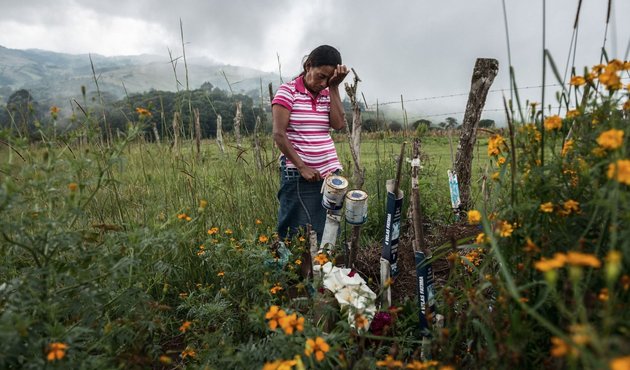
Julia Francisco Martínez stands at the graveside of her husband Juan, a Honduran Indigenous defender who was found murdered in 2015. Giles Clarke / Global Witness
Every year, Global Witness works with partners to gather evidence, verify and document every time a land and environmental defender is killed or disappeared. Our methodology follows robust criteria, yet undocumented cases pose challenges when it comes to analysing data
Global Witness documents killings and long-term disappearances of land and environmental defenders globally. In partnership with over 30 local, national and regional organisations in more than 20 countries, we produce an annual report containing these figures, and we have done so since 2012.
Our methodology involves a year-long process of cross-referencing data from different sources to ensure its credibility. Over 2,200 killings or long-term disappearances of defenders appear in our database since 2012 – with 146 cases documented in 2024.
Every year, we maintain a database to keep a record of these crimes and create a comprehensive global picture of the systematic violence defenders face.
The data provides a snapshot of the underlying drivers behind reprisals and indicates how some defenders and their communities face increased risks. Exposing these trends is the first of many steps to ensure that defenders and their communities are protected and can exercise their rights without fearing for their lives.
Killings and disappearances documented between 2012 and 2024
2,253 defenders have been killed or disappeared since 2012 Global Witness
146 of these attacks occurred in 2024 Global Witness
The accompanying press release goes into considerable detail on the methodology used.
On 8 September 2025, a report “Defending forests shouldn’t cost lives: Forest 500 assesses corporate zero tolerance policies,” links world’s top banks to social & environmental harms from mining
… Global Canopy’s annual Forest 500 assessment looks at six human rights criteria closely associated with preventing deforestation. Three indicators are interconnected with deforestation as violations of these rights frequently happen around the point of forest loss. They are: Free, Prior and Informed Consent (FPIC); zero tolerance for threats and violence against forest, land and human rights defenders; and customary rights to land, resources and territory.
Among them, zero tolerance is least likely to be addressed by companies: only 9% of the 500 companies assessed have a public commitment in place for at least one forest risk commodity. By comparison, 37% of companies have committed to FPIC, and 24% have commitments to respect the customary rights of IPLCs to land, resources and territory.
… Only 47 Forest 500 companies have commitments for zero tolerance. Companies in the palm oil (18%) and cocoa (14%) supply chains are more likely to have commitments. Commitments are scarce in the beef (10%), soy (11%) and timber (6%) sectors, although these industries are linked to abuses in Latin America. According to BHRRC, 40% of attacks against human rights defenders over the last decade took place in Latin America, with Brazil recording the highest number of killings worldwide.
… Only six of the Forest 500 companies publish evidence of due diligence and progress reporting on eradicating violence and threats f
The report focuses on financing for companies mining critical minerals used in the global energy transition, including lithium, nickel, graphite and cobalt. Nearly 70% of these transition mineral mines overlap with Indigenous lands and roughly an equal amount is in regions of high biodiversity.
“Our findings shed light on the central role that financial institutions play in enabling this new wave of destruction as companies rush to expand mining operations as rapidly as possible,” Steph Dowlen, forests and finance campaigner for the Rainforest Action Network, told Mongabay by email. “While this extraction for raw minerals falls under a ‘green’, ‘clean’ or ‘renewable’ banner, it’s still extraction and the mining sector remains high-risk, dominated by companies with egregious track records on rights, the environment and corporate accountability.”
The report assessed environmental, social and governance policy scores of 30 major financial institutions and found an average score of only 22%. Vanguard and CITIC scored the lowest, each with just 3%. The assessment found that many financial institutions lacked policies to prevent financing issues, including pollution, Indigenous rights abuses or deforestation.
Of all institutions assessed, 80% lacked policies on human rights defenders and none had safeguards for Indigenous peoples living in voluntary isolation. Many institutions (60%) lacked grievance mechanisms, which allow communities that have been negatively impacted by mining activities to seek justice. Also, 60% of institutions had no policies on tax transparency, which is key to preventing companies from shifting profits abroad and ensuring that mining revenues remain in the resource-rich countries.
“Due to the significant overlap with transition minerals and Indigenous Territories, and high-biodiversity areas, there is an immediate need for governments, financial institutions and mining companies to stop and listen,” Dowlen said. “Indigenous Peoples and local communities have been raising the alarm for a long time but continue to face disproportionate harm as well as violence and intimidation for defending their rights and their lands.”
BlackRock and JPMorgan Chase declined to comment on the report. None of the other institutions mentioned in this piece responded to Mongabay’s emails.
A new report by the research organization Swedwatch of 29 April 2025 highlights critical human rights risks associated with the global transition to renewable energy. The report reveals that human rights and environmental defenders face serious threats and reprisals in countries where renewable energy projects are being rapidly developed.
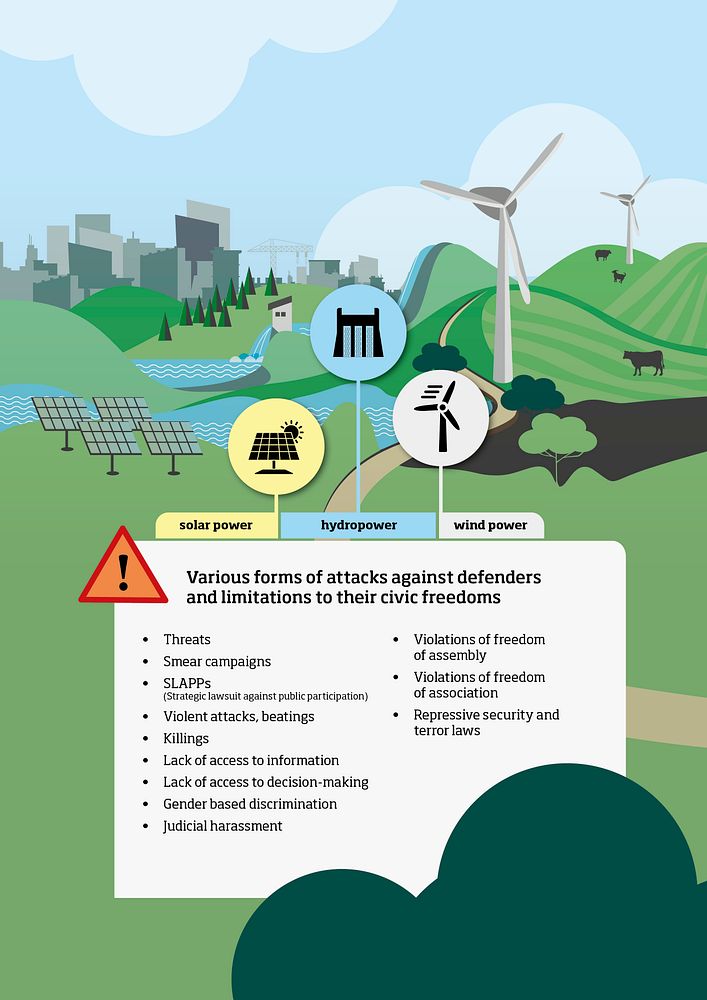
More than half of the world’s total prospective wind farm capacity, and more than two thirds of the prospective solar farm capacity, is estimated to take place in countries with obstructed, repressed or closed civic space.
While scaling up wind, solar, and hydropower is essential to limiting global warming to 1.5°C, this growth must not come at the expense of human rights.
–We cannot build a green future on the backs of those who are silenced or displaced. The renewable energy transition must not come at the cost of human rights. Defenders are not obstacles – they are essential allies in ensuring that this is just, equitable, and sustainable, says Alice Blondel, Director Swedwatch.
Renewable energy projects require large land areas, often affecting local communities, ecosystems, and livelihoods. Swedwatch’s analysis shows that the renewable energy transition will largely take place in countries with restricted civic space and poor human rights protections, where defenders who raise concerns often face harassment, legal persecution and at times even deadly violence.
The report Renewables and Reprisals – Defenders at risk in the green energy transition in Brazil, Honduras, Mozambique, and the Philippines is based on a global mapping of such high-risk areas for defenders, where civic space is restricted and where renewable energy expansion is projected to accelerate. Additionally, the report presents four case studies from Mozambique, Honduras, Brazil, and the Philippines, where defenders and affected community members describe restrictions and reprisals of defenders linked to renewable energy projects.
-The report underscores the urgent need for stronger protections for defenders, transparent consultation processes, and corporate accountability. Without immediate action, the rapid expansion of renewables risk repeating the same human rights abuses seen in industries such as mining and agribusiness, rather than fostering a truly just energy transition, says Alice Blondel.
Expansion of renewables in countries with high risks for defenders Swedwatch’s findings indicate that a large share of the expansion of renewable energy is taking place in countries where civic space is restricted, and defenders are at significant risk.
Case studies: Defenders under threat In the four case studies, defenders from Mozambique, Honduras, Brazil and the Philippines described restrictions of basic civic freedoms and risks of verbal, legal or violent physical attacks when reporting about impacts of renewable energy projects.
Mozambique: According to interviews in the report, the planning of the Mphanda Nkuwa hydropower project has been marred by inadequate social and environmental impact assessments, lack of transparency, and suppression of civic engagement. Defenders reported threats, violation of freedom of assembly, and an overall disregard for their right to participate in decision-making processes.
Honduras: Human rights defenders have faced legal intimidation through SLAPPs (Strategic Lawsuits Against Public Participation) for their criticism of the Los Prados solar power project, according to a group of women human rights lawyers. Community members involved in protests have allegedly been surveilled and subjected to repressive actions by security forces. Defenders also reported smear campaigns in the media, further restricting their ability to voice concerns.
Brazil: In Brazil, the wind power project Bons Ventos failed to properly include impacted communities, including marginalized groups, traditional fishing, and quilombola communities, in consultations, according to interviews. Defenders decided to remain anonymous in the interviews out of fear of reprisals, citing increasing threats and violence against defenders in the past years.
The Philippines: Indigenous defenders from the Tumandok communities were allegedly threatened, harassed, and killed when the national police and the armed forces raided their communities after community leaders criticized the Jalaur River Multipurpose project, according to a CSO operating in the area. Defenders reporting on the dam project outlined persecution, surveillance and red-tagging – terror-labelling by the government accusing defenders of being communist insurgents, creating an environment of fear and impunity.
Swedwatch´s recommendations As the world races to meet climate targets, a just transition must include the voices of those most affected by energy projects, and defenders are essential in ensuring that renewable energy projects respect human rights and the environment.
-Governments, businesses, and financial institutions must work together to ensure that human rights are protected, and that defenders can operate without fear of repression or violence. Engaging with defenders as valuable partners rather than as adversaries can help governments and businesses ensure renewable energy projects’ alignment with international human rights obligations, mitigate conflicts, and promote sustainable development, says Jessica Johansson.
Detailed recommendations to different actors can be found in the report, below the main ones are summarized:
Recommendations for governments:
Adopt legislation on mandatory human rights due diligence (HRDD) for companies, highlighting risks to defenders and meaningful consultation with defenders.
Adopt laws on company transparency laws and access to information.
Establish and enforce protections for defenders, ensuring they can operate without fear of retaliation, and provide effective legal remedies for those affected by violations.
Recommendations for companies and investors:
Strengthening their HRDD processes by integrating civic space risks and ensuring meaningful stakeholder engagement with defenders.
Adopt and enforce a zero-tolerance policy against reprisals targeting defenders (and affected communities).
Take appropriate action when business partners or third parties commit violations in relation to their business activities.
Cândida Schaedler on 12 February 2025 asks whether anything can be done to protect them.
In 2023, 196 land and environmental defenders were murdered around the world – the vast majority of them in Latin America. In fact, just four countries – Brazil, Colombia, Honduras and Mexico – accounted for over 70 percent of those killings. Colombia was by far the deadliest country, with 79 murders, followed by Brazil, with 25.
We spoke with some of these brave activists to learn more about the threats they face, how they stay safe and how Colombia and Brazil are working to keep them alive.
Quilombolas in the Jequitinhonha Valley in Minas Gerais, Brazil. Photo: Mídia NINJA, Flickr
“When we recognized ourselves and declared ourselves a quilombo, our peace was over”, recalls Elza,* a Brazilian Quilombola leader in her late 50s.
In December 2008, she was shot and injured in an attack that killed her brother and sister. Since then, she hasn’t left her home alone – not even for a walk in her own territory, one of the 11 urban quilombos in Porto Alegre, the capital of Rio Grande do Sul in southern Brazil.
Quilombos are Afro-Brazilian communities that were originally founded by escaped slaves in colonial times.
Today, they are officially defined as “ethno-racial groups that, by self-definition, have their own historical trajectory, maintain specific territorial relations and are presumed to have Black ancestry related to resistance against historical oppression.” Brazil has recognized quilombos in its constitution since 1988, but the process of gaining legal recognition is time-consuming and often fraught with obstacles. Elza’s community was officially designated a quilombo in 2005, but only after its residents agreed to give up half their territory. Ever since, they’ve been battling gangs and real estate speculators who want control of the same 58 hectares of land they call home.
In 2022, they once again came under attack. Armed men showed up at their door in an attempt to take over a housing project under construction in the quilombo, which had been put on hold due to a dispute with the bank financing it….
Elza and her daughter, Carolina,* live under the protection of the Brazilian government, which has a program to safeguard human rights defenders, environmentalists and communicators.
Jesus Pinilla leads a workshop for the Network of Young Guardians of the Atrato. Photo courtesy of Jesus Pinilla
Jesus Pinilla is a 26-year-old Afro-Colombian activist from a small community in the Chocó Department in western Colombia. He is a member of the Network of Young Guardians of the Atrato, a group composed of 36 young people defending the Atrato River – considered the mightiest river in Colombia.
Back in 2016, the Atrato was the first Colombian river to be given legal rights. Enforcing those rights are a group of 10 guardians, along with the Young Guardians, who are embroiled in a constant battle against mining companies exploiting the river’s waters.
Pinilla works as an environmental educator. He first became an environmental activist at the age of 14, but he fears that the risks often drive young people away from climate and environmental movements in Colombia.
“My community is located by the river, so we are constantly dealing with it on a daily basis,” he says. “We depend on it for our basic needs.”
Policing is not enough to tackle the threats facing land and environmental defenders in Latin America. Photo: Agência Brasília, Flickr
“When combined with the interests of communities, the internal armed conflict becomes even more dangerous,” says Leonardo González Perafán, director of the Institute for Development and Peace Studies (Indepaz) in the capital, Bogotá.
“That’s when actions against environmental defenders and communities come into play,” he explains, adding that environmental conflicts often occur in countries with abundant mineral resources.
In most cases, communities are forced to self-organize to ensure their own safety due to the absence of the state.
“They provide self-protection through Indigenous or campesino [farmer] guards,” he explains.
The communities have also developed communication strategies to share information with each other, as well as with the authorities and other organizations.
But as long as the armed conflict persists, it will be very difficult for the government to tackle systemic threats against environmental defenders, especially in areas where it has little authority, says Franklin Castañeda, director of human rights at Colombia’s Ministry of the Interior.
Castañeda explains that more than 15,000 people are currently protected under the National Protection Unit (UNP), which aims to ensure the safety of members of Congress, mayors, journalists, human rights defenders, community leaders and other individuals facing threats due to their work.
The majority – around 9,000 – of these people are social leaders, including environmental defenders. The UNP provides them with security measures such as bulletproof vests, private escorts, armored vehicles or other measures as deemed necessary on a case-by-case basis.
Still, Castañeda emphasizes that individual measures are a last resort. The government has also invested in prevention, such as ensuring that the military and police are not involved in illegal activities.
Despite these efforts, Castañeda concedes that there is still plenty of work to be done to address the structural drivers of conflict, such as high levels of socioeconomic inequality.
“Most of the territories where social conflicts arise are the least developed ones that the government still cannot reach.”
He says these areas will need internet access, highways and other infrastructure to improve the government’s ability to ensure safety and the rule of law.
A quilombo in southern Brazil. Photo: Cândida Schaedler
In Brazil, the main drivers of conflict are deforestation, illegal mining, real estate speculation and the expansion of agriculture.
The program’s coordinator, Igo Martini, emphasizes the importance of listening to the communities to respond quickly to their protection needs. Last year, it carried out 54 public consultations to devise a National Plan to address threats to these communities. But Martini also points out the need to address the root causes rather than merely deploying the police.
“If we don’t solve the underlying causes, the program will continue for another 20 or 40 years just responding to emergencies,” he warns. “A movement from the states is also necessary, not just from the federal government.”
“We need to strengthen agencies, monitoring systems and prevention systems, like the Brazilian Institute of the Environment and Renewable Natural Resources (Ibama), for example.”
The PPDDH operates in three areas: state protection, justice protection and collective protection.
While state and justice protection are offered by the police and courts respectively, collective protection involves strengthening communities and providing them with the tools to communicate with each other and report threats to the authorities to safeguard their territory.
Here a few highlights for this year from UN and NGOs sources:
While commemorating the 76th anniversary of the Universal Declaration of Human Rights, the United Nations Secretary-General Antonio Guterres said that “human rights are under assault”. “Whether economic, social, civic, cultural or political, when one right is undermined, all rights are undermined,” Guterres said in a post on X. “Let’s protect, defend and uphold all human rights for all people,” he added. In a video message, The UN secretary-general said “we must stand up for all rights — always.”
..As we mark Human Rights Day 2024, we are reminded that human rights are not abstract ideals. They are vital tools for addressing these pressing challenges and advancing dignity and justice for all.
… the United Nations Development Programme (UNDP) works to support human rights solutions that strengthen accountability, protect communities and foster peace, recovery, and stability. This includes partnering with National Human Rights Institutions, which often represent the frontline defenders of human rights. … Local initiatives also remain key. That includes women in Somalia who are being supported to lead peace efforts including assisting those facing violence, discrimination, and injustice. “I have resolved numerous local disputes…I feel motivated when I see I have been able to change people’s lives positively,” says Fatuma who led a local Peace Working Group.
As the accelerating climate emergency threatens the ability of current and future generations to enjoy their right to a clean, healthy, and sustainable environment, UNDP is focusing on access to justice, working with the United Nations Environment Programme (UNEP) and OHCHR to help communities claim their rights. …The private sector also has a pivotal role to play. UNDP supports the implementation of the UN Guiding Principles on Business and Human Rights including to advance sustainable practices that protect the environment. Indeed, technology offers both risks and opportunities to advance human rights. The Global Digital Compact aims to create an inclusive, open, safe, and secure digital space that respects, protects and promotes human rights. Tech-enabled UNDP tools like iVerify and eMonitor+ deployed in over 25 countries to monitor and address false narratives and hate speech show the potential. It is now crucial to adopt a rights-based approach to technologies like A.I., addressing ethical challenges, protecting data, and tackling biases to mitigate risks today and unlock immense benefits for the generations to come. [https://humanrightsdefenders.blog/2024/09/27/united-nations-adopts-ground-breaking-pact-for-the-future-to-transform-global-governance/]
——
The NGO Index on Censorship spotlights four people standing up for human rights around the world:
Despite the declaration, all around the world human rights are being challenged, degraded and attacked. That is why this year, on Human Rights Day, we pay tribute to five human rights defenders who have worked tirelessly to defend people’s rights and have been persecuted as a result.
Jemimah Steinfeld, CEO at Index on Censorship said: “In this increasingly polarised and authoritarian world these people stand out as beacons of hope and light. It’s depressing to think that over 75 years since the Declaration, we still need a day like this but that should not detract from the bravery and fortitude of these people. May their example show us all how we can all better fight injustice.”
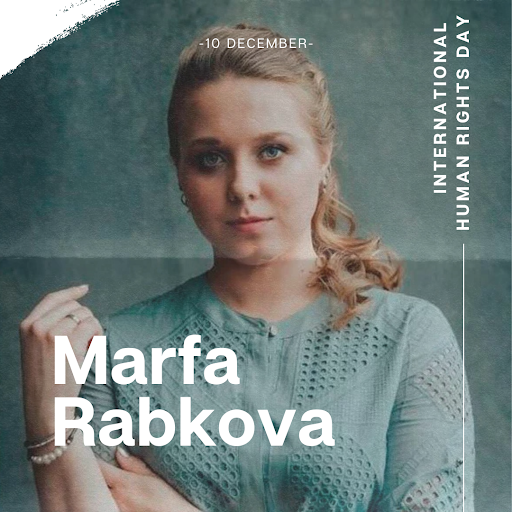
Marfa Rabkova (Belarus) Marfa Rabkova is a human rights defender who has been behind bars since 17 September 2020. She has long been targeted by the Belarusian authorities as a result of her civic activism. Marfa became head of the volunteer service at the Human Rights Centre Viasna in 2019. During the 2020 presidential election, she joined the “Human Rights Defenders for Free Elections” campaign, which registered over 1,500 election observers. When peaceful protests began to take place after the election, she helped document evidence of torture and violence against demonstrators. Marfa was indicted on a long list of charges, including inciting social hostility to the government and leading a criminal organisation. She was sentenced to 14 years and 9 months in prison in September 2022, after nearly two years of pre-trial detention. Index on Censorship calls for her immediate and unconditional release. See also: https://humanrightsdefenders.blog/2021/03/22/belarus-end-reprisals-against-human-rights-defenders/
‘Indigenous communities must have better political representations to ensure our rights are protected both constitutionally and in practice,‘ says Victoria Maladaeva, and Indigenous peoples’ rights defender from Russia. Victoria was also a participant in ISHR’s Women Rights Advocacy Week this year. She spoke to ISHR about her work and goals.
Hello Victoria, thanks for accepting to tell us your story. Can you briefly introduce yourself and your work?
Sure! I’m a Buryat anti-war decolonial activist, co-founder of the Indigenous of Russia Foundation.
What inspired you to become involved in the defence of human rights?
Since the full-scale Russian invasion of Ukraine, Indigenous peoples, particularly Buryat, have been hit the hardest. I wanted to help my people, fight the Russian propaganda and raise awareness about systemic colonial oppression and discrimination faced by Indigenous people and ethnic minorities in the Russian Federation.
What would Russia and your community look like in the future if you achieved your goals, if the future you are fighting for became a reality?
The country needs a large-scale transformation— political, economic, and cultural. Indigenous communities must have better political representations to ensure our rights are protected both constitutionally and in practice. Genuine democratic reforms involve fundamental rights for self-determination and autonomy where Indigenous peoples gain control of their land and resources. Putin’s constitution’s amendments to national Republics must be reversed, our languages must be mandatory in all schools, universities, and institutions where Indigenous communities live.
How do you think your work is helping make that future come true?
I’m advocating for the rights of Indigenous peoples with international stakeholders and institutions to raise awareness about issues faced by our communities and spreading awareness, producing documentaries, and mobilising diasporas.
Have you been the target of threats or attempts at reprisals because of your work?
Unfortunately, yes. There have been threats because of my anti-war activism and for shedding light on the disproportionate mobilisation in the Republic of Buryatia. For some reason, my colleagues and I were denied participation in the UN Permanent Forum on Indigenous Issues. I would like to believe this was a mistake and that there was no influence from the Russian delegation at the UN.
Do you have a message for the UN and the international community?
Russia needs decolonisation and de-imperialisation. Without revising the past and acknowledging colonial wars (not only in Ukraine) and discrimination, there can be no bright future for Russia—free and democratic. The international and anti-imperialist community should acknowledge that the Russian government is not for any anti-colonial movement. Stand in solidarity with independent Indigenous activists!
Grassroots environmental defenders are building a variety of strategic, community-based approaches to environmental justice. Global actors can do more to support their work write Rebecca Iwerks & Ye Yinth & Otto Saki on 14 October 2024 in Open Global Rights.
The last few years have seen encouraging steps to respond through global and regional policy. National governments have started to make specific commitments to protect environmental rights defenders, deeming it necessary to address the climate crisis. The Escazu agreement in Latin America has explicit requirements for the state protection of environmental rights defenders. [NOTE: On 16 October 2024 civil society in the Americas has issued an urgent call to accelerate the implementation of the Plan of Action on Human Rights Defenders, of the Escazú Agreement, adopted five months ago].Just this month, the UNFCCC Supervisory Body for Article 6.4 and the UN Secretary General’s Panel on Critical Energy Transition Minerals showed how global bodies can incorporate the protection of environmental rights defenders directly into climate policy. More broadly, hundreds of organizations have pooled their efforts to end retaliation against environmental defenders through the ALLIED network.
Last year, we examined the experiences of environmental defenders who were able to continue their work in repressed environments, using tenets of legal empowerment to find pathways to justice in ways that reduce their risk. Here’s what we saw:
Building community power.…
Changing paths to remedy. …
Building relationships with allies. …..
Knowing, using, and shaping the law to respond to security concerns. …
How do we super-charge support for this subtle, effective protection alternative?
While grassroots justice advocates are continuing to seek remedies in tricky places, global actors can do more to support them. The primary shift that can support this type of innovative risk response is to provide flexible, unrestricted funding directly to grassroots justice advocates, whether through philanthropy or from pooled private sector funds that facilitate independent legal and technical support. Flexible funding allows the practitioners to shift their plans as pathways become riskier; it also allows them to invest in security equipment that may not clearly fit into a project-driven budget. Openness to different types of reporting can allow grassroots justice advocates to make decisions about what information is safest for them to reveal without concerns about financial security.
Secondly, those who influence global frameworks, such as the UN Sustainable Development Goals and the United Nations Framework Convention on Climate Change (UNFCCC), can do more to incorporate the security of environmental rights defenders into these frameworks. For example, the security of environmental rights defenders is integral to the access to justice encompassed by Sustainable Development Goal 16, and progress on that issue should be included in all SDG 16 reporting. Within the UNFCCC, the language protecting defenders from Article 6.4 Supervisory Body and the Secretary General’s Panel on Critical Energy Transition Minerals should be mirrored throughout climate policy frameworks and resourced during their implementation.
While the actions against environmental defenders are shocking, there are significant steps the rights community can take now to support grassroots actors moving forward.
Volker Türk, United Nations High Commissioner for Human Rights
Global CITIZENS FESTIVAL 2024
New York
Friends, New Yorkers, global citizens.
Human rights defenders are champions for our future – shining a light on repression, on injustice and on solutions to humanity’s greatest challenges.
In return, they are often smeared, intimidated, imprisoned, and worse.
According to data gathered by my Office, last year, 320 human rights defenders, journalists and trade unionists in 40 countries were killed. Many of them while protecting nature and the environment.
Across the globe, environmental human rights defenders are leading efforts to tackle a climate crisis that is growing ever more ferocious, more terrifying, and more present.
They are standing up for the marginalized, for the natural world, and for the planet.
For the human right to a clean, healthy and sustainable environment.
They deserve our gratitude and our protection.
My office is proud to support the Leaders Network for Environmental Activists and Defenders (LEAD), a new initiative focused on meaningful and safe participation of defenders in climate and environmental discussions.
But they need your support too. So I urge you to join my office.
Take action to protect civic space and help us to build a more sustainable and more equal future.




 Hans Thoolen on Human Rights Defenders and their awards