Posts Tagged ‘Egypt’

NGOs protest sentencing of human rights defender Patrick George Zaki – with success

July 19, 2023

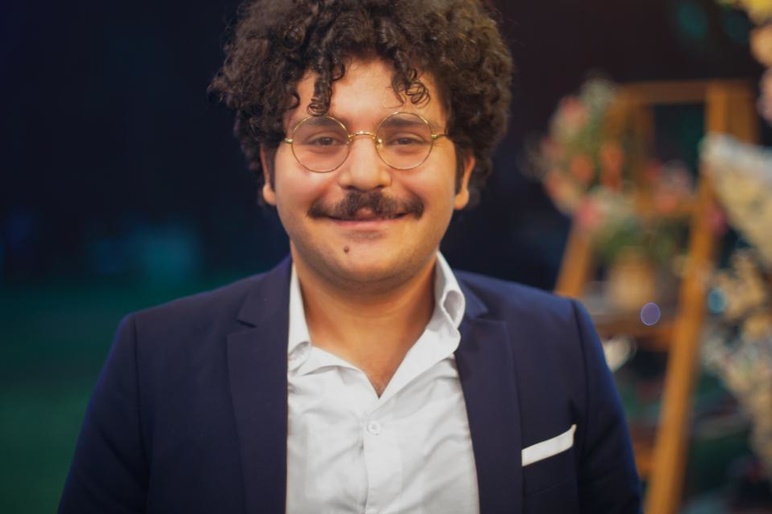
A large group of civil society organizations, condemn the three-year prison sentence handed down to human rights researcher at the Egyptian Initiative for Personal Rights (EIPR) and academic Patrick George Zaki for his writings highlighting the hardship and discrimination faced by Coptic Christians in Egypt, such as himself.

On July 18, 2023, following a trial rife with due process violations, an Egyptian emergency state security court handed down a three-year prison sentence to Patrick on trumped up charges of spreading false news. Patrick, who was a graduate student at the University of Bologna at the time, was arrested by Egyptian authorities on February 7, 2020, while at the Cairo Airport during a visit home to see his family. In custody, he was held incommunicado for a 24-hour period; he was beaten, stripped, electrocuted, verbally abused, and threatened. He was initially accused of joining a terrorist organization and spreading false news. In September 2021, lawyers learned that he had been referred to emergency state security court on false news charges for a 2019 article that he authored for independent digital media outlet Daraj on his experience as a Coptic Christian religious minority, titled, “Displacement, Killing & Harassment: A Week in the Diaries of Egypt’s Copts.” On December 7, 2021, following 22 months behind bars, he was ordered released from detention pending trial, and placed on travel ban. His trial continued until the July 2023 verdict, following which he was taken back into custody today.

Verdicts handed down by an emergency court are not subject to legal appeal, only to ratification by the President. The President also has the authority to commute the sentence or to quash the verdict. Furthermore, under Circular No. 10 of 2017 governing emergency state security courts, “If the accused is brought to trial while not in custody and sentenced to a prison penalty, he must be released immediately without executing the penalty pending the decision of the ratifying authority.” Per this provision, Patrick must legally be free while the President considers ratification; for Egyptian authorities to have taken him into custody constitutes a clear violation of this circular.

The targeting, arrest, prosecution, and sentencing of Patrick Zaki for writing about his experiences as a Coptic Christian is an egregious measure by Egyptian authorities that is indicative of a larger failure by the state to protect religious minorities. Instead, the authorities target Copts for merely expressing themselves and bringing attention to the discrimination they regularly endure. This sentence occurs in violation of Egypt’s domestic laws and international legal commitments, and sends a clear message that the Egyptian government is not serious about implementing its national human rights strategy or carrying out a meaningful national dialogue. At a time during which Egyptian authorities should be addressing the dire economic crisis, this step raises severe questions on the trajectory of the country.

The undersigned civil society organizations, call on Egyptian President Abdel Fattah El-Sisi not to ratify the verdict handed down to Patrick Zaki and instead to quash it in its entirety. We call on Egyptian authorities to immediately release Patrick Zaki from custody, to drop all charges and close all cases brought against him in their entirety, and to lift the travel ban brought against him. We urge all of Egypt’s international, multilateral, and government partners to press the Egyptian government to immediately release Patrick and cease persecuting him for his legally protected speech and vital human rights work.

For once it seems to have worked: https://www.barrons.com/news/egypt-s-sisi-pardons-researcher-a-day-after-jailing-sparked-outcry-e22a3c1a?refsec=topics_afp-news

Signatories

  • Access Now
  • Alternative Press Syndicate
  • Amnesty International
  • Arab Reform Initiative
  • Cairo Institute for Human Rights Studies (CIHRS)
  • Campaign Against Arms Trade
  • Center for International Policy
  • CNCD-11.11.11
  • Committee for Justice
  • Daraj
  • Democracy in the Arab World Now (DAWN)
  • DIGNITY Danish Institute Against Torture
  • Egyptian Commission for Rights and Freedoms
  • Egyptian Front for Human Rights (EFHR)
  • Egyptian Human Rights Forum (EHRF)
  • Egyptian Initiative for Personal Rights (EIPR)
  • EgyptWide for Human Rights
  • El Nadim Center
  • FIDH (International Federation for Human Rights), within the framework of the Observatory for the Protection of Human Rights Defenders
  • Human Rights First
  • Human Rights Watch
  • HuMENA for Human Rights and Civic Engagement
  • INSM for Digital Rights
  • International Service for Human Rights (ISHR)
  • Kawaakibi Foundation
  • Lebanese Center for Human Rights – CLDH
  • MENA Rights Group
  • PEN America
  • PEN International
  • Project on Middle East Democracy (POMED)
  • Refugees Platform in Egypt (RPE)
  • Scholars at Risk
  • Shadow World Investigations
  • Sinai Foundation for Human Rights (SFHR)
  • SMEX
  • Start Point
  • Taafi initiative
  • The Freedom Initiative
  • The Legal Agenda
  • The Syria Campaign
  • The Tahrir Institute for Middle East Policy (TIMEP)
  • World Liberty Congress
  • World Organisation Against Torture (OMCT), within the framework of the Observatory for the Protection of Human Rights Defenders

https://www.omct.org/en/resources/statements/egypt-sentencing-of-academic-and-researcher-patrick-george-zaki

https://www.hrw.org/news/2023/07/18/civil-society-organizations-condemn-sentencing-egyptian-academic-and-researcher

https://www.aljazeera.com/news/2023/7/18/egypt-jails-rights-researcher-patrick-zaki-for-3-years-ngo-says

Human Rights Defenders issues at the 53rd Session of the UN Human Rights Council

June 20, 2023

The 53rd session of the UN Human Rights Council started 19 June (to end on 14 July 2023). Thanks to the – as usual – excellent documentation prepared by the International Service for Human Rights (ISHR) I will highlight the themes mostly affecting HRDs.

To stay up-to-date you can follow @ISHRglobal and #HRC53 on Twitter, and look out for its Human Rights Council Monitor. During the session, follow the live-updated programme of work on Sched.

See also: https://humanrightsdefenders.blog/2023/05/09/hrc52-civil-society-presents-key-takeaways-from-human-rights-council/

Here are some highlights of the session’s thematic discussions

Human rights of migrants

The Council will consider a resolution on the human rights of migrants this session, where a big problem is the criminalisation of the provision of solidarity and support, including rescues at sea, by migrant rights defenders.

Reprisals

..States raising cases is an important aspect of seeking accountability and ending impunity for acts of reprisal and intimidation against defenders engaging with the UN. It can also send a powerful message of solidarity to defenders, supporting and sustaining their work in repressive environments.

This month ISHR launched a new campaign regarding five cases. ISHR urges States to raise these cases in their statements:

  • Anexa Alfred Cunningham (Nicaragua), a Miskitu Indigenous leader, woman human rights defender, lawyer and expert on Indigenous peoples rights from Nicaragua, who has been denied entry back into her country since July 2022, when she participated in a session of a group of United Nations experts on the rights of Indigenous Peoples. States should demand that Anexa be permitted to return to her country, community and family and enabled to continue her work safely and without restriction.
  • Vanessa Mendoza (Andorra), a psychologist and the president of Associació Stop Violències, which focuses on gender-based violence, sexual and reproductive rights, and advocates for safe and legal abortion in Andorra. After engaging with CEDAW in 2019, Vanessa was charged with ‘slander with publicity’, ‘slander against the co-princes’ and ‘crimes against the prestige of the institutions’. She has been indicted for the alleged “crimes against the prestige of the institutions” involving a potentially heavy fine (up to 30,000 euros) and a criminal record if convicted. States should demand that the authorities in Andorra unconditionally drop all charges against Vanessa and amend laws which violate the rights to freedom of expression and association.
  • Kadar Abdi Ibrahim (Djibouti) is a human rights defender and journalist from Djibouti. He is also the Secretary-General of the political party Movement for Democracy and Freedom (MoDEL). Days after returning from Geneva, where Kadar carried out advocacy activities ahead of Djibouti’s Universal Periodic Review (UPR), intelligence service agents raided his house and confiscated his passport. He has thus been banned from travel for five years. States should call on the authorities in Djibouti to lift the travel ban and return Kadar’s passport immediately and unconditionally.
  • Hong Kong civil society (Hong Kong): Until 2020, civil society in Hong Kong was vibrant and had engaged consistently and constructively with the UN. This engagement came to a screeching halt after the imposition by Beijing of the National Security Law for Hong Kong (NSL), which entered into force on 1 July 2020. States should urge the Hong Kong authorities to repeal the offensive National Security Law and desist from criminalizing cooperation with the UN and other work to defend human rights.
  • Maryam al-Balushi and Amina al-Abduli (United Arab Emirates), Amina Al-Abdouli used to work as a school teacher. She was advocating for the Arab Spring and the Syrian uprising. She is a mother of five. Maryam Al Balushi was a student at the College of Technology. They were arrested for their human rights work, and held in incommunicado detention, tortured and forced into self-incriminatory confessions. After the UN Special Procedures mandate holders sent a letter to the UAE authorities raising concerns about their torture and ill treatment in detention in 2019, the UAE charged Amina and Maryam with three additional crimes. The UN Working Group on Arbitrary Detention found their detention arbitrary and a clear case of reprisals for communicating with Special Procedures. In April 2021, a court sentenced them to three additional years of prison for “publishing false information that disturbs the public order”. States should demand that authorities in the UAE immediately and unconditionally release Maryam and Amina and provide them with reparations for their arbitrary detention and ill-treatment.

Other thematic reports

At this 53rd session, the Council will discuss a range of civil, political, economic, social and cultural rights through dedicated debates with the mandate holders and the High Commissioner, including:

  • The Special Rapporteur on the rights to freedom of peaceful assembly and of association
  • The Independent Expert on protection against violence and discrimination based on sexual orientation and gender identity
  • The Special Rapporteur on the right to freedom of expression
  • The Special Rapporteur on the right to health
  • The Special Rapporteur on extrajudicial, summary of arbitrary executions
  • The Special Rapporteur on promotion and protection of human rights in the context of climate change
  • The Special Rapporteur on contemporary forms of racism, racial discrimination, xenophobia and related intolerance
  • The Working Group on the issue of human rights and transnational corporations and other business enterprises
  • The High Commissioner on the importance of casualty recording for the promotion and protection of human rights
  • The Special Adviser to the Secretary-General on the Prevention of Genocide

In addition, the Council will hold dedicated debates on the rights of specific groups including:

  • The Working Group on discrimination against women and girls
  • The Special Rapporteur on violence against women and girls, its causes and consequences
  • The Special Rapporteur on the human rights of migrants
  • The Special Rapporteur on trafficking in persons, especially women and children
  • The Special Rapporteur on independence of judges and lawyers

#HRC53 | Country-specific developments

Afghanistan

The Human Rights Council will hold its Enhanced Interactive Dialogue on Afghanistan, with the Special Rapporteur on the situation in Afghanistan and the Working Group on Discrimination against Women in Law and Practice. The joint report of the two mandates follows up from an urgent debate held last year on the situation of women and girls in the country. Their visit to the country concluded that there exist manifestations of systemic discrimination violating human rights and fundamental freedoms in both public and private lives. ISHR has joined many around the world to argue that the situation amounts to gender apartheid, and welcomes the call of the two mandate holders to develop normative standards and tools to address this as “an institutionalised system of discrimination, segregation, humiliation and exclusion of women and girls”. The gravity and severity is urgent, and requires that States act on the ongoing calls by Afghan civil society to establish an accountability mechanism for crimes against humanity.

Algeria

On 15 June, fifteen activists and peaceful protesters will face trial in Algiers on the basis of unfounded charges which include ‘enrolment in a terrorist or subversive organisation active abroad or in Algeria’ and ‘propaganda likely to harm the national interest, of foreign origin or inspiration’. The activists were arrested between 23 and 27 April 2021, and arbitrarily prosecuted within one criminal case. If convicted of these charges, they face a prison sentence of up to twenty years. This case includes HRDs Kaddour Chouicha, Jamila Loukil and Said Boudour who were members of the LADDH before its dissolution by the Administrative Court of Algiers following a complaint filed by the Interior Ministry on 29 June 2022.  We urge States to monitor the prosecution closely, including by attending the trial. We also urge States to demand that Algeria, a HRC member, end its crackdown on human rights defenders and civil society organisations, amend laws used to silence peaceful dissent and stifle civil society, and immediately and unconditionally release arbitrarily detained human rights defenders.

China

The recent findings of the Committee on Economic, Social and Cultural Rights in March, the Committee on the Elimination of Discrimination against Women in May, and the seven key benchmarks on Xinjiang by 15 Special Rapporteurs add up to wide range of UN expert voices that have collectively raised profound concern at the Chinese government’s treatment of Uyghurs, Tibetans, Hong Kongers and HRDs in mainland China. Seldom has the gap between the breadth of UN documentation on crimes against humanity and other grave violations and the lack of action by the Human Rights Council in response to such overwhelming evidence been so flagrant: the Council’s credibility is at stake. ISHR calls on the Council to promptly adopt a resolution requesting updated information on the human rights situation in Xinjiang, and a dialogue among all stakeholders on the matter. Governments from all regions should avoid selectivity, put an end to China’s exceptionalism, and provide a meaningful response to atrocity crimes on the basis of impartial UN-corroborated information.

The recent convictions of prominent rights defenders Ding Jiaxi and Xu Zhiyong to 12 and 14 years in jail respectively, and the recent detention of 2022 Martin Ennals awardee Yu Wensheng and his wife Xu Yan for ‘subversion of State power’ a year after his release, point to the need for sustained attention to the fate of HRDs in China. States should address in a joint statement the abuse of national security and other root causes of violations that commonly affect Uyghurs, Tibetans, Hong Kongers and mainland Chinese HRDs. States should also ask for the prompt release of human rights defenders, including human rights lawyers Chang Weiping, Yu Wensheng and Ding Jiaxi, legal scholar Xu Zhiyong, feminist activists Huang Xueqin and Li Qiaochu, Uyghur doctor Gulshan Abbas, Hong Kong lawyer Chow Hang-tung, and Tibetan climate activist A-nya Sengdra.

Egypt

Since the joint statement delivered by States in March 2021 at the HRC, there has been no significant improvement in the human rights situation in Egypt despite the launching of the national human rights strategy and the national dialogue. The Egyptian government has failed to address, adequately or at all, the repeated serious concerns expressed by several UN Special Procedures over the broad and expansive definition of “terrorism”, which enables the conflation of civil disobedience and peaceful criticism with “terrorism”. The Human Rights Committee raised its concerns “that these laws are used, in combination with restrictive legislation on fundamental freedoms, to silence actual or perceived critics of the Government, including peaceful protesters, lawyers, journalists, political opponents and human rights defenders”. Egyptian and international civil society organisations have been calling on the HRC to establish a monitoring and reporting mechanism on the human rights situation in Egypt, applying objective criteria and in light of the Egyptian government’s absolute lack of genuine will to acknowledge, let alone address, the country’s deep-rooted human rights crisis.

Israel and OPT

Civil society continues to call on the OHCHR to implement, in full, the mandate provided by HRC resolution 31/36 of March 2016 with regards to the UN database of businesses involved in Israel’s illegal settlement industry. The resolution mandated the release of a report containing the names of the companies involved in Israel’s settlement enterprise, to be annually updated. The initial report containing a list of 112 companies was released by the OHCHR in February 2020, three years after the mandated release date and despite undue political pressure. Since then, the UN database has not been updated. UN member states should continue to call on the OHCHR to implement the mandate in full and publish an annual update, as this represents a question of credibility of the Office of the High Commissioner and the Council.

The Commission of Inquiry on the Occupied Palestinian Territory, including East Jerusalem, and Israel will present its second report to the Council on 20 June. Member states should continue to support the work of the CoI to investigate the root causes of the situation in line with its mandate with a view to putting an end to 75 years of denial of the Palestinian’s people inalienable rights to self-determination and return. As the Palestinian people commemorate 75 years of Nakba (the destruction of Palestinian homeland and society), the CoI needs to address the root causes of the situation, including by investigating the ongoing denial of the Palestinian people’s right to self-determination and the return of refugees, as well as the ongoing forcible displacement of Palestinians on both sides of the Green Line in the context of Israel’s imposition of a system of colonial apartheid.

In addition, on 10 July, the Council will hold an interactive dialogue with the Special Rapporteur on the situation of human rights in the Palestinian territories occupied since 1967.

Saudi Arabia

In light of the ongoing diplomatic rehabilitation of crown prince and de facto ruler Mohammed bin Salman, the Saudi authorities’ brazen repression continues to intensify, as ALQST has documented. Some notable recent trends include, but are not limited to: the further harsh sentencing of activists for peaceful social media use, such as women activists Salma al-Shehab (27 years), Fatima al-Shawarbi (30 years and six months) and Sukaynah al-Aithan (40 years); the ongoing detention of prisoners of conscience beyond the expiry of their sentences, some of whom continue to be held incommunicado such as human rights defenders Mohammed al-Qahtani and Essa al-Nukheifi, and; regressive developments in relation to the death penalty, including a wave of new death sentences passed and a surge in executions (47 individuals were executed from March-May 2023), raising concerns for those currently on death row, including several young men at risk for crimes they allegedly committed as minors. We call on the HRC to respond to the calls of NGOs from around the world to create a monitoring and reporting mechanism on the ever-deteriorating human rights situation in Saudi Arabia.

Nicaragua

Continued attention should be paid by States at the HRC to the steadily worsening situation in Nicaragua. On 2 June, the spokesperson for the UN High Commissioner for Human Rights raised ‘growing concerns that the authorities in Nicaragua are actively silencing any critical or dissenting voices in the country and are using the justice system to this end’. The OHCHR reports 63 individuals arbitrarily detained in May alone, with 55 charged with ‘conspiracy to undermine national integrity’ and ‘spreading false news’ within one single night, without access to a lawyer of their choosing. States should express support for the monitoring and investigation work of the OHCHR and the Group of Human Rights Experts on Nicaragua (GHREN), and call on the Nicaraguan government to release the remaining 46 political prisoners, revoke its decision to strip deported political prisoners off their nationality, and take meaningful measures to prevent, address and investigate violence by armed settlers against Indigenous Peoples and Afro-descendants.

Russia

Russia’s war of aggression against Ukraine has also been accompanied by a domestic war of repression against human rights defenders, independent journalists and political dissent. Most recently, Russia has adopted a sweeping new law criminalising assistance to or cooperation with a range of international bodies, including the International Criminal Court, ad hoc tribunals, foreign courts and arguably even the UN Human Rights Council itself. This law is manifestly incompatible with the right to communicate and cooperate with international bodies, and a flagrant and institutionalised case of reprisal. With Russian authorities having been found by a UN-mandated Commission of Inquiry to be possibly responsible for crimes against humanity and war crimes, and having a closed and highly repressive environment for civil society (ranking 17/100 in the CIVICUS Monitor), Russia is plainly unfit to be elected to the UN Human Rights Council and should be regarded as an illegitimate candidate. States should support and cooperate with the mandate of the new Special Rapporteur on the human rights situation in Russia, as well as with the Commission of Inquiry into human rights violations and abuses associated with Russia’s illegal war of aggression against Ukraine.

Sudan

Since the beginning of the war in Sudan on 15 April 2023, increasing numbers of Sudanese WHRDs are receiving threats and subject to grave danger. WHRDs are facing challenges in evacuating from Sudan and face further protection risks in neighboring countries. Sudanese women groups and WHRDs are risking their lives to provide support, solidarity, and report on the rising numbers of sexual and gender-based violence crimes. Many survivors are trapped in fighting areas unable to access support, and the occupation of hospitals by RSF is hindering women’s access to health services. The Council must urgently establish an international investigation in Sudan with sufficient resources, including to investigate the threats and reprisals against WHRDs for their work, and to document sexual and gender-based violence. During the debate with the High Commissioner and designated expert on Sudan on 19 June, we urge States to condemn sexual and gender-based violence (SGBV). States should highlight the impacts of the war on women and girls, including sexual and reproductive health as well as lack of support services for survivors of SGBV. States should reaffirm the importance of participation of women and their demands, and amplify the critical work of WHRDs on the ground despite the imminent risks to their lives and safety. States should also condemn the increasing threats against WHRDs and demand their effective protection.

Venezuela

On 5 July, the High Commissioner will present his report on the human rights situation in Venezuela, which will include an assessment of the level of implementation of UN recommendations already made to the State. The Council focus on Venezuela remains critical at a time when some States’ efforts to normalize relations with Venezuela risk erasing human rights from key agendas. Council members and observers should actively engage in the interactive dialogue with the High Commissioner to make evident that the human rights situation in the country remains at the heart of their concerns. The human rights and humanitarian situation in the country remains grave. Human rights defenders face ongoing and potentially increasing restrictions. We urge States to:

  • Express concern about the NGO bill, sitting with the Venezuelan National Assembly, and call for it to be withdrawn. The potential implications of this bill are to drastically shrink civic space, including by criminalising the work of human rights defenders;
  • Call for the release of all those detained arbitrarily – including defender Javier Tarazona who has been held since July 2021 and whose state of health is deteriorating;
  • Call for the rights of human rights defenders and journalists to be respected including during electoral periods, with a mind to Presidential elections next year; and
  • Call on Venezuela to engage fully with all UN agencies and mechanisms, including OHCHR, and develop a clear plan for the implementation of UN human rights recommendations made to it.

Tunisia

Civil society organisations have raised alarm at the escalating pattern of human rights violations and the rapidly worsening situation in Tunisia following President Kais Saied’s power grab on 25 July 2021 leading to the erosion of the rule of law, attacks on the independence of the judiciary, a crackdown on peaceful political opposition and abusive use of “counter-terrorism” law, as well as attacks on freedom of expression. The High Commissioner has addressed the deteriorating situation in the three latest global updates to the HRC. Special Procedures issued at least 8 communications in less than one year addressing attacks against the independence of the judiciary, as well as attacks against freedom of expression and assembly. Despite the fact that in 2011 Tunisia extended a standing invitation to all UN Special Procedures, and received 16 visits by UN Special Procedures since, Tunisia’s recent postponement of the visit of the Special Rapporteur on the independence of judges and lawyers, is another sign of Tunisia disengaging from international human rights mechanisms and declining levels of cooperation. The upcoming session provides a window of opportunity for the Council to exercise its prevention mandate and address the situation before the imminent risk of closure of civic space in Tunisia and regress in Tunisia’s engagement with the HRC and its mechanisms is complete.  

Syria

On 5 July, the Council will hold an interactive dialogue with the Commission of Inquiry on Syria. In a report to the Human Rights Council in 2021, the Commission of Inquiry on Syria called for the establishment of a mechanism to reveal the fate of the missing and disappeared. On 28 March 2023, during the 77th session of the UN General Assembly, the Secretary-General and UN High Commissioner for Human Rights briefed UN Member States on the situation of the missing in Syria, and the findings of the study conducted by the Secretary-General as mandated by Resolution UNGA 76/228. The study concluded that in order to address the situation of the missing in Syria and its impact on families’ lives, it is necessary to create an institution to reveal the fate and whereabouts of the disappeared and to provide support to their families. As discussions are taking place in the UNGA to adopt a resolution establishing a humanitarian institution to reveal the fate and whereabouts of the disappeared, civil society, led by the Truth and Justice Charter, urges States to support the families of the missing to know the truth about the fate and whereabouts of their loved ones by voting in favour of the resolution at the UNGA.

Other country situations

The High Commissioner will present the annual report on 19 June. The Council will hold an interactive dialogue on the High Commissioner’s annual report on 20 June 2023. The Council will hold debates on and is expected to consider resolutions addressing a range of country situations, in some instances involving the renewal of the relevant expert mandates. These include:

  • Interactive Dialogue with the Special Rapporteur on Eritrea
  • Interactive Dialogues with the High Commissioner and the Special Rapporteur on Myanmar
  • Interactive Dialogue with the Special Rapporteur on Burundi
  • Interactive Dialogue with the High Commissioner on Ukraine
  • Interactive Dialogue with the Special Rapporteur on Belarus
  • Interactive Dialogue with the Fact-Finding Mission on Iran
  • Interactive Dialogue with the Independent Expert on Central African Republic

Appointment of mandate holders

The President of the Human Rights Council has proposed candidates for the following mandates:

  1. Special Rapporteur on minority issues (Mr Nicolas Levrat, Switzerland)
  2. Special Rapporteur on the human rights of migrants (Ms Anna Triandafyllidou, Greece)
  3. Special Rapporteur on the promotion and protection of human rights and fundamental freedoms while countering terrorism (Mr Ben Saul, Australia).

Resolutions to be presented to the Council’s 53rd session

At the organisational meeting on 5 June the following resolutions (selected) were announced (States leading the resolution in brackets):

  1. Human rights situation in Syria (Germany, France, Italy, Jordan, Netherlands, Qatar, Turkey, USA, UK)
  2. New and emerging digital technologies and human rights (Austria, Brazil, Denmark, South Korea, Morocco, Singapore)
  3. Civil society space (Chile, Ireland, Japan, Sierra Leone, Tunisia)
  4. Independence and impartiality of the judiciary, jurors and assessors, and the independence of lawyers – mandate renewal (Australia, Botswana, Hungary, Maldives, Mexico, Thailand)
  5. Human rights of migrants (Mexico)
  6. Mandate of the Special Rapporteur on the situation of human rights in Belarus mandate renewal (EU)
  7. Mandate of the Special Rapporteur on the human rights situation in Eritrea mandate renewal (EU)
  8. Business and human rights – mandate renewal (Russian Federation, Ghana, Argentina and Switzerland)
  9. Extrajudicial, summary or arbitrary executions mandate renewal (Finland, Sweden)
  10. Situation of human rights of Rohiynga muslims and other minorities in Myanmar (Pakistan on behalf of OIC)

Adoption of Universal Periodic Review (UPR) reports

During this session, the Council will adopt the UPR working group reports on Argentina, Benin, Czechia, Gabon, Ghana, Guatemala, Japan, Pakistan, Peru, Republic of Korea, Sri Lanka, Switzerland and Zambia.

Panel discussions

During each Council session, panel discussions are held to provide member States and NGOs with opportunities to hear from subject-matter experts and raise questions. 5 panel discussions are scheduled for this upcoming session:

  1. Panel discussion on the measures necessary to find durable solutions to the Rohingya crisis and to end all forms of human rights violations and abuses against Rohingya Muslims and other minorities in Myanmar
  2. Annual full-day discussion on the human rights of women [accessible panel]. Theme: Gender-based violence against women and girls in public and political life
  3. Annual full-day discussion on the human rights of women [accessible panel]. Theme: Social protection: women’s participation and leadership
  4. Annual panel discussion on the adverse impacts of climate change on human rights [accessible panel]. Theme: Adverse impact of climate change on the full realisation of the right to food
  5. Panel discussion on the role of digital, media and information literacy in the promotion and enjoyment of the right to freedom of opinion and expression [accessible panel]

https://ishr.ch/latest-updates/hrc53-key-issues-on-agenda-of-june-2023-session-of-the-human-rights-council/

https://www.reuters.com/world/asia-pacific/un-rights-chief-seeks-establish-presence-china-india-2023-06-19/

HRC52: CIVIL SOCIETY PRESENTS KEY TAKEAWAYS FROM HUMAN RIGHTS COUNCIL

May 9, 2023

With quite a bit of delay I reproduce here the rsults of the 52nd session of the UN Human Rights Council. [see: https://humanrightsdefenders.blog/2023/03/02/human-rights-defenders-at-the-52nd-session-of-the-un-human-rights-council/].

  • The 52nd regular session of the Human Rights Council (HRC52) was held from Monday 27th February to Tuesday 4th April 2023.
  • On 7 March, the UN High Commissioner for Human Rights, Mr. Volker Türk presented an oral update on the human rights situation around the world. In his intervention, the High Commissioner referred to several situations around the world that raise human rights concerns and highlighted several developments. During the session, the High Commissioner also provided oral updates on Nicaragua and on Sudan on March 3,  on the Bolivarian Republic of Venezuela on March 21, on the Democratic Republic of the Congo on March 30, and on Ukraine on March 31. These oral updates given by the High Commissioner provided the basis for the general debate under Item 2 on 7th and 8th March.
  • Ten new Special Procedures mandate-holders were appointed to the following mandates: the Special Rapporteur on the situation of human rights in the Russian Federation, the Special Rapporteur on the right to development, one member to the Working Group of Experts on People of African Descent (from Asia-Pacific States), four members to the Expert Mechanism on the Right to Development (one member from African States, one from Asia-Pacific States, one from Eastern European States and one from Western European and other States), two members to the Expert Mechanism on the Rights of Indigenous Peoples (one from Asia and one from the Arctic), and one member to the Working Group on Enforced or Involuntary Disappearances (one member from Latin American and Caribbean States).
  • 43 texts (all resolutions) were considered by the Council. This represents a 23% increase in the number of adopted texts compared to one-year prior (HRC49). Of the 43 adopted texts, 28 were adopted by consensus (65%) and 15 by a recorded vote (35%).
  • After adopting 43 resolutions, the Council extended the mandates of nine thematic mandate-holders (i.e., adequate housing, foreign debt, freedom of opinion and expression, human rights defenders, migrants, minority issues, racism, sale and sexual exploitation of children, and torture), and nine country mandate-holders (i.e., Belarus, Democratic People’s Republic of Korea, the Islamic Republic of Iran, Mali, Myanmar, Nicaragua, South Sudan, Syrian Arab Republic, and Ukraine).

16 NGOs made a joint analysis:

That this Council has chosen to blatantly ignore the findings of the Fact Finding Mission (FFM) on Libya and end its mandate at a time when crimes against humanity are being perpetrated, with no sign of abating, is shocking. That it is set to replace it with a capacity-building resolution, with no ongoing monitoring and investigative component, is shameful. It sends a to message to abusive militias and armed groups that they can continue to perpetrate crimes under international law without fear of consequences. These crimes include arbitrary detention, murder, rape, enslavement, sexual enslavement, extrajudicial killing and enforced disappearance in detentions, and increasingly, repressive measures against civic groups.  David Yambio, a co-founder and speaker of the self-organized protest movement Refugees in Libya and a refugee in Libya who was forcibly conscripted by the RADA militias, and sent to war fronts, asked UN Member States in his statement before the Council, if the mandate of the FFM on Libya is discontinued who will document the violations in Libya, including against migrants, and how will the victims find justice and accountability.  Instead of appeasing unaccountable warlords and officials, the Council should let victims of violations in Libya and their loved ones know that they matter, and that committing a crime comes at a cost because no one is above the law. As a matter of priority, as per the FFM’s recommendations, the Council should establish an independent international investigative mechanism and an OHCHR established autonomous mechanism to monitor and report on gross human rights violations. See also: https://www.hrw.org/news/2023/04/07/weak-un-resolution-libya-exposes-eu-bias

We are deeply concerned by the push to undermine language on gender based discrimination and violence evidenced by the amendments tabled to replace gender with sex, or gender responsive with gender sensitive, across resolutions. This is a continuation of the trend at HRC sessions to deliberately use disinformation to attack gender equality and measures to address gender based discrimination. We remind States of their obligation to prevent and eliminate gender based discrimination and violence, it is not optional and should not be reduced in its scope. We are also deeply concerned by the attempts by some States to question the fact that a clean, healthy and sustainable environment is a universal human right, despite the recognition of this right by both the HRC and the UNGA, and in the context of the triple planetary crisis and the strong demands for environmental justice across the world. We are equally concerned about growing and coordinated efforts to undermine or outright delete standard language on the need for a ‘human rights based approach’ to development and other rights agendas, offering as a subpar substitute undefined and duplicative concepts such as a ‘people-centered approach.’ 

We welcome the adoption of the resolution on the human right to a clean, healthy and sustainable environment. The fact that all tabled amendments were massively rejected and that no State eventually called for a vote shows how much this right is important for the work of the HRC and for the international community as a whole.

We welcome the resolution on the contribution of the Human Rights Council with regard to the human rights implications of drug policy, which comes at a critical time, as States prepare for next year’s mid-term review of the 2019 political declaration. It underlines the role of the Human Rights Council, as the UN’s premier human rights body, in contributing to human rights strengthening throughout the UN system.  We welcome that the resolution promotes an approach centered on human rights and public health, including harm reduction, and that some of the amendments tabled to weaken this approach were rejected, but we regret that other amendments aimed at continuing a harmful and punitive approach to drugs were adopted. We now call on States to ensure that they comply with their human rights obligations in the design and implementation of drug policies.

Civil society participation is a cornerstone of the HRC. It brings voices from local communities and organisations who can effectively inform the HRC of human rights priorities and needs on the ground. Yet the special emergency measures and ongoing budget constraints adopted by the HRC in 2019, 2020, 2021 and 2022, coupled with measures adopted to respond to the Covid-19 crisis, and the ongoing Strategic Heritage Plan, have heavily restricted civil society participation at the HRC. We appreciate the reinstatement of side events and request that the Council continues to work with UNOG and New York to ensure that side events are kept in place amidst the implementation of the Strategic Heritage Plan. We reiterate our calls on the HRC to maintain hybrid modalities (remote participation in all debates and informal consultations) for all Observers of the HRC (States and civil society organisations with ECOSOC status), as complementary to in-person participation; to reinstate General Debates in June sessions and maintain them unrestricted; and to ensure that efficiency is not prioritised over effectiveness, expertise and inclusiveness, including by addressing the chronic underfunding of the UN’s human rights pillar. Furthermore, civil society must be able to access and communicate with the HRC freely and safely. They should not be intimidated nor suffer reprisals related to that engagement.

We welcome the renewal of the mandate of the Special Rapporteur on Human Rights Defenders. Coinciding with the 25th anniversary of the Declaration on HRDs and the 75th anniversary of the Universal Declaration of Human Rights, this reflects that the unhindered work of defenders is integral to the realisation of all human rights for all people, particularly those who have suffered discrimination or repression.

We welcome the renewal of the Special Rapporteur on the promotion and protection of the right to freedom of opinion and expression, on the thirty-year anniversary of the creation of the mandate. Over 30 years, the mandate has played an essential role in creating a robust set of international standards and shaping how we understand the right to freedom of expression in the digital age, as well as responding to violations and helping ensure accountability and justice.

We welcome the renewal of the mandate of the Special Rapporteur on the sale, sexual exploitation and sexual abuse of children. We welcome the change in the title of the mandate in line with the Luxembourg Guidelines and the inclusion of children among the stakeholders the mandate should consult with.

We welcome the resolution on the situation of human rights in Belarus in the run-up to the 2020 presidential election and in its aftermath, given the strong report of the High Commissioner following the OHCHR examination of the human rights situation in Belarus, and the need to renew the mandate of the mechanism. However, we express disappointment that the call of Belarusian and international organisations to establish an independent investigative mechanism went unheeded.

We welcome the adoption by consensus of the resolution on the situation of human rights in the Democratic People’s Republic of Korea (DPRK) which renews the mandates of the Special Rapporteur and the OHCHR Seoul office, which are key avenues for accountability for victims and survivors. The consensus adoption demonstrates the isolation of the North Korean government and the universal condemnation of its grave violations of the human rights of its people. States should support efforts to document and preserve evidence of crimes for future prosecutions, and explore other pathways to bring to account those responsible for serious international crimes committed in North Korea.

We welcome the resolution on cooperation with Georgia, however we strongly urge Georgia to remain focused on addressing the human rights challenges in the territory within its control, not just in the Georgian territories of Abkhazia and the Tskhinvali region/South Ossetia.

While we welcome the resolution on technical assistance in Haiti, we regret that the Human Rights Council took years before putting Haiti back on its agenda.  Since the discontinuation of the independent expert in March 2017, the human rights situation in Haiti has deteriorated rapidly. The security crisis has exacerbated inequalities and has pushed thousands of Haitians to be forcibly displaced. This situation has been noted by the report of the OHCHR of February 2023 and by the High Commissioner himself after his official visit earlier this year. We also welcome that the resolution envisages the creation of an Office of the High Commissioner in the future.

We welcome the adoption of the resolution on the situation of human rights in the Islamic Republic of Iran, and the change of approach from a purely procedural resolution merely renewing the mandate of the UN Special Rapporteur on human rights in Iran to a more substantial resolution addressing some of the key issues of concern, including violations committed in the context of the repression of recent protests, violations of the rights of women and girls and of minorities, illegal use of the death penalty and persistent impunity for violations of human rights. For the first time ever, the HRC has adopted a resolution, through which it collectively expresses alarm at these “widespread, repeated and persistent” violations and urges Iranian authorities to take action on them. We also welcome the increased support from States from all regions to this resolution, and we note with appreciation that opposition to the renewal of the mandate has significantly decreased at this session, reflecting growing concerns with the situation of human rights in Iran since the repression of the protests started in September 2022 following the custodial death of Jina Mahsa Amini.  

We welcome the resolution on the situation of human rights in Myanmar maintaining the situation high on the agenda of the HRC and reaffirming the Council’s collective condemnation of the grave violations and abuses of international human rights and humanitarian law in the country. However, we regret that despite clear, repeated calls by the Special Rapporteur and civil society, the Council once again failed to call for a comprehensive arms embargo on Myanmar to prevent the ongoing violations, especially indiscriminate airstrikes on civilians and civilian infrastructure.

We welcome the resolution on the promotion and protection of human rights in Nicaragua that consolidates and extends for two years the mandates of the Group of Human Rights Experts and the OHCHR, with a new emphasis on violence against Indigenous Peoples and Afrodescendants, those forcibly displaced and striped of nationality, and reprisals, including against EMRIP member Anexa Cuningham. The exceptional two-year extension is a sheer reflection of the sustained worsening and gravity of the country’s human rights crisis – where the Group of Experts found crimes against humanity -, fueled by the government’s unprecedented lack of engagement with the UN system. The Group of Experts will be able to deepen its investigation, further identify perpetrators, and preserve evidence for justice processes.

We welcome the resolution on the situation of human rights in Ukraine stemming from the Russian aggression. The report of the Independent International Commission of Inquiry (COI) was clear: war crimes are being committed in Ukraine and the patterns of serious violations suggest other crimes are likely being committed as well, including crimes against humanity. Given the need for further investigation, the HRC is right to mandate the COI for a further year.

We welcome the renewal of the mandate of the Commission of Inquiry on Syria and call on the Council to continue to support scrutiny and accountability for gross human rights violations committed in Syria. We welcome the language in the resolution in support of the establishment of an international mechanism for the missing in Syria, and we call on UN Member States to support the creation of such an institution at the General Assembly.

We welcome the adoption of a resolution that further extends the mandate of the Commission on Human Rights in South Sudan. Such a mechanism remains vital as the conditions that prompted the Council to establish the Commission, in 2016, have not significantly changed to warrant less scru­tiny. Regarding this and other country situations, the Council should stand steadfast in support of accountability for grave violations. We stress that a purely technical assistance and capacity-building focus would be unsui­table to tackle South Sudan’s serious human rights challenges and would risk further emboldening those who perpetrate the most serious crimes.

We regret that the Council failed to respond adequately to several human rights situations including Algeria, China, Egypt, India, and Saudi Arabia.

We regret that the Council failed to respond to the situation in Algeria. Since the beginning of the Hirak pro-democracy movement in Algeria, more than 5500 Algerians have been prosecuted for exercising their fundamental rights and freedoms. According to the documentation of activists in the country, more than 70% of the people detained are in pre-trial detention. In the context of heightening repression against activists and closure of civic space, more than 500 individuals are prosecuted on the basis of so-called terrorism charges pursuant to the 2021 amended article 87 bis of the penal code. Between 2022 and 2023, four Algerians were condemned to lengthy prison sentences ranging between 10 and 15 years on the basis of this article. UN Special Procedures have continued to address the situation in Algeria, regarding the increased use by the authorities of ‘national security laws to prosecute people who exercise their rights to freedoms of opinion and expression, and peaceful assembly and association’ and raise ‘alarm at the extent of crackdown on dissent in Algeria’. In her statement on 22 February 2023, Special Rapporteur on human rights defenders addressed the dissolution of two leading human rights associations, and said “acts of intimidation, silencing and repression against the human rights movement must end”. Algeria, a member of the Council, is failing to cooperate with the Council and its mechanisms, including in the context of the UPR review where Algeria did not accept several important recommendations, especially with regards to amending the counter-terrorism law to meet international law requirements, to guarantee the protection of human rights defenders, and fundamental freedoms, including freedom of assembly and expression.

We regret the ongoing failure of the Council to respond meaningfully to the OHCHR Xinjiang report through a resolution on China. The Council’s ‘China exceptionalism’, facilitated by but by no means solely attributable to the OIC’s shameful double-standards, not only weakens its credibility but also undermines the confidence of victims and human rights defenders everywhere in its ability to respond to international crimes orchestrated by the most powerful governments. With a historic Urgent Action ruling by the CERD in November, countless Treaty Bodies recommendations, an OHCHR report, and three joint statements by over 40 Special Procedures experts, the UN system cannot be clearer: the crisis is severe, and so should be the Council’s response to it.

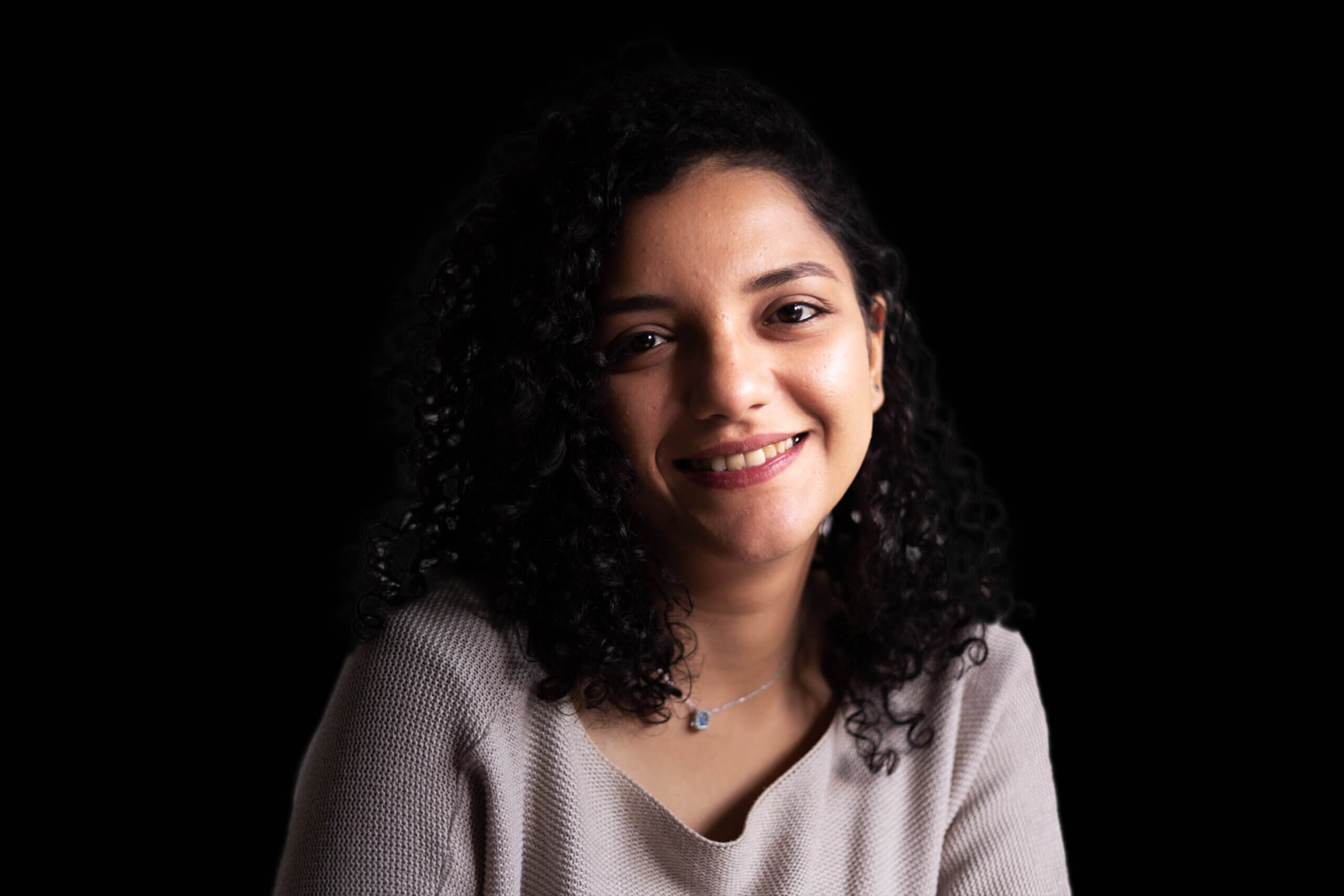
We regret that the Council failed to respond to the situation in Egypt. Egyptian and international civil society organisations have been calling on the  Council to adopt a resolution on the human rights situation in Egypt. The human rights situation in Egypt merits the Council’s attention according to the objective criteria which States from all regions have committed to apply on whether a situation merits the HRC’s attention. Yet, civil society’s request for HRC action at the 52nd session was declined. WHRD Sanaa Seif, sister of arbitrarily detained British-Egyptian human rights defender Alaa Abdel Fattah, came to the HRC to advocate for her brother’s release and the thousands others arbitrarily detained in Egypt. She told the Council “you can’t keep turning a blind eye on Egypt”, and urged the Council to address the human rights crisis in Egypt.

We regret that the Council once again failed to respond to the situation in India, despite the systematic rollback of fundamental freedoms, the rule of law and independent institutions as well as the ongoing harassment, intimidation and criminalisation of human rights defenders, journalists, and dissidents, and targeting of civil society organisations using national security and counter-terrorism infrastructure. The Council also has responsibility to take appropriate action to prevent potential atrocity crimes against minorities, especially Muslims, as a result of the increasing discrimination and incitement to violence often by Hindu nationalist leaders.

We regret that the Council failed to respond to the situation in Saudi Arabia, where the situation meets the objective criteria. According to ALQST’s 2022 annual report, the Saudi authorities continue patterns of abuse, including arbitrary arrests, severe jail sentences for peaceful, legitimate activity on social media, enforced disappearances, systemic gender discrimination, and harsh restrictions on prisoners of conscience released from prison, including travel bans, thus further deepening the climate of fear. We reiterate our call on the HRC to create a monitoring and reporting mechanism on the ever-deteriorating human rights situation in Saudi Arabia.

Signatories:

  1. ARTICLE 19
  2. Asian Forum for Human Rights and Development (FORUM-ASIA)
  3. Association for Progressive Communications (APC)
  4. Cairo Institute for Human Rights Studies (CIHRS)
  5. Child Rights Connect
  6. CIVICUS: World Alliance for Citizen Participation
  7. Commonwealth Human Rights Initiative (CHRI)
  8. DefendDefenders (East and Horn of Africa Human Rights Defenders Project)
  9. Franciscans International
  10. Gulf Centre for Human Rights
  11. Impact Iran
  12. International Bar Association’s Human Rights Institute (IBAHRI)
  13. International Federation for Human Rights (FIDH)
  14. International Service for Human Rights
  15. Southern Africa Human Rights Defenders
  16. World Uyghur Congress

https://www.universal-rights.org/uncategorized/report-on-the-52nd-session-of-the-human-rights-council/

https://mailchi.mp/ishr/ishrs-human-rights-council-monitor-april2023?e=d1945ebb90

15th edition of the Oslo Freedom Forum starts on 13 June

April 30, 2023

From June 13-15, 2023 the 15th edition of the Oslo Freedom Forum will take place at the Oslo Konserthus in Oslo, Norway. You can learn about the struggle for freedom directly from dissidents and human rights defenders on the frontlines. The theme of this year’s Oslo Freedom Forum (OFF) is: Celebrating Solidarity. This theme honors the unity, mentorship, and community that HRF and our global community — from frontline dissidents to journalists, philanthropists, and technologists — have fostered in the last 15 years. It recognizes that only together can we defeat tyranny.

One of the speakers will be Sanaa Seif, from an incredibly active family of human rights defenders. Her sister Mona has asked for attention previously. [see: https://humanrightsdefenders.blog/2020/08/07/update-to-monas-campaign-for-her-sister/] Her brother Alaa, is also in dire situation: https://humanrightsdefenders.blog/2022/07/07/mona-seifs-letter-a-cry-for-help-for-alaa/

Human rights defenders at the 52nd session of the UN Human Rights Council

March 2, 2023

The 52nd session of the UN Human Rights Council started on27 February and will last until 4 April. Thanks to the Internationl Serrvice of Human Rights I am able to hightlight issues direclty affecting human rights defenders. For the full Alert to the session online, click here.  Stay up-to-date: Follow @ISHRglobal and #HRC52 on Twitter. See also: https://humanrightsdefenders.blog/2022/10/14/report-on-the-51st-session-of-the-human-rights-council/

Thematic areas

Protection of human rights defenders The mandate of the UN Special Rapporteur on the situation of human rights defenders is to be renewed at the HRC’s March session through a resolution led by Norway.

Reprisals

ISHR remains deeply concerned about reprisals against civil society actors who engage or seek to engage with UN bodies and mechanisms. We call on all States and on the Council to do more to address the situation. General Debate Item 5 is a key opportunity for States to raise concerns about specific cases of reprisals and demand that Governments provide an update on any investigation or action taken toward accountability. An increasing number of States have raised concerns in recent Council sessions about individual cases of reprisals, including at HRC sessions 39, 41, 42, 43, 45, and 51.  

ISHR believe that States raising cases is an important aspect of seeking accountability and ending impunity for acts of reprisal and intimidation against defenders engaging with the UN. In September 2022, ISHR ran a campaign regarding five specific cases of reprisals (#EndReprisals). We continue to urge perpetrator States to resolve these cases and other States to raise these cases in their statements: Ibrahim Metwally Hegazy (Egypt), the co-founder and coordinator of the Association of the Families of the Disappeared. Jiang Tianyong (China), a lawyer and legal rights activist working at grassroots level to defend land and housing rights, promote the rights of vulnerable social groups and expose root causes of systemic rights abuses. The Human Rights Center ‘Viasna’ (Belarus), which works towards the development of civil society and the promotion of human rights in Belarus and provides legal aid to people in defending their rights and public interests. Comité de Familiares de Víctimas del Caracazo (COFAVIC); Observatorio Venezolano de Conflictividad Social (OVCS); Centro de Justicia y Paz (CEPAZ); Control Ciudadano (and its director Ms. Rocío San Miguel); and Espacio Público (and its director Mr. Carlos Correa) (Venezuela): a group of five NGOs and two individuals working for the promotion of human rights in Venezuela and who have a history of cooperating with the UN, including the Fact-Finding Mission on Venezuela. Human rights lawyers and defenders Armel Niyongere,Dieudonné Bashirahishize, Vital Nshimirimana and Lambert Nigarura (Burundi), four prominent and well-respected figures within Burundian civil society and their local communities.   In addition, we urge States to raise individual cases of reprisals in the country-specific debates taking place at this session: Nicaragua, Sudan, Israel and occupied Palestine, Myanmar, Iran, Venezuela, Belarus, Democratic Republic of the Congo. Further information on these cases can be found here or by contacting the ISHR team at s.hosseiny@ishr.ch.

Other thematic debates At this 52nd session, the Council will discuss a range of economic, social and cultural rights in depth through dedicated debates with: The Special Rapporteur on the right to food The Independent Expert on the effects of foreign debt The Special Rapporteur on the right to adequate housing The Special Rapporteur in the field of cultural rights The Council will discuss a range of civil and political rights through dedicated debates with: The Special Rapporteur on freedom of religion or belief The Special Rapporteur on torture The Special Rapporteur on the right to privacy In addition, the Council will hold dedicated debates on the rights of specific groups including: The Special Rapporteur on the sale and sexual exploitation of children The Special Representative of the Secretary-General on violence against children and the Special Representative of the Secretary-General on children and armed conflict The Special Rapporteur on the rights of persons with disabilities The Special Rapporteur on minority issues The Independent Expert on the enjoyment of human rights of persons with albinism The Council will hold dedicated debates on the interrelation of human rights and thematic issues including: The Special Rapporteur on the promotion and protection of human rights while countering terrorism The Special Rapporteur on human rights and the environment The High Commissioner’s report on access to COVID-19 vaccines  

Country-specific developments

Afghanistan: The mandate of the Special Rapporteur on Afghanistan is a crucial mechanism for ongoing monitoring and documentation of the situation in the country, as well as enabling discussion and dialogue amongst States on its findings. It remains an important channel for communication between human rights defenders and survivors inside Afghanistan with the intergovernmental decision-making spaces. However, it falls short due to the overwhelming evidence of gross violations and abuses in Afghanistan. The HRC must respond to the calls from Afghan human rights defenders, especially women human rights defenders, and civil society and establish an independent accountability mechanism with a mandate and resources to investigate the full scope of violations abuses that continue to be committed in Afghanistan by all parties and to preserve evidence of these violations for future accountability. The Council will hold an interactive dialogue with the Special Rapporteur on 6 March.

China On 24 November 2022, the CERD issued an Urgent Action decision on Xinjiang stressing the ‘scale and nature’ of the repression of Uyghurs and Muslim minorities, as evidenced by the Xinjiang Police Files leaks. The Committee urged China to release all those arbitrarily detained, stop harassing Uyghurs abroad, and fully review its national security framework. For the first time ever, the Committee referred the matter to the Special Adviser of the Secretary-General on the Responsibility to Protect, while reminding ‘all States of their responsibility to cooperate to bring to an end through lawful means any serious breach of human rights obligations.’ States should ensure sustained visibility on the broader human rights situation across China, raising root causes of violations that commonly affect Uyghurs, Tibetans, Hong Kongers and mainland Chinese human rights defenders, including the abuse of national security as documented by the OHCHR’s Xinjiang report and Special Procedures, and ask for the prompt release of human rights defenders, including feminist activists Huang Xueqin and Li Qiaochu, human rights lawyers Chang Weiping and Ding Jiaxi, legal scholar Xu Zhiyong, Uyghur doctor Gulshan Abbas, Hong Kong lawyer Chow Hang-tung, and Tibetan climate activist A-nya Sengdra.

Mali. In 2020, Mali finally adopted its implementation decree for the HRD law. While it was a long awaited achievement, especially as it establishes the defenders protection mechanism within the National Human Rights Institution, the text also provides that in order to be recognised as such, any defender must carry a card or badge issued in advance by the Minister responsible for human rights. This provision was later reinforced by the decision adopted by the Malian government in September 2020, which establishes the characteristics and procedures for granting and withdrawing the professional card of human rights defenders. During the last presentation of the report of the independent expert on the human rights situation in Mali, ISHR delivered a statement asking the independent expert what support he planned to give to the Malian government to ensure the full implementation of the defenders law and its protection mechanism. The HRC must keep the scrutiny on Mali to ensure that defenders in the country are protected in line with the UN Declaration and not restricted by the limitation imposed by a card defining the status of defenders. The Council will hold an interactive dialogue with the independent expert on 30 March.

DRC The DRC has noticeably improved the protection of human rights in the Kasaï region but progress remains slow and action is still needed towards transitional justice and the protection of defenders in this region. In December 2022, the national assembly of the DRC adopted the draft law for the protection and promotion of defenders. The last step is for the text to be adopted by the Senate, which would strengthen the protection of defenders at the national level after the adoption in February 2016 of an edict for the protection of human rights defenders and journalists in the South Kivu province and a similar text adopted in November 2019 on the Protection of Human Rights Defenders in the North Kivu Province. The United Nations Joint Human Rights Office (UNJHRO) must support the calls of civil society and ensure the protection and promotion of defenders is part of its support to the government of the DRC. The Council will consider oral updates and hold an enhanced interactive dialogue with the High Commissioner and the team of international experts on the DRC on 30 March.

Egypt Notwithstanding the launch of a national human rights strategy, the fundamental purpose of which is to deflect international scrutiny rather than advance human rights, there has been no significant improvement in the human rights situation in Egypt since the joint statement delivered by States in March 2021. Since that time no consequential follow-up has occurred at the HRC, while the situation has further deteriorated on the ground. As witnessed by the world during COP27, the brutal crackdown on civil society in Egypt continues to intensify. Sustained, coordinated action on Egypt at the Council is more necessary than ever. Egypt continues to carry out widespread and systematic violations of human rights, including freedom of expression and freedom of assembly and association. The Egyptian authorities have for years employed draconian laws, including laws on counterterrorism, cybercrimes, and civil society in order to subdue the civilian populations and stifle all forms of peaceful dissent and mobilisation. Under the current government, Egypt ranks among the worst three countries in the world in the numbers of jailed journalists and almost all independent media has been forced to shut down or threatened into silence. Hundreds of websites continue to be banned. Scores of civil society and media representatives continue to be disappeared, tortured and arbitrarily detained under the pretense of counter-terrorism and national security.

While the release of a few select arbitrarily-detained activists is a sign that international pressure works, the number of releases pales in comparison to the vast numbers of individuals newly detained by the National Security Prosecution, or whose arbitrary detention was renewed in 2022. Between the reactivation of the Presidential Pardons Committee in April 2022 and the end of 2022, the authorities released around 900 people held for political reasons, but almost triple that number of suspected critics and opponents were interrogated by prosecutors and arbitrarily detained. ISHR reiterates the calls of more than 100 NGOs from around the world urging the HRC to create a monitoring and reporting mechanism on the ever-deteriorating human rights situation in Egypt.

Israel / OPT This session will consider a number of resolutions associated with the human rights situation in Israel and the Occupied Palestinian Territories, including with respect to the right of Palestinian’s to self-determination, as well as expanding and illegal Israeli settlements. Israeli policies and practices against Palestinian people have been found to constitute acts of apartheid by UN experts as well as by both international and national NGOs, while a HRC-mandated commission of inquiry has found that Israel’s permanent occupation and de facto annexation of Palestinian territory is likely unlawful. ISHR calls on all States to engage with these resolutions on their human rights merits, applying objective criteria in a principled and consistent way which upholds the right of self-determination as well as freedom from violence and discrimination. The Council will hold an interactive dialogue with the High Commissioner on ensuring accountability and justice in the Occupied Palestinian Territory, including East Jerusalem on 3 March.

Nicaragua A year after the adoption of resolution 49/3, the UN system has continued to document a steady deterioration of the country’s multi-pronged human rights crisis: UN and IACHR documentation compiled by the Colectivo 46/2 point to the absence of any step taken to implement any of the 14 recommendations from resolution 49/3. Instead, the ruling party has seized absolute control over the country’s 153 municipalities in a 2022 electoral process characterised by ‘repression of dissenting voices and undue restriction of political rights and civil liberties,’ according to the OHCHR; canceled the legal status of more than 2500 civil society organisations; detained political prisoners in inhumane conditions; and allowed for the continuation of widespread attacks, including 32 killings since 2018, by armed settlers against indigenous peoples of the Northern Caribbean Coast. The Nicaraguan government has confirmed its diplomatic isolation by refusing to cooperate with six UN Treaty Bodies within a year prompting an unprecedented public condemnation by the UN’s two anti-torture committees. It has also retaliated against EMRIP member and Nicaraguan citizen Anexa Cunningham, by denying her entry into the country on July 9. We urge the Human Rights council to renew, for a period of two years, resolution 49/3 establishing the mandate of the Group of Human Rights Experts on Nicaragua, and the monitoring mandate of the OHCHR. We call on all governments to support such a resolution and reinforce its intersectional approach, by bringing particular attention to the situation of indigenous peoples and afro-descendants, migrants and forcibly displaced persons, those detained for political reasons and the families of victims.

Saudi Arabia According to ALQST‘s 2022 annual report, the Saudi authorities’ unleashed a new wave of repression in 2022. Familiar patterns of abuse continued, including arbitrary arrests, enforced disappearances and harsh restrictions on prisoners of conscience released from prison, including travel bans. However from mid-year onwards in particular, the Saudi courts started imposing jail sentences of unprecedented severity for peaceful, legitimate activity on social media, further deepening the climate of fear in the kingdom. Use of the death penalty increased sharply after a lull during the COVID period, with the biggest mass execution in recent times (of 81 men in a single day), and executions for non-violent drugs-related offences made a dramatic comeback. This intensification of repression went hand in hand with the progressive diplomatic rehabilitation of Saudi Arabia’s crown prince and de facto ruler, Mohammed bin Salman. We call on the HRC to respond to the calls of NGOs from around the world to create monitoring and reporting mechanism on the ever-deteriorating human rights situation in Saudi Arabia.

Sudan The Sudanese military and some political parties and civic groups signed a framework agreement to pave the way for a power transition to civilian forces in December 2022. But the agreement was not widely welcomed by local resistance movements, including resistance committees and some women’s groups. The protests continued across the country demanding a comprehensive transitional process that respects the people’s demands for accountability, peace, and justice. In the meantime, the security forces crackdown on protests is sustained, while the violations of freedoms of assembly, expression, and association continues. Following the political framework agreement, attacks on women human rights defenders (WHRDs) and women groups continued as the violence in conflict areas escalated. The HRC must ensure continued reporting on Sudan and to urge the international community to prioritise justice and accountability in any upcoming political solution. The Council will consider an oral update and hold an interactive dialogue with the High Commissioner and designated Expert on 3 March.

Ukraine In the face of overwhelming evidence of war crimes and crimes against humanity associated with Russia’s war of aggression against Ukraine, ISHR calls on the HRC to renew the mandate of the Commission of Inquiry on human rights in Ukraine associated with Russia’s war of aggression, including the mandate of the Commission to examine the root causes of the conflict such as the repression and criminalisation of human rights defenders and independent journalists in Russia. The Council will hold an interactive dialogue with the Commission of Inquiry on 20 March. The Council will also hold an interactive dialogue on the OHCHR report on Ukraine on 31 March.

Venezuela ISHR joins Venezuelan and international organisations in urging states to speak out against the NGO bill currently passing through the National Assembly in Venezuela. The ‘Law of Supervision, Regularization, Performance and Financing of Non-Governmental and Related Organizations’ seeks to criminalise and further restrict the work of NGOs in the country. During the HRC session, there will be two agenda items specifically focusing on Venezuela: the update from the High Commissioner on 21 March, and an oral update by the UN fact-finding mission on 23 March, which will be their first since their mandate was renewed by the Council, last September. The High Commissioner’s update will no doubt include impressions and recommendations drawn from his recently concluded first visit to Venezuela. These updates will take place at a time of ongoing political flux in the country, upcoming elections and – critically – further threats to civic space. During the interactive dialogues on Venezuela, States must continue to express concern at ongoing human rights and humanitarian crises in the country, at the introduction of the NGO bill and call for the release of the arbitrarily detained including human rights defender Javier Tarazona who has now been held for almost 600 days, wholly without justification.

Yemen ISHR joins civil society organisations from Yemen and around the world in urging the HRC to establish an independent international criminally focused investigative mechanism on Yemen. Before its untimely dissolution in 2021, the UN Group of Eminent Experts (GEE), established by the HRC in 2017, recommended that UN member States refer the situation in Yemen to the International Criminal Court (ICC), support the establishment of an international criminally focused investigative mechanism, and stressed the need to realise victims’ right to reparation. In late 2021, HRC members narrowly rejected a resolution that would have renewed the GEE’s mandate following lobbying by Saudi Arabia and the UAE. In September 2022, Saudi Arabia and Yemen rejected attempts by States to ensure continued discussion at the HRC of the ongoing human rights crises in Yemen. The international community should not stand by and allow the vote to disband the GEE to be the HRC’s last word on the situation, nor should they allow warring parties to continue to block formal discussions of large-scale human rights abuses, war crimes and the urgent need for accountability. A new, HRC-mandated mechanism is required to ensure that potential avenues of criminal accountability and reparative justice are effectively explored for Yemen and may be pursued now and in the future to address impunity and provide effective redress to victims.

Guatemala Guatemala’s recent UPR put a spotlight on the fast deterioration of democratic spaces in the country. Over twenty States raised attacks against indigenous, environmental, and other human rights defenders, and journalists. There has been a  steady increase in attacks, with a record high of 1000 attacks by 2021 according to local groups. The government, meanwhile, made no reference to the issue during the review. States also shared concern about the erosion of judicial independence, an issue repeatedly highlighted by UN experts and officials. Over the past years, UN experts have exposed interference or blocking in the appointment of high level court judges. High Commissioner Volker Türk recently condemned a 70% increase in cases of intimidation and criminal charges against justice officials fighting impunity and corruption. A growing number of judges and legal professionals have fled the country since the government closed the UN’s International Commission Against Impunity in Guatemala (CICIG) in 2019. In 2021, UN and OAS experts denounced a ‘choking’ law that gave the government ‘wide scope to control NGOs’. In this context, space for Guatemalan civil society to safely advocate for human rights and expose violations, and for the judicial authorities to respond to abuses and uphold the rule of law has become dangerously narrow. These patterns create serious risks of further deterioration – in a trend that is also seen in neighbouring Central American countries –  in the lead-up to the June 2023 presidential elections. High Commissioner Türk’s presentation of his Office’s report on Guatemala to the HRC in March will provide a critical window of opportunity for States to collectively urge Guatemala to engage with the OHCHR to meaningfully address and put an end to attacks against human rights defenders and justice officials, ensure judicial independence, and review laws and policies that restrict civil society space.

Other country situations

The High Commissioner will provide an oral update to the Council on 7 March. The Council will consider updates, reports and is expected to consider resolutions addressing a range of country situations, in some instances involving the renewal of the relevant expert mandates. These include: Enhanced interactive dialogue with the Special Rapporteur on Eritrea Oral briefing and interactive dialogue with the International Commission of Human Rights Experts on Ethiopia ID with the Special Rapporteur on the Democratic People’s Republic of Korea and a presentation of the report of the High Commissioner Interactive Dialogue with the High Commissioner on Belarus Interactive dialogue with the High Commissioner, and interactive dialogue with the Special Rapporteur on Myanmar Interactive Dialogue with the Special Rapporteur on Iran Interactive Dialogue with the Commission of Inquiry on Syria Enhanced interactive dialogue with the Commission on Human Rights in South Sudan with the participation of the High Commissioner,  and an interactive Dialogue on the OHCHR report on South Sudan High-level Dialogue with the Independent Expert on the Central African Republic Interactive dialogue with the Fact-Finding Mission on Libya   #HRC52 | Council programme, appointments and resolutions During the organisational meeting for the 52nd session, held on 13 February, the President of the Human Rights Council presented the programme of work. It includes 7 panel discussions. States also announced at least 39 proposed resolutions.

Adoption of Universal Periodic Review (UPR) reports

During this session, the Council will adopt the UPR working group reports on Bahrain, Ecuador, Tunisia, Morocco, Indonesia, Finland, the United Kingdom, India, Algeria, Philippines, Brazil, Poland, the Netherlands, and South Africa.

Panel Discussions:

During each Council session, panel discussions are held to provide member States and NGOs with opportunities to hear from subject-matter experts and raise questions. 7 panel discussions are scheduled for this upcoming session: Biennial high-level panel discussion on the question of the death penalty. Theme: Human rights violations relating to the use of the death penalty, in particular with respect to limiting the death penalty to the most serious crimes High-level meeting commemorating the thirty-fifth anniversary of the Declaration on the Right to DevelopmentHigh-level panel discussion on UPR Voluntary Funds: achievements, good practices and lessons learned over the past 15 years and optimized support to States in the implementation of recommendations emanating from the fourth cycle Annual full-day meeting on the rights of the child [two accessible meetings]. Theme: Rights of the child and the digital environment Annual interactive debate on the rights of persons with disabilities. Theme: Support systems to ensure community inclusion of persons with disabilities, including as a means of building forward better after the COVID-19 pandemic Debate in commemoration of the International Day for the Elimination of Racial Discrimination. Theme: The urgency of combating racism and racial discrimination 75 years after the adoption of the Universal Declaration of Human Rights​ Annual high-level panel discussion on human rights mainstreaming. Theme: A reflection on five years of the United Nations Youth Strategy (Youth 2030): mapping a blueprint for the next steps
Read here the three-year programme of work of the Council with supplementary information.

Read here ISHR’s recommendations on the key issues that are or should be on the agenda of the UN Human Rights Council in 2023.

https://mailchi.mp/ishr/alert-to-the-human-rights-councils-35th-session-33793?e=d1945ebb90

See also: https://www.universal-rights.org/blog/what-are-the-human-rights-priorities-of-world-governments-at-hrc52/

#EndReprisals campaign continues throughout HRC 51

September 20, 2022

Human rights defenders promote dignity, fairness, peace and justice in their homes, workplaces, communities and countries. They challenge governments that fail to respect and protect their people, corporations that degrade and destroy the environment, and institutions that perpetuate privilege and patriarchy. For many, the United Nations (UN) is the last arena in which they can confront abuses. 

Human rights defenders must be able to share crucial information and perspectives with the UN safely and unhindered. Yet some States try to escape international scrutiny by raising obstacles – such as intimidation and reprisals – aimed at creating fear and systematically hindering defenders’ access to and cooperation with human rights mechanisms. See my post of today: https://humanrightsdefenders.blog/2022/09/20/human-rights-defenders-at-the-51st-session-of-the-un-human-rights-council/

This needs to change! Join the campaign of the International Service for Human Rights today so human rights defenders have a seat at the UN table.

What can you do? ISHR and partners have worked to support individual defenders and organisations that have endured multiple forms of reprisals and intimidation. Take action for them now and help #EndReprisals!

Here are two quick, impactful actions you can take:

Write to State representatives at the UN and urge them to take up cases from Belarus, Burundi, China, Egypt, and Venezuela
Click to tweet a message in solidarity with the individuals or groups described in a specific case:

 Tweet for Viasna in Belarus

Tweet for human rights lawyers in Burundi

Tweet for Jiang Tianyong in China

Tweet for Ibrahim Metwally Hegazy in Egypt

Tweet for NGOs in Venezuela

Join the campaign

Human rights defenders at the 51st session of the UN Human Rights Council

September 20, 2022

The 51st session of the UN Human Rights Council has started well and good on 12 September and will last until 7 October. I am awfully delayed in extracting from the – as always excellent – guide – produced by the team of the ISHR – the issues most directly affecting human rights defenders. Apologies.

Readthe full Alert to the session online here and to stay up-to-date, follow @ISHRglobal and #HRC51 on Twitter. See also: https://humanrightsdefenders.blog/2022/09/15/new-high-commissioner-for-human-rights-volker-turk-the-man-for-an-impossible-job/

Throughout the session ISHR is calling on States to #EndReprisals against human rights defenders and civil society groups who engage with the United Nations!

Some Thematic areas

Reprisals On 29 September, Ilze Brands Kehris, the Assistant Secretary-General for Human Rights will present the Secretary-General’s annual report on Cooperation with the United Nations, its representatives and mechanisms in the field of human rights (also known as ‘the Reprisals Report’) to the Council in her capacity as UN senior official on reprisals. The presentation of the report will be followed by a dedicated interactive dialogue, as mandated by the September 2017 resolution on reprisals. ISHR remains deeply concerned about reprisals against civil society actors who engage or seek to engage with UN bodies mechanisms. The dedicated dialogue is a key opportunity for States to raise concerns about specific cases of reprisals and demand that Governments provide an update on any investigation or action taken toward accountability. An increasing number of States have raised concerns in recent sessions about individual cases of reprisals, including in Egypt, Nicaragua, Cuba, Saudi Arabia, Malaysia, Bahrain, Yemen, Burundi, China and Venezuela, Egypt, Burundi, Lao and China, Belarus, Iran, Turkmenistan, and the Philippines. During its 48th session, the Council adopted a resolution on reprisals. The text, which was adopted by consensus, invited the UN Secretary-General to submit an annual report on reprisals and intimidation to the UN General Assembly. Once again, the resolution listed key trends including that acts of intimidation and reprisals can signal patterns, increasing self-censorship, and the use of national security arguments and counter-terrorism strategies by States as justification for blocking access to the UN. The resolution also acknowledged the specific risks to individuals in vulnerable situations or belonging to marginalised groups, and called on the UN to implement gender-responsive policies to end reprisals. The Council called on States to combat impunity by conducting prompt, impartial and independent investigations and ensuring accountability for all acts of intimidation or reprisal, both online and offline, by condemning all such acts publicly, providing access to effective remedies for victims, and preventing any recurrence.

Other thematic reports At this 51st session, the Council will discuss a range of civil, political, economic, social and cultural rights and issues through dedicated debates, including

Special Rapporteur on truth, justice, reparation and guarantees of non-recurrence

Special Rapporteur on contemporary forms of slavery, including its causes and consequences 

Working Group on Arbitrary Detention Independent Expert on the promotion of a democratic and equitable international order.

Working Group on Enforced or Involuntary Disappearances

Special Rapporteur on the implications for human rights of the environmentally sound management and disposal of hazardous substances and wastes 

In addition, the Council will hold dedicated debates on the rights of specific groups including with the: Special Rapporteur on the rights of indigenous peoples and the Expert Mechanism on the Rights of Indigenous Peoples

The Council will also consider various other reports, see the full list here.  

Country-specific developments
Afghanistan The Council will hold an interactive dialogue with the Special Rapporteur on Afghanistan and enhanced interactive dialogue on the human rights situation of women and girls in Afghanistan on 12 September. While a Special Rapporteur mandate is necessary to monitor and report on the human rights situation in Afghanistan, the dire situation in the country and the atrocities affecting women and girls warrant a more robust and systematic response. ISHR together with other NGOs call on the Council to establish in parallel an ongoing accountability mechanism with the specific mandate: To investigate all alleged violations and abuses of human rights law amounting to crimes under international law in Afghanistan, in particular against women and girls, To collect, consolidate and analyse evidence of such violations and abuses, including their gender dimension, and to systematically record and preserve all information, documentation and evidence, including interviews, witness testimony and forensic material, consistent with international law standards, in view of any future legal proceedings; To document and verify relevant information and evidence, including through field engagement, and to cooperate with judicial and other entities, national and international, as appropriate; To identify, where possible, those individuals and entities responsible for all alleged violations and abuses of human rights law amounting to crimes under international law in Afghanistan, in particular against women and girls, with a view to ensuring that those responsible are held accountable.

China  Despite significant pressure, the UN human rights office (OHCHR) has published its human rights assessment on the Uyghur region (Xinjiang). The report highlights ‘serious human rights violations’, including torture and sexual and gender-based violence, stressing that existing ‘highly securitised and discriminatory’ re-education camps ‘provide fertile ground for such violations to take place on a broad scale.’ The OHCHR found that the ‘arbitrary and discriminatory detention of members of Uyghur and other predominantly Muslim group […] may constitute international crimes, in particular crimes against humanity.’ It also warns that ‘conditions remain in place for serious violations to continue and recur’, calling for ‘urgent attention’ by the international community.  The Human Rights Council, and all governments that are genuinely committed to rights protection globally, cannot turn a blind eye to the severity and scale of evidence verified by the UN.  In line with ‘objective criteria’ for Human Rights Council action, ISHR calls on:  The Council to hold a formal discussion on China’s human rights crisis, including the human rights situations in the Uyghur region (Xinjiang), the Tibetan region, Hong Kong, and on human rights defenders;  States to initiate and support efforts to establish an independent international mechanism to monitor and report on the human rights situation in China, in line with the call by 50 UN Special Procedures experts. See also: https://humanrightsdefenders.blog/2022/09/01/finally-the-long-awaited-un-report-on-china/

Burundi The Council will hold an Interactive Dialogue with the Special Rapporteur on Burundi on 22 September.  Since the Special Rapporteur’s mandate was operationalised, the human rights situation in Burundi has not changed in a substantial or sustainable way. The limited improvements since President Évariste Ndayishimiye was sworn in, in June 2020, as well as the positive signals he sent, particularly with regard to freedom of the press and promises of justice, have not materialised into long-term reforms. All the structural issues the CoI and other human rights actors identified remain in place. These include arbitrary arrests of political opponents or those perceived as such, acts of torture and other cruel, inhuman or degrading treatment or punishment, enforced disappearances, extrajudicial killings, sexual and genderbased violence, undue restrictions to freedoms of expression, peaceful assembly and association, and violations of economic, social and cultural rights that are intertwined with the economic underpinnings of the State. In the absence of structural improvements and as grave human rights violations and abuses continue to be committed with impunity, the Council should adopt a resolution that reflects realities on the ground and ensures continued monitoring, reporting, and public debates on Burundi’s human rights situation. It should grant the Special Rapporteur the time he needs to fulfill his mandate and urge Burundi to cooperate with him, including by granting him access to the country. At its 51st session, the Council should adopt a resolution that extends the mandate of the Special Rapporteur on Burundi for a further year.

Egypt The continued silence of the Council on the critical human rights situation in Egypt is of great concern. As Egypt prepares to host COP27, it continues to carry out widespread and systematic violations of human rights, including freedom of expression and freedom of assembly and association against Egyptian and foreign nationals.

Egyptian authorities have for years employed draconian laws, including laws on counterterrorism, cybercrimes, and civil society in order to subdue the civilian populations and stifle all forms of peaceful dissent and mobilization. Under the current government, Egypt has become among the worst three countries in the world in the numbers of jailed journalists and almost all independent media has been forced to shut down or threatened into silence. Hundreds of websites continue to be banned. Scores of civil society and media representatives have been and continue to be disappeared, tortured and/or arbitrarily detained under the pretense of counter-terrorism and national security.

While the release of a few select arbitrarily-detained activists is a sign that international pressure works, the number of releases pales in comparison to the vast numbers of individuals newly detained by the National Security Prosecution, or whose arbitrary detention has been renewed in 2022. Amongst those still in prison is well known Egyptian-British human rights defender Alaa Abdel Fattah – recently sentenced to an additional 5 years in prison by an exceptional court.  He is on hunger strike for over 150 days. [see also: https://humanrightsdefenders.blog/2022/07/07/mona-seifs-letter-a-cry-for-help-for-alaa/]We urge the Council and its Special Procedures to take action to protect and ensure the release of all those arbitrarily detained in Egypt.

Russia  Together with Russian and international human rights organisations, ISHR continues to call on the Human Rights Council to establish a dedicated international mechanism to monitor and report on the dire human rights situation in Russia. As recognised by UN human rights experts, this situation includes: the stigmatisation and criminalisation of independent civil society; the persecution of human rights defenders, peaceful protesters and political activists, including through arbitrary arrest, detention, ill-treatment and torture; the banning of independent media and the silencing of journalists; attacks against women and LGBTI persons and activists; the propagation of massive disinformation; and the systematic erosion of any semblance of the rule of law or accountability mechanisms.  As further recognised by independent UN experts, by undermining and attacking independent civil society, persecuting human rights defenders, activists, and opposition and dissenting voices, banning independent media, silencing journalists, and effectively outlawing any form of peaceful protest, the Russian authorities have created an environment that, at least in part, facilitates its war in Ukraine. The war has led to an enormous loss of civilian life, displacement of millions of Ukrainian civilians, and contributed to a global food security and energy crisis, among other developments. A dedicated Special Rapporteur mandate would independently collect, analyse and present information on the human rights situation in Russia and make recommendations to the Council and the authorities on how to address it. It would serve as a crucial lifeline between Russian human rights defenders and the international community at a time when other bridges have been cut. [see also: https://humanrightsdefenders.blog/2022/04/26/lev-ponomarev-human-rights-defender-leaves-russia/] Finally, a Special Rapporteur could speak up authoritatively against the deepening restrictions on human rights in Russia and on behalf of those facing intimidation, harassment and reprisal for their human rights work.

Israel and oPT ISHR joined over 150 organisations from all world regions demand that the international community condemns and takes action to protect seven Palestinian civil society organisations that have been subject to illegal threats, raids and closure by Israeli authorities.

On the morning of 18 August 2022, the Israeli occupying forces (IOF) raided and sealed the doorways into the offices of the seven Palestinian organisations: Addameer Prisoner Support and Human Rights Association, Al-Haq Law in the Service of Man (Al-Haq), Bisan Center for Research and Development, Defense for Children International-Palestine (DCI-P), Health Work Committees (HWC), the Union of Agricultural Work Committees (UAWC), and the Union of Palestinian Women’s Committees (UPWC). We urge States to unequivocally condemn Israel’s targeting of Palestinian civil society and tactics to further repress of freedom of expression, and to take all necessary action to support and protect Palestinian human rights defenders and ensure the continuation of their invaluable work.

We call upon States to demand that Israel immediately revoke its designations of Palestinian human rights and civil society organisations as ‘terrorist organisations’, reverse the military orders designating the organisations and closing their offices, and repeal its Anti-Terrorism Law (2016) as it does not meet basic human rights standards. See also: https://humanrightsdefenders.blog/2021/12/15/human-rights-defenders-targeted-by-israel-launch-new-joint-website/

Venezuela The HRC’s fact-finding mission on Venezuela will present its final report under its current mandate to the Human Rights Council on 26 September, followed by an interactive dialogue with States. All eyes are on Latin American states, in particular, to see whether or not they will present a resolution to renew the mission’s mandate.  While there have been significant human rights changes in Venezuela – including a reduction in extrajudicial executions between 2020 and 2021 – the human rights situation in the country remains grim, with clear retrogression in some cases. This is not the time for States to end the work of the Mission, a key accountability mechanism which during its work to date has produced evidence of likely crimes against humanity.  Not only is its work on past violations far from over, but it could play a key role in the prevention of further violations, particularly at times of instability such as is possible during upcoming Presidential elections.   ISHR has worked as part of a Coalition of Venezuelan, regional and international organisations calling for the continuation of the mandate of the Mission. These demands were recently made in a letter to States, signed by 125 other Venezuelan and international organisations. The continuation of the Mission should be a key part of foreign policy aims of states of the region, and ISHR hopes to see States step up on this front in the coming days and weeks.

Yemen ISHR joined NGOs in urging States to work toward the establishment of an independent international criminally focused investigative mechanism on Yemen in the coming period, including at HRC51. While a Yemen truce hangs in the balance, little to no progress has been made by parties to the conflict to  address ongoing and widespread violations and abuses of international human rights and humanitarian law or remedy the harms they have inflicted on civilians throughout the conflict. The humanitarian situation in Yemen remains desperate, and, in recent weeks, armed clashes have once again increased. Civilians continue to fall victim to shelling, drone strikes and other attacks.These factors attest to the urgent and critical need to reinvigorate international accountability efforts on Yemen through the establishment of an independent international investigation. After its mandate ended in October 2021, members of the GEE called on the international community to take specific initiatives at the international level in pursuit of accountability.  Continued impunity will only increase the likelihood that more children will starve, more rights defenders and journalists will be imprisoned or executed, more homes and schools will be bombed, and the cycle of violence and suffering will continue. In this context, an international independent criminal accountability mechanism for Yemen can play a critical role to deter violence, protect civilians and promote a genuine and lasting peace.  In December 2021, nearly 90 civil society organisations called on member states of the UN to move quickly and establish such a mechanism in order to  investigate and publicly report on the most serious violations and abuses of international law committed in Yemen.

Other country situations These include: Interactive Dialogue with the Special Rapporteur on Afghanistan and Enhanced Interactive Dialogue on the human rights situation of women and girls in Afghanistan Interactive Dialogue on the report of the High Commissioner on Nicaragua Interactive Dialogue on the report of the OHCHR on Sri Lanka Interactive Dialogue on the report of the Independent Investigative Mechanism for Myanmar, Interactive Dialogue with the SR on Myanmar, Interactive Dialogue on the OHCHR report on Myanmar, Acting High Commissioner oral update on the human rights situation in Myanmar Interactive Dialogue with the Commission of Human Rights Experts on Ethiopia Interactive Dialogue on the oral update of OHCHR on technical assistance and capacity-building for South Sudan Interactive Dialogue with the Commission of inquiry on the Syrian Arab Republic  Interactive Dialogue on the interim oral update of the Acting High Commissioner on the situation of human rights in Belarus  Interactive Dialogue with the Commission of Inquiry on Ukraine and Interactive Dialogue on the Acting High Commissioner oral update on Ukraine Enhanced Interactive Dialogue on the report of the High Commissioner and experts on the Democratic Republic of Congo Interactive Dialogue with the Special Rapporteur on Cambodia and presentation of the Secretary-General’s report  Interactive Dialogue with the Independent Expert on Somalia Interactive Dialogue with the Independent Expert on the Central African Republic  Presentation of the High Commissioner’s report on cooperation with Georgia  Enhanced Interactive Dialogue on the report of the High Commissioner on the Philippines

Council programme, appointments and resolutions

States announced at least 29 proposed resolutions. Read here the reports presented this session. Appointment of mandate holders: The President of the Human Rights Council will propose candidates for:  Special Rapporteur on the human rights of internally displaced persons; Special Rapporteur on the independence of judges and lawyers; Working Group on Arbitrary Detention, member from Eastern European States; Special Rapporteur on contemporary forms of racism, racial discrimination, xenophobia and related intolerance.

Read here the three year programme of work of the Council with supplementary information. Read here ISHR’s recommendations on the key issues that are or should be on the agenda of the UN Human Rights Council in 2022.

Concerning side events, the Secretariat informed the Bureau that it had developed a way to organise the time slots for the three meeting rooms in order to allow for side events to take place in the Palais des Nations during the 51st session of the Council. The time slots for side events will be allocated according to availability and on a first-come, first-served basis. In order to accommodate as many requests as possible, only one side event per requesting organiser will be accommodated and each side event would be limited to one hour in duration. Organisers are requested to strictly respect the allotted time and to leave the room on time in order to ensure the smooth organisation of the following side event. NGOs will find additional information on the modalities and the criteria at the OHCHR NGO participation web page. The Secretariat underscored that these measures will be implemented during the 51st session on a pilot basis.

See also: https://humanrightsdefenders.blog/2022/09/20/report-on-the-50th-session-of-the-un-hrc/

https://ishr.ch/latest-updates/hrc51-key-issues-on-agenda-of-september-2022-session/

Mona Seif’s letter: a cry for help for Alaa

July 7, 2022

On 7 July 2022, Egyptian Human Rights Defender Mona Seif [https://www.martinennalsaward.org/hrd/mona-seif/] wrote the following letter asking for your help:

Dear Friends, colleagues and human rights defenders 

As I write this, I am on day 25 of my hunger strike, and Alaa, my brother, is on day 96 of his.

Alaa is a British-Egyptian prisoner of conscience and pro-democracy activist imprisoned in Egypt for most of the past decade.I decided to go on this hunger strike right after I last saw my brother in prison, on June 12th. He has lost a lot of weight, there was a very frail air about him, his hands looked thin and so pale that I could see the blue veins, and he was livid with anger. He kept on telling me to get over the notion that he can be rescued, he will never make it out of prison. “Focus on making the political price of my death the highest possible”, he said. It was an incredibly intense visit. [see also: https://humanrightsdefenders.blog/2021/12/21/alaa-abdel-fattah-and-two-others-receive-heavy-prison-sentences-in-egypt/]

I stepped out of prison and decided I will join his hunger strike. I was frustrated with how all officials seemed to take his strike lightly. The Egyptian government was blatantly denying his hunger strike on national TV  and all official meetings, while making sure no one sees Alaa but his family, so they blocked his lawyer from visiting, the national council for human rights from seeing him, and they have been blocking his British consular visit for months. On the other hand the British officials while sharing their genuine concern with us as a family in meetings, in their public official communication seemed to tip toe around Alaa’s hunger strike and how critical his situation is. 

Things have changed over the course of the past weeks. 

On June 21st the British Foreign Secretary confirmed to parliament that she is “working very hard to secure his release.” On July 4th a letter written by MP David Lammy, my MP and shadow foreign minister to the foreign secretary Liz Truss stressing on the importance of her intervention for Alaa’s release and highlighting his hunger strike. Another letter signed by 35 MPs and Lords was sent to the Egyptian minister for foreign affairs, Sameh Shoukry, on the same day.

And finally Sameh Shoukry arrived in London this week and my brother’s case was brought up during the bilateral meetings he attended, we are still waiting for an update about these meetings and if any agreement has been reached between both governments with regards to Alaa.

Accordingly I have decided to put an end to my strike, mostly because I feel I am growing too weak and tired to carry out my most important role right now: advocating for my brother’s life and freedom. But Alaa, being a prisoner, has no way of voicing out his frustration and anger at the continued injustice he is trapped in, except through his body, and depriving himself of the comfort of food. So he continues with his hunger strike, and next Sunday will be his 100th day!

Things seem to be moving but it worries us that the pace is very slow given how critical and life-threatening Alaa’s situation is.

So I am writing asking for your help, and asking you to believe that no help is too little. Every small action at this point really helps in building more awareness, sympathy and pressure to help us save my brother and with him the possibility of any happy future for my family. I will share some suggestions but please feel free to reach out, or organize any kind of action you think might help.

– Write to the Egyptian ambassador in your respective countries, address the urgency of Alaa’s case and situation.

– Write to your parliament representatives asking them to write to their counterparts in the UK and Egypt discussing Alaa’s case. If they could also issue any solidarity public statements it’d help immensely. Only today the German MP Tobias B. Bacherle published this statement in solidarity

– With the coming UN Climate conference #COP27 taking place in Egypt this year, all participating governments can influence and help in improving the human rights situation in Egypt prior to their attendance. So accordingly you have a chance to write to your government’s representatives who might be taking part in it and urge them to raise Alaa’s case with their Egyptian counterparts, and stress on how devastating it’d be if they allowed a British/Egyptian activist to die in prison after years of unjust detention. – Statements of solidarity by Human Rights defenders and organizations, and any solidarity vigils are always welcome

Feel free to share this email with anyone you think could help. For more resources and info regarding Alaa : check https://freealaa.net/, and on twitter @FreedomForAlaa

I urge you to carry my brother’s case as yours and help me in every possible way. I am exhausted and scared we’d lose him, but I also think this is the first time in years his release seems like an actual possibility not just a dream.

Much love Mona Seif #FreeAlaa,

50th session Human Rights Council: issues directly affecting Human Rights Defenders

June 22, 2022

A bit belatedly this overview for the 50th session:

The 50th session of the UN Human Rights Council, from 13 June to 8 July 2022, will consider issues including sexual orientation and gender identity, violence and discrimination against women and girls, poverty, peaceful assembly and association, and freedom of expression, among others. It will also present an opportunity to address grave human rights situations including in Afghanistan, Belarus, China, Eritrea, Israel and OPT, Russia, Sudan, Syria and Venezuela, among many others. With “HRC50 | Key issues on agenda of June 2022 session” the ISHR provided again its indispensable guide. Here’s an overview of some of the key issues on the agenda that are the most relevant to HRDs [see also: https://humanrightsdefenders.blog/2022/02/21/guide-to-49th-session-of-human-rights-council-with-human-rights-defenders-focus/ and https://humanrightsdefenders.blog/2022/04/15/results-49th-session-human-rights-council-as-seen-by-ngos/

Thematic areas of interest

Here are some highlights of the session’s thematic discussions

Business and human rights

Despite their vital work to protect the environment and combat climate change, Indigenous peoples as well as land and environmental defenders continue to be attacked. New data shows an alarming pattern of violence and harassment as a precursor to lethal attacks against defenders. 

In 2020, Global Witness registered the killings of 137 land and environmental defenders in just five of the most dangerous countries for them: Colombia, Guatemala, Kenya, Mexico and the Philippines. However, a new dataset from the ALLIED Data Working Group, a coalition in which ISHR takes part, focused on these countries has for the first time documented what is often hidden – the non-lethal attacks, including threats, harassment, smear campaigns and stigmatisation that are a precursor to the shocking number of deaths we see each year.

The findings highlight the urgent need for States to monitor, collect data, report on the situation of these defenders, and address the root causes of attacks against them. ISHR urges all States to make a commitment to the systematic monitoring of attacks on indigenous, land and environmental defenders in their countries, and to take stronger action, together with civil society and relevant UN Special Procedures, to address the root causes of attacks in the debate with the Working Group due to take place on 21 June 2022. 

Reprisals

Reports of cases of intimidation and reprisal against those cooperating or seeking to cooperate with the UN not only continue, but grow. Intimidation and reprisals violate the rights of the individuals concerned, they constitute violations of international human rights law, and they undermine the UN human rights system.

The UN has taken action towards addressing this critical issue, including:

  • Requesting that the Secretary General prepare an annual report on cases and trends of reprisals;
  • Establishing a dedicated dialogue under item 5 to take place every September;
  • Affirmation by the Council of the particular responsibilities of its Members, President and Vice-Presidents to investigate and promote accountability for reprisals and intimidation; and
  • The appointment of the UN Assistant Secretary General on Human Rights as the Senior Official on addressing reprisals.

Despite this, ISHR remains deeply concerned about reprisals against civil society actors who try to engage with UN mechanisms, and consistent in its calls for all States and the Council to do more to address the situation.

During the 48th session, the Council adopted a resolution on reprisals. The text was adopted by consensus for the first time since 2009 and invites the UN Secretary General to submit his annual report on reprisals and intimidation to the UN General Assembly. Once again the resolution listed key trends, including that acts of intimidation and reprisals can signal patterns, increasing self-censorship, and the use of national security arguments and counter-terrorism strategies by States as justification for blocking access to the UN. The resolution also acknowledged the specific risks to individuals in vulnerable situations or belonging to marginalised groups, and called on the UN to implement gender-responsive policies to end reprisals. The Council called on States to combat impunity by conducting prompt, impartial and independent investigations and ensuring accountability for all acts of intimidation or reprisal, both online and offline, by condemning all such acts publicly, providing access to effective remedies for victims, and preventing any recurrence.

Item 5 of the Human Rights Council’s agenda provides a key opportunity for States to raise concerns about specific cases of reprisals, and for governments involved in existing cases to provide an update to the Council on any investigation or action taken toward accountability. The President should also update the Council on actions taken by the President and Bureau to follow up on cases and promote accountability under this item.

Due to the lack of a general debate under item 5 at HRC 50, ISHR encourages States to raise concerns about specific cases of reprisals during the interactive dialogues on the relevant countries on the agenda at this session or in the context of thematic interactive dialogues where relevant.

During the organisational meeting held on 30 May, the President of the Council stressed the importance of ensuring the safety of those participating in the Council’s work, and the obligation of States to prevent intimidation or reprisals.

In line with previous calls, ISHR expects the President of the Human Rights Council to publicly identify and denounce specific instances of reprisals by issuing formal statements, conducting press-briefings, corresponding directly with the State concerned, publicly releasing such correspondence with States involved, and insisting on undertakings from the State concerned to investigate, hold perpetrators accountable and report back to the Council on action taken.

Sexual orientation and gender identity

The mandate of the Independent Expert on violence and discrimination on the basis of sexual orientation and gender identity is up for renewal for the second time at this session. We will be following this closely and call on all States to support the mandate and contribute to the Council’s efforts to combat violence and discrimination on the basis of sexual orientation and gender identity.

Other thematic reports

At this 50th session, the Council will discuss a range of civil, political, economic, social and cultural rights through dedicated debates with the mandate holders and the High Commissioner, including interactive dialogues with:

  • The Special rapporteur on the rights to freedom of peaceful assembly and of association
  • The Independent Expert on protection against violence and discrimination based on sexual orientation and gender identity
  • The Special Rapporteur on the right of everyone to the enjoyment of the highest attainable standard of physical and mental health
  • The Special Rapporteur on the promotion and protection of the right to freedom of opinion and expression
  • The Special Rapporteur on the right to education
  • The Independent Expert on human rights and international solidarity
  • The Special Rapporteur on extrajudicial, summary of arbitrary executions
  • The Special Rapporteur on extreme poverty and human rights
  • The Special Rapporteur on promotion and protection of human rights in the context of climate change
  • The Working Group on the issue of human rights and transnational corporations and other business enterprises
  • The Special Rapporteur on contemporary forms of racism, racial discrimination, xenophobia and related intolerance
  • The High Commissioner on State responses to pandemics 

In addition, the Council will hold dedicated debates on the rights of specific groups including;

  • The Special Rapporteur on the rights of internally displaced persons
  • The Working Group on discrimination against women and girls
  • The Special Rapporteur on violence against women and girls, its causes and consequences
  • The Special Rapporteur on the human rights of migrants
  • The Special Rapporteur on trafficking in persons, especially women and children
  • The Special Rapporteur on the elimination of discrimination against persons affected by leprosy and their family members
  • The Special Rapporteur on independence of judges and lawyers

Country-specific developments

Afghanistan

Together with WHRDs from the country and civil society organisations from all regions, ISHR calls on States to lead and support an Urgent Debate at HRC50 on women’s rights in Afghanistan.

Since August 2021, when the Taliban took control of the country, there has been an enormous deterioration in the recognition and protection of the rights of women and girls in Afghanistan, including with respect to the rights to non-discrimination, education, work, public participation, health, and sexual and reproductive health. The Taliban has also imposed sweeping restrictions on the rights to freedom of expression, association, assembly and movement for women and girls. Afghanistan is now the only country in the world to expressly prohibit girls’ education.

The world’s worst women’s rights crisis demands a response and it would be unacceptable for the June session of the HRC, traditionally the session focused on gender-related issues, to pass without some meaningful action on the issue. I

The Council will hold an interactive dialogue with the High Commissioner on the update on Afghanistan on 15 June 2022. 

China 

The High Commissioner’s visit to China failed to adequately address widespread and systematic violations in the country, express solidarity with victims and defenders, or pave the way for meaningful monitoring of China’s human rights crisis across the Uyghur and Tibetan regions, Hong Kong and mainland China. The High Commissioner’s end of mission statement failed to address strong, specific concerns or make substantive, concrete recommendations to the governmen. The broad concerns issued in a light language do not match the scope and gravity of human rights violations across the country that have been thoroughly documented by UN experts and civil society and that could amount to crimes against humanity and genocide.

States should call on the High Commissioner to immediately publish her OHCHR report on the Uyghur region, with clear, compelling recommendations to the government, and present her findings in a briefing to the Human Rights Council. The High Commissioner should also ensure that the established annual meeting and working group for dialogue with the authorities are of public nature, include specific substantive recommendations to the government, and involve substantial consultation with a diverse set of independent civil society groups. China should also follow suit on promises for subsequent visits by the OHCHR by granting prompt unfettered access to Hong Kong and the Tibetan region. See also: https://humanrightsdefenders.blog/2022/06/09/disappointment-with-un-high-commissioners-visit-to-xinjiang-boils-over/

Burundi

The Commission of Inquiry on Burundi (CoI) concluded its work at the 48th HRC session in October 2021 while a new resolution establishing a mandate of UN Special Rapporteur on Burundi was adopted, resolution 48/16. The resolution tasks the mandate with monitoring the human rights situation in the country, making recommendations for its imp­ro­ve­ment, and re­por­ting to the Human Rights Council. During the 50th HRC session, the newly nominated Special Rapporteur on Burundi will present their first oral update on 29 June 2022.

Egypt

Notwithstanding the launch of a national human rights strategy, the fundamental purpose of which is to deflect international scrutiny rather than advance human rights, there has been no significant improvement in the human rights situation in Egypt since the joint statement delivered by States in March 2021 at HRC46. Emblematic recent examples include: Ayman Hadhoud’s death in the custody of Egyptian security forces following his enforced disappearance over two months ago and the execution of seven people in Egypt on 8 and 10 March 2022 following trials in which the defendants were forcibly disappeared, tortured, and denied their right to a lawyer.

In response to the Egyptian President’s announcement of “reactivating the work of the Presidential Pardon Committee” on 26 April 2022, Egyptian human rights organisations submitted a proposal for a fair and transparent process to release political prisoners in Egypt. Yet, recent harsh sentences in unfair trials against peaceful critics demonstrate further the lack of political will of the Egyptian authorities to address the crisis of arbitrary detention in Egypt. ISHR joined more than 100 NGOs from around the world in urging the HRC to create a monitoring and reporting mechanism on the ever-deteriorating human rights situation in Egypt. 

Israel and oPT

This session, the COI on the oPt and Israel established in 2021 will present its first report to the HRC. Civil society from around the world had welcomed the historic resolution establishing the standing Commission of Inquiry to address Israel’s latest and ongoing violations against the Palestinian people on both sides of the Green Line, while also addressing the root causes of Israel’s settler colonialism and apartheid. The interactive dialogue with the CoI comes in the context of mounting recognition of Israel’s establishment and maintenance of an apartheid regime by Israel over the Palestinian people as a whole. During HRC49, the SR on the oPT called on the international community to accept and adopt his findings as well as the “findings by Palestinian, Israeli and international human rights organisations that apartheid is being practised by Israel in the occupied Palestinian territory and beyond.” In its 2019 concluding observations, the Committee on the Elimination of Racial Discrimination found that Israel’s policies violated Article 3 of ICERD pertaining to segregation and apartheid on both sides of the Green Line. In 2022, the Human Rights Committee concluding observations on Israel emphasized the “pre-existing systematic and structural discrimination against non-Jews”.

While some States continue to seek to undermine the mandate of the CoI and effective accountability mechanisms to put an end to Israel’s apartheid regime, CSOs support the CoI’s methodological approach to fulfill its vital mandate. We call on States to engage with the substance of the mandate of the CoI during the interactive dialogue, express support for this important accountability mechanism and ensure it has sufficient resources to discharge its mandate.

Russia 

Together with a coalition of international and regional NGOs, as well as numerous Russian civil society organisations, ISHR urges the Council to establish an independent international monitoring and reporting mechanism on Russia. In the context of the systematic repression of civil society organisations, severe restrictions on press freedoms and independent media, severe restrictions and criminalisation of many forms of free expression, association, assembly and peaceful protest, and the propagation of huge volumes of misinformation, a Special Rapporteur is necessary to ensure that the international community receives vital information about the human rights situation on the ground. 

Sudan

The Council will hold a debate with the High Commissioner and Expert on Sudan on 15 June 2022.

The Sudanese Women Rights Action documented from March to April 2022 the violations against women protesters, including arrests, injuries, and sexual violence. Their report also highlighted the economic and humanitarian situation in conflict areas and in the country in general. The report shows that “the coup leaders are using increasing violence against women protesters, including arrests, fabricated charges, direct lethal violence in protests, and sexual violence. The civic space is shrinking across Sudan, where human rights groups and WHRDs are not able to work freely and safely. Surveillance on internet, communication, movement, and offices of many groups led them to work from underground. The economic conditions and the fragile political situation is increasing women insecurity, as the peace process failed to end violence conflict areas. Women in Sudan are living in constant fear of violence with growing threats of the collapse of the state.”

In light of this context, ISHR urges all States to support the adoption of a resolution that ensures continued attention to Sudan’s human rights situation through enhanced interactive dia­logues at the Council’s 52nd and 53rd regular sessions. While the Expert’s mandate is ongoing, a resolution is required for the Council to hold public de­bates and continue to formally discuss the situation. A resolution at the Council’s 50th session would ope­ra­tio­nalise resolution S-32/1, which in its operative paragraph 19 called upon “the High Commis­sioner and the designated Expert to monitor human rights violations and abu­ses and to continue to bring information thereon to the attention of the Human Rights Council, and to advise on the further steps that may be needed if the situation continues to deteriorate.”

Venezuela

On 29 June, the Council will hold an interactive dialogue with the High Commissioner on her report on the situation of human rights in Venezuela. The Council requested her to provide in this report a detailed assessment of the implementation of the recommendations made in her previous reports. Implementation of recommendations and improvements in the human rights situation on the ground remains a critical question as HRC mandates for OHCHR and the international investigative body for Venezuela expire in September. Venezuelan civil society groups continue to show evidence of a lack of any substantive human rights reform in the country, of a lack of meaningful cooperation by the State and – in fact – of regression in key areas such as judicial independence and civic space. ISHR urges States at the upcoming session to express support for the work of OHCHR in the country, and encourage the Office to speak clearly to realities on the ground. In addition, States should signal their support for the continuance of the work of the HRC’s fact-finding mission to the country through an extension of the Mission’s mandate at HRC51. 

The adoption of the report of the third cycle UPR on Venezuela will also take place on the 29 June or 1 July.  

Other country situations

The Council will hold an interactive dialogue on the High Commissioner’s annual report on 14 June 2022. The Council will hold debates on and is expected to consider resolutions addressing a range of country situations, in some instances involving the renewal of the relevant expert mandates. These include:

  • Interactive Dialogue with the Special Rapporteur on Eritrea
  • Interactive Dialogues with the High Commissioner and Special Rapporteur on Myanmar
  • Interactive Dialogue with the High Commissioner on Nicaragua
  • Interactive Dialogues with the High Commissioner on Ukraine
  • Interactive Dialogue with the Commission of Inquiry on Syria
  • Interactive Dialogue with the International commission of Human Rights Experts on Ethiopia 
  • Interactive Dialogue with the Special Rapporteur on Belarus
  • Interactive Dialogue with the Independent Fact-Finding Mission on Libya
  • Interactive Dialogue with the Independent Expert on Central African Republic 

Council programme, appointments and resolutions

The President of the Human Rights Council will propose candidates for the following mandates: 

  1. Special Rapporteur on freedom of religion or belief
  2. Special Rapporteur on the right to education
  3. Special Rapporteur on the situation of human rights in the Democratic People’s Republic of Korea
  4. Working Group on the issue of human rights and transnational corporations and other business enterprises, member from African States
  5. Expert Mechanism on the Right to Development, member from Latin American and Caribbean States
  6. Special Rapporteur on torture and other cruel, inhuman or degrading treatment or punishment
  7. Working Group on Enforced or Involuntary Disappearances, member from Eastern European States
  8. Working Group on the issue of human rights and transnational corporations and other business enterprises, member from Western European and other States

Resolutions to be presented to the Council’s 50th session

At the organizational meeting on 30 May the following resolutions were announced (States leading the resolution in brackets):

  1. Elimination of discrimination against women (Mexico), mandate renewal 
  2. Freedom of expression (Brazil, Canada, Fiji, Sweden, Namibia, Netherlands) 
  3. Elimination of female genital mutilation (Africa Group)
  4. Rights to freedom of peaceful assembly and of association (Czech Republic, Indonesia, Lithuania, Maldives, Mexico), mandate renewal 
  5. Human rights situation in Sudan (United Kingdom, Germany, Norway, United States)
  6. Human rights situation in Syria (Germany, France, Italy, Jordan, Kuwait, Netherlands, Qatar, Turkey, United States, United Kingdom)
  7. Mandate of the Independent Expert on protection against violence and discrimination based on sexual orientation and gender identity  (Argentina, Brazil, Chile, Colombia, Costa Rica, Mexico, Uruguay), mandate renewal 
  8. Casualty recording and the promotion and protection of human rights (Liechtenstein, Croatia, Costa Rica, Sierra Leone) 
  9. Human rights and climate change (Bangladesh, Philippines, Viet Nam)
  10. Access to medicines and vaccines in the context of the right of everyone to the enjoyment of the highest attainable standard of physical and mental health (Brazil, China, Egypt, India, Indonesia, Senegal, South Africa, Thailand)
  11. Enhancement of international cooperation in the field of human rights (NAM)
  12. Independence and impartiality of the judiciary, jurors and assessors, and the independence of lawyers (Hungary, Australia, Botswana, Maldives, Mexico, Thailand)
  13. Human rights and the regulation of civilian acquisition, possession and use of firearms (Ecuador, Peru)
  14. Human rights in Belarus, mandate renewal (European Union)
  15. Human rights in Eritrea, mandate renewal (European Union) 
  16. The promotion and protection of human rights in the context of peaceful protest (Switzerland, Costa Rica)
  17. Situation of human rights of Rohingya Muslims and other minorities in Myanmar (OIC) 
  18. Accelerating efforts to eliminate all forms of violence against women (Canada), mandate renewal 
  19. Mandate of the Special Rapporteur on the human rights of internally displaced persons (Austria, Honduras, Uganda), mandate renewal
  20. Human rights and international solidarity (Cuba)
  21. Social Forum (Cuba)

Read the calendar here

Adoption of Universal Periodic Review (UPR) reports

During this session, the Council will adopt the UPR working group reports on Myanmar, Togo, Syrian Arab Republic, Iceland, Venezuela, Zimbabwe, Lithuania, Uganda, Timor-Leste, Republic of Moldova, South Sudan, Haiti and Sudan.

Panel discussions

During each Council session, panel discussions are held to provide member States and NGOs with opportunities to hear from subject-matter experts and raise questions. Seven panel discussions are scheduled for this upcoming session:

  1. Panel discussion on the root causes of human rights violations and abuses against Rohingya Muslims and other minorities in Myanmar 
  2. Panel discussion on menstrual hygiene management, human rights and gender equality
  3. Panel discussion on good governance in the promotion and protection of human rights during and after the COVID-19 pandemic
  4. Annual full-day discussion on the human rights of women
  5. Panel discussion on the adverse impact of climate change on the full and effective enjoyment of human rights by people in vulnerable situations
  6. High-level panel discussion on countering the negative impact of disinformation on the enjoyment and realization of human rights
  7. Annual thematic panel discussion on technical cooperation and capacity-building

Stay up-to-date: Follow @ISHRglobal and #HRC50 on Twitter, and look out for its Human Rights Council Monitor. During the session, follow the live-updated programme of work on Sched. 

https://ishr.ch/latest-updates/hrc50-key-issues-on-agenda-of-june-2022-session/

Three Aurora Prize finalists for 2022 announced

April 26, 2022

On 24 April – Armenian Genocide Remembrance Day – the Aurora Humanitarian Initiative announced the names of 2022 Aurora Humanitarians, chosen for their exceptional impact, courage, and commitment to putting themselves at risk to help others. One of the Humanitarians will later be named the 2022 Aurora Prize Laureate.

Such exceptional modern-day heroes remind us that even in the darkest times, a brighter future is in the hands of those who believe in it and are willing to do extraordinary things to protect it. Many of us may feel overwhelmed by the seemingly endless tide of human sorrow and suffering we face today, but the Aurora Humanitarians remain beacons of compassion, guiding and inspiring humanity. It is an honor for me to be part of the Initiative that recognizes and supports them,” said Lord Ara Darzi, Chair of the Aurora Prize Selection Committee and Director of the Institute of Global Health Innovation at Imperial College London.

The 2022 Aurora Humanitarians are:

  • Jamila Afghani (Afghanistan), a peace activist and founder of the Noor Educational and Capacity Development Organization (NECDO) who has dedicated over 25 years of her life to giving the women of Afghanistan access to education. After the Taliban took over her country, Jamila Afghani was forced to flee her homeland – but she hasn’t given up on its people.
  • Hadi Jumaan (Yemen), a peace activist, mediator, and body collector from Yemen who regularly risks his life to facilitate the exchange of prisoners of war and recover human remains from the frontlines. As the country continues to experience a prolonged political and humanitarian crisis caused by the civil war, Mr. Jumaan brings to the families the only solace left to them – the knowledge that their loved and lost ones may finally rest in peace.
  • Mahienour El-Massry (Egypt), a lawyer and political activist from Egypt who promotes political freedoms and human rights in the country by organizing peaceful protests and defending political prisoners in courts. In Egypt, voicing disagreement with the official policy can be dangerous, and Mahienour El-Massry has been detained and put in jail several times for her activism. Nevertheless, she remains optimistic about the future of her country and committed to being an agent of positive change. [see also: https://humanrightsdefenders.blog/2020/11/29/2020-award-of-european-bars-associations-ccbe-goes-to-seven-egyptian-lawyers-who-are-in-prison/]

“As one of the Aurora Prize Laureates, I have witnessed the impact of support and recognition on the international level. The Aurora Humanitarian Initiative gives activists and human rights defenders, often operating on their own, a way to promote and elevate their work so they can achieve even more. I would like to congratulate the 2022 Aurora Humanitarians and wish them all the best in their activities,” said 2021 Aurora Prize Laureate Julienne Lusenge, co-founder of Women’s Solidarity for Inclusive Peace and Development (SOFEPADI) and Fund for Congolese Women (FFC).

In accordance with the tradition, the names of the 2022 Aurora Humanitarians are inscribed in the Chronicles of Aurora, a unique 21st century manuscript containing the depictions of the Aurora Humanitarian Initiative activities, and the tome will be displayed for the public in the Matenadaran.

For more about the Aurora Prize for Awakening Humanity see: https://www.trueheroesfilms.org/thedigest/awards/35D4B5E3-D290-5DF9-08E1-14E6B3012FFA

https://hetq.am/en/article/143783