Posts Tagged ‘criminalisation’

International Organizations Denounce Escalating State Violence in Ecuador

October 22, 2025

On 16 October 2025 Amazon Watch reported that more than 130 civil society and human rights organizations from across Latin America and around the world have issued an urgent appeal for an immediate end to repression, militarization, and human rights violations by the Ecuadorian government. The statement follows weeks of violent crackdowns against Indigenous-led protests that began on September 21, when social movements mobilized to defend democracy, rights, and the environment amid controversial government reforms.

According to Ecuadorian human rights groups, the government’s response has been brutal and disproportionate: at least three people have been killed, including Indigenous leader Efraín Fuerez; over 282 people injured; 172 detained; and 15 temporarily disappeared. Reports also confirm attacks on journalists, raids without warrants, internet blackouts, and summary deportations, while military operations continue across several provinces.

The joint declaration denounces the criminalization of Indigenous and human rights defenders, who face fabricated charges of terrorism, sabotage, and illicit enrichment, along with the freezing of organizational bank accounts. The signatories condemn President Daniel Noboa’s use of racist and stigmatizing rhetoric to justify state violence and to discredit legitimate social protest.

“Defending life, land, human rights, and freedom of expression cannot be criminalized. Peace cannot be imposed by force; it is built on truth, justice, and dialogue,” the statement affirms.

The organizations also point to international alarm: on October 8, seven United Nations Special Rapporteurs expressed concern about the repression and institutional rollbacks that weaken environmental protections and Indigenous rights. Two days later, members of the European Parliament called for a public EU statement, a monitoring mission, and a review of the E.U.–Ecuador Trade Agreement under its human rights clauses.

In response to the escalating crisis, Amazon Watch has launched an international action urging President Noboa to cease all violence immediately, end the criminalization of Indigenous movements, and ensure full respect for human rights and the rule of law.

Download the statement in PDF format to view a complete list of signatories.

NGOs demand to stop the Criminalization of Human Rights Defenders in El Salvador

July 22, 2025

On 3 July 2025, the undersigned 22 organizations, expressed their deep concern over the increasing use of criminal law without due process guarantees, the harassment, the stigmatization, and the persecution by Salvadoran authorities against human rights defenders, community leaders, environmental activists, university professors, lawyers, journalists, and other voices critical of the government.

Prominent journalists, activists, and lawyers, such as former prosecutor and defender Ruth López and professor and constitutional lawyer Enrique Anaya, have been arbitrarily detained in retaliation for their work documenting and denouncing corruption, human rights violations, and attacks on the rule of law in El Salvador. Both are in prolonged pretrial detention and face spurious and unfounded charges of embezzlement and money laundering, respectively. These detentions send an intimidating message to the rest of civil society and further erode public confidence in the impartiality and independence of the Salvadoran judicial system.

The Salvadoran state has intensified its attacks on civil society and the independent press through coordinated strategies in the legal, institutional, and media spheres to silence their work. It is extremely alarming that they are being persecuted under a prolonged state of exception that suspends fundamental rights and freedoms, a measure whose objective is to control organized crime gangs.

In a context of high concentration of power, the Foreign Agents Law was enacted, imposing severe restrictions on non-governmental organizations, including onerous registration requirements, a 30 percent tax on foreign funding, and broad powers to suspend their activities based on vague allegations of political activity. Together with the hostile rhetoric from senior officials led by President Bukele, these measures aim to delegitimize independent voices and restrict the legitimate activities of civil society organizations.

The persecution of defenders such as Ruth López and Enrique Anaya reflects a broader strategy to dismantle civic oversight and the rule of law, and to criminalize criticism and the defense of human rights. Other examples of criminalization include community leaders from La Floresta and the El Bosque cooperative, among them Fidel Zavala, Alejandro Henríquez, and Ángel Pérez, who have been detained during peaceful protests over land and evictions. 

It is important to note that, throughout Nayib Bukele’s administration, dozens of human rights defenders, journalists, lawyers, former public officials, members of the political opposition, and businesspeople have been forced into exile outside the country. This trend, which is worrying in itself, has significantly increased in the last month, reflecting a growing climate of repression and persecution that severely restricts civic and democratic space in El Salvador.

The repression of civic space in El Salvador is taking place within a broader context of erosion of democratic institutions and the rule of law. As a result of the state of exception, more than 85,000 people have been detained without respect for basic due process guarantees, including the presumption of innocence and access to a fair and impartial trial, and in inhumane conditions of deprivation of liberty. Local organizations have documented at least 400 deaths of people in custody since the beginning of the exception regime.

We therefore call on the Salvadoran State to:

  • ​​Immediately release lawyers Ruth López and Enrique Anaya, as well as all human rights defenders and community leaders who have been arbitrarily detained for political reasons; and respect due process guarantees, including the right to a public trial, in any proceedings against them.
  • Refrain from using pretrial detention as a form of advance punishment against human rights defenders and others detained for political reasons, in clear violation of due process guarantees and international human rights standards.
  • Protect human rights defenders from reprisals, harassment, torture, and threats, and ensure accountability for abuses committed.
  • Restore conditions that allow freedom of expression, association, and assembly, and harmonize national laws with El Salvador’s international obligations, including by repealing the Foreign Agents Law.
  • End the misuse and abuse of emergency measures and, in all cases, guarantee the right to a fair trial.

We also call on the international community, including the Organization of American States and the United Nations, to:

  • Urge the government of El Salvador to immediately cease the instrumentalization of the criminal justice system against human rights defenders or those who express criticism of the government.
  • Take urgent action, through diplomatic channels, assistance, and conditional cooperation, among other means, to protect civic space, the rule of law, democracy, and human rights in El Salvador.

  • Abogadas y Abogados para la Justicia y los Derechos Humanos (México)
  • Alianza Regional por la Libre Expresión e Información
  • Asociación Pro Derechos Humanos -APRODEH, Perú
  • Center for Gender & Refugee Studies (CGRS)
  • Centro de Documentación en Derechos Humanos “Segundo Montes Mozo SJ” (CSMM) / Ecuador
  • Centro por la Justicia y el Derecho Internacional (CEJIL)
  • Consultora Solidaria (Mexico)
  • Consultoría para los Derechos Humanos y el Desplazamiento – CODHES (Colombia).
  • Convergencia por los Derechos Humanos (CDH), Guatemala
  • Comité de Familiares de Víctimas de los Sucesos de Febrero y Marzo de 1989 (COFAVIC), Venezuela.
  • Due Process of Law Foundation (DPLF)
  • Equipo de Reflexión, Investigación y Comunicación (ERIC-SJ). Honduras
  • Global Strategic Litigation Council for Refugee Rights
  • Instituto de Defensa Legal (IDL), Peru
  • Latin America Working Group (LAWG)
  • Movimiento Autónomo de Mujeres
  • Robert F. Kennedy Human Rights 
  • Synergía, iniciativas para los derechos humanos
  • Tejiendo Redes Infancia en América Latina y el Caribe
  • The International Commission of Jurists
  • Washington Office on Latin America (WOLA)

se also:

https://www.devdiscourse.com/article/law-order/3508809-el-salvadors-human-rights-defenders-forced-into-exile-amid-rising-repression

Front Line Defenders’ Global Analysis 2024/25

May 13, 2025

Resilience of Human Rights Defenders a Source of Hope Amid Global Rollback on Rights – At least 324 defenders killed in 32 countries for their peaceful work in 2024

Frontline Defenders

On 6 May 2025 Front Line Defenders Global Analysis 2024/25 was published giving a detailed panorama of the violations against HRDs at risk in 105 countries in all regions. Despite an increasingly hostile world with expanded threats to their work, human rights defenders (HRDs) everywhere demonstrated a remarkable level of resilience and determination as they resisted a global rollback on human rights, Front Line Defenders said as it launched its flagship report.

The report also reveals statistics gathered and verified by the HRD Memorial – which Front Line Defenders coordinates – documenting the killings of at least 324 HRDs in 32 countries in 2024. HRDs working on land rights, citizen’s rights and Indigenous peoples’ rights each made up almost a fifth of the total, and the countries with the highest number of killings documented were Colombia (157), Mexico (32), Guatemala (29), Palestine (22) and Brazil (15). (See pp. 6-13 for complete data.)

Year on year, hundreds of human rights defenders pay the ultimate price when they are killed for their work, having a devastating impact on their families and communities. It is a grim reflection of the immense danger faced by those who work peacefully to defend human rights,” said Alan Glasgow, Executive Director of Front Line Defenders.“Other threats and risks are manifold. Front Line Defenders’ analysis shows that women’s rights defenders globally and HRDs working in situations of conflict were among those most targeted for their work. It is a remarkable sign of these defenders’ courage that they continue their struggle despite such immense danger. They are the best among us, who fervently believe a better world is worth fighting for.”

Arbitrary arrest/detention was the most commonly reported violation against HRDs around the world, followed by threats/other harassment, legal action, death threats and surveillance. Women HRDs reported slightly higher levels of threats/other harassment compared to their male counterparts, while trans and non gender-conforming HRDs reported this as the most common violation they faced overall.

Criminalisation of HRDs remained rife with 107 charges filed in 75 cases. The most commonly cited charges were linked to defamation (23.4%); national security (19.6%); other criminal charges (12.1%); public order offences (11.2%); and terrorism-related charges (11.2%). In every region, governments and non-state actors turned to the judicial system to disrupt, stymie, stigmatise, bankrupt and imprison HRDs, regardless of the human rights they were defending. Counter-terrorism legislation and “Foreign Agent” laws were among those weaponised for use against HRDs.

According to Front Line Defenders data, defenders working on women’s rights were among the most targeted globally in 2024, ranking in the top three for all regions except one. This trend played out in numerous ways, with women human rights defenders (WHRDs) subjected to smear campaigns, criminalisation, arbitrary arrest and detention, as well as targeted with threats – including threats of sexual and gender-based violence.

WHRDs played key roles in protest movements seeking more just societies – for example in Bangladesh – faced stark discrimination in countries like Afghanistan and Iran, and shouldered heavy burdens in conflict and crisis situations, ranging from Gaza to Colombia, DRC, Myanmar, Sudan and Ukraine.

Dr. Mahrang Baloch, an outspoken WHRD from Pakistan’s Balochistan region, faced ongoing risks throughout the year, including travel bans, smear campaigns and arbitrary detention. At the time of publication she remains jailed in Quetta after being arbitrarily arrested for leading a peaceful protest. In a foreword provided to Front Line Defenders, she described why HRDs persist in their struggle:

We must continue to resist. Because human rights defenders are the ones standing on the frontlines, risking everything so that others may find their missing loved ones, so that everyone can go to school, so that the silenced can speak, so that women raped in refugee camps can find justice, so that those fighting alone in their homes, their villages, their cities can know they are not alone. We must stand with them, and we must stand together. Not for a nation. Not for a religion. Not for a race. But for humanity. Because if we do not, who will?

For last year’s, CF: https://humanrightsdefenders.blog/2024/05/22/front-line-defenders-launches-global-analysis-2023-24-on-human-rights-defenders/

For more information or to receive a full copy of the report, please contact:

Conor Fortune
Frontline Defenders
+353 85 802 0895
cfortune@frontlinedefenders.org

https://www.frontlinedefenders.org/en/resource-publication/global-analysis-202425

https://www.wric.com/business/press-releases/ein-presswire/808917521/remarkable-resilience-of-human-rights-defenders-a-source-of-hope-amid-global-rollback-on-rights/

23 rights groups call for release of Istanbul Bar board member Fırat Epözdemir

February 7, 2025
Photo: Evrensel

Twenty-three human rights organizations have called for the immediate release of İstanbul Bar Association executive board member Fırat Epözdemir, who was arrested last week over alleged ties to the outlawed Kurdistan Workers’ Party (PKK), the Media and Law Studies Association reported February 3, 2025,

Advocacy groups condemned his detention as unlawful and part of a broader crackdown on human rights defenders and legal professionals in Turkey.

The Human Rights Defenders Solidarity Network (İHSDA) issued a statement denouncing Epözdemir’s arrest and urging authorities to drop the charges. The statement, signed by multiple rights organizations, emphasized that targeting lawyers and human rights advocates with judicial harassment is unacceptable.

Epözdemir was arrested Saturday by an İstanbul court on charges of “membership in an armed terrorist group” and “disseminating terrorist propaganda.”

Prosecutors in İstanbul accuse Epözdemir of joining a PKK-linked WhatsApp group in 2015, during the peak of clashes between Kurdish militants and Turkish security forces in the country’s predominantly Kurdish southeast.

The PKK has waged an armed insurgency against the Turkish state since 1984, a conflict that has left more than 40,000 people dead. 

Epözdemir’s legal team has faced severe restrictions in accessing case files due to a confidentiality order, preventing them from reviewing the evidence against him. Authorities also imposed a 24-hour ban on lawyer visits without providing a clear justification, raising concerns of due process violations.

The joint statement criticized the prosecution’s reliance on a decade-old public event and phone conversations as grounds for Epözdemir’s arrest, calling the charges baseless and politically motivated.

His detention, rights groups argue, is an attack on the legal profession and human rights advocacy in Turkey. They linked his arrest to broader efforts to suppress dissent, noting that members of the İstanbul Bar Association have faced mounting pressure after issuing a statement regarding two journalists killed in Syria.

“Lawyers and bar associations must not be criminalized for their advocacy and defense of fundamental rights,” the statement said. “We reject all attempts to silence human rights defenders and demand the immediate and unconditional release of Fırat Epözdemir.”

Among the signatories were the MLSA, the Human Rights Association (İHD), Civil Rights Defenders, the Turkish Human Rights Foundation (TİHV) and numerous other civil society organizations.

Rapporteur dismayed by continued criminalisation of human rights defenders after her visit to Algeria

February 1, 2025

On 30 January 2025 Mary Lawlor, UN Special Rapporteur on the situation of human rights defenders, said that Algeria continues to restrict and harass human rights defenders for their peaceful activities, an independent human rights expert said today.

More than a year after I visited Algeria – at the end of 2023 – I am deeply disappointed to see that human rights defenders in different fields of work, some of whom I met, are still being arbitrarily arrested, judicially harassed, intimidated and criminalised for their peaceful activities under vaguely worded provisions, such as ‘harming the security of the State’,” said Mary Lawlor. [https://humanrightsdefenders.blog/2023/12/07/mary-lawlor-returns-from-algeria-visit/]

“The case of Mr. Merzoug Touati, an independent journalist and human rights defender who has been subjected for years to trials on spurious charges, is among the most alarming cases I have recently examined,” Lawlor said.

“Since 2024, he has been detained three times. During his latest arrest, in August 2024, his family was reportedly subjected to ill-treatment. He was then allegedly physically and psychologically tortured while in police custody for five days. He continues to be judicially harassed even after his release,” the expert said.

“No less concerning is the arrest of three human rights lawyers and a young whistleblower between February and July 2024,” Lawlor said, highlighting the cases of Toufik Belala, Soufiane Ouali and Omar Boussag.

Belala was summoned for interrogation three times since April 2024 and finally accused of publishing false information that may threaten the security of the State, before being freed under judicial control.

The human rights lawyer Soufiane Ouali was taken from his home during a violent dawn raid by police in July 2024, and placed in custody along with 14 others, including the young whistleblower Yuba Manguellet. They were charged under Article 87bis of the Penal Code, a vaguely worded counter-terrorism provision that is often misused to crackdown on freedom of expression, association and peaceful assembly.

Other restrictive articles of the Penal Code have been used to accuse human rights lawyer Omar Boussag of ‘incitement of an unarmed gathering’ and ‘contempt of an official body’ following the publication of his posts on Facebook.

“These are not the only cases,” Lawlor said. “The environmental rights defender Karim Khima has been pursued for years in court for organising protests against a housing development on land with historical remains and for the protection of the ecosystem around Lake Mezaia, which is threatened by the planned construction of an amusement park. Fortunately, he was finally acquitted.”

Lawlor also drew attention to the case of the ‘Collectif des Familles de Disparus,’ an organisation set up during the Algerian Civil War in the 1990s to seek answers to the forcible disappearance of persons. This year, the organisation has repeatedly been prevented from holding events by huge contingents of police forces surrounding its office in Algiers. Its female lawyer and members, many of whom are mothers of disappeared persons, have been manhandled and forced to leave the location on these occasions.

“I want to repeat that I met nearly all of these human rights defenders,” the Special Rapporteur said. “Not one of them was in any way pursuing violent acts. They all must be treated in accordance with international human rights law, which Algeria is bound to respect.”

She said that during her visit to Algeria, she also met with many public officials in an atmosphere of constructive exchange. “I am therefore doubly disappointed to see that restrictions against human rights defenders are continuing,” Lawlor said.

https://reliefweb.int/report/algeria/algeria-special-rapporteur-dismayed-continued-criminalisation-human-rights-defenders-after-her-visit

https://www.ohchr.org/en/press-releases/2025/01/algeria-special-rapporteur-dismayed-continued-criminalisation-human-rights

UN special rapporteur ‘dismayed’ at Turkey’s jailing of human rights lawyers

January 17, 2025

A United Nations special rapporteur on Thursday 16 January 2025 condemned Turkey’s continued use of counterterrorism laws to imprison human rights lawyers and activists, calling it a violation of international human rights obligations.

Mary Lawlor, the UN special rapporteur on human rights defenders, expressed alarm over the long-term detention of nine Turkish human rights lawyers and activists who were sentenced to lengthy prison terms on what she described as “spurious terrorism-related charges.”

[see also: https://humanrightsdefenders.blog/2019/02/07/turkey-not-a-good-place-to-be-a-lawyer-or-a-judge/]

The group includes eight members of the Progressive Lawyers’ Association (ÇHD) who were arrested between 2018 and 2019 and convicted under Turkey’s Anti-Terror Law: Barkın Timtik, Aytaç Ünsal, Özgür Yılmaz, Behiç Aşçı, Engin Gökoğlu, Süleyman Gökten, Selçuk Kozağaçlı and Oya Aslan. They were sentenced to up to 13 years in prison in what has been widely criticized as an unfair trial, known as the ÇHD II trial.

Another arrestee, lawyer Turan Canpolat of the Malatya Bar Association, was imprisoned in 2016 based on the testimony of a client who later admitted he had been coerced. Canpolat was convicted of alleged links to the Gülen movement, inspired by the late Turkish cleric Fethullah Gülen, which Ankara accuses of orchestrating a coup attempt in 2016, and sentenced to 10 years in prison. The Gülen movement denies involvement in the coup.

Canpolat was detained in 2016 after responding to a police search at a client’s residence, only to find himself accused based on doctored evidence and coerced testimony. Despite the dismissal of related charges against others implicated in his case and the recanting of key testimony, he remains in prison. His conviction was based on his legal representation of companies later closed by emergency decrees after the coup, a move critics argue criminalizes standard legal work. International legal groups have denounced his imprisonment as a miscarriage of justice, calling for his release.

All nine lawyers are currently held in high-security prisons, and Canpolat has reportedly been kept in solitary confinement for nearly three years without a disciplinary order, a practice the UN expert found “extremely disturbing.”

Lawlor has raised concerns about their cases since the beginning of her mandate in 2020, but Turkey has continued to criminalize their work. “I remain dismayed that the criminalization of their human rights work has not stopped,” she said.

She urged Turkish authorities to comply with international human rights law and guarantee fair appeal hearings for the detained lawyers. “I am ready to discuss this further with Turkish authorities,” she added.

The Turkish government has repeatedly been criticized for using broad anti-terror laws to silence political dissent and imprison journalists, lawyers and activists. Since the 2016 coup attempt, Turkey has arrested thousands on terrorism-related charges, often based on tenuous evidence such as social media posts or association with banned groups.

International human rights organizations, including Amnesty International and Human Rights Watch, have condemned Turkey for what they describe as politically motivated prosecutions and the erosion of due process. The European Court of Human Rights has ruled against Turkey in multiple cases, finding that it has violated the right to a fair trial and engaged in arbitrary detention.

https://www.turkishminute.com/2025/01/16/un-special-rapporteur-dismayed-at-turkeys-jailing-of-human-rights-lawyers-under-terrorism-laws4

seealsohttps://www.fidh.org/en/region/europe-central-asia/turkey/turkey-unacceptable-attacks-on-the-legal-profession

Türk in Wilton Park: Human rights defenders are key to conflict resolution

January 15, 2025
Volker Türk, UN High Commissioner for Human Rights, addressing a General Assembly meeting. (file)

UN Photo/Eskinder Debebe

The UN High Commissioner for Human Rights Volker Türk highlighted the critical role of human rights defenders in today’s tumultuous global landscape in a speech on 13 January 2025 to Wilton Park, the executive agency of the United Kingdom’s Foreign office.  

For many workers, defending human rights is not just a job, but a calling. As he noted, many “work out of a deep sense of service to others, and a desire to make a meaningful impact.”

From conflict zones to post-war societies, they provide crucial support to detainees and victims of torture, deliver emergency relief, document violations and expose the root causes of conflict. 

Human rights defenders are key to conflict resolution. They are the messengers of dignity, justice and peace,” said Mr. Türk.

However, despite their invaluable work, human rights defenders face “unacceptably high” threats, with some attacks amounting to war crimes.

For journalists and humanitarian workers, being killed, kidnapped, harassed or detained has become an increasingly likely reality.

Women are particularly vulnerable, often targeted by sexual violence, online threats and risks to their family.

Mr. Türk cited the criminalisation of dissent, the forceful suppression of peaceful protests and restrictions on non-governmental organisations as alarming developments. 

These events often force human rights defenders to operate in exile, exposing them to new forms of persecution and repression, including online surveillance.

“The full impact of digital technologies on the work and safety of human rights defenders is not yet known,” he warned, underlining the urgency of addressing these modern threats.

Mr. Türk urged governments to take decisive action, including establishing well-resourced national protection systems and supporting civil society networks that provide cross-border protection. He also noted the importance of reacting swiftly to emerging threats.

“The risks of this work must not be shouldered by the defenders alone,” he said, emphasising the need to support NGOs at risk and to push back against the labelling of defenders as terrorists, foreign agents or traitors.

“We must do everything we can to make sure [defenders] can operate safely wherever they are,” he concluded.  

For other of Turk’s statements see: https://humanrightsdefenders.blog/tag/volker-turk/

https://news.un.org/en/story/2025/01/1158961

The dangers confronting human rights defenders in the United States

December 2, 2024

On 27 November, 2024 Amelia Shindelar (managing director of the Human Rights Initiative at the University of Minnesota) published in Open Global Rights an assessment of the situation of n HRDs in the USA: From grief to activism: The dangers confronting human rights defenders in the United States

Human rights defenders who have lost loved ones to law enforcement violence face additional traumas and risks. These activists need safety and support for their mental and physical well-being.

…HRDs are at high risk of adverse health and safety outcomes. They face significant mental health challenges, particularly when the defenders are from a marginalized community and work on issues related to their identities and their communities. Through a series of interviews with HRDs involved in the anti-law enforcement violence movement, my research team learned about the particular risks faced by HRDs in the United States who have lost a loved one to law enforcement violence. 

The most recognised risk to HRDs is the threat to their physical safety. This danger can take various forms, including direct violence and assault, ranging from beatings to torture and abduction at the hands of both state and non-state actors. Tragically, hundreds of HRDs are killed each year. Front Line Defenders reported over 300 killings in 2023 alone, and this figure likely underestimates the true toll.

While not as often discussed, other risks are just as severe. These include the criminalization of protest and activism, spurious lawsuits, or legal proceedings designed to hinder their work and drain their resources. Ostracization and or stigmatization within their communities leads to social isolation. The chronic stress and trauma associated with human rights work can have severe mental health consequences. 

The unique struggles of defenders who have lost loved ones to law enforcement violence

In the United States, HRDs who have lost family members or loved ones to law enforcement violence face an exceptional set of traumatizing experiences that go beyond the already significant challenges associated with the loss of a loved one to violence. We identified four common risk factors that contribute to this:

1. Dehumanization and criminalization by the media

Traditional media often relies on official statements from law enforcement, which emphasize perceived threats and reinforce that the officer is justified in their use of force. Victims of law enforcement violence are regularly portrayed as criminals in an effort to justify their deaths and shift the focus elsewhere.

Shortly after the death of her son in 2022, Monique Johnson shared with us her experience of how the media portrayed the situation, saying, “They always put their own narrative out there so that people think that he’s the bad guy.” Monique’s experience mirrors that of all the other activists that we interviewed. This negative portrayal can have severe consequences, including exacerbating grief, traumatization, and a loss of social support, as community members withdraw their assistance based on these representations. 

2. Recurring exposure to law enforcement violence

Each new incident of violence reopens the wounds. With over 1,000 people killed by law enforcement in the United States each year, the reminders are frequent and painful. Cindy Sundberg, whose son Tekle was killed in 2022, vividly described her experience: “Each event and each killing is like you just open up the wound, and they take a knife and stir it up. And you are just oozing pain.”

In the cases that receive substantial media attention, there’s an added layer of daily trauma. Courteney Ross, George Floyd’s fiance, described this experience: “It never stops. I know loss and grief don’t stop, but when you are faced with literally a symbol of your loved one’s murder every single day, it’s exhausting. It’s just—it’s fearful; it’s anxiety ridden.”

This recurring exposure leads to chronic stress, keeping defenders in a state of heightened alertness that can have severe physical and mental health consequences and affect their ability to process their grief and trauma.

3. Surveillance and harassment by law enforcement

Many HRDs report surveillance or harassment by law enforcement following the death of their loved ones, ranging from increased police presence in their neighborhoods to overt acts of intimidation. Such experiences contribute to a pervasive sense of fear and insecurity.

Matilda Smith shared her experience of constant fear after the officer who killed her son moved into her apartment building: “I was afraid for my life, and my daughter was, and my son as well.” This anxiety led her to move to a different part of town, but the feeling of being watched persisted. The psychological impact of surveillance can be severe, leading to a constant state of alertness and paranoid thoughts and behaviors.

4. Negative consequences of activism

All of the affected individuals with whom we spoke turned to activism to find purpose and healing after the death of their loved ones. As demonstrated by the examples above, among others, activists face multifaceted risks. “I’ve known people in this work that have died of a broken heart,” said Jeralynn Brown-Blueford, co-founder of the Alan Blueford Foundation. Other interviewees also described the emotional, physical, financial, and social toll of their work. 

Activism can involve difficult physical labor; carrying protest materials for long distances, building temporary blockades, setting up and taking down sound systems and event spaces, and distributing supplies and resources are just a few examples. Marilyn Hill, whose son was killed in 1997 and has since been active in the anti-law enforcement violence movement, talked about the physical toll the work takes: “I had to load and unload and pick up heavy things…I ended up with a hole in my stomach, and it got bigger and bigger. I ended up having the most excruciating surgery that left me in a nursing home for a month after the surgery.” 

The intense focus on activism can strain family relationships. According to Colette Flanagan, founder of Mothers Against Police Brutality, “People get confused; they don’t know what to do when you fight against the policeman. It has damaged our family. I basically lost my daughter. We’re estranged—we haven’t spoken in ten years.” Family estrangement can lead to a loss of crucial support systems, leaving defenders more vulnerable to burnout and emotional exhaustion.

Conclusion

Understanding the risks faced by HRDs in the United States is crucial not only for supporting individual defenders but also for ensuring the sustainability of human rights movements. As the rights community continues to grapple with issues of systemic injustice and human rights violations, we must recognize the human cost borne by those on the front lines of these battles and work towards creating safer, more supportive environments.

Her research focuses on the protection, security, and well-being of human rights defenders.

https://www.openglobalrights.org/from-grief-to-activism-the-dangers-confronting-human-rights-defenders-in-the-united-states/
Human rights defenders in Brazil disappointed by Lula and Mary Lawlor agrees with them

April 24, 2024

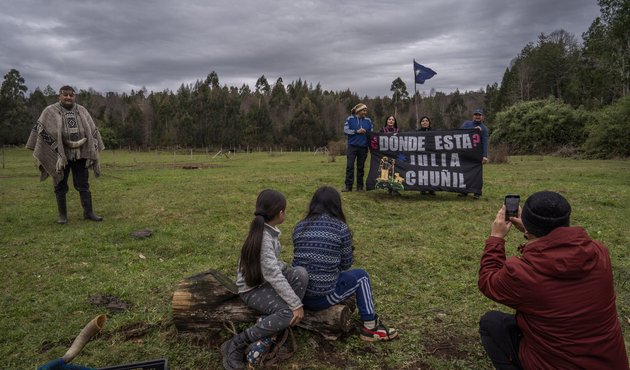
On 19 April 2024 – Indigenous Peoples Day in Brazil – tribal leaders and activists used the occasion to criticize government of Brazilian President Luiz Inácio Lula da Silva for falling short on promises to safeguard native land rights.

This is revolting for us Indigenous peoples to have had so much faith in the government’s commitments to our rights and the demarcation of our territories,” Alessandra Korap Munduruku, a member of the Munduruku people and a 2023 winner of the prestigious Goldman Environmental Prize, told Amazon Watch in a statement published Friday.

We hear all of these discussions about environmental and climate protection, but without support for Indigenous peoples on the front lines, suffering serious attacks and threats. Lula cannot speak about fighting climate change without fulfilling his duty to demarcate our lands,” she added.

On the same day United Nations Special Rapporteur on the situation of human rights defenders, Mary Lawlor said that Brazil needs to prioritise the demarcation and titling of land – the root cause of most attacks against human rights defenders in the country.

Human rights defenders are under extreme threat in Brazil. The Federal Government knows this but has so far failed to put the structures in place to provide them with better protection and tackle the root causes of the risks they face,” said Mary Lawlor, in a statement following an official visit to the country.

Brazil’s Federal Government recognises human rights defenders and their work, and understands the risks they face, the expert noted. However, when human rights defenders challenge structures of power that impose and reinforce injustice, they are violently attacked and face an extremely high level of risks, she said. “Again and again during my visit I heard from defenders who had survived assassination attempts, who had been shot at, had their houses surrounded, had death threats delivered to their door. I heard from defenders whose work had been criminalised,” Lawlor said.

“The defenders most at risk in Brazil are indigenous and quilombola people and members of other traditional communities. In many cases, perpetrators of the attacks are known. Yet, there is rampant impunity for these crimes,” the expert said.

The UN expert said business and markets play a key role as drivers of conflicts, putting human rights defenders at risk. “The demarcation and titling of indigenous, quilombola and other traditional peoples’ land, as well as the revision of the legality of all existing concessions given to companies must be prioritised,” she said.

Lawlor said that in urban areas, human rights defenders were also being attacked, defamed and heavily criminalised, specifically black women human rights defenders, journalists, popular communicators and lawyers, and social and cultural workers.

“The conflation of human rights defenders with criminals by local authorities – in particular defenders who are part of social movements and supporting the most vulnerable in society – is a clear problem and must end,” the expert said.

A protection programme to address situations of risk for human rights defenders has been in place in Brazil for some time. However, Lawlor said it was currently unfit for purpose and needs radical reform and expansion. Lawlor applauded the Federal Government for re-opening the door to human rights defenders and civil society in the design of policy that affects them and encouraged authorities to not abandon these efforts.

The Federal Government needs to match the courage of human rights defenders in the country – and it must do so now,” Lawlor said.

On 22 April 2024 Maria Laura Canineu HRW’s Deputy Director, Environment and Human Rights, said she wanted to use this quilombolaas an opportunity to celebrate the work of the courageous people who put themselves at risk fighting for a world in which people and the planet can thrive. “I personally would like to honor Osvalinda Marcelino Alves Pereira. Sadly, she passed away from a long-standing illness just over a week ago.”

https://reliefweb.int/report/brazil/united-nations-special-rapporteur-situation-human-rights-defenders-mary-lawlor-brasilia-19-april-2024-enpt

Download Report (PDF | 213.1 KB | Statement – English version)

https://www.commondreams.org/news/lula-indigenous-rights

https://www.hrw.org/news/2024/04/22/earth-day-homage-beloved-forest-defender

Abuse of counter-terrorism laws threaten human rights globally, warns UN expert

March 13, 2024

On 12 March 2024 the recently appointed UN Special Rapporteur on the promotion and protection of human rights while countering terrorism, Ben Saul, warned that two decades of prolific global efforts to counter terrorism have not been matched by an equally robust commitment to human rights.

In his first report to the Human Rights Council, the Special Rapporteur painted a counter-terrorism landscape strewn with human rights violations, including unlawful killings, arbitrary detention, torture, unfair trials, privacy infringements from mass surveillance, and the criminalisation of freedoms of expression, assembly, association and political participation. For earlier posts on this topic, see: https://humanrightsdefenders.blog/tag/anti-terrorism-legislation/

The misuse of counter-terrorism measures not only violates the rights of suspected criminals but can also jeopardise the freedoms of the innocent,” Saul said.

He condemned the rampant weaponisation of overly-broad terrorism offences against civil society, including political opponents, activists, human rights defenders, journalists, minorities, and students. Unjustified and protracted states of emergency continue to undermine human rights, the expert warned.

Excessive military violence in response to terrorism also destroys fundamental rights, including through violations of international humanitarian law and international criminal law,” Saul said. “Cross-border military violence is increasingly used by states even when it is not justified under the international law of self-defence.

“Many states have also failed to address the root causes of terrorism, including state violations of human rights – while impunity for those violations is endemic,” he said.

Saul said regrettably, the UN has been part of the problem, by encouraging authoritarian regimes to strengthen counter-terrorism laws in the absence of a rule of law culture or human rights safeguards. “The UN must also do better to meaningfully consult civil society on counter-terrorism,” he said.

Announcing his priorities for his three-year term, the Special Rapporteur said his focus would include ensuring regional organisations respect human rights when countering terrorism; all coercive administrative measures used to prevent terrorism comply with human rights; and States are held accountable for large-scale violations of human rights resulting from counter terrorism – and victims receive full and effective remedies.

Saul will also continue the efforts of his predecessor on preventing the abuse of counter-terrorism measures against civil society; protecting the 70,000 people arbitrarily detained in north-east Syria in the conflict against ISIL; protecting detainees and transferees from the detention facility at Guantánamo Bay, Cuba; ensuring that the UN safeguards human rights in its counter-terrorism work, regulating new technologies used in counter-terrorism; and protecting the victims of terrorism.

Human rights in counter-terrorism are at increased risk because of rising authoritarianism, surging domestic polarisation and extremism, geopolitical competition, dysfunction in the Security Council and new tools, including social media, for fuelling dehumanisation, vilification, incitement and misinformation,” the Special Rapporteur warned.

Double standards and selectivity by major powers in the enforcement of human rights is also eroding public confidence in the credibility of the international human rights system,” he said. “States must move beyond rhetorical commitment to human rights and instead place human rights at the heart of all counter-terrorism measures.

Statements Statement of the mandate of the United Nations Special Rapporteur on the promotion and protection of human rights while countering terrorism

Statements Human Rights Council discusses the protection of human rights while countering terrorism

Statements UN Office of Counter-Terrorism Town Hall meeting, Statement by Michelle Bachelet, UN High Commissioner for Human Rights

https://www.ohchr.org/en/press-releases/2024/03/rampant-abuse-counter-terrorism-laws-threaten-human-rights-globally-warns-un