Hans Thoolen on Human Rights Defenders and their awards

share information on human rights defenders, with special focus on human rights awards and laureates


Posts Tagged ‘crimes against humanity’

« Older posts

Summary of 2024 Human Rights Watch Report

January 29, 2024

On 27 January 2024, Olivia Biliuna and Madison Whittemore in the Davis Vanguard produced a useful summary of the 2024 Human Rights Watch Report
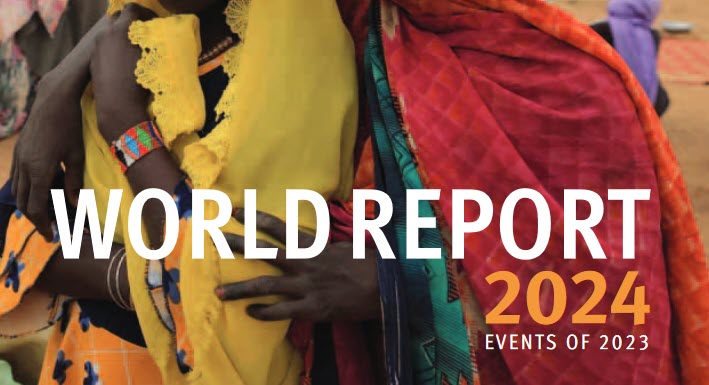
After reflecting on the formidable human rights challenges of 2023, it has become evident that changes in how human rights are approached will be needed in 2024 to prevent the atrocious suppression and human rights crises that have been prominent in the past year, according to Human’s Rights Watch’s “World Report 2024: Our annual review of human rights around the globe.” [see: https://www.hrw.org/world-report/2024]

However, despite the human rights atrocities seen in 2023, the group added that there appears to be some hope for upholding human rights in 2024 through enforcing principles of international human rights law.

Looking back on 2023, the 2024 World Report reflects on renewed conflicts between Israel and Hamas that resulted in the abuse of many and a tragic loss of life, and other countries such as Ukraine and Myanmar that continue to struggle with their own intense conflicts. 

Human Rights Watch notes that in accordance with the aforementioned conflicts, “Economic inequality rose around the world, as did anger about the policy decisions that have left many people struggling to survive.”

However, while many are quick to blame the government for being complicit in these human rights crises, the report maintains action is needed outside of just government action alone to help diminish these threats, since they “often transcend borders and cannot be solved by governments acting alone.” 

In fact, the report notes the often forgotten importance of universal principles of international human rights and the rule of law which are more critical now than ever. 

The 2024 World Report argues governments have the ability to help improve human rights and that they have double standards in “applying the human rights framework,” as stated in the 2024 World Report, and “chips away at trust in the institutions responsible for enforcing and protecting rights.” 

The legitimate laws and universality of human rights are weakened when governments that are vocal about denouncing the Israeli government war crimes against Gaza citizens do not speak up about the crimes against humanity in Xinjiang, China, according to the 2024 World Report.

Governments have found it is easier to disregard international human rights matters because internationally there is no challenge to human rights nationally, writes Tirana Hassan, the executive director.

Hassan also noted that autocrats across regions have taken away both the independence of key institutions to protect human rights and the freedom of dissent, as stated by the 2024 World Report, “with the same endgame in mind: to exercise power without constraint.”

Hassan explains that with campaigning of civil rights groups and years of diplomatic negotiations, 83 countries were able to protect their citizens by adopting a political declaration that provided protection from explosive weapons in populated areas.

The international pledge to recognize the “long-standing practice of warring parties to use aerial bombing, artillery, rockets, and missiles in villages, towns, and cities” is the first to address this issue as the 2024 World Report states.

Some countries are addressing long-marginalized communities. With years of pressure, the Japanese government parliament has passed its first law to protect LGBT people from “unfair discrimination,”  the 2024 World Report states.

With the humanitarian crises there has been questioning on the effectiveness of the human rights framework in the realm of protection, notes the 2024 World Report, adding, “especially in the face of selective government outrage, transactional diplomacy seeking short-term gain, growing transnational repression, and the willingness of autocratic leaders to sacrifice rights to consolidate their power.”

With that, the 2024 World Report also suggests the human rights framework will continue to be the plan to build “thriving, inclusive societies” and governments need to be persistent and, with urgency, defend human rights to handle the global and existential threats to humanity.

As also highlighted by Hassan in the report, the assault on Israel by Hamas-led fighters on Oct. 7 that deliberately killed hundreds of vulnerable civilians led to swift condemnation from many countries around the world.

In retaliation to the Oct. 7 attack, the Israeli government ceased all running water and electricity in the Gaza strip, “blocking the entry of all but a trickle of fuel, food, and humanitarian aid – a form of collective punishment that is a war crime,” the 2024 World Report noted.

The Israeli government and military continue frequently bombing the Gaza strip. Following these attacks, countries were outraged after they found out that Israel used a chemical called white phosphorus during the indiscriminate attacks on Gaza, with many countries even highlighting the attacks as “apparent war crimes,” stated by Human Rights Watch.

However, despite world-wide outrage after Israel’s war crimes on Gaza, countries have failed to publicly call the Israeli government out on its war crimes resulting in severe human rights abuses, the report detailed, noting even the U.S. and the European Union have acknowledged Israel’s human rights abuses on Gaza citizens, yet have continued to be complicit in the “ongoing crimes against humanity of apartheid and persecution against Palestinians.”

The report asserted the repercussions of governments failing to intervene undermine the legitimacy of the rules system designed 75 years ago to safeguard all citizen’s rights. In response to the inconsistencies, Hassan cites that governments like Russia and China aim to take advantage of the shaky legitimacy by attempting to infringe on human rights and take advantage of the system that is supposed to punish both countries.

Another example used by the 2024 World Report that displays these inconsistencies is the power battle between two influential generals in Sudan, Gen. Abdelfattah al-Burhan and Gen. Mohamed Hamdan Dagalo.

This conflict resulted in civilians facing deadly abuses and human rights infringements in the Darfur region—with numerous countries listed in the 2024 world report allegedly ignoring the horrendous abuses and abstaining from intervening.

Despite nations such as Gabon, Ghana, and Mozambique being on the Security Council, “the UN, under pressure from the Sudanese government, shuttered its political mission in Sudan.” the 2024 World Report stated, also concluding that “This marked the conclusion of the UN’s limited capacity in the country to safeguard civilians and openly address the human rights situation.”

Regardless of African governments refusing to hold the Sudanese government accountable, the report highlights that many have been strong advocates for resolving the human rights issues in other places like Palestine, even leading a full-fledged effort to investigate its human rights abuses last November and recently asserting that “Israel violated its obligations under the 1948 Genocide Convention in its military operations in Gaza.”

Domestic policies and foreign policies should hold value in human rights and their rules of laws at the forefront of governments, charged the 2024 World Report.

Even rights-respecting governments hold these principles as “optional, seeking short-term, politically expedient “solutions” at the expense of building the institutions that would be beneficial for security, trade, energy, and migration in the long term,” according to the 2024 World Report, adding transactional diplomacy carries a human cost that extends past borders, the group adds.

The 2024 Report writes that without awareness while making transactional diplomacy, risks are created. Removing human rights and the rule of law from a sensible direction creates leverage for right-violating governments too, the 2024 World Report adds, arguing, “It can also contribute to further human rights violations, including transnational repression,” which governments do when they commit human rights abuses against their nationals abroad or to those families living at home, the report continues.

According to the World Report of 2024, India, a democracy, under its Prime Minister Narenda Modi has moved toward an autocracy “with authorities targeting minorities, tightening repression, and dismantling independent institutions, including federal investigative agencies.”

Additionally, as cited in The Report, the US, Australia, the UK, and France chose trade and security over raising human rights concerns.

As reported by Executive Director Hassan, the Modi government’s repressive tactics went past borders and were empowered to do so from the Indian government’s “silence on the Indian government’s worsening rights record…including to intimidate diaspora activists and academics or restrict their entry into India.”

Rwandan’s government has had three decades of no punishment for their repression of civil and political rights at home, the 2024 World Report states, writing “to stifle dissent beyond its borders,” and noting, Rwanda, despite having risen on the international stage, has failed to recognize its problematic human rights violations.

Similarly, Chinese government abuses in Beijing escalate its repression against both Chinese and non-Chinese with failure of resistance from other countries, according to the 2024 World Report, explaining a Laos lawyer and human rights defender, Lu Siwei, received pressure from the Chinese government to return and authorities pushed out warrants.

The 2024 World Report claims nowhere is safe if repressive governments can get away with “strong approaches to silence human rights defenders, exiled politicians, journalists, and critics beyond their borders.”

As reported by the Human Rights 2024 World Report, with almost half of the global population being eligible to vote in 2024, both citizens and independent institutions need to participate in order to effectively have leaders who defend human rights, regardless of society and many institutions having “become renewed battlegrounds for autocratic leaders around the world looking to eliminate scrutiny of their decisions and actions.”

According to Hassan, the nations of Guatemala and Nicaragua are two stories of autocratic leaders consolidating power and failing to prioritize civil society.

For example,  after Guatemala’s President-elect Bernardo Arévalo ran on an anti-corruption platform, a corrupt judiciary attempted to overturn Arévalo’s election triumph.

Similarly, the report refers to Nicaragua, where corrupt and authoritarian President Daniel Ortega uses “abusive legislation to shut down over 3,500 nongovernmental organizations” in order to dominate the political landscape and wield unchecked power.

The Human Rights report insists these “vital” checks and balances continue to be eroded, it poses great harm to human rights.

Judicial independence has also been drastically sabotaged in Poland, the report alleges, with the Polish government suppressing civil society groups through law enforcement and incarceration. Polish freedom and independence are extremely threatened, with the Law and Justice party most notably encroaching on women’s reproductive rights and essentially banning abortion, Hassan suggested in the report.

“In May 2023, an abortion rights activist was convicted of helping a woman to get abortion pills and was sentenced to eight months of community service – the first known prosecution of its kind in the EU,” the 2024 World Report noted.

On an environmental note, with the impending issue of global warming, the 2024 report highlights activists being shot by governments across the globe who want to “deter the climate movement.”

In another example, the report cites how one of the largest oil producers, the United Arab Emirates (UAE), continues to expand its production of fossil fuels; however, people are discouraged from exposing the UAE unless they are willing to face grave punishment.

Apart from punishing dissent, governments are using technology and social media platforms to “silence critics and censor dissent,” the 2024 World Report notes, citing a 54-year-old retired Saudi Arabian teacher named Muhammad al-Ghamdi, who received the death penalty after he expressed his opinions on X and Youtube and allegedly went against the country’s counterterrorism law.

Despite everything that occurred in 2023, there were also positive moments for human rights where institutions and movements succeeded, the 2024 World Report states, arguing, “Indeed, these successes illustrate why self-serving politicians and repressive governments work so hard to curtail them – and why all governments should recognize and support these fragile successes.”

Additionally, according to the Executive Director Hassan, the ICC issued warrants for Russia’s President Vladimir Putin and his children’s rights commissioner for war crimes related to deporting and transferring children and a court ruled that South Africa had a commitment to arrest Putin. 

According to the 2024 World Report, the Xokleng Indigenous people succeeded when the Brazil Supreme Court, as noted by the 2024 World Report, “upheld all Indigenous peoples’ rights to their traditional lands,” despite efforts by the Santa Catarina state. 

The 2024 World Report said, “These victories highlight the tremendous power of independent, rights-respecting, and inclusive institutions and of civil society to challenge those who wield political power to serve the public interest and chart a rights-respecting path forward” and that “all governments, in their bilateral relations and at the multilateral level, should redouble efforts to uplift key institutions and protect civic space wherever it is under threat.”

The human rights crisis highlights the importance for “mutually agreed principles of international human rights law everywhere,” the 2024 World Report notes. 

It also points out that through governments centering their human rights obligations through moral governing, it will provide a diligent change to those affected. 

The 2024 World Report concludes that consistently upholding human rights, “across the board, no matter who the victims are or where the rights violations are being committed, is the only way to build the world we want to live in.”

https://www.davisvanguard.org/2024/01/2024-human-rights-watch-report-observes-safeguarding-human-rights-system-worldwide-demands-urgent-action/

Posted in books, HRW, Human Rights Defenders | Leave a Comment »
Tags: annual report 2023, crimes against humanity, Davis Vanguard, Gaza, human rights, Human Rights Defenders, Human Rights Watch, international human rights and humanitarian law, Israel, Olivia Biliuna and Madison Whittemore, Palestine, universality of human rights

UN Rapporteur on Iran comes with devastating assessment

March 22, 2023

Patrick Wintour, Diplomatic editor of the Guardian, reported on Monday 20 March 2023 that the he UN rapporteur on Iran, Javaid Rehman, has said the scale and gravity of Iran’s violations of human rights amount to a crime against humanity. Javaid Rehman, a special rapporteur on Iran, told the United Nations Human Rights Council on Monday the country was experiencing the most serious violations in four decades.

Rehman warned Iran was experiencing the most serious violations in four decades. He also claimed the death in police custody of Mahsa Amini, a young Kurdish woman, in September 2022 resulted from beatings by the “morality police”. Iran has said she died from a pre-existing neurological disorder, but Rahman said reliable medical sources pointed to state culpability. He said Iran had refused to conduct an impartial or transparent inquiry into her death, including the allegations that she was beaten up and tortured.

“The scale and gravity of the violations committed by Iranian authorities, especially since the death of Ms Amini, points to the possible commission of international crimes, notably the crimes against humanity of murder, imprisonment, enforced disappearances, torture, rape and sexual violence, and persecution,” he said.

Drawing on evidence, including eyewitness testimony and comments from reliable medical sources, the report said it was clear she had died on 16 September “as a result of beatings by the state “morality police”.

“I would like to stress that her death was not an isolated event but the latest in a long series of extreme violence against women and girls committed by the Iranian authorities,” Rehman said. He said “the responsibility of top senior officials in instigating this violence can … not be ignored.”

The UN human rights council decided last November – despite protests from Beijing and Tehran itself – to launch a fact-finding mission into the repression of peaceful demonstrators after protests erupted around Iran. A fact-finding team has been appointed but has been denied access to Iran. See: https://humanrightsdefenders.blog/2022/11/23/un-human-rights-council-holds-special-session-on-iran-on-24-november/

“Protesters including children were beaten to death,” Rehman said, adding that “at least 527 people, including 71 children were killed, and hundreds of protesters severely injured.”He also said dozens of protesters “have lost their eyes because of direct shots to the head”, while Iranian doctors had reported that women and girls participating in the demonstrations “were targeted with shotgun fire to their faces, breasts and genitals”.

He said: “Children released have described sexual abuses, threats of rape, floggings, administration of electric shocks and how their heads were maintained underwater, how they were suspended from their arms or from scarves wrapped around their necks.”

The EU says it has now imposed sanctions on 204 individuals and 34 entities in six waves of sanctions. The UK announced it was putting sanctions on five members of the board of directors of the IRGC Co-operative Foundation. This organisation funnels money into the Iranian regime’s repression, the UK Foreign Office said.

He voiced outrage at the executions of at least four people associated with the protests “after arbitrary, summary, and sham trials marred by torture allegations”. He added: “These summary executions are the symbols of a state ready to use all means to instil fear and quash protests,” pointing out that at least 17 other protesters have so far been sentenced to death and more than 100 others face charges that carry the death penalty.

See also: //humanrightsdefenders.blog/2023/03/13/women-human-rights-defenders-from-iran-and-pakistan-explain-why-women-resisting-are-a-force-to-be-reckoned-with/

https://www.theguardian.com/world/2023/mar/20/iran-rights-violations-crime-against-humanity-un-expert

Also Human rights violations by authorities in Belarus and Venezuela may amount to crimes against humanity, the UN human rights council has heard. SEE: https://genevasolutions.news/global-news/un-finds-possible-crimes-against-humanity-in-belarus-venezuela-iran?utm_source=newsletter&utm_medium=email

Posted in Human Rights Council, Human Rights Defenders | Leave a Comment »
Tags: children, crimes against humanity, EU, Iran, Javaid Rehman, Mahsa Amini, sanctions, the Guardian, UK, UN Human Rights Council, UN special rapporteur on Iran

Finally the long awaited UN report on China

September 1, 2022

A long-delayed but groundbreaking United Nations report published on August 31, 2022, says the Chinese government has committed abuses that may amount to crimes against humanity targeting Uyghurs and other Turkic communities in the Xinjiang region. The report by the outgoing UN High Commissioner for Human Rights, Michelle Bachelet, contains victim accounts that substantiate mass arbitrary detention, torture, cultural persecution, forced labor, and other serious human rights violations, and recommends that states, businesses, and the international community take action with a view to ending the abuses, and advancing justice and accountability. See also: https://humanrightsdefenders.blog/2022/06/09/disappointment-with-un-high-commissioners-visit-to-xinjiang-boils-over/

“The UN human rights chief for the first time lays bare the Chinese government’s grave abuses and concludes they may amount to crimes against humanity,” said John Fisher, Global Advocacy Deputy Director at Human Rights Watch. “Victims and their families whom the Chinese government has long vilified have at long last seen their persecution recognized, and can now look to the UN and its member states for action to hold those responsible accountable.”

The high commissioner’s report challenges the Chinese government’s blatant disregard for its international human rights obligations, Human Rights Watch said. It calls on businesses to meet their responsibilities to respect human rights, and for follow-up by UN member countries and bodies, which could take the form of an investigation to interview victims and survivors, identify those responsible, gather evidence, and recommend strategies for accountability. Similar recent UN Human Rights Council mechanisms have included commissions of inquiry, fact-finding missions, and independent international monitoring missions. This could also lead to the identification of all those missing and forcibly disappeared so that they can be reunited with their families.

The report should be formally presented to the Human Rights Council as a matter of priority, Human Rights Watch said, so that states can discuss the report’s findings and take the steps needed to implement its recommendations.

In the report, the high commissioner details widespread abuses, including targeting of cultural and religious practices, family separation, arbitrary arrests and detention, rape, torture, and enforced disappearances, across Xinjiang. The report concludes that “[t]he extent of arbitrary and discriminatory detention of members of Uyghur and other predominantly Muslim groups, pursuant to law and policy, in context of restrictions and deprivation more generally of fundamental rights enjoyed individually and collectively, may constitute international crimes, in particular crimes against humanity.”

Detainees interviewed for the report described conditions in so-called “vocational training centres” that would amount to torture or other forms of ill-treatment, including “being beaten with batons, including electric batons while strapped in a so-called “tiger chair”; being subjected to interrogation with water being poured in their faces; prolonged solitary confinement; and being forced to sit motionless on small stools for prolonged periods of time.”

The report noted that Chinese authorities continue to openly criticize victims and their relatives now living abroad for speaking about their experiences in Xinjiang, engaging in acts of intimidation, threats, and reprisals. In the words of one interviewee: “We had to sign a document to remain silent about the camp. Otherwise, we would be kept for longer and there would be punishment for the whole family.”

The report also draws on analyses of Chinese laws, regulations, and policies. The findings are consistent with those of academics, journalists, and human rights organizations, published since 2017 documenting grave international crimes. In the past five years, Human Rights Watch has documented mass arbitrary detention, pervasive surveillance, and crimes against humanity across the region.

The high commissioner has been systematically assessing a growing body of evidence regarding Chinese government human rights violations targeting Uyghurs and other Turkic communities. Treaty body reviews and reports from UN human rights experts also informed the new report, reinforcing concerns about secret detention and unlawful family separations, among other violations.

In June 2020, 50 UN human rights experts urged the Human Rights Council to establish an independent UN mandate to monitor and report on human rights violations in China, partly in response to Chinese government resistance to UN human rights scrutiny. In June 2022, another group of UN experts reiterated the 2020 statement and again urged Chinese authorities to grant them access to investigate “allegations of significant human rights violations and repression of fundamental freedoms in the country.”

In May, Bachelet visited China, despite being unable to travel or engage with interlocutors freely, and had little direct engagement with affected communities. In an end-of-mission statement delivered on May 28, Bachelet underlined that the visit was not an investigation, which she noted would require “detailed, methodical, discreet work of an investigative nature.” The new report lays a solid foundation for further UN and Human Rights Council action towards accountability in China.

“Never has it been so important for the UN system to stand up to Beijing, and to stand with victims,” Fisher said. “Governments should waste no time establishing an independent investigation and taking all measures necessary to advance accountability and provide Uyghurs and others the justice they are entitled.”

Amnesty International’s Secretary General Agnès Callamard said: 

“This 46-page document lays bare the scale and severity of the human rights violations taking place in Xinjiang – which Amnesty International previously concluded amounted to crimes against humanity. There can be little doubt why the Chinese government fought so hard to pressure the UN to conceal it. 

https://www.hrw.org/news/2022/08/31/china-new-un-report-alleges-crimes-against-humanity

China: Long-delayed UN report must spur accountability for crimes against humanity in Xinjiang

Click to access 22-08-31-final-assesment.pdf

Posted in Amnesty international, HRW, Human Rights Council, Human Rights Defenders, OHCHR | 4 Comments »
Tags: Amnesty International, China, crimes against humanity, Human Rights Watch, Michelle Batchelet, UN High Commissioner for Human Rights, UN Report, Uyghurs

Basic intro to the UN Human Rights Council

February 23, 2022

On 22 February 2022 Imogen Foulkes (a journalist reporting from Geneva for SWI swissinfo.ch as well as the BBC) published a piece: “What can the Human Rights Council do for you?”

Next week the spring session of the UN Human Rights Council begins [see also my: https://humanrightsdefenders.blog/2022/02/21/guide-to-49th-session-of-human-rights-council-with-human-rights-defenders-focus/]. Geneva will be inundated with the world’s top diplomats and human rights activists, who will wade their way through mountains of reports.  Foulkes brief survey helps to see the essence:

It’s too easy, sometimes, to be overwhelmed by all the paperwork and protocol of the human rights council. The 47 council members sit, day after day, in the vast council chamber, listening to those endless reports, and waiting for their two minutes to speak. 

Of course, the content of the reports is utterly serious; from possible war crimes and crimes against humanity in Syria, Yemen, or Myanmar, to the plight of child soldiers, to violence against women, and racial discrimination. Our world continues, day after day, to flout the human rights standards we’ve all signed on to defend. 

But the very quantity of those reports, the way multiple human rights crises are addressed in a single day, before moving on to the next litany of cruelty and misery, can be exhausting, and, somehow, desensitising. I, and my journalist colleagues at the UN in Geneva, often find it difficult to interest our editors in what the human rights council is doing. Not least because, when those editors ask “so, once they’ve passed the resolution condemning x or y country, what happens then?” our answer has to be “not much”. The council has no power to impose sanctions, it cannot prosecute, its investigators can never apprehend someone they know to be a war criminal, and drag him or her to the International Criminal Court. 

So what’s the point of it? That’s the question we try to answer in this week’s edition of Inside Geneva. We talk to human rights investigators, and to human rights defenders, people who bring their own testimonies of atrocities to the UN, often at great risk to themselves, and, often, because the UN is their last and only hope. 

Andrew Clapham, who is currently a member of the UN team investigating violations in South Sudan, tells us that “The idea that someone has listened to your story, and you have taken your case to the United Nations is incredibly important.” 

But is that enough? Is the UN’s human rights work simply a form of counselling, a way for victims of violations to talk through their trauma? 

Feliciano Reyna, a human rights defender from Venezuela, explains that the UN’s regular reviews of a country’s record, from its upholding of the convention against torture, on women’s rights or the rights of the child, allow human rights defenders to participate – they come to Geneva to present their version of what’s happening in their country. This process, Feliciano tells Inside Geneva has been “absolutely key in advancing our work on human rights and putting Venezuela on the international and local agenda”. 

We also talk to Collette Flanagan, whose son Clinton was shot and killed by Dallas police in 2013. Together with many other US mothers who have lost a child to police violence, Collette brought her case to the UN, because, she told us, her attempts at home to get answers for what had happened to her son, who was unarmed, were “dismissed by…the police department, we couldn’t get any answers to what happened to our child.” 

See also her piece: What does the Human Rights Council mean to victims of atrocities?

Collette’s campaigning resulted, eventually in the UN’s report on the treatment of people of African descent. Presenting that report last year, UN Human Rights Commissioner Michelle Bachelet drew a direct link between slavery and the violence and discrimination inflicted on people of African descent today. She said there was “an urgent need to confront the legacies of enslavement” and called for “amends for centuries of violence and discrimination”, including “formal acknowledgment and apologies, truth-telling processes and reparations in various forms”. 

For Collette, the report was a hugely important sign that even the most powerful country on earth, with its oft repeated promise of “liberty and justice for all”, is not above international scrutiny. 

“The United States is a democracy,” Collette says. “And we are supposed to uphold life, liberty and freedom for every citizen. And that is not happening in the United States. And if those things are not happening in the United States then that is an egregious attack on democracy and human rights and freedom. How can the United Nations not be involved?” 

One of the most disturbing investigations currently underway by UN human rights officers is the Fact Finding Mission on Myanmar, which is examining, among other things, the treatment of the Rohingya Muslim community by Myanmar’s ruling military regime. 

In 2016 and 2017 over a million Rohingya fled appalling violence. When human rights officer Ilaria Ciarla arrived in the refugee camps in Bangladesh to take witness accounts, among them from mothers whose babies had been killed before their eyes, she tells Inside Geneva her initial reaction was “incredulity… is this possible? How can human beings do such horrible things to other human beings?” 

Australian lawyer Chris Sidoti also served on the Fact Finding Mission, and highlights the inherent weakness in the human rights council’s inability to legally hold perpetrators to account. “I still know that the Myanmar butchers who are responsible for what happened may never individually be brought to justice,” he says. 

But, he explains, those UN investigations are quietly growing some teeth. Names of perpetrators, and all the evidence to convict them, is available to courts, national or international, who do have the power to try and convict. 

“We are seeing court cases in the top international courts now, dealing with Myanmar,” he notes. “The International Court of Justice is using our report. The International Criminal Court is using our report.” 

And for Khin Ohmar, who has devoted her life to the struggle for democracy in her native Myanmar, this is a milestone. “Oh yes, that is what I have been working for, there is no other way. We have allowed this military to enjoy blanket impunity for so long, and that must stop,” she says. “These perpetrators [must be] held to account by law, and there is no domestic law available, so now we need international law to hold them to account for all the crimes they have committed against the people of Myanmar.” 

https://www.swissinfo.ch/eng/what-can-the-human-rights-council-do-for-you-/47368266

Posted in Human Rights Council, Human Rights Defenders, UN | Leave a Comment »
Tags: 49th session of the UN Human rights council, crimes against humanity, Imogen Foulkes, journalists, Myanmar, NGOs, Special Procedures, Swissinfo

Israel and Apartheid: Israeli Human Rights Group stirs debate

January 18, 2021

At the risk of inviting a torrent of abusive reactions, I think that the question of whether there is a case of APARTHEID is a legitimate one as a recent human rights NGO report asserts that one unequal system governs Israel, Gaza, the West Bank and East Jerusalem.

B’Tselem, a prominent Israeli human rights group has intensified its criticism of the country’s policies toward Palestinians, saying Israel pursues a nondemocratic “apartheid regime” and “Jewish supremacy” in both Israel and the Palestinian territories. The report of Tuesday 12 January 2021 reflects a recent shift by critics within Israel, widening their focus beyond the country’s half-century military occupation of Palestinian territories to policies stretching back to Israel’s founding, and endorsing highly charged parallels to South Africa’s former regime of white rule.

An editorial in the Guardian of 17 January states: It was a deliberate provocation by B’Tselem, Israel’s largest human rights group, to describe the Palestinians in the Holy Land as living under an apartheid regime. Many Israelis detest the idea that their country, one they see as a democracy that rose from a genocidal pyre, could be compared to the old racist Afrikaner regime. Yet figures such as Desmond Tutu and Jimmy Carter have done so. There is a serious argument about injustices to be had. Palestinians – unlike Israeli Jews – live under a fragmented mosaic of laws, often discriminatory, and public authorities which seem indifferent to their plight. Apartheid is a crime against humanity. It is a charge that should not be lightly made, for else it can be shrugged off. Some might agree with the use of such incendiary language, but many will recoil. The crime of apartheid has been defined as “inhumane acts committed in the context of a regime of systematic oppression and domination by one racial group over any other racial group or groups with the intention of maintaining that regime”.

Many Israelis firmly reject the comparison. They boast of a vibrant Israeli democracy, say Palestinians have representation in their own semi-autonomous Palestinian Authority, and justify restrictions on Palestinians as necessary security measures in the absence of peace.

B’Tselem’s director Hagai El-Ad, who is Jewish, said he hoped the report would inform the analysis of the incoming Biden administration as it considers how to steer U.S. policy, after the Trump administration sided with Israel and against Palestinian positions on the most sensitive aspects of the long-running conflict between the two peoples. “I expect this will be part of a new chapter for fighting for justice in this place,” El-Ad said.

B’Tselem, which has documented Israeli human rights abuses in Palestinian territories since 1989, said it now rejects the commonly held notion that Israel maintains two separate regimes side-by-side: a democracy inside Israel, where the country’s 20% Palestinian Arab minority shares equal citizenship and rights with its Jewish majority, and a military occupation imposed on Palestinian non-citizens in territories captured in 1967 which Palestinians seek for an independent state. “One organizing principle lies at the base of a wide array of Israeli policies: advancing and perpetuating the supremacy of one group – Jews – over another – Palestinians,” B’Tselem said in a statement Tuesday.

Daniel Estrin notes in his piece on NPR some reactions:

The Israeli government did not issue an immediate public response, but defenders of Israeli policy accused B’Tselem of radicalized anti-Israel propaganda.

“This is no longer the same NGO that once gained respect, even from critics, by championing human rights based on credible research. Today, it is a platform for demonizers,” Gerald Steinberg of NGO Monitor, an Israeli watchdog of pro-Palestinian groups, said in a statement.

B’Tselem seeks to “fundamentally delegitimize Israel and call for its destruction – because one does not reform an Apartheid regime, one ends it,” said Eugene Kontorovich of the Kohelet Policy Forum, a conservative Israeli think tank.

Another prominent Israeli advocate for Palestinian rights, lawyer Michael Sfard, issued a legal opinion last year that Israelis practice apartheid over Palestinians in the Israeli-occupied West Bank, but he stopped short of evaluating whether the same definition applied within Israel proper.

Last year, the Israeli NGO Yesh Din found that Israeli officials were culpable of the crime of apartheid in the West Bank.

B’Tselem said Palestinian Arab citizens in Israel have more rights than non-citizens in the West Bank and Gaza but that they were second-class citizens to Jewish Israelis. It pointed to Israel’s construction of hundreds of Jewish communities while building few communities for the country’s Palestinian citizens; and laws that grant automatic Israeli citizenship to Jews around the world but exclude non-Jews, including Palestinians.

B’Tselem’s criticisms of Israel’s military occupation include travel restrictions placed on Palestinians, who require Israeli travel permits; and Palestinians’ lack of voting rights in the Israeli political system which holds sway over their lives.

B’Tselem said it decided to embrace the apartheid terminology following the adoption in 2018 of Israel’s Nation State Law, which defined Israel as a Jewish state and accorded Jews priority in areas ranging from the official use of Hebrew versus Arabic, to land development, to the government’s discussion last year of potentially annexing occupied West Bank territory without extending voting rights to Palestinians living there, a move Israel says is possible.

“Israel is not a democracy that has a temporary occupation attached to it: it is one regime between the Jordan River to the Mediterranean Sea, and we must look at the full picture and see it for what it is: apartheid,” El-Ad said.

The human rights group’s name, B’Tselem, Hebrew for “In the Image,” is taken from Genesis 1:27 which states that humanity was created in the image of God.

See also: https://www.aljazeera.com/news/2021/1/18/israel-moves-to-rein-in-rights-group-over-use-of-term-apartheid

https://www.npr.org/2021/01/12/956020789/israeli-human-rights-group-says-the-country-pursues-nondemocratic-apartheid-regi?t=1610539620271

https://www.theguardian.com/commentisfree/2021/jan/17/the-guardian-view-on-israel-and-apartheid-prophecy-or-description

https://www.scoop.co.nz/stories/WO2105/S00023/quibbling-over-cruelties-human-rights-watch-israel-and-apartheid.htm

Posted in human rights | 5 Comments »
Tags: apartheid, B’Tselem, crimes against humanity, Hagai El-Ad, Israel, Israeli–Palestinian conflict, Jewish state, the Guardian, Yesh Din

ICJ says human rights defenders alarmed over election results in Sri Lanka

November 19, 2019

Sri Lanka’s newly elected president, Gotabaya Rajapaksa and his Government must demonstrate that they will uphold human rights and rule of law, and ensure that Sri Lanka sustains its international obligations and commitments to justice and accountability, said the International Commission of Jurists (ICJ) on 19 November 2019. “The election of Gotabaya Rajapaksa, after a highly polarizing campaign, has alarmed human rights defenders in Sri Lanka and abroad, who have little reason to believe that someone facing such serious allegations of perpetrating human rights violations can be relied upon to meet the country’s obligations under international law,” said Frederick Rawski, ICJ Asia Pacific Director.
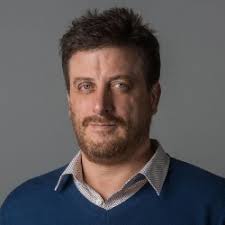
Gotabaya Rajapaksa, who won the presidency with 52.25% of votes, served as Sri Lanka’s Secretary of the Ministry of Defence from 2005 to 2015 during the tenure of his brother Mahinda Rajapaksa, at the height of the armed conflict against the Liberation Tigers of Tamil Eelam (LTTE). Gotabaya Rajapaksa faces credible allegations of involvement in war crimes and crimes against humanity that took place during the country’s armed conflict.

International condemnation of atrocities committed during the conflict led to the UN Human Rights Council demanding that the Sri Lankan government commit to a process of transitional justice, in view of the systematic failures of accountability mechanisms in Sri Lanka in the past, as documented by the ICJ in its submission to the Human Rights Council, and others. Despite commitments from the Sri Lankan government, the transitional justice process has effectively stalled and impunity has prevailed.

“The ICJ is deeply concerned that even the limited strides made over the past five years in Sri Lanka on transitional justice, positive constitutional amendments and institutional reform will be reversed,” said Rawski. The ICJ urged the Government to deliver on its commitment to the transitional justice process, including by holding those responsible for human rights violations and abuses accountable, and complying with the obligations set out in United Nations Human Rights Council Resolutions 30/1, 34/1 and 40/1.

https://colombogazette.com/2019/11/19/human-rights-defenders-alarmed-over-polls-outcome-says-icj/
https://www.amnesty.org/en/latest/news/2019/10/sri-lanka-human-rights-must-be-at-the-heart-of-next-presidency/

Posted in Human Rights Defenders, ICJ | Leave a Comment »
Tags: crimes against humanity, elections, Frederick Rawski, Gotabaya Rajapaksa, ICJ, impunity, International Commission of Jurists, Sri Lanka, transitional justice

Gaston Chillier speaks about the values of his NGO, CELS, in Argentina

November 10, 2019

In an interview with Carly Graf of the Buenos Aires Times, Gaston Chillier, the executive director of Centre for Legal and Social Studies (CELS), one of Argentina’s most influential human rights groups, reflects on the organisation’s four-decade fight and the battles that still lie ahead.

Forty years ago, in the throes of Argentina’s brutal 1976-1983 military dictatorship, a number of parents came together under tragic circumstances. Their children had been abducted by the government, part of the estimated 30,000 people who were victims of the dirty war. The group included Emilio Mignone, a lawyer today remembered as one of Argentina’s fiercest defenders of human rights. He began documenting cases of disappearances, providing legal assistance to families and spreading news about the dramatic scale of the state’s terrorism againts its citizens. [see also: http://www.trueheroesfilms.org/thedigest/awards/emilio-mignone-prize]

Eventually, the grassroots organisation grew into the Centro de Estudios Sociales y Legales (CELS). It would play a fundamental role in bringing to light the abuses and crimes against humanity committed by the military dictatorship and in promoting human rights reform once the regime fell. However, the work did not end with the fall of the military government – over the coming decades, CELS would go on to become increasingly influential in defending the dignity and protecting the human rights of all Argentines. As CELS celebrates the 40th anniversary of its founding, its executive director, Gastón Chillier, spoke with the Times to discuss the organisation’s history, future and the most pressing human rights issues in Argentina today.


How does the CELS of today compare to the CELS of 40 years ago?

There are many lines of continuity between now and then. It was founded by a group of people with family members who had been “disappeared,” intending to denounce the military government and fight for justice. We continue with that commitment and fight against impunity. Of course, there have been some changes that have broadened our vision beyond only combating institutional violence — the greatest of which is that we now advocate and incorporate groups who don’t have a direct tie to the dictatorship. In the 1990s, we brought into the fold groups like immigrants, the indigeneous, union workers, men and more. In the last 15 years, we’ve worked hard to defend the right to protest. I think of our organisation as many different sectors coming together for a grand commitment to defend human rights.

What is the state of the human rights movement in Argentina?

Argentina has a society that’s mobilised across distinct generations and across distinct movements. We have activated and incorporated a wide variety of interests in a way that’s only grown and amplified the human rights movement. What we have now is something much larger and more diverse, but with objectives that we share in common.

What are the biggest challenges to the movement?

Currently, the regional trend of re-militarisation. First, there’s the use of the armed forces to maintain internal security, using the excuse of things like terrorism or drug-trafficking to justify it. This has led to grave systemic violations like what we’re seeing in Colombia, Mexico and Chile. Then, there’s the return of former military actors to positions of political power. We’re seeing the emergence of leaders on the far right, far more conservative and bolstered politically by rhetoric that directly threatens the rights of most people. We see this in Bolsonaro in Brazil. Many of those leaders also have a strong tie to the business sector and they promote the concentration of wealth and the perpetuation of inequality.

How would you evaluate outgoing president Mauricio Macri and his government in this context?

Obviously, Macri is not the same as someone like Bolsonaro or Donald Trump. But, it seems to me, there are many elements of Macri’s government that do resemble this movement towards the right. His policies are more neoliberal, and his term ended with a phenomenal economic crisis, with thousands more poor people and with higher levels of inequality. He also supported the intensified use of armed forces and police, even if it meant abuse. So, no, he’s not like those others, but he still has a very poor record in these matters.

What do you anticipate from Alberto Fernández in terms of human rights?

I can’t speak to the agenda. But I do believe his election signifies a consensus in Argentina to reject militarisation and the creep towards authoritarianism. It seems there’s a widespread understanding of the importance of human rights. Macri’s one of the only leaders in the region in recent years that wasn’t able to maintain his mandate through re-election.

What do you say to critics who say CELS has become too partisan?

I don’t have a defensive response. We’re consistent with our founders. When we participate in a campaign, it’s because we want to bring in a government with the best human rights platform. Today, individual members of our organisation have their own opinions and, of course, we don’t prohibit them from having those. As for our organisation as a whole, we have an agenda of values, not of politics or partisanship.

Let’s talk about specific human rights issues Argentina faces today. First, the prosecution of crimes against humanity.

These didn’t slow down during Macri’s administration, really, because there aren’t ways for him to simply stop the judicial process. That said, the surrounding agencies that could make things go faster didn’t necessarily help […]

Also, there was such a backlash when the government said the“2×1” [ruling] was applicable in these cases, that the courts and Congress quickly corrected course, saying it couldn’t be used for perpetrators of crimes against humanity. And, now, whenever world leaders come like Trump, Angela Merkel or many others, one of the first things they’re taken to see is the Parque de la Memoria or the ESMA [former Navy Mechanics School, used a clandestine detention centre during dictatorship].

Therefore, I think this government finally understands what it was ignorant to before — here’s great relevance and importance to finding justice and memorialising Argentina’s past both here and worldwide.

And what about the push for abortion reform?

With Macri, we had a lot of ambiguity, especially last year during the failed legalisation fight. But then, we saw him and Maria Eugenia Vidal, the outgoing governor of Buenos Aires Province, with the blue scarf — a sign of the anti-abortion movement — at the end of this campaign […] With Alberto Fernández, we have an explicit position. I believe he’s expected to achieve it, and that he will push it through the legislature […]

Even though the Catholic Church and conservative northern provinces still wield great influence , I think it’s now inevitable, it’s just a matter of time […]

Argentina’s society, especially its younger generations, realise that this is a question of public health and another part of the inequality discussion. It is going to be over soon.

There have been cases too about the use of lethal force by security forces…

It’s one of those things that’s not necessa r ily documented, but it’s clearly risen in recent years, especially under Macri. It’s obvious through the political discourse there’s more support and alignment with security forces. In the case of a potential abuse — as in the case of Luis Chocobar — the government will often protect, ally itself with and celebrate police instead of investigating the officer or guaranteeing the victim’s family justice […]

Fernández is going to have to do a lot to reinstate a feeling of trust and legitimacy in the security forces and to disarm these policies promoted by the highest offices of power.

And what’s your view on the health of Argentina’s institutions?

The legacy of the last four years in this respect is very poor, as poor as the economic legacy […] We see this even in the report that came out from the office of the United Nations High Commissioner for Human Rights last week. It points out a number of potential abuses and interventions that could violate the law.

Now, the government under Cristina Fernández de Kirchner didn’t have a good record with institutional corruption, especially as it relates to the Judiciary, but Macri’s government has recorded the same kind of levels […] and Macri ran his campaign selling anti-corruption and transparency as one of the legacies of his administration.

This report goes against that message entirely […] There’s been corruption in our institutions for at least 30 years, not only under him, but it’s led to having a Justice Ministry without any credibility. It would be great to see the incoming government address it.

http://www.batimes.com.ar/news/argentina/gaston-chillier-cels-has-an-agenda-of-values-not-of-politics-or-partisanship.phtml

Posted in human rights | Leave a Comment »
Tags: argentina, CELS, Centre for Legal and Social Studies (CELS), crimes against humanity, Emilio Mignone, Gaston Chillier, national ngos

Human rights defenders to President Weah: the ball is in your camp

January 23, 2018

Africa on Line of 23 January 2018 report that human rights defenders NGOs have urged Liberian President Weah to prosecute war crimes.

Twenty international, African and Liberia-based human rights organizations have sent an open letter to Liberian President George Weah, calling on his administration to investigate and prosecute war atrocities. According to a release by the Center for Justice and Accountability based in the United States, the groups also called upon President Weah “to make accountability a priority” for his administration and “ensure the protection of Liberian human rights defenders, particularly those working on accountability initiatives.“
The Center for Justice and Accountability describes the two phases of Liberia civil war, which caused the killings of an estimated 250,000 people and request that the atrocities are investigated and prosecuted. “A report by Liberia’s Truth and Reconciliation Commission (TRC) released in June 2009 found all sides responsible for serious violations of domestic and international law, including war crimes, crimes against humanity, widespread and systematic rape and sexual slavery, torture, use and recruitment of child soldiers, and mass executions of civilians,” the release said.

“Although the TRC recommended the establishment of an Extraordinary Criminal Tribunal in Liberia to investigate and prosecute perpetrators of serious violations of international criminal and humanitarian law, the only prosecutions to date have been outside of Liberia,” it added. Hassan Bility, Executive Director of Monrovia based Global Justice and Research Project and one of the authors of the open letter said: “Justice must be one of the cardinal points of the President’s new agenda. There must be justice for war crimes, otherwise there will be no lasting peace in Liberia.” Mr. Bility, a former journalist and torture survivor of the civil war, helped initiate the arrests of several Liberian perpetrators in Europe and the U.S. in partnership with the Swiss based NGO, Civitas Maxima.

President Weah, during his inaugural address, assured that his administration would protect human rights and justice for all Liberians: “Today, we Liberians have reached an important milestone in the never-ending journey for freedom, justice, and democracy; a search that has remained central to our history as a nation,” .

Reacting to the speech on Monday, Mr. Bility told FrontPageAfrica the President’s commitment to social justice and human rights would make some difference…“This is an opportunity for him to right many of the things that probably slipped through the safety net of the Ellen administration,” he added.

Recent cases such as the conviction of Jungle Jabbah in Philadelphia and the indictments of other alleged war criminals in Europe and the U.S. have shown that prosecuting war criminals will not reignite the civil war in Liberia, as has often been feared, added  Nushin Sarkarati, Senior Staff Attorney at the Center for Justice and Accountability. “It is time to bring these examples of justice home, and make ending impunity in Liberia a priority.”

However, as the the Economist on 4 January 2018 says: Yet there are doubts about the kind of leader Mr Weah will be. Since his election as a senator in 2014, he has rarely attended parliament. Nor has he introduced or co-sponsored any legislation. Mr Weah’s relative lack of education, though, only seems to make him more popular. His supporters see the former slum-dweller as one of them—a champion from their streets. Much will depend on the ministers and advisers with whom he surrounds himself. Liberia needs better roads and schools, more jobs and electricity, and a thousand other things. Presidents, unlike footballers, must aim at multiple goals.

http://www.frontpageafricaonline.com/index.php/news/6709-human-rights-groups-urge-president-weah-to-prosecute-war-crimes

https://www.economist.com/news/middle-east-and-africa/21734008-far-beautiful-game-champion-footballer-george-weah-wins-liberias

Posted in human rights | 1 Comment »
Tags: Center for Justice and Accountability (CJA), Civitas Maxima, crimes against humanity, George Weah, Hassan Bility, ICC, impunity, Liberia, open letter, The Economist, universal jurisdiction

The Code, a documentary film project, needs support….and soon

July 6, 2017

An ambitious documentary project has 7 days left to find the funding via Kickstarter:

Baltasar Garzón, the Spanish judge who took the Chilean dictator Augusto Pinochet to justice, is leading a movement of legal ‘warriors’ from all over the world to guarantee the international punishment of major economic, financial and environmental crimes. The tool to achieve their goal can be summed up in two words: Universal Jurisdiction. The movement composed of judges, prosecutors and lawyers tries to promote the international denouncement of actions such as food speculation, issuing junk bonds, squandering public funds and large-scale contamination. These crimes should, as genocides and war crimes, be designated as Crimes Against Humanity and prosecuted internationally.

History is filled with visionaries who understood before others that practices such as slavery, colonialism and apartheid were not part of the natural order of things: they were immoral actions carried out by a minority and should be considered as crimes. Today, this international movement led by Baltasar Garzón tries to expose that financial fraud is not a systemic problem but a premeditated act, and should be considered as criminal behaviour. The aim of the group is to foster a new Universal Jurisdiction code of principles and fight alongside the civil society to ensure its application.

During the Universal Jurisdiction Congress (Buenos Aires, September 2015), a new list of Crimes Against Humanity was drafted. After countless debates between experts from the six continents, the list now includes economical and environmental infractions. All these efforts must now work their way to national legislations. On a planet with almost 8 billion people, irresponsible economic decisions can be disastrous. With all their effort, the legal warriors work together towards a common goal: cease with the impunity of economic and environmental crimes.

In the Kickstarter post, the Director, states “For me it’s an important task to help people understand the juridical language, given the historical isolation of the judicial power and its perverse use by the political and economic powers. Democratize juridical language, understand judicial mechanisms and point out their actors, all this with the support of a hundred of the most prestigious international jurists who have united to fight against impunity in major economic and environmental crimes, is a noble objective.  This documentary is about heroes, brave jurists, classical characters of film noir

Our team has been working on this project for three years now and is very committed to it. We think that if the fight of the legal warriors is made public, citizens will be able to pressure their political powers to include changes in national legislations and international relations.  We are talking about establishing a new code of social conduct, a code of human relationships, consistent with the challenges of living on a planet in constant evolution.  We interviewed tens of professionals and filmed in three countries so far: Argentina, Spain and Senegal, where we attended in May 2016 to the end of Hissène Habré’s trial for crimes against humanity during his dictatorship in Chad.

We now need your support to finish the production and get this film out to the world where it can make a difference! After three years working on this project, we are launching a crowdfunding campaign to find the necessary funding to finish the film. All funds we raise will enable our team to finish production, access film footage, and cover the editing and postproduction costs. We are confident that if we meet our goal, we will be able to finish the film before the end of 2017.

This is how we will use the money:


see also: https://humanrightsdefenders.blog/tag/universal-jurisdiction/

Posted in films, human rights | Leave a Comment »
Tags: Baltasar Garzón, crimes against humanity, crowdfunding, Documentary film, human rights lawyers, Kickstarter, reed broody, The Code (film), universal jurisdiction, Universal Jurisdiction Congress

Remembering Clyde Snow, unusual human rights defender

September 26, 2014

img1

Only now did I see the tribute paid by filmmakers Paco de Onis and Pamela Yates to the American forensic anthropologist turned human rights defender Clyde Snow who passed away on 16 May 2014.  Clyde was a tall Texan with an easygoing manner that masked a tenacious commitment to finding the truth and advancing justice through the science of forensic anthropology, applied to the exhumation of victims of mass atrocities. As Clyde often said, “the bones tell stories.”  And these were stories that often helped land the perpetrators of heinous crimes in prison, from Argentina to Guatemala, the Balkans, Rwanda and beyond.

Clyde’s work lives on through the crack forensic anthropology teams he formed in Argentina, Guatemala and Peru, two of which are featured in the films “State of Fear” (Peru) and “Granito: How to Nail a Dictator” (Guatemala).

This Saturday 27 September there is a memorial service in Norman, Oklahoma, where he lived with his wife Jerry.


Posted in films, Human Rights Defenders | Leave a Comment »
Tags: argentina, Clyde Snow, crimes against humanity, exhumation, film makers, forensic anthropology, Guatemala, Human rights defender, in memoriam, investigation, mass graves, Paco de Onis, Pamela Yates, Peru, Texas, Truth commissions, USA

« Older posts
  • Enter your email address to subscribe to this blog and receive notifications of new posts by email.

    Join 1,786 other subscribers
  • Recent Posts

    • Ales Bialiatski free but more human rights defenders must be released in Belarus
    • New study shows that on-line attacks against women human rights defenders doubled
    • International Federation for Human Rights keeps growing
    • Human rights defender: Cressida Kuala from Papua New Guinea
    • Human Rights Defenders in Greece on trial for baseless charges for assisting people on the move
    • 10 NGOs Taking Action for Transitional Justice
    • UN experts concerned by Interpol red notices against human rights defenders from El Salvador
    • NGOs call on Malaysian authorities to stop intimidating human rights defenders
Blog at WordPress.com.
Entries and comments feeds.Valid XHTML and CSS.
  • Subscribe Subscribed
    • Hans Thoolen on Human Rights Defenders and their awards
    • Join 441 other subscribers
    • Already have a WordPress.com account? Log in now.
    • Hans Thoolen on Human Rights Defenders and their awards
    • Subscribe Subscribed
    • Sign up
    • Log in
    • Report this content
    • View site in Reader
    • Manage subscriptions
    • Collapse this bar
 

Loading Comments...