Posts Tagged ‘Central Asia’

Central Asia Leaders Must Deliver on Human Rights Pledges Made at Summit say NGOs

April 26, 2025
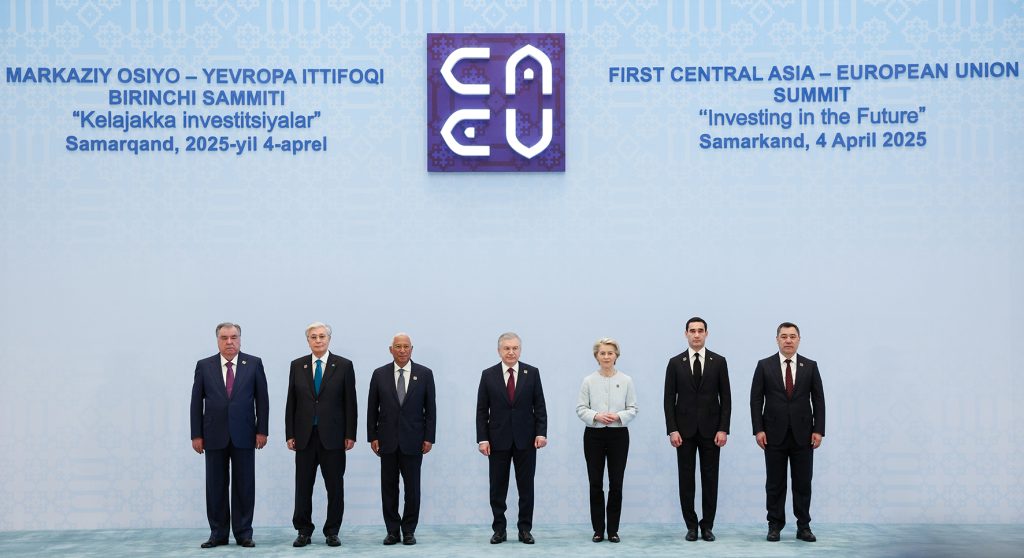
Photo and copyright: European Union.

On 10 April 2025 Civil Rights Defenders, along with seven other international human rights organizations, commend the commitments made at the EU-Central Asia Summit in Samarkand. We urge Central Asian leaders to prioritize human rights and uphold the civil and political freedoms enshrined in their national constitutions and international treaties. The commitments to peace, security, democracy, and the elevation of relations to a strategic partnership must be matched by concrete actions to protect human rights.

On Friday, April 4, the Uzbek city of Samarkand hosted the first ever EU – Central Asia Summit where high-level officials – all five regional presidents and European Council President António Costa and European Commission President Ursula von der Leyen – discussed economic cooperation and agreed to bring their existing partnership to a new strategic level. At the end of the summit, participants issued a joint declaration that, among others, stated their commitment to freedom of expression and association, creating an enabling environment for civil society and independent media, protection of human rights defenders, as well as to respecting the rights of women and children. According to an official press release, the European Commission promised to invest €12 billion in the region to strengthen transport links and deepen cooperation on critical raw materials, digital connectivity, water, and energy.

Paragraph 3 of the joint declaration says: “We are committed to cooperate for peace, security, and democracy, to fully respect international law, including the UN Charter and the fundamental principles of respect for the independence, sovereignty and territorial integrity of all States, within their internationally recognised borders. We emphasised the importance of achieving as soon as possible, a comprehensive, just, and lasting peace in Ukraine in accordance with the principles of the Charter of the United Nations. We emphasized the need to uphold the principles of the OSCE by the participating States. We reconfirmed the obligation of all States to refrain in their international relations from the threat or use of force, to respect international humanitarian law and underlined the need for peaceful resolution of conflicts.”

In paragraph 16, the “EU and Central Asian leaders reiterated that the promotion and protection of rule of law, human rights and fundamental freedoms is a common fundamental value. Ensuring freedom of expression and association, an enabling environment for civil society and independent media, protection of human rights defenders as well as the respect for the rights of women, the rights of the child, and labor rights remain at the core of EU–Central Asia relations. The EU reiterated its readiness to support efforts in this regard at regional as well as at national level.” 

Furthermore, in paragraph 15 the “Participants affirmed the need for their continued commitment to enhanced cooperation and the development of new approaches in the joint fight against organised crime, violent extremism, radicalisation, terrorism, drug trafficking, trafficking in human beings, migrant smuggling, cyber threats, including cybercrime and disinformationas well as addressing Chemical, Biological, Radiological and Nuclear risks whilst safeguarding human rights and media freedom [emphasis added].”

Civil Rights Defenders, International Partnership for Human Rights (IPHR), Araminta, Freedom Now, Norwegian Helsinki Committee, People in Need, International Federation for Human Rights (FIDH), and the World Organisation Against Torture (OMCT) welcome these declared commitments and urge the leaders of each Central Asian nation to take immediate steps to fulfill their promises. They should start by releasing from prison all journalists, bloggers, lawyers, human rights defenders, civil society activists, and political opponents who have been prosecuted and convicted on retaliatory and unsubstantiated charges. They should also repeal legislation containing provisions that directly contradict their declared commitment to human rights standards. 

The Central Asian governments should also end–and establish safeguards to prevent–the misuse of anti-extremism and anti-disinformation policies and security tools to restrict, persecute, and/or criminalize legitimate civil society activity. While enhanced cooperation in the joint fight against organized crime, violent extremism and terrorism, and disinformation are a welcome development, these types of laws and cooperation initiatives have been instrumentalized by the Central Asian governments against legitimate civil society actors, media and political opposition activists, including for imprisonment on lengthy sentences and transnational repression extending to the territory of the European Union. 

In particular:

  • In Kazakhstan, President Kassym-Jomart Tokayev should order the release from custody of activist Aigerim Tleuzhanova, political opposition party leader Marat Zhylanbayev, satirist blogger Temirlan Ensebek, and labor rights activist Erzhan Elshibayev among others prosecuted on politically motivated charges, We believe that these individuals were targeted in direct retaliation for exercising their civil and political rights, and authorities have failed to provide any credible evidence to support the allegations levelled against them. Kazakh authorities should repeal or thoroughly revise broadly worded criminal code provisions penalising the involvement in ‘’extremist’’ activities, ‘’incitement’’ to discord and the spread of ‘’false’’ information, which are frequently misused to target critics, including in some of the cases mentioned above. Kazakh authorities should also drop their declared plans to adopt a so-called “foreign agents’” law, cease the public attacks on the LGBTIQ community, and end reprisals against NGOs-recipients of foreign grants.
  • In Kyrgyzstan, it is welcome that President Sadyr Japarov pardoned Temirov Live associated journalist Azamat Ishenbekov this week, although he should not have been imprisoned in the first place. Authorities should also quash the charges against his colleagues convicted on similar charges, releasing Makhabat Tajibek Kyzy  and lifting the probational sentences imposed on Aike Beishekeyeva and Aktilek Kaparov. We believe all four journalists were targeted in retaliation for their critical opinions and independent journalism. Authorities should also release independent journalist Kanyshay Mamyrkulova and drop the criminal charges initiated against her and others in apparent retaliation for social media posts critical of the government. In addition, they should reverse the court ruling that ordered the liquidation of independent news organization Kloop Media and stop pressuring other independent media. They should repeal the law on so-called “foreign representatives” and revoke vaguely worded provisions that prohibit the dissemination of “false’’, defamatory or insulting information, as well as content that ‘’promotes non-traditional sexual relations’’. This legislation severely violates the fundamental freedoms of expression, association, and assembly.
  • In Tajikistan, President Emomali Rakhmon should take immediate steps to release from prison the eight independent journalists Rukhshona Hakimova, Abdusattor Pirmuhammadzoda, Ahmad Ibrohim, Abdullo Ghurbati, Daler Imomali, Khurshed Fozilov, Khushom Gulyam, and Zavqibek Saidamini. Human rights activists and lawyers Ulfatkhonim Mamadshoeva, Buzurgmehr Yorov, Manuchehr Kholiknazarov, and Faromuz Irgashov should also be freed without delay. By imprisoning these individuals the Tajik authorities have cemented a climate of fear among civil society actors – a record that must be reversed. Tajik authorities should also cease its continued crackdown in the Gorno-Badakshan Autonomous Region and its systematic use of transnational repression to target government opponents abroad, including in EU countries. Several individuals who were forcibly returned to Tajikistan in  2024 were tortured, arrested and handed lengthy prison sentences after closed trials. 
  • In Turkmenistan, President Serdar Berdimuhamedov should take concrete steps to rectify his government’s extremely poor human rights record, free political prisoners, and allow space for an independent civil society to develop. The government should publicly declare tolerance towards criticism in the media and end wide ranging internet censorship. Authorities should immediately end attacks and harassment of critics of the regime both inside the country and abroad, including veteran human rights defender and journalist Soltan Achilova, who has repeatedly been barred from leaving the country. They should also decriminalize homosexuality while adopting legislation to criminalize domestic violence.  
  • In Uzbekistan, President Shavkat Mirziyoyev should order to quash wrongful convictions and free from prison and retaliatory psychiatric ward lawyer Dauletmurat Tadzhimuratov, activists Nargiz Keldiyorova and Dildora Khakimova and blogger Valijon Kalonov. All these human rights defenders have been targeted with retaliatory prosecution and convicted on unsubstantiated charges for publicly expressing their opinions about the state of affairs in the country. The Uzbek government should also repeal the law on so-called “undesirable foreign persons,” decriminalize male homosexuality, and remove all legal provisions and bureaucratic obstructions that prevent independent civil society groups from engaging in legitimate human rights work.

We urge the leaders of each Central Asian nation to demonstrate that they have the political will to deliver on their declared commitments made at the Samarkand summit and to respect human rights and civil and political freedoms protected by their national constitutions and international treaties ratified by them. We call on the EU to ensure that the commitments expressed in the joint declaration are followed through and that Central Asian governments are held accountable for violations of their human rights obligations under EU cooperation instruments, including bilateral partnership and cooperation agreements and preferential trade schemes. In line with the EU’s value-based partnership with the Central Asian countries, advancing connectivity, trade, and investment should go hand in hand with efforts to promote concrete progress in human rights and rule of law in these countries. The steps listed above are merely a suggested choice of actions that we urge the Central Asia governments to implement without delay. Much more needs to be done for addressing past and ongoing abuses that respect and protect citizens’ rights and freedoms.

Signtures

Civil Rights Defenders

International Partnership for Human Rights (IPHR)

Araminta,

Freedom Now

Norwegian Helsinki Committee

People in Need

International Federation for Human Rights (FIDH)

World Organisation Against Torture (OMCT)
Tajik Activist Taken Into Custody Upon Arrival After German Deportation

November 9, 2024
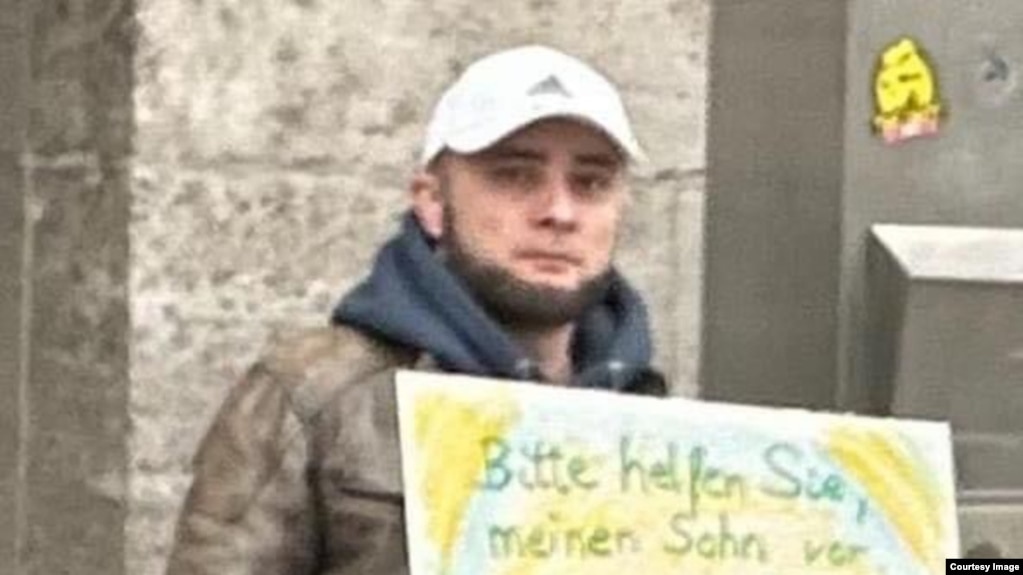
Dilmurod Ergashev (file photo)

Tajik opposition activist Dilmurod Ergashev was reportedly taken into custody by authorities as he disembarked a plane in Dushanbe after being deported by Germany hours earlier. Sharofiddin Gadoev, leader of the opposition Movement for Reform and Development of Tajikistan, told RFE/RL that Ergashev was met by Tajik security officials, who declined to comment on the situation.

His case has raised concerns among human rights advocates and international observers, given the serious allegations of potential torture and the lack of transparency regarding Ergashev’s condition following his deportation.

Ergashev reportedly attempted to harm himself by slitting his wrists and legs as German police were preparing to escort him to the airport on November 6. The Insider investigative group reported that Ergashev was hospitalized after the incident, but that the deportation proceeded regardless.

Gadoev said Ergashev’s health condition during the deportation was poor, and that since his arrival in Tajikistan, no further information has been available about his whereabouts or well-being.

RFE/RL’s efforts to obtain an official statement from Tajik authorities have been unsuccessful with representatives of the Prosecutor-General’s Office and the Interior Ministry failing to respond to inquiries.

Leila Nazgul Seiitbek, head of the Vienna-based organization Freedom for Eurasia, informed RFE/RL on November 7 that her organization has appealed to the European Court of Human Rights, seeking intervention in Ergashev’s case and advocating for his safe return from Tajikistan.

Seiitbek noted that her organization had called on German authorities to halt the deportation, arguing that Ergashev faces a high risk of torture in Tajikistan. The deportation order was issued by the Administrative Court of the German town of Kleve on October 28, immediately following Ergashev’s detention.

His associates argued that the court disregarded Ergashev’s pending asylum application in another German court, which is still under consideration.

Ergashev is a prominent member of the Group 24 movement.

Group 24 was founded by businessman Umarali Quvatov, who was assassinated in Turkey in 2015. The group has been a vocal critic of the Tajik government and advocates for democratic reforms. Tajik authorities have labeled it “extremist.” In 2024, Ergashev joined the Movement for Reform and Development of Tajikistan movement.

Ergashev had been living in Germany for the past 13 years as his cases wound through German courts.

https://www.rferl.org/a/germany-tajikistan-deportation-tajik-opposition-activist-dilmurod-ergashev-rights/33194321.html

Amnesty International looking for Senior Regional Campaigner for Eastern Europe and Central Asia region

December 19, 2022

The urgent human rights issues in the Eastern Europe and Central Asia region are hugely varied and demand creative campaigns that are well-researched, well-planned and well-managed despite the time pressures that surround them.

JOB PURPOSE: To lead the identification, development, implementation and evaluation of Amnesty International’s campaigning and advocacy strategies on human rights violations in the Eastern Europe and Central Asia region, to deliver impact in relation to agreed priorities, utilizing political judgment and analytical, communication and representational skills.

ABOUT YOU

  • Lead the development and implementation of campaign strategies, ensuring campaigns result in measurable change.
  • Advise on, coordinate and review the contribution to relevant campaigns by regional colleagues and other programmes.
  • Coordinate action planning and ensure consistency with campaigning standards and optimal use of resources.
  • Assess opportunities for action, identifying creative and effective campaigning tactics.
  • Provide advice to sections and structures and external partners on the development and implementation of campaign strategies.
  • Responsible for ensuring there is effective communication between relevant IS teams, sections and structures and partners about projects.
  • Draft, review and advise on campaign materials for internal and external use, ensuring products are coherent within the campaign strategy.
  • Communicate AI’s concerns, positions and messages to external and internal audiences.
  • Contribute to planning, execution and evaluation stages of campaign projects; develop and share campaigning best practice.

SKILLS AND EXPERIENCE

  • The ability to adapt to fast-changing political situations in, and related to, Eastern Europe and Central Asia.
  • Experience of leading and implementing campaigns at the national & international level and the ability to lead innovation and creative approaches to campaigning.
  • Knowledge of working on, and in, the region and a specialist knowledge in relation to specific countries or other geographical areas in the region.
  • Digitally competent, with experience of digital campaigning and keeping up to date with digital trends and campaigning methodologies.
  • Experience of working with colleagues and partners based around the world.
  • Excellent communications skills in English and Russian in a fluent, clear and concise way. Knowledge of another regional language desirable
  • Experience of leading project teams and the ability to engage and inspire team members.
  • Experience of managing conflicting demands, meeting deadlines and adjusting priorities
  • Ability to undertake research to gather information relevant to the development of campaign strategies.
  • Ability to evaluate campaigns and projects and to report progress against stated objectives; experience of managing budgets and reporting against expenditure.

Amnesty International is committed to creating and sustaining a working environment in which everyone has an equal opportunity to fulfill their potential and we welcome applications from suitably qualified people from all sections of the community. For further information on our benefits, please visit https://www.amnesty.org/en/careers/benefits/

APPLY HERE

https://careers.amnesty.org/vacancy/senior-regional-campaigner-london-3481/3509/description/

JOINT NGO RECOMMENDATIONS ON ENSURING PROTECTION OF HUMAN RIGHTS DEFENDERS IN CENTRAL ASIA

May 21, 2014


9

From 20-21 May 2014 there was in Dushanbe, Tajikistan, a Regional Workshop on Implementing the Human Dimension Commitments and Enhancing the role of Civil Society. An important contribution was the joint statement by six NGOs containing recommendations to protect human rights defenders in Central Asia.  The text in its totality follows below:  Read the rest of this entry »

Russian human rights defenders update: Tatiana Kotlyar and Elena Ryabinina

May 12, 2014

On 30 April 2014, an investigative officer in Russia ordered the psychiatric assessment of human rights defender Ms Tatiana Kotlyar in relation to an ongoing criminal investigation into the allegations that she falsely allowed dozens of migrants to illegally register her own apartment as their place of residence. [Tatiana Kotlyar is the deputy of Obninsk city council and is the chair of the Kaluga movement “For Human Rights”, which specialises in the protection of minority rights, including the rights of Roma and migrants. Since 2011, Tatiana Kotlyar has been allowing dozens of migrants to register her apartment as their place of residence for free. The Investigative Officer Zimin ordered the psychiatric examination, even though Tatiana Kotlyar has no history of psychiatric difficulties and has never received psychiatric treatment. Front Line believes that the decision may be linked to the fact that the human rights defender did not require payment for providing residence registration for more than a hundred people.]  For actions see: http://www.frontlinedefenders.org/node/25865/action

In the meantime Front Line Defenders informs us of the death of Elena Ryabinina, a much admired Russian human rights defender, on 4 May 2014 in Moscow, aged 59. Since 2002, Ryabinina had been fighting for the rights of refugees seeking asylum from Central Asian countries. She was renowned for the compassion, enthusiasm, and optimism with which she worked to achieve better rights for refugees and asylum seekers. She must have saved dozens of Uzbeks and Tajiks who sought asylum. Although she did not have formal legal training, Ryabinina developed an impressive knowledge of asylum laws, and consulted and defended people seeking political and religious asylum. She worked with the Civic Assistance Committee and the Memorial Human Rights Center and headed the Right to Asylum program at the Institute for Human Rights.


12 human rights defenders who are not on the slopes of Sochi

February 9, 2014

FLD launches Olympics campaign on 12 human rights defenders

Front Line Defenders launched an online and social media campaign to focus attention on the plight of 12 human rights defenders (HRDs) from Eastern Europe and Central Asia coinciding with the launch of the Winter Olympics in Sochi, Russia. The ‘Rights. Risks. Change!’ campaign (www.sportshrd.org) calls on the public to take solidarity action to support these 12 defenders and to pressure local officials to respect the work of HRDs.

All 12 of the HRDs highlighted in the campaign have displayed great courage and integrity in their work on a range of human rights issues. Read the rest of this entry »

The EU and freedom of expression as seen by Index on Censorship

January 16, 2014

Index on Censorship is basing a series of articles on its larger report by Mike Harris, Time to Step Up: The EU and freedom of expression.

On 14 January 2014 came the one the ‘southern neighbourhood’ arguing that the credibility of the EU’s swing in focus from economic development towards human rights (after the outbreak of the Arab spring) is low.

The EU’s  communication “A partnership for democracy and shared prosperity with the southern Mediterranean“ (published on 8 May 2011) addresses the EU’s commitment to financially support transition to democracy and civil society and heralds the creation of the Civil Society Facility for the neighbourhood (covering both the southern and eastern neighbourhoods), while the European Instrument for Democracy and Human Rights (EIDHR) deployed a number of operations in the region to protect and promote freedom of expression, often without the consent of the host country. Still, the article argues, european countries are often still seen as former allies of repressive regimes.

http://www.indexoncensorship.org/2014/01/eu-freedom-expression-southern-neighbourhood/

The one of 15 January, entitled ‘The EU and free expression: Human rights dialogues’, looks at the situation that the EU runs 30 human rights dialogues across the globe, with the key dialogues taking place in China, Kazakhstan,  Kyrgyzstan, Tajikistan, Turkmenistan, Uzbekistan, Georgia and Belarus. It also has a dialogues with the African Union. The article is more detailed on China 

The article concludes: “With criticism of the effectiveness and openness of the dialogues, the EU should look again at how the dialogues fit into the overall strategy of the Union and its member states in the promotion of human rights with third countries and assess whether the dialogues can be improved.

The EU and free expression: Human rights dialogues – Index on Censorship | Index on Censorship.


Vacancy at Civil Rights Defenders: Programme Director for Eastern Europe and Central Asia

December 19, 2013

Stockholm-based Civil Rights Defenders is looking for a replacement to the organisation’s Programme Director for 
the Eastern Europe and Central Asia department. This is a full-time position starting from 24 March 2014, lasting at least until 10 February 2015 though it might be prolonged. Deadline for applications is 20 January 2014.

The Programme Director is stationed in Stockholm, though frequently travelling and meeting with human rights defenders in the region, and representing Civil Rights Defenders in public. The tasks of the Programme Director include fundraising. Qualifications: MA in Law, Political Science, International Relations or related fields/areas, including training in international human rights mechanisms; Minimum of 5 years of working experience with human rights; At least 2 years of management experience; Working experience from Eastern Europe, Central Asia or the South Caucasus, preferably in human rights, and extensive knowledge about the human rights situation in the region; Fluency in at least two of the following languages: English, Swedish, and Russian.

Application to kim.matthis[at]civilrightsdefenders.org

via Civil Rights Defenders – Temporary Programme Director for Eastern Europe and Central Asia.

“Fabricated” charges like trafficking and sexual harassment used to silence Uzbek Human Rights Defenders

September 26, 2013

In what could possibly put trafficking campaigners and human rights organisations on a collision course, the Uzbekistan authorities have recourse to trafficking and sexual harassment charges to put human rights defenders behind bars. Read the rest of this entry »

Turkmenistan and Uzbekistan: non-cooperation should not pay!

April 22, 2013

Turkmenistan and Uzbekistan’s highly repressive policies are coming up for rare international scrutiny as from today (22 and 24 April 2013), Human Rights Watch said today. United Nations member countries gathering at the Human Rights Council in Geneva under the Universal Periodic Review (UPR) procedure should seize the opportunity to expose and denounce the ongoing repression in both countries and press for concrete steps to end abuses.HRW_logo

The governments of Turkmenistan and Uzbekistan stand out as among the most repressive in the world, Human Rights Watch said. Both also stand out for their failure to heed recommendations made during their previous Human Rights Council reviews, in December 2008. “The extraordinarily high levels of repression in both Uzbekistan and Turkmenistan, coupled with their governments’ refusal to acknowledge problems, let alone to address them, underscores the need for a strong, unified message,” said Veronika Szente Goldston, Europe and Central Asia advocacy director at Human Rights Watch.

In submissions on Turkmenistan and on Uzbekistan Human Rights Watch highlighted key concerns with respect to both countries, and the steps needed to address them. One immediate step – and crucial if crime should not pay ! – is that both governments should be urged to end their longstanding denial of access for the UN’s own rights monitors. Ten UN rapporteurs have requested such access to Turkmenistan, while the number of UN rapporteurs barred from Uzbekistan has reached 11!  Cooperation with the International Committee of the Red Cross ICRC is another pressing issue [On April 12, the ICRC took the unusual step of announcing publicly its decision to end prison visits to detainees in Uzbekistan].

Other key concerns in Turkmenistan include: The government’s longstanding use of imprisonment as a tool for political retaliation and draconian restrictions on freedom of expression and association, which authorities enforce by threatening, harassing, or imprisoning those who dare to question its policies, however modestly. The severe repression of civil society activism makes it impossible for independent human rights defenders and journalists to work openly.

via Turkmenistan/Uzbekistan: Abuses in International Spotlight | Human Rights Watch.