Posts Tagged ‘Central Asia’

Turkmenistan and Uzbekistan: non-cooperation should not pay!

April 22, 2013

Turkmenistan and Uzbekistan’s highly repressive policies are coming up for rare international scrutiny as from today (22 and 24 April 2013), Human Rights Watch said today. United Nations member countries gathering at the Human Rights Council in Geneva under the Universal Periodic Review (UPR) procedure should seize the opportunity to expose and denounce the ongoing repression in both countries and press for concrete steps to end abuses.HRW_logo
The governments of Turkmenistan and Uzbekistan stand out as among the most repressive in the world, Human Rights Watch said. Both also stand out for their failure to heed recommendations made during their previous Human Rights Council reviews, in December 2008. “The extraordinarily high levels of repression in both Uzbekistan and Turkmenistan, coupled with their governments’ refusal to acknowledge problems, let alone to address them, underscores the need for a strong, unified message,” said Veronika Szente Goldston, Europe and Central Asia advocacy director at Human Rights Watch.

In submissions on Turkmenistan and on Uzbekistan Human Rights Watch highlighted key concerns with respect to both countries, and the steps needed to address them. One immediate step – and crucial if crime should not pay ! – is that both governments should be urged to end their longstanding denial of access for the UN’s own rights monitors. Ten UN rapporteurs have requested such access to Turkmenistan, while the number of UN rapporteurs barred from Uzbekistan has reached 11!  Cooperation with the International Committee of the Red Cross ICRC is another pressing issue [On April 12, the ICRC took the unusual step of announcing publicly its decision to end prison visits to detainees in Uzbekistan].

Other key concerns in Turkmenistan include: The government’s longstanding use of imprisonment as a tool for political retaliation and draconian restrictions on freedom of expression and association, which authorities enforce by threatening, harassing, or imprisoning those who dare to question its policies, however modestly. The severe repression of civil society activism makes it impossible for independent human rights defenders and journalists to work openly.

via Turkmenistan/Uzbekistan: Abuses in International Spotlight | Human Rights Watch.


Turkmenistan: two surviving Human Rights Defenders finally released but others linger in jail

February 18, 2013
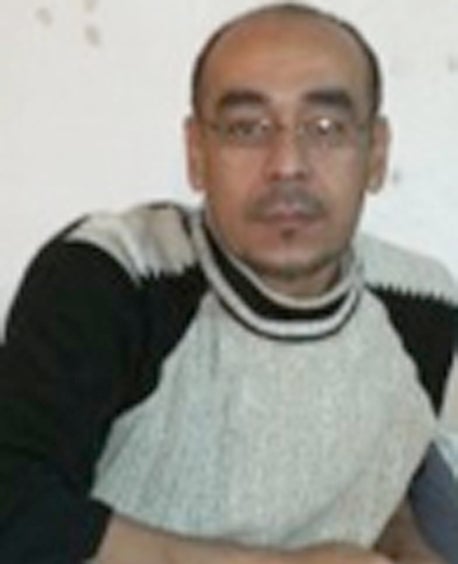
On 17 February 2013 Human Rights Watch announced that two human rights defenders were released in Turkmenistan after serving their sentence: Sapardurdy Khajiev and Annakurban Amanklychev  (© Turkmen Helsinki foundation)
The Turkmen authorities have long used the judicial system and long-term imprisonment to suppress civic activism and settle political scores. So while we celebrate Amanklychev and Khajiev’s long overdue freedom, the pressing question remains, how many others still languish behind bars on wrongful charges? said Rachel Denber of HRW. Read the rest of this entry »

Russian HRD Vitaly Ponomarev of Memorial Receives Death threats

January 21, 2013

On 12 January 2013, human rights defender Mr Vitaly Ponomarev received several anonymous death threats through electronic mail. Vitaly Ponomarev is the head of the Central Asia programme of Human Rights Centre (HRC) Memorial, which was founded in 1999 and has a major focus on documenting human rights violations in Central Asian states, particularly Uzbekistan, Turkmenistan and Kyrgyzstan, in close cooperation with local human right defenders.

The messages received on 12 January, in Russian and Uzbek languages and originating from an IP address in Tashkent, Uzbekistan, threatened Vitaly Ponomarev with death if he moved to the south of Kyrgyzstan, and also issued death threats against his family members living in Moscow. HRC Memorial has lodged a complaint to the Federal Security Service of the Russian Federation and requested an investigation to be launched into the threats. The messages follow

Frontline NEWlogo-2 full version - cropped

the publication on web site of Memorial on 27 December 2012, of a report containing information about reported torture by Uzbekistan’s security services against Uzbek citizens on the territory of the Russian Federation.

Front Line Defenders believes that the death threats issued against Vitaly Ponomarev are directly linked to his work.

2012 OSCE Human Dimension meeting gets information on HRD problems

September 27, 2012

Organisation for the Security and Cooperation in Europe (OSCE) has an active human rights defenders programme that is often overlooked. The statement below illustrates the kind of cases that continue to plague parts of Europe.

The International Federation for Human Rights (FIDH) and the World Organisation Against Torture (OMCT), within the framework of their joint programme, the Observatory for the Protection of Human Rights Defenders, submitted to the OSCE information on the threats and obstacles faced by human rights defenders in OSCE Participating States.

In 2011 and 2012, human rights defenders in Eastern Europe and Central Asia continued to operate in a difficult, and sometimes hostile environment. The lack of accountability and respect for the rule of law remained acute, particularly in Belarus, Kyrgyzstan, the Russian Federation, Turkey and Uzbekistan. For the full text go to:

Organization for Security and Cooperation in Europe OSCE : Contribution to the 2012 OSCE Human Dimension … – FIDH.

Turkmenistan and the UN: a rare comprehensive review of human rights shortcomings

April 3, 2012
On 30 March Human Rights Watch (HRW)  together with the International Partnership for Human Rights, and Turkmen Initiative for Human Rights made public a report that on the result of the Turkmen government’s hearing at the UN Human Rights Committee. Both the hearing and the original NGO submission  show its abysmal human rights record.  “The UN review leaves no doubt about the urgent need for human rights reform in Turkmenistan. What’s key now is to make sure the Turkmen government does what it takes to rectify abuses” stated Veronika Szente Goldston, Europe and Central Asia advocacy director at Human Rights Watch.  Given Turkmenistan’s exceptionally poor record of cooperation with the UN’s human rights bodies, sustained external pressure is essential to enforce compliance, the organizations said.
The Turkmen government’s clampdown on freedom of expression and repression of civil society activism, torture and ill-treatment in places of detention, and the lack of an independent judiciary topped the committee’s concerns. It directed the Turkmen government to report back within one year on measures taken to address them. The committee also highlighted other important areas of concern, such as: Incommunicado detention and imprisonment and restrictions on “the exit and entry into [the country] by certain individuals.  Other concerns raised by the committee include: The Law on Public Associations, which “severely restricts freedom of association; reports of the use of child labor in cotton harvesting; criminalization of homosexuality; and the “alleged use of a forced assimilation policy of ‘Turkmenisation,’ for ethnic minorities.
For the full report go to: http://www.hrw.org/news/2012/03/30/turkmenistan-damning-un-report-shows-need-urgent-action
RELATED MATERIALS: