On Human Rights Day 2024, in the year of its 35th anniversary, the North-South Centre celebrated the invaluable contributions of young people to the promotion and protection of Human Rights. Over the years, youth have played important roles as experts, multipliers, representatives, and active participants in our initiatives.
Young people are essential stakeholders in any meaningful effort to protect and strengthen Human Rights. The new Human Rights Education for Youth (HEY) programme is a reflection of that approach. It seeks to contribute to an increased youth capacity to engage in Human Rights protection through further awareness about European and International standards, and how they can be used by young people to protect themselves and their communities.
HEY joins a series of initiatives by the North South Centre where young people lead the way in championing Human Rights. These include the Rule of Law Youth Network, and the many activities in the field of Global Education and Youth Cooperation, such as the Youth Summer Universities that have engaged thousands of young people from all over the world. The youth focus was also present at the 2024 North-South intercultural conference, which resulted in the Kotor Declaration, with recommendations on youth initiatives to combat racist and xenophobic acts through computer systems.
Front Line Defenders issues regularly urgent appeals on behalf of Human Rights Defenders. This case is just an example: on 29 May 2024 FLD called for action on behalf of woman human rights defender Jina Modares Gorji in Iran who was sentenced to twenty-one years in prison.
Please get your own Front Line Defenders Appeals. By subscribing to this list [https://www.frontlinedefenders.org/secure/act-now.php] you will receive information on all cases that Front Line Defenders takes up on behalf of human rights defenders at risk. You will receive an average of 4 to 8 emails per week.
On 24 May 2024, Jina Modares Gorji was notified that Branch 1 of the Sanandaj Revolutionary Court has sentenced her to a total of twenty-one years in prison. In the verdict of the revolutionary court, the woman human rights defender has been sentenced to ten years in prison on the charge of “forming groups and association with the intention of disturbing the national security,” ten years in prison for “collaboration with a hostile government,” and one year in prison on the charge of “propaganda activities against the state.”
Jina Modares Gorji is a woman human rights defender, book seller, and feminist podcaster and blogger in Sanandaj, in the Kurdistan province in Iran. Her human rights work includes advocating for women among the Kurdish community, girls’ rights, and socio-cultural rights via holding book clubs and writing blogs. She has been arrested several times since September 2022, following the death of Mahsa (Jina) Amini in the custody of the Iranian morality police …
On 9 April 2024, the last hearing occurred for the woman human rights defender. The aforementioned charges are related to her peaceful human rights activities, which includes speaking to media, participating in international conferences and organising activities to promote women’s rights in the Kurdistan province in Iran. The woman human rights defender was arrested on 10 April 2023 and was arbitrarily detained for almost three months in solitary condiment and in the public Womens Ward of Sanandaj prison. She was also denied access to a lawyer. In mid-February 2023, she was informed that “spreading disinformation” had been added to the previous charges of “forming groups and association with the intention of disturbing the national security”, and “propaganda activities against the state”. On 3 July 2023, the woman human rights defender was released on a bail of one billion IRR.
In April 2023, Branch 1 of the Sanandaj Public and Revolutionary Court dismissed the lawsuit that Jina Modares Gorji filed against the physical and verbal assault during her arbitrary arrest.
On 12 February 2023, Jina Modares Gorji appeared with her lawyer before Branch 1 of the Sanandaj Revolutionary Court, where she did not sign the pardon scheme as she stated this would constitute an acknowledgement that the charges against her human rights work were legitimate. This scheme was announced by the Iranian judiciary in February 2023 on the occasion of the 44th anniversary of the Islamic Revolution.
The woman human rights defender had previously been arrested on 21 September 2022 for her work and participation in the “Woman, Life, Freedom” protests, and charged with “gathering and collusion against the national security” and “propaganda activities against the state.” She was released on a bail of 10 billion IRR on 30 October 2022, after going on hunger strike for three days in protest against the physical assault and detention she endured in the Sanandaj Correctional Centre.
The prosecution of Jina Modares Gorji is part of a wide crackdown on human rights defenders in Iran where, hefty sentences issued against human rights defenders on the charge of “forming groups and association with the intention of disturbing the national security,” against groups of human rights rights defenders reported by Front Line Defenders in April and May 2024.
Front Line Defenders is particularly concerned with the sentencing of the woman human rights defender Jina Modares Gorji , as it believes the judicial action is in reprisal for her peaceful and legitimate human rights work.
AI asked three older activists to reflect on their experiences, the changes they are campaigning for, and how being an older person gives them unique perspective and motivation.
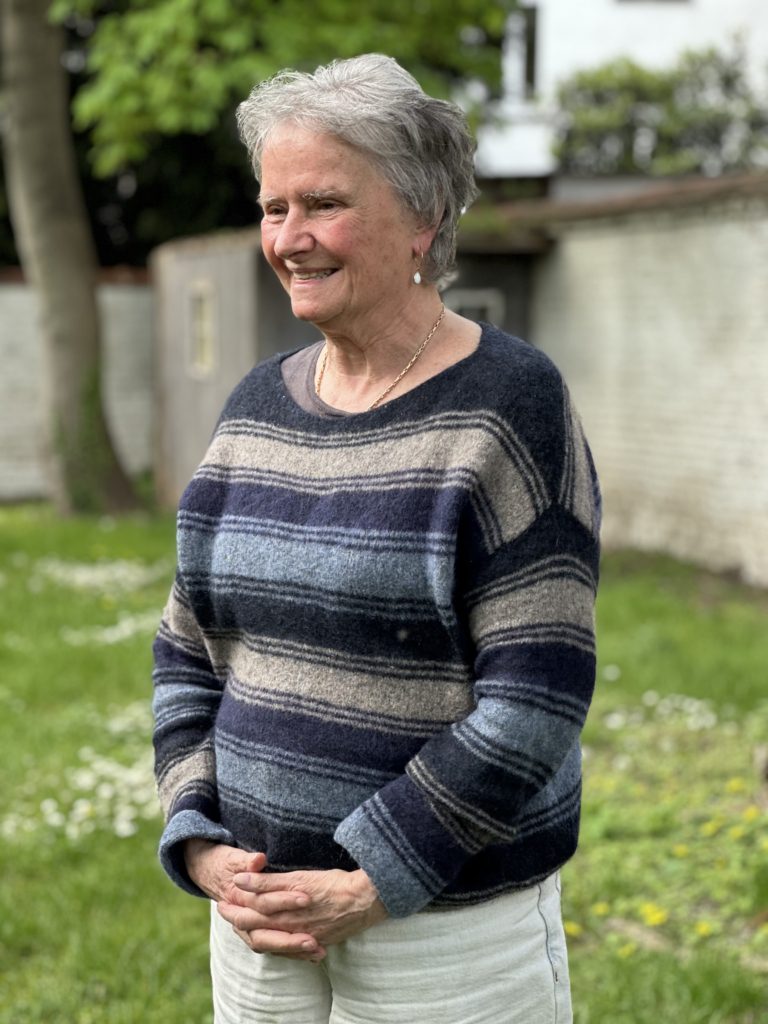
Cecile de Ryckel, 78, Belgium
Cecile is a lifelong activist working on anti-racism and climate change.
Why did you become an activist?
After a homelessness crisis amongst migrants in Belgium in 2015, my husband and I hosted two people from Ethiopia who the authorities had left to sleep in a city park. They told us that in Ethiopia they were small-scale farmers and grew food for their families. However, it was raining less frequently, and growing food was becoming more difficult. That was when I realized that climate change was one of the most important issues in the world today, and that it would have far-reaching consequences. Soon after that I participated in a citizens assembly discussing how best to address climate change and reduce carbon emissions. We learned how to mobilize people and change behaviours. I joined an advocacy collective, Grandparents for the Climate, and started working actively on the issue.
We have a responsibility to future generations to address this challenge today. It already has wide-ranging impacts on people of all ages. I remember when I was a child that we would joke that an older person was someone who “wouldn’t make it through the winter”, but today due to rising temperatures we sadly have to ask whether some older people can “make it through the summer”.
I recently saw how a group of older women won a landmark court case that the Swiss government’s weak climate change policy had violated their rights. This will help advance the cause greatly, for people of all ages.
Amina Musa, 72, Nigeria
Amina is an activist on behalf of victims of the armed conflict in north-east Nigeria and their families, including those who have been unlawfully killed or detained.
Why did you become an activist?
I became an activist nine years ago when Boko Haram forced us to leave our homes, and we found ourselves living in camps controlled by the Nigerian government. The military made baseless accusations that our sons were associated with Boko Haram. Our sons were blindfolded and arrested and held in dehumanizing conditions. I had no choice but to start campaigning for their release. As mothers, we came together and started a movement to seek justice. We are demanding that all those detained unlawfully be released immediately and that the government investigate the gross violations we have experienced. Some of our sons have been in detention for more than 10 years. We have had enough, we want justice.
I tell other older people that they should continue with their activism and bear with the challenges, and that our activism can also inspire younger people. I know it is not easy, but these causes are important. Age should not and will not deter us from making our society free from injustice.
Juan Jacobo Hernández, 82, Mexico
Juan is an activist on social issues and LGBTQ+ liberation.
Why did you become an activist?
In the 1960s, I was part of Mexican student movements. Then Stonewall happened: I had a boyfriend at the time who lived in New York, and he told me that I had to come and see it for myself. I witnessed the first LGBTQ+ rebellion: the first time gay men, trans people, lesbians were standing up and confronting the police. Coming back to Mexico, we started the Frente de Liberación Homosexual (Gay Liberation Front). I had learned a lot about how to make protests visible and how to make our voices heard. Finally, there was a space where we could be active, where we could do something. When I started my activism, we didn’t use the term “human rights” – but that’s what it has always been about. We held large demonstrations against political repression, for the abolition of the death penalty, and to fight restrictions on social protest. Persecution by the government was very real and close to us at the time – gay men and trans women were persecuted, raided by the police, extorted and beaten up.
Whenever we were out in the street, we felt that something bad could happen. We were struggling for our lives, for our security, for our right to be in the street without being beaten up, robbed or killed.
My whole life, I have never stopped being an activist. The AIDS epidemic collapsed the first phase of gay liberation. So many activists died and [as I grew older], I recognised the need to transmit my experience, knowledge and values [to the younger generation]. Since 1981 I’ve been part of Collective Sol, where we work to build and strengthen the capacity of small, grassroots organizations that are working on the most pressing LGBTQ+ issues they see today.
My life as an activist means I can look back and say I have witnessed three great moments in LGBTQ+ liberation. The first was when we formed political organizations, coming out of the shadows and breaking the silence. The second was the HIV/AIDS epidemic, the way it created a connection between LGBTQ+ liberation and people living with HIV, irrespective of whether they were LGBTQ+. This connection was powerful and drove the movement forward.
On 9 April 2024, Michael Morrison in Human Rights Centre Blog of the University of Essex wrote a post “Standing Strong: Supporting Human Rights Defenders Worldwide” about the work of Prisoners Of Conscience (PoC), a UK-based charity,
In a world where human rights are not universally respected, there are courageous individuals who face persecution, silencing, torture, and forced displacement just for standing up for their beliefs. Prisoners Of Conscience (PoC), our UK-based charity, stands in solidarity with these brave people, offering both financial and practical support to those who defend human rights worldwide.
Prisoners Of Conscience operates on a simple yet powerful belief: no one should be persecuted for protecting or advancing human rights. We recognise that while we enjoy the freedom to express ourselves, many others around the world are not so fortunate. These individuals face unimaginable challenges for their beliefs, often enduring imprisonment, torture, harassment, violence, or being forced to flee their home countries.
Our mission is clear: supporting those who stand for rights. Our charity provides rapid financial assistance through grants; ensuring immediate relief, resettlement, and requalification during a recipient’s time of greatest need. These grants are not just about providing temporary relief; they are a lifeline for those who have sacrificed their freedom for the principles they believe in. Financial assistance includes covering legal fees, medical expenses, and basic living costs for individuals and their families.
Moving towards holistic support, we have developed various programs to empower our beneficiaries beyond financial aid. Our employability panel offers guidance and opportunities for career development, including job placement services and vocational training. Additionally, our web-based forum provides a platform for networking and collaboration, where individuals can connect with like-minded activists and organisations. We also collaborate with other parties to offer signposting to practical support, such as mental health services, legal advice, language classes, and integration support for those seeking asylum.
Yuzana* for example, is a writer, surgeon, and founding member of PEN Myanmar. Yuzana faced a daunting 20-year sentence for her role as a campaigns assistant for the National League of Democracy (NLD) and her unwavering commitment to human rights. Despite enduring almost six years of imprisonment in one of Myanmar’s most notorious prisons, Yuzana’s determination remained unyielding. After being released on humanitarian grounds due to her declining health and international pressure, she continued her advocacy work.
Yuzana
In the wake of the military coup in Myanmar in February 2021, PEN Myanmar continues to monitor and share critical information despite grave risks to their safety. Several members of the organisation have been detained, and tragically, four poets are among the unarmed civilians killed. Yuzana, concerned for her safety, was compelled to leave Myanmar and seek refuge in another country. With the assistance of Prisoners Of Conscience, Yuzana was able to cover her travel expenses and basic living costs while she establishes herself in a new environment.
Our recent research indicates that at any one time there are tens of thousands of prisoners of conscience who are persecuted and in need of our support. The impact of our work is evident in the numbers: in the past year alone, Prisoners of Conscience awarded 130 grants to over 420 individuals from 28 countries. This vital support reached a total of 424 individuals, offering crucial assistance during times of adversity. We are profoundly grateful for the generosity of our donors, whose unwavering support enables us to continue our mission of empowering those who defend human rights.
The challenges of the past year, compounded by the pandemic, have prompted us to adapt and innovate, and right now, April is all about #RightsRealityCheck.
Not everyone has access to even the most basic of human freedoms, so we launched the #RightsRealityCheck campaign. This April, human rights champions are undertaking a series of challenges to raise awareness of the rights that many take for granted – basic rights and freedoms which prisoners of conscience risk their life to uphold and protect. Whether it’s reading 5 books throughout the month, writing a blog post each week, or walking in public each day without wearing a head covering, our kind-hearted fundraisers are standing in solidarity with those who face persecution for these simple acts. If you would like to join others who have taken on this commitment to an everyday right, you will not only be standing with prisoners of conscience, but also raising crucial funds to help keep those who defend human rights, and their voices, alive. It’s easy to get started: Simply download our fundraising pack by signing up here (it’s packed with tips and resources to make your challenge a success). Then, share your challenge with friends, family, and colleagues to gather sponsorship. Every pound raised goes directly to supporting human rights defenders and prisoners of conscience around the world. Or alternatively, see what we’re up to and support someone on their challenge by heading to the link here: #RightsRealityCheck Challenge – JustGiving. Let’s turn our everyday actions into a powerful force for change. Together, we can make a difference in the lives of those who need it most.
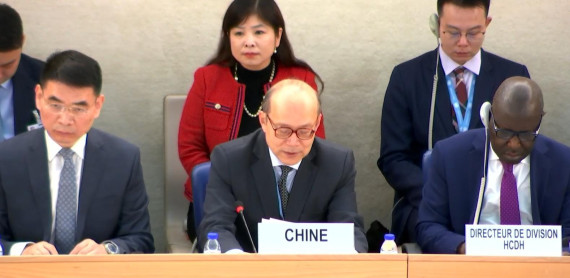
Last week, on 23 January 2024, the UN Human Rights Council reviewed the human rights record of China during its fourth Universal Periodic Review (UPR). The International Service for Human Rights reporst back on its successful campaign: Following ISHR campaign and your messages to UN member States, sixcountries, including France, Luxembourg, the UK, the US, Sweden, and Australia urged Beijing to put an end to the practice of ‘Residential Surveillance at a Designated Location’ (RSDL) – which UN experts have branded a form of enforced disappearance. This would not have been possible without you!
Following this session, the Chinese government must review the recommendations and decide whether to accept or simply note them, and report back to the Human Rights Council at its 56th session (June 2024). ISHR will closely monitor this and keep you informed. Our call to raise the case of Cao Shunli got unanswered. Cao was detained by Chinese police in September 2013 in retaliation for her work to seek meaningful civil society participation in China’s second UPR cycle. Ten years ago, on 14 March 2014, Cao died of multiple organ failure following continued denial of medical treatment in custody. Despite the emblematic nature of her case Cao’s name was not once cited by UN member States. Nevertheless, at least four States recommended to China to end reprisals against human rights defenders seeking to engage with the United Nations. We’re ramping up efforts for honouring the memory of Cao Shunli and calling for accountability in her case. We are preparing a small event on 14 March 2024 in Geneva. Stay tuned for more very soon!
On 27 March 2023 “Portrait of a Stranger,” a creative multimedia collaboration between world-renowned photographer and storyteller Platon, and UNHCR, was launched in partnership with the Movies That Matter International Human Rights Film Festival in The Hague, Netherlands.
The 18-minute film features interviews and portraits of over 20 refugees who fled conflict and persecution in various parts of the world, exploring the universal desire to be free, safe, respected and valued, and to belong.
Over the last year, UNHCR and Platon interviewed a diverse group of refugees ranging in age, nationality, ethnicity and personal circumstances. The result, Portrait of a Stranger, is a holistic, multimedia experience, marrying film and photography. It asks audiences to look beyond our differences and instead focus on our shared humanity.
“Living in exile may be their life circumstance, but it is not what defines them,” said Platon. “I hope the images and voices of the refugees in this film will help audiences focus on the shared humanity that unites us, rather than the barriers that divide us. Not only for these particular refugees but for all people forced to flee around the world.”
As the number of people forcibly displaced continues to rise – last year there were more than 100 million people uprooted globally – it is hoped that the collaboration will help to reframe the narratives and perceptions around people forced to flee.
“This film and these images are powerful reminders of who refugees really are. They are people like your neighbour, your friend, your colleague. Like you and me, each with our own personality; our hopes; our dreams,” United Nations High Commissioner for Refugees, Filippo Grandi, said. “By amplifying the voices of refugees, the film offers an important reality check to counter the negative public discourse we often hear about people forced to flee.”
About Platon:
Photographer, communicator and storyteller Platon has gained worldwide fame with his portraits. Platon has worked with a range of international publications including Rolling Stone, Vanity Fair, Esquire, and won a Peabody Award for his photo essays for The New Yorker. He has photographed over 30 covers for TIME Magazine and is a World Press Photo laureate. He is currently on the board for Arts and Culture at the World Economic Forum. In 2013, Platon founded The People’s Portfolio, a non-profit foundation dedicated to celebrating emerging leaders of human rights and civil rights around the world. See also: https://humanrightsdefenders.blog/2015/02/25/photographer-platon-speaks-about-human-rights-in-indiana-wells-on-february-27
AfricanDefenders‘ podcast series, “Exile Shall Not Silence Us”, is now complete and fully available for you to listen to. “Exile Shall Not Silence Us” (which I announced on 22 June 2020: https://humanrightsdefenders.blog/2020/06/22/exile-shall-not-silence-us/) is a podcast series on the situation of African human rights defenders (HRDs) in exile. The podcast is based on a research that collected the testimonies of more than 120 HRDs and in-depth case studies, and it features interviews with four exiled HRDs. It highlights the professional, security, socio-economic, and psychosocial challenges of HRDs in exile in Africa, but most of all their achievements and resilience strategies.
Episode#1 gives an overview of the main findings of the research on the situation of African HRDs in exile, with key issues and current trends.
Episode #2 features an anonymous interview with a young woman HRD from Zimbabwe in exile in South Africa. She not only sheds light on the challenges faced by HRDs in and outside Zimbabwe, but also on the complex and painful relationship between exile and motherhood.
Episode#3 explores the challenges HRDs face after returning from exile through an interview with a formerly exiled Gambian journalist.
Episode #4 explores the challenges and contradictions of internal displacement, as well as the multiple layers of vulnerability faced by HRDs in conflict-ridden areas through an anonymous interview with a Cameroonian woman HRD.
Episode#5 zooms in on Egypt where we speak to an Egyptian HRD in exile in Tunis who tells us about his experience, his hopes, and what he has been learning from Tunisian civil society.
Among the signatories are Nobel Prize, Academy Award, Pulitzer Prize, Booker Prize and British Academy Film Awards winners, including: Juliette Binoche, Laurent Cantet, Noam Chomsky, JM Coetzee, Judi Dench, Claire Denis, Dave Eggers, Danny Glover, Paul Greengrass, Maggie Gyllenhaal, Rebecca Hall, Naomie Harris, Khaled Hosseini, Anish Kapoor, Naomi Klein, Mike Leigh, Ken Loach, Paul Mason, Simon McBurney, Ruth Negga, Thandie Newton, Michael Ondaatje, Philip Pullman, Miranda Richardson, Andrea Riseborough, Arundhati Roy, and Stellan Skarsgård.
Leading advocacy groups, including Amnesty International, PEN International, Human Rights Watch and Reprieve have also signed onto the letter, as have prominent film organizations, including Sundance Institute, International Documentary Film Festival Amsterdam, the European Film Academy and Société des Réalisateurs de Films.
On 9 june 2020 Agnes Callamard, the UN special rapporteur on extrajudicial, summary or arbitrary executions, urged member states to pressure Saudi Arabia to free women activists before a G20 nations summit which Riyadh will be hosting in November. At least a dozen prominent women’s rights activists were arrested in Saudi Arabia in 2018 as it lifted a ban on women driving cars, a step that many of the detainees had long campaigned for. The women were rounded up as part of a broader crackdown on dissent that extended to clerics and intellectuals.
Several of the arrested women have alleged torture and sexual assault in detention. Saudi officials deny this and said the detainees were suspected of having harmed Saudi interests and offered support to hostile elements abroad.
Some of the activists are now on trial, but few charges have been made public. Charges against at least some of the activists relate to contacts with foreign journalists, diplomats and human rights groups. Their prosecution has drawn global criticism, particularly following the 2018 murder of journalist Jamal Khashoggi by Saudi agents inside the kingdom’s Istanbul consulate. (as Rapporteur Agnes Callamard also dealt with Khashoggi’s killing: https://humanrightsdefenders.blog/2019/12/23/the-unsatisfactory-end-to-the-khashoggi-investigation/)
Earlier Amnesty International had called on Saudi Arabian authorities to immediately release women human rights activists, including those who are “being punished for daring to drive.“…. Amnesty UK has launched a “Beep for freedom” campaign in support of the persecuted women’s rights defenders. The campaign involves supporters sharing photos of themselves behind the wheel of a car or sharing the campaign’s “Beep For Freedom” car horn symbol, with an appeal to the Saudi authorities to “immediately and unconditionally” release the activists and drop all charges against them.
Live discussion with 3 human rights defenders from across the globe
This event is part of the ‘Mural of Change’ campaign by Justice and Peace.
Today, more than ever before, we need to bring awareness to human rights, justice and environmental action. For this reason, we from Justice and Peace Netherlands have brought to you the ‘Mural of Change’ – a vibrant graffiti mural in The Hague representing known and unknown human rights defenders from around the world. The mural created by the graffiti-art duo Karski & Beyond is a visual statement and a call to action, as it comes in the unprecedented times of COVID-19 pandemic. [see: https://humanrightsdefenders.blog/2020/05/19/mural-of-human-rights-defenders-vitaly-safarov-greta-thunberg-and-berta-caceres-unveiled-at-hague-university/]
As part of our campaign to spread the message of change and action for human rights, we invite you to join our virtual event ‘Standing Side By Side With Human Rights Defenders’. During this event you will have the opportunity to meet three human rights defenders that took part in Shelter City. They will share with you the challenges they have been facing due to the COVID-19 pandemic; how their countries and the countries in their regions have responded to the spread of the virus; and how we can support them in their work. You will also have the chance to get in a conversation with them and ask your own questions.
SPEAKERS:
Genesis Davila, Human rights lawyer from Venezuela
Shibolo Awali, Lawyer and LGBTI rights defender from Uganda
Asha Kowtal, Dalit women’s rights defender from India
This discussion will be moderated by Tessa de Ryck, Security Training Coordinator for HRDs at Justice and Peace. The event will be in English.





 Hans Thoolen on Human Rights Defenders and their awards