Posts Tagged ‘Burundi’

Burundian women’s rights defender Marie Louise Baricako pushes for a national dialogue

October 8, 2025
Marie Louise Baricako, a women’s rights activist from Burundi, in Geneva for the Human Rights Council (Geneva Solutions/Michelle Langrand)

Marie Louise Baricako, a women’s rights activist from Burundi, in Geneva for the Human Rights Council (Geneva Solutions/Michelle Langrand)

Michelle Langrand in Geneva Solutions of 8 October 2025, talks with Burundian women’s rights defender Marie Louise Baricako – who was In Geneva to attend the Human Rights Council. She warns that her country is sinking deeper into crisis as the region teeters on the brink, urging the international community to push for a national dialogue.

Marie Louise Baricako recalls the Arusha negotiations with a mixture of pride and sorrow. In the late 1990s, she pushed for women to have a seat at the table in the talks aimed at ending Burundi’s inter-ethic civil war – and yet, 25 years on, much of the agreement’s promises remain unfulfilled.

“If women are left out, Burundi will keep losing,” she says. “How can you hope to develop when 52 per cent of your population are left aside?”

Baricako has spent a lifetime trying to empower that 52 per cent. In 1988, she became the first Burundian woman to earn a PhD, studying in Cameroon, and later led the English department at the University of Burundi. Born in Muramvya province, she spent much of her adult life abroad, including in The Gambia, where she joined Femme Africa Solidarité, a feminist network founded in Geneva in 1996 to promote female leadership in peace, security and development……

Fortuné Gaetan Zongo, UN special rapporteur on Burundi since 2021, warns of a “real risk” of regional destabilisation. “If Kinshasa were to fall, Burundi would be deeply affected,” he tells Geneva Solutions. Some 78,000 Congolese refugees fleeing the violence have crossed into Burundi since the beginning of the year, raising questions about how Burundi, already struggling, can cope with their humanitarian needs while the UN aid system is strapped for cash.

Baricako sees how ethnic narratives continue to be exploited by those in power. “This is what our leaders today are nourishing, because in their mind, Tutsi had kept power for so long alone, excluding Hutus. Now, they say ‘we have taken it, we shall not release it, until Jesus comes back’,” she says.

Yet repression is not limited to a group. “When women or human rights defenders dare to speak out on any violation, the next day, either they are in prison or they are killed,” she says…

Despite the bleak prospects, Baricako places hope in ordinary Burundians. “They have had time to believe in these stories of Hutus or Tutsi being the enemy. Now I believe people have realised that it is not about the ethnic group,” she says. “Burundians want a peaceful country, and they are ready to work as hard as they can to rebuild Burundi.”

Baricako stresses that talks would lead to more unfulfilled promises without the participation of those in power. She calls on the African Union and the East African Community to step out of their indifference and pressure Burundi to the table.

Zongo, who has been met with the government’s outright refusal to cooperate with him and other human rights experts, also notes that certain states with good relations with Burundi, like Tanzania, DRC and Cameroon, “can convince Burundi to sit at the table and engage in cooperation.”

For all the setbacks, Baricako remains steadfast. “The support of civil society has been essential in staying strong and not abandoning the fight,” she says. “Peace is our business, whether they want it or not. I will not go to the battlefield with a weapon, but what I have in my heart, I will use it to stand for peace and security of Burundians.”

https://genevasolutions.news/human-rights/rights-defender-fights-for-political-way-out-as-burundi-sinks-deeper-into-crisis

The Burundi crisis has been forgotten; interview with a Armel Niyongere, Burundian in exile

April 25, 2025

On 23 April, 2025 OMCT made public this interview with Armel Niyongere, exiled Burundian lawyer and Secretary General of SOS-Torture Burundi, a member of the World Organization Against Torture (OMCT) SOS-Torture network. He continues to denounce human rights violations in his home country. Despite 10 years of threats and intimidation from the authorities, Mr. Niyongere continues his fight to promote and protect human rights. In this interview he talks about the difficulties of exile, the challenges facing those who defend human rights, and the role of the international community.

https://www.omct.org/en/resources/blog/burundian-crisis-forgotten-armel-niyongere-exil

Elections to the next UN Human Rights Council: some good and quite some bad news

October 13, 2023

A year after being suspended from the body, Russia will not be returning to the UN Human Rights Council in January, despite its best efforts. Running for one of two seats allocated to countries from Central and Eastern Europe, Russia received only 83 votes, significantly less than competitors Albania (123) and Bulgaria (163).

With this vote, States have acted in line with General Assembly resolution 60/251 and stopped Russia’s brazen attempt to undermine the international human rights system,’ said Madeleine Sinclair, co-director of ISHR’s New York office. ‘Russia must answer for a long list of crimes in Ukraine and for its ruthless and longstanding crackdown on civil society and individual liberties at home. We’re relieved voting States agreed that it could not have legitimately held a seat at the UN’s top human rights body,’. [see also: https://humanrightsdefenders.blog/tag/russia/]

In the only other competitive race, between States from Latin American and the Caribbean, the General Assembly re-elected Cuba, one of Russia’s most consistent allies. Cuba ran for one of three seats for Latin America and the Caribbean, facing three competitors and coming in first, with 146 votes, ahead of Brazil (144), the Dominican Republic (137) and Peru (108).

Results for Asia and Africa were as disappointing as they were predictable, with the election of China and Burundi. Both States ran in uncompetitive races, with only as many candidates as seats available, thus all but assured to win. They were elected with 154 (China) and 168 (Burundi), finishing bottom of each of their respective regional slates with noticeably fewer votes than their direct competitors. 

Both countries are objectively and manifestly unsuitable for the Human Rights Council in view of their domestic records, their past actions as Council members, and the very criteria that nominally governs membership of the Council.

ISHR has been campaigning to call on States at the General assembly to vote in accordance with resolution 60/251 and to use their votes to ensure a strong and principled Human Rights Council. ISHR produced a series of individual and regional scorecards examining the records of all 17 candidates running this year.

https://ishr.ch/latest-updates/general-assembly-states-stave-off-cynical-russian-attempt-to-return-to-the-human-rights-council/

For more on scoring, see: https://www.universal-rights.org/2023-elections-to-the-human-rights-council-did-ga-members-vote-according-to-human-rights-criteria/

Human Rights Defenders at the 54th session of the UN Human Rights Council

September 11, 2023

On 6 September 2023 the ISHR published its formidable overview of key issues at the upcoming, 54th session of the UN Human Rights Council (from 11 September – 13 October). I have extracted from it – as ussual [for 53rd see: https://humanrightsdefenders.blog/2023/06/20/human-rights-defenders-issues-at-the-53rd-session-of-the-un-human-rights-council/], the issues most direclty affecting Human Rights defenders

To stay up-to-date: Follow @ISHRglobal and #HRC54 on Twitter/X, and look out for their Human Rights Council Monitor.

Thematic areas of interest

Reprisals

During the 54th session, Ghana, Fiji, Hungary, Ireland and Uruguay will present a draft resolution on cooperation with the UN. ISHR urges all States to support the adoption of a HRC resolution that strengthens the UN’s responses to reprisals.

On 28 September, the Assistant Secretary General for Human Rights, Ilze Brands Kehris, will present the Secretary General’s annual Reprisals Report to the Council in her capacity as UN senior official on reprisals. States raising cases is an important aspect of seeking accountability and ending impunity for acts of reprisal and intimidation against defenders engaging with the UN. It can also send a powerful message of solidarity to defenders, supporting and sustaining their work in repressive environments.

This year, ISHR launched a campaign regarding five cases. ISHR urges States to raise these cases in their statements:

  • Anexa Alfred Cunningham (Nicaragua), a Miskitu Indigenous leader, woman human rights defender, lawyer and expert on Indigenous peoples rights from Nicaragua, who has been denied entry back into her country since July 2022, when she participated in a session of a group of United Nations experts on the rights of Indigenous Peoples. States should demand that Anexa be permitted to return to her country, community and family and enabled to continue her work safely and without restriction.
  • Vanessa Mendoza (Andorra), a psychologist and the president of Associació Stop Violències, which focuses on gender-based violence, sexual and reproductive rights, and advocates for safe and legal abortion in Andorra. After engaging with CEDAW in 2019, Vanessa was charged with ‘slander with publicity’, ‘slander against the co-princes’ and ‘crimes against the prestige of the institutions’. She has been indicted for the alleged “crimes against the prestige of the institutions” involving a potentially heavy fine (up to 30,000 euros) and a criminal record if convicted. States should demand that the authorities in Andorra unconditionally drop all charges against Vanessa and amend laws which violate the rights to freedom of expression and association.
  • Kadar Abdi Ibrahim (Djibouti) is a human rights defender and journalist from Djibouti. He is also the Secretary-General of the political party Movement for Democracy and Freedom (MoDEL). Days after returning from Geneva, where Kadar carried out advocacy activities ahead of Djibouti’s Universal Periodic Review (UPR), intelligence service agents raided his house and confiscated his passport. He has thus been banned from travel for five years. States should call on the authorities in Djibouti to lift the travel ban and return Kadar’s passport immediately and unconditionally.
  • Hong Kong civil society (Hong Kong): Until 2020, civil society in Hong Kong was vibrant and had engaged consistently and constructively with the UN. This engagement came to a screeching halt after the imposition by Beijing of the National Security Law for Hong Kong (NSL), which entered into force on 1 July 2020. States should urge the Hong Kong authorities to repeal the offensive National Security Law and desist from criminalizing cooperation with the UN and other work to defend human rights.
  • Maryam al-Balushi and Amina al-Abduli (United Arab Emirates), Amina Al-Abdouli used to work as a school teacher. She was advocating for the Arab Spring and the Syrian uprising. She is a mother of five. Maryam Al Balushi was a student at the College of Technology. They were arrested for their human rights work, and held in incommunicado detention, tortured and forced into self-incriminatory confessions. After the UN Special Procedures mandate holders sent a letter to the UAE authorities raising concerns about their torture and ill treatment in detention in 2019, the UAE charged Amina and Maryam with three additional crimes. The UN Working Group on Arbitrary Detention found their detention arbitrary and a clear case of reprisals for communicating with Special Procedures. In April 2021, a court sentenced them to three additional years of prison for “publishing false information that disturbs the public order”. States should demand that authorities in the UAE immediately and unconditionally release Maryam and Amina and provide them with reparations for their arbitrary detention and ill-treatment.

Other thematic debates

At this 54th session, the Council will discuss a range of civil, political, economic, social and cultural rights and issues through dedicated debates with the:

  1. Special Rapporteur on truth, justice, reparation and guarantees of non-recurrence
  2. Special Rapporteur on contemporary forms of slavery, including its causes and consequences
  3. Working Group on Arbitrary Detention
  4. Working Group on Enforced or Involuntary Disappearances
  5. Special Rapporteur on the implications for human rights of the environmentally sound management and disposal of hazardous substances and waste
  6. ID on HC oral update on drivers, root causes and human rights impacts of religious hatred constituting incitement to discrimination, hostility or violence

In addition, the Council will hold dedicated debates on the rights of specific groups including with the:

  1. Independent Expert on the enjoyment of all human rights by older persons
  2. Special Rapporteur on the rights of Indigenous Peoples and the Expert Mechanism on the Rights of Indigenous Peoples

Country-specific developments

Afghanistan

The Council will hold an Interactive Dialogue with the Special Rapporteur on Afghanistan on 11 September, and on the OHCHR report on Afghanistan on 12 September, and will consider a resolution on the human rights situation in Afghanistan at this session.

ISHR supports the call of Afghan human rights defenders to the Council to renew the mandate of the Special Rapporteur on the situation of human rights in Afghanistan. We also support the call to establish a parallel independent investigative mechanism in the upcoming September session and to ensure meaningful follow up to the joint report of the Special Rapporteur and the Working Group on discrimination against women and girls, as well as continuation of a dedicated discussion at the Council on the situation of women and girls in Afghanistan. Accountability for widespread human rights violations, including gender apartheid and other crimes against humanity, is imperative to securing sustainable peace and development in the country.

Algeria

We urge States to demand that Algeria, a Council member, end its crackdown on human rights defenders and civil society organisations, amend laws aimed at silencing peaceful dissent and stifling civil society, and immediately and unconditionally release arbitrarily detained human rights defenders and activists, including in the interactive dialogue with the Working Group on arbitrary detention. Since the beginning of the Hirak pro-democracy movement, the Working Group has issued at least 6 decisions of arbitrary detention, highlighting Algerian legislation that is inconsistent with international law, violations of due process and the right to a fair trial, as well as violations to the right to freedom of expression, discrimination based on language, ethnicity and religion. They have also condemned Algeria’s abuse of counter-terrorism legislation. States should call on Algeria to implement the recommendations of the working group.

We also urge States to address the case of reprisals against HRDs Kaddour Chouicha and Jamila Loukil, members of the Algerian League for the Defence of Human Rights (LADDH) before its dissolution by the Algerian authorities. They were prevented from traveling to attend the pre-session organized by UPR-info, a clear case of reprisals against human rights defenders attempting to cooperate with the UPR. Chouicha, Loukil and other HRDs are charged in a criminal case, which includes ‘enrollment in a terrorist or subversive organization active abroad or in Algeria’. They are still awaiting trial as the authorities postponed their court session on 15 June 2023. If convicted of these charges, they face up to twenty years imprisonment.

Bahrain

Civil society organisations, including ISHR, have requested States to urge Bahraini authorities to unconditionally release all those sentenced for their political opinions, including human rights defenders Abdulhadi Al-Khawaja and Abduljalil Al-Singace, and in the meantime, to ensure that they are provided with life-saving medical care to prevent an imminent tragedy. [see also: https://humanrightsdefenders.blog/2023/08/20/500-bahraini-prisoners-on-hunger-strike-over-conditions/]

Burundi

The Council will hold an Interactive Dialogue with the Special Rapporteur on Burundi on 22 September. As serious human rights violations persist in Burundi and the Government has failed to hold per­petrators accountable or take the concerns raised by Burundian and international actors seriously, the Coun­cil should not relax its scrutiny. The Council should extend the Special Rapporteur’s mandate for a further year.

China

31 August marked one year since the release of the groundbreaking OHCHR report finding possible crimes against humanity committed by the Chinese government in Xinjiang. This Council session also marks one year since the failure of the Council, and most of its Council Members, to stand by principle against Beijing’s coercion and promote a dialogue on the human rights of Uyghurs. Since that time, the recommendations of the OHCHR’s report have been echoed by the CERD in its Urgent Action decision on Xinjiang, by the CESCR and CEDAW in their respective Concluding Observations, and by 15 Special Procedures mandates in their seven benchmarks on Xinjiang. Yet, in a surprise visit to the region in August, President Xi Jinping reiterated its hardline policy and called for further efforts to ensure ‘social stability’ and ‘control illegal religious activities’. States should take collective action to urge China to implement key recommendations from the OHCHR Xinjiang report, and from relevant UN Treaty Bodies and Special Procedures, with a focus on root causes of violations that commonly affect Uyghurs, Tibetans, Hong Kongers and mainland Chinese human rights defenders, including the abuse of national security laws and measures.

States should further ask for the prompt release of human rights defenders targeted by the Chinese government’s renewed crackdown on human rights lawyers, including lawyer Lu Siwei at risk of refoulement from Laos, activists Chang Weiping, Ding Jiaxi and Xu Zhiyong, recently convicted to lengthy prison sentences, as well as Yu Wensheng and Xu Yan, detained en route to meet with EU diplomats in Beijing. Ten years after the detention, and subsequent death in custody, of woman human rights defender Cao Shunli on her way to attend China’s UPR in Geneva, the Council must also pierce the veil of impunity for egregious cases of reprisals, and call on China to acknowledge its responsibility, bring perpetrators to justice and provide adequate remedy. [see also: https://humanrightsdefenders.blog/2023/09/05/human-rights-lawyer-gao-zhisheng-and-the-practice-of-enforced-disappearances-joint-letter/]

Egypt

Recent arrests and arbitrary detention of several media figures, dissidents and their family members in Egypt are indicative of the ongoing crackdown on basic freedoms and liberties in the country, and reflect a lack of genuine political will to improve the human rights situation by the Egyptian government. In the last ten years, Egyptian human rights organisations have recorded the enforced disappearance of no less than 3,000 citizens for varying periods of time, death by mistreatment and medical negligence of at least 1,200 people in detention centers, the sexual assault of at least 655 people and their family members, and the extrajudicial killing of more than 750 people. The continued silence on Egypt by States at the Council will only encourage further violations. NGOs continue to urge States to ensure appropriate action on Egypt at the Council though the establishment of a monitoring and reporting mechanisms on the human rights crises in the country. As an immediate step, States should deliver a follow-up joint statement condemning the human rights situation in the country and calling on the Egyptian government to refrain from continuing to carry out wide-spread human rights violations.

Israel/OPT

While Israel rejected all the recommendations on the right of the Palestinian people to self-determination and refugee return made by states during its UPR review, States should reiterate their commitment to putting an end to 75 years of denial of the Palestinian’s people inalienable rights to return and self-determination.

During HRC 53, civil society welcomed the resolution put forward by the OIC to ensure the full implementation of the United Nations database of businesses involved in Israeli’s settlement enterprise in the occupied Palestinian territory. States must ensure that the mandate is implemented in full as it represents a question of credibility to the Council, including by ensuring that the budget adopted in the fifth committee of the General Assembly later this year is in line with the programme budget implications (PBI). 

Russia

The Council will hold an Interactive Dialogue with the Special Rapporteur on the Russian Federation on 21 September. The Council will also be called upon to renew the mandate of the Special Rapporteur (HRC Resolution 51/25). ISHR strongly supports the renewal of the mandate and urges States to oppose Russia’s candidacy to the Human Rights Council.

The human rights situation in Russia continues to deteriorate, while Russia also continues to perpetrate atrocity crimes in Ukraine In recent months, Russia has enacted laws providing immunity against war crimes and crimes against humanity committed in the ‘State’s interests’, intensified its assault against LGBT persons, adopted further measures to repress civil society and silence independent journalists, and continued to arbitrarily imprison human rights defenders. Of further and direct relevance to the Council, Russia adopted a new law on 28 April 2023 which criminalises assistance, cooperation or confidential communications with international bodies, which may include the HRC and its mechanisms. These regressive developments, and the lack of any improvement in the human rights situation in the country, clearly warrant the extension of the mandate of the Special Rapporteur.

With respect to Russia’s candidacy for the Council, ISHR only campaigns against countries based on strict and objective criteria. Russia manifestly fulfils all of these criteria, being a country: (1) responsible for a pattern of reprisals against those who cooperate with the UN; (2) responsible for the repression of civil society (Russia is ranked as ‘closed’ (scoring 17/100 in the Civicus Monitor); and (3) directly responsible for war crimes and crimes against humanity in Ukraine according to the HRC-mandated CoI. On ISHR’s HRC candidate scorecards, Russia scores just 1/20 on objective criteria.

Saudi Arabia

In light of the ongoing diplomatic rehabilitation of crown prince and de facto ruler Mohammed bin Salman, the Saudi authorities’ brazen repression continues to intensify. Some notable recent trends as documented by ALQST include, but are not limited to: the further harsh sentencing against individuals for peaceful social media use, including a death sentence issued against a man for tweets, the prosecution of women such as Manahel al-Otaibi over her choice of clothing and support for women’s rights, the ongoing forcible disappearance of prisoners of conscience including Mohammed al-Qahtani [see: https://www.trueheroesfilms.org/thedigest/laureates/78383825-0b3f-4bca-883a-b81e1baecd09]and Essa al-Nukheifi beyond the expiry of their sentences, and; regressive developments in relation to the death penalty, including a surge in executions (95 individuals were executed in 2023 so far), and several young men at imminent risk of execution for crimes they allegedly committed as minors. Human Rights Watch has documented the brutal massacre of migrants at the Yemen border, in what may amount to further crimes against humanity. ISHR continues to call for States at the Council to adopt a resolution mandating an independent international monitoring and investigative mechanism on massive human rights violations perpetrated in and by Saudi Arabia.

Sudan

On 12 September, the Council will hold Interactive Dialogue on the High Commissioner’s oral update on Sudan.

Sudanese Women Rights Action published a report “laying an overview of the conditions of women’s rights and gender equality in Sudan as an extended crisis started on October 25th, 2021, when the military took over the power in Sudan, ending the transitional period on a bloody note…the report presents verified information about the crises scope, context, and responses from a gender perspective based on the needs on the grounds, the challenges, and the recommended interventions according to local actors and women activists.” ISHR urges the implementation of  the recommendations identified by women activists including to “Pressure both fighting parties to commit to sustainable Ceasefire; Pressure the fighting parties to open humanitarian corridors; Provide urgent funding to the humanitarian aid interventions; Ensure protection and evacuation of women and WHRDs from fighting areas”. Ahead of HRC54, ISHR joined over 110 NGOs in reiterating a call on the Council to establish an independent investigative mechanism on Sudan with a mandate to investigate human rights violations and abuses in Sudan, collect and preserve evidence, and identify those responsible.

Tunisia

We regret that the Council failed to exercise its prevention mandate and address the deteriorating human rights situation in Tunisia during HRC 53, during which the High Commissioner and UN Special Procedures raised alarm at the escalating pattern of human rights violations and the rapidly worsening situation in Tunisia following President Kais Saied’s power grab on 25 July 2021. In the last two years in Tunisia there has been a significant erosion of the rule of law, attacks on the independence of the judiciary, reprisals against independent judges and lawyers and judges associations, a crackdown on peaceful political opposition and abusive use of “counter-terrorism” law in politicised prosecutions, as well as attacks on freedom of expression and threats to freedom of association.

In an open letter against the “Memorandum of Understanding on a Strategic and Comprehensive Partnership between the European Union (EU) and Tunisia” and against the EU’s border externalisation policies, 379 researchers and members of civil society decried the use of vulnerable populations as scapegoats to mask the failures of public policy in Tunisia. While Tunisian authorities were persecuting Black African foreign nationals, including migrants, asylum seekers and refugees – deporting at least 1,200 sub-Saharan nationals to the borders with Libya and Algeria, in inaccessible and militarised desert zones, leaving them abandoned without water and food – the signing of the Memorandum effectively gave Tunisia “a blank check, following a strategy that is all the more irresponsible given its inefficacy”. Unless States tackle “the structural socio-economic causes of so-called irregular migration”, and radically rethink access to mobility, “this security approach to border management will only make crossings more deadly and strengthen smugglers”. Addressing these grave violations cannot be done without also urgently addressing the rule of law crisis in the country.

Venezuela

The UN’s fact-finding mission on Venezuela (FFM) will report to the Council on 25 and 26 September. The Mission will focus on the situation for human rights defenders in the country – an essential focus given the existing and proposed legislation adversely affecting civic space, and the threats and attacks HRDs face. The recent sentencing of 6 union leaders, denounced by UN Special Rapporteurs, is a clear example of the criminalisation of HRDs, as is the continued detention of the HRD Javier Tarazona, since July 2021, and that of many other real or perceived opposition figures. The continuing impunity in regard to the killing of defender Virgilio Trujillo Arana a year ago is an example of how little will exists to prevent attacks against HRDs.

In its first report in 2020, the FFM stated that it had reasonable grounds to believe that crimes against humanity had been carried out in Venezuela, with the principal targets of violations including social activists and political leaders at the forefront of protests. The recommendations made by the FFM at that time have not been implemented. We recall that Venezuela continues to refuse to engage with the FFM or allow it to enter the country.

States must participate in the interactive dialogue with the FFM to highlight the essential role of HRDs; express utmost concern at the ongoing, systematic threats, attacks and restrictions against civic space, and urge the Venezuelan authorities to take immediate steps to implement the recommendations issued by the UN human rights system. States must speak out forcefully in support of the FFM and its work, and encourage other states to do the same. This vital accountability mandate must be supported and its recommendations echoed, so that victims of violations in the country can believe that one day justice will be done.

Other country situations:

The High Commissioner will provide an oral update to the Council on 11 September 2023. The Council will consider updates, reports and is expected to consider resolutions addressing a range of country situations, in some instances involving the renewal of the relevant expert mandates. These include:

  • Interactive Dialogue on the report of the Independent Investigative Mechanism for Myanmar and Interactive Dialogue on the OHCHR report on Myanmar
  • Interactive Dialogue on the report of the High Commissioner on Nicaragua and oral update by the Group of Experts on Nicaragua
  • Interactive Dialogue on the report of the OHCHR on Sri Lanka
  • Interactive Dialogue with the Commission of Human Rights Experts on Ethiopia
  • Interactive Dialogue with the Commission of Inquiry on the Syrian Arab Republic
  • Interactive Dialogue on the interim oral update of the High Commissioner on the situation of human rights in Belarus
  • Interactive Dialogue with the Commission of Inquiry on Ukraine and Interactive Dialogue on the High Commissioner oral update on Ukraine
  • Enhanced Interactive Dialogue on the report of the High Commissioner and experts on the Democratic Republic of Congo
  • Interactive Dialogue on the oral update of OHCHR on technical assistance and capacity-building for South Sudan
  • Interactive Dialogue with the Special Rapporteur on Cambodia and presentation of the Secretary-General’s report
  • Interactive Dialogue with the Independent Expert on Somalia
  • Interactive Dialogue with the Independent Expert on the Central African Republic
  • Interactive Dialogue with the High Commissioner on the interim report on Haiti
  • Presentation of the High Commissioner’s report on cooperation with Georgia
  • Presentation of the High Commissioner’s report on cooperation with Yemen

Council programme, appointments and resolutions

Appointment of mandate holders

The President of the Human Rights Council has proposed candidates for the following mandates:

  1. Special Rapporteur on minority issues
  2. Special Rapporteur on the human rights of migrants
  3. Special Rapporteur on the promotion and protection of human rights and fundamental freedoms while countering terrorism
  4. Independent Expert on protection against violence and discrimination based on sexual orientation and gender identity
  5. Working Group on discrimination against women and girls, several members

Resolutions to be presented to the Council’s 54th session

At the organisational meeting on 28 August resolutions were announced (States leading the resolution in brackets):

  1. From rhetoric to reality: a global call for concrete action against racism, racial discrimination, xenophobia and related intolerance (Africa Group)
  2. Technical assistance and capacity-building in the field of human rights in the Democratic Republic of the Congo (Africa Group)
  3. Question of the death penalty (Benin, Belgium, Costa Rica, France, Mexico, Mongolia, Republic of Moldova, Switzerland)
  4. Special Rapporteur on truth, justice, reparation and guarantees of non-recurrence – mandate renewal (Argentina, Morocco, Switzerland)
  5. Human rights and Indigenous Peoples (Guatemala, Mexico)
  6. Special Rapporteur on the situation of human rights in Afghanistan – mandate renewal (EU)   
  7. Special Rapporteur on the situation of human rights in Burundi – mandate renewal (EU)
  8. Working Group on enforced or involuntary disappearances – mandate renewal (Argentina, France, Japan, Morocco)
  9. Implementation of the UN declaration on the rights of peasants and other people working in rural areas (Bolivia)
  10. Technical assistance and capacity-building for Yemen in the field of human rights (Lebanon on behalf of the Arab Group)
  11. Special Rapporteur on Russia – mandate renewal (Luxembourg on behalf of 26 EU countries)
  12. Right to privacy in the digital age (Austria, Brazil, Germany, Liechtenstein, Mexico)
  13. A world of sports free from racism, racial discrimination, xenophobia and related intolerance (Brazil and Africa Group)
  14. Cooperation with the United Nations, its representatives and mechanisms in the field of human rights (Fiji, Ghana, Hungary, Ireland, Uruguay)

The core group on Sudan (Germany, Norway, UK, US) announced that they are considering presenting a resolution on Sudan at this session. The core group on Syria (Germany, France, Italy, Jordan, Netherlands, Qatar, Turkiye, UK, USA) also announced that they are considering presenting a resolution on the human rights situation in Syria.

Read here the three year programme of work of the Council with supplementary information.

Read here ISHR’s recommendations on the key issues that are or should be on the agenda of the UN Human Rights Council in 2023.

https://ishr.ch/latest-updates/hrc54-key-issues-on-agenda-of-september-2023-session/

Five Rights Defenders in Burundi should be released immediately

March 14, 2023
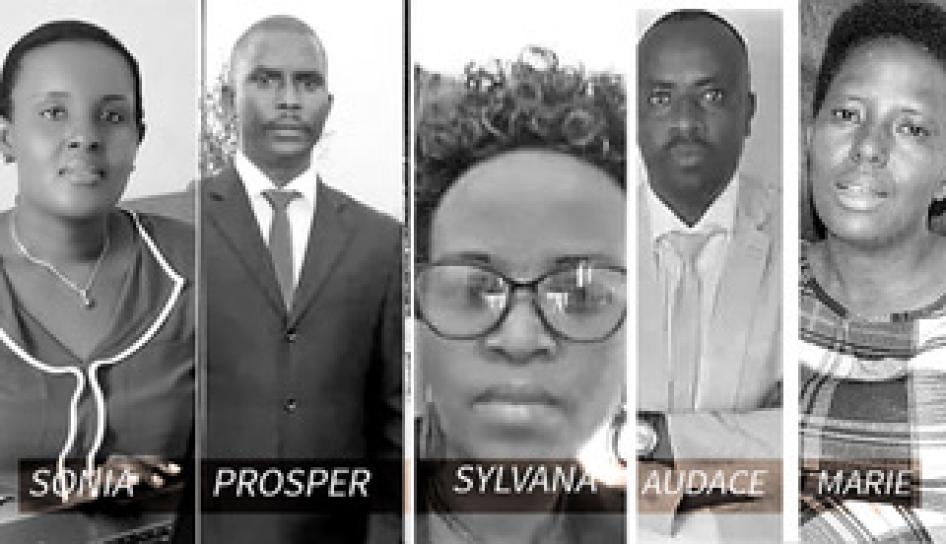
From the left to the right, Sonia Ndikumasabo, Prosper Runyange, Sylvana Inamahoro, Audace Havyarimana and Marie Emerusabe.
From the left to the right, Sonia Ndikumasabo, Prosper Runyange, Sylvana Inamahoro, Audace Havyarimana and Marie Emerusabe. © 2023 Private

Burundian authorities should immediately and unconditionally release five human rights defenders arbitrarily arrested on February 14, 2023, and drop the baseless charges against them, Amnesty International, the Burundi Human Rights Initiative, and Human Rights Watch said on 14 March 2023.

The five human rights defenders are accused of rebellion and of undermining internal state security and the functioning of public finances. The charges appear to relate only to their relationship with an international organization abroad and the funding they have received from this organization. Two of the defenders work for the Association of Women Lawyers in Burundi (Association des femmes juristes du Burundi, AFJB) and three for the Association for Peace and the Promotion of Human Rights in Burundi (Association pour la paix et la promotion des droits de l’Homme, APDH).

“The arrests of the five human rights defenders and the serious charges brought against them signal a worsening climate for independent civil society in Burundi,” said Clémentine de Montjoye, Africa researcher at Human Rights Watch. “If working in partnership with or receiving funding from international groups is treated as a criminal offense and a threat to state security, what little space was left for civil society to operate in Burundi will be closed.

On February 16, Martin Niteretse, Minister of Interior, Community Development and Public Security, accused the organizations of working with an international nongovernmental organization. Intelligence agents arrested four of the defenders – Sonia Ndikumasabo, president, and Marie Emerusabe, general coordinator, of AFJB; Audace Havyarimana, legal representative, and Sylvana Inamahoro, executive director, of APDH – on February 14 at Bujumbura’s Melchior Ndadaye Airport as they were preparing to fly to Uganda for a meeting with partners.

Prosper Runyange, the APDH land project coordinator, was arrested in Ngozi on February 14 and transferred to Bujumbura the next day. The five defenders were held at the National Intelligence Service (Service national de renseignement, SNR) headquarters in Bujumbura, then transferred to Mpimba central prison in Bujumbura, on February 17. On March 2, the high court of Ntahangwa in Bujumbura confirmed their pretrial detention.

The two organizations work on gender-based violence and land rights and are officially registered in Burundi. They help some of the most marginalized groups in Burundian society. The judicial authorities’ decision to pursue prosecution of the defenders, apparently solely on the grounds of their organizations’ partnership with and funding from an international organization, has triggered fears of another civil society crackdown in Burundi and undermines the president’s stated reform agenda, the organizations said. In October 2018, the authorities suspended the activities of most foreign organizations in Burundi and forced them to re-register, which included submitting documentation that stated the ethnicity of their Burundian employees.

The government policy, based on a law on foreign nongovernmental organizations, adopted in January 2017, caused some international organizations to close their offices in Burundi because they disagreed with government-imposed ethnic quotas and objected to the requirement to provide information on the ethnicity of their staff. Some said they feared that submitting this information could put their employees at risk of ethnic profiling and targeting.

The charges of endangering state security and rebellion against these five human rights defenders are absurd,” said Carina Tertsakian from the Burundi Human Rights Initiative. “If the authorities have questions about their sources of funding, these can be solved through normal administrative channels, as provided for by the law.”

During late President Pierre Nkurunziza’s third and final term, from 2015 to 2020, independent civil society and media were often targeted, and their members attacked, forcibly disappeared, detained, and threatened. Scores of human rights defenders and journalists fled the country and many remain in exile. There has been almost total impunity for these crimes.

Since President Évariste Ndayishimiye came to power in June 2020 and despite his promises to restore freedom of expression and association, the government’s hostility toward Burundi’s once thriving civil society and media remains. The arrests of the five rights defenders followed the conviction, on January 2, 2023, of an online journalist, Floriane Irangabiye, to 10 years in prison, on charges of “undermining the integrity of the national territory” in violation of her rights to free speech and to a fair trial.

These latest arrests and Irangabiye’s conviction reverse a brief moment of optimism after the acquittal and release, in December, of Tony Germain Nkina, a lawyer and former human rights defender who spent more than two years unjustly imprisoned on unsubstantiated charges of collaboration with a rebel group. Twelve human rights defenders and journalists in exile were convicted in June 2020 of participating in a May 2015 coup attempt. The verdict, which was only made public in February 2021, came after a deeply flawed trial during which the defendants were absent and did not have legal representation, flouting the most basic due process principles. The 12 were found guilty of “attacks on the authority of the State,” “assassinations,” and “destruction.”

The arrest of Ndikumasabo, Emerusabe, Havyarimana, Inamahoro, and Runyange appears to be designed to punish the human rights defenders and their organizations for collaborating with an international organization, obstruct their organizations’ activities, and intimidate other activists. Such behavior belies Burundian authorities’ claims that they respect human rights and further stains the image of openness and reform that they try to project internationally, the organizations said.

“Actions speak louder than words,” said Flavia Mwangovya, Deputy Regional Director at Amnesty International. “If the Burundian authorities want their human rights promises to be taken seriously, they should allow civil society to do its valuable work – including defending and assisting victims of human rights violations – without harassment.”

https://www.hrw.org/news/2023/03/14/burundi-free-five-rights-defenders

#EndReprisals campaign continues throughout HRC 51

September 20, 2022

Human rights defenders promote dignity, fairness, peace and justice in their homes, workplaces, communities and countries. They challenge governments that fail to respect and protect their people, corporations that degrade and destroy the environment, and institutions that perpetuate privilege and patriarchy. For many, the United Nations (UN) is the last arena in which they can confront abuses. 

Human rights defenders must be able to share crucial information and perspectives with the UN safely and unhindered. Yet some States try to escape international scrutiny by raising obstacles – such as intimidation and reprisals – aimed at creating fear and systematically hindering defenders’ access to and cooperation with human rights mechanisms. See my post of today: https://humanrightsdefenders.blog/2022/09/20/human-rights-defenders-at-the-51st-session-of-the-un-human-rights-council/

This needs to change! Join the campaign of the International Service for Human Rights today so human rights defenders have a seat at the UN table.

What can you do? ISHR and partners have worked to support individual defenders and organisations that have endured multiple forms of reprisals and intimidation. Take action for them now and help #EndReprisals!

Here are two quick, impactful actions you can take:

Write to State representatives at the UN and urge them to take up cases from Belarus, Burundi, China, Egypt, and Venezuela
Click to tweet a message in solidarity with the individuals or groups described in a specific case:

 Tweet for Viasna in Belarus

Tweet for human rights lawyers in Burundi

Tweet for Jiang Tianyong in China

Tweet for Ibrahim Metwally Hegazy in Egypt

Tweet for NGOs in Venezuela

Join the campaign

Human rights defenders at the 51st session of the UN Human Rights Council

September 20, 2022

The 51st session of the UN Human Rights Council has started well and good on 12 September and will last until 7 October. I am awfully delayed in extracting from the – as always excellent – guide – produced by the team of the ISHR – the issues most directly affecting human rights defenders. Apologies.

Readthe full Alert to the session online here and to stay up-to-date, follow @ISHRglobal and #HRC51 on Twitter. See also: https://humanrightsdefenders.blog/2022/09/15/new-high-commissioner-for-human-rights-volker-turk-the-man-for-an-impossible-job/

Throughout the session ISHR is calling on States to #EndReprisals against human rights defenders and civil society groups who engage with the United Nations!

Some Thematic areas

Reprisals On 29 September, Ilze Brands Kehris, the Assistant Secretary-General for Human Rights will present the Secretary-General’s annual report on Cooperation with the United Nations, its representatives and mechanisms in the field of human rights (also known as ‘the Reprisals Report’) to the Council in her capacity as UN senior official on reprisals. The presentation of the report will be followed by a dedicated interactive dialogue, as mandated by the September 2017 resolution on reprisals. ISHR remains deeply concerned about reprisals against civil society actors who engage or seek to engage with UN bodies mechanisms. The dedicated dialogue is a key opportunity for States to raise concerns about specific cases of reprisals and demand that Governments provide an update on any investigation or action taken toward accountability. An increasing number of States have raised concerns in recent sessions about individual cases of reprisals, including in Egypt, Nicaragua, Cuba, Saudi Arabia, Malaysia, Bahrain, Yemen, Burundi, China and Venezuela, Egypt, Burundi, Lao and China, Belarus, Iran, Turkmenistan, and the Philippines. During its 48th session, the Council adopted a resolution on reprisals. The text, which was adopted by consensus, invited the UN Secretary-General to submit an annual report on reprisals and intimidation to the UN General Assembly. Once again, the resolution listed key trends including that acts of intimidation and reprisals can signal patterns, increasing self-censorship, and the use of national security arguments and counter-terrorism strategies by States as justification for blocking access to the UN. The resolution also acknowledged the specific risks to individuals in vulnerable situations or belonging to marginalised groups, and called on the UN to implement gender-responsive policies to end reprisals. The Council called on States to combat impunity by conducting prompt, impartial and independent investigations and ensuring accountability for all acts of intimidation or reprisal, both online and offline, by condemning all such acts publicly, providing access to effective remedies for victims, and preventing any recurrence.

Other thematic reports At this 51st session, the Council will discuss a range of civil, political, economic, social and cultural rights and issues through dedicated debates, including

Special Rapporteur on truth, justice, reparation and guarantees of non-recurrence

Special Rapporteur on contemporary forms of slavery, including its causes and consequences 

Working Group on Arbitrary Detention Independent Expert on the promotion of a democratic and equitable international order.

Working Group on Enforced or Involuntary Disappearances

Special Rapporteur on the implications for human rights of the environmentally sound management and disposal of hazardous substances and wastes 

In addition, the Council will hold dedicated debates on the rights of specific groups including with the: Special Rapporteur on the rights of indigenous peoples and the Expert Mechanism on the Rights of Indigenous Peoples

The Council will also consider various other reports, see the full list here.  

Country-specific developments
Afghanistan The Council will hold an interactive dialogue with the Special Rapporteur on Afghanistan and enhanced interactive dialogue on the human rights situation of women and girls in Afghanistan on 12 September. While a Special Rapporteur mandate is necessary to monitor and report on the human rights situation in Afghanistan, the dire situation in the country and the atrocities affecting women and girls warrant a more robust and systematic response. ISHR together with other NGOs call on the Council to establish in parallel an ongoing accountability mechanism with the specific mandate: To investigate all alleged violations and abuses of human rights law amounting to crimes under international law in Afghanistan, in particular against women and girls, To collect, consolidate and analyse evidence of such violations and abuses, including their gender dimension, and to systematically record and preserve all information, documentation and evidence, including interviews, witness testimony and forensic material, consistent with international law standards, in view of any future legal proceedings; To document and verify relevant information and evidence, including through field engagement, and to cooperate with judicial and other entities, national and international, as appropriate; To identify, where possible, those individuals and entities responsible for all alleged violations and abuses of human rights law amounting to crimes under international law in Afghanistan, in particular against women and girls, with a view to ensuring that those responsible are held accountable.

China  Despite significant pressure, the UN human rights office (OHCHR) has published its human rights assessment on the Uyghur region (Xinjiang). The report highlights ‘serious human rights violations’, including torture and sexual and gender-based violence, stressing that existing ‘highly securitised and discriminatory’ re-education camps ‘provide fertile ground for such violations to take place on a broad scale.’ The OHCHR found that the ‘arbitrary and discriminatory detention of members of Uyghur and other predominantly Muslim group […] may constitute international crimes, in particular crimes against humanity.’ It also warns that ‘conditions remain in place for serious violations to continue and recur’, calling for ‘urgent attention’ by the international community.  The Human Rights Council, and all governments that are genuinely committed to rights protection globally, cannot turn a blind eye to the severity and scale of evidence verified by the UN.  In line with ‘objective criteria’ for Human Rights Council action, ISHR calls on:  The Council to hold a formal discussion on China’s human rights crisis, including the human rights situations in the Uyghur region (Xinjiang), the Tibetan region, Hong Kong, and on human rights defenders;  States to initiate and support efforts to establish an independent international mechanism to monitor and report on the human rights situation in China, in line with the call by 50 UN Special Procedures experts. See also: https://humanrightsdefenders.blog/2022/09/01/finally-the-long-awaited-un-report-on-china/

Burundi The Council will hold an Interactive Dialogue with the Special Rapporteur on Burundi on 22 September.  Since the Special Rapporteur’s mandate was operationalised, the human rights situation in Burundi has not changed in a substantial or sustainable way. The limited improvements since President Évariste Ndayishimiye was sworn in, in June 2020, as well as the positive signals he sent, particularly with regard to freedom of the press and promises of justice, have not materialised into long-term reforms. All the structural issues the CoI and other human rights actors identified remain in place. These include arbitrary arrests of political opponents or those perceived as such, acts of torture and other cruel, inhuman or degrading treatment or punishment, enforced disappearances, extrajudicial killings, sexual and genderbased violence, undue restrictions to freedoms of expression, peaceful assembly and association, and violations of economic, social and cultural rights that are intertwined with the economic underpinnings of the State. In the absence of structural improvements and as grave human rights violations and abuses continue to be committed with impunity, the Council should adopt a resolution that reflects realities on the ground and ensures continued monitoring, reporting, and public debates on Burundi’s human rights situation. It should grant the Special Rapporteur the time he needs to fulfill his mandate and urge Burundi to cooperate with him, including by granting him access to the country. At its 51st session, the Council should adopt a resolution that extends the mandate of the Special Rapporteur on Burundi for a further year.

Egypt The continued silence of the Council on the critical human rights situation in Egypt is of great concern. As Egypt prepares to host COP27, it continues to carry out widespread and systematic violations of human rights, including freedom of expression and freedom of assembly and association against Egyptian and foreign nationals.

Egyptian authorities have for years employed draconian laws, including laws on counterterrorism, cybercrimes, and civil society in order to subdue the civilian populations and stifle all forms of peaceful dissent and mobilization. Under the current government, Egypt has become among the worst three countries in the world in the numbers of jailed journalists and almost all independent media has been forced to shut down or threatened into silence. Hundreds of websites continue to be banned. Scores of civil society and media representatives have been and continue to be disappeared, tortured and/or arbitrarily detained under the pretense of counter-terrorism and national security.

While the release of a few select arbitrarily-detained activists is a sign that international pressure works, the number of releases pales in comparison to the vast numbers of individuals newly detained by the National Security Prosecution, or whose arbitrary detention has been renewed in 2022. Amongst those still in prison is well known Egyptian-British human rights defender Alaa Abdel Fattah – recently sentenced to an additional 5 years in prison by an exceptional court.  He is on hunger strike for over 150 days. [see also: https://humanrightsdefenders.blog/2022/07/07/mona-seifs-letter-a-cry-for-help-for-alaa/]We urge the Council and its Special Procedures to take action to protect and ensure the release of all those arbitrarily detained in Egypt.

Russia  Together with Russian and international human rights organisations, ISHR continues to call on the Human Rights Council to establish a dedicated international mechanism to monitor and report on the dire human rights situation in Russia. As recognised by UN human rights experts, this situation includes: the stigmatisation and criminalisation of independent civil society; the persecution of human rights defenders, peaceful protesters and political activists, including through arbitrary arrest, detention, ill-treatment and torture; the banning of independent media and the silencing of journalists; attacks against women and LGBTI persons and activists; the propagation of massive disinformation; and the systematic erosion of any semblance of the rule of law or accountability mechanisms.  As further recognised by independent UN experts, by undermining and attacking independent civil society, persecuting human rights defenders, activists, and opposition and dissenting voices, banning independent media, silencing journalists, and effectively outlawing any form of peaceful protest, the Russian authorities have created an environment that, at least in part, facilitates its war in Ukraine. The war has led to an enormous loss of civilian life, displacement of millions of Ukrainian civilians, and contributed to a global food security and energy crisis, among other developments. A dedicated Special Rapporteur mandate would independently collect, analyse and present information on the human rights situation in Russia and make recommendations to the Council and the authorities on how to address it. It would serve as a crucial lifeline between Russian human rights defenders and the international community at a time when other bridges have been cut. [see also: https://humanrightsdefenders.blog/2022/04/26/lev-ponomarev-human-rights-defender-leaves-russia/] Finally, a Special Rapporteur could speak up authoritatively against the deepening restrictions on human rights in Russia and on behalf of those facing intimidation, harassment and reprisal for their human rights work.

Israel and oPT ISHR joined over 150 organisations from all world regions demand that the international community condemns and takes action to protect seven Palestinian civil society organisations that have been subject to illegal threats, raids and closure by Israeli authorities.

On the morning of 18 August 2022, the Israeli occupying forces (IOF) raided and sealed the doorways into the offices of the seven Palestinian organisations: Addameer Prisoner Support and Human Rights Association, Al-Haq Law in the Service of Man (Al-Haq), Bisan Center for Research and Development, Defense for Children International-Palestine (DCI-P), Health Work Committees (HWC), the Union of Agricultural Work Committees (UAWC), and the Union of Palestinian Women’s Committees (UPWC). We urge States to unequivocally condemn Israel’s targeting of Palestinian civil society and tactics to further repress of freedom of expression, and to take all necessary action to support and protect Palestinian human rights defenders and ensure the continuation of their invaluable work.

We call upon States to demand that Israel immediately revoke its designations of Palestinian human rights and civil society organisations as ‘terrorist organisations’, reverse the military orders designating the organisations and closing their offices, and repeal its Anti-Terrorism Law (2016) as it does not meet basic human rights standards. See also: https://humanrightsdefenders.blog/2021/12/15/human-rights-defenders-targeted-by-israel-launch-new-joint-website/

Venezuela The HRC’s fact-finding mission on Venezuela will present its final report under its current mandate to the Human Rights Council on 26 September, followed by an interactive dialogue with States. All eyes are on Latin American states, in particular, to see whether or not they will present a resolution to renew the mission’s mandate.  While there have been significant human rights changes in Venezuela – including a reduction in extrajudicial executions between 2020 and 2021 – the human rights situation in the country remains grim, with clear retrogression in some cases. This is not the time for States to end the work of the Mission, a key accountability mechanism which during its work to date has produced evidence of likely crimes against humanity.  Not only is its work on past violations far from over, but it could play a key role in the prevention of further violations, particularly at times of instability such as is possible during upcoming Presidential elections.   ISHR has worked as part of a Coalition of Venezuelan, regional and international organisations calling for the continuation of the mandate of the Mission. These demands were recently made in a letter to States, signed by 125 other Venezuelan and international organisations. The continuation of the Mission should be a key part of foreign policy aims of states of the region, and ISHR hopes to see States step up on this front in the coming days and weeks.

Yemen ISHR joined NGOs in urging States to work toward the establishment of an independent international criminally focused investigative mechanism on Yemen in the coming period, including at HRC51. While a Yemen truce hangs in the balance, little to no progress has been made by parties to the conflict to  address ongoing and widespread violations and abuses of international human rights and humanitarian law or remedy the harms they have inflicted on civilians throughout the conflict. The humanitarian situation in Yemen remains desperate, and, in recent weeks, armed clashes have once again increased. Civilians continue to fall victim to shelling, drone strikes and other attacks.These factors attest to the urgent and critical need to reinvigorate international accountability efforts on Yemen through the establishment of an independent international investigation. After its mandate ended in October 2021, members of the GEE called on the international community to take specific initiatives at the international level in pursuit of accountability.  Continued impunity will only increase the likelihood that more children will starve, more rights defenders and journalists will be imprisoned or executed, more homes and schools will be bombed, and the cycle of violence and suffering will continue. In this context, an international independent criminal accountability mechanism for Yemen can play a critical role to deter violence, protect civilians and promote a genuine and lasting peace.  In December 2021, nearly 90 civil society organisations called on member states of the UN to move quickly and establish such a mechanism in order to  investigate and publicly report on the most serious violations and abuses of international law committed in Yemen.

Other country situations These include: Interactive Dialogue with the Special Rapporteur on Afghanistan and Enhanced Interactive Dialogue on the human rights situation of women and girls in Afghanistan Interactive Dialogue on the report of the High Commissioner on Nicaragua Interactive Dialogue on the report of the OHCHR on Sri Lanka Interactive Dialogue on the report of the Independent Investigative Mechanism for Myanmar, Interactive Dialogue with the SR on Myanmar, Interactive Dialogue on the OHCHR report on Myanmar, Acting High Commissioner oral update on the human rights situation in Myanmar Interactive Dialogue with the Commission of Human Rights Experts on Ethiopia Interactive Dialogue on the oral update of OHCHR on technical assistance and capacity-building for South Sudan Interactive Dialogue with the Commission of inquiry on the Syrian Arab Republic  Interactive Dialogue on the interim oral update of the Acting High Commissioner on the situation of human rights in Belarus  Interactive Dialogue with the Commission of Inquiry on Ukraine and Interactive Dialogue on the Acting High Commissioner oral update on Ukraine Enhanced Interactive Dialogue on the report of the High Commissioner and experts on the Democratic Republic of Congo Interactive Dialogue with the Special Rapporteur on Cambodia and presentation of the Secretary-General’s report  Interactive Dialogue with the Independent Expert on Somalia Interactive Dialogue with the Independent Expert on the Central African Republic  Presentation of the High Commissioner’s report on cooperation with Georgia  Enhanced Interactive Dialogue on the report of the High Commissioner on the Philippines

Council programme, appointments and resolutions

States announced at least 29 proposed resolutions. Read here the reports presented this session. Appointment of mandate holders: The President of the Human Rights Council will propose candidates for:  Special Rapporteur on the human rights of internally displaced persons; Special Rapporteur on the independence of judges and lawyers; Working Group on Arbitrary Detention, member from Eastern European States; Special Rapporteur on contemporary forms of racism, racial discrimination, xenophobia and related intolerance.

Read here the three year programme of work of the Council with supplementary information. Read here ISHR’s recommendations on the key issues that are or should be on the agenda of the UN Human Rights Council in 2022.

Concerning side events, the Secretariat informed the Bureau that it had developed a way to organise the time slots for the three meeting rooms in order to allow for side events to take place in the Palais des Nations during the 51st session of the Council. The time slots for side events will be allocated according to availability and on a first-come, first-served basis. In order to accommodate as many requests as possible, only one side event per requesting organiser will be accommodated and each side event would be limited to one hour in duration. Organisers are requested to strictly respect the allotted time and to leave the room on time in order to ensure the smooth organisation of the following side event. NGOs will find additional information on the modalities and the criteria at the OHCHR NGO participation web page. The Secretariat underscored that these measures will be implemented during the 51st session on a pilot basis.

See also: https://humanrightsdefenders.blog/2022/09/20/report-on-the-50th-session-of-the-un-hrc/

https://ishr.ch/latest-updates/hrc51-key-issues-on-agenda-of-september-2022-session/

50th session Human Rights Council: issues directly affecting Human Rights Defenders

June 22, 2022

A bit belatedly this overview for the 50th session:

The 50th session of the UN Human Rights Council, from 13 June to 8 July 2022, will consider issues including sexual orientation and gender identity, violence and discrimination against women and girls, poverty, peaceful assembly and association, and freedom of expression, among others. It will also present an opportunity to address grave human rights situations including in Afghanistan, Belarus, China, Eritrea, Israel and OPT, Russia, Sudan, Syria and Venezuela, among many others. With “HRC50 | Key issues on agenda of June 2022 session” the ISHR provided again its indispensable guide. Here’s an overview of some of the key issues on the agenda that are the most relevant to HRDs [see also: https://humanrightsdefenders.blog/2022/02/21/guide-to-49th-session-of-human-rights-council-with-human-rights-defenders-focus/ and https://humanrightsdefenders.blog/2022/04/15/results-49th-session-human-rights-council-as-seen-by-ngos/

Thematic areas of interest

Here are some highlights of the session’s thematic discussions

Business and human rights

Despite their vital work to protect the environment and combat climate change, Indigenous peoples as well as land and environmental defenders continue to be attacked. New data shows an alarming pattern of violence and harassment as a precursor to lethal attacks against defenders. 

In 2020, Global Witness registered the killings of 137 land and environmental defenders in just five of the most dangerous countries for them: Colombia, Guatemala, Kenya, Mexico and the Philippines. However, a new dataset from the ALLIED Data Working Group, a coalition in which ISHR takes part, focused on these countries has for the first time documented what is often hidden – the non-lethal attacks, including threats, harassment, smear campaigns and stigmatisation that are a precursor to the shocking number of deaths we see each year.

The findings highlight the urgent need for States to monitor, collect data, report on the situation of these defenders, and address the root causes of attacks against them. ISHR urges all States to make a commitment to the systematic monitoring of attacks on indigenous, land and environmental defenders in their countries, and to take stronger action, together with civil society and relevant UN Special Procedures, to address the root causes of attacks in the debate with the Working Group due to take place on 21 June 2022. 

Reprisals

Reports of cases of intimidation and reprisal against those cooperating or seeking to cooperate with the UN not only continue, but grow. Intimidation and reprisals violate the rights of the individuals concerned, they constitute violations of international human rights law, and they undermine the UN human rights system.

The UN has taken action towards addressing this critical issue, including:

  • Requesting that the Secretary General prepare an annual report on cases and trends of reprisals;
  • Establishing a dedicated dialogue under item 5 to take place every September;
  • Affirmation by the Council of the particular responsibilities of its Members, President and Vice-Presidents to investigate and promote accountability for reprisals and intimidation; and
  • The appointment of the UN Assistant Secretary General on Human Rights as the Senior Official on addressing reprisals.

Despite this, ISHR remains deeply concerned about reprisals against civil society actors who try to engage with UN mechanisms, and consistent in its calls for all States and the Council to do more to address the situation.

During the 48th session, the Council adopted a resolution on reprisals. The text was adopted by consensus for the first time since 2009 and invites the UN Secretary General to submit his annual report on reprisals and intimidation to the UN General Assembly. Once again the resolution listed key trends, including that acts of intimidation and reprisals can signal patterns, increasing self-censorship, and the use of national security arguments and counter-terrorism strategies by States as justification for blocking access to the UN. The resolution also acknowledged the specific risks to individuals in vulnerable situations or belonging to marginalised groups, and called on the UN to implement gender-responsive policies to end reprisals. The Council called on States to combat impunity by conducting prompt, impartial and independent investigations and ensuring accountability for all acts of intimidation or reprisal, both online and offline, by condemning all such acts publicly, providing access to effective remedies for victims, and preventing any recurrence.

Item 5 of the Human Rights Council’s agenda provides a key opportunity for States to raise concerns about specific cases of reprisals, and for governments involved in existing cases to provide an update to the Council on any investigation or action taken toward accountability. The President should also update the Council on actions taken by the President and Bureau to follow up on cases and promote accountability under this item.

Due to the lack of a general debate under item 5 at HRC 50, ISHR encourages States to raise concerns about specific cases of reprisals during the interactive dialogues on the relevant countries on the agenda at this session or in the context of thematic interactive dialogues where relevant.

During the organisational meeting held on 30 May, the President of the Council stressed the importance of ensuring the safety of those participating in the Council’s work, and the obligation of States to prevent intimidation or reprisals.

In line with previous calls, ISHR expects the President of the Human Rights Council to publicly identify and denounce specific instances of reprisals by issuing formal statements, conducting press-briefings, corresponding directly with the State concerned, publicly releasing such correspondence with States involved, and insisting on undertakings from the State concerned to investigate, hold perpetrators accountable and report back to the Council on action taken.

Sexual orientation and gender identity

The mandate of the Independent Expert on violence and discrimination on the basis of sexual orientation and gender identity is up for renewal for the second time at this session. We will be following this closely and call on all States to support the mandate and contribute to the Council’s efforts to combat violence and discrimination on the basis of sexual orientation and gender identity.

Other thematic reports

At this 50th session, the Council will discuss a range of civil, political, economic, social and cultural rights through dedicated debates with the mandate holders and the High Commissioner, including interactive dialogues with:

  • The Special rapporteur on the rights to freedom of peaceful assembly and of association
  • The Independent Expert on protection against violence and discrimination based on sexual orientation and gender identity
  • The Special Rapporteur on the right of everyone to the enjoyment of the highest attainable standard of physical and mental health
  • The Special Rapporteur on the promotion and protection of the right to freedom of opinion and expression
  • The Special Rapporteur on the right to education
  • The Independent Expert on human rights and international solidarity
  • The Special Rapporteur on extrajudicial, summary of arbitrary executions
  • The Special Rapporteur on extreme poverty and human rights
  • The Special Rapporteur on promotion and protection of human rights in the context of climate change
  • The Working Group on the issue of human rights and transnational corporations and other business enterprises
  • The Special Rapporteur on contemporary forms of racism, racial discrimination, xenophobia and related intolerance
  • The High Commissioner on State responses to pandemics 

In addition, the Council will hold dedicated debates on the rights of specific groups including;

  • The Special Rapporteur on the rights of internally displaced persons
  • The Working Group on discrimination against women and girls
  • The Special Rapporteur on violence against women and girls, its causes and consequences
  • The Special Rapporteur on the human rights of migrants
  • The Special Rapporteur on trafficking in persons, especially women and children
  • The Special Rapporteur on the elimination of discrimination against persons affected by leprosy and their family members
  • The Special Rapporteur on independence of judges and lawyers

Country-specific developments

Afghanistan

Together with WHRDs from the country and civil society organisations from all regions, ISHR calls on States to lead and support an Urgent Debate at HRC50 on women’s rights in Afghanistan.

Since August 2021, when the Taliban took control of the country, there has been an enormous deterioration in the recognition and protection of the rights of women and girls in Afghanistan, including with respect to the rights to non-discrimination, education, work, public participation, health, and sexual and reproductive health. The Taliban has also imposed sweeping restrictions on the rights to freedom of expression, association, assembly and movement for women and girls. Afghanistan is now the only country in the world to expressly prohibit girls’ education.

The world’s worst women’s rights crisis demands a response and it would be unacceptable for the June session of the HRC, traditionally the session focused on gender-related issues, to pass without some meaningful action on the issue. I

The Council will hold an interactive dialogue with the High Commissioner on the update on Afghanistan on 15 June 2022. 

China 

The High Commissioner’s visit to China failed to adequately address widespread and systematic violations in the country, express solidarity with victims and defenders, or pave the way for meaningful monitoring of China’s human rights crisis across the Uyghur and Tibetan regions, Hong Kong and mainland China. The High Commissioner’s end of mission statement failed to address strong, specific concerns or make substantive, concrete recommendations to the governmen. The broad concerns issued in a light language do not match the scope and gravity of human rights violations across the country that have been thoroughly documented by UN experts and civil society and that could amount to crimes against humanity and genocide.

States should call on the High Commissioner to immediately publish her OHCHR report on the Uyghur region, with clear, compelling recommendations to the government, and present her findings in a briefing to the Human Rights Council. The High Commissioner should also ensure that the established annual meeting and working group for dialogue with the authorities are of public nature, include specific substantive recommendations to the government, and involve substantial consultation with a diverse set of independent civil society groups. China should also follow suit on promises for subsequent visits by the OHCHR by granting prompt unfettered access to Hong Kong and the Tibetan region. See also: https://humanrightsdefenders.blog/2022/06/09/disappointment-with-un-high-commissioners-visit-to-xinjiang-boils-over/

Burundi

The Commission of Inquiry on Burundi (CoI) concluded its work at the 48th HRC session in October 2021 while a new resolution establishing a mandate of UN Special Rapporteur on Burundi was adopted, resolution 48/16. The resolution tasks the mandate with monitoring the human rights situation in the country, making recommendations for its imp­ro­ve­ment, and re­por­ting to the Human Rights Council. During the 50th HRC session, the newly nominated Special Rapporteur on Burundi will present their first oral update on 29 June 2022.

Egypt

Notwithstanding the launch of a national human rights strategy, the fundamental purpose of which is to deflect international scrutiny rather than advance human rights, there has been no significant improvement in the human rights situation in Egypt since the joint statement delivered by States in March 2021 at HRC46. Emblematic recent examples include: Ayman Hadhoud’s death in the custody of Egyptian security forces following his enforced disappearance over two months ago and the execution of seven people in Egypt on 8 and 10 March 2022 following trials in which the defendants were forcibly disappeared, tortured, and denied their right to a lawyer.

In response to the Egyptian President’s announcement of “reactivating the work of the Presidential Pardon Committee” on 26 April 2022, Egyptian human rights organisations submitted a proposal for a fair and transparent process to release political prisoners in Egypt. Yet, recent harsh sentences in unfair trials against peaceful critics demonstrate further the lack of political will of the Egyptian authorities to address the crisis of arbitrary detention in Egypt. ISHR joined more than 100 NGOs from around the world in urging the HRC to create a monitoring and reporting mechanism on the ever-deteriorating human rights situation in Egypt. 

Israel and oPT

This session, the COI on the oPt and Israel established in 2021 will present its first report to the HRC. Civil society from around the world had welcomed the historic resolution establishing the standing Commission of Inquiry to address Israel’s latest and ongoing violations against the Palestinian people on both sides of the Green Line, while also addressing the root causes of Israel’s settler colonialism and apartheid. The interactive dialogue with the CoI comes in the context of mounting recognition of Israel’s establishment and maintenance of an apartheid regime by Israel over the Palestinian people as a whole. During HRC49, the SR on the oPT called on the international community to accept and adopt his findings as well as the “findings by Palestinian, Israeli and international human rights organisations that apartheid is being practised by Israel in the occupied Palestinian territory and beyond.” In its 2019 concluding observations, the Committee on the Elimination of Racial Discrimination found that Israel’s policies violated Article 3 of ICERD pertaining to segregation and apartheid on both sides of the Green Line. In 2022, the Human Rights Committee concluding observations on Israel emphasized the “pre-existing systematic and structural discrimination against non-Jews”.

While some States continue to seek to undermine the mandate of the CoI and effective accountability mechanisms to put an end to Israel’s apartheid regime, CSOs support the CoI’s methodological approach to fulfill its vital mandate. We call on States to engage with the substance of the mandate of the CoI during the interactive dialogue, express support for this important accountability mechanism and ensure it has sufficient resources to discharge its mandate.

Russia 

Together with a coalition of international and regional NGOs, as well as numerous Russian civil society organisations, ISHR urges the Council to establish an independent international monitoring and reporting mechanism on Russia. In the context of the systematic repression of civil society organisations, severe restrictions on press freedoms and independent media, severe restrictions and criminalisation of many forms of free expression, association, assembly and peaceful protest, and the propagation of huge volumes of misinformation, a Special Rapporteur is necessary to ensure that the international community receives vital information about the human rights situation on the ground. 

Sudan

The Council will hold a debate with the High Commissioner and Expert on Sudan on 15 June 2022.

The Sudanese Women Rights Action documented from March to April 2022 the violations against women protesters, including arrests, injuries, and sexual violence. Their report also highlighted the economic and humanitarian situation in conflict areas and in the country in general. The report shows that “the coup leaders are using increasing violence against women protesters, including arrests, fabricated charges, direct lethal violence in protests, and sexual violence. The civic space is shrinking across Sudan, where human rights groups and WHRDs are not able to work freely and safely. Surveillance on internet, communication, movement, and offices of many groups led them to work from underground. The economic conditions and the fragile political situation is increasing women insecurity, as the peace process failed to end violence conflict areas. Women in Sudan are living in constant fear of violence with growing threats of the collapse of the state.”

In light of this context, ISHR urges all States to support the adoption of a resolution that ensures continued attention to Sudan’s human rights situation through enhanced interactive dia­logues at the Council’s 52nd and 53rd regular sessions. While the Expert’s mandate is ongoing, a resolution is required for the Council to hold public de­bates and continue to formally discuss the situation. A resolution at the Council’s 50th session would ope­ra­tio­nalise resolution S-32/1, which in its operative paragraph 19 called upon “the High Commis­sioner and the designated Expert to monitor human rights violations and abu­ses and to continue to bring information thereon to the attention of the Human Rights Council, and to advise on the further steps that may be needed if the situation continues to deteriorate.”

Venezuela

On 29 June, the Council will hold an interactive dialogue with the High Commissioner on her report on the situation of human rights in Venezuela. The Council requested her to provide in this report a detailed assessment of the implementation of the recommendations made in her previous reports. Implementation of recommendations and improvements in the human rights situation on the ground remains a critical question as HRC mandates for OHCHR and the international investigative body for Venezuela expire in September. Venezuelan civil society groups continue to show evidence of a lack of any substantive human rights reform in the country, of a lack of meaningful cooperation by the State and – in fact – of regression in key areas such as judicial independence and civic space. ISHR urges States at the upcoming session to express support for the work of OHCHR in the country, and encourage the Office to speak clearly to realities on the ground. In addition, States should signal their support for the continuance of the work of the HRC’s fact-finding mission to the country through an extension of the Mission’s mandate at HRC51. 

The adoption of the report of the third cycle UPR on Venezuela will also take place on the 29 June or 1 July.  

Other country situations

The Council will hold an interactive dialogue on the High Commissioner’s annual report on 14 June 2022. The Council will hold debates on and is expected to consider resolutions addressing a range of country situations, in some instances involving the renewal of the relevant expert mandates. These include:

  • Interactive Dialogue with the Special Rapporteur on Eritrea
  • Interactive Dialogues with the High Commissioner and Special Rapporteur on Myanmar
  • Interactive Dialogue with the High Commissioner on Nicaragua
  • Interactive Dialogues with the High Commissioner on Ukraine
  • Interactive Dialogue with the Commission of Inquiry on Syria
  • Interactive Dialogue with the International commission of Human Rights Experts on Ethiopia 
  • Interactive Dialogue with the Special Rapporteur on Belarus
  • Interactive Dialogue with the Independent Fact-Finding Mission on Libya
  • Interactive Dialogue with the Independent Expert on Central African Republic 

Council programme, appointments and resolutions

The President of the Human Rights Council will propose candidates for the following mandates: 

  1. Special Rapporteur on freedom of religion or belief
  2. Special Rapporteur on the right to education
  3. Special Rapporteur on the situation of human rights in the Democratic People’s Republic of Korea
  4. Working Group on the issue of human rights and transnational corporations and other business enterprises, member from African States
  5. Expert Mechanism on the Right to Development, member from Latin American and Caribbean States
  6. Special Rapporteur on torture and other cruel, inhuman or degrading treatment or punishment
  7. Working Group on Enforced or Involuntary Disappearances, member from Eastern European States
  8. Working Group on the issue of human rights and transnational corporations and other business enterprises, member from Western European and other States

Resolutions to be presented to the Council’s 50th session

At the organizational meeting on 30 May the following resolutions were announced (States leading the resolution in brackets):

  1. Elimination of discrimination against women (Mexico), mandate renewal 
  2. Freedom of expression (Brazil, Canada, Fiji, Sweden, Namibia, Netherlands) 
  3. Elimination of female genital mutilation (Africa Group)
  4. Rights to freedom of peaceful assembly and of association (Czech Republic, Indonesia, Lithuania, Maldives, Mexico), mandate renewal 
  5. Human rights situation in Sudan (United Kingdom, Germany, Norway, United States)
  6. Human rights situation in Syria (Germany, France, Italy, Jordan, Kuwait, Netherlands, Qatar, Turkey, United States, United Kingdom)
  7. Mandate of the Independent Expert on protection against violence and discrimination based on sexual orientation and gender identity  (Argentina, Brazil, Chile, Colombia, Costa Rica, Mexico, Uruguay), mandate renewal 
  8. Casualty recording and the promotion and protection of human rights (Liechtenstein, Croatia, Costa Rica, Sierra Leone) 
  9. Human rights and climate change (Bangladesh, Philippines, Viet Nam)
  10. Access to medicines and vaccines in the context of the right of everyone to the enjoyment of the highest attainable standard of physical and mental health (Brazil, China, Egypt, India, Indonesia, Senegal, South Africa, Thailand)
  11. Enhancement of international cooperation in the field of human rights (NAM)
  12. Independence and impartiality of the judiciary, jurors and assessors, and the independence of lawyers (Hungary, Australia, Botswana, Maldives, Mexico, Thailand)
  13. Human rights and the regulation of civilian acquisition, possession and use of firearms (Ecuador, Peru)
  14. Human rights in Belarus, mandate renewal (European Union)
  15. Human rights in Eritrea, mandate renewal (European Union) 
  16. The promotion and protection of human rights in the context of peaceful protest (Switzerland, Costa Rica)
  17. Situation of human rights of Rohingya Muslims and other minorities in Myanmar (OIC) 
  18. Accelerating efforts to eliminate all forms of violence against women (Canada), mandate renewal 
  19. Mandate of the Special Rapporteur on the human rights of internally displaced persons (Austria, Honduras, Uganda), mandate renewal
  20. Human rights and international solidarity (Cuba)
  21. Social Forum (Cuba)

Read the calendar here

Adoption of Universal Periodic Review (UPR) reports

During this session, the Council will adopt the UPR working group reports on Myanmar, Togo, Syrian Arab Republic, Iceland, Venezuela, Zimbabwe, Lithuania, Uganda, Timor-Leste, Republic of Moldova, South Sudan, Haiti and Sudan.

Panel discussions

During each Council session, panel discussions are held to provide member States and NGOs with opportunities to hear from subject-matter experts and raise questions. Seven panel discussions are scheduled for this upcoming session:

  1. Panel discussion on the root causes of human rights violations and abuses against Rohingya Muslims and other minorities in Myanmar 
  2. Panel discussion on menstrual hygiene management, human rights and gender equality
  3. Panel discussion on good governance in the promotion and protection of human rights during and after the COVID-19 pandemic
  4. Annual full-day discussion on the human rights of women
  5. Panel discussion on the adverse impact of climate change on the full and effective enjoyment of human rights by people in vulnerable situations
  6. High-level panel discussion on countering the negative impact of disinformation on the enjoyment and realization of human rights
  7. Annual thematic panel discussion on technical cooperation and capacity-building

Stay up-to-date: Follow @ISHRglobal and #HRC50 on Twitter, and look out for its Human Rights Council Monitor. During the session, follow the live-updated programme of work on Sched. 

https://ishr.ch/latest-updates/hrc50-key-issues-on-agenda-of-june-2022-session/

Guide to 49th session of Human Rights Council – with human rights defenders focus

February 21, 2022

The 49th session of the UN Human Rights Council, from 28 February – 1 April 2022, will consider issues including the protection of human rights defenders, freedom of religion or belief, protection and promotion of human rights while countering terrorism, the right to food and adequate housing, among others. It will also present an opportunity to address grave human rights situations in States including Nicaragua, Venezuela, China, Syria, South Sudan, Sri Lanka, Iran, the Democratic People’s Republic of Korea, Myanmar, Eritrea, among many others. Here’s an overview of some of the key issues on the agenda. The ISHR has issued again its excellent Guide to the upcoming session and I have extracted from it the issues most directly related to human rights defenders:

Protection of human rights defenders

On 11 March 2022, the UN Special Rapporteur will present her report on the work of human rights defenders to address corruption. At the 49th session of the HRC, Norway will present a thematic resolution on human rights defenders in conflict and post-conflict situations. A group of NGOs have produced a list of 25 recommendations related to key concerns that should be addressed in the resolution. These include recommendations related to the removal of legislation that impinges upon the ability of defenders to do their work, including counter-terrorism legislation; the development of protection measures that take into account the specific needs of particular groups of defenders and the precarious nature of their situation in conflict and post-conflict contexts, and specific measures to support human rights defenders in such contexts, including in regard to the provision of cloud-based solutions for storage of documentation, flexible and reliable funding and swift responses in the case of the need for relocation of human rights defenders and their families. ISHR joins these calls and to impress upon the Council the need for a strong commitment to acknowledging and taking action to protect human rights defenders working in such contexts.  In addition, we call on all UN members to monitor and report on their implementation of the resolution in a comprehensive way, sharing updates on challenges faced and progress made during relevant UN dialogues and debates.   

Reprisals

Reports of cases of intimidation and reprisal against those cooperating or seeking to cooperate with the UN not only continue, but grow. Intimidation and reprisals violate the rights of the individuals concerned, they constitute violations of international human rights law and undermine the UN human rights system.

The UN has taken some action towards addressing this critical issue including:

  • an annual report by the Secretary General;
  • a dedicated dialogue under item 5 to take place every September;
  • The appointment of the UN Assistant Secretary General on Human Rights as the Senior Official on addressing reprisals.

Despite this, ISHR remains deeply concerned about reprisals against civil society actors who try to engage with UN mechanisms, and consistent in its calls for all States and the Council to do more to address the situation. See also: https://humanrightsdefenders.blog/tag/reprisals/

During the 48th session, the Council adopted a resolution on reprisals. The text was adopted by consensus for the first time since 2009 and invites the UN Secretary General to submit his annual report on reprisals and intimidation to the UN General Assembly. Once again the resolution listed key trends including that acts of intimidation and reprisals can signal patterns, increasing self-censorship, and the use of national security arguments and counter-terrorism strategies by States as justification for blocking access to the UN. The resolution also acknowledged the specific risks to individuals in vulnerable situations or belonging to marginalised groups, and called on the UN to implement gender-responsive policies to end reprisals. The Council called on States to combat impunity by conducting prompt, impartial and independent investigations and ensuring accountability for all acts of intimidation or reprisal, both online and offline, by condemning all such acts publicly, providing access to effective remedies for victims, and preventing any recurrence.

Item 5 of the Human Rights Council’s agenda provides a key opportunity for States to raise concerns about specific cases of reprisals, and for governments involved in existing cases to provide an update to the Council on any investigation or action taken toward accountability to be carried out. The President should also update the Council on actions taken by the President and Bureau to follow up on cases and promote accountability under this item.

Other thematic debates

At this 49th session, the Council will discuss a range of topics in depth through dedicated debates with mandate holders. The debates with mandate holders include: 

  • The Special Rapporteur in the field of cultural rights 
  • The Special Rapporteur on freedom of religion or belief
  • The Special Rapporteur on torture
  • The Special Rapporteur on the right to privacy

In addition, the Council will hold dedicated debates on the rights of specific groups including the Special Rapporteur on minority issues

In addition, the Council will hold dedicated debates on interrelation of human rights and human rights thematic issues including:

  • The Special Rapporteur on the promotion and protection of human rights while countering terrorism
  • The Special Rapporteur on human rights and the environment

Country-specific developments

China: High Commissioner Bachelet has still not released her Office’s report on grave human rights violations in the Uyghur region, six months after announcing its upcoming publication, and three months since her spokesperson indicated it would only be a matter of ‘weeks’. Further delays risk entrenching the Chinese government’s sense of impunity, and will harm the credibility of, and confidence in her Office’s capacity to address grave violations, some of which could amount to atrocity crimes. States should urge the High Commissioner to promptly publish her report, and present it to the Human Rights Council as a matter of utmost priority.  This includes ensuring sustained pressure around China’s abuse of national security in discourse and law, and on the widespread and systematic use of enforced disappearance under ‘Residential Surveillance at a Designated Location’ (RSDL). See also: https://humanrightsdefenders.blog/2022/02/05/chinas-residential-surveillance-at-a-designated-location-needs-to-disappear/

Burundi: The Commission of Inquiry on Burundi (CoI) concluded its work at the 48th HRC session in October 2021 while a new resolution establishing a mandate of UN Special Rapporteur on Burundi was adopted, resolution 48/16. The resolution tasks the mandate with monitoring the human rights situation in the country, making recommendations for its imp­ro­ve­ment, and re­por­ting to the Human Rights Council. While the Spe­cial Rapporteur will be unable to continue the entirety of the investigative work carried out by the CoI, they will “collect, examine and assess” information on human rights deve­lop­ments. Ahead of HRC48 more than 40 organisations, including ISHR, urged the Council to continue its scrutiny and further work towards justice and accountability in Burundi. See also: https://humanrightsdefenders.blog/2021/07/03/germain-rukuki-burundi-human-rights-defender-out-of-jail/

The UN Human Rights Office (OHCHR) will ensure that evidence col­lec­ted by the CoI is “consolidated, preserved, accessible and usable in support of ongoing and future accountability efforts” including efforts to hold Bu­rundian officials responsible for atrocities in front of the International Criminal Court (ICC). The Burundian government should resume its engagement with the Council and grant the Special Rap­porteur, who will be appointed in March 2022, access to the country for an official visit.

France: Following an urgent call by ISHR and the Comité Adama, UN experts sent two communications to the French government on 15 and 26 November 2021 asking for measures to ensure that human rights defenders, including people of African descent, enjoy a safe environment in which to carry out their legitimate work for human rights and justice. The lack of investigation in the case of Adama Traoré’s death and the judicial harassment against his sister Assa Traoré for her activism is a sign of broader systemic racism against Black people in policing and criminal justice in France. 

ISHR urges the HRC to continue its scrutiny and calls on France to ensure a prompt, transparent, and impartial investigation into the case of Adama Traoré; end the judicial harassment of Assa Traoré for her activism; accept the requests of the UN Special Rapporteur on Racism and the Working Group on People of African Descent to visit the country; end impunity for police violence; and ensure truly free and impartial investigations into the death or injury of anyone at the hands of the police, especially people of African descent.

Egypt: The joint statement delivered by States in March 2021 at the 46th session of the HRC played a critical role in securing the conditional release of several human rights defenders and journalists arbitrarily detained throughout 2021 and 2022. Regrettably, these releases do not reflect any significant change in Egypt’s systematic attacks on civic space and human rights defenders, including arbitrary detention, torture, ill-treatment, enforced disappearances and criminalisation of the exercise of the rights to freedom of expression, association, assembly or public participation. On 3 February 2022, 175 parliamentarians from across Europe urged the HRC to establish a “long overdue monitoring and reporting mechanism on Egypt”. ISHR joined more than 100 NGOs from around the world in urging the HRC to create a monitoring and reporting mechanism on the ever-deteriorating human rights situation in Egypt. Continued, sustained and coordinated action on Egypt at the HRC is more necessary than ever. The HRC should follow up on the 2021 State joint statement and heed the calls of civil society and parliamentarians. See also: https://humanrightsdefenders.blog/2022/01/11/the-arabic-network-for-human-rights-information-has-shut-down/

Nicaragua: A year after Council resolution 46/2, civil society reporting indicates no meaningful action has been taken by Nicaragua to implement any of the Council’s recommendations to the government. Instead, it has deepened its crackdown on human rights defenders and any form of dissent, and further closed civil society space ahead of the November 2021 electoral process. The government’s absolute disregard for cooperation with international and regional mechanisms, including the treaty bodies, is an additional sign that the government does not intend to revert course on the country’s human rights crisis. ISHR, jointly with the Colectivo 18/2, urges the Human Rights Council to establish an independent mechanism to investigate grave human rights violations since April 2018 in Nicaragua, as well as their root causes. The mechanism should verify alleged grave violations, identify perpetrators, and preserve evidence, with a view to long-term accountability processesSee also my post of today: https://humanrightsdefenders.blog/2022/02/21/nicaragua-death-in-detention-and-sham-trial/

Saudi Arabia: According to ALQST’s 2021 annual report, for a short time in early 2021, intense global pressure on Saudi Arabia’s leaders to improve their dismal human rights record resulted in some minor reforms and concessions, yet, when the pressure eased, the Saudi authorities resumed their habitual pattern of abuses with renewed intensity. A number of high-profile women human rights defenders and prisoners of conscience were conditionally released, but they remain under severe restrictions which means that while they are released, they are not yet free. Saudi authorities continue to crackdown on freedom of expression and hand down lengthy prison sentences to human rights defenders. Saudi Arabia is sensitive regarding its reputation and susceptible to international pressure.

Sudan: On 5 November 2021, the Human Rights Council held a special session to address the ongoing situation in the Republic of Sudan and mandated an Expert on human rights in Sudan to monitor and report on the situation until the restoration of its civilian-led Government. The HRC must extend the reporting mandate of the Expert as the human rights situation is deteriorating. The military is closing the civic space for women’s rights groups and women human rights defenders, including by stigmatising women’s rights groups as terrorists or drug abusers. The recent arrests of women human rights defenders are part of a systemic attack against WHRDs in Sudan. The military and security forces are using social media and traditional media to defame women protesters. Women’s rights groups and WHRDs are facing a new wave of attacks that include framing charges to prolong the detention of WHRDs and defame the women’s rights movement. The military reinstated the authorities of the former regime’s security forces in December 2021 in the emergency order number 3. The new emergency order gave Sudanese security complete impunity and protection from accountability for any form of violations on duty.  Sudanese security forces have a well-documented history of sexual abuse and torture of women detainees. WHRDs in detention are at risk of maltreatment, torture, and sexual violence. 

Venezuela is back under the microscope with updates from the Office of the High Commissioner and from the Council’s fact-finding mission on the country both scheduled for 17th March. Attention on the human rights situation in the country follows hot on the heels of the Universal Periodic Review of Venezuela that took place at the end of January.  The Council session is taking place at a time that Venezuelan civil society continues facing restrictions and attacks on their work. The head of human rights organisation, Fundaredes, has now been arbitrarily detained for 224 days. The Council session is an opportunity for States to express concern about the restrictions on civil society, and to enquire about the implementation of prior recommendations made to Venezuela by both OHCHR and the Mission. Despite being a Council member, Venezuela has yet to allow the Council’s own fact-finding mission access to the country, something the Council as a whole should denounce. 

The High Commissioner will provide an oral update to the Council on 7 March. The Council will consider updates, reports on and is expected to consider resolutions addressing a range of country situations, in some instances involving the renewal of the relevant expert mandates. These include:

  • Oral update and interactive dialogue with the Special Rapporteur on Eritrea
  • Oral update and interactive dialogue with the High Commissioner on the Tigray region of Ethiopia 
  • Interactive Dialogue on the High Commissioner’s written update on Sri Lanka
  • Interactive dialogue on the High Commissioner’s report on  Nicaragua
  • Interactive dialogue on the High Commissioner’s report on Afghanistan
  • Interactive Dialogue on the High Commissioner’s report on ensuring accountability and justice in the Occupied Palestinian Territory, including East Jerusalem
  • Oral updates and interactive dialogues with the High Commissioner and fact-finding mission on Venezuela 
  • Oral update bv the High Commissioner and interactive Dialogue with the Special Rapporteur on the Democratic People’s Republic of Korea
  • Enhanced Interactive Dialogue on the OHCHR’s report on Belarus
  • Interactive Dialogue on the High Commissioner’s report, enhanced interactive dialogue on the Secretary-General’s report, and interactive dialogue on the Special Rapporteur’s report on Myanmar
  • Interactive Dialogue on the Special Rapporteur’s report on Iran
  • Interactive Dialogue on the Commission of Inquiry’s report on Syria 
  • Interactive Dialogue on the Special Rapporteur’s report on the Palestinian territories occupied since 1967
  • Interactive Dialogues on the High Commissioner’s report and Commission on Human Rights’ report on South Sudan
  • Interactive Dialogue with the High Commissioner on Ukraine
  • High-level Interactive Dialogue with the Independent Expert on Central African Republic
  • Oral updates and enhanced interactive dialogue with the High Commissioner and the team of international experts on the Democratic Republic of the Congo
  • Oral update by the Special Rapporteur on Cambodia 
  • Interactive Dialogue on the Independent Expert’s report on Mali 
  • Interactive Dialogue on the fact-finding mission’s report on Libya

Appointment of mandate holders

The President of the Human Rights Council will propose candidates for the following mandates: 

  1. Three members of the Expert Mechanism on the Rights of Indigenous Peoples (one from the Pacific, one from Central and South America and the Caribbean, and one from Central and Eastern Europe, the Russian Federation, Central Asia and Transcaucasia); 
  2. The Special Rapporteur on the promotion and protection of human rights in the context of climate change; 
  3. The Special Rapporteur on the situation of human rights in Afghanistan; 
  4. The Special Rapporteur on the situation of human rights in Burundi; 
  5. The Special Rapporteur on the situation of human rights in the Palestinian territories occupied since 1967; 
  6. A member of the Working Group on Arbitrary Detention, from Western European and other States; 
  7. A member of the Working Group on Enforced or Involuntary Disappearances, from Asia-Pacific States; 
  8. A member of the Working Group on the issue of human rights and transnational corporations and other business enterprises, from Asia-Pacific States;
  9. A member of the Working Group on the use of mercenaries as a means of violating human rights and impeding the exercise of the right of peoples to self-determination, from Latin American and Caribbean States (an unforeseen vacancy that has arisen due to a resignation).

Resolutions to be presented to the Council’s 49th session

At the organisational meeting on 14 February the following resolutions were announced (States leading the resolution in brackets):

  1. Human rights of persons belonging to minorities (Austria, Mexico, Slovenia)
  2. Combating intolerance, negative stereotyping and stigmatization of, and discrimination, incitement to violence and violence against, persons based on religion or belief (Pakistan on behalf of the OIC) 
  3. Human rights situation in the Occupied Palestinian Territory, including East Jerusalem, and the obligation to ensure accountability and justice (Pakistan on behalf of the OIC) 
  4. Cultural rights (Cuba)
  5. The negative impact of unilateral coercive measures on the enjoyment of human rights (Azerbaijan on behalf of NAM)
  6. Right to work (Egypt, Greece, Indonesia, Mexico, Romania)
  7.  Situation of human rights in the Islamic Republic of Iran – mandate renewal (Iceland, Moldova, North Macedonia, UK) 
  8. Rights of the child (GRULAC and EU)
  9. Human rights defenders (Norway)
  10. Adequate housing as a component of the right to an adequate standard of living, and the right to non-discrimination in this context (Germany, Brazil, Finland, Namibia)
  11. Situation of human rights in the Syrian Arab Republic – mandate renewal (France, Germany, Italy, Jordan, Kuwait, Netherlands, Qatar, Turkey, UK, USA)
  12. Situation of human rights in South Sudan – mandate renewal (Albania, Norway, USA, UK)
  13. Mandate of the Special Rapporteur on the promotion and protection of human rights and fundamental freedoms while countering terrorism – mandate renewal (Mexico)
  14. Prevention of genocide (Armenia)
  15. Situation of human rights in Belarus – mandate renewal (EU)
  16. Situation of human rights in the Democratic People’s Republic of Korea (DPRK)- mandate renewal (EU) 
  17. Situation of human rights in Myanmar – mandate renewal (EU)
  18. Freedom of religion or belief (EU)
  19. Technical assistance and capacity-building for Mali in the field of human rights (Africa Group)
  20. Technical assistance and capacity-building for South Sudan (Africa Group) 
  21. Role of states in countering the negative impact of disinformation on human rights (Ukraine)

During this session, the Council will adopt the UPR working group reports on Myanmar, Greece, Suriname, Samoa, Hungary, Saint Vincent and the Grenadines, Papua New Guinea, Tajikistan, United Republic of Tanzania, Eswatini, Antigua and Barbuda, Trinidad and Tobago, Thailand and Ireland.

During each Council session, panel discussions are held to provide member States and NGOs with opportunities to hear from subject-matter experts and raise questions. 7 panel discussions and 1 thematic meeting are scheduled for this upcoming session:

To stay up-to-date: Follow @ISHRglobal and #HRC49 on Twitter, and look out for our Human Rights Council Monitor.

See also: https://humanrightsdefenders.blog/2021/10/19/48th-session-of-the-human-rights-council-outcomes/

https://ishr.ch/latest-updates/hrc49-key-issues-on-agenda-of-march-2022-session/

Human Rights Defenders issues in the 48th session of he UN Human Rights Council

September 13, 2021

The International Service for Human Rights (HRC) published again it – as usual – very useful Guide to the next (48th) Session of the UN Human Rights Council, from 13 September to 8 October 2021. Here is an overview of some of the key issues on the agenda directly affecting human rights defenders. Stay up-to-date: Follow @ISHRglobal and #HRC48 on Twitter, and look out for their Human Rights Council Monitor and during the session. [for last year’s, see: https://humanrightsdefenders.blog/2021/06/22/key-issues-affecting-hrds-in-47th-session-of-un-human-rights-council-june-2021/

Thematic areas of interest

Reprisals

On 29 September, the Assistant Secretary General Ilze Brands Kehris for Human Rights will present the Secretary General’s annual report on Cooperation with the United Nations, its representatives and mechanisms in the field of human rights (also known as ‘the Reprisals Report’) to the Council in her capacity as UN senior official on reprisals. The presentation of the report will be followed by a dedicated interactive dialogue, as mandated by the September 2017 resolution on reprisals. ISHR remains deeply concerned about reprisals against civil society actors who engage or seek to engage with UN bodies mechanisms. We continue to call for all States and the Council to do more to address the situation. The dedicated dialogue provides a key opportunity for States to raise concerns about specific cases of reprisals, and demand that Governments provide an update on any investigation or action taken toward accountability. An increasing number of States have raised concerns in recent sessions about individual cases of reprisals, including in Egypt, Nicaragua, Cuba, Saudi Arabia, Malaysia, Bahrain, Yemen, Burundi, China and Venezuela, Egypt, Burundi, Lao and China,  

During the 48th session, Ghana, Fiji, Hungary, Ireland and Uruguay will present a draft resolution on cooperation with the UN. The draft resolution aims to strengthen the responses by the UN and States to put an end to acts of intimidation and reprisals. ISHR urges all delegations to support the adoption of the draft resolution and resist any efforts to undermine and weaken it.

ISHR recently launched a study analysing 709 reprisals cases and situations documented by the UN Secretary-General between 2010 and 2020. The study examines trends and patterns in the kinds of cases documented by the UNSG, how these cases have been followed up on over time, and whether reprisal victims consider the UN’s response effective. Among other things, the study found that nearly half the countries serving on the Council have been cited for perpetrating reprisals. The study found that public advocacy and statements by high level actors condemning reprisals can be one of the most effective tools to prevent and promote accountability for reprisals, particularly when public pressure is sustained over time. The study also found that, overall, the HRC Presidency appears to have been conspicuously inactive on intimidation and reprisals, despite the overall growing numbers of cases that are reported by the UNSG – including in relation to retaliation against individuals or groups in connection with their engagement with the HRC – and despite the Presidency’s legal obligation to address such violations. The study found that the HRC Presidency took publicly reported action in only 6 percent of cases or situations where individuals or organisations had engaged with the HRC. Not only is this a particularly poor record in its own right, it also compares badly with other UN actors. [see also: https://humanrightsdefenders.blog/2021/05/06/un-action-on-reprisals-towards-greater-impact/]

In line with previous calls, ISHR expects the President of the Human Rights Council to publicly identify and denounce specific instances of reprisals by issuing formal statements, conducting press-briefings, corresponding directly with the State concerned, publicly releasing such correspondence with States involved, and insisting on undertakings from the State concerned to investigate, hold the perpetrators accountable and report back to the Council on action taken.

Environmental Justice

It’s high time the Council responds at this session to the repeated calls by diverse States and civil society to recognize the right of all to a safe, clean, healthy and sustainable environment and establish a new mandate for a Special Rapporteur on human rights and climate change. ISHR joins a broad civil society coalition in calling on all States to seize this historic opportunity to support the core-group of the resolution on human rights and environment (Costa Rica, Maldives, Morocco, Slovenia, Switzerland) as they work towards UN recognition of the right to environment so that everyone in the world, wherever they live, and without discrimination, can live in a safe, clean and sustainable environment. Furthermore, ISHR also joins a broad civil society coalition in calling on States to establish a new Special Rapporteur on climate change at this session. This new mandate is essential to strengthen a human rights-based approach to climate change, engage in country visits, undertake normative work and capacity-building, and further address the human rights impacts of climate responses, in order to support the most vulnerable. [see also the recent Global witness report: https://humanrightsdefenders.blog/2021/09/13/global-witness-2020-the-worst-year-on-record-for-environmental-human-rights-defenders/]

Other thematic reports

At this 48th session, the Council will discuss a range of civil, political, economic, social and cultural rights and issues through dedicated debates, including interactive dialogues with the:

  1. Special Rapporteur on the human rights to safe drinking water and sanitation
  2. Special Rapporteur on the negative impact of unilateral coercive measures on the enjoyment of human rights 
  3. Special Rapporteur on truth, justice, reparation and guarantees of non-recurrence
  4. Special Rapporteur on contemporary forms of slavery, including its causes and consequences 
  5. Working Group on Arbitrary Detention
  6. Working Group on Enforced or Involuntary Disappearances
  7. Special Rapporteur on the implications for human rights of the environmentally sound management and disposal of hazardous substances and wastes 
  8. The Special Rapporteur on contemporary forms of racism, racial discrimination, xenophobia and related intolerance

In addition, the Council will hold dedicated debates on the rights of specific groups including with the:

  1. High Commissioner on the current state of play of the mainstreaming of the human rights of women and girls in conflict and post-conflict situations
  2. Special Rapporteur  on the rights of indigenous peoples and the Expert Mechanism on the Rights of Indigenous Peoples
  3. Working Group of Experts on People of African Descent 

Country-specific developments

Afghanistan

ISHR has joined 50 civil society organisations to urge UN Member States to ensure the adoption of a robust resolution to establish a Fact-Finding Mission or similar independent investigative mechanism on Afghanistan as a matter of priority at the upcoming 48th regular session of the HRC.  We expressed profound regret at the failure of the recent HRC special session on Afghanistan to deliver a credible response to the escalating human rights crisis gripping the country, falling short of the consistent calls of the Afghanistan Independent Human Rights Commission (AIHRC), the UN High Commissioner for Human Rights, Special Procedures and civil society organisations, and does not live up to the mandate of the HRC to effectively address situations of violations of human rights, including gross and systematic violations. The Council must establish a Fact-Finding Mission, or similar independent investigative mechanism, with a gender-responsive and multi-year mandate and resources to monitor and regularly report on, and to collect evidence of, human rights violations and abuses committed across the country by all parties. 

China 

It has now been three years since High Commissioner Bachelet announced concerns about the treatment of Uyghurs and other Turkic Muslims – including mass arbitrary detention, surveillance and discrimination – in the Xinjiang Uyghur Autonomous Region of China. During the intervening three years, further substantial and incontrovertible evidence has been presented indicating crimes against humanity in the region. ISHR joins a 300+ strong coalition of global civil society that continues to call for accountability for these and other violations, including in Tibet and Hong Kong, by the Chinese authorities. At this session, ISHR highlights that arbitrary detention is – as has been noted by the Special Procedures – a systemic issue in China. Chinese authorities are long overdue in taking any meaningful action in response to the experts’ concerns, such as ceasing the abuse of ‘residential surveillance in a designated location’, or RSDL. ISHR reiterates its calls from the 46th and 47th sessions for a clearly articulated plan from OHCHR to ensure public monitoring and reporting of the situation, in line with their mandate and with full engagement of civil society, regardless of the outcome of long-stalled negotiations for High Commissioner access to the country. This would be a critical first step for future, more concrete actions that would respond to demands of victims, their families and communities, and others defending human rights in the People’s Republic of China. 

Burundi

We request the Council to continue its scrutiny and pursue its work towards justice and accountability in Burundi. The Council should adopt a resolution that acknowledges that despite some improvements over the past year, the human rights situation in Burundi has not changed in a substantial or sustainable way, as all the structural issues identified by the Commission of Inquiry on Burundi (CoI) and other human rights actors have identified since 2015 remain in place. The Council should adopt an approach that focuses on continued independent documentation on the situation of human rights in Burundi which should be carried out by the CoI, or a similarly independent mechanism or team of experts, who are solely focused on Burundi. The Council’s approach should also ensure that there is follow up to the work and recommendations of the CoI, in particular, on justice and accountability. See joint letter released ahead of the UN Human Rights Council’s 48th session.

Egypt

Despite Egypt’s assurances during the UPR Working Group in 2019 that reprisals are unacceptable, since 2017, Egypt has been consistently cited in the UN Secretary General’s annual reprisals reports. The Assistant Secretary-General raised the patterns of intimidation and reprisal in the country in the 2020 reprisals report, as well as UN Special Procedures documenting violations including detention, torture and ill-treatment of defenders. In her latest communication to the Government, the Special Rapporteur on human rights defenders highlighted the arbitrary detention of 12 defenders, including three targeted for their engagement with the UN: Mohamed Al-Baqer, human rights lawyer and Director of the Adalah Centre for Rights and Freedoms, arbitrarily detained since 29 September 2019; Ibrahim Metwally, coordinator for the Association of the Families of the Disappeared in Egypt, arbitrarily detained since 10 September 2017; and Ramy Kamel, Copitic rights activist, arbitrarily detained since 23 November 2019. Both States and the HRC Presidency should publicly follow up on these cases. Furthermore, in light of Egypt’s failure to address concerns expressed by States, the High Commissioner and Special Procedures, ISHR reiterates our joint call with over 100 NGOs on the Council to establish a monitoring and reporting mechanism on Egypt and will continue to do so until there is meaningful and sustained improvement in the country’s human rights situation. 

Nicaragua

The human rights crisis in Nicaragua has steadily deteriorated since May 2021. Given the reported lack of implementation of resolution 46/2 and the absence of meaningful engagement with the UN and regional mechanisms by the Government, stepping up collective pressure has become vital. We warmly welcome the joint statement delivered by Costa Rica on behalf of a cross-regional group of 59 States on 21 June 2021. This is a positive first step in escalating multilateral pressure. Further collective action should build on this initiative and seek to demonstrate global, cross-regional concern for the human rights situation in the country. In her oral update, the High Commissioner stressed ‘as set out in [the Council’s] latest resolution, I call on this Council to urgently consider all measures within its power to strengthen the promotion and protection of human rights in Nicaragua. This includes accountability for the serious violations committed since April 2018.’ We call on all States to support a joint statement at the 48th session of the Human Rights Council, urging the Government to implement priority recommendations with a view to revert course on the ongoing human rights crisis, and indicating clear intention to escalate action should the Nicaraguan Government not take meaningful action.

Saudi Arabia

While many of the WHRDs mentioned in previous joint statements at the Council have been released from detention, severe restrictions have been imposed including travel bans, or making public statements of any kind. Most of the defenders have no social media presence. Furthermore, COVID-19 restrictions and the G20 Summit in November 2020 coincided with a slow down in prosecutions of those expressing peaceful opinions and a decline in the use of the death penalty. However, throughout 2021 the pace of violations has resumed. This has included fresh new waves of arrests of bloggers and ordinary citizens, often followed by periods of enforced disappearance, lengthy prison terms issued against human rights defenders and prisoners of conscience, and abuse in prison, including deliberate medical neglect. In addition, despite announcing the halt of the death penalty against minors, the Saudi government recently executed someone who may have been 17 at the time of the alleged offense, and the number of executions in 2021 is already more than double the total figure for 2020. Saudi Arabia has refused to address the repeated calls by UN Special Procedures and over 40 States at the Council in March 2019, September 2019 and September 2020, further demonstrating its lack of political will to genuinely improve the human rights situation and to engage constructively with the Council. ISHR reiterates its call on the Council to establish a monitoring and reporting mechanism on the human rights situation in Saudi Arabia.

Venezuela 

With the environment becoming all the more hostile for civil society organisations in Venezuela, the Council will once again focus attention on the human rights situation in the country at the upcoming session. On 24 September, the Independent International Fact-Finding Mission will provide its second report to the Council building on its findings of likely crimes against humanity committed in the country. ISHR looks forward to making an oral statement during the dialogue with the Mission. In addition, the High Commissioner will provide an oral update on the situation in the country and the work of her office in-country, on 13 September. The Special Rapporteur on Unilateral Coercive Measures will present her report following her in-person visit to the country in February 2021. Finally, it’s expected that the report of the Secretary General on reprisals will include cases related to Venezuela. During all these opportunities to engage, States should remind Venezuela of the need to implement UN recommendations; engage with UN human rights mechanisms, including the Mission; and organise visits for Special Rapporteurs already identified for prioritisation by OHCHR. 

Yemen

ISHR joined over 60 civil society organisations to use the upcoming session of the HRC to establish an international criminally-focused investigation body for Yemen, and simultaneously ensure the continuity of the Group of Eminent Experts on Yemen (GEE) through an ongoing or multi-year mandate. In their last report, “A Pandemic of Impunity in a Tortured Land”, the UN Group of Eminent International and Regional Experts on Yemen (GEE) underscored Yemen’s “acute accountability gap”, concluding that the international community “can and should” do more to “help bridge” this gap in Yemen. They recommended that the international community take measures to support criminal accountability for those responsible for serious violations of international humanitarian law and egregious human rights abuses. In particular, they supported the “establishment of a criminally focused investigation body” (similar to the mechanisms established for Syria and Myanmar) and “stressed the need to realize victims’ rights to an effective remedy (including reparations)”.  Such a mechanism would facilitate and expedite fair and independent criminal proceedings, in accordance with international law standards, and lay the groundwork for effective redress, including reparations for victims. 

Other country situations:

The High Commissioner will provide an oral update to the Council on 13 September 2021. The Council will consider updates, reports and is expected to consider resolutions addressing a range of country situations, in some instances involving the renewal of the relevant expert mandates. These include:

  • Interactive Dialogue on the High Commissioner’s written update on Myanmar, including of Rohingya Muslims and other minorities, an interactive dialogue on the report of on the Independent Investigative Mechanism, and an Interactive Dialogue with the Special Rapporteur 
  • Oral update by the High Commissioner and enhanced interactive dialogue on the Tigray region of Ethiopia
  • Enhanced Interactive Dialogue with the Commission on Human Rights in South Sudan
  • Interactive Dialogue with the Commission of Inquiry on Syria and oral update by OHCHR on the extent of civilian casualties
  • Oral update by OHCHR and interactive dialogue on Belarus
  • Oral update by the High Commissioner on the progress made in the implementation of the Council’s 30th Special Session resolution on the Occupied Palestinian Territory, including East Jerusalem, and in Israel, and presentation of the High Commissiner’s report on allocation of water resources in Occupied Palestinian Territory, including East Jerusalem
  • Interactive Dialogue with the High Commissioner on Ukraine 
  • Enhanced Interactive Dialogue with the High Commissioner on the Democratic Republic of the Congo and on the final report of the team of international experts on the situation in Kasai
  • Enhanced Interactive Dialogue on the oral update of the High Commissioner on South Sudan
  • Interactive Dialogue with the Special Rapporteur on Cambodia and presentation of the Secretary-General’s report 
  • Enhanced Interactive Dialogue on the report of the High Commissioner on Sudan
  • Interactive Dialogue with the Independent Expert on Somalia
  • Interactive Dialogue with the Independent Expert on the Central African Republic 
  • Interactive Dialogue with the Fact-finding mission on Libya
  • Presentation of the High Commissioner’s report on cooperation with Georgia 
  • Oral update by the High Commissioner on the Philippines

#HRC48 | Council programme, appointments and resolutions

During the organisational meeting for the 48th session held on 30 August the President of the Human Rights Council presented the programme of work. It includes six panel discussions. States also announced at least 20 proposed resolutions. Read here the 87 reports presented this session. 

Appointment of mandate holders

  1. The Special Rapporteur in the field of cultural rights
  2. a member of the Working Group on the issue of human rights and transnational corporations and other business enterprises from Latin American and Caribbean States; 
  3. a member of the Working Group of Experts on People of African Descent, also from Latin American and Caribbean States (an unforeseen vacancy that has arisen due to the resignation of a current member).

Resolutions to be presented to the Council’s 48th session

At the organisational meeting on 30 August the following resolutions inter alia were announced (States or groups leading the resolution in brackets):

  1. Human rights situation in Burundi (EU)
  2. Human rights and environment (Costa Rica, Maldives, Morocco, Slovenia, Switzerland) 
  3. Cooperation with the United Nations, its representatives and mechanisms in the field of human rights  (Fiji, Ghana, Hungary, Ireland, Uruguay) 
  4. Human rights situation in Yemen (Belgium, Canada, Ireland, Luxembourg, Netherlands) 
  5. Elimination of child, early and forced marriage (Argentina, Canada  Italy, Honduras, Montenegro, Poland, Sierra Leone, Switzerland, UK, Uruguay, Zambia, Netherlands) 
  6. Technical assistance and capacity-building in the field of human rights in the Democratic Republic of the Congo (African Group) 
  7. Technical assistance and capacity-building to improve human rights in Libya (African Group)
  8. From rhetoric to reality: a global call for concrete action against racism, racial discrimination, xenophobia and related intolerance (African Group)
  9. Human rights and indigenous peoples (Mexico, Guatemala)
  10. Human rights situation in Syria (France, Germany, Italy, Jordan, Kuwait, Netherlands, Qatar, Turkey, UK, USA)
  11. Advisory services and technical assistance for Cambodia – mandate renewal (Japan) 
  12. Enhancement of technical cooperation and capacity-building in the field of human rights (Thailand, Brazil, Honduras, Indonesia, Morocco, Norway, Qatar, Singapore, Turkey)
  13. Technical assistance and capacity building to Yemen (Arab Group)
  14. Equal participation in political and public affairs (Czech Republic, Botswana, indonesia, Peru, Netherlands)
  15. Right of privacy in the digital age (Germany, Brazil, Liechtenstein, Austria, Mexico) 
  16. The question of the death penalty (Belgium, Benin, Costa Rica, France, Mexico, Mongolia, Moldova, Switzerland) 

Adoption of Universal Periodic Review (UPR) reports

During this session, the Council will adopt the UPR working group reports on Myanmar, Namibia, the Niger, Mozambique, Estonia, Belgium, Paraguay, Denmark, Somalia, Palau, Solomon Islands, Seychelles, Latvia, Singapore and Sierra Leone.

Panel discussions

During each Council session, panel discussions are held to provide member States and NGOs with opportunities to hear from subject-matter experts and raise questions. Six panel discussions are scheduled for this upcoming session:

  1. Biennial panel discussion on the issue of unilateral coercive measures and human rights
  2. Annual discussion on the integration of a gender perspective throughout the work of the Human Rights Council and that of its mechanisms
  3. Annual half-day panel discussion on the rights of indigenous peoples on the theme “Situation of human rights of indigenous peoples facing the COVID-19 pandemic, with a special focus on the right to participation” (accessible to persons with disabilities)
  4. Half-day panel discussion on deepening inequalities exacerbated by the COVID-19 pandemic and their implications for the realization of human rights (accessible to persons with disabilities)
  5. High-level panel discussion on the theme “The tenth anniversary of the United Nations Declaration on Human Rights Education and Training: good practices, challenges and the way forward” (accessible to persons with disabilities
  6. Panel discussion on the promotion and protection of human rights in the context of peaceful protests, with a particular focus on achievements and contemporary challenges (accessible to persons with disabilities)

Read here ISHR’s recommendations on the the key issues that are or should be on the agenda of the UN Human Rights Council in 2021.

https://ishr.ch/