Oiwan Lam on 26 April 2022 reported that Hong Kong’s Foreign Correspondents’ Club has canceled its Human Rights Awards for fear of “legal risks”
Image created by Oiwan Lam.
The Foreign Correspondents’ Club, Hong Kong (FCC HK), a press freedom watchdog, announced they would cancel their 2022 Human Rights Press Awards (HRPA) on April 25. Eight members of the Club’s Press Freedom Committee have resigned in protest over the decision.
Many foreign correspondents were shocked by the decision. Launched in 1995, the HRPA has been one of the most important platforms to celebrate and honour human rights journalism from around Asia. The Club normally announces the winners on May 3, World Press Freedom Day.
Hong Kong Free Press (HKFP) quoted sources from FCC HK that the cancellation was related to the legal risks in presenting awards to the now-defunct Stand News. Two former senior staff members of the independent news outlet have been charged with conspiring to publish “seditious publications” pending trial.
Stand News was forced to shut down last December after security police raided its office. The police authorities accused the news site of publishing “seditious materials” with the intent to cause hatred towards the government and the judiciary.
An FCC member told the HKFP that Stand News would receive four awards and five merits in this year’s award, but “certain items” would pose a legal risk.
In a letter to the Club’s members, the president of FCC HK Keith Richburg said the decision was made in the organization’s board meeting on April 23:
Over the last two years, journalists in Hong Kong have been operating under new “red lines” on what is and is not permissible, but there remain significant areas of uncertainty and we do not wish unintentionally to violate the law. This is the context in which we decided to suspend the Awards.
The letter also says that “recent developments might also require changes to our [FCC HK’s] approach” in the promotion of press freedom.
As the city’s incoming Chief Executive John Lee has vowed to apply the “strictest measures” to clamp down on “anyone who tries to use journalistic work as a shield to engage in crimes endangering national security” in response to the crackdown on Apple Daily, FCC HK’s anticipation of legal risks is valid.
Yet, as a press freedom watchdog, many see the choice to ax the awards as an act of self-censorship antithetical to the organization’s purpose, as independent journalist Ilaria Maria Sala wrote on Twitter:
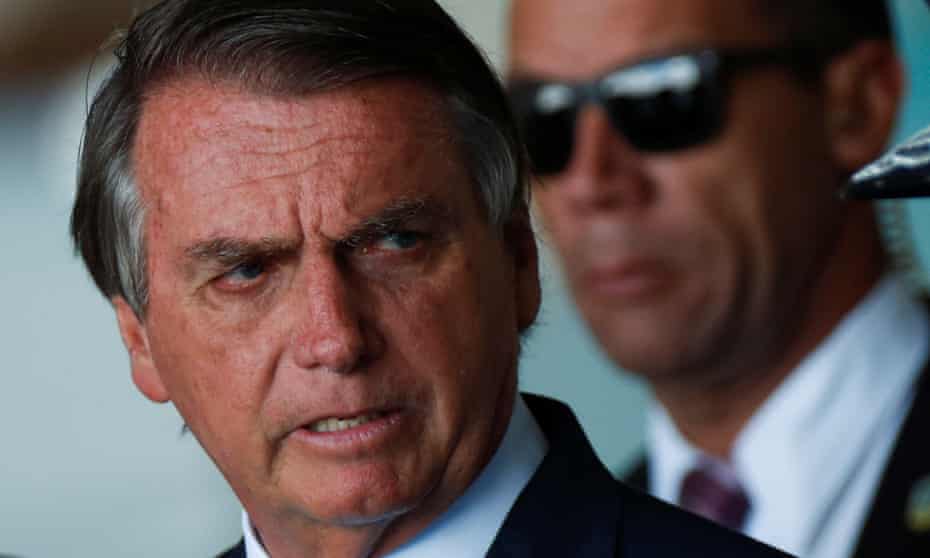
Indigenous leaders said Jair Bolsonaro had spent three years promoting legislation that would open their territories to commercial development. Photograph: Adriano Machado/Reuters
Tom Phillips on 17 March 2022 reported how the Brazilian Government honours a president who activists accuse of undermining Indigenous protections.
Brazilian activists are outraged after Jair Bolsonaro – who has been accused of spearheading a cataclysmic attack on Indigenous rights – was honoured by his own government for his supposedly “altruistic” efforts to protect Indigenous lives.
Bolsonaro was granted the Medal of Indigenous Merit on Wednesday in recognition of what the justice ministry called his attempts to defend Indigenous communities in the South American country.
The same honour was bestowed upon key Bolsonaro allies, including his health, defence and agriculture ministers and the hardline institutional security chief, Augusto Heleno, who has accused Indigenous activists of committing crimes against the state by criticising the government’s policies overseas.
Indigenous leaders reacted to the award with disbelief and exasperation, noting how Brazil’s far-right president had spent three years undermining its Indigenous and environmental protection agencies, Funai and Ibama, and promoting legislation that would open Indigenous territories to commercial development.
The Articulation of Indigenous Peoples of Brazil criticised the government’s “contemptuous gesture”. “They want to destroy us at all costs and, as if that wasn’t enough, they now want to pay tribute to themselves in our name?” the group said, claiming Bolsonaro deserved only “the medal of Indigenous genocide”.
“Now he wants to use the Ukraine war [as justification] for allowing mining, oil and gas exploration, hydroelectric dams and soy plantations on Indigenous lands,” Korap added, in reference to recent moves to fast-track draft legislation allowing such activities.
Alessandro Molon, the lower house leader of Brazil’s opposition, urged Congress to strip Bolsonaro of the medal. “It’s a mockery that the same government that is trying to legalise mining on Indigenous lands – endangering the existence of these utterly persecuted and mistreated people – has the nerve to award itself medals of ‘merit’ for all of the harm it has caused over the past three years,” Molon told the magazine Veja.
“If Congress doesn’t overrule this absurdity it will be associating itself with this unprecedented assault on Indigenous people,” Molon said.
Nominations can be submitted in either in English, French or Spanish, through the dedicated forms below.
Please note: Each individual may only submit one nomination per year.
Please reach out to Submittable’s Customer Support team with any technical questions at support@submittable.com
For further information, please visit the website and for any questions directly relating to process or information required, please contact the research team by email: research@rightlivelihood.org.
The head of the North Caucasus region of Chechnya, Ramzan Kadyrov, long accused of grave human rights abuses, has been named “distinguished human rights defenders” by the regional human rights ombudsman.
Ombudsman Nurdi Nukhazhiyev, at a ceremony in Grozny on December 30 that was not attended by Kadyrov, said the Kadyrov family had made an “enormous contribution…to securing human rights and strengthening the state.”
In addition to Kadyrov, the medals were awarded to his father, former Chechen President Akhmad Kadyrov, and his mother, Aimani Kadyrova.
Akhmad Kadyrov was president of Chechnya from 2003 until his assassination in May 2004.
Earlier in the month, Kadyrov’s daughter, Aishat Kadyrova, who serves as Chechnya’s culture minister, was awarded the medal For the Defense of Human Rights.
Russian and international human rights monitors have for years accused Ramzan Kadyrov of overseeing grave human rights abuses including abductions, torture, extrajudicial killings, and the persecution of the LGBT community.
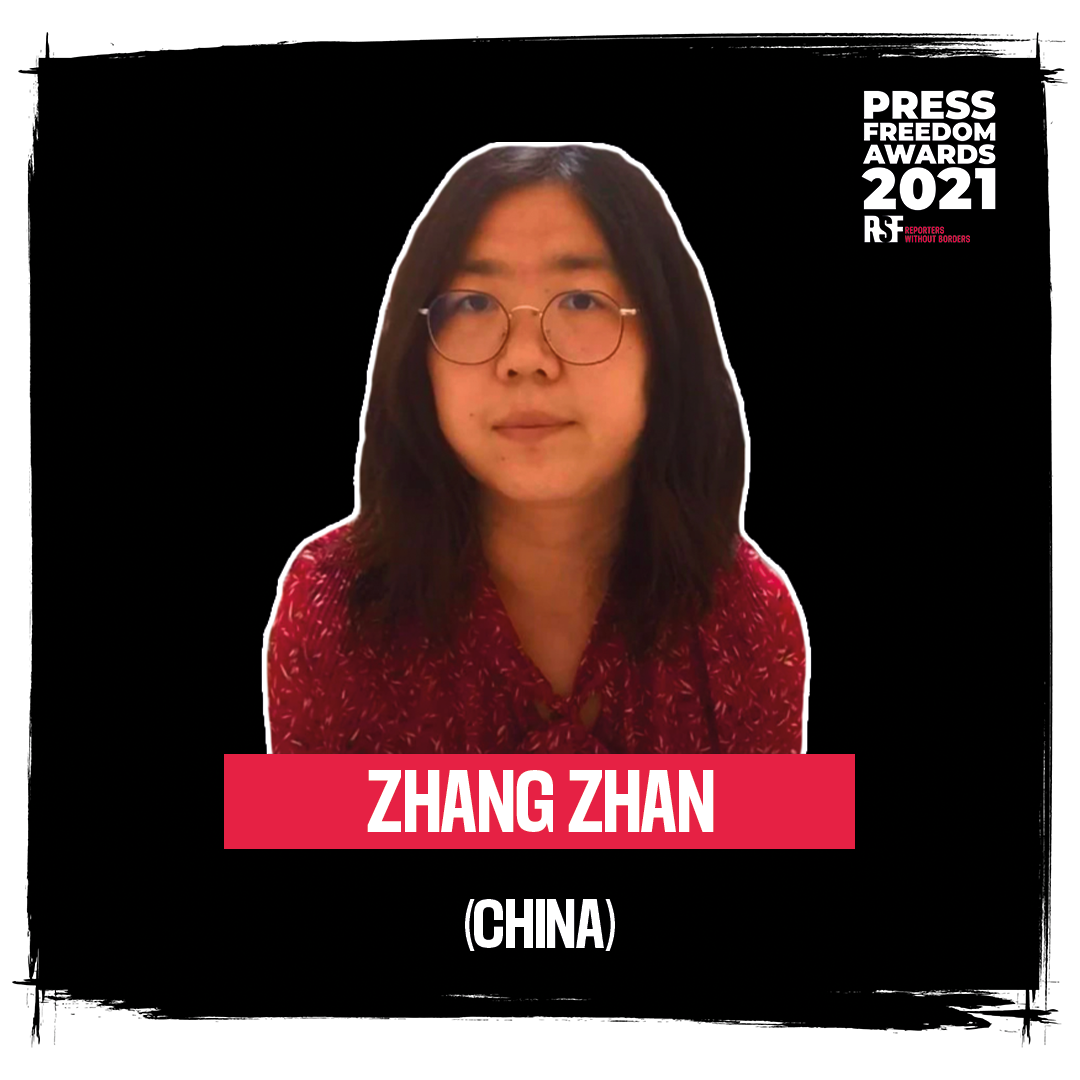
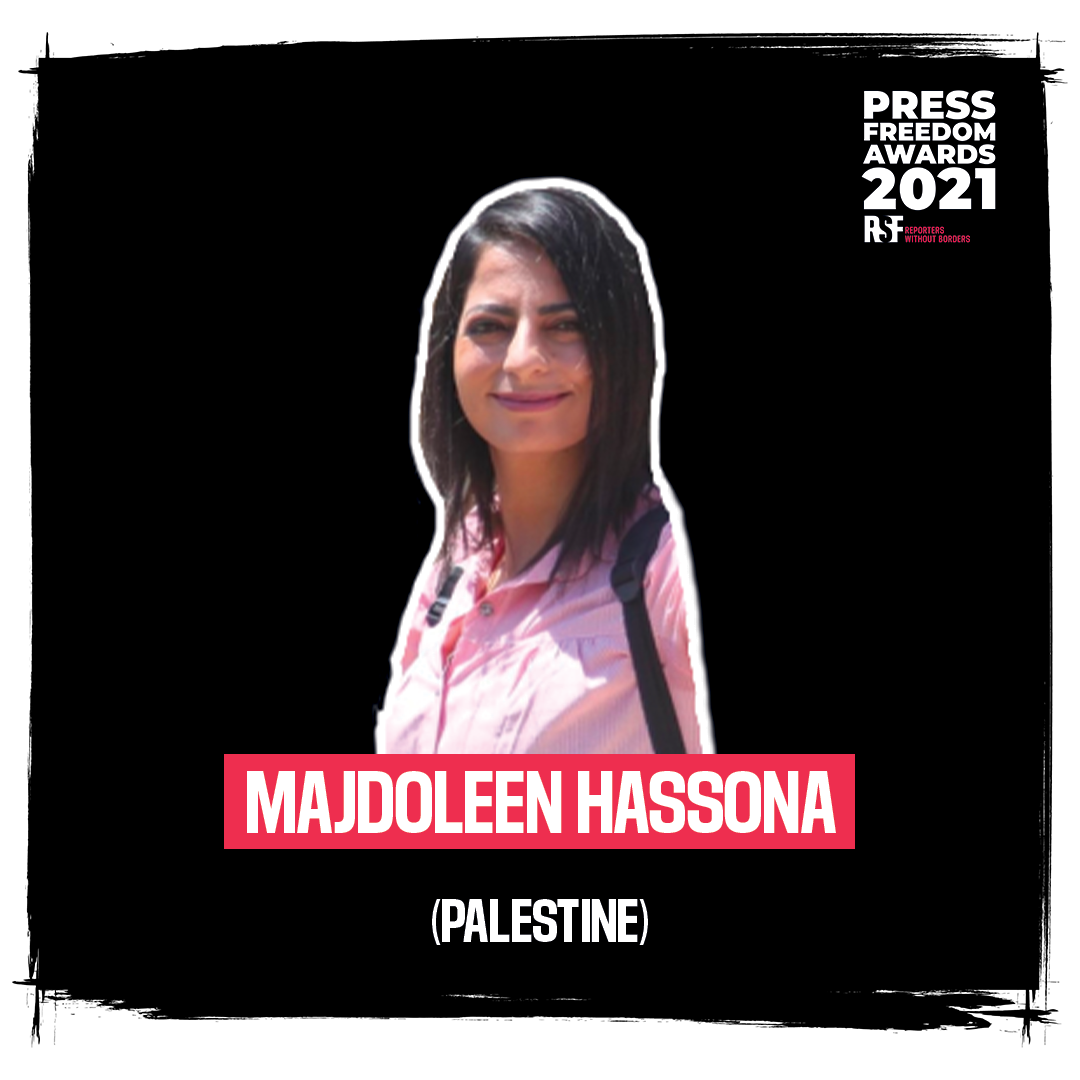
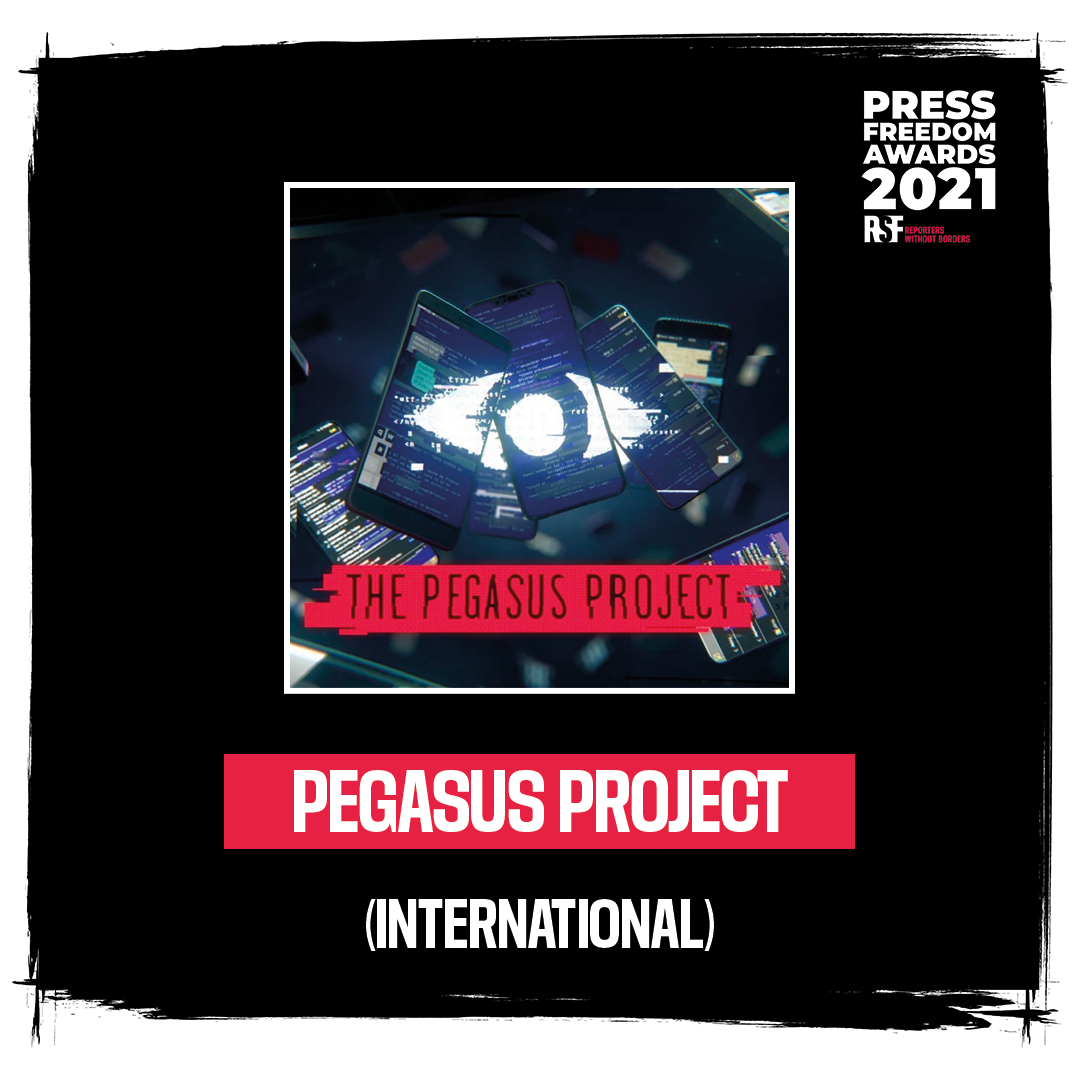
On 20 November 2021 Pacific Media Watch reported that the 2021 Reporters Without Borders (RSF) Press Freedom Awards have been given to Chinese journalist Zhang Zhan in the courage category, Palestinian journalist Majdoleen Hassona in the independence category, and the Pegasus Project in the impact category.
RSF president Pierre Haski announces the 29th RSF Press Freedom Awards in Paris. Video: RSF
RSF’s press freedom prizes are awarded every year to journalists or media that have made a notable contribution to the defence or promotion of freedom of the press in the world. This is the 29th year they have been awarded. The 2021 awards have been given in three categories — journalistic courage, impact and independence.
Courage Prize The 2021 Prize for Courage, which aims to support and salute journalists, media outlets or NGOs that have displayed courage in the practice, defence or promotion of journalism, has been awarded to Chinese journalist Zhang Zhan.
Despite constant threats, this lawyer-turned-journalist covered the covid-19 outbreak in the city of Wuhan in February 2020, live-streaming video reports on social media that showed the city’s streets and hospitals, and the families of the sick. Her reporting from the heart of the pandemic’s initial epicentre was one of the main sources of independent information about the health situation in Wuhan at the time.
After being arrested in May 2020 and held incommunicado for several months without any official reason being provided, Zhang Zhan was sentenced on 28 December 2020 to four years in prison for “picking quarrels and provoking trouble”. In protest against this injustice and the mistreatment to which she was subjected, she went on a hunger strike that resulted in her being shackled and force-fed. Her friends and family now fear for her life, and her health has worsened dramatically in recent weeks. See also: https://humanrightsdefenders.blog/2021/11/06/chinese-journalist-zhang-zhan-at-imminent-risk-of-death/
Independence Prize The 2021 Prize for Independence, which rewards journalists, media outlets or NGOs that have resisted financial, political, economic or religious pressure in a noteworthy manner, has been awarded to Palestinian journalist Majdoleen Hassona.
Majdoleen Hassona
Before joining the Turkish TV channel TRT and relocating to Istanbul, this Palestinian journalist was often harassed and prosecuted by both Israeli and Palestinian authorities for her critical reporting. While on a return visit to the West Bank in August 2019 with her fiancé (also a TRT journalist based in Turkey), she was stopped at an Israeli checkpoint and was told that she was subject to a ban on leaving the territory that had been issued by Israeli intelligence “for security reasons”. She has been stranded in the West Bank ever since but decided to resume reporting there and covered the anti-government protests in June 2021 following the death of the activist Nizar Banat.
Impact Prize The 2021 Prize for Impact, which rewards journalists, media outlets or NGOS that have contributed to clear improvements in journalistic freedom, independence and pluralism, or increased awareness of these issues, has been awarded to the Pegasus Project.
The Pegasus Project
The Pegasus Project is an investigation by an international consortium of more than 80 journalists from 17 media outlets* in 11 different countries that was coordinated by the NGO Forbidden Stories with technical support from experts at Amnesty International’s Security Lab. Based on a leak of more than 50,000 phone numbers targeted by Pegasus, spyware made by the Israeli company NSO Group, the Pegasus Project revealed that nearly 200 journalists were targeted for spying by 11 governments — both autocratic and democratic — which had acquired licences to use Pegasus. This investigation has made people aware of the extent of the surveillance to which journalists are exposed and has led many media outlets and RSF to file complaints and demand a moratorium on surveillance technology sales. See also: https://humanrightsdefenders.blog/2021/11/10/palestinian-ngos-dubbed-terrorist-were-hacked-with-pegasus-spyware/
“For defying censorship and alerting the world to the reality of the nascent pandemic, the laureate in the ‘courage’ category is now in prison and her state of health is extremely worrying,” said RSF secretary-general Christophe Deloire.
“For displaying a critical attitude and perseverance, the laureate in the ‘independence category has been unable to leave Israeli-controlled territory for the past two years. “For having revealed the scale of the surveillance to which journalists can be subjected, some of the journalists who are laureates in the ‘impact’ category are now being prosecuted by governments.
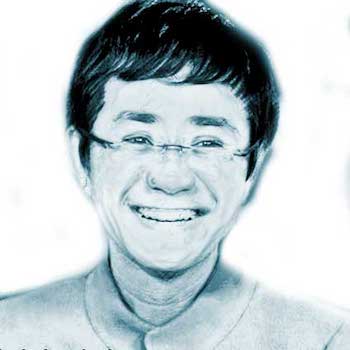
On 8 October 2021 the Norwegian Nobel Committee decided to award the Nobel Peace Prize for 2021 to Maria Ressa and Dmitry Muratov for their efforts to safeguard freedom of expression, which is a precondition for democracy and lasting peace. Ms Ressa and Mr Muratov are receiving the Peace Prize for their courageous fight for freedom of expression in the Philippines and Russia. At the same time, they are representatives of all journalists who stand up for this ideal in a world in which democracy and freedom of the press face increasingly adverse conditions.
Maria Ressa uses freedom of expression to expose abuse of power, use of violence and growing authoritarianism in her native country, the Philippines. In 2012, she co-founded Rappler, a digital media company for investigative journalism, which she still heads. As a journalist and the Rappler’s CEO, Ressa has shown herself to be a fearless defender of freedom of expression. Rappler has focused critical attention on the Duterte regime’s controversial, murderous anti-drug campaign. The number of deaths is so high that the campaign resembles a war waged against the country’s own population. Ms Ressa and Rappler have also documented how social media is being used to spread fake news, harass opponents and manipulate public discourse. Maria Ressa has received earlier recognition with 5 human rights awards [see: https://www.trueheroesfilms.org/thedigest/laureates/c048da20-ba0f-11ea-a77e-f524f6fc9aaa]
Dmitry Andreyevich Muratov has for decades defended freedom of speech in Russia under increasingly challenging conditions. In 1993, he was one of the founders of the independent newspaper Novaja Gazeta. Since 1995 he has been the newspaper’s editor-in-chief for a total of 24 years. Novaja Gazeta is the most independent newspaper in Russia today, with a fundamentally critical attitude towards power. The newspaper’s fact-based journalism and professional integrity have made it an important source of information on censurable aspects of Russian society rarely mentioned by other media. Since its start-up in 1993, Novaja Gazeta has published critical articles on subjects ranging from corruption, police violence, unlawful arrests, electoral fraud and ”troll factories” to the use of Russian military forces both within and outside Russia.
Novaja Gazeta’s opponents have responded with harassment, threats, violence and murder. Since the newspaper’s start, six of its journalists have been killed, including Anna Politkovskaja who wrote revealing articles on the war in Chechnya. Despite the killings and threats, editor-in-chief Muratov has refused to abandon the newspaper’s independent policy. He has consistently defended the right of journalists to write anything they want about whatever they want, as long as they comply with the professional and ethical standards of journalism.
Muratov dedicated his award to six contributors to his Novaya Gazeta newspaper who had been murdered for their work exposing human rights violations and corruption. “Igor Domnikov, Yuri Shchekochikhin, Anna Politkovskaya, Stas Markelov, Anastasia Baburova, Natasha Estemirova – these are the people who have today won the Nobel Prize,” Muratov said, reciting the names of slain reporters and activists whose portraits hang in the newspaper’s Moscow headquarters.
Free, independent and fact-based journalism serves to protect against abuse of power, lies and war propaganda. The Norwegian Nobel Committee is convinced that freedom of expression and freedom of information help to ensure an informed public. These rights are crucial prerequisites for democracy and protect against war and conflict. The award of the Nobel Peace Prize to Maria Ressa and Dmitry Muratov is intended to underscore the importance of protecting and defending these fundamental rights.
“For building a model of community-based child protection in the face of terrorist insurgency and gender-based violence in the Lake Chad region of Cameroon.”
Scholars at Risk is seeking nominations for the 2021 Courage to Think Award, which will be presented during an award ceremony at its annual Free to Think event in November 2021. Please submit a nomination by July 31, 2021, here.
The Courage to Think Award recognizes individuals, groups, or institutions that have demonstrated an exemplary commitment to protecting scholars and promoting academic freedom, whether through their professional work, private or community service, or by facing personal risk. For more of this award and its laureates, see: https://www.trueheroesfilms.org/thedigest/awards/165B4CC5-0BC2-4A77-B3B4-E26937BA553C
After at first agreeing to accept the grand prize as “Cultural Personality of the Year” in the Sheikh Zayed Book Award, Juergen Habermas then decided to decline the honour. An interesting commentary by Reinhard Schulze sheds light on the wisdom of accepting such awards:
The rejection of the prize awarded by the United Arab Emirates has sparked quite a controversy and even been linked to the debate on “cancel culture”.
The first argument concerns the political context behind the Zayed Award. Some say that the UAE’s foreign, cultural and anti-Islamism policies betray signs of cautious reforms and opening in the principalities. This raises the question: who is honouring whom here? Does the prize honour the laureate, or does the laureate honour the sponsor’s reform policies by accepting?
The award in the context of neo-nationalist cultural policy
However, the Emirates’ cultural policy is clearly heading in a different direction. It combines the aspiration to make the Emirates the embodiment of a global culture on the one hand with a sentimental and nostalgic Arabism on the other. The Emirates want to give shape and expression to this Arabism and yet at the same time take on the status of patron of global culture. It is therefore no coincidence that the Zayed Award always selects as its “cultural personality of the year” someone who represents this global culture, this time in the form of Juergen Habermas, who was henceforward to be protected and promoted by the Emirates. See also: https://humanrightsdefenders.blog/2019/10/26/celebrity-endorsements-and-the-dubai-expo-on-the-one-hand-and-the-other/
The Emirates see as their greatest adversaries all organisations and groups that view Islam as a secular order, chief among them of course the Muslim Brotherhood. Such groups are ridiculed as relics of bygone times and at the same time furiously opposed. Promoted instead is an Islamic orthodoxy, provided it renounces any political pretensions. This Islamic orthodoxy is seen as part of the new nostalgic Arabism and reduced to the function of a symbolic cultural system of the Emirati “nation” represented by the princes.
Current policies in the Emirates thus largely rule out any opening up within society or social change. Only 10% of the population in the seven principalities are considered citizens, while 90% are foreigners or stateless persons (bidun). And only 7% are deemed to be Arab members of the titular nation.
The award and the weak legitimacy of the princes
Like most awards, the Zayed Award is also a mark of distinction for its sponsor. There is nothing inherently dishonourable about that. Things become problematic, however, when, as in Abu Dhabi, such self-adulation serves primarily to enhance the legitimacy of the ruling order through external recognition. Since only a very small minority of people in the country have any function at all as subjects that can legitimise the rule of the princes, a large portion of the population is politically and culturally functionless.
The legitimacy of the princes thus rests on very weak shoulders, which is why they strive to compensate for the lack of an internal basis of legitimacy through increased acknowledgement from the outside. And, as with the numerous principalities in the age of European absolutism, the princes on the Arabian Peninsula can also get ahead in the competition to secure legitimacy from the outside by obtaining prestigious objects. In Abu Dhabi, this includes the “Arab Louvre” and also the Zayed Award, which spotlights the “book” as the route to legitimacy.
Many have already been honoured with this award. In 2003, for example, the 8th President of FIFA, Sepp Blatter, received this highest state award in the Emirates. Zayed Award winners in the “cultural personality” category include the French-Lebanese writer Amin Maalouf (2016), Moroccan historian Abdallah Laroui (2017), Arabists Yaroslav and Suzanne Stetkevych (2019), and Palestinian author Salma Khadra Al Jayyusi (2020). Abu Dhabi is emerging from Saudi Arabia’s shadow: since the Arab Spring of 2011, the United Arab Emirates (UAE) have been pursuing an increasingly active foreign and security policy and have emerged as a leading regional power. The rise of the UAE to a regional power has made the country a more important and simultaneously a more problematic policy partner for Germany and Europe, argues Guido Steinberg in his study on “Regional Power United Arab Emirates”
Enlightened absolutism in the Gulf?
All of the award-winners to date have had a direct connection to the Arab world. With Juergen Habermas, however, a personality has been chosen for this year’s prize who has a pronounced legitimising function. To a certain extent, this has made the award more international, a move that corresponds quite closely to the efforts of the royal house of Abu Dhabi to gain the broadest possible worldwide recognition. Juergen Habermas’s oeuvre would seem to be ideally suited for this purpose. One might ask, though, why potentates would choose a personality whose work entails a radical critique of discourses of power, when their own actions as rulers run counter to precisely what the honouree has deemed necessary for the success of a society.
Do the princes want to show that they have now become advocates of an “enlightened absolutism”, endeavouring to reform the Leviathan of the state to such an extent that it becomes a beacon for Arab enlightenment? Are they trying to shift the weight of their project onto the shoulders of giants?
But an enlightened absolutism 2.0 would require broad legitimacy that goes far beyond a public sphere controlled by the royal court. This legitimacy, the princes realise, can only be obtained internationally. And if international recognition is tantamount to support for their foreign and security policy strategy, then that is certainly worth the prize money.
Refusing to condone such a strategy is by no means an expression of “cancel culture”. There are often good reasons for honourees to turn down awards. This was the case in 2008, for example, when literary critic Marcel Reich-Ranicki refused to accept the honorary prize of the German Television Award, and in 2011, when Juan Goytisolo from Spain refused to accept the Al-Gaddafi International Prize for Human Rights. Jean-Paul Sartre seems to have had less cogent reasons for turning down the Nobel Prize for Literature in 1964. But in any case, the reasons that lead someone to decline an award should be appreciated and respected. It harms no one, unless you regard the awardee as a sovereign subject of the prize sponsor. So let’s wait and see if Juergen Habermas takes the opportunity to explain his motives.
The argument that culture cannot be kept free of the double standards of politics, which is willing to prioritise economic interests over the demand for human rights, may seem disturbing. In the final analysis, this means that awards such as the aforementioned Al-Gaddafi Prize for Human Rights would also have to be recognised. I believe that the awards culture in particular poses a major challenge, as it can quickly be exploited in an almost extortionate manner to gain legitimacy and recognition. This was evident in some of the reactions to Juergen Habermas’s refusal of the award. The Catholic Bishop for the Apostolic Vicariate of Southern Arabia, Paul Hinder, described the rejection of the invitation to accept the prize as an “insult” to its sponsor. This makes one wonder whether, as an award winner, one automatically has some sort of obligation towards the donor?
It is precisely because international relations are so rife with double standards that it is necessary to create cultural and scientific realms in which the claim can be made to address human rights violations, freedom of the press and freedom of religion on an equal footing and based on an equal rationale. When someone like Juergen Habermas calls for this so urgently, relying on the power of words, then we can rightly expect that receiving an award will also be evaluated from this standpoint.
Not a case of arrogance
Therefore, it is not arrogance on the part of the West to reject this prize, if only because Juergen Habermas is not the West and the prize is not the Arab world. We should keep our feet firmly planted on the ground and not speak here of a new culture war. An honouree has exercised his right to ask who is honouring him and then decide whether to accept that honour.
His rejection of the award is in keeping with the work of Juergen Habermas. Social media reactions coming from Arab countries indicate that the majority welcomes Habermas’s decision; some have even expressed relief because the refusal to accept the award accomplishes two things at once: for one thing, the awards committee has recognised and manifested the prize-worthiness of Juergen Habermas’s work for the Arab world. Arabic editions of his works will surely become more widespread. Secondly, Habermas himself has shown that, despite the honour, he has stood by his critical principles and arrived at a decision that is consistent for him, and he has done so in a political environment where every honour is subject to the suspicion of being corrupt.
On 24 April 2021 the Aurora Humanitarian Initiative has revealed the names of five 2021 Aurora Humanitarians, chosen by the Aurora Prize Selection Committee for their courage, commitment and impact. The announcement was made today at the Matenadaran, the national repository of ancient manuscripts located in Yerevan, Armenia. During this special event, the attendees also paid tribute to the great scholar and philanthropist Vartan Gregorian, Co-Founder of the Aurora Humanitarian Initiative and member of the Aurora Prize Selection Committee, who passed away a few days ago. In accordance with the tradition, the names of the 2021 Aurora Humanitarians have been inscribed in the Chronicles of Aurora, a unique 21st century manuscript containing the depictions of the Aurora Humanitarian Initiative activities. For 2020 see: https://humanrightsdefenders.blog/2020/09/17/fartuun-adan-and-ilwad-elman-from-somalia-named-2020-aurora-prize-winners/
One of the Humanitarians will become the 2021 Aurora Prize Laureate and will receive an opportunity to continue the cycle of giving by sharing a $1,000,000 award with the organizations that help people in need. The 2021 Aurora Humanitarians are:
Grégoire Ahongbonon (Côte d’Ivoire), founder of the St Camille Association, which helps people in West Africa suffering from mental illness and seeks to end the inhumane local practice of keeping them in chains. Mr. Ahongbonon has nominated three organizations that promote international solidarity and support people with intellectual disabilities and mental illnesses: CRÉDIL (Lanaudière’s Regional Committee on Education for International Development), L’Arche Canada Foundation, and St Camille Association.
Ruby Alba Castaño (Colombia), a human rights activist and founder of ASOCATDAME (Meta Association for Peasants, Rural Workers and Defenders of the Environment) who works to protect the rights of thousands of Colombian peasants that are subjected to persecution, forced disappearances and displacement. Ms. Castaño has nominated three organizations that advocate for the rights of the peasant and impoverished communities in Colombia: ASOCATDAME, Claretian Corporation Norman Pérez Bello (CCNPB), and National Federation of Agricultural Unions (FENSUAGRO).
Paul Farmer (USA), a medical anthropologist, professor at Harvard Medical School, co-founder and chief strategist of Partners In Health (PIH), an international non-profit organization that brings the benefits of modern medical science to those who need it the most. Dr. Farmer has nominated two organizations that deliver healthcare to the world’s poorest communities and build a global movement of social medicine educators and practitioners: Partners In Health and Equal Health.
Julienne Lusenge (Democratic Republic of the Congo), a human rights defender, co-founder of Women’s Solidarity for Inclusive Peace and Development (SOFEPADI) and Fund for Congolese Women (FFC), who has been helping the victims of wartime sexual violence for years. Ms. Lusenge has nominated three organizations that support grassroots women’s organizations, empower survivors of gender-based violence and reintegrate internally displaced persons: Fund for Congolese Women, League for Congolese Solidarity and Association of Mothers for Development and Peace.
Ashwaq Moharram (Yemen), a physician who provides life-saving support to the starving population of Hodeida, facing a humanitarian crisis in the aftermath of conflict and blockade. Dr. Moharram has nominated two organizations that protect the future of children and provide free healthcare services to the people affected by the ongoing conflict in Yemen: Save the Children and Doctors Without Borders.
“It is a great honor to have the opportunity to recognize these distinguished men and women from all over the world. The 2021 Aurora Humanitarians are individuals who truly believe in the basic human rights and have dedicated their lives to helping people in areas of adversity. They are also recognized for the huge impact that even one individual can have by helping thousands and, most importantly, inspiring millions at the same time,” said Lord Ara Darzi, Chair of the Aurora Prize Selection Committee.
“The outstanding accomplishments of the 2021 Aurora Humanitarians show their unyielding willingness to act in response to the needs of people around them. Aurora believes deeply in the power of humanity to improve and save lives and has come up with the concept of “Gratitude in Action” that describes the human spirit that can motivate humanitarian activism. The heroes we are honoring today are the role models the world needs now more than ever before,” noted Marguerite Barankitse, founder of Maison Shalom and REMA Hospital and the inaugural Aurora Prize Laureate.
At the event, the Aurora Humanitarian Initiative also officially announced the opening of the nomination period for the 2022 Aurora Prize and encouraged everyone to put forward inspiring modern-day heroes. Earlier that day, Aurora representatives had commemorated the Armenian Genocide by attending a flower-laying ceremony at the Tsitsernakaberd memorial in Yerevan, Armenia, dedicated to the victims of the first genocide of the 20th century.