Enforced disappearance refers to the arrest, detention or abduction of persons by agents of the State, or those acting with State authorization or support, whose whereabouts are unknown.
Once largely the product of military dictatorships, it has become a global problem, according to the UN, with hundreds of thousands of people “disappeared” in more than 80 countries. Impunity remains widespread.
While strictly prohibited under international human rights law, the SG, Mr. Guterres said enforced disappearance continues to be used across the world as a method of repression, terror, and stifling dissent.
“Paradoxically, it is sometimes used under the pretext of countering crime or terrorism. Lawyers, witnesses, political opposition, and human rights defenders are particularly at risk,” he added.
Having been removed from the protection of the law, victims, who can include children, are deprived of all their rights and are at the mercy of their captors.
They are frequently tortured and know that it is unlikely anyone will come to their aid. Some are even killed.
“Enforced disappearance deprives families and communities of the right to know the truth about their loved ones, of accountability, justice and reparation,” the Secretary-General said.
“The COVID-19 pandemic has added to the agony and anguish of enforced disappearance, by limiting capacities to search for missing persons and investigate alleged enforced disappearance.”
It was established by the UN General Assembly, which adopted a resolution in December 2010 expressing deep concern about the rise in incidents in various regions, and increasing reports of harassment, ill-treatment and intimidation of witnesses of disappearances, or relatives of people who were disappeared.
“The Convention for the Protection of all Persons against Enforced Disappearances is indispensable in helping to tackle this cowardly practice. But it requires the will and commitment of those with the power to do so,” the Secretary-General said. “States must fulfil their obligations to prevent enforced disappearance, to search for the victims, and to investigate, prosecute and punish the perpetrators.”
Mr. Guterres reiterated his call for countries to ratify the Convention, and to work with the UN Committee that monitors its implementation, as well as the Working Group on Enforced Disappearances, which assists families in determining the fate of their loved ones.
On this day Amnesty International, Human Rights Watch and the International Commission of Jurists (ICJ) issued a statement that the government of Nepal should promptly enforce Supreme Court rulings and permit the regular courts to try cases of enforced disappearance and other grave international crimes. On the International Day of the Victims of Enforced Disappearances, August 30, 2021, thousands of Nepali families are no closer to knowing the truth of what happened to their missing loved ones than they were when the country’s armed conflict ended 15 years ago.
Nepal’s Supreme Court has repeatedly ordered the government to investigate gross violations of human rights and international humanitarian law during the conflict from 1996 to 2006, and to conduct a meaningful, effective transitional justice process to establish the truth and provide justice for thousands of cases of serious abuses.
“The Nepali government stands in blatant violation of express orders of the Supreme Court by failing to conduct a credible, timely transitional justice process,” said Mandira Sharma, senior legal adviser for South Asia at the ICJ.
The enforced disappearance of people is the latest tactic that authorities in Nicaragua have adopted to silence any criticism or dissenting voices, Amnesty International said in a new report released on 25 August 2021. Where are they? Enforced Disappearance as a Strategy of Repression in Nicaragua documents the cases of 10 people detained for their activism or for exercising their right to freedom of expression who have been subjected to enforced disappearance, despite being in the custody of the Nicaraguan authorities.
“Daniel Ortega’s government of is implementing a new strategy to try to silence those who speak out. By disappearing opponents, activists and journalists, Ortega is showing his fear of criticism and complaints,” said Erika Guevara-Rosas, Americas director at Amnesty International.
“The 10 cases we have documented demonstrate a new pattern of detentions followed by enforced disappearances and bear strong similarities to the cases of dozens of others who may be in the same situation. We demand that Daniel Ortega’s government immediately release all those detained for exercising their rights.”
Since the beginning of the human rights crisis in Nicaragua in April 2018, there has been no end to reports of harassment against people identified as opponents of the government, human rights defenders, journalists, victims of human rights violations and their families.
The new phase of the repressive strategy of President Ortega’s government, which is highlighted by the detention of a new group of people identified as opponents of the government, began on 28 May 2021. From then until 2 August, more than 30 people were deprived of their liberty, adding to the more than 100 people who were already in prison just for exercising their human rights.
After analysing the cases of 10 individuals, Amnesty International concluded that – in light of the Nicaraguan state’s international human rights obligations – their detention, followed by the concealment of their whereabouts, constitutes the crime of enforced disappearance. The cases documented were those of Daysi Tamara Dávila, Miguel Mendoza, José Pallais, Suyen Barahona, Víctor Hugo Tinoco, Félix Maradiaga, Ana Margarita Vijil, Violeta Granera, Jorge Hugo Torres and Dora María Téllez.
The 10 documented cases are not isolated cases and occur in a context where there are repeated reports of other situations that have important similarities. Therefore, the cases analysed likely represent just a small sample of a longer list of victims.
In all of the documented cases, as of 2 August (the closing date of the investigation), the authorities had not officially disclosed the exact location of the detainees – a requirement under international law. In most cases, the only information received about their possible location has been provided verbally by police officers at the gate of the Judicial Assistance Directorate Evaristo Vasquez Police Complex (Dirección de Auxilio Judicial Complejo Policial Evaristo Vásquez, DAJ), known as the “New Chipote” (Nuevo Chipote), after family members insisted. However, mere statements by police officers in charge of the entrance of a detention centre are not sufficient, official and credible proof of the whereabouts and conditions of the detainees.
Both the Public Prosecutor’s Office and the National Police have issued public statements acknowledging the detentions. However, in none of them do they mention the place of detention. Furthermore, the families have not been able to visit the detainees, their legal teams have not had access to interview them, and the judicial authorities have not responded to calls to authorise the entry of family members and lawyers.
The information available to Amnesty International shows that the families and legal representatives of the 10 detainees submitted more than 40 applications, petitions and appeals to different authorities, requesting access to their files, medical examinations for the detainees, interviews with their lawyers, family visits, and immediate release, among other requests. Unfortunately, these appeals have been ineffective and, in most cases, left unanswered by the authorities.
Enforced disappearance is a crime under international law and one of the most serious human rights violations because it implies the violation of multiple human rights. It is defined as a lawful or unlawful deprivation of a person’s liberty by state agents, or by other actors with the acquiescence or tolerance of the state, without subsequently acknowledging that the detention took place, or, if acknowledged, withholding information about the fate or whereabouts of the person deprived of liberty.
“This week will mark 90 days since the most recent detentions began, but the authorities continue to refuse to provide official information on the whereabouts and conditions of detention,” said Erika Guevara-Rosas. “The families deserve to know for sure if their loved ones are alive and where they are being held. The anguish they’re experiencing is yet another form of punishment under the repressive policies of Daniel Ortega’s government.”
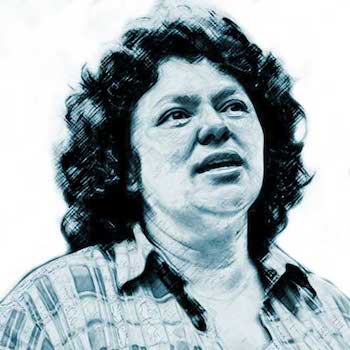
According to Common Dreams, human rights defenders on Monday 5 July 2021 welcomed the conviction of Roberto David Castillo Mejía, a Honduran businessman and former military intelligence officer, for the March 2016 assassination of Indigenous environmental activist Berta Cáceres, while calling on authorities in the Central American nation to bring everyone involved in planning the murder.
(Photo CC by Trocaire on Flickr.)
The Guardianreports that the Tegucigalpa high court found Castillo—formerly head of the dam company Desarrollos Energéticos, or DESA—guilty of collaborating in Cáceres’ murder. The court ruled that Cáceres was killed for leading the campaign to stop construction of the $50 million Agua Zarca dam, a local grassroots effort which caused delays and monetary losses for DESA.
The environmentally destructive hydroelectric project is located on the Gualcarque River, which is sacred to the Indigenous Lenca people, and was approved despite its failure to comply with Honduran and international environmental requirements.
Cáceres, who was 44 years old when she was murdered, was co-founder and coordinator of the Council of Popular and Indigenous Organizations of Honduras (COPINH), a group dedicated to the defense of the environment in Intibucá and the protection of the Lenca. In 2015 she received the prestigious Goldman Environmental Prize for leading “a grassroots campaign that successfully pressured the world’s largest dam builder to pull out of the Agua Zarca Dam” project at Río Gualcarque. See also: https://humanrightsdefenders.blog/2020/06/10/nina-lakhanis-who-killed-berta-caceres-reviewed/
COPINH hailed Monday’s verdict as “a popular victory for the Honduran people” that “means the criminal power structures failed to corrupt the justice system.”
Erika Guevara-Rosas, Americas director at Amnesty International, said in a statement that “the long-awaited prosecution of David Castillo, convicted as co-author of the murder of Berta Cáceres, is an important step towards justice and the result of her family and COPINH’s tireless efforts to secure truth, justice, and reparation. However, justice for Berta will never be truly complete until everyone who took part in the crime, including those who planned it, is brought to justice.”
“We urge the prosecutors to keep uncovering the truth,” Guevara-Rosas continued. “Until all those responsible are held accountable, other human rights defenders in Honduras will continue to lose their lives, for raising their voices and defending the most vulnerable. The Honduran authorities must put an end to impunity.”
Noting that Honduras is “the most dangerous country for defenders of land, territory, and the environment,” Guevara-Rosas admonished the Honduran government, which she said “seems to look the other way when human rights defenders are attacked instead of fulfilling its obligation to protect them.”
“Authorities must take this seriously and do whatever is necessary to keep human rights defenders safe from harm, so that a crime like the murder of Berta Cáceres is never repeated,” she added.
A 2017 report (pdf) by international legal experts concluded Cáceres’ murder was not an “isolated incident” and alleged “willful negligence by financial institutions.” The report found that the targeting of Cáceres was part of a “strategy” by DESA employees, private security firms, and public officials “to violate the right to prior, free, and informed consultations of the Lenca.”
“The strategy was to control, neutralize, and eliminate any opposition,” the report said.
On 3 July 2021, a new interactive online platform by Forensic Architecture, supported by Amnesty International and the Citizen Lab, maps for the first time the global spread of the notorious spyware Pegasus, made by cyber-surveillance company NSO Group.
‘Digital Violence: How the NSO Group Enables State Terror’ documents digital attacks against human rights defenders around the world, and shows the connections between the ‘digital violence’ of Pegasus spyware and the real-world harms lawyers, activists, and other civil society figures face. NSO Group is the worst of the worst in selling digital burglary tools to players who they are fully aware actively and aggressively violate the human rights of dissidents, opposition figures, and journalists. Edward Snowden, President of Freedom of the Press Foundation.
NSO Group is a major player in the shadowy surveillance industry. The company’s Pegasus spyware has been used in some of the most insidious digital attacks on human rights defenders. When Pegasus is surreptitiously installed on a person’s phone, an attacker has complete access to a phone’s messages, emails, media, microphone, camera, calls and contacts. For my earlier posts on NSO see: https://humanrightsdefenders.blog/tag/nso-group/
“The investigation reveals the extent to which the digital domain we inhabit has become the new frontier of human rights violations, a site of state surveillance and intimidation that enables physical violations in real space,” said Shourideh C. Molavi, Forensic Architecture’s Researcher-in-Charge.
Edward Snowden narrates an accompanying video series which tell the stories of human rights activists and journalists targeted by Pegasus. The interactive platform also includes sound design by composer Brian Eno. A film about the project by award-winning director Laura Poitras will premiere at the 2021 Cannes Film Festival later this month.
The online platform is one of the most comprehensive databases on NSO-related activities, with information about export licenses, alleged purchases, digital infections, and the physical targeting of activists after being targeted with spyware, including intimidation, harassment, and detention. The platform also sheds light on the complex corporate structure of NSO Group, based on new research by Amnesty International and partners.
“For years, NSO Group has shrouded its operations in secrecy and profited from working in the shadows. This platform brings to light the important connections between the use of its spyware and the devastating human rights abuses inflicted upon activists and civil society,” said Danna Ingleton, Deputy Director of Amnesty Tech.
Amnesty International’s Security Lab and Citizen Lab have repeatedly exposed the use of NSO Group’s Pegasus spyware to target hundreds of human rights defenders across the globe. Amnesty International is calling on NSO Group to urgently take steps to ensure that it does not cause or contribute to human rights abuses, and to respond when they do occur. The cyber-surveillance must carry out adequate human rights due diligence and take steps to ensure that human rights defenders and journalists do not continue to become targets of unlawful surveillance.
In October 2019, Amnesty International revealed that Moroccan academic and activist, Maati Monjib’s phone had been infected with Pegasus spyware. He continues to face harassment by the Moroccan authorities for his human rights work. In December 2020, Maati Monjib was arbitrarily detained before being released on parole on 23 March 2021.
Maati Monjib, tells his story in one of the short films, and spoke of the personal toll following the surveillance, “The authorities knew everything I said. I was in danger. Surveillance is very harming for the psychological wellbeing of the victim. My life has changed a lot because of all these pressures.”
Amnesty International is calling for all charges against Maati to be dropped, and the harassment against him and his family by the Moroccan authorities to end.
The Hill of 26 May 2021 reports that a coalition of more than 30 human rights and digital privacy rights groups called on Google to abandon its plans to establish a Google Cloud region in Saudi Arabia over concerns about human rights violations.
The groups, which include Amnesty International, Human Rights Watch and PEN America, wrote in their letter that Saudi Arabia’s record of tamping down on public dissent and its justice system that “flagrantly violates due process” made it unsafe for Google to set up a “cloud region” in the kingdom.
“While Google publishes how it handles government requests for customer information and reports when requests are made through formal channels, there are numerous potential human rights risks of establishing a Google Cloud region in Saudi Arabia that include violations of the rights to privacy, freedom of expression and association, non-discrimination, and due process,” the groups said. See also: https://humanrightsdefenders.blog/2019/03/08/saudi-arabia-for-first-time-openly-criticized-in-un-human-rights-council/
The letter also pointed to Saudi authorities who have routinely sought to identify anonymous online dissenters and spy on Saudi citizens through digital surveillance. The groups also pointed to how they themselves are believed to have been put under surveillance by the Saudi government.
“Google has a responsibility to respect human rights, regardless of any state’s willingness to fulfill its own human rights obligations,” the letter continued, pointing to Google’s statement in which it expressed its commitment to human rights and to “improve the lives of as many people as possible.”
In order to address these concerns, the groups called on Google to conduct a “robust, thorough human rights due diligence process” and to “draw red lines around what types of government requests concerning Cloud regions it will not comply with” due to human rights concerns.
“The Saudi government has demonstrated time and again a flagrant disregard for human rights, both through its own direct actions against human rights defenders and its spying on corporate digital platforms to do the same,” the letter read. “We fear that in partnering with the Saudi government, Google will become complicit in future human rights violations affecting people in Saudi Arabia and the Middle East region.”
Responding to the arbitrary arrest of prominent Vietnamese human rights defender Nguyen Thuy Hanh on 7 April , Ming Yu Hah, Amnesty International’s Deputy Regional Director for Campaigns, said: “The arrest of Nguyen Thuy Hanh is a blatant and politically-motivated attempt to silence one of the most respected human rights advocates in the country. Nguyen Thuy Hanh is an inspiring activist who has worked tirelessly to support unjustly detained persons in Viet Nam. Despite police beatings and years of harassment, she has remained steadfast in her efforts to help and support those in desperate need. Vietnamese jails are notoriously overcrowded and fail to meet minimum international standards. It is a travesty that Nguyen Thuy Hanh is being targeted for her humanitarian work in support of unjustly detained prisoners. She should be celebrated and supported for this work – not punished.
“We urge the Vietnamese authorities to immediately and unconditionally release Nguyen Thuy Hanh and to end their relentless attacks on human rights defenders and peaceful critics. Authorities must respect, protect, promote and fulfil the rights to freedom of expression, peaceful assembly, and association.” [see also yesterday’s: https://humanrightsdefenders.blog/2021/04/08/worries-about-rsf-laureate-pham-doan-trang-jailed-in-vietnam/
Nguyen Thuy Hanh is a human rights defender from Ha Noi. She founded the 50K Fund in 2017, through which she fundraised support for the families of unjustly detained persons across Viet Nam. In 2019 she won the Le Dinh Luong Human Rights Award an award given by the U.S.-based opposition party Viet Tan for her work supporting the families of prisoners of conscience.
She was arrested on 7 April 2021 and charged under Article 117 of the Criminal Code for “making, storing, or spreading information, materials or items for the purpose of opposing the State of the Socialist Republic of Viet Nam”, carrying a potential prison sentence of between five and 20 years.
Nguyen Thuy Hanh is also a vocal advocate for human rights with a popular Facebook account, where she frequently discusses human rights issues. She has faced multiple instances of harassment in retaliation for her peaceful human rights activism.
Nguyen Thuy Hanh nominated herself as an independent candidate for Ha Noi City in the 2016 National Assembly election. Since then, she has been subjected to harassment and intimidation on many occasions. Amnesty International recently called on the Vietnamese authorities to end their mounting crackdown on independent candidates and other critical voices ahead of the 2021 National Assembly election.
In January 2020, when police raided the village of Dong Tam in Ha Noi, leading to a deadly conflict, Nguyen Thuy Hanh fundraised for the family of a village leader who was killed by security forces. In retaliation, her bank account was frozen, with her bank reportedly telling Nguyen Thuy Hanh that police forced them to do so.
In June 2018, while engaging in a peaceful protest against the Law on Cybersecurity and the Law on Special Economic Zones, Nguyen Thuy Hanh was arrested and detained by police. She reported afterwards that she was severely beaten during the interrogation which resulted in injuries to her face. Police have also interrogated Nguyen Thuy Hanh on her work relating to the 50k Fund on many occasions.
Amnesty International’s 2016 report, Prisons Within Prisons, documented the widespread torture and other ill-treatment which prisoners of conscience are subjected to in Viet Nam.
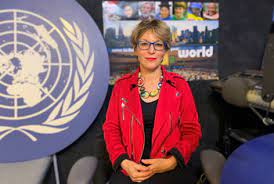
On 29 March 2021 Amnesty International announced the appointment of Dr. Agnès Callamard, a leading international human rights expert, as its new Secretary General, effective immediately.
As Secretary General, Dr. Callamard will be the Chief Executive of Amnesty’s International Secretariat and the principal spokesperson of the global Amnesty movement, which has some 10 million supporters, and offices in more than 70 countries.
“At a time when human rights are under unprecedented threat around the world, Dr. Callamard will lead, excite and rally the entire Amnesty movement to meet these challenges head-on,” said Sarah Beamish, Chair of the International Board, in announcing the appointment. “The combination of her intellectual acuity, her deep global human rights experience, and her courageous voice makes her highly qualified to front our movement. We are delighted she has accepted this challenge to take us boldly into our next phase.”
“Where governments and corporations seek to silence those who speak out against their abuses, to obfuscate the truth, and to undermine or reject human rights norms, the rigorous investigations and uncompromising campaigns of Amnesty International are more vital than ever.” Agnès Callamard
“I am honoured to take up the post of Secretary General and work alongside Amnesty’s supporters around the world so that together we defend and demand respect for all human rights for all,” Dr Callamard said.
Dr. Callamard, a French national, has built a highly distinguished career in the international human rights and humanitarian sectors, working across NGOs, academia, and the United Nations. Alongside her role as a United Nations independent human rights expert, she held the role of Director of the Global Freedom of Expression Project at Columbia University. Previously, she has been the Executive Director of the Freedom of Expression organization ARTICLE 19 and was the founder and Executive Director of HAP International (the Humanitarian Accountability Partnership).
Dr. Callamard worked with Amnesty International from 1995-2001, including as Chef de Cabinet for then-Secretary General Pierre Sané. She has led human rights investigations in more than 30 countries and published extensively on human rights, women’s rights, freedom of expression, refugee movements, and the methodology of human rights investigations.
Living close to Turkey, I follow the situation there perhaps with more worry than others. And nothing good seems to happen:
Turkish police detained three district heads of the pro-Kurdish Peoples’ Democratic Party (HDP) and seven others in Istanbul on Friday over alleged links to militants, police said, two days after a court case began over banning the party.
Separately, Turkey’s Human Rights Association (IHD) co-chairman Ozturk Turkdogan was arrested by police at his home, IHD said, prompting human rights groups to call for his release. Turkdogan was then released on Friday evening, the association said.
Responding to the arrest today of Öztürk Türkdoğan, the president of Turkey’s Human Rights Organisation, Esther Major, Amnesty International’s Senior Research Adviser for Europe, said:
“The detention of Öztürk Türkdoğan is outrageous. With ink barely dry on the Human Rights Action Plan announced by President Erdoğan two weeks ago, his arrest reveals that this document is not worth the paper it is written on.
After over three years in jail without a conviction, one of Turkey’s highest-profile detainees, Osman Kavala, is “not optimistic” that President Tayyip Erdogan’s planned reforms can change a judiciary he says is being used to silence dissidents. A philanthropist, 63-year-old Kavala told Reuters that after decades of watching Turkey’s judiciary seeking to restrict human rights, it was now engaged in “eliminating” perceived political opponents of Erdogan’s government. Kavala was providing written responses via his lawyers to Reuters’ questions days after Erdogan outlined a “Human Rights Action Plan” that was said will strengthen rights to a free trial and freedom of expression. See: https://humanrightsdefenders.blog/2020/09/16/osman-kavala-and-mozn-hassan-receive-2020-international-hrant-dink-award/ and
Not surprisingly this is leading to reactions, such as a bipartisan letter penned by 170 members of the US Congress to Secretary of State Antony Blinken, in which the lawmakers have urged President Joe Biden’s administration to consider the “troubling human rights abuses” in Turkey. “President Recep Tayyip Erdogan and his Justice and Development Party have used their nearly two decades in power to weaken Turkey’s judiciary, install political allies in key military and intelligence positions, crack down on free speech and (the) free press,” the letter said. Dated 26 February but made public on 1 March, the letter asks Washington to formulate its policy regarding Turkey considering human rights, saying that the Erdogan administration has strained the bilateral relationship.
On top of this Turkey has pulled out of the world’s first binding treaty to prevent and combat violence against women by presidential decree, in the latest victory for conservatives in President Recep Tayyip Erdogan’s ruling party. The 2011 “Istanbul Convention| [SIC], signed by 45 countries and the European Union, requires governments to adopt legislation prosecuting domestic violence and similar abuse as well as marital rape and female genital mutilation. Conservatives had claimed the charter damages family unity, encourages divorce and that its references to equality were being used by the LGBT community to gain broader acceptance in society. The publication of the decree in the official gazette early Saturday sparked anger among rights groups and calls for protests in Istanbul. Women have taken to the streets in cities across Turkey calling on the government to keep to the 2011 Istanbul Convention.
Gokce Gokcen, deputy chairperson of the main opposition CHP party said abandoning the treaty meant “keeping women second class citizens and letting them be killed.” “Despite you and your evil, we will stay alive and bring back the convention,” she said on Twitter. Last year, 300 women were murdered according to the rights group We Will Stop Femicide Platform. The platform called for a “collective fight against those who dropped the Istanbul convention,” in a message on Twitter. “The Istanbul convention was not signed at your command and it will not leave our lives on your command,” its secretary general Fidan Ataselim tweeted.
Kerem Altiparmak, an academic and lawyer specializing in human rights law, likened the government’s shredding of the convention to the 1980 military coup. “What’s abolished tonight is not only the Istanbul convention but the parliament’s will and legislative power,” he commented.
This day leads to a plethora of statements and actions. Here a small selection focusing on women human rights defenders:
Credit: UN Women/Yihui Yuan.
Joan Kuriansky – a volunteer with The Advocates For Human Rights – writes: “Celebrating International Women’s Day in 2021 compels us to pause and examine the lessons of the past year- the COVID pandemic, economic distress and the surging mandate of Black Lives Matter. Each phenomenon has made so more visible the challenges that historically face women across the globe. Importantly, these forces have also made it clear how connected we are to each other whether in neighborhoods within miles of our home or across a continent and the extraordinary role that women play in making lives better and more just in every corner of the world. The UN and UNDP estimate that the pandemic will push 47 million more women and girls below the poverty line. Our upcoming workshop at the NGO CSW65 Virtual Forum will highlight the economic and other inequalities women face as a result of the pandemic. Register here: https://bit.ly/3dmVgSk Event link: https://bit.ly/2NhPoiL“
Women have been in the forefront of promoting peaceful solutions to conflict -conflict that has often included the rape and violation of women, the death of those in combat and the destruction of communities. Women have been in the forefront of promoting peaceful solutions to conflict -conflict that has often included the rape and violation of women, the death of those in combat and the destruction of communities. The Soldiers Mother’s Committee in Russia and Chechnya [[https://www.trueheroesfilms.org/thedigest/laureates/3371DC1A-42AE-44BF-E349-26987BF98314], or the Women of Liberia Mass Action for Peace founded by Leymah Gbowe or the 3 co-founders of Black Lives Matter have inspired all of us. And as we documented in our work with the Liberian Truth and Reconciliation Commission, women have a key role to play in the post-conflict and peacebuilding process.], or the Women of Liberia Mass Action for Peace founded by Leymah Gbowe or the 3 co-founders of Black Lives Matter [https://www.trueheroesfilms.org/thedigest/laureates/4f840e00-be5d-11e7-b953-f7f66015c2f3]have inspired all of us. And as we documented in our work with the Liberian Truth and Reconciliation Commission, women have a key role to play in the post-conflict and peacebuilding process.
The WWSF introduces 60 Heroes out of 462 Laureates awarded with the WWSF Prize for Women’s Creativity in Rural Life (1994-2020)
UN Women this year is celebrating women’s leadership in all its forms and calling for women and feminists across the world to claim their space in leadership and decision-making. Presently, only 7.4 per cent of Fortune 500 companies are run by women. Despite progress and many broken records, women continue to be excluded in certain sports. Systemic barriers, gender bias, discrimination and gender stereotypes continue to hold women back from rising in STEM careers. Women and girls have been leading climate action and environmental movements, but men occupy 67 per cent of climate-related decision-making roles. 119 countries have never had a woman leader. Just 25 per cent of national parliamentary seats are held by women.
Around the world, the space for civil discourse and movements is shrinking. The media plays a critical role in amplifying women’s voices and stories and drawing attention to key issues. But, with women holding only 27 per cent of top management jobs in media organizations, More than one-third of women’s employment is in agriculture, increasing women’s access to land and providing better support for women farmers is, therefore, essential. The majority of negotiators, mediators, and signatories in peace processes are still men.
Amnesty International stated that across the Middle East and North Africa (MENA), despite some limited reforms, women continue to face entrenched discrimination and daily violence amid the abject failure of governments to stamp out arbitrary arrests, abductions, assassinations, so-called “honour” killings and other forms of gender-based violence, said Amnesty International, marking International Women’s Day. ..Inadequate government action to protect women from gender-based violence and address impunity has long perpetuated this form of abuse. As a first step, authorities must publicly condemn all forms of gender-based violence and dismantle discriminatory structures that facilitate such abuse – such as male guardianship,” said Heba Morayef. “They must also ensure that the rights of survivors are protected, that survivors can safely access justice and that perpetrators are held to account. Survivors must be able to access adequate shelter, psycho-social support as well as legal and other services.”
All over the world, a female-driven political awakening is taking place. But this is met with prosecution by the State and persecution by self-vigilante groups. Their experiences are marred with patriarchal subordination, sexualised violence, threat and harassment. They face severe retribution and systematic abuse, even at the hands of the State. It is important to have an enabling environment for these soft targets who face heightened risks as compared to their male counterparts. International obligation requires the State to stop criminalising women defenders, write SHRUTIKA PANDEY & MRINALINI MISHRA in The Leaflet of 8 March 2021.
MRT of 8 March 2021 states that International Women’s Day is not celebrated, a struggle is commemorated – that has not ended- in favor of justice, peace and freedom of each one of them. In a strict sense, feminism seeks make gender issues visible. Under that idea, there should be no censorship or exclusion. Nevertheless, What about trans women? While it is true that some people do not agree that they are part of the feminist movement, the reality is that they also suffer from violence, harassment and discrimination. Therefore, they are in the same fight. With that said, we present to you 8 recognized trans women in history
The Media Line of 7 March writes that “Women face uphill climb to equality in the MENA region” Activists and human rights groups paint a daunting portrait of the equality landscape between the genders in the MENA region, as they prepare to mark International Women’s Day, March 8. The coronavirus epidemic, certainly, did not help the plight of women this past year. Still, going forward, the largest issues facing women in the Middle East were entrenched long before the pandemic hit.
In the Gulf Cooperative Council (GCC) countries, women’s rights defenders have it tough. While prominent Saudi women’s activist Loujain al-Hathloul was freed last month after almost three years in prison [see https://www.trueheroesfilms.org/thedigest/laureates/1a6d84c0-b494-11ea-b00d-9db077762c6c], Samar Badawi [https://www.trueheroesfilms.org/thedigest/laureates/eaed8641-4056-4130-a5ff-fb7bf289cece], Nassima al-Sadah, Nouf Abdelaziz and Maya’a al-Zahrani remain in jail after their 2018 arrests on charges of advocating for women’s rights. “Those who are behind bars are the champions for the change that took place,” Khalid Ibrahim, executive director of the Gulf Centre for Human Rights, told The Media Line, referring to women driving.
In UCANews of 8 March 2021 Mary Aileen D. Bacalso, Manila writes that “Millions of women the world over suffer from discrimination, abuse, poverty, gender-based violence and human rights violations, of which enforced disappearance is one of the most cruel forms. Enforced disappearance, which motivated the international community to establish the International Convention for the Protection of All Persons from Enforced Disappearance, especially affects women. On this significant occasion, I remember the faces and voices of women I personally encountered from 50 countries that I visited during my almost three decades of advocacy for the cause of the disappeared. Many of them carried pictures of their loved ones. Some gave me every bit of information with the hope against hope to find light amidst the dark night of the disappeared.”
Euromed uses the occasion for a series of podcast. For our first episode, the story you are about to hear is that of Mozn Hassan, a woman human rights defender and the founder and executive director of Nazra for Feminist Studies, a feminist organisation working in Egypt and the MENA region on gender equality and combatting violence against women. See: https://www.trueheroesfilms.org/thedigest/laureates/38B5C337-72F5-C4DE-BC95-95094B9E3939
On Wednesday 24 February 2021 Megan Thornberry writes about a report by the University of York and others concluding that human rights defenders have been at increased risk during pandemic, and calls for UK government to provide better protection.
There is a dearth of serious and quantitative research into how human rights defenders experience diplomatic support and interest in their work. So, this report – published by Amnesty International UK and the Center for Applied Human Rights, in collaboration with the Law Society of England and Wales, Peace Brigades International UK, Bond and other NGOs – is most welcome.
Research by the University’s Centre for Applied Human Rights (CAHR) and Amnesty International UK shows that during the COVID-19 pandemic, 94 per cent of human rights defenders interviewed reported face threats, death threats, abuse, and harassment.
It is reported that only 6 per cent of these activists, including lawyers, journalists, women’s rights defenders, and LGBTQ+ activists, received support from the UK government.
Researchers interviewed 82 human rights defenders from seven countries about their experiences with UK government support:
40% had contacted the UK government embassy as part of their work in the last two years, where as 70% had contacted other embassies
75% could not recall a time in which their resident country’s UK embassy had spoken out in support of specific at-risk human rights defenders
31% had been in contacted by their UK embassy seeking to further its knowledge about the struggles for human rights
The report highlights the increased threats to LGBTQ+ rights during the pandemic, as poor job security has driven many to return to unsafe and unaccepting hometowns in order to live with family. Particularly in countries such as Russia and the Philippines, this has placed LGBTQ+ activists at a higher risk of abuse. LGBTQ+ activists have also reported an increase in discrimination towards LGBTQ+ groups due to their being blamed for the pandemic.
Dr Piergiuseppe Parisi, a research associate at the Human Rights Defender Hub at CAHR and direct contributor to the report, said: “Human rights defenders are active agents of positive change. The UK should make sure that they are recognised as such, that they have the means to carry on with their crucial work and that they have access to rapid response protection mechanisms when they are in danger.”
Kate Allen, Director of Amnesty International UK, said: “The UK government has pledged to stand up for human rights defenders around the world. We now need to see words turned into action. The UK’s voice has power. It’s time to use it and to be a world leader.”