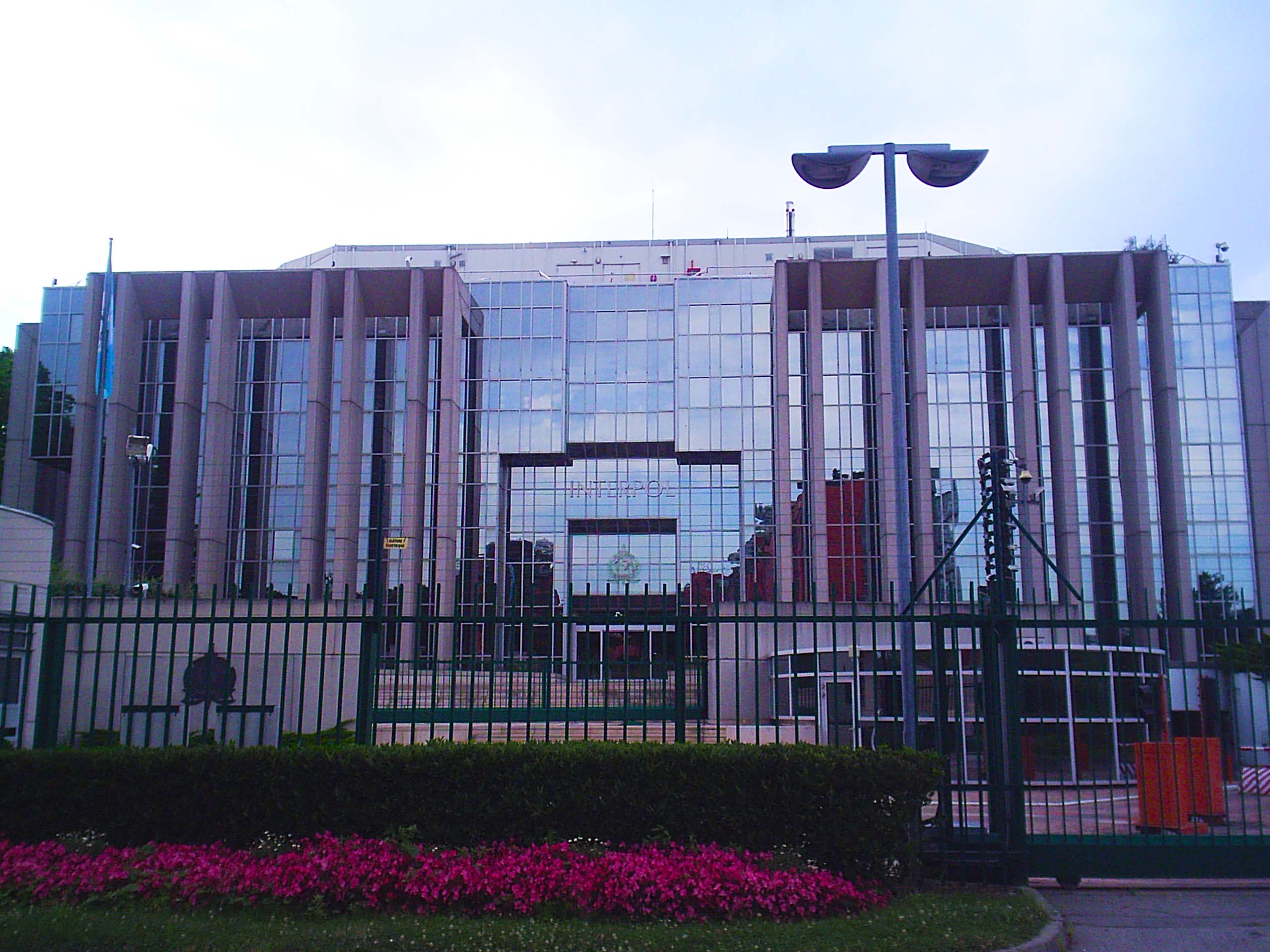
Two media outlets reported on states’ abuses of Interpol red notices to target political dissidents and human rights defenders on Monday. Amnesty International urged Interpol to address this “grave institutional failure” and improve its transparency.
Disclose, a French investigative media outlet, reported that Interpol has disclosed to the public less than 10 percent of the 86,000 active red notices. As of September 2024, Russia (4,817), Peru (4,457), and Tajikistan (3,493) are the countries with the most active red notices. The report also revealed that Interpol’s Commission for the Control of Files (CCF) removed at least 322 notices in 2024 alone after deeming them unjustified. In March 2024 an HRW report also highlights cases of governments misusing Interpol, see https://humanrightsdefenders.blog/2024/03/19/transnational-repression-human-rights-watch-and-other-reports/
At the same time, the BBC revealed that Interpol quietly dropped some initial measures that prevented Russia from abusing the red notices in 2025. The BBC also reported the phenomenon of countries using Interpol’s messaging systems to trace people abroad instead of issuing a notice that can be challenged by the target.
The BBC’s report also outlined how the abuse of the red notice system impacted the life of an exiled Russian dissident, Igor Pestrikov. He fled the country with his family after he refused to supply metal products to government-designated buyers in 2022. During the two years when a red diffusion against him was active, he was unable to rent an apartment, and his bank accounts were frozen. CCF removed his case after he challenged that Russia’s case against him was politically motivated.
Interpol is an intergovernmental organization that coordinates law enforcement of over 196 member countries. When a member state issues a red notice, law enforcement in other member states will assist in locating and arresting the wanted persons. However, Article 3 of Interpol’s constitution prohibits it from participating in any political interventions.
Reacting to the reports, Senior Director for Research, Advocacy, Policy and Campaigns of Amnesty International, Erika Guevara Rosas, questioned Interpol’s credibility since it failed repeatedly to challenge whether the states use red notices legitimately. She urged Interpol to improve its transparency and “stop serving states’ political interest.” Conversely, Interpol told the BBC that some accusations misunderstood how Interpol and its CCF system work, or are based on factual errors.
Relatedly, in November 2025, UN experts also flagged El Salvador’s misuse of the red notices to target two exiled Salvadoran human rights defenders, denouncing the country’s use of red notices as a means “to pursue its political agenda to harass and persecute human rights defenders beyond its borders.” According to international lawyer Kate McInnes, this marks the first time that UN Special Rapporteurs have issued a communication to Interpol. The communication warned that the red notices against the human rights offenders constituted transnational repression, violating Interpol’s constitution to uphold the Universal Declaration on Human Rights and to maintain political neutrality.
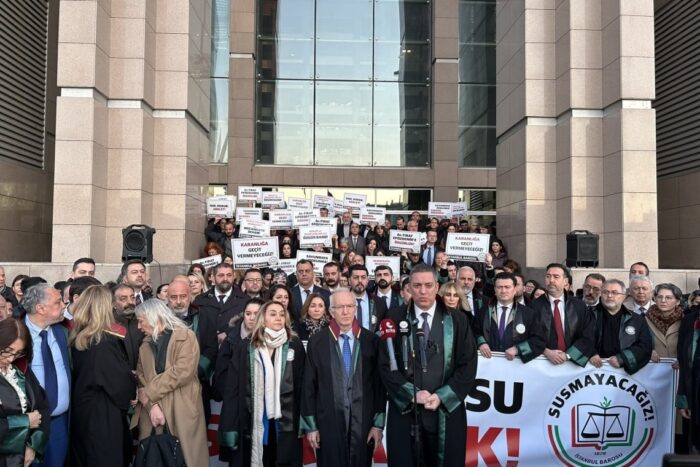
On 5 January 2026 the International Commission of Jurists and many other NGOs issued a joint statement calling on the authorities to immediately terminate the abusive criminal proceedings and drop charges ahead of the 26 Istanbul Heavy Penal Court’s expected final hearing scheduled for 5 to 9 January 2026.
The continued prosecution of the president and 10 executive board members of the Istanbul Bar Association, and the prosecutor’s request for their conviction on terrorism charges are a damning reflection of the troubled state of the rule of law and democratic norms in Turkey.
The prosecutor seeks the criminal conviction of all eleven members of the Bar’s elected leadership – President Prof. İbrahim Özden Kaboğlu, Ahmet Ergin, Bengisu Kadı Çavdar, Ekim Bilen Selimoğlu, Ezgi Şahin Yalvarici, Fırat Epözdemir, Hürrem Sönmez, Mehmedali Barış Beşli, Metin İriz, Rukiye Leyla Süren, and Yelde Koçak Urfa – on the charge of “spreading terrorist propaganda” under Article 7/2 of the Anti-Terrorism Law, solely for issuing a public statement on 21 December 2024 concerning the killing of two journalists in northern Syria and the arrest of journalists and lawyers at a related peaceful protest in Istanbul the day before.
The trial prosecutor’s final opinion confirms and deepens the concerns raised by 56 international organisations in the joint statement of January 2025, condemning the initiation of criminal and civil proceedings against the Bar’s leadership, and in the April 2025 joint statement, which deplored the removal of the elected board and the escalating attacks on lawyers across Turkey. A group of the organisations also submitted a joint amicus curiae brief in which they concluded that the proceedings violate Turkey’s obligations under international human rights law and constitute an unjustified interference with the independence of the legal profession.
A clear misuse of criminal law
In his final opinion, the prosecutor alleges that by referring to the two individuals killed in Syria as journalists and by citing international humanitarian law applicable to the protection of civilians and media workers in conflict zones, the Bar leadership “treated as a war crime” an operation carried out by security forces, thereby intentionally legitimising and disseminating the ultimate separatist aims of the Kurdistan Workers’ Party (PKK). The prosecutor further asserts that describing those killed as journalists “encouraged” membership of the PKK and “made its methods appear legitimate”, amounting to “press and media–based terrorist propaganda” under Article 7/2 of the Anti-Terrorism Law. These allegations, which claim that a lawful, rights-based statement consciously advanced the objectives of an armed organisation, are wholly unfounded and legally unsustainable.
As emphasised in both joint statements in January and April 2025 and the amicus curiae brief in September 2025, the Istanbul Bar Association has a statutory and ethical duty to speak out on violations of human rights and the rule of law. The prosecutor’s position effectively criminalises the Bar Association’s discharge of this duty protected under both domestic law and international human rights law and standards. The prosecutor’s construal of a legitimate exercise of the right to freedom of expression as a terrorism offence amounts to a misuse of criminal law and judicial harassment.
Violations of international standards and the Bar’s statutory mandate
International and regional human rights standards, including the UN Basic Principles on the Role of Lawyers, the Council of Europe Convention for the Protection of the Profession of Lawyer, and consistent jurisprudence of the European Court of Human Rights, affirm that lawyers and their associations must be able to engage in public debate on matters of justice and human rights without fear of reprisals.
Criminalising their exercise of the rights to freedom of expression and association contravenes the provisions of these instruments safeguarding the rights and role of lawyers and their professional organisations, as well as Articles 10 and 11 of the European Convention on Human Rights, Articles 19 and 22 of the International Covenant on Civil and Political Rights, and Articles 26, 27 and 33 of the Constitution of Türkiye.
The criminal proceedings strike at the heart of the independence of the legal profession and amount to a misuse of counter-terrorism laws to silence criticism, suppress human rights monitoring, and undermine self-governance of bar associations.
Signatories (in alphabetical order):
Amnesty International
Center of Elaboration and Research on Democracy (CRED)
Council of Bars and Law Societies of Europe (Le Conseil des barreaux européens, CCBE)
Defense Commission of the Barcelona Bar Association (Spain)
Deutscher Anwaltverein (German Bar Association, Germany)
Eşit Haklar İçin İzleme Derneği (Association for Monitoring Equal Rights, Türkiye)
European Association of Lawyers for Democracy and World Human Rights (ELDH)
The European Criminal Bar Association (ECBA)
Fédération des Barreaux d’Europe (European Bars Federation, FBE)
Foundation Day of the Endangered Lawyer
Hak İnsiyatifi Derneği (Rights Initiative Association, Türkiye)
Hakikat Adalet Hafıza Merkezi (Truth Justice Memory Center, Türkiye)
Haldane Society of Socialist Lawyers (UK)
Human Rights Institute of the Brussels Bar (Belgium)
Human Rights Watch
İnsan Hakları Derneği (Human Rights Association, Türkiye)
The International Association of Democratic Lawyers (IADL)
International Bar Association’s Human Rights Institute (IBAHRI)
The International Commission of Jurists (ICJ)
International Federation for Human Rights (FIDH), within the framework of the Observatory for the Protection of Human Rights Defenders
Kaos GL Derneği (Kaos GL Association, Türkiye)
The Law Society of England and Wales (LSEW, UK)
Lawyers for Lawyers (Netherlands)
Lawyers’ Rights Watch Canada (LRWC, Canada)
Lyon Bar Association (France)
National Union of Peoples Lawyers (NUPL, Philippines)
PEN Norway (Norway)
Turkey Litigation Support Project (TLSP, UK)
Türkiye İnsan Hakları Vakfı (Human Rights Foundation of Turkey, Türkiye)
Vereinigung Demokratischer Jurist:innen VDJ (Association of Democratic Jurists, Germany)
World Organisation Against Torture (OMCT), within the framework of the Observatory for the Protection of Human Rights Defenders
then on 9 January 2026 Amnesty stated “The decision to acquit the Istanbul Bar Association leadership of these unfounded charges is welcome news. This case was a clear misuse of criminal law and should never have been brought in the first place.” https://www.amnesty.org/en/latest/news/
On 14 November 2025, Al Jazeera (Mariamne Everett) and other media reported that international NGOs, such as Human Rights Watch and Amnesty International, have decried a sharp decline in civil liberties and a pervading “injustice” in Tunisia since President Kais Saied came to power in 2019, as authorities escalate their crackdown on the opposition, activists and foreign nongovernmental organisations.
“Tunisian authorities have increasingly escalated their crackdown on human rights defenders and independent non-governmental organizations (NGOs) through arbitrary arrests, detention, asset freezes, bank restrictions and court-ordered suspensions, all under the pretext of fighting ‘suspicious’ foreign funding and shielding ‘national interests’,” Amnesty International said in a statement on Friday.
Tunisia’s crackdown on civil society has reached an unprecedented level, according to Amnesty, as six NGO workers and human rights defenders from the Tunisian Council for Refugees are “being criminally prosecuted on charges solely related to their legitimate work supporting refugees and asylum seekers”. The trial’s opening session, initially scheduled for October 16, has been adjourned to November 24.
Within the past four months, Tunisia has temporarily suspended the activities of at least 14 Tunisian and international NGOs, said Amnesty, including the Tunisian Association of Democratic Women and the World Organisation against Torture.
Human Rights Watch said in a statement on Friday that Tunis’s Court of Appeal will hear on November 17 the appeal of more than 30 people “unjustly sentenced to heavy prison terms in a politically motivated ‘Conspiracy Case’” mass trial in April.
“Four of those detained are on hunger strike, including one who, according to his lawyers, was subjected to physical violence in prison on November 11.”
The defendants were charged with plotting to destabilise the country under various articles of Tunisia’s Penal Code and the 2015 Counterterrorism Law. Human Rights Watch, which reviewed the judicial documents, said the charges are unfounded and lack credible evidence. The NGO has called on the court to immediately overturn the convictions and ensure the release of all those detained.
The 37 people detained include opponents of Saied, lawyers, activists and researchers. Their prison terms range from four to 66 years for “conspiracy against state security” and terrorism offences. Jawhar Ben Mbarek – cofounder of Tunisia’s main opposition alliance, the National Salvation Front – began a hunger strike on October 29 to protest his arbitrary detention. Ben Mbarek was sentenced to 18 years behind bars on charges of “conspiracy against state security” and “belonging to a terrorist group”.
On 29 October, 2025 Amnesty International came with a report: “Closing the door – How Europe’s Schengen area visa policies fail human rights defenders“. International travel is crucial for human rights defenders (HRDs), and the Schengen area is a key destination, offering many opportunities for human rights advocacy, networking, learning, and for temporary respite for those facing threats and burnout. The importance of mobility for HRDs has been recognized by EU institutions and Schengen states. However, gaps remain between commitments and practice.
HRDs who are nationals of the 104 visa-restricted countries and who are in their vast majority racialized as Black, Asian and/or Muslim, continue to encounter huge barriers in obtaining a visa.
The report brings together real-life cases showing the impact of these obstacles on racialized HRDs, including many examples of visa denials because HRDs were not believed for the purpose of their travel. These experiences occur within a broader context of systemic racism, a legacy of colonial practices that shape visa policies and practices to this day. The report calls on authorities to ensure the full implementation of existing flexible arrangements for HRDs applying for visas, to develop a new visa procedure specifically designed to facilitate the process for HRDs, and to eliminate and prevent racial discrimination in the context of visa policies and processes.
Every journalist who dares to speak the truth faces danger, yet their courage lights the path for all of us. Remembering those killed is not enough; we must demand justice, protection, and a world where truth can be spoken without fear”. Burhan Sonmez, PEN International President
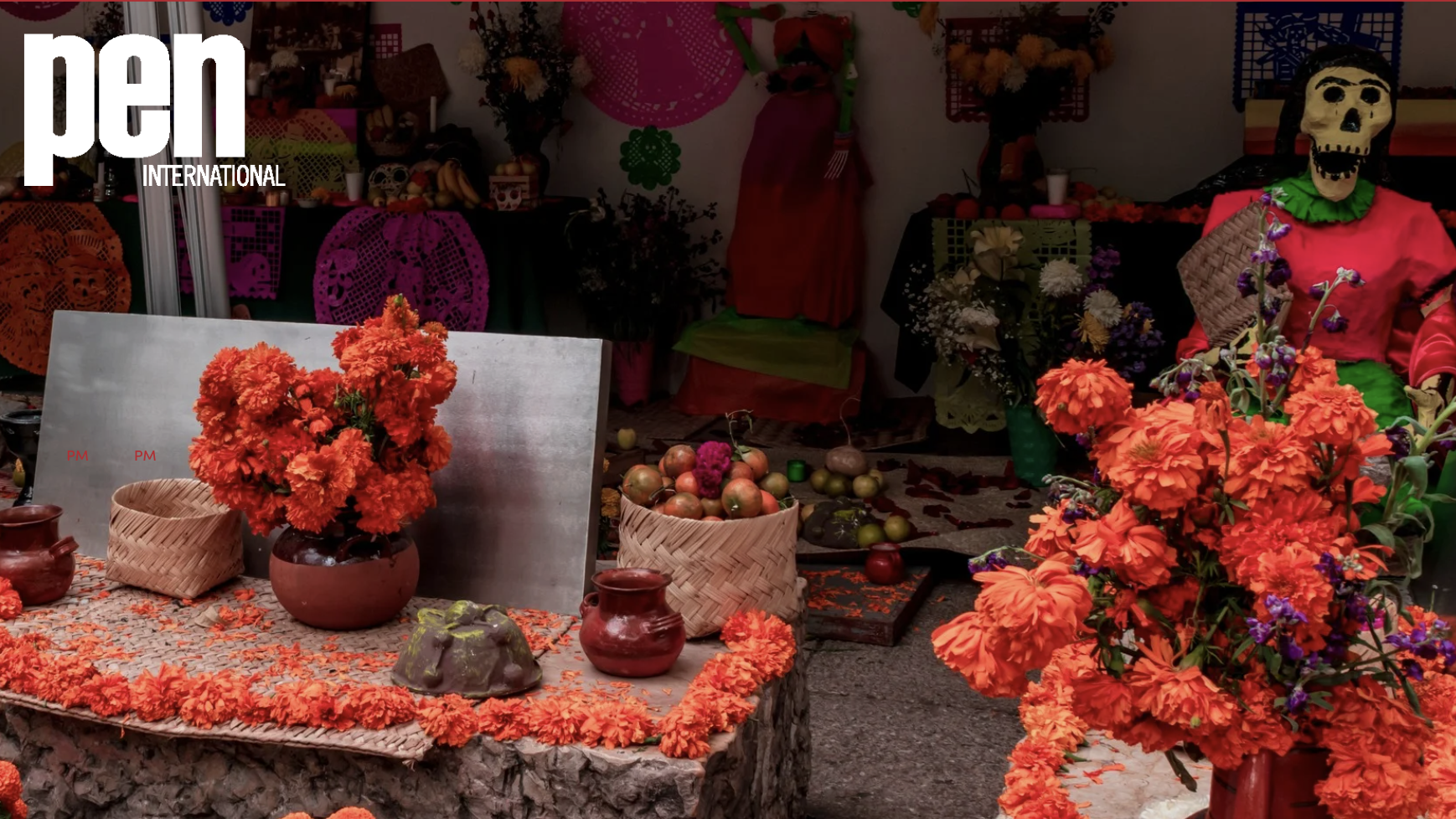
31 October 2025: On the Day of the Dead, we the undersigned, honour the journalists in Mexico who have been killed for their work. This act of remembrance is also an urgent appeal: violence against the press has reached alarming levels in the region. In Mexico, practicing journalism carries deadly risks. The Mexican State must acknowledge this reality and take immediate action.
PEN International and Article 19’s Mexico and Central America office have documented the killing of at least ten journalists over the past twelve months in Mexico. Seven of these cases are believed to be directly linked to their work, while the motives behind the remaining three killings are still under investigation. The past year, UNESCO, PEN, CPJ, RSF also recorded the murder of journalists in Brazil (1), Colombia (3), Ecuador (2), Honduras (1), Guatemala (1), Haiti (2), and Peru (2), positioning Mexico once again as the country with the highest number of journalists murdered in the continent. The murders of journalists are closely linked to their reporting on matters of high public interest, including corruption, organised crime, drug trafficking, human rights violations, environmental concerns, and abuses of power.
The brutality of the attacks, combined with entrenched impunity, has created a perpetual cycle of violence that undermines not only the right to freedom of expression but also the public’s right to be informed.
Despite its international obligations, the Mexican State continues to fail to ensure the protection of journalists and a safe environment for journalism, and to deliver effective justice for victims and their families.
This reflects a reality that cannot be ignored: Mexico faces not only a crisis of violence, but also a crisis of structural impunity that enables attacks to continue without consequence. Such impunity creates a chilling effect of self-censorship, restraint, and fear among journalists.
Emblematic cases
We remember the journalists Kristian Uriel Martínez Zavala andCalletano de Jesús Guerrero, killed in Mexico in 2025. …
Mexico’s ongoing crisis is no accident. It is the result of entrenched impunity and a state either unable or unwilling to protect those who bring truth to light.
We urge the Mexican State to:
Take concrete steps to guarantee that journalists in Mexico can exercise their right to freedom of expression without fear of reprisals.
Review and strengthen the Protection Mechanism for Human Rights Defenders and Journalists, ensuring that effective measures are deployed swiftly.
Undertake thorough, impartial, and independent investigations into the killings of and attacks on journalists, and deliver effective justice for victims and their families.
On 12 September, 2025 the seven rights groups described Khalid’s prolonged imprisonment as a “violation of his rights” and an instance of “selective persecution”, asserting that he was arrested on “politically motivated and spurious charges” on 13 September 2020.
Alongside Amnesty International, the signatories include: CIVICUS, FORUM-ASIA, Front Line Defenders. International Commission of Jurists, International Federation for Human Rights (FIDH) and World Organisation Against Torture (OMCT).
The statement expressed deep concern over the invocation of the anti-terror law UAPA (Unlawful Activities Prevention Act) and the repeated denial of bail to Khalid.
“These repeated bail denials combined with persistent delays, and the continued absence of trial proceedings, amount to a violation of his right to a fair trial, including speedy trial, guaranteed under the International Covenant on Civil and Political Rights (ICCPR), to which India is a state party, as well as under the Constitution of India,” the statement read.
The groups further highlighted the unequal application of bail standards, particularly in cases related to the 2020 Delhi riots and anti-CAA protests, saying:
“We are further concerned about the discriminatory application of bail standards in cases arising from the violence surrounding the CAA protests and more broadly in cases involving the UAPA. While similarly situated accused have been granted bail, Khalid continues to be denied relief. Such unequal treatment violates the principle of equality before the law and sets a deeply troubling precedent.”
The rights organizations also drew attention to the role of the Delhi Police and political leaders during the 2020 Delhi riots, where Khalid and other Muslim activists were implicated.
“Independent investigations, including by Amnesty International India, Human Rights Watch and Delhi Minorities Commission, have documented the role of the Delhi Police in human rights violations during the CAA protests and the ensuing violence,” the statement said. “Police officers were recorded engaging in beatings, torture and other ill-treatment, and arbitrary arrests, and in some cases standing by as mobs attacked protesters.”
The statement noted that Indian courts have repeatedly criticized the police investigations, describing them as: “Very poor,” “callous,” and “fraught with multiple flaws,” with documented instances of fabricated cases and manipulated records.
It further condemned the role of senior political leaders, who were seen delivering inflammatory hate speeches, branding protesters as “traitors” or “anti-nationals”, and openly inciting violence.
“Despite the existence of video and documentary evidence, no meaningful accountability measures have been taken against implicated political figures or police officials,” the statement added.
The rights groups emphasized that Khalid’s prolonged detention is not an isolated incident, but part of a larger pattern of repression against those exercising their constitutional rights to freedom of expression and association.
“Other students and human rights activists, including Gulfisha Fatima, Sharjeel Imam, Khalid Saifi, Shifa-ur-Rehman and Meeran Haider, also remain in detention for their peaceful opposition to the CAA, while police officials and political leaders responsible for incitement or complicity in violence continue to enjoy impunity,” the groups noted. “This selective prosecution erodes public trust in the justice system, entrenches impunity for state actors, and criminalises free expression.”
The seven international organizations demand:
The immediate and unconditional release of Umar Khalid
The equal application of bail standards
An end to the discriminatory treatment of human rights defenders
Accountability for police officers and political leaders implicated in incitement and violence
The Trump administration’s omission of key sections and manipulation of certain countries’ rights abuses degrade and politicize the 2025 US State Department human rights report, Human Rights Watch, Amnesty International, Human Rights First and many other NGOs concluded .
On August 12, 2025, the State Department released its “Country Reports on Human Rights Practices” covering the year 2024. The report omits several categories of rights violations that were standard in past editions, including women, LGBT people, persons with disabilities, corruption in government, and freedom of peaceful assembly. The administration has also grossly mischaracterized the human rights records of abusive governments with which it has or is currently seeking friendly relations.
By undermining the credibility of the report, the administration puts human rights defenders at risk, weakens protections for asylum seekers, and undercuts the global fight against authoritarianism.
This year’s human rights report may strictly keep with the minimum statutory requirements but does not acknowledge the reality of widespread human rights violations against whole groups of people in many locations. As a result, Congress now lacks a widely trusted, comprehensive tool from its own government to appropriately oversee US foreign policy and commit resources. Many of the sections and rights abuses that the report omits are extremely important to understanding the trends and developments of human rights globally, Human Rights Watch said.
On Israel, the State Department disregards the Israeli authorities’ mass forced displacement of Palestinians in Gaza, their use of starvation as a weapon of war, and their deliberate deprivation of water, electricity, medical aid, and other goods necessary for civilians’ survival, actions that amount to war crimes, crimes against humanity, and acts of genocide. The State Department also fails to mention vast damage and destruction to Gaza’s essential infrastructure and the majority of homes, schools, universities, and hospitals.
The report is dishonest about abuses in some third countries to which the US is deporting people, stating that the US found “no credible reports of significant human rights abuses” in El Salvador, although they cite “reports” of extrajudicial executions, enforced disappearance, and mistreatment by police. The administration has transferred to El Salvador’s prisons, despite evidence of torture and other abuses.
The State Department glosses over the Hungarian government’s escalating efforts to undermine democratic institutions and the rule of law, including severe curbs on civil society and independent media, and abuses against LGBT people and migrants. It also fails to acknowledge that Russian authorities have widely used politically motivated imprisonment as a tool in their crackdown on dissent, and its prosecutions of individuals for “extremism” for their alleged affiliation with the LGBT movement.
In an update on its website on 6 August 2025, Front Line Defenders in raising alarm over the worsening conditions of detention for prominent Belarusian human rights defender Nasta Loika, currently held in Homel Correctional Facility No. 4. On August 1, independent Belarusian media reported that Loika had been transferred to a secure housing unit under harsher detention conditions — a common punitive tactic used by the Belarusian authorities against political prisoners. [see also; https://humanrightsdefenders.blog/2023/11/07/the-sad-story-of-nasta-loika-human-rights-defender-behind-bars-in-belarus/]
As described in the statement, these stricter conditions mean confinement in a tiny 4-square-meter cell without privacy or proper sanitation:
Loika’s ongoing persecution is part of a broader crackdown on civil society in Belarus. A lawyer and educator, she has long been involved in documenting state abuses, challenging Belarus’s vague and punitive “anti-extremist” legislation, and advocating for migrants and stateless persons. Her organization, Human Constanta, was forcibly dissolved by the state in 2021 as part of an orchestrated campaign against human rights groups. It now operates in exile.
Nasta Loika has been imprisoned since June 2023, when the Minsk City Court sentenced her to seven years in prison, accusing her of “incitement to social enmity.” In a further act of repression, she was later added to the KGB’s list of individuals “involved in terrorist activities.” Her supporters have also been targeted: in May 2025, the Instagram page @let_nasta_go, which calls for her release, was declared “extremist.”
In early July 2025, a pro-government Telegram channel claimed Aliaksandr Lukashenka had pardoned Loika, publishing a photo of a handwritten pardon request. While her colleagues acknowledged the handwriting resembled hers, they could not confirm whether the letter was written freely or under coercion. Later, another Telegram channel associated with the Belarusian police dismissed the report as a hoax.
“Front Line Defenders is deeply appalled by the continued persecution of Nasta Loika,” the organization said in its statement. “The organisation condemns the use of strict conditions of detention as part of the reprisals against her for peaceful and legitimate human rights work. Front Line Defenders expresses grave concern about the inhumane conditions of detention the woman human rights defender is enduring and reiterates its call to the Belarus authorities to quash Nasta Loika’s conviction and facilitate her immediate release.”
On May 28, 1961 -64 years ago today – a British lawyer named Peter Benenson penned a letter for the Observer newspaper in the UK launching the “Appeal for Amnesty 1961,” a campaign calling for the release of people imprisoned around the world because of the peaceful expression of their beliefs. This movement galvanized into what is now Amnesty International, an organization founded on the idea that ordinary people around the world could protect human rights by coming together to take action on behalf of others.
Sixty-four years later, Amnesty is a worldwide movement for human rights with a collective power of 10 million people, each one committed to fighting for justice, equality and freedom everywhere.
Today, Amnesty is needed more than ever to confront a backlash against human rights and increasing authoritarian practices, including right here in the United States.
As a global movement, we have—and continue to—show up in solidarity for communities and across issues and geographies. Caring, compassionate people have powered our movement for decades as we’ve shined a light on injustice and defended human rights. We will raise the political cost of authoritarian practices through direct advocacy, constituent pressure on Congress and other leaders to use their power in the defense of human rights, and other impactful campaigning efforts……
As we mark our anniversary, we are recommitting to our efforts to champion and protect human rights, here in the United States, and around the world.
12 tips from Amnesty International leaders around the world:
Fight hard against early attacks against individuals and institutions, and ask, “If we lose now, who will they come for next.”
Watch for new government agencies and data collection designed for repression. Leaders who embrace authoritarian tactics create “lists” to target effective activists, often using social media. Surveillance is a red flag.
Elections are dangerous flashpoints for accelerators of repression. Crackdowns and laws passed to restrict civic space often spike pre-elections.
Resist the legal system being weaponized. Governments will use trumped up charges, long pretrial detentions and lengthy trials to sideline activists, denying bail and delaying appeals.
Read new “unrelated” laws carefully with an eye on civic space and freedom of expression. Not every attack on rights will be direct and obvious.
Be ready for fake “facts” and smear campaigns to paint human rights defenders as corrupt or criminal. How are you going to get the truth out quickly and widely?
Catch repressive legislative drafts early and fight back hard and publicly. And don’t stop until bills are dead and won’t come back.
Stay inspired about a pro-rights future, but create strategies and stay ready for worsening anti-rights scenarios.
Public narrative matters. Anti-rights actors will reframe human rights as threats, to shrink civic space. Don’t let them. Resist and frame a public narrative that speech, protest and assembly are essential to defend all the other rights.
Protect yourself, your wellbeing and your safety. Threats come in many forms and will be experienced differently by each activist. Do what is right for you.
Be a good partner. Solidarity wins. Build coalitions, share resources, lean on allies and let them lean on you.
Keep an eye on other contexts. Repressive leaders learn from each other. Human rights activists need to do the same.
From Hungary to China to Venezuela, and anywhere else leaders think they can act with impunity—we have fought back at every turn.
Reacting to the news that the Russian authorities have declared Amnesty International an “undesirable organization” thereby criminalizing its activities and any association with the organization in Russia, Agnès Callamard, Amnesty International’s Secretary General, said19 May 2025
“This decision is part of the Russian government’s broader effort to silence dissent and isolate civil society. In a country where scores of activists and dissidents have been imprisoned, killed or exiled, where independent media has been smeared, blocked or forced to self-censor, and where civil society organizations have been outlawed or liquidated, you must be doing something right if the Kremlin bans you.
“The authorities are deeply mistaken if they believe that by labelling our organization “undesirable” we will stop our work documenting and exposing human rights violations – quite the opposite. We will not give in to the threats and will continue undeterred to work to ensure that people in Russia are able to enjoy their human rights without discrimination. We will keep documenting and speaking worldwide about the war crimes committed in Ukraine by Russia. We will redouble our efforts to expose Russia’s egregious human rights violations both at home and abroad.
The authorities are deeply mistaken if they believe that by labelling our organization “undesirable” we will stop our work documenting and exposing human rights violations – quite the oppositeAgnès Callamard, Amnesty International’s Secretary General
“We will never stop fighting for the release of prisoners of conscience detained for standing up for human rights or for the repeal of repressive laws that prevent people in Russia from speaking up against injustice. We will continue to work relentlessly to ensure that all those who are responsible for committing grave human rights violations, whether in Russia, Ukraine, or elsewhere, face justice. Put simply, no authoritarian assault will silence our fight for justice. Amnesty will never give up or back down in its fight for upholding human rights in Russia and beyond.”
Background
On 19 May 2025, the Russian Prosecutor General’s Office declared Amnesty International an “undesirable organization” under repressive 2015 Russian legislation which allows the authorities to ban arbitrarily any foreign organization and criminalize its activities in Russia. The announcement accused Amnesty International of promoting “Russophobic projects” and indicated that it was prompted by the organization’s work on freedom of expression and association in Russia, and its documentation and exposition of crimes under international law committed by Russian forces in Ukraine. The decision is based on a Russian law which in itself violates international law, and the language of the decision goes against facts accusing Amnesty International of activities which, within its statutory documents and policies, it is prevented from undertaking.
The designation comes three years after the Russian authorities blocked access to Amnesty International’s websites in Russia and de-registered – effectively closed down – the organization’s office in Moscow. The designation puts at risk of prosecution in Russia partner organizations and individual supporters, journalists, other persons who now work with, or are seen by the authorities as supporting or promoting, the organization.
Under Russian legislation, participation in the activities of an “undesirable organization” is punishable by law. First-time “offenses” may result in administrative fines of up to 15,000 rubles (around US$185). Repeated violations as well as funding or managing such organizations carry criminal liability and can lead to prison sentences of up to six years. The law has previously been applied to the distribution or reposting of any materials from the designated organization, including publications and hyperlinks predating its designation as “undesirable”.
This designation places Amnesty International among dozens of independent NGOs and media outlets that have been targeted in recent years as part of a sweeping campaign to suppress dissent and dismantle civil society in Russia and prevent international watchdogs and partners from providing support or showing solidarity with them. These moves are the backbone of a pattern whereby the Russian authorities are using authoritarian practices to silence voices, undermine accountability and entrench power. [see also: https://humanrightsdefenders.blog/2019/01/22/in-russia-first-criminal-case-under-undesirable-organizations-law/]





 Hans Thoolen on Human Rights Defenders and their awards