Archive for the 'Human Rights Council' Category

Coalition of 187 global organisations issues joint statement re the impact of Covid-19 pandemic on LGBTI

June 11, 2020

Drafted by ILGA World, the International Service for Human Rights (ISHR), COC, OutRight Action International, the Swedish Federation for Lesbian, Gay, Bisexual, Transgender, Queer and Intersex Rights (RFSL), GATE and ARC International, the statement was submitted to the United Nations Human Rights Council in advance of its 44th session on 22 June 2020.

The statement addresses several issues, including:

  • the right to health;
  • the rise of stigma and discrimination and scapegoating of LGBTI persons;
  • access to housing, water and sanitation;
  • the right to work and impacts on livelihood; and
  • civic space restrictions.

While acknowledging that actions to combat the COVID-19 pandemic are urgent and necessary, signatories of the statement urge UN Member States and stakeholders to ensure that international human rights obligations are complied with, and specific vulnerabilities of LGBTI persons are taken into account, during the implication of such emergency response measures.

Five key recommendations to States and stakeholders are included in the statement, including:

  • ensure accessibility of health care and services to every person, including sexual and reproductive health, without discrimination of any kind;
  • comply with international human rights laws and standards when implementing emergency measures, following requirements of legality, necessity, proportionality and non-discrimination, including on the basis of sexual orientation, gender identity and expression and sex characteristics (SOGIESC);
  • guarantee that shelters are inclusive for all persons regardless of their SOGIESC and implement measures allowing LGBTI persons to report violence and discrimination suffered in a private context, including at homes and shelters;
  • ensure that emergency measures to address the socio-economic impacts of the pandemic, as well as recovery plans, are inclusive to LGBTI persons – especially to trans, older and homeless LGBTI persons; and
  • ensure access to national, regional and international systems of accountability. States and stakeholders should implement lines of action designed to sustain and ensure the continuity of the engagement of civil society and human rights defenders in UN bodies and mechanisms.

In its conclusion, the statement urges authorities ‘to ensure that this public health emergency will neither exacerbate existing misconceptions, prejudices, inequalities or structural barriers, nor lead to increased violence and discrimination against persons with diverse sexual orientation, gender identity and expression and sex characteristics.’

See also: https://humanrightsdefenders.blog/2020/05/18/17-may-was-international-day-against-homophobia-covid-19-makes-things-worse/

https://www.curvemag.com/us/ibahri-signs-joint-statement-on-the-impact-of-covid-19-on-lgbti-persons-human-rights/

Virtual Human Rights Council adopts President’s statement on implications of COVID-19

May 30, 2020

On 29 May 2020 the UN Human Rights Council adopted a decision appealing to States to ensure human rights were at the front and centre of national responses to the pandemic and not side-lined while contending with the multiple ill effects of the virus on their societies.

Today’s decision is a profound reminder of the far-reaching effects of this deadly virus on all aspects of our livelihoods and our rights which we cannot take for granted”, stated Council President Elisabeth Tichy-Fisslberger. “We are all in this together, and we must act together with a sense of purpose if we are going to achieve our common agenda to promote and protect human rights around the globe”, she added.

The President’s Statement, presented by Ambassador Tichy-Fisslberger, and adopted by the 47 member States of the human rights body by silence procedure, “calls upon States to ensure that all human rights are respected, protected and fulfilled while combatting the pandemic and that their responses to the COVID-19 pandemic are in full compliance with their human rights obligations and commitments”.

The adopted statement also calls on High Commissioner for Human Rights Michelle Bachelet to produce a report on the impact of the COVID-19 pandemic on the enjoyment of human rights around the world, including highlighting good practices and areas of concern, to be presented at the 46th session of the Human Rights Council scheduled to take place in February/March 2021. [One is to hope that it will include a hard look at the fragmentation of Covid-19 relate policy statements, see: https://humanrightsdefenders.blog/2020/05/27/proliferation-of-human-rights-bodies-guidance-on-covid-19/]

States also invited the High Commissioner to present an oral update on the human rights impact of COVID-19 at the 44th session of the Council which is still scheduled to start on 22 June, which is expected to set the tone for similar statements addressing the multiple human rights angles of the virus during the planned three-week meeting. Since suspending its 43rd session on 13 March due to coronavirus restrictions, the Human Rights Council has been conducting its business in a virtual manner holding regular Bureau meetings, with States and NGOs, and three “virtual informal conversations”, including with the High Commissioner and Special Procedures who have issued more than 90 press releases and statements addressing COVID-19.

https://reliefweb.int/report/world/human-rights-council-adopts-president-s-statement-human-rights-implications-covid-19

Proliferation of Human Rights Bodies’ Guidance on COVID-19

May 27, 2020

On 22 May 2020 in “Just Security” [see: https://www.justsecurity.org/about-us/) published a post ” Mapping the Proliferation of Human Rights Bodies’ Guidance on COVID-19 Mitigation “. It is in some ways rather critical of the response by intergovernmental bodies in the human rights area when it comes to the COVID-19 pandemic. It starts by pointing out that they have collectively put out more than 150 statements on respecting human rights during the pandemic since late February. ..To help those interested in keeping track of the many statements, the International Justice Resource Center (IJRC) has published a webpage – COVID-19 Guidance from Supranational Human Rights Bodies – listing and linking to all relevant press releases and other guidance. This article serves to provide an overview of – and initial response to – the nature, scope, and sources of human rights advice available to States in the context of the pandemic. Having myself contributed with my blog to the proliferation of policy repsonse by NGOs and IGOs, I feel that this piece deserves full citation:

Read the rest of this entry »

Brian Dooley to advice Mary Lawlor

May 13, 2020
Further to the announcement of Mary Lawlor as Special Rapporteur on HRDs [see: https://humanrightsdefenders.blog/2020/05/07/mary-lawlor-takes-up-post-as-un-special-rapporteur-for-human-rights-defenders/]. Human Rights First on 12 May 2020 proudly announced that Brian Dooley, its senior advisor on human rights movements and the risk of persecution and reprisal they face, will also serve as an advisor to Mary Lawlor. Dooley will advise the special rapporteur on a range of issues facing human rights defenders while continuing his work at Human Rights First.

We are incredibly proud Brian was chosen for such a distinguished and important role,” said Mike Breen, president and CEO of Human Rights First. “Brian has been critical to the success of numerous campaigns to support human rights defenders in Bahrain, Egypt and Hong Kong over the last ten years. He will be an asset to the UN Special Rapporteur’s team and his work will undoubtedly increase the visibility of the threats that human rights defenders face, and hopefully, lead to better protections for those doing the vital work of advancing human rights.”  For some of my older posts referring to Brian Dooley: https://humanrightsdefenders.blog/tag/brian-dooley/.

See also: https://en.wikipedia.org/wiki/Brian_J._Dooley

Other new UN Special Rapporteurs appointed in 2020

May 8, 2020

Having referred specially to the appointment of Mary Lawlor [https://humanrightsdefenders.blog/2020/05/07/mary-lawlor-takes-up-post-as-un-special-rapporteur-for-human-rights-defenders/ ], I should point out that the United Nations Human Rights Council appointed in March 12 new independent experts to its fact-finding and monitoring mechanisms. Currently, there are 56 mandates: 44 thematic ones and 12 mandates related to countries and territories, with a total of 80 human rights experts. The 8 May 2020 Media Guide explains who they are and how to contact them. For details go to: https://www.ohchr.org/EN/NewsEvents/Pages/DisplayNews.aspx?NewsID=25871

They are:

Ms. Claudia MAHLER (Austria) is the new Independent Expert on the enjoyment of all human rights by older persons. This mandate gained in importance with the Corona virus pandemic.

Mr. Balakrishnan RAJAGOPAL (United States of America) is the new Special Rapporteur on adequate housing as a component of the right to an adequate standard of living, and on the right to non-discrimination in this context.

Mr. Tomoya OBOKATA (Japan) is the new Special Rapporteur on contemporary forms of slavery, including its causes and its consequences.

Mr. Olivier DE SCHUTTER (Belgium) is the new Special Rapporteur on extreme poverty and human rights.

Ms. Alena DOUHAN (Belarus) is the new Special Rapporteur on the negative impact of unilateral coercive measures on the enjoyment of human rights.

Mr. Michael FAKHRI (Lebanon) is the new Special Rapporteur on the right to food

Mr. José Francisco CALÍ TZAY (Guatemala) is the new Special Rapporteur on the rights of indigenous peoples.

Ms. Mama Fatima SINGHATEH (Gambia) is the new Special Rapporteur on the sale and sexual exploitation of children.

Ms. Mary LAWLOR (Ireland) is the new Special Rapporteur on the situation of human rights defenders.

Mr. Thomas H. ANDREWS (United States of America) is the new Special Rapporteur on the situation of human rights in Myanmar.

Ms. Isha DYFAN (Sierra Leone) is the new Independent Expert on the situation of human rights in Somalia.


Mary Lawlor takes up post as UN special rapporteur for human rights defenders

May 7, 2020

Mary Lawlor

Mary Lawlor

Mary Lawlor takes up her post as UN special rapporteur for human rights defenders, reportes the Irish Legal on 6 May 2020 [see also: https://humanrightsdefenders.blog/2020/03/16/good-breaking-news-mary-lawlor-the-new-un-special-rapporteur-for-human-rights-defenders/].  In spite of all the (sometimes understandable) criticism of the UN and its procedures, I would like to put on record that in my view the UN has made excellent appointments when it comes the big majority of special rapporteurs and espescially with regard to this mandate for human rights defenders which originated in 2000.

Mary Lawlor

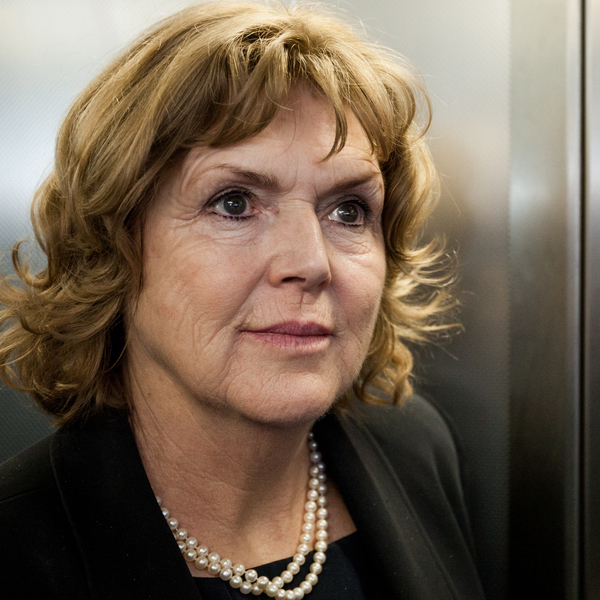
Ms Lawlor has decades of experience in human rights, having helped to grow Irish-based NGOs as a previous director of Amnesty International in Ireland and a founder of Front Line Defenders (FLD). She led FLD from 2001 until her retirement in 2016, overseeing its growth to become a global organisation providing resources for the protection and security of human rights defenders (HRDs) at risk. Ms Lawlor helped spearhead civil society efforts to bring the EU Guidelines on Human Rights Defenders into effect and became a recognised leader in focusing on attention on the unique protection needs of HRDs. Congratulating Ms Lawlor on her appointment, Tánaiste and Foreign Affairs Minister Simon Coveney said: “Mary has been a tireless advocate for human rights for over 40 years both in Ireland and overseas. “This appointment is deserving recognition of her work and that of the organisation she founded – Front Line Defenders – supporting human rights defenders at risk around the world.


https://www.irishlegal.com/article/mary-lawlor-takes-up-post-as-un-special-rapporteur-for-human-rights-defenders

UN Rapporteurs concerned about detention of Miyan Abdul Qayoom of Kashmir Bar Association

April 28, 2020

Qayoom, who is also a human rights lawyer, was arrested on the night of 4 and 5 August during the clamp down. Qayoom was accused of being a “most staunch advocate of secessionist ideology”. [see also: https://humanrightsdefenders.blog/2020/02/09/forgotten-kashmir-something-has-to-be-done/]

Dated 27 February 2020, the UN has released the letter after 2 months. Qayoom was moved to Agra Central Jail, Uttar Pradesh, on 8 August and was kept in solitary confinement, as per the letter, adding that he is suffering from multiple health issues — including a scheduled open heart surgery at the time of his detention. On 29 January, the letter states, Qayoom suffered a heart attack. Next day, he was taken back to the jail’s dispensary. On 1 February 2020, he was transferred from Agra Central Jail to the All India Institute of Medical Science (AIIMS) in New Delhi, for a medical check-up. “He was then transferred to Tihar Jail, New Delhi,” the letter added.

The Special Rapporteurs also claimed in the letter that Qayoom is being denied “the right to a fair trial… and the right of everyone to hold opinions and to freedom of expression.”

We also express concern that Mr. Qayoom’s deprivation of liberty appears to be a reprisal for his opinions, the legitimate and peaceful exercise of his freedom to express them and his human rights work,” the letter added, citing various previous cases and relevant articles of ICCPR that entitles anyone who is deprived of liberty by arrest or detention to take proceedings before a court. “Arrest or detention as punishment for the legitimate exercise of other rights, as guaranteed by the ICCPR, is arbitrary, including the right to freedom of opinion and expression,” it mentioned.

The Special Rapporteurs stated:

“Please provide detailed information about the factual and legal grounds for the arrest and detention of Mr. Qayoom, including the charges brought against him. Please explain how his arrest and continued detention are in conformity with India’s international human rights obligations under the conventions it has acceded to.

Please provide detailed information on the treatment by the court of the habeas corpus petition initiated by Mr. Qayoom. Please explain how the absence of a decision on his petition more than six months after it was made is compatible with the requirement that the lawfulness of his detention’s petitioner is adjudicated as expeditiously as possible, and with India’s obligations under ICCPR.

Please provide detailed information on the present medical situation of Mr. Qayoom and explain how his medical concerns have been duly taken into account and addressed since he was arrested and placed in detention. Please explain what measures are being taken to ensure Mr. Qayoom’s access to appropriate medical care on a reliable and regular basis.

Please indicate what measures have been taken to ensure that human rights defenders in India are able to carry out their legitimate work in a safe and enabling environment without fear of threats or acts of intimidation and harassment of any sort.

Please provide detailed information, included disaggregated data to the extent possible, as to the number of persons from Jammu and Kashmir who have been detained under the Public Security Act since August 2019.”

https://thekashmirwalla.com/2020/04/un-special-rapporteurs-express-concern-over-detention-of-bar-president-mian-qayoom/

Land rights defenders are the main target of those destroying the environment

April 24, 2020

The world has come together in the fight against a common enemy in COVID-19; a force so strong that it has knocked economies to the ground, turned our daily lives upside down and made us reflect on what really matters. Yet amidst the world’s lockdown, there are land grabbers and investors looking to take advantage of the situation. For them, there is no better time to strike than now.

This Earth Day, more than any other, it’s time to shine a spotlight on the everyday guardians of our planet, land and environment defenders, who stand at the front line to defend their land and territories from corporate or state abuse and unsustainable exploitation.  They protect lands, forests and water sources, which provide their communities with good and healthy food, shelter and medicine.

By protecting such resources for the common good, they find themselves directly in the way of others who want to profit from these natural resources. If their lives were at risk before, this global pandemic has only exasperated an already difficult situation. When a community goes into lockdown, defenders not only become easier to target, they lose their right to protection and the world’s attention and that of the media, is elsewhere.
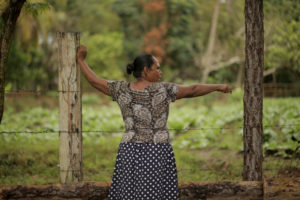
A Miskito woman in Nicaragua. Photo: Jason Taylor/ILC.

Defending land, ecosystems, and Indigenous rights has always come with immense risks.

More than three people were murdered each week in 2019 for defending their land and environment. Countless more were attacked or threatened. Only a year ago, the United Nations Human Rights Council adopted a landmark resolution, recognizing the importance of environmental human rights defenders and urging States to ensure their protection. Yet, as governments call states of emergencies and enforce new containment measures, even where national protection mechanisms for defenders exist, they are rendered futile.

Even worse, lockdowns are being used by irresponsible companies to further suppress defenders and by governments to give industries a free pass.

We saw evidence of this as the first cities in Colombia went into lockdown and three social activists were killed. Marco Rivadeneira, a high-profile activist, was murdered in the southern Putumayo province, Ángel Ovidio Quintero was shot dead in the western Antioquia region, and Ivo Humberto Bracamonte was killed on the eastern border with Venezuela. These follow more than six hundred murders of social activists in Colombia since the Peace Accords were signed.

While in Indonesia, two local land defenders have been killed and four arrested in connection with land disputes in Sumatra and Borneo, as mining and palm oil operations in rural areas continue on with business as usual and activists are told to stay home.

In Brazil, the country’s environment agency is withdrawing its enforcement staff because of the risk of contracting the virus. This move coincides with a 70 percent increase in deforestation compared to 2019. Many fear that loggers and land grabbers will take advantage of the lax policing, hoping for impunity. We are observing the same trend in other countries, all over the world.

The increased vulnerability of these defenders is palpable, and what’s happening, alarming. We must ask ourselves how we can ensure and promote their safetyUN Human Rights Experts have expressed grave concern on “the rise of reports of killings and other instances of excessive use of force targeting in particular people living in vulnerable situations”.  Amnesty International has issued a series of recommendations to states in the Americas to ensure that their responses to COVID-19 are in line with their international human rights obligations.

In addition to appealing to States to maintain and reinforce their promises and protection schemes, there are some urgent steps that we need to take.

Develop an urgent real-time alert system for crisis situations to help people in danger. Where data is available, 80 percent of killings are preceded by a non-lethal attack or a threat on the affiliated group or community.  So while environmental human rights defenders receive daily death threats, usually a sign for what’s to come, who will hear their cries for help?

A group of organizations belonging to the Defending Land and Environmental Defenders Coalition – among them, the Business and Human Rights Resource Centre, Frontline Defenders, Global Witness, the World Resources Institute and the International Land Coalition – are systematically monitoring COVID-related incidents in order to identify trends. Cases can be securely collected beginning Friday via LANDex, a global monitoring system dedicated to democratizing land data.

Particularly vulnerable are many of the world’s 320 million Indigenous peoples, whose territories are often rich in natural resources. Despite protecting more than 50% of the world’s land surface, they have formally recognized ownership over just 10%, which leaves them especially exposed. Governments and corporations should heedcalls for a moratorium on external activities in Indigenous territories without their express consent.

Beyond urgent measures, building longer-term resilience for these communities is essential so that they are not as vulnerable to increased harassment, threats, criminalization and eventually, killings. Secure land rights for local communities gives greater control over their own territories, and provides them with legal recourse when faced with harassment and attacks.

On this Earth Day, as we look forward to re-building a more sustainable world, we cannot forget those who have dedicated their entire lives – putting themselves and their families at risk – to do just that.

See also: https://humanrightsdefenders.blog/2020/01/14/front-line-defenders-global-analysis-2019-is-out-304-hrds-killed/

Land and environmental defenders are sitting ducks, while world goes into lockdown

UN Guidelines for use of emergency powers in time of covid-19 pandemic

April 14, 2020
UN Special Rapporteur on Extra-Judicial Executions Agnes Callamard. Photo: Foreign and Commonwealth Office/Wikipedia.

a set of guidelines issued by the UN’s Human Rights’ Committee on Economic, Social and Cultural Rights (CESR), in whcih governments are urged to respect human rights across the spectrum, including economic and social rights, and civil and political rights as this would be fundamental to the success of the public health response.

The announcement shed light on the controversial decision by the Maltese government to close the country’s ports as migrant boats were stranded. The UN said it was aware that governments had to take difficult decisions in light of the coronavirus pandemic, but insisted measures should be proportionate. Emergency powers must be used for legitimate public health goals, not used as a basis to quash dissent or silence the work of human rights defenders or journalists.

This was also highlighted by Agnes Callamard, the UN Special Rapporteur on Extra-Judicial Executions, who said these emergency measures also had to be lifted when these were no longer necessary for protecting public health. People needed to be informed about the emergency measures, where these applied and for how long they were meant to be in effect. “As the crisis passes, it will be important for governments to return life to normal and not use emergency powers to indefinitely regulate day-to-day life, recognizing that the response must match the needs of different phases of this crisis,” the CESC said.

Unfortunately, several governments around the world – and in the EU – have taken advantage of the coronavirus pandemic to implement a series of measures that roll back human rights.

  • As people are being called upon to stay at home, governments must take urgent measures to help people without adequate housing. …The authorities should also take particular care to prevent more people from becoming homeless and implement good practices such as moratoriums on evictions, deferrals of mortgage or loan payments.
  • It was also important to keep in mind people who relied on community and home services to eat, dress and bathe – including people with a disability or the elderly.
  • The guidelines also refer to prisoners and those kept in detention, saying these were at a higher risk of infection in case of an outbreak. Social distancing was difficult to maintain in these places, which had a high risk of contamination. States should “urgently explore options for release and alternatives to detention to mitigate the risk of harm within places of detention,” it said.
  • The document also tackled the issue of migration, saying migrants and refugees also faced “particular risks” as these may be confined to camps and settlements, which might be overcrowded, overstretched and with poor sanitation. “It is also vital that any tightening of border controls, travel restrictions or limitations on freedom of movement do not prevent people who may be fleeing from war or persecution from accessing safety and protection,” the committee said.

This recommendation is the exact opposite of the decision taken by the Maltese government last week to close its ports, making it very clear that it would not be taking any more migrants as a measure to prevent the spread of COVID-19. This announcement came 24 hours after Italy closed all its ports, saying its harbours could not be considered safe. The decision was harshly criticised by more than 20 non-governmental organisations who called on the prime minister to ensure that all persons within Malta’s responsibility were rescued and their safety guaranteed. “The nation cannot quietly celebrate Easter while men, women and children are drowning on our doorstep. Saving lives and ensuring their disembarkation at a safe place is a fundamental legal obligation and also a moral imperative that can in no way be negotiated or renounced,” the NGOs said.

The guidelines called on governments to take “specific actions” to include migrants and refugees in national prevention and response campaigns by ensuring equal access to information, testing, and health care for all, regardless of their status. Earlier this month, the Maltese authorities put the Hal Far open centre under a two-week quarantine after eight migrants tested positive for coronavirus. The decision was slammed by local NGOs who said this would exacerbate the situation where the virus could potentially spread among the 1,000 residents.

On 14 April 2020 Clément Nyaletsossi Voule, the UN Special Rapporteur on the rights to freedom of peaceful assembly and of association, called on States not to use state of emergency declarations during the COVID-19 crisis to impose wholesale restrictions on freedom of peaceful assembly and association, and released detailed Guidelines governments and law enforcement agencies must follow to avoid human rights abuses.

No country or government can solve this health crisis alone and I am concerned about worrying trends and limitations emerging from civil society reports around the world, including on civil society’s ability to support an effective COVID-19 response,” said Clément Nyaletsossi Voule, the UN Special Rapporteur on the rights to freedom of peaceful assembly and of association. “Civil society organisations are key in helping States to frame inclusive policies, disseminate information, and provide social support to vulnerable communities in need,” he said.

In his 10 Guidelines, the expert said that where new laws or regulations are adopted, any limitations on rights imposed must adhere to the principles of legality, necessity and proportionality. Free-flow of information is crucial in times of crisis and laws criminalising ‘false news’, including those targeting human rights defenders, must be avoided. “It is inadmissible to declare blanket restrictions on human rights and fundamental freedoms,” Voule said. “Exemptions should be foreseen for civil society actors, particularly those monitoring human rights, trade unions, social services providing humanitarian assistance, and journalists covering the management of the crisis. “State of emergency does not halt the freedoms of peaceful assembly and of association,” the human rights expert said.

Voule said his Guidelines could help States reassess measures already in place to ensure compliance with their human rights obligations and to take citizens’ demands fully into account.

https://reliefweb.int/report/world/covid-19-restrictions-should-not-stop-freedom-assembly-and-association-says-un-expert

Coronavirus emergency measures must be timely and proportionate

Covid-19 spread leads to reactions and messages of solidarity

March 27, 2020

From the myriad of messages on the spread and impact of the Covid-19 virus, here a few excerpts:

On 27 March 2020, Rosa Kornfeld-Matte, UN Independent Expert on the enjoyment of all human rights by older persons said that society has a duty to exercise solidarity and better protect older persons who are bearing the lion’s share of the COVID-19 pandemic. “Reports of abandoned older persons in care homes or of dead corpses found in nursing homes are alarming. This is unacceptable,” said  “We all have the obligation to exercise solidarity and protect older persons from such harm.” Older persons .. are further threatened by COVID-19 due to their care support needs or by living in high-risk environments such as institutions, the expert said. [https://reliefweb.int/report/world/unacceptable-un-expert-urges-better-protection-older-persons-facing-highest-risk-covid]

—–

Adrien-Claude Zoller, President of the small NGO ‘Geneva for Human Rights – Global Training’ issued a statement of solidiarity ith the marginalised who will suffer most:….As a human rights organisation, Geneva for Human Rights is deeply worried about the situation of the most vulnerable, of the unemployed and homeless, of those in extreme poverty, of people with disabilities, of women already assuming so many tasks, of the elderly, of those arbitrarily detained in overcrowded prisons, of minorities, migrants, internally displaced, refugees, and indigenous peoples. It is a matter of human dignity. Human rights are at stake.
Many Governments first denied, then de-dramatized the spread of the virus, before taking measures to contain it and limit the damage for their economy. Too often in these measures, the social impact of both the health and the economic crises is neglected. We all fully support efforts to eradicate the virus. At the same time, we should not forget the commitment of the international community to eradicate extreme poverty (‘Sustainable Development Goal’, Nr.1). We have to protect the most vulnerable.
….Countrywide lockdowns imply a limitation of human rights. Indeed, complying with these emergency rules, including home confinement, is a moral imperative, a matter of solidarity to slow down the spread of the virus in our communities, and to support those on the frontline, in particular health- and social workers. However, we should recall that measures derogating from human rights obligations in ‘public emergency which threatens the life of the nation’ have to be limited ‘to the extent strictly required by the exigencies of the situation’. They have to be proportionate, limited in time, and in no way discriminatory (International Covenant on Civil and Political Rights, Article 4, United Nations, 16 December 1966). In many countries, such derogations led to special powers attributed to the Executive branch. Still, the principles of proportionality and non-discrimination have to apply. Parliamentary control and the Rule of Law remain a must, as well as transparency and access to all the information. We are dismayed that in several ‘denying’ countries (e.g. China at the beginning of the pandemic, Brazil, Egypt, Turkey) journalists, physicians, health workers and human rights defenders, are targeted for having exposed the gravity of the situation and the fate of marginalized people…………

—–

The New Humanitarian looks at the expected impact on aid:  https://www.thenewhumanitarian.org/news-feature/2020/03/26/coronavirus-international-aid

—–

The G20 seems to be aware as shown by a portion of their recent statement: “Enhancing Global CooperationWe will work swiftly and decisively with the front-line international organizations, notably the WHO, IMF, WBG, and multilateral and regional development banks to deploy a robust, coherent, coordinated, and rapid financial package and to address any gaps in their toolkit. We stand ready to strengthen the global financial safety nets. We call upon all these organizations to further step up coordination of their actions, including with the private sector, to support emerging and developing countries facing the health, economic, and social shocksof COVID-19.We are gravely concerned withthe serious risks posed to all countries, particularly developing and least developed countries, and notably in Africaand small island states, where health systems and economies may be less able to cope with thechallenge, as well as the particular risk faced by refugees and displaced persons. We consider that consolidating Africa’s health defense is a key for the resilience of global health. We will strengthen capacity building and technical assistance, especially to at-risk communities. We stand ready to mobilize development and humanitarian financing” [https://g20.org/en/media/Documents/G20_Extraordinary%20G20%20Leaders%e2%80%99%20Summit_Statement_EN%20(3).pdf]