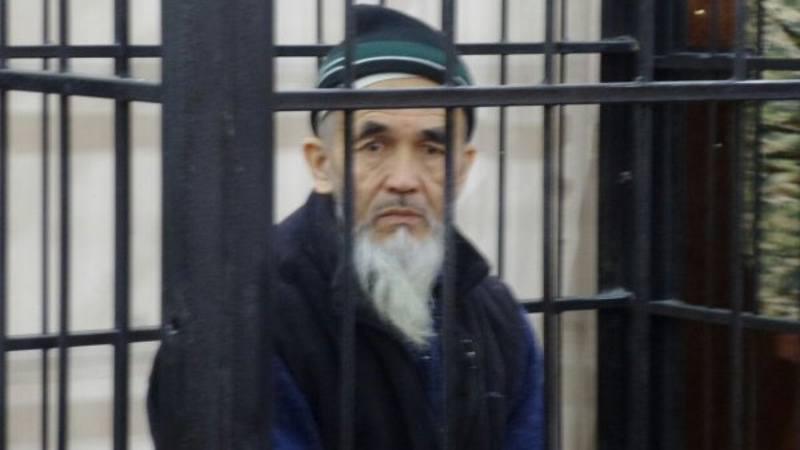
“I was deeply saddened to hear the news of Mr. Askarov’s death, despite multiple requests for his release on humanitarian grounds as his health deteriorated significantly in prison,”
Although the Kyrgyz Government shared detailed information on court proceedings and medical care afforded to Askarov, she criticized the government for not taking concerns about his health seriously.
“We learned in June that, in the midst of COVID-19, and despite his age and pre-existing conditions, Mr. Askarov did not qualify for early release under Kyrgyz law,” Lawlor said. “I now question whether more could have been done to protect his health.”
In the days before Askarov’s death, his lawyer made a number of urgent medical appeals to authorities after the 69-year-old fell ill with a cough, fever, aches and pains, and had difficulty eating and walking. It was only on 24 July 2020, when he had already been sick for 10 days, that he was transferred to a prison medical facility, where he died the following day.
“Mr. Askarov’s case should act as a reminder to all states of the serious and grave threat that prisoners in at-risk categories face during the COVID-19 pandemic,” she said. She stressed that human rights defenders and all those detained without sufficient legal basis, or most at risk of the virus, should be released…
Lawlor’s call has been endorsed by the Special Rapporteur on minority issues, Fernand de Varennes; the Special Rapporteur on the independence of judges and lawyers, Diego García-Sayán; and the Special Rapporteur on torture and other cruel, inhuman or degrading treatment or punishment, Nils Melzer.
Lisa Schlein reported on 14 July 2020 that UN Investigators are skeptical of reform promises by new President, while HRW sent a letter to the new President Ndayishimiye
The U.N. Commission of Inquiry on Burundi is doubting that promises of reform made by Burundi’s newly-elected president will result in hoped-for improvements in the country’s human rights situation. The commission has submitted its report on prevailing conditions in the country to the U.N. Human Rights Council.
The three-member panel welcomes promises of political reconciliation, judicial reform and protection of the population made by President Ndayishimiye, in his inaugural address. But, the chair of the U.N. commission, Doudou Diene, says the president’s comments were full of ambiguities and contradictions.
For example, he notes the president’s remarks seemed to justify the imposition of restrictions on some public liberties such as freedom of expression, information and assembly under the guise of preserving Burundian culture.
Speaking on a video link from Paris, he said, “Such remarks are concerning, especially given that the new president’s policies will be implemented by a government composed primarily of the old guard of the late President Nkurunziza’s regime — some of whom are under sanctions for their involvement in grave human rights violations.”
FILE – Burundi’s President Pierre Nkurunziza queues at a polling station during elections, under the simmering political violence and the growing threat of the coronavirus, in Ngozi, Burundi, May 20, 2020.
President Pierre Nkurunziza died of cardiac arrest on June 8, after a brief hospitalization, while his wife was in Kenya undergoing medical treatment. A number of news outlets report he died of the coronavirus.
Commission chair Diene says gross, widespread human rights violations continue in Burundi and that it would be premature to make any pronouncements on the possible evolution of the situation under the new government.
He said, “We solemnly urge the new president of the republic to demonstrate his willingness for change by fully cooperating with the international human rights mechanisms. The immediate release of the four journalists of Iwacu, of human rights defenders … would be a significant gesture of this.” {see: https://humanrightsdefenders.blog/2020/02/05/burundi-elections-start-with-convicting-4-journalists/]
Burundi’s ambassador to the United Nations in Geneva, Renovat Gabu, rejects the commission’s report. He accuses the commission of interfering in the domestic affairs of his country and of slandering and insulting public authorities with the blessing of the U.N. council.
Letter to President Ndayishimiye: Protecting Human Rights in Burundi, 13 July, 2020
Re: Protecting Human Rights in Burundi
… We have reported on human rights concerns in Burundi since 1995. We are writing to raise important concerns and share our recommendations on steps your government should take to advance and protect human rights in Burundi. We hope that you will address these issues and make the protection and promotion of human rights a top priority throughout your presidency. We urge you to work to make systemic changes to end the violence and abuse, fueled by widespread impunity, that have plagued the country for far too long, especially since 2015.
While we regret the former administration’s withdrawal of Burundi from the International Criminal Court, which took effect in 2017, we are encouraged by the commitments stated in your inaugural speech to reform the judiciary and ensure that all government or other officials who commit offenses are held accountable. Your assurances that measures will be taken to protect victims and witnesses are critical to delivering this promise, as is your commitment to ensuring that corruption will not be tolerated….
To address these challenges and demonstrate a real commitment to promoting rights and turning the page on decades of violence, abuse, mismanagement, and impunity, we urge you to take the following steps during your first year in office:
Remove from security services posts and other executive branches, officials who have been credibly implicated in serious human rights violations, according to reports by the United Nations Commission of Inquiry on Burundi, the UN Human Rights Council, the African Commission on Human and Peoples’ Rights’ fact-finding mission report, and Burundian and international human rights organizations. Ensure that no one who may be subject to criminal or other investigation into human rights abuses is in a position to influence that investigation.
Instruct the security forces, the local administrators, and the Imbonerakure to stop extortion, the use of forced labor, beatings, arbitrary arrests, threats, harassment, and collection of contributions for state-led projects. Order the Imbonerakure and other officials to dismantle all unauthorized roadblocks.
Ensure a thorough and independent investigation into the crimes and abuses committed by the Imbonerakure. These investigations should lead to fair and transparent prosecutions, and your government should ensure that your party’s youth league is disarmed and not used for any official state security or similar duties.
Fully protect everyone’s rights to freedom of expression, assembly, and association in accordance with international standards. Lift the suspension on the operations of independent media and human rights organizations, and ensure journalists and human rights activists who are in exile can return safely. Members and supporters of political parties, Burundian and international journalists, and Burundian and international human rights defenders should be able to conduct their work freely, criticize government policies, and organize peaceful protests without fear of intimidation, reprisals, harassment, arrests, or the excessive use of force by the security forces.
Cooperate with and support regional and international human rights mechanisms and treaties, and act to ensure that Burundian law adequately reflects international human rights commitments. This should include full cooperation with the UN Human Rights Council’s special procedures, including giving the UN Commission of Inquiry on Burundi unfettered access to the country; the resumption of cooperation with the Office of the High Commissioner for Human Rights; finalization of a memorandum of understanding with the African Union’s human rights observer mission and ensuring the observers get unfettered access to the country and its detention facilities; and allow international NGOs to operate without interference.
Ratify the Rome Statute and align national legislation provisions to cooperate promptly and fully with the International Criminal Court as a court of last resort. Cooperate with the ongoing ICC investigations into alleged crimes against humanity committed in Burundi or by nationals of Burundi outside Burundi until 26 October 2017.
Hong Kong’s chief executive Carrie Lam on giant screens remotely addressing the opening of the UN Human Rights Council’s 44th session on in Geneva, Switzerland, 30 June 2020, FABRICE COFFRINI/AFP via Getty Images
The 44th session of the UN Human Rights Council began with China’s imposition of legislation severely undermining rights and freedoms in Hong Kong. Within days, there were reports of hundreds of arrests, some for crimes that didn’t even exist previously. We welcome efforts during this session by a growing number of States to collectively address China’s sweeping rights abuses, but more is needed. An unprecedented 50 Special Procedures recently expressed concerns at China’s mass violations in Xinjiang, Hong Kong and Tibet, suppression of information in the context of COVID-19, and the targeting of human rights defenders across the country. The Council should heed the call of these UN experts to hold a Special Session and create a mechanism to monitor and document rights violations in the country. No state is beyond international scrutiny. China’s turn has come.
The 44th session also marked an important opportunity to enable those affected directly by human rights violations to speak to the Council through NGO video statements.
Amnesty’s Laith Abu Zeyad addressed the Council remotely from the occupied West Bank where he has been trapped by a punitive travel ban imposed by Israel since October 2019. We call on the Israeli authorities to end all punitive or arbitrary travel bans.
During the interactive dialogue with the Commission of Inquiry on Syria, victims’ associations and families of victims highlighted the human rights violations occurring in detention centers in Syria. We welcome the efforts by some States to underline their demands and welcome the adoption of the Syria resolution on detainees and urge the Syrian government to take all feasible measures to release detainees and provide truth to the families, noting the important pressure needed by Member States to further call for accountability measures for crimes committed in Syria.
Collette Flanagan, Founder of Mothers against Police Brutality, also delivered a powerful video statement at the Council explaining the reality of racist policing in the United States of America. We fully support victims’ families’ appeals to the Council for accountability.
We hope that the High Commissioner’s report on systemic racism, police violence and government responses to antiracism peaceful protests will be the first step in a series of meaningful international accountability measures to fully and independently investigate police killings, to protect and facilitate Black Lives Matter and other protests, and to provide effective remedy and compensation to victims and their families in the United States of America and around the world.
We appreciate the efforts made by the Council Presidency and OHCHR to overcome the challenges of resuming the Council’s work while taking seriously health risks associated with COVID-19, including by increasing remote and online participation. We recommend that remote civil society participation continue and be strengthened for all future sessions of the Council.
Despite these efforts, delays in finalising the session dates and modalities, and subsequent changes in the programme of work, reduced the time CSOs had to prepare and engage meaningfully. This has a disproportionate impact on CSOs not based in Geneva, those based in different time zones and those with less capacity to monitor the live proceedings. Other barriers to civil society participation this session included difficulties to meet the strict technical requirements for uploading video statements, to access resolution drafts and follow informal negotiations remotely, especially from other time zones, as well as a decrease in the overall number of speaking slots available for NGO statements due to the cancellation of general debates this session as an ‘efficiency measure.’
We welcome the joint statement led by the core group on civil society space and endorsed by cross regional States and civil society, which calls on the High Commissioner to ensure that the essential role of civil society, and States’ efforts to protect and promote civil society space, are reflected in the report on impact of the COVID-19 pandemic presented to the 46th Session of the HRC. We urge all States at this Council to recognise and protect the key role that those who defend human rights play.
We therefore welcome that the resolution “the promotion and protection of human rights in the context of peaceful protests” was adopted by consensus, and that the Council stood strongly against some proposed amendments which would have weakened it. We also welcome the inclusion in the resolution of a panel during the 48th session to discuss such events and how States can strengthen protections. We urge States to ensure full accountability for such human rights violations as an essential element of the protection of human rights in the context of protests. The current context has accelerated the urgency of protecting online assembly, and we welcome that the resolution reaffirms that peaceful assembly rights guaranteed offline are also guaranteed online. In particular, we also commend the resolution for calling on States to refrain from internet shutdowns and website blocking during protests, while incorporating language on the effects of new and emerging technologies, particularly tools such as facial recognition, international mobile subscriber identity-catchers (“stingrays”) and closed-circuit television.
We welcome that the resolution on “freedom of opinion and expression” contains positive language including on obligations surrounding the right to information, emphasising the importance of measures for encryption and anonymity, and strongly condemning the use of internet shutdowns.. Following the High Commissioner’s statement raising alarm at the abuse of ‘false news’ laws to crackdown on free expression during the COVID-19 pandemic, we also welcome that the resolution stresses that responses to the spread of disinformation and misinformation must be grounded in international human rights law, including the principles of lawfulness, legitimacy, necessity and proportionality. At the same time, we are concerned by the last minute addition of language which focuses on restrictions to freedom of expression, detracting from the purpose of the resolution to promote and protect the right. As we look to the future, it is important that the core group builds on commitments contained in the resolution and elaborate on pressing freedom of expression concerns of the day, particularly for the digital age, such as the issue of surveillance or internet intermediary liability, while refocusing elements of the text.
The current context has not only accelerated the urgency of protecting assembly and access to information, but also the global recognition of the right to a safe, clean, healthy and sustainable environment. We welcome the timely discussions on ”realizing children’s right to a healthy environment” and the concrete suggestions for action from panelists, States, and civil society. The COVID-19 crisis, brought about by animal-to-human viral transmission, has clarified the interlinkages between the health of the planet and the health of all people. We therefore support the UN Secretary General’s call to action on human rights, as well as the High Commissioner’s statement advocating for the global recognition of the human right to a safe, clean, healthy and sustainable environment – already widely reflected at national and regional levels – and ask that the Council adopts a resolution in that sense. We also support the calls made by the Marshall Islands, Climate Vulnerable Forum, and other States of the Pacific particularly affected and threatened by climate change. We now urge the Council to strengthen its role in tackling the climate crisis and its adverse impacts on the realization of human rights by establishing a Special Rapporteur on Human Rights and Climate Change, which will help address the urgency of the situation and amplify the voices of affected communities.
The COVID crisis has also exacerbated discrimination against women and girls. We welcome the adoption by the Council of a strong resolution on multiple and intersecting forms of discrimination against women and girls, which are exacerbated in times of a global pandemic. The text, inter alia, reaffirms the rights to sexual and reproductive health and to bodily autonomy, and emphasizes legal obligations of States to review their legislative frameworks through an intersectional approach. We regret that such a timely topic has been questioned by certain States and that several amendments were put forward on previously agreed language.
The Council discussed several country-specific situations, and renewed the mandates in some situations.
We welcome the renewal of the Special Rapporteur’s mandate and ongoing scrutiny on Belarus. The unprecedented crackdown on human rights defenders, journalists, bloggers and members of the political opposition in recent weeks ahead of the Presidential election in August provide a clear justification for the continued focus, and the need to ensure accountability for Belarus’ actions. With concerns that the violations may increase further over the next few weeks, it is essential that the Council members and observers maintain scrutiny and pressure even after the session has finished.
We welcome the extension of the mandate of the Special Rapporteur on Eritrea. We urge the government to engage, in line with its Council membership obligations, as the Special Rapporteur’s ‘benchmarks for progress’ form a road map for human rights reform in the country.
We welcome the High Commissioner report on the human rights situation in the Philippines which concluded, among other things, that the ongoing killings appear to be widespread and systematic and that “the practical obstacles to accessing justice in the country are almost insurmountable.” We regret that even during this Council session, President Duterte signed an Anti Terrorism Law with broad and vague definition of terrorism and terrorists and other problematic provisions for human rights and rule of law, which we fear will be used to stifle and curtail the rights to freedom of opinion and expression, to freedom of peaceful assembly and of association. Also during this session, in a further attack on press freedom, Philippine Congress rejected the franchise renewal of independent media network ABS-CBN, while prominent journalist Maria Ressa and her news website Rappler continue to face court proceedings and attacks from President Duterte after Ressa’s cyber libel conviction in mid-June. We support the call from a group of Special Procedures to the Council to establish an independent, impartial investigation into human rights violations in the Philippines and urge the Council to establish it at the next session.
The two reports presented to the Council on Venezuela this session further document how lack of judicial independence and other factors perpetuate impunity and prevent access to justice for a wide range of violations of civil, cultural, economic, political, and social rights in the country. We also urge the Council to stand ready to extend, enhance and expand the mandate of the Independent International Fact-Finding Mission when it reports in September.
We also welcome the report of the Special rapporteur on the human rights situation in the Palestinian Territory occupied since 1967 and reiterate his call for States to ensure Israel puts an end to all forms of collective punishment. We also reiterate his call to ensure that the UN database of businesses involved with Israeli settlements becomes a living tool, through sufficient resourcing and annual updating.
We regret, however, that several States have escaped collective scrutiny this session.
We reiterate the UN Special Rapporteur Agnes Callamard’s call to pressure Saudi Arabia to release prisoners of conscience and women human rights defenders and call on all States to sustain the Council’s scrutiny over the situation at the September session.
As highlighted in a joint statement of Special Procedures, we call on the Indian authorities to immediately release HRDs, who include students, activists and protest leaders, arrested for protesting against changes to India’s citizenship laws. Also eleven prominent HRDs continue to be imprisoned under false charges in the Bhima Koregaon case. These activists face unfounded terror charges under draconian laws such as sedition and under the Unlawful Activities (Prevention) Act. While we welcome that Safoora Zargar was granted bail on humanitarian grounds, the others remain at high risk during a COVID-19 pandemic in prisons with not only inadequate sanitary conditions but also limited to no access to legal counsel and family members. A number of activists have tested positive in prison, including Akhil Gogoi and 80-year-old activist Varavara Rao amid a larger wave of infections that have affected many more prisoners across the country. Such charges against protestors, who were exercising their rights to freedom of peaceful assembly must be dropped. We call on this Council to strengthen their demands to the government of India for accountability over the excessive use of force by the police and other State authorities against the demonstrators.
In Algeria, between 30 March and 16 April 2020, the Special rapporteur on freedom of opinion and expression, freedom of peaceful assembly and of association, human rights defenders, issued three urgent appeals in relation to cases involving arbitrary and violent arrests, unfair trials and reprisals against human rights defenders and peaceful activists Olaya Saadi, Karim Tabbou and Slimane Hamitouche. Yet, the Council has been silent with no mention of the crackdown on Algerian civil society, including journalists.
To conclude on a positive note, we welcome the progress in the establishment of the OHCHR country office in Sudan, and call on the international community to continue to provide support where needed to the transitional authorities. While also welcoming their latest reform announcements, we urge the transitional authorities to speed up the transitional process, including reforms within the judiciary and security sectors, in order to answer the renewed calls from protesters for the enjoyment of “freedom, peace and justice” of all in Sudan. We call on the Council to ensure continued monitoring and reporting on Sudan.
Thanks to ReliefWeb‘s detailed coverage of the UN Human Rights Council:
On 17 july The Human Rights Council adopted four resolutions dealing with the promotion and protection of human rights in the context of peaceful protests ; the situation of human rights in the Syrian Arab Republic ; the Social Forum ; and the contribution of respect for all human rights and fundamental freedoms to achieving the purposes of the Charter of the United Nations. It also appointed four Special Procedure mandate holders, and concluded its regular forty-fourth session.
The Council also appointed four new Special Procedure mandate holders : Marcos A. Orellana (Chile) for the position the Special Rapporteur on the implications for human rights of the environmentally sound management and disposal of hazardous substances and wastes ; Irene Khan (Bangladesh) for the position of the Special Rapporteur on the promotion and protection of the right to freedom of opinion and expression ; Tlaleng Mofokeng (South Africa) as Special Rapporteur on the right of everyone to the enjoyment of the highest attainable standard of physical and mental health ; and Siobhán Mullallay (Ireland) as the Special Rapporteur on trafficking in persons, especially women and children.
Yackoley Kokou Johnson, Vice-President of the Council and Rapporteur, noted that during the session, the Council had held 29 meetings, seven debates and 35 interactive dialogues, including with the High Commissioner on her annual report, as well as with 22 Special Procedure mandate holders, two commissions of inquiry and two special representatives of the Secretary-General, covering over 50 human rights themes and 40 country situations.
Elisabeth Tichy-Fisslberger, President of the Council, concluded by thanking those present for their dedication, flexibility and creativity in implementing many precautionary measures, proving that the Council could continue to do its important work in these difficult times.
The Human Rights Council is scheduled to hold its forty-fifth session from 14 September to 2 October.
On Wednesday 9 September 9am-12pm (New York time)Amnesty International and the International Service for Human Rights will hold – as usual – an online pledging event for candidate States in advance of the Human Rights Council elections that will take place this autumn for the membership term 2021-2023,. State representatives and civil society are invited to participate actively in the events and pose questions to candidate States.
The link to attend the event will be shared closer to the date.
Have a question? Follow the event on Twitter and submit questions to candidates via: @ISHRglobal #HRCpledging #HRCelections2020
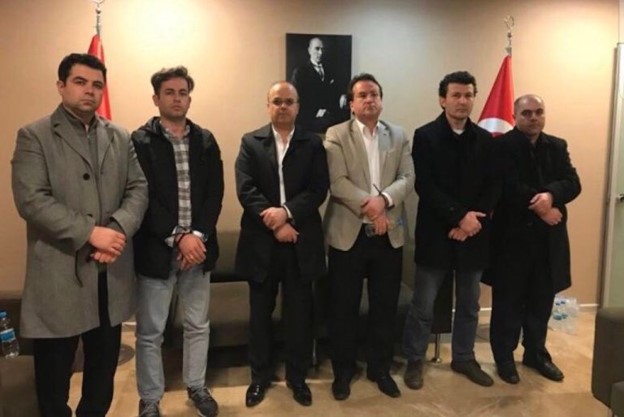
Turkish nationals who were abducted in Kosovo were kept for a time at the Turkish embassy premises.
On 9 July 9, 2020 the Nordic Monitor higlighted the shocking news that the Turkish government has signed bilateral security cooperation agreements with multiple states that were phrased ambiguously to allow for the expulsion or abduction of Turkish nationals living abroad, This is based on a joint UN letter on 5 May 2020.
Four UN rapporteurs/experts sent a joint letter to the Turkish government to express their concern about the “systematic practice of state-sponsored extraterritorial abductions and forcible return of Turkish nationals from multiple States to Turkey.”
“The Government of Turkey, in coordination with other States, is reported to have forcibly transferred over 100 Turkish nationals to Turkey, of which 40 individuals have been subjected to enforced disappearance, mostly abducted off the streets or from their homes all over the world, and in multiple instances along with their children,” the letter said.
Nordic Monitor previously reported how the content of Turkey’s security agreements has changed in parallel to the transformation of national legislation and that the new documents contained ambiguous copy-paste phrases designed to suppress government opponents outside the country.
“[The Turkish] Government has signed bilateral security co-operation agreements with multiple States allegedly containing broad and vague references to combatting terrorism and transnational crime. Sources claim that the agreements have been phrased ambiguously to allow for expulsion or abduction of anyone deemed to be a ‘security risk’ from third countries party to the agreements. There appears to be a clear link in the timing of the alleged operations – most, if not all, have been carried out within two years since the agreements entered into force. For instance, allegations are made that Turkey has signed secret agreements with several States, including Azerbaijan, Albania, Cambodia and Gabon, where several operations are reported to have taken place,” the letter stated….
Furthermore, rapporteurs, with reference to statements by Turkish officials, exposed the fact that over 100 alleged members of the Gülen movement have been abducted abroad by Turkish intelligence and brought back to Turkey as part of the Turkish government’s systematic global manhunt.
“Turkish authorities have not only acknowledged direct responsibility in perpetrating or abetting abductions and illegal transfers, but have also vowed to run more covert operations in the future. On September 21, 2018, it is alleged that Turkey’s Presidential Spokesperson stated during a press conference that the Government would continue its operations against the Hizmet Movement, similar to the one in Kosovo (March 29, 2018).”….
“We note in this respect that deprivation of nationality for the sole purpose of facilitating expulsion or removal goes against international law norms and standards. Finally, we wish to highlight that violations of international human rights obligations resulting from these agreements engage Turkey’s responsibility under international law as well as the third countries parties to the agreements” the letter said….
That Turkey takes an aggressive stand on anything that smacks like terrorism was made clear again on 7 July 2020 when Turkey’s Foreign Ministry slammed recent remarks by Sweden’s foreign minister against Turkey’s military operation in northeastern Syria while meeting via videolink with members of the PYD/YPG/PKK terrorist organization.
“Essentially this meeting was not the first in which Ann Linde came into contact with members of the terrorist organization. She previously held talks with members of the terrorist organization and participated in activities organized by people associated with the terrorist organization,” the ministry said late Thursday in a statement.
“It is a shame that so-called human rights defenders, who are becoming an instrument to the terrorist organization’s smear campaign, ignore the massacres, crimes and oppression…committed by these terrorists in Syria,” it stressed. [what the term “human rights defenders” here means is not clear] – https://www.aa.com.tr/en/turkey/turkey-slams-swedish-fm-for-meeting-with-terror-group/1905510
The admittedly Pakistan-based Geonet.tv gives a good summary of India’s disregard of concerns and objections in five letters by UN Human Rights Council (UNHRC) about human rights abuses in Jammu and Kashmir, India’s new terrorism law and the Citizenship law.
In the five letters, UNHRC experts raised pertinent questions and pointed out violations by Indian authorities of the resolutions by UN Security Council, General Assembly and UN Human Rights Council…
On July 4, 2020, United Nations Human Rights Council (UNHRC) made public 14 cases of worst possible human rights abuses in Jammu and Kashmir after the Indian government failed to respond to their concerns within the stipulated 60 days.
Four UNHRC Rapporteurs on torture, extrajudicial executions, minority issues and freedom of religion under HRC charter and mandate had written to Indian government on May 4th, 2020, to respond back on the 14 cases and countless other cases involving grave abuse of human rights in Kashmir after its annexation on Aug 5th, 2019. The UN Rapporteurs in the May 4th letter lamented that Indian government had not responded to their earlier letters on Aug 16, 2019, and February 27, 2020, on the atrocities in Kashmir. The two earlier letters questioned the restrictions in Kashmir on rights of expression and assembly and dissent following Indian annexation of Kashmir.
In another letter on May 6th, 2020, eight Rapporteurs of UNHRC and one Vice Chair of a Working Group raised serious concern on the new anti-Terrorism law passed by Indian parliament just before Indian annexation of Kashmir in July/Aug 2019. UNHRC questioned the detention of any accused for an extended period of six months under the new anti-terror law
In another letter on February 28th, 2020, eight Rapporteurs of UNHRC and one Vice Chair of a Working Group questioned the Indian Citizenship Act of December 2019 which discriminates against Muslims and bars them to get Indian citizenship whereas people from different religious beliefs who entered Indian before Dec 2014 are eligible for it. The letter also heavily criticise excessive use of force to quell protests against this Act which resulted in death of over 50 and injuries to hundreds.
In an interesting article published on 10 july 2020, Bruno Stagno Ugarte – Deputy Executive Director for Advocacy of Human Rights Warch – sees encouraging signs of a revival of the leading role of the Nordic countries when it comes to international human rights policy.
…There are encouraging signs these countries might be ready to re-engage in denouncing grave abuses and lead international efforts for country-specific scrutiny and accountability.
..If Iceland with a population of 365,000, found the bandwidth to lead on two issues simultaneously, its larger Nordic neighbors can surely match both its courage and performance.
There are reasons to be encouraged on that front. In June, Finland supported the creation of a Libya investigation by the Human Rights Council to document violations committed by all parties and preserve evidence. Denmark, currently a member of the Council, is considering addressing ongoing rights violations by Saudi Arabia. And now that Norway has been elected to a non-permanent seat on the United Nations Security Council for the 2021-22 term, we hope it will become a principled voice for human rights and lead on country-specific situations.
In the absence of leadership by larger states, it is incumbent on smaller states, individually and collectively, to ensure that multilateral tools remain relevant to address dire human rights situations. The Nordic countries have done so in the past; it is time for them to do so again.
On 9 june 2020 Agnes Callamard, the UN special rapporteur on extrajudicial, summary or arbitrary executions, urged member states to pressure Saudi Arabia to free women activists before a G20 nations summit which Riyadh will be hosting in November. At least a dozen prominent women’s rights activists were arrested in Saudi Arabia in 2018 as it lifted a ban on women driving cars, a step that many of the detainees had long campaigned for. The women were rounded up as part of a broader crackdown on dissent that extended to clerics and intellectuals.
Several of the arrested women have alleged torture and sexual assault in detention. Saudi officials deny this and said the detainees were suspected of having harmed Saudi interests and offered support to hostile elements abroad.
Some of the activists are now on trial, but few charges have been made public. Charges against at least some of the activists relate to contacts with foreign journalists, diplomats and human rights groups. Their prosecution has drawn global criticism, particularly following the 2018 murder of journalist Jamal Khashoggi by Saudi agents inside the kingdom’s Istanbul consulate. (as Rapporteur Agnes Callamard also dealt with Khashoggi’s killing: https://humanrightsdefenders.blog/2019/12/23/the-unsatisfactory-end-to-the-khashoggi-investigation/)
Earlier Amnesty International had called on Saudi Arabian authorities to immediately release women human rights activists, including those who are “being punished for daring to drive.“…. Amnesty UK has launched a “Beep for freedom” campaign in support of the persecuted women’s rights defenders. The campaign involves supporters sharing photos of themselves behind the wheel of a car or sharing the campaign’s “Beep For Freedom” car horn symbol, with an appeal to the Saudi authorities to “immediately and unconditionally” release the activists and drop all charges against them.
Verafiles of 6 July 2020 carries the personal impression of human rights defender Mary Aileen D. Bacalso who attended the 44th seesion of the UN Human Rights Council where the Philippines was on the agenda.
Participation to the 44th session of the UN Human Rights Council was mostly online. Inset photo on the left is UN High Commissioner of Human Rights Michelle Bachelet. Inset photo on the right is Philippine Justice Secretary Menardo Guevarra.
During the last two and a half decades, ..I would never have believed that I should see the UN session hall almost empty as it was during the 44th session of the UN Human Rights Council, which opened on 30th June 2020. Participation was online due to the COVID-19 pandemic.
The Republic of the Philippines, one of the founding members of the United Nations, was yet again subjected to international scrutiny at the outset of the 44th session. The UN High Commissioner of Human Rights said that according to her office’s report the Philippine situation is “near impunity.” This from the first female Chilean president, Michelle Bachelet, a woman who survived torture during the Pinochet dictatorship: she was referring to Philippine laws and policies directed at the drugs business and threats to national security, whose implementation has led to the killing of 248 human rights defenders – lawyers, journalists, trade unionists – between 2015 and 2019.
….Yet barely a week after the start of the UNHRC session, the bill has already been signed into law, on 3 July 2020. This draconian law, which introduces warrantless arrests among other curtailments of fundamental freedoms, is vehemently opposed by civil society….
At the 44th session, members of the European Union, part of the Western European and Other Groups, expressed profound concern about the direction of the Philippines, emphasizing the consequences for human rights of the Duterte administration’s “war on drugs” and censuring its failure to implement recommendations made during the Philippines’ Third Cycle of the Universal Periodic Review.
ASEAN on the other hand, and other members of the Asia and the Pacific Group, as well as some states in other regions such as Venezuela, Cuba and Belarus, expressed their unequivocal support for the Philippines, noting in particular its collaboration with the UNHRC, its robust NGO community and its efforts in reducing poverty. China conspicuously praised the Philippines’ progress in human rights……
Philippine non-government organizations (NGOs) condemned their country’s withdrawal from the International Criminal Court; the arrest and detention of Maria Ressa; the endless implementation of extrajudicial executions; the shutdown of the largest television network, ABS-CBN; continuing enforced disappearances and torture; the red-tagging of Sister Mary John Mananzan OSB and of a number of NGOs; the shoot-to-kill order against COVID-19 lockdown violators; and the then-imminent enactment of what is now the 2020 Anti-Terror Law.
Towing President Duterte’s line, Justice Secretary Menardo Guevarra responded that transparency and constructive cooperation characterized the country’s engagement with the UN, while the Philippine Commission on Human Rights, which Duterte tried to eliminate in 2018 by giving it a budget of PhP 1,000 ($20), asserted the vital importance of accountability. Commissioner Karen Dumpit said that the past failure to protect human rights had directly led to the current climate of impunity, and there was an obligation on the Government to pursue social justice and uphold human rights.
The Philippines prides itself as a founding member of the community of nations, though to become a model of human rights promotion and defense remains a distant hope.
Mary Aileen D. Bacalso is former secretary-general of the Asian Federation Against Involuntary Disappearances. For her work against enforced disappearances, the Argentinian Government conferred on her the Emilio F. Mignone International Human Rights Prize in 2013, and she was awarded the 2019 Franco-German Ministerial Prize for Human Rights and the Rule of Law.




 Hans Thoolen on Human Rights Defenders and their awards