On 7 May 2021 Mary Lawlor, the Special Rapporteur on the situation of human rights defenders, condemned a decision by a Cambodian court to sentence three environmental human rights defenders to jail terms of up to 20 months and urged the Government to release them immediately and unconditionally.
The convicted human rights defenders – Mr. Thun Ratha, Ms. Long Kunthea and Ms. Phuon Keoraksmey – are members of Mother Nature Cambodia (MNC), a non-governmental organization that advocates for the protection and preservation of Cambodia’s natural environment and supports local communities in defending those rights.
The three, who were sentenced by the Phnom Penh Municipal court on charges of incitement to create social chaos, had been in pre-trial detention for eight months before the conviction.
“The decision of the Cambodian court sentencing the three human rights defenders to prison terms is disgraceful and only reinforces the Government’s enduring policy to diminish civic space and dissenting voices,” said Mary Lawlor, the Special Rapporteur on the situation of human rights defenders.
“The verdict also shows how unable and unwilling the court is to uphold human rights and fundamental freedoms that the government has voluntarily accepted. I am concerned about the pattern of increasing prosecution of human rights defenders in Cambodia since July 2020,” Lawlor said. “The trial and conviction against the MNC human rights defenders clearly demonstrates a sustained intolerance and efforts to undermine the space for human rights defenders.”
“This decision is extremely worrying as States have the obligation to provide a safe and enabling environment in which environmental human rights defenders can operate free from threats, harassment, intimidation, criminalisation and violence,” emphasized the Special Rapporteur on human rights and the environment, Dr. David Boyd.
The three were arrested in September 2020 without warrants and were charged under articles 494 and 495 of Cambodia’s Penal Code. The charges carried a custodial sentence of between six months to two years and a fine of one to four million riels (approximately USD 250 to USD 1,000).
Lawlor expressed serious concerns about the lack of factual evidence underpinning the charges. The human rights defenders were convicted based on a number of Facebook posts on environmental matters and video clips which showed them raising human rights and environmental awareness in a factual and peaceful manner. No substantial evidence was cited that would prove how their actions had in fact or could potentially lead to “social chaos”.
“While the three human rights defenders may still file an appeal, I urge the Cambodian Government to immediately and unconditionally release them. No one should be criminalised for undertaking legitimate human rights work,” she said. “As highlighted in my last statement in November, I call on the United Nations system in Cambodia to support all human rights defenders who are exposed to risk.”
Not surprisingly the Cambodian government see it differently:
Cambodia’s permanent mission to the UN said Lawlor’s statement was false and misleading.
“Crime is crime and it cannot be justified because it is in pursuit of other aspirations,” the press release said.
The permanent mission’s statement said that Cambodia values all duly-registered NGOs that are operating within the boundaries of law and that, unfortunately, Professor Lawlor seems to be advocating the work of an unlawful organization that commits crimes in the name of environmentalism.
The mission said MNC had officially dissolved itself in 2017, but the organisation continued on illegally exploiting the environmental movement until today and that the self-proclaimed human rights defenders are not entitled to break the law with impunity.
It described Lawlor’s remarks as inappropriate and an interference in the national judicial system of a sovereign state, saying the demand for the government to arbitrarily release anyone is tantamount to an attack on the separation of powers and the independence of the judiciary that are guaranteed under the Constitution.
A placard reads “Abdulhadi al-Khawaja, will and determination, hunger strike” during an anti-government protest on 5 September 2014 (AFP/File photo)
Mary Lawlor, UN special rapporteur on the situation of human rights defenders, made the case for the release of Abdulhadi al-Khawaja, former president of the Bahrain Centre for Human Rights, before his 60th birthday this week. in a video message posted to Twittery.
Khawaja, who previously served as president of the Bahrain Centre for Human Rights, has been in prison for 10 years, serving a life sentence for “organising and managing a terrorist organisation”, among other charges. “He’s serving a life sentence in prison for peacefully defending the rights of others,” Lawlor said.
“He’s been given an unfair trial and details of his torture have been corroborated by an independent commission of inquiry.” Lawlor said she had known Khawaja “for many years” and “witnessed his committed work for human rights in the Middle East”.
The UN expert also noted that Khawaja’s case had been taken up by the European Union, the United Nations and other international organisations.
“I urge the Bahraini government to finally release Abdulhadi in time for his 60th birthday on the 5th of April. His family have been fragmented and dislocated and have suffered greatly over the past ten years; it would be an honourable and compassionate act to allow them to reunite,” Lawlor concluded.
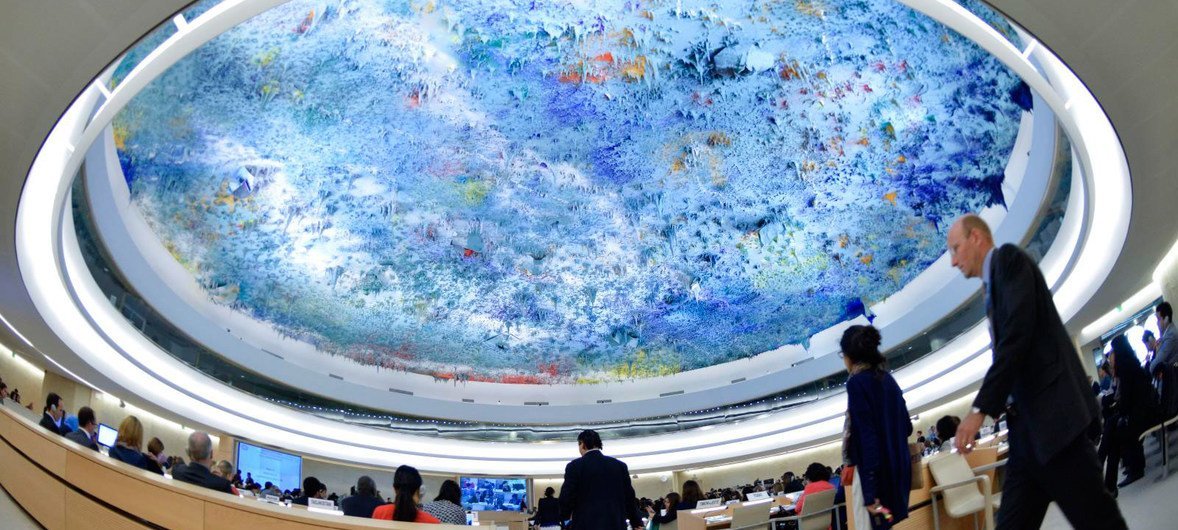
UN Photo/Jean-Marc FerréA general view of the Geneva-based UN Human Rights Council in session. 24 March 2021
The UN’s top rights forum passed resolutions condemning abuses of fundamental freedoms in Belarus and Myanmar on Wednesday, in response to ongoing concerns over the human rights situation in both countries.
The ISHR and another 15 organisations (see below) produced as usual their reflections on the key outcomes of the 46th session of the UN Human Rights Council, as well as the missed opportunities to address key issues and situations including pushbacks and other human rights violations faced by migrants and refugees, and the human rights situations in Algeria, Cameroon, China, India, Kashmir and the Philippines.
They welcome some important procedural advances such as the possibility for NGOs to make video statements, which should be maintained and expanded after the pandemic for all discussions, including in general debates. …They are concerned by the renewal for another year of the ‘efficiency’ measures piloted in 2020, despite their negative impact on civil society participation in a year also impacted by the COVID-19 pandemic. We urge States to reinstate general debates in the June sessions, to preserve their open-ended nature, and maintain the option of video intervention also in general debates.
Environmental justice:
They welcome the joint statement calling for the recognition of the right of all to a safe, clean, healthy and sustainable environment that was delivered by the Maldives, on behalf of Costa Rica, Morocco, Slovenia and Switzerland and supported by 55 States. We call on all States to seize this historic opportunity to support the core-group as they continue to work towards UN recognition so that everyone in the world, wherever they live, and without discrimination, has the right to live in a safe, clean and sustainable environment.
We welcome the joint statement that was delivered by Bangladesh, on behalf of 55 States, calling the Council to create a new Special Rapporteur on human rights and climate change. We believe this new mandate would be essential to supporting a stronger human rights-based approach to climate change, engaging in country visits, normative work and capacity-building, and further addressing the human rights impacts of climate responses, in order to support the most vulnerable. This mandate should be established without further delay.
Racial Justice: Over 150 States jointly welcomed that the implementation of HRC Resolution43/1 will center victims and their families. They urge the Council to respond to the High Commissioner’s call to address root causes of racism including the “legacies of enslavement, the transatlantic trade in enslaved Africans, and its context of colonialism”. The Council must answer to the demands of victims’ families and civil society’s, and establish – at its next session – an independent inquiry to investigate systemic racism in law enforcement in the United States and a thematic commission of inquiry to investigate systemic racism in law enforcement globally, especially where it is related to legacies of colonialism and transatlantic slavery.
Right to health: The resolution on ensuring equitable, affordable, timely, and universal access by all countries to vaccines in response to the COVID-19 pandemic is a welcome move in highlighting the need for States not to have export and other restrictions on access to safe diagnostics, therapeutics, medicines, and vaccines, and essential health technologies, and their components, as well as equipment and encouraged States to use all flexibilities within TRIPs. However, a revised version of the resolution tabled was further weakened by the deletion of one paragraph on stockpiling of vaccines and the reference to ‘unequal allocation and distribution among countries”. The specific deletion highlights the collusion between rich States and big pharmaceuticals, their investment in furthering monopolistic intellectual property regimes resulting in grave human rights violations. The reluctance of States, predominantly WEOG States who continue to defend intellectual property regimes and States’ refusal to hold business enterprises accountable to human rights standards is very concerning during this Global crisis.
Attempts to undermine HRC mandate: They regret that once again this Council has adopted a resolution, purportedly advancing ‘mutual beneficial cooperation’ which seeks to undermine and reinterpret both the principle of universality and its mandate. Technical assistance, dialogue and cooperation must be pursued with the goal of promoting and protecting human rights, not as an end in itself or as a means of facilitating inter-State relations. We reiterate our call on all States, and especially Council members, to consider country situations in an independent manner, based on objective human rights criteria supported by credible UN and civil society information. This is an essential part of the Council’s work; reliance on cooperation alone hobbles the Council’s ability to act to support the defenders and communities that look to it for justice.
Country-specific resolutions: They welcome the new mandate for the High Commissioner focused on the human rights situation in Belarus in the context of the 2020 Presidential election. It is now essential for States to support the High Commissioner’s office, ensuring the resources and expertise are made available so that the mandate can be operationalised as quickly as possible. Immediately afterwards, on 24 March, 2021 the Human Rights House Foundation published a call by 64 Belarusian and international human rights organisations, welcoming the resolution passed by the UN Human Rights Council mandating the High Commissioner to create a new robust monitoring and reporting mandate focused on accountability for human rights violations in Belarus that have taken place since 1 May 2020. In so doing, the Council demonstrated its determination to hold Belarusian authorities to account. This mandate needs immediate action. We urge the international community to support this critical next step. The mandate should provide a complementary and expert international mechanism to regional accountability processes already under way. Furthermore, it should assist in the identification of those responsible for the most serious violations for future prosecution. [https://humanrightshouse.org/statements/civil-society-organisations-call-for-the-immediate-operationalisation-of-hrcs-new-mandate-on-belarus/]
They welcome the renewal of the mandate of the Special Rapporteur on Iran, and urge Council to consider further action to hold Iranian authorities accountable, in view of the systematic impunity and lack of transparency surrounding violations of human rights in the country.
They welcome the call for additional resources for the Special Rapporteur on Myanmar, increased reporting by OHCHR as well as the work of the IIMM. Lack of international monitoring on, the imposition of martial law in Myanmar to prosecute civilians, including protesters, before military courts, the dangerous escalation of violence by the Tatmadaw and the widespread human rights violations amounting to crimes against humanity demand more efforts to ensure accountability.
They welcome the renewal and strengthening of the OHCHR’s monitoring and reporting mandate on Nicaragua, in a context of steady human rights deterioration marked by the Government’s refusal to cooperate constructively with the Office, over two years after its expulsion from the country. The adopted resolution lays out steps that Nicaragua should take to resume good faith cooperation and improve the situation ahead of this year’s national elections. It is also vital that this Council and its members continue to closely follow the situation in Nicaragua, and live up to the resolution’s commitments, by considering all available measures should the situation deteriorate by next year.
They welcome the increased monitoring and reporting on the situation of human rights in Sri Lanka. However, in light of the High Commissioner’s report on the rapidly deteriorating human rights situation and Sri Lanka’s incapacity and unwillingness to pursue accountability for crimes under international law, the Council should have urged States to seek other avenues to advance accountability, including through extraterritorial or universal jurisdiction.
While they welcome the extension of the mandate of the Commission on Human Rights in South Sudan (CHRSS), they regret the adoption of a competing resolution under the inadequate agenda item 10. This resolution sends a wrong signal as myriads of local-level conflicts and ongoing SGBV and other violations of fundamental rights continue to threaten the country’s stability. We urge South Sudan to continue cooperating with the CHRSS and to demonstrate concrete progress on key benchmarks and indicators.
They welcome the report by the Commission of Inquiry on Syria on arbitrary imprisonment and detention and reiterate the recommendation to establish an independent mechanism “to locate the missing or their remains”, and call on States to ensure the meaningful participation of victims and adopt a victim-centered approach, including by taking into consideration the Truth and Justice Charter of Syrian associations of survivors and families of disappeared when addressing arbitrary detention and enforced disappearance.
Country-specific State statements: They welcome States’ leadership and statements on human rights situations that merit the HRC’s attention.
They welcome the joint statement on the situation in Ethiopia’s Tigray region and urge all actors, including the Ethiopian Federal Government, to protect civilians and ensure unhindered humanitarian access. Those responsible for crimes under international law, including Ethiopian soldiers, members of armed militias and non-State groups, and Eritrean soldiers involved in Tigray, must be held criminally accountable. The HRC should mandate an independent investigation and reporting by the High Commissioner.
For the first time in seven years, States at the HRC have united to condemn the widespread human rights violations by Egypt and its misuse of counter-terrorism measures to imprison human rights defenders, LGBTI persons, journalists, politicians and lawyers and peaceful critics. They welcome the cross-regional joint statement by 32 States and we reiterate our call supported by over 100 NGOs from across the world on the HRC to establish a monitoring and reporting mechanism on the situation.
They welcome the joint statement by 45 States focused on the human rights situation in Russia, including the imprisonment of Alexi Navalny and the large number of arbitrary arrests of protestors across Russia. The statement rightly expresses concern for shrinking civil society space in Russia through recent legislative amendments and Russia using its “tools of State” to attack independent media and civil society.
The next session will receive a report on pushbacks from the Special Rapporteur on human rights of migrants. The Council must respond to the severity and scale of pushbacks and other human rights violations faced by migrants and refugees in transit and at borders and the ongoing suppression of solidarity, including by answering the High Commissioner’s call for independent monitoring. The Council’s silence feeds impunity, it must build on the momentum of the joint statement of over 90 States reaffirming their commitment to protection of the human rights of all migrants regardless of status.
While the OHCHR expressed deep concern about the deteriorating human rights situation and the ongoing crackdown on civil society in Algeria, and called for the immediate and unconditional release of arbitrarily detained individuals, the Council has remained largely silent. As authorities are increasingly arbitrarily and violently arresting protesters – at least 1,500 since the resumption of the Hirak pro-democracy movement on 13 February, they call on the Council to address the criminalisation of public freedoms, to protect peaceful protesters, activists and the media.
Cameroon is one of the human rights crises the Council has failed to address for too long. They condemn the acts of intimidation and reprisal exercised by the Cameroonian government in response to NGOs raising concerns, including DefendDefenders. This is unacceptable behavior by a Council member. The Council should consider collective action to address the gross human rights violations and abuses occurring in the country.
They echo the calls of many governments for the Council to step up its meaningful action to ensure that concerns raised by civil society, the UN Special Procedures and the OHCHR about the human rights situation in China be properly addressed, including through an independent international investigation. We also regret that a number of States have taken an unprincipled approach of voicing support to actions, such as those by the Chinese government, including in Xinjiang and Hong Kong, through their national and other joint statements.
They call for the Council’s attention on the rapid deterioration of human rights in India. Violent crackdowns on recent farmers’ protests, internet shutdowns in protest areas, sedition and criminal charges against journalists reporting on these protests, and criminalisation of human rights defenders signal an ongoing dangerous trend in restrictions of fundamental freedoms in India. We call on India to ensure fundamental freedoms and allow journalists, HRDs and civil society to continue their legitimate work without intimidation and fear of reprisals. [see also: https://humanrightsdefenders.blog/2020/10/29/also-un-calls-on-india-to-protect-human-rights-defenders/]
We once again regret the lack of Council’s attention on the human rights crisis in Kashmir. Fundamental freedoms in the Indian-administered Kashmir remains severely curtailed since the revocation of the constitutional autonomy in August 2019. Raids in October and November 2020 on residences and offices of human rights defenders and civil society organisations by India’s anti-terrorism authorities in a clear attempt at intimidation have further exacerbated the ongoing crisis. We call on the OHCHR to continue to monitor and regularly report to the Council on the situation in both Indian and Pakistani administered Kashmir, and on Indian and Pakistani authorities to give the OHCHR and independent observers unfettered access to the region. [See also; https://humanrightsdefenders.blog/2020/02/09/forgotten-kashmir-something-has-to-be-done/]
Nearly six months since its adoption, the Council Resolution 45/33 on technical assistance to the Philippines has proven utterly insufficient to address the widespread human rights violations and persistent impunity. Killings in the war on drugs continue, and attacks on human rights defenders and activists have escalated. The killing of nine unarmed activists on 7 March 2021 clearly demonstrates that no amount of technical assistance will end the killings as long as the President and senior officials continue to incite violence and killings as official State policy. It is imperative that the Council sets up an international accountability mechanism to end the cycle of violence and impunity in the Philippines. [see also: https://humanrightsdefenders.blog/2021/03/09/philippines-killings-continue-and-de-lima-stays-in-jail/]
Watch the statement:
*The statement was also endorsed by: Franciscans International; Egyptian Initiative for Personal Rights (EIPR); International Commission of Jurists (ICJ); International Movement Against All Forms of Discrimination and Racism (IMADR); Asian Forum for Human Rights and Development (FORUM-ASIA); African Centre For Democracy And Human Rights Studies; International Federation for Human Rights Leagues (FIDH); MENA Rights Group; International Lesbian and Gay Association; Impact Iran; Ensemble contre la Peine de Mort (ECPM); Siamak Pourzand Foundation; Cairo Institute for Human Rights Studies (CIHRS); ARTICLE 19; CIVICUS: World Alliance for Citizen Participation.
NOTE: The 47th regular session of the Human Rights Council is scheduled from 21 June 2021 to 9 July 2021.
.On 15 March 2021 Katharina Rall, Senior Researcher, Environment and Human Rights at Human Rights Watch, wrote about Mama Fikile’s murder, It is almost five months since an environmental activist, Mama Fikile Ntshangase, was gunned down in her home in Somkhele in KwaZulu-Natal province, after raising concerns about a coal mine in the area. No arrests have been made. Mama Fikile had received threats to her life but carried on with what she perceived to be the only way to protect her community’s health and livelihood.
On March 3, the UN expert on human rights defenders used Mama Fikele’s story to begin a new report to the Human Rights Council in Geneva that highlights the risks many environmental defenders operate under, and the widespread attempts to silence their voices.
South African environmental justice groups have urged the government to carry out a prompt, thorough, and impartial investigation into Mama Fikile Ntshangase’s killing and ensure that those found responsible are held to account. But her family is still waiting for justice.
Beyond the individual tragedy and injustice, there is another reason the UN expert, Mary Lawlor, highlights the South African case in her global report. Killings of activists create an environment of fear and can have a chilling effect on the people around them. Or, as the UN expert frames it, “[t]here is no more direct attack on civil society space than the killing of human rights defenders.”
As a community rights defender opposing coal mining in Fuleni, a small rural village not far from the place where Mama Fikile was killed, Billy Mnqondo once heard gunshots at the gate of his house and was warned by community members that he and his family will be in trouble if he continues to oppose mining. When, in 2018, Human Rights Watch visited Somkhele, Fuleni, and other communities affected by mining, some activists confirmed they were afraid to speak out about the impact of mining in their community, especially after Sikhosiphi “Bazooka” Rhadebe, another prominent environmental rights defender, was killed in Xolobeni in 2016.
Violence and intimidation against those who raise their voices to defend their right to a healthy environment is endemic in South Africa. Human Rights Watch, in its 2019 report, published jointly with groundWork, the Centre for Environmental Rights, and Earthjustice, documented how activists in mining-affected communities across the country have experienced threats, physical attacks, or property damage that they believe is retaliation for their activism. Most of these cases are not widely known and have not made headlines like the killings of Sikhosiphi “Bazooka” Rhadebe and Mama Fikile. Yet, investigations into these killings or other attacks are moving very slowly, if at all.
Other, less brutal ways to silence the voices of environmental rights defenders are nuisance lawsuits, known as “strategic lawsuits against public participation” (SLAPPs) – baseless cases brought forward by companies to intimidate and burden activists with the onerous costs of mounting a legal defense.
South African courts are beginning to take a stance against these tactics. In February, the High Court in Cape Town issued a ruling that strengthens the constitutional right to freedom of expression. The court held that a defamation suit brought by an Australian mining company, Mineral Commodities Ltd (MRC), and its local subsidiary against three attorneys, two activists, and a social worker in relation to their statements about its operations is an abuse of legal process. The defamation trial may still proceed, but activists can now defend themselves by arguing that the Court should assess the SLAPP nature of the case.
Following this ruling it will be harder for corporations to use South Africa’s legal system against citizens and activists to silence and intimidate them when they raise human rights concerns or seek accountability for past abuses. The government should now do its part to follow the recommendations of the UN expert by bringing those responsible for killings of environmental defenders to justice. Unless there are prompt, effective, and impartial investigations into the killings—and those responsible are brought to justice— human rights defenders will continue to live in an environment of fear.
On 2 March 2021, Mary Lawlor – the UN’s Special Rapporteur on Human Rights Defenders – wrote for Amnesty International “Five years after Berta Cáceres was murdered, states are still failing to protect human rights defenders". With the presentation of Mary Lawlor's report to the UN Human Rights Council coming up this week, the piece is worth reading in full:
She was one of hundreds of human rights defenders killed that year because of their peaceful work, and hundreds more defenders have been killed every year since. Those responsible are rarely brought to justice. Although some have been convicted of Berta Cáceres’ killing, others believed to have been involved have still not been brought to account. [see: https://humanrightsdefenders.blog/2020/06/10/nina-lakhanis-who-killed-berta-caceres-reviewed/]
It’s a familiar and continuing story, in Honduras and across the world, where those responsible for the murder of a human rights defender often enjoy impunity. This week I am presenting my latest report to the United National Human Rights Council in Geneva, and it is on the killings of human rights defenders and the threats that often precede them.
At least 281 human rights defenders were killed in 2019, with a similar number expected to be recorded for 2020. Unless radical, immediate action is taken we can expect hundreds more murders again this year.
Since 2015, at least 1,323 defenders have been killed. While Latin America is consistently the most affected region, and environmental human rights defenders like Berta Cáceres often the most targeted, it is a worldwide issue. At least 281 human rights defenders were killed in 2019, with a similar number expected to be recorded for 2020
Between 2015 to 2019, human rights defenders were killed in at least 64 countries, that’s a third of all U.N. member states. Those collecting the data agree that underreporting is a common problem. The number of defenders killed is likely significantly higher than the figures we have.
We know that on every continent, in cities and the countryside, in democracies and dictatorships, governments and other forces threatened and killed human rights defenders. Many, like Berta Cáceres, are killed in the context of large business projects.
Why do so many governments and others kill human rights defenders working peacefully for the rights of others? Partly because they can, safe in the knowledge that there is unlikely to be the political will to punish the perpetrators.
While some states, particularly those with high numbers of such killings, have established dedicated protection mechanisms to prevent and respond to risks and attacks against human rights defenders, defenders often complain that the mechanisms are under-resourced.
And in too many cases, businesses are also shirking their responsibilities to prevent attacks on defenders or are even responsible for the attacks.
These murders are not random acts of violence that come out of nowhere. Many of the killings are preceded by threats. As Amnesty International noted, Berta Cáceres’ murder “was a tragedy waiting to happen,” and she had “repeatedly denounced aggression and death threats against her. They had increased as she campaigned against the construction of a hydroelectric dam project called Agua Zarca and the impact it would have on the territory of the Lenca Indigenous people.”
And yet her government failed to protect her, as so many governments fail to protect their defenders. Since I took up this mandate in May last year I have spoken to hundreds of human rights defenders. Many have told me about their real fears of being murdered, and have shown me death threats made against them, often in public.
They tell me how some threats shouted in person, posted on social media, delivered in phone calls or text messages, or in written notes pushed under a door. Some are threatened by being included on published hit lists, receiving a message passed through an intermediary or having their houses graffitied. Others are sent pictures through the mail showing that they or their families have been under long-term surveillance, while others are told their family members will be killed. It’s not that complicated. It’s up to states to find the political will to prevent killings by responding better to threats against human rights defenders, and to hold murderers to account
I’ve been told by defenders about a coffin being delivered to the office of an NGO; a bullet being left on a dining room table in their home; edited pictures of them being posted on Twitter, showing them having been attacked with axes or knives; and an animal head being tied to the door of their organization’s office.
Those advocating for lesbian, gay, bisexual, transgender and intersex rights, and women and transgender human rights defenders, are often attacked with gendered threats, and targeted because of who they are as well as what they do. Women and LGBTI people demanding rights in a patriarchal, racist, or discriminatory contexts often suffer specific forms of attack, including sexual violence, smears and stigmatisation.
The murders of human rights defenders are not inevitable, many are signalled in advance, and yet governments fail, year after year, to provide enough resources to prevent them, and fail, year after year, to hold the murderers to account. In fact, states should not only end impunity but also publicly applaud the vital contribution that human rights make to societies.
This week I’ll again remind the U.N. that their members are failing in their moral and legal obligations to prevent the killings of human rights defenders. It’s no use for government officials to wring their hands and agree that the murder of Berta Cáceres and other defenders is a terrible problem and that someone should do something about it.
It’s not that complicated. It’s up to states to find the political will to prevent killings by responding better to threats against human rights defenders, and to hold murderers to account.
“Reports … indicate that the conditions and treatment that these human rights defenders are subjected to, such as prolonged solitary confinement, are in violation of human rights standards and may constitute torture,” said Mary Lawlor,
The UAE government media office did not immediately respond to a request for comment. UAE authorities have previously dismissed such accusations as false and unsubstantiated.
Lawlor described the three rights defenders’ jail sentences as an attempt to silence them and “intimidate and deter others from engaging in this legitimate work“.
The statement said Mansoor went on hunger strike twice in 2019 to protest his conditions, including reportedly being held in a cell measuring four square metres with no mattress, and limited access to sunlight, a shower or portable water.
It said Bin Ghaith went on hunger strike in 2017 and 2018 to protest against being denied access to medication, as well as physical assault by prison authorities and periods in solitary confinement.
Although I have decided to focus this blog mostly on human rights defenders and their awards, I will make an exception for the regular sessions of the UN Human Rights Council of which the46th session has started on 22 February and which will last until to 23 March 2021. This post is based on the as always excellent general overview published by the International Service for Human rights: “HRC46 | Key issues on agenda of March 2021 session”. Here’s an overview of some of the key issues on the agenda which affect HRDs directly:
Modalities for NGOs this year: According to the Bureau minutes of 4 February 2021: “Concerning the participation of NGOs in the 46th session, the President clarified that under the proposed extraordinary modalities, NGOs in consultative status with the ECOSOC would be invited to submit pre-recorded video statements for a maximum of three general debates in addition to the interactive dialogues, panel discussions and UPR adoptions as they had been able to do during the 45th session. In addition, “the Bureau agreed that events organised virtually by NGOs in consultative status with the ECOSOC could be listed on the HRC Extranet for information purposes.”
Human Rights implications of COVID-19
The pandemic – and States’ response to it – has presented various new challenges and threats for those defending human rights. The pandemic has exposed and deepened existing discrimination, violence and other violations. Governments have used COVID as a pretext for further restricting fundamental rights, including through the enactment of legislation, and specific groups of defenders – including WHRDs and LGBTI rights defenders – have lost their livelihoods, access to health services have reduced and they have been excluded from participating in pandemic responses. Action to address the pandemic must be comprehensive and systemic, it must apply a feminist, human rights-based, and intersectional lens, centred on non-discrimination, participation and empowerment of vulnerable communities. Last March ISHR joined a coalition of 187 organisations to draw the Council’s attention to the situation of LGBTI persons and defenders in the context of the pandemic.
Reports of cases of intimidation and reprisals against those cooperating or seeking to cooperate with the UN not only continue, but grow. Intimidation and reprisals violate the rights of the individuals concerned, they constitute violations of international human rights law and undermine the UN human rights system. See also: https://humanrightsdefenders.blog/tag/reprisals/
The UN has taken action towards addressing this critical issue including:
Establishing a dedicated dialogue under item 5 to take place every September;
Affirmation by the Council of the particular responsibilities of its Members, President and Vice-Presidents to investigate and promote accountability for reprisals and intimidation; and
Appointment of the UN Assistant Secretary General on Human Rights as the Senior Official on addressing reprisals.
ISHR remains deeply concerned about reprisals against civil society actors who try to engage with UN mechanisms, and consistent in its calls for all States and the Council to do more to address the situation.
During its 42nd session, the Council adopted a resolution which listed key trends such as the patterns of reprisals, increasing self-censorship, the use of national security arguments and counter-terrorism strategies by States as justification for blocking access to the UN. The resolution also acknowledged the specific risks to individuals in vulnerable situations or belonging to marginalised groups, and called on the UN to implement gender-responsive policies to end reprisals. The Council called on States to combat impunity and to report back to it on how they are preventing reprisals, both online and offline.
Item 5 of the Human Rights Council’s agenda provides a key opportunity for States to raise concerns about reprisals, and for governments involved in existing cases to provide an update to the Council on any investigation or action taken toward accountability to be carried out.
During the organisational meeting held on 8 February, the President of the Council stressed the importance of ensuring the safety of those participating in the Council’s work, and the obligation of States to prevent intimidation or reprisals.
In line with previous calls, ISHR expects the President of the Human Rights Council to publicly identify and denounce specific instances of reprisals by issuing formal statements, conducting press-briefings, corresponding directly with the State concerned, publicly releasing such correspondence with States involved, and insist on undertakings from the State concerned to investigate, hold the perpetrators accountable and report back to the Council on action taken.
Other thematic reports
At this 46th session, the Council will discuss a range of economic, social and cultural rights in depth through dedicated debates with mandate holders, and consider the annual report of the Secretary-General on the question of the realization in all countries of economic, social and cultural rights. The debates with mandate holders include:
The Special Rapporteur in the field of cultural rights, annual report on COVID-19, culture and culture rights and country visit to Tuvalu
The Special Rapporteur on the right to adequate housing, annual report on twenty years on the right to adequate housing: taking stock – moving ahead and country visit to New Zealand
The Council will discuss a range of civil and political rights through dedicated debates with the mandate holders, including:
The Special Rapporteur on freedom of religion or belief, annual report on combating anti-Muslim hatred
The Special Rapporteur on the right to privacy, annual report on artificial intelligence and privacy, and children’s privacy, and country visit reports to the United Kingdom, France, Germany, United States of America, Argentina, and Republic of Korea.
In addition, the Council will hold dedicated debates on the rights of specific groups including:
In addition, the Council will hold dedicated debates on interrelation of human rights and human rights thematic issues including:
The Special Rapporteur on human rights and the environment, annual report on human rights and the global water crisis: water pollution, water scarcity and water-related disasters
The Special Rapporteur on the promotion and protection of human rights while countering terrorism, annual report on human rights impact of counter-terrorism and countering (violent) extremism policies and practices on the rights of women, girls and the family
Country-specific developments
China
A pile of evidence continues to mount, including the assessment from the UN Committee on the Elimination of Racial Discrimination, about policies of the Chinese government targeting ethnic and religious minorities, including Uyghurs, Tibetans and Mongolians. The rule of law is being further eroded in Hong Kong, as deeply-respected principles of due process and pluralistic democracy are disappearing at an alarming rate. Human rights defenders and ordinary citizens confront ongoing crackdowns on civic freedoms, pervasive censorship and lightning-fast recourse to administrative sanction, enforced disappearance and trumped-up national security charges to silence critics. – In the face of this, inaction has become indefensible.
The UN Special Procedures issued a sweeping statement in June 2020, calling for the international community to take ‘decisive action’ on the human rights situation in the country. At the March session, ISHR urges States to convey at the highest level the incompatibility of China’s actions domestically with its obligations as a new Council member, and to continue to press for transparency, actionable reporting and monitoring of the situation. Statements throughout the Council are key moments to show solidarity with individual defenders – by name – , their families, and communities struggling to survive. And finally, States should take every opportunity to support efforts by China that meaningfully seek to advance human rights – while resolutely refuting, at all stages of the process, initiatives that seek to distort principles of human rights and universality; upend the Council’s impressive work to hold States up to scrutiny; and weaken the effectiveness and impact of the Council for victims of violations and human rights defenders. Furthermore, other Council members should step up their commitments to the body’s mandate and purpose, and reject efforts by China and its partners and proxies. See also: https://humanrightsdefenders.blog/tag/china/
Egypt
The Egyptian authorities continue to systematically carry out patterns of reprisals against human rights defenders for their legitimate work, including for engagement with UN Special Procedures. These have included arbitrary arrests and detention, enforced disappearance, torture, unlawful surveillance, threats and summons for questioning by security agencies. The government’s refusal to address key concerns raised by States in its response to the UPR in March 2020 demonstrated its lack of political will to address its deep challenges and to engage constructively with the Council. ISHR reiterates its call on the Council to establish a monitoring and reporting mechanism on the human rights situation in Egypt. See also: https://humanrightsdefenders.blog/tag/egypt/
Saudi Arabia
In 2020, the Council continued its scrutiny over the human rights situation in Saudi Arabia. Yet, the Saudi government has failed the litmus test to immediately and unconditionally release the women’s rights activists and human rights defenders, instead they continued to prosecute and harshly sentence them for their peaceful activism. On 10 February 2021, it was reported that WHRDs Loujain Al-Hathloul, and Nouf Abdulaziz have been released conditionally from prison after spending over two and a half years in detention solely for advocating for women’s rights, including the right to drive and the dismantling of the male guardianship system. ALQST reported that WHRDs Nassima al-Sadah and Samar Badawi remain in detention and that “in a worrying development, the Public Prosecution has appealed the initial sentence issued on 25 November 2020 by the Criminal Court against al-Sadah of five years and eight months in prison, half of it suspended, seemingly with the aim of securing an even harsher sentence”. See: https://www.trueheroesfilms.org/thedigest/laureates/1a6d84c0-b494-11ea-b00d-9db077762c6c
The government’s refusal to address this key concern raised in the three joint statements demonstrates its lack of political will to genuinely improve the human rights situation and to engage constructively with the Council. ISHR reiterates its call on the Council to establish a monitoring and reporting mechanism on the human rights situation in Saudi Arabia.
Nicaragua
On 24 February, the Council will hold an interactive dialogue on the High Commissioner’s report on Nicaragua. Despite the renewal of Resolution 43/2, the human rights situation in Nicaragua has steadily deteriorated over the last months. Civil society space has sharply shrank, due to new restrictive laws on foreign agents and counter-terrorism, while attacks against journalists and human rights defenders -the last remaining independent human rights observers – continue. The lack of an independent judiciary or NHRI further deprives victims of the possibility to seek justice and redress. Whilst the repression deepens, State inaction in the face of the Covid-19 pandemic and the passage of hurricanes have also exacerbated the ongoing humanitarian crisis and the deprivation of economic, social, and cultural rights. In light of upcoming elections in Nicaragua, ISHR urges the Council to renew and strengthen its resolution on the human rights situation in Nicaragua, laying down a clear benchmark of key steps the State should take to demonstrate its willingness to cooperate in good faith, while clearly signaling the intention to move towards international investigation and accountability should such cooperation steps not be met within the year. States should also increase support to targeted defenders and CSOs by raising in their statements the cases of student Kevin Solís, Aníbal Toruño and Radio Darío journalists, trans activist Celia Cruz, as well as the CENIDH and seven other CSOs subject to cancellation of their legal status.
Venezuela
Venezuela will come under the spotlight several times with oral updates from OHCHR on the situation of human rights in the country (25 February, 11 March) and an update from the international fact-finding mission on Venezuela (10 March). OHCHR is mandated to report on the implementation of the recommendations made to Venezuela, including in reports (here and here) presented last June. The fact-finding mission has started work on its renewed and strengthened 2-year mandate, despite delays in the disbursement of funds and is due to outline its plans to the Council. Intensifying threats and attacks on civil society in Venezuela since November 2020, provide a bleak context to these discussions. States should engage actively in dialogue on Venezuela, urging that recommendations be implemented – including facilitating visits from Special Rapporteurs; that the fact-finding mission be granted access to the country and that civil society be promoted and safeguarded in its essential work.
Burundi
On 2 February 2021, the Supreme Court of Burundi announced its decision allegedly adopted on 23 June 2020 to sentence 12 defenders to life in prison. The date of the adoption of this decision was announced after the Court decided to defer it further to 30 June 2020 and again after that. The Court never assigned or informed the 12 concerned of the proceedings. This case was investigated and judged in the absence of all those concerned and the sentence only made public seven months after the alleged proceedings took place. Among the victims of this arbitrary procedure are renown lawyers such as Me Armel Niyongere, Vital Nshimirimana and Dieudonné Bashirahishize, who are being targeted for their engagement in the defense of victims of the 2015 repression in Burundi and for filing complaints for victims to the International Criminal Court (ICC) in The Hague. A group of civil society organisations denounced the dysfunctioning and lack of independence of judicial proceedings in the country. After confirming the 32 years sentence of defender Germain Rukuki, Burundi continues its crackdown against civil society. In addition to ensuring the continued work of the Commission of Inquiry on Burundi, members of the Council need to call on Burundi to uphold its international obligations and stop reprisals against defenders for engaging with any international mechanisms. See also: https://humanrightsdefenders.blog/2019/03/29/ngo-statement-condemns-new-irregularities-in-the-case-of-germain-rukuki-burundi/ The Council will hold an interactive dialogue with the Commission of Inquiry on Burundi on 10 March.
The High Commissioner will provide an oral update to the Council on 25 February. The Council will consider updates, reports on and is expected to consider resolutions addressing a range of country situations, in some instances involving the renewal of the relevant expert mandates. These include:
Oral update and interactive dialogue with the Special Rapporteur on Eritrea
Interactive Dialogue on the High Commissioner’s report on Sri Lanka
Enhanced Interactive Dialogue on the High Commissioner’s report on Belarus
Oral update and interactive dialogue with the Group of Eminent International and Regional Experts on Yemen
Interactive Dialogue on the High Commissioner’s report on ensuring accountability and justice in the Occupied Palestinian Territory, including East Jerusalem
Interactive Dialogue with the Special Rapporteur on the situation of human rights in the Islamic Republic of Iran
Interactive Dialogue with the Special Rapporteur on the situation of human rights in the Democratic People’s Republic of Korea
Interactive Dialogue with the Commission on Human Rights in South Sudan
Interactive Dialogue with the Commission of Inquiry on the Syrian Arab Republic
Interactive Dialogue with the Special Rapporteur on the situation of human rights in Myanmar
Interactive Dialogue with the High Commissioner on the situation of human rights in Ukraine
Oral updates and enhanced interactive dialogue with the High Commissioner on the situation of human rights in the Democratic Republic of the Congo, and the team of international experts on the situation in Kasai
High-level Interactive Dialogue with the Independent Expert on the situation of human rights in the Central African Republic
Interactive Dialogue with the Independent Expert on the situation of human rights in Mali
Council programme, appointments and resolutions
During the organisational meeting for the 46th session held on 8 February, the President of the Human Rights Council presented the programme of work. It includes seven panel discussions. States also announced at least 28 proposed resolutions. Read here the reports presented this session.
Appointment of mandate holders
The President of the Human Rights Council proposed candidates for the following mandates:
Expert Mechanism on the Rights of Indigenous Peoples (member from Africa)
Expert Mechanism on the Rights of Indigenous Peoples (member from North America)
Special Rapporteur on extrajudicial, summary or arbitrary executions
Special Rapporteur on the situation of human rights in Cambodia
Working Group of Experts on People of African Descent (member from African States)
Working Group on Arbitrary Detention (member from Asia-Pacific States).
Resolutions to be presented to the Council’s 46th session
At the organisational meeting on 8 February the following resolutions were announced (States leading the resolution in brackets):
Promotion of the enjoyment of the cultural rights of everyone and respect for cultural diversity (Cuba)
Human rights and the environment, mandate renewal (Costa Rica, Maldives, Morocco, Slovenia, Switzerland)
Prevention of torture and other cruel, inhuman or degrading treatment or punishment (Denmark)
Question of the realization in all countries of economic, social and cultural rights (Portugal)
Guarantee of the right to the health through equitable and universal access to vaccines in response to pandemics and other health emergencies (Ecuador)
Negative impacts of unilateral coercive measures (Azerbaijan on behalf of the Non-Aligned Movement-NAM)
Human rights, democracy and the rule of law (Morocco, Norway, Peru, Romania, Republic of Korea, Tunisia)
Freedom of religion or belief (EU)
Situation of human rights in the Democratic People’s Republic of Korea, mandate renewal (EU)
Situation of human rights in Myanmar, mandate renewal (EU)
Combating intolerance based on religion or belief (OIC)
Ensuring accountability and justice for all violations of international law in the Occupied Palestinian Territory, including East Jerusalem (OIC)
Right of the Palestinian people to self-determination (OIC)
Human rights situation in the Occupied Palestinian Territory, including East Jerusalem (OIC)
Israeli settlements in the Occupied Palestinian Territory, including East Jerusalem, and in the occupied Syrian Golan (OIC)
Technical assistance and capacity-building for Mali in the field of human rights (African Group)
Persons with albinism (African Group)
Impact of non-repatriation of funds of illicit origin to countries of origin (African Group)
The situation of human rights in Iran, mandate renewal (Moldova, United Kingdom of Great Britain and Northern Ireland, Iceland)
The right to privacy in the digital age, mandate renewal (Austria, Brazil, Germany, Liechtenstein, Mexico)
The human rights situation in the Syrian Arab Republic, mandate renewal (France, Germany, Italy, Jordan, Kuwait, Morocco, Netherlands, Qatar, Turkey, United Kingdom of Great Britain and Northern Ireland)
Promoting reconciliation, accountability and human rights in Sri Lanka (Canada, Germany, Montenegro, North Macedonia, United Kingdom of Great Britain and Northern Ireland)
Situation of human rights in South Sudan, mandate renewal (Albania, Norway, UK)
Adoption of Universal Periodic Review (UPR) reports
During this session, the Council will adopt the UPR working group reports on Belarus, Liberia, Malawi, Panama, Mongolia, Maldives, Andorra, Honduras, Bulgaria, the Marshall Islands, the United States of America, Croatia, Libya and Jamaica. ISHR supports human rights defenders in their interaction with the UPR. It publishes and submits briefing papers regarding the situation facing human rights defenders in some States under review and advocate for the UPR to be used as a mechanism to support and protect human rights defenders on the ground.
Panel discussions
During each Council session, panel discussions are held to provide member States and NGOs with opportunities to hear from subject-matter experts and raise questions. Panel discussions scheduled for this upcoming session:
Annual high-level panel discussion on human rights mainstreaming. Theme: The state of play in the fight against racism and discrimination 20 years after the adoption of the Durban Declaration and Plan of Action and the exacerbating effects the COVID-19 pandemic has had on these efforts
Biennial high-level panel discussion on the question of the death penalty. Theme: Human rights violations related to the use of the death penalty, in particular with respect to whether the use of the death penalty has a deterrent effect on crime rate
Meeting on the role of poverty alleviation in promoting and protecting human rights
Annual full-day meeting on the rights of the child [two accessible panels]. Theme: Rights of the child and the Sustainable Development Goals
Annual interactive debate on the rights of persons with disabilities [accessible panel]. Theme: Participation in sport under article 30 of the Convention on the Rights of Persons with Disabilities
Debate on the midterm review of the International Decade for People of African Descent. (Commemoration of the International Day for the Elimination of Racial Discrimination)
To stay up-to-date: Follow @ISHRglobal and #HRC46 on Twitter, and look out for the Human Rights Council Monitor. During the session, follow the live-updated programme of work on Sched.
A Thai scholar, Vitit Muntarbhorn, has been proposed for appointment as the new Special Rapporteur on the situation of human rights in Cambodia by president of the United Nations Human Rights Council Nazhat Shameem Khan.
Muntarbhorn was listed in the candidates proposed for the six vacancies of special procedure mandate holders scheduled to be filled at the 46th session of the Human Rights Council, according to a letter from Shameem Khan on Monday.
If the 46th session of the Human Rights Council approves, Muntarbhorn will be appointed as the UN Special Rapporteur on Human Rights Situation for Cambodia, replacing Rhona Smith, whose tenure ended in January.
Cambodian Human Rights Committee (CHRC) spokesman Chin Malin said Cambodia will welcome and work with whomever is selected as the Special Rapporteur.
Muntarbhorn was designated in September 2016 as the first UN independent expert on violence and discrimination based on sexual orientation and gender identity by the Human Rights Council. He is an international law professor..
He is currently a professor emeritus of law at the Chulalongkorn University in Bangkok, having taught international law, human rights, the law of regional organisations, migration and refugee law, child rights, international humanitarian law and European Union law. He was awarded the Unesco Human Rights Education Prize in 2004. [see: https://www.trueheroesfilms.org/thedigest/laureates/DB1D6BB8-85F5-7BBA-A715-5DA728579021]
Muntarbhorn has served on many United Nations bodies. He was formally the United Nations Special Rapporteur on the situation of human rights in South Korea. He has also been Special Rapporteur of the UN Commission on Human Rights on the sale of children, child prostitution and child pornography.
The UN Human Rights Council (UNHRC) must take urgent steps to address the worsening human rights situation in Sri Lanka, said Amnesty International, on 27 January 2021 following the release of a damning UN report on the country’s efforts to ensure accountability for crimes committed during the civil conflict.
In February 2020, the Sri Lankan government announced that it would no longer cooperate with the UNHRCs landmark resolution 30/1, which promotes reconciliation, accountability, and human rights in the country, and would instead pursue its own reconciliation and accountability process. This report lays bare Sri Lanka’s abject record on delivering justice and accountability and the decaying effect this has had on human rights in the country David Griffiths, Director of the Office of the Secretary General at Amnesty International
“This report lays bare Sri Lanka’s abject record on delivering justice and accountability and the decaying effect this has had on human rights in the country. The seriousness of these findings highlights the urgent need for the UN Human Rights Council to step up its efforts in Sri Lanka,” said David Griffiths.
“For more than a decade, domestic processes have manifestly failed thousands of victims and their families. Given the government’s decision to walk away from resolution 30/1, and regression on the limited progress that had been made, the Human Rights Council must send a clear message that accountability will be pursued with or without the cooperation of the government.”
Amnesty International is calling on the UN Human Rights Council to implement the report’s key recommendations to put in place more stringent oversight on Sri Lanka, including more robust monitoring and reporting on the human rights situation, and the collection and preservation of evidence for future prosecutions.
“UN member states should learn from past experience, and this time heed the early warning indicators identified by the UN’s top human rights official.” said David Griffiths
The OHCHR report, published on 27 January 2021, is available to download here:. The Human Rights Council will meet for its 46th session from 22 February to 23 March, during which Canada, Germany, Montenegro, North Macedonia and the UK – the current core group of states leading on Sri Lanka – are expected to present a resolution in follow-up to the OHCHR report.
Amnesty International published an assessment of the situation in Sri Lanka, setting out clear expectations for HRC action, earlier this month. The High Commissioner’s report supports the call for more robust monitoring and reporting on the situation, as well as the collection and preservation of evidence for future prosecutions.
On Wednesday morning 6 January 2021 an Israeli military court convicted Palestinian Human Rights Defender Issa Amro for peacefully protesting and civil disobedience. The Israeli military judge announced the verdict in a hearing attended by representatives of British, European, EU and Canadian consulates. Amnesty International issued a statement calling to drop all the “politically motivated” charges.
“Today Israel announced that Palestinians are not allowed to peacefully protest the Israeli occupation without a permit from the occupier,” Amro stated. “This conviction is the military system against the Palestinian nonviolent resistance. It aims to suppress my voice and end all activism against the Israeli occupation.” Amro’s Israeli lawyer Gaby Lasky added that “The military court is just an organ of occupation. The [indictment for nonviolent protest] is an example of how the courts are used in order to deter the important voices of human rights defenders.”
Amro is a founder of the Youth Against Settlements group in Hebron, which organises non-violent activism against the illegal Israeli settlements in Hebron and the discriminatory restrictions placed on Palestinians by the Israeli authorities in the city. Amro first appeared in an Israeli military court in 2016 on 18 charges, ranging from “insulting a soldier” to “participating in a march without a permit”. Some of the charges dated back to 2010.
The indictment, first presented in 2016, included 18 charges related to Amro’s community organizing deemed “baseless,” “politically motivated” or “physically impossible” by Amnesty. The military judge convicted Amro on six counts: three counts of “participating in a rally without a permit,” two counts of “obstructing a soldier,” and one count of “assault.” These surround Amro’s participation in the peaceful “Open Shuhada Street” demonstration in 2016; Amro’s participation in the nonviolent “I Have a Dream” demonstration from 2013 in which participants wore masks of Obama and Martin Luther King; one count of obstruction relates to a nonviolent sit-in protest in 2012 calling to re-open the old Hebron municipality building; one count of “assault” by “shoving someone” related to a previously-closed case from 2010, an incident for which the indictment had included an obstruction charge (acquitted) for Amro yelling “I am being assaulted” in the Israeli police station prior to Amro being carried out to an ambulance on a stretcher.
In 2019, UN Special Rapporteurs called for Amro’s protection and expressed “concern” over the charges. In 2017[see: https://humanrightsdefenders.blog/2019/04/11/un-rapporteurs-intervene-again-for-palestinian-human-rights-defender-issa-amro/]; thirty-five U.S. House Representatives and four Senators including Bernie Sanders sent letters highlighting that some charges were not internationally recognizable offenses and that Amnesty would consider Amro a “prisoner of conscience” if convicted. Issa Amro is the co-founder and former coordinator of the Hebron-based Youth Against Settlements initiative. In 2010, he was declared “Human Rights Defender of the year in Palestine” by the UN OHCHR and he is formally recognized by the European Union. He won the One World Media Award in 2009 for his involvement in B’Tselem’s camera distribution project. He was a guest of the U.S. State Department in 2011 and has spoken at the UN Human Rights Council on numerous occasions. The sentencing is scheduled for 8 February.
Saleh Higazi, Amnesty International’s Middle East and North Africa Deputy Director, said: “The Israeli authorities must end their campaign of persecution against Palestinian activist Issa Amro, who is a prominent voice against Israel’s regime of discrimination and systematic human rights violations against Palestinians in the Occupied Palestinian Territories, particularly in Hebron.”

 Hans Thoolen on Human Rights Defenders and their awards