Following up on my post from yesterday [https://humanrightsdefenders.blog/2020/11/25/loujain-al-hathloul-to-stand-trial-in-saudi-arabia-today/] Amnesty International reported on 25 November 2020 that a Saudi Arabian judge has decided to transfer human rights defender Loujain al-Hathloul’s case to Saudi Arabia’s Specialized Criminal Court (SCC), an institution used to silence dissent and notorious for issuing lengthy prison sentences following seriously flawed trials
Archive for the 'organisations' Category
Loujain al-Hathloul to stand trial in Saudi Arabia today
November 25, 2020As I have been following the case of Loujain al-Hathloul regularly [see https://humanrightsdefenders.blog/tag/loujain-al-hathloul/] I think it is important to report that she will appear in a Saudi court today Wednesday 25 November 2020, more than two years after she was first detained in a crackdown on human rights defenders.
 Lina al-Hathloul, whose sister Loujain is being held by Saudi authorities, speaks at the 10th Anniversary Women In The World Summit at David H. Koch Theater at Lincoln Center on April 10, 2019, in New York City. Photo by Photo by Mike Coppola/Getty Images.
“We were just announced that @LoujainHathloul has a trial tomorrow,” her sister, Lina al-Hathloul, tweeted Tuesday.
The conservative Gulf kingdom insists that Hathloul and the others are detained over national security concerns. Saudi Minister of State for Foreign Affairs Adel Jubeir told CNN last week that Hathloul’s fate “was up to the courts.”
“The idea that she and her friends were detained because they advocated women’s driving is preposterous,” said Jubeir.
Hathloul’s court date was scheduled for March but was postponed indefinitely amid what Saudi officials said were coronavirus concerns. On Oct. 26, she began a hunger strike to protest her treatment in prison and lack of regular contact with her parents.
Amnesty International urged Riyadh to allow diplomats and journalists to attend the trial. The rights group also called for Hathloul to be given access to her parents, and to a lawyer so she can prepare an adequate defense.
“In light of the women rights activists reporting having been tortured or otherwise ill-treated in detention, we also have concerns about the admissibility of any ‘evidence’ that might be submitted in court tomorrow,” Lynn Maalouf, Amnesty’s deputy Middle East and North Africa director, said in a statement.
“The only just outcome for this trial would be the immediate and unconditional release of Loujain al-Hathloul,” Maalouf said.
On Tuesday, a group of 29 organizations issued a letter to the president of Saudi Arabia’s Human Rights Commission, Awwad Al-Awwad, expressing their concern over the “continued arbitrary detention of women’s rights defenders.”
Hathloul’s expected court appearance comes days after Saudi Arabia wrapped up its hosting duties for this year’s Group of 20 summit, of which women’s empowerment was a theme. Ahead of the virtual gathering, a coalition of human rights organizations sought to draw attention to what they say is an increase in repression under Crown Prince Mohammed bin Salman.
EU Council approves conclusions on the EU Action Plan on Human Rights and Democracy 2020-2024
November 20, 2020The Council has approved conclusions on the EU Action Plan on Human Rights and Democracy 2020-2024. The Action Plan sets out the EU’s level of ambition and priorities in this field in its relations with all third countries.
The conclusions acknowledge that while there have been leaps forward, there has also been a pushback against the universality and indivisibility of human rights. The ongoing COVID-19 pandemic and its socio-economic consequences have had an increasingly negative impact on all human rights, democracy and rule of law, deepening pre-existing inequalities and increasing pressure on persons in vulnerable situations.
In 2012, the EU adopted the Strategic Framework on Human Rights and Democracy which set out the principles, objectives and priorities designed to improve the effectiveness and consistency of EU policy in these areas. To implement the EU Strategic Framework of 2012, the EU has adopted two EU Action Plans (2012-2014 and 2015-2019).
The new Action Plan for 2020-2024 builds on the previous action plans and continues to focus on long-standing priorities such as supporting human rights defenders and the fight against the death penalty.
By identifying five overarching priorities: (1) protecting and empowering individuals; (2) building resilient, inclusive and democratic societies; (3) promoting a global system for human rights and democracy; (4) new technologies: harnessing opportunities and addressing challenges; and (5) delivering by working together, the Action Plan also reflects the changing context with attention to new technologies and to the link between global environmental challenges and human rights.
EU law on corporate due diligence and SLAPPs: crucial and urgent matters
November 19, 2020European Parliament is deciding its position on what an EU law on corporate due diligence should look like. Richard Gardiner (a Senior Campaigner for Corporate Accountability at Global Witness) on 2 September 2020 explains more and more recently (11 November 2020) a group of 87 organisations and media freedom groups call on the EU to to protect journalists against gag lawsuits (SLAPPs)
As the European Parliament begins developing proposals for a new – and momentous – law to hold business to account for its impact on people and planet, Richard Gardiner sets out how this process came about and what needs to happen now to ensure this really delivers results.
Where are we now?
Following the publication of the European Commission study on due diligence requirements through the supply chain earlier this year, in April, European Commissioner for Justice Didier Reynders announced to the European Parliament Responsible Business Conduct Working Group that he will introduce EU rules on corporate accountability and corporate due diligence in early 2021.
In response to this announcement, Members of the European Parliament are now starting work to develop a European Parliament position on what an EU law on corporate due diligence could look like. This work will take place within the European Parliament Legal Affairs Committee and will be led by MEP Lara Wolters.
The goal of this work is to influence the final Commission legislative proposal and ensure that the Commissioner follows through on his commitment to present an ambitious framework for this law.
Potential to be a real game changer?
Global Witness has long advocated for mandatory corporate accountability rules to tackle corporate abuse against people and planet.
Our recently published report ‘Defending Tomorrow’ shows that while land and environmental defenders continue to act as the first line of defence against climate breakdown, far too many businesses, financiers and governments either fail to protect them or – in the worst examples – can be complicit in the violence they face.
These brave people play a vital role challenging companies operating recklessly, rampaging unhampered through virgin forests, protected wetlands, indigenous territories and biodiversity hotspots. They are on the frontline of our global, collective fight against climate change. However, despite their importance to the preservation of our planet, our report shows that 212 land and environmental defenders were murdered in 2019 – the bloodiest on record, with the deadliest sectors for this violence being mining, agribusiness and logging.
Our findings show that an average of four land and environmental defenders are killed every week since the Paris Agreement was signed in 2016. These are reinforced by our previous investigations on continued deforestation, minerals that fuel and fund conflict, and grand-scale corruption.
There is clearly a legislative gap when governments and citizens have no legal means to hold corporations accountable for their human rights and environmental abuses. As the world’s largest trading bloc, the EU is now looking to lead the global debate on corporate accountability and this new law will shape not only corporate behaviour within the EU but also globally.
What needs to be in this new law?
Civil society united in their calls for the EU to introduce legislation on corporate due diligence. We have consistently pointed to the fact that voluntary measures have proved to be vastly insufficient and new legislation is urgently needed to establish clear, robust and enforceable cross-sectoral requirements on all business enterprises, including financial institutions, to respect human rights and the environment.
As the European Parliament begins to discuss the details of corporate accountability legislation, Global Witness is part of a coalition of NGOs that has published its call to action for the key elements needed to hold businesses to account:
- The new law must apply to all businesses, including finance, of all sizes and sectors acting in the EU.
- Business must have a duty to address all the adverse human rights, environmental and governance impacts in their global supply chains.
- Businesses must conduct Responsible Business Conduct (RBC) Due Diligence to identify, cease, prevent, mitigate, monitor and account for their adverse risks.
- Businesses must engage and consult with all relevant stakeholders, including human rights defenders and indigenous peoples, as part of their RBC due diligence.
- Businesses must be made liable for the human rights, environmental and governance adverse impacts in their global value chains.
You can read the full paper here.
So what happens next?
The months between now and the end of the year promise to be extremely interesting on the topic of corporate accountability across all the EU institutions. Firstly, the European Parliament will aim to finalise its advice to the Commission by end 2020 in order to ensure that it can be taken into account in the Commission proposal. Secondly, the Commission has draft plans to release a public consultation on the new due diligence legislation in Autumn 2020 to get public input on how to draft their proposal.
And finally, the German Presidency of the European Council have indicated that due diligence is a key political priority for their Presidency and they will aim to have Council conclusions on this topic by the end of the year. At Global Witness, we will continue to engage with all the European institutions to ensure that EU policy makers live up to their commitments to introduce a meaningful and impactful new law.
SLAPPs: More and more journalists and civil society organisations are being sued by powerful businessmen and politicians. The International Press Institute (IPI) has joined a group of 87 organisations and media freedom groups calling on the EU to ensure those with a watchdog role are protected from gag lawsuits.
‘SLAPP’ stands for Strategic Lawsuit against Public Participation. It’s a form of legal harassment designed to intimidate critical voices into silence. Expensive and unscrupulous law firms market this attack-dog service to powerful and wealthy individuals who can afford to drag on abusive proceedings for years just to shield themselves from unwanted public scrutiny. [see also: https://humanrightsdefenders.blog/2020/01/28/ngos-demand-that-rules-against-strategic-lawsuits-against-public-participation-slapp-are-upgraded/]
This scrutiny is the lifeblood of healthy democratic societies. The European Court of Human Rights and other national and regional courts have consistently and explicitly recognised in their judgments the important role a free press, and more broadly civil society, plays in holding the powerful to account. Their judgments reaffirm the obligation states have to create an environment that is conducive to free speech. Because without this, democracy weakens and dies.
The holes in our laws that allow powerful people to hammer their critics into submission are a hole in European democracy. Cases of abuse pepper the continent. Poland’s second-biggest daily newspaper, Gazeta Wyborcza, has received over 55 legal threats and lawsuits by a number of actors, including from Poland’s ruling party, since 2015.
French businessman Vincent Bolloré and companies affiliated with the Bollore Group have blanketed journalists and NGOs in libel suits to stop them covering his business interests in Africa. In Spain, meat producer Coren is demanding €1 million in damages from an environmental activist for criticising its waste management practices, having previously threatened activists and scientists who were researching nitrate levels in its local waters.
The people we depend on for information about what is happening around us are being distracted, impeded, or entirely blocked from pursuing their work by these costly and resource-intensive legal attacks. The situation is becoming skewed beyond recognition. When it comes to certain people, governments, companies and topics, it’s not writers, film makers or journalists who decide what we read, watch and talk about.
It’s not even the courts, for SLAPPs rarely make it to a hearing, let alone a court judgment. Rather, it’s the oligarchs and their associates in politics, through the lawyers they pay, who are shaping the narrative and preventing the truth from emerging.
We’ve seen a worrying pattern emerge in Europe of government officials or beneficiaries of large public contracts adopting the tactics of celebrities and oligarchs to shield themselves from the heightened level of scrutiny that their positions or financial links to government warrant. The fact that the threats are often cross-border ratchets up the costs for journalists and activists, who find themselves summoned to court far from home in Europe’s most expensive legal jurisdictions.
Awareness of this problem is growing. European Commission Vice-President Věra Jourová has promised to ‘look into all possible options’ to counter the threat SLAPPs pose to European democracy. One promising solution lies in the institutions of the European Union, and it could help realter the balance between pursuers of SLAPPs and the public’s right to be informed of matters in the public interest.
EU-wide legislation should be adopted to protect people across the European Union from SLAPPs. This has to be a priority. As in other parts of the world, rules should be in place across the EU to allow SLAPP suits to be dismissed at an early stage of proceedings, to sanction SLAPP litigants for abusing the law and the courts, and to provide measures to allow victims to defend themselves.
When we consider the importance of public watchdogs such as investigative journalists, activists, and whistleblowers to the rule of law and the fight against corruption, the absence of safeguards is a threat not only to press freedom but to the proper functioning of Europe’s internal market and, increasingly, to Europe’s democratic life.
The reality is that for every journalist or activist threatened with violence in Europe, a hundred more are silenced discreetly by letters sent by law firms, perverting laws meant to protect the reputations of the innocent from attacks by the powerful.
SLAPPs are a far less barbaric means of silencing someone than a car bomb or a bullet to the head, but their silencing effect is often just as destructive.
Signatories
In reprisal for talking to diplomats Egypt arrests human rights defender Mohamed Basheern
November 18, 2020On 16 November 2020, Amnesty International denounces the arbitrary arrest of Mohamed Basheer, the Administrative Manager at the Egyptian Initiative for Personal Rights (EIPR), over bogus charges.
“By arresting Mohamed Basheer, a member of staff at one of Egypt’s most prominent independent human rights organizations, the Egyptian authorities have yet again shown their intolerance of any scrutiny of their abysmal human rights record, sending a chilling message to the embattled human rights community in Egypt that they remain at risk.” said Philip Luther, Amnesty International’s Middle East and North Africa Research and Advocacy Director.
“Amnesty International strongly condemns Basheer’s arrest and detention and believes he is being targeted solely for his organization’s legitimate human rights work, including for meeting with Western diplomats. Members of the international community, and especially the states whose representatives were part of that visit, must now show that they won’t accept this reprisal and urge the Egyptian authorities to immediately and unconditionally release Basheer, drop all charges against him, and end the persecution of Egyptian civil society and human rights defenders. ”
EIPR is an independent human rights organization whose work covers a variety of political, civil, economic and social rights in Egypt. According to Gasser Abdel-Razek, the Executive Director of EIPR, plainclothes security forces raided Basheer’s home in the early hours of 15 November. They took him to a National Security Agency building, where they detained him for more than 12 hours and questioned him without a lawyer present about the visit on 3 November by Western ambassadors and diplomats to the EIPR’s office. He was then taken to the Supreme State Security Prosecution (SSSP), where a lawyer who attended his questioning by prosecutors there, said the questions had focused on EIPR’s publications and legal assistance to victims of human rights violations.
Mohamed Basheer was added to Case No. 855/2020 Supreme State Security, which involves investigations over unfounded terrorism-related charges against prominent detained human rights defenders and journalists, including Mahienour el-Masry, Mohamed el-Baqer, Solafa Magdy and Esraa Abdelfattah. Amnesty International has extensively documented how the SSSP use prolonged pre-trial detention over unfounded terrorism related charges to imprison opponents, critics and human rights defenders for months and years without trial. [see also: https://humanrightsdefenders.blog/2020/10/09/un-expresses-deep-concern-over-egypt-using-special-terror-courts-to-silence-human-rights-defenders/]
EIPR researcher Patrick George Zaki remains detained pending investigations by the SSSP over unfounded “terrorism”-related charges since his arrest in February 2020.
And on 18 November the authorities arrested another staff member of the Egyptian Initiative for Personal Rights, Karim Ennarah, director of criminal justice initiatives Mada Masr reported [https://www.al-monitor.com/pulse/originals/2020/11/egypt-arrest-rights-group-karim-ennarah.html]
and https://www.al-monitor.com/pulse/originals/2020/11/egypt-arrest-human-rights-condemn-eu-un.html
Mary Lawlor’s first report to the Third Committee of General Assembly
November 16, 2020On 20 October 2020 (sorry for the delay) the ISHR reported on the new Special Rapporteur on Human Rights Defenders, Mary Lawlor, presenting her first report to the General Assembly’s Third Committee. [see: https://humanrightsdefenders.blog/2020/05/07/mary-lawlor-takes-up-post-as-un-special-rapporteur-for-human-rights-defenders/].
The Special Rapporteur appealed to States to help stop the killing of human rights defenders, which she identified as the mandate’s core priority. Defenders, she said, are ‘ordinary people doing extraordinary things to make all of our lives better‘ and shared her hope that all would work together to find ways to protect them.

The Special Rapporteur’s report outlined how she intends to approach and develop the subject of her mandate in the coming years. Her priorities include: those defenders most exposed to killings and other violent attacks, with attention paid to the most marginalised and vulnerable, among them women defenders, those defending the rights of LGBTI persons, defenders who are children, defenders with disabilities, defenders working on the rights of migrants, the climate crisis, defenders working in isolated and remote areas, defenders serving long terms in prison, reprisals against defenders who cooperate with the UN, the issue of impunity for those who attack defenders, the role of businesses and financial institutions in both harming and protecting the work of defenders, and strengthening follow-up to individual cases brought to her attention.
As the Third Committee continues to grapple with the difficulties of moving its work online, the dialogue was plagued by a number of IT issues, including not being webcast for the first 35 minutes, and several statements remained muted in the archived video made available later.
A large number of States took the floor to welcome the Special Rapporteur’s report and echo her concerns and priorities. Many of the States that spoke touched on the need to address the worrying deterioration of civic space brought on by the COVID 19 pandemic. The UK delivered a joint statement on reprisals on behalf of 75 States, following up on its initiative last year when it delivered the first ever such statement.
The US raised a number of individual cases and country situations: Nasrin Sotoudeh in Iran; China’s systematic persecution and imprisonment of human rights defenders, including those from Xinjiang, Tibet, and Hong Kong, naming Ilham Tohti and Joshua Wong in particular; in Zimbabwe, opposition leader Job Sikhala, parliamentarian Joana Mamombe and activists Cecilia Chimbiri and Netsai Marova. China used its time to question the notion of a human rights defender arguing there is no accepted definition of the term and that defenders are not ‘above the law’. China also accused the US of suppressing civil society during the pandemic.
In her concluding remarks, the Special Rapporteur touched on the need for the UN’s human rights work to be properly funded and for States to cooperate fully with Special Procedures through standing invitations and positive responses to requests for visits. She emphasised her desire to cooperate with States, to have an open dialogue, and cited recent talks with Bahrain, Burundi and Iran in that regard. She indicated she hoped these talks would result in releases of defenders soon. The Special Rapporteur also emphasised that her approach would include specifically highlighting positive changes in each of her reports.
New Assistant Secretary General wants to improve civil society participation in the General Assembly
November 16, 2020In her first interaction with the Third Committee of the General Assembly, Ilze Brands Kehris, the new Assistant Secretary-General for Human Rights and Head of the Office of the High Commissioner for Human Rights (OHCHR) in New York, emphasised the importance of civil society participation as well as preventing reprisals and attacks against human rights defenders who engage with the UN.

On 5 November 2020 the ISHR reported on her participation in an interactive dialogue with the Third Committee of the General Assembly on 2 November. In light of what the EU called a ‘disconcerting trend’ of increasing reprisals, attacks and killings of human rights defenders, it welcomed the Secretary General’s Report on Reprisals (A/HRC/45/36) as well as the UN’s commitment to a system wide strategy to protect civil society space. The EU also condemned the practice by some States in the ECOSOC Committee on NGOs of blocking accreditation for NGOs without justification. Furthermore, the EU asked the ASG how civil society participation in key UN meetings could be improved, including the Third Committee.
In her responses, the ASG reaffirmed the UN’s commitment to enhance civil society participation at all levels including in New York at the Third Committee, and encouraged discussions on this. She emphasised that furthering the inclusion of civil society participation is a specific priority in the Secretary General’s “Call to action for Human Rights” and that the UN has followed this with endorsement at a UN-wide level with a particular focus on the 3 ‘Ps’ – Protection, Promotion and Participation of civil society. She indicated that there was a plan to implement this focus with specific guidance in the future.
In response to a question by Latvia on challenges that her office faces, the ASG emphasised the challenges surrounding the looming budgetary discussions. While reiterating that human rights is one of the three key pillars, the ASG lamented that only 3.7% of the overall budget is devoted to human rights. She urged support for human rights in the budget so that the crucial functions could continue to be performed.
https://www.un.org/sg/en/content/profiles/ilze-brands-kehris
Andorra should drop charges against woman human rights defender Vanessa Mendoza
November 16, 2020It is not often that Andorra figures in this blog but on 6 November 2020 the International Service for Human Rights (ISHR) refers to the case of Vanessa Mendoza, the president of Associació Stop Violències, who demands that all women in Andorra are able to enjoy their rights to sexual and reproductive health, in particular the decriminalisation of abortion. Due to her advocacy including with the UN Committee for the Elimination of Discrimination against Women (CEDAW), she is facing intimidation, judicial harassment and defamation.

Vanessa Mendoza, President of Associació Stop Violències, is facing at least two judicial proceedings related to her activism. In one case where she received formal notification, she is facing charges of slander against the government, defamation against the co-princes and crimes against the State institutions due to statements she made to the media and her engagement with CEDAW. These charges carry up to four years imprisonment. In a separate case in relation to organising a protest in September 2019 calling for decriminalising abortion, she was brought before the police to testify in November 2019, but has not yet received a formal notification of the charges she is facing
During the Universal Periodic Review (UPR) of Andorra, which took place on 5 November 2020, the State delegation of Andorra said that Mendoza ‘is not risking in any case a jail sentence’. ISHR urges Andorra to drop all charges against Mendoza, provide assurances that she will no longer face any intimidation, threats or judicial harassment, and guarantee her right to an effective remedy for the reprisals that she was subjected to.
ISHR welcomes the Netherlands’ statement at the UPR raising concerns about the reprisals against Mendoza for her engagement with CEDAW, and recommending that the Andorran government ‘stop the judicial harassment, the reprisals and intimidation against human rights defenders in relation to the exercise of human rights and fundamental freedoms and engagement with the UN’.
The UN Secretary-General, in his 2020 annual report on reprisals, documented that the Andorra Government is taking ‘disproportionate measures’ against Stop Violències and its President for their participation with the CEDAW.
Libyan human rights defender Hanan al-Barassi gunned down in Benghazi
November 12, 2020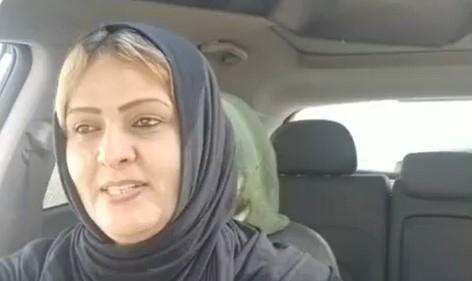
International media (here CNN) reported on 11 November 2020 on the killing of prominent Libyan lawyer and women’s rights activist Hanan al-Barassi, who was gunned down by armed men Tuesday in the eastern city of Benghazi. Her killing in Benghazi, which falls under the control of the Libyan National Army (LNA), came just a day after she shared comments on social media criticizing the son of renegade military general and LNA leader Khalifa Haftar. “The assassination of human rights defenders and opinion-holders and the silencing of voices is a heinous crime and a disgraceful form of tyranny and a desperate attempt to destroy hope for the establishment of a civil and democratic state,” Libya’s Interior Minister, Fathi Bashagha, tweeted Tuesday.
According to the United Nations Support Mission in Libya (UNSMIL), al-Barassi — whom the mission describes as a “vocal critic of corruption, abuse of power and human rights violations” — was shot “in broad daylight” by unidentified armed men. “Her tragic death illustrates the threats faced by Libyan women as they dare to speak out,” UNSMIL added. In videos posted publicly on her Facebook page, al-Barassi expressed criticism of figures loyal to the LNA. In a livestream shared on Monday, just a day before her killing, al-Barassi said she would not be silenced by threats. “I won’t surrender, only with bullets will I ever surrender — if I die, so be it. Only in death will I be silenced. Tomorrow I will have several surprises [to share], several surprises,” she told viewers. The LNA has not yet responded to a CNN request for comment on al-Barassi’s death.
Elham Saudi, the director of Lawyers for Justice in Libya, an organization which seeks to defend and promote human rights in the conflict-ridden country, called the attack an “appalling and painful reminder of the reality on the ground” for women in Libya. “With no accountability, violators will continue to get away with literal murder in broad daylight,” she added.Al-Barassi’s killing follows a series of attacks against those critical of forces aligned to the LNA.
In 2019, one of Libya’s most prominent female politicians and a vocal critic of Haftar, Seham Sergewa, was abducted from her home in Benghazi by a militia group loyal to the LNA; while an investigation was launched into her abduction, she has yet to be found. [see also: https://humanrightsdefenders.blog/2016/06/28/two-years-after-murder-of-salwa-bugaighis-in-libya-still-no-investigation/]
“The killing of an outspoken lawyer in broad daylight in Benghazi will send chills through activists across the region,” said Hanan Salah, senior Libya researcher at Human Rights Watch. “This brutal killing smacks of a cold-blooded execution. The only way to end this cycle of violence is if authorities hold criminals to account for these terrible acts.”
https://edition.cnn.com/2020/11/11/africa/libya-lawyer-rights-activist-killed-intl/index.html
https://www.hrw.org/news/2020/11/11/libya-outspoken-benghazi-lawyer-murdered
What limits for NGOs in the decentralisation of human rights infrastructure?
November 11, 2020Ravindran Daniel, in Open Global Rights of 10 November 2020 published a piece that should interest anybody who wrestles with the issue of how to ‘decentralise’ the international human rights movement. In “What are the implications of International Human Rights NGOs moving to the South?” Daniel – who is a human rights lawyer from India, served as director of the Human Rights Division with the UN peacekeeping missions in East Timor, Libya and the Sudan and established the Asian Forum for Human Rights and Development – takes the recent closure of AI India as the starting point for a wider discussion of the structural problems that come up in trying to realise the ‘democratization of the global human rights movement”. [see also: https://humanrightsdefenders.blog/2020/09/29/amnesty-feels-forced-to-shut-sown-its-india-office-amidst-govenment-pressure/]
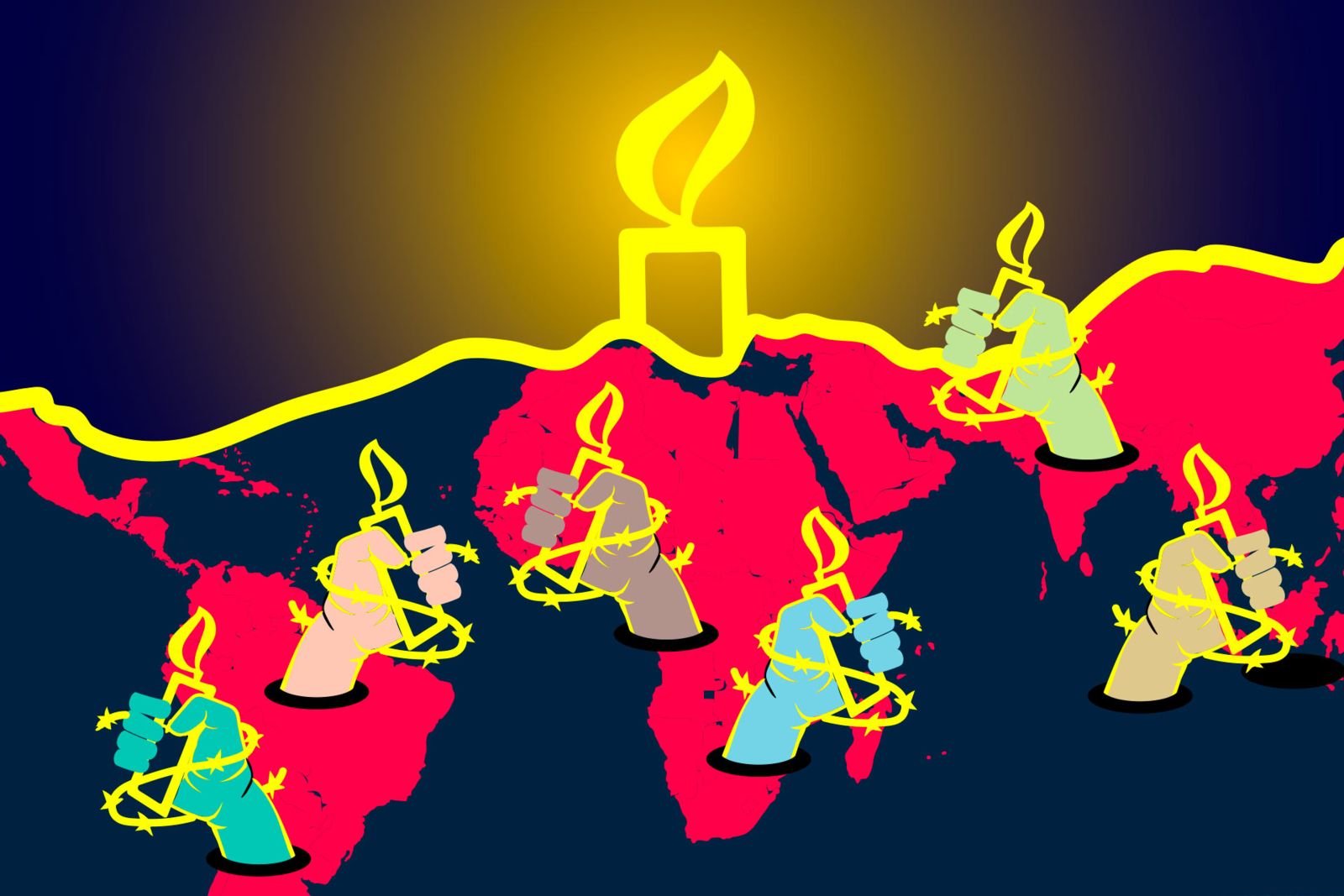
..The closure of Amnesty International’s India office raises questions about AI’s global strategy and the democratization of the global human rights movement. AI’s India office was part of the AI’s 2010 Global Transition Program (GTP) which aimed at restructuring the organization by reducing its London office operations and transferring them to regional hubs in various parts of the world. New forms of national offices were set up in India, Brazil, South Africa, Kenya, Nigeria, and Indonesia. The aim was also to make AI a truly global movement and raise funds from the Global South and not depend entirely on funds from the Global North. Donors such as the Ford Foundation and the Open Society Foundation funded AI’s move to the South which was seen as strengthening mobilization from local to international levels and increased contact with human rights defenders and civil society actors.
However, it also raised some questions for both AI and the global human rights movement.
When opening its office in India in 2012, AI may not have foreseen the assumption of power by an illiberal government in 2014; although it must have known the risks involved in other countries. When AI rolled out its GTP program in 2010, was it unrealistically optimistic, particularly when the global support for human rights in the West was rapidly declining? The optimism about emerging powers such as India, Brazil, and South Africa had waned and several illiberal governments had become powerful in the global system. It could not have waited for an opportune time since governments of various hues always challenge human rights organizations to function freely. The fact remains that human rights offices, national or international, face reprisals by governments and AI should have foreseen it when it established its India office under the GTP program. The question remains: was the cost including the consequences for those associated with AI India worth the risk?
However, the question is: given its tradition of safeguarding its members from bias and reprisals, what steps did it take to prevent reprisals for its members and supporters of national offices? Since 2001, AI abandoned its “own country rule” under which AI members were barred from working on cases in their own countries. It was a self-imposed limitation to safeguard members against potential problems from their own governments but also to stress the importance of solidarity in human rights work.
The closure of the Indian office raises the value of “own country rule” which would have possibly prevented the Indian government from taking the extraordinary step of closing the AI’s office. The Indian Government is alleging money laundering, which would entail conducting investigations against all those who contributed to AI India putting a large number of its supporters at risk.
Was the cost including the consequences for those associated with AI India worth the risk?
Moreover, the aim of the “own country rule” was to prevent AI’s local chapters from becoming just another local human rights organization with international links. In the case of the AI India office, its links to its parent organization seemed to have impeded its functioning. For example, in November 2019, Indian police raided the AI India office after the parent organization testified before the US Congress on the situation in Jammu and Kashmir.
The closure of the AI’s India office has implications for the global human rights movement as well. An evaluation of the Ford Foundation’s Strengthening Human Rights Worldwide Global Initiative (SHRW), under which the foundation funded AI to move to the South, raised the following issues: how to differentiate between the roles played by national and international NGOs; if these roles could be construed as the imperial expansion of Northern-based groups?; if such moves help or reduce the voice of local groups and communities;and if international NGOs have an advantage over national NGOs in garnering a larger share of resources due to a concentration of “cultural capital” (“knowledge and access to global governance institutions”) among NGOs based in the North?
The ecology of the human rights movement began changing in the 80s and the SHRW review captures it. In this changed context, AI’s efforts to be closer to the ground happened at an ill-advised time when strong NGOs had emerged in the South and were increasingly challenging the traditional human rights ecology. While based in the North, AI was functioning as a global movement with some of the corresponding limitations, such as authoritarian governments accusing it of being a Western organization. AI, instead of building from its strength, seemed to have pursued a naïve goal of expanding in the field at a wrong time for the wrong reasons.
Nevertheless, the global human rights movement must condemn the Indian government’s actions against the AI India office. It must campaign for withdrawing all the cases and restoring the office. It should also examine the lessons learned from democratizing the movement in the last two decades, including strengthening the role and voices of NGOs in the South. AI on its part should re-examine its GTP’s assumptions considering the developments of the last two decades. A 2017 evaluation of the GTP commissioned by AI recommended the need for a “new narrative” that “…goes beyond moving closer to the ground, beyond the distribution of Amnesty International Secretariat (IS) and to the distribution of Amnesty as a movement… (making all) regions vibrant communities for public campaigning”.
 Hans Thoolen on Human Rights Defenders and their awards