Archive for the 'organisations' Category

FIFA Broke Human Rights Rules: Saudi Arabia Shouldn’t be Rewarded for Its Repression

November 6, 2023

On 27 October, 2023 Human Rights Watch stated that FIFA has broken its own human rights rules in announcing a plan for hosting the next two men’s World Cups that effectively eliminates bidding and human rights due diligence.

Within hours after FIFA published its arrangements for the 2030World Cup, Saudi Arabia announced its ambitions to host the 2034 World Cup.  

Barely a year after the human rights catastrophes of the 2022 Qatar World Cup, FIFA has failed to learn the lesson that awarding multi-billion dollar events without due diligence and transparency can risk corruption and major human rights abuses,” said Minky Worden, director of global initiatives at Human Rights Watch “The possibility that FIFA could award Saudi Arabia the 2034 World Cup despite its appalling human rights record and closed door to any monitoring exposes FIFA’s commitments to human rights as a sham.” 

In February 2023, Human Rights Watch contacted FIFA to request details on its due diligence and stakeholder consultation for selection of future World Cup hosts and awarding commercial sponsorship contracts. FIFA has not responded.

Because of regional rotation requirements, the six-country 2030 World Cup means that FIFA will only accept bids from Asia or Oceania for 2034, opening the way for Saudi Arabia to be the host. FIFA instead needs to keep open bidding for the 2034 World Cup and apply the same human rights benchmarks to all bidders in advance of selection, Human Rights Watch said.

FIFA’s Human Rights Policy, adopted in 2017, outlines its responsibility to identify and address adverse human rights impacts of its operations, including taking adequate measures to prevent and mitigate human rights abuses. Article 7 of FIFA’s Human Rights Policy states that “FIFA will constructively engage with relevant authorities and other stakeholders and make every effort to uphold its international human rights responsibilities.” This should include consulting a wide range of stakeholders, including potentially affected groups, domestic human rights monitors, athletes, fans, migrant laborers, and unions, before making major hosting decisions. [see also: https://humanrightsdefenders.blog/2022/04/17/fifa-world-cup-the-human-rights-plans-of-host-cities/]

Under FIFA’s human rights policies, countries bidding to host games must commit to strict human rights and labor standards. In the introduction to FIFA’s “Key Principles of the Reformed Bidding Process,” FIFA President Gianni Infantino writes: “Whoever ends up hosting the FIFA World Cup must …formally commit to conducting their activities based on sustainable event management principles and to respecting international human rights and labour standards according to the United Nations’ Guiding Principles.” 

FIFA has so far failed to apply these principles in the award of the 2030 and 2034 World Cups. 

In June, FIFA cancelled its planned announcement about the bidding process for the 2030 World Cup, instead announcing that:

in line with the principle of confederation rotation and of securing the best possible hosting conditions for the tournaments, the bidding processes for both the 2030 and 2034 editions would be conducted concurrently, with FIFA member associations from the territories of the Asian Football Confederations and the Oceania Football Confederation invited to bid to host the FIFA World Cup 2034

FIFA’s Overview of the Bidding Processes document sets a deadline for any member associations to confirm bidding by October 31, 2023, an unreasonably tight deadline for the 2034 World Cup 11 years away that should include national stakeholder consultation and could ultimately cost billions of dollars. Saudi Arabia’s appalling human rights record has deteriorated under Crown Prince Mohammed Bin Salman’s rule, including mass executions, continued repression of women’s rights under its male guardianship system, and the killing of hundreds of migrants at the Saudi-Yemen border. Torture and imprisonment of peaceful critics of the government continues, and courts imposed decades-long imprisonment on Saudi women for tweets. Sex outside marriage, including same-sex relations, is a crime, with punishments including death. Lesbian, gay, bisexual and transgender (LGBT) people in Saudi Arabia practice extreme self-censorship to survive their daily lives. LGBT players and fans visiting Saudi Arabia could face censorship, stigma, and discrimination on the basis on their sexual orientation and gender identity. See e.g.: https://humanrightsdefenders.blog/tag/saudi-arabia/]

Independent human rights monitors, journalists, women’s rights activists, and other peaceful critics are jailed, under house arrest, and cannot safely work in Saudi Arabia. Saudi Arabia has severe restrictions on journalists and free expression, a basic requirement for World Cup hosts, Human Rights watch said. In October 2018, Saudi agents murdered and dismembered the Washington Post columnist Jamal Khashoggi, who had been critical of the Saudi government, an assassination apparently approved by the crown prince himself.

In Saudi Arabia, independent human rights monitoring is not possible due to government repression. This makes it effectively impossible for FIFA to carry out the ongoing monitoring and inspection of human rights its human rights policy requires,” Worden said. 

While welcoming the Saudi bid to host the World Cup in 2034, FIFA has not said anything about how it proposes to assess its human rights conditions.

“With Saudi Arabia’s estimated 13.4 million migrant workers, inadequate labor and heat protections and no unions, no independent human rights monitors, and no press freedom, there is every reason to fear for the lives of those who would build and service stadiums, transit, hotels, and other hosting infrastructure in Saudi Arabia,” Worden said.

“FIFA is failing in its responsibility to the world of football to conduct World Cup bidding and selection procedures in an ethical, transparent, objective, and unbiased way,” Worden said. “If there’s to be any integrity in what remains of this process, FIFA needs to immediately delay and open the bidding process for the 2034 World Cup, make public its labor, human rights, and environment policies, and then make sure protections are fully carried out.”

https://www.hrw.org/news/2023/10/27/fifa-broke-own-human-rights-rules-world-cup-hosts
https://www.forbes.com/sites/minkyworden/2023/11/02/rights-at-risk-as-saudi-arabia-sole-bidder-to-host-2034-world-cup/?sh=394e4fb123de

https://www.ft.com/content/7f86882f-6cc6-4259-9520-6fa07e9669be?segmentId=3f81fe28-ba5d-8a93-616e-4859191fabd8

40 years of HURIDOCS: a bit of history

November 6, 2023

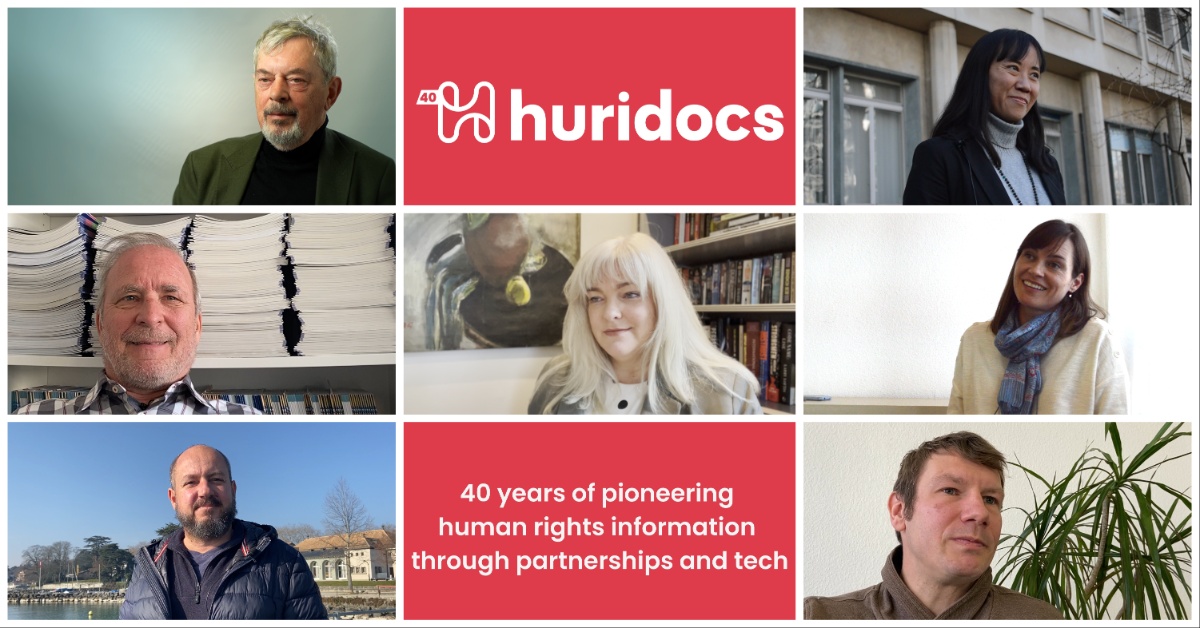
Join in exploring the vital role the NGO HURIDOCS plays in shaping the landscape of human rights today. Hear from past and present directors, board chair and senior documentalist about our ongoing impact (admittedly including my good self).

As HURIDOCS celebrates 40 years of commitment to human rights, it shared a video which is not only a retrospective, but a testament to its ongoing role and impact in the world of human rights information.

In this video, the HURIDOCS team sat down with individuals who have been instrumental in shaping HURIDOCS throughout its history. This includes our co-founder, our senior documentalist, a dedicated board member, and past and present directors, all sharing their unique insights.

“Information has always been the key to human rights work and that is still the case. Being organised, sharp, learning from our history and not being afraid to go into the future fighting for truth, justice and human rights with all of the tools that are available to us. That is the civil society we want to see, that is the civil society we want to support!”

Danna Ingleton, HURIDOCS Executive Director

https://www.youtube-nocookie.com/embed/8UArMYSaMx8

Find out more about HURIDOCS’ history here. See also: https://humanrightsdefenders.blog/category/organisations/huridocs/

EU observes International Day to End Impunity for Crimes against Journalists:

November 2, 2023

Ahead of the International Day to End Impunity for Crimes against Journalists on 2 November, and in the year that marks the 75th anniversary of the Universal Declaration of Human Rights, High Representative Josep Borrell and Vice-President Věra Jourová issued the following statement:

“In these difficult times, marred by wars*, conflict and terrorist acts, we recall and praise the essential role played by journalists and media workers in fighting for the truth and for human rights. Journalists contribute to counter disinformation and hate speech and to keep checks and balances on governments and public institutions. They shed light on war crimes and human rights violations, sometimes at the risk of their own lives.

We firmly condemn the killings, physical attacks, arbitrary detentions, online and offline intimidation, harassment, and surveillance, that journalists at times face while exercising their profession. Media worldwide continue to be raided or closed, and journalists are increasingly targeted by legislation that curtails freedom of expression, and by abusive litigation, thus limiting pluralism, editorial independence, and infringing freedom of expression.

The EU remains committed to support independent journalists and media workers everywhere. We will continue to mobilise all the diplomatic tools at our disposal to raise attention to individual cases of journalists in detention or at risk. We have also established ProtectDefenders.eu to provide journalists at high risk with physical and digital protection, legal support, and relocation.

Under the Global Europe Human Rights and Democracy programme, the EU provides €185 million for support to independent media, harnessing digitalisation worldwide.

Protecting journalists means protecting our own rights. Democracy cannot work without free and independent media. This is why the EU is also taking unprecedented steps at home to protect journalists.

We call on Member States to implement the Commission Recommendation on the safety of journalists. The proposal for a Media Freedom Act aims to safeguard their independence and media pluralism. The Commission also took action to fight strategic lawsuits against public participation, which put pressure on journalists and want to silence them. These legislative proposals should be adopted swiftly to improve the environment in which journalists and media operate and to set global standards. See also: https://humanrightsdefenders.blog/2023/07/02/eu-directives-for-slapps-and-media-freedom-being-weakened-european-parliament-should-come-to-the-rescue/

The European Union stands with journalists around the world who, each and every day, exercise their freedom of expression for the benefit of us all.”

https://ec.europa.eu/commission/presscorner/detail/de/statement_23_5447

Not the moment for Switzerland to Suspend Funding for Human Rights Defenders in Israel and Palestine

November 2, 2023

On 1 November 2023 Erin Kilbride for Human Rights Watch wrote critically about a rather weird decision by the Swiss Government namely to suspend funding to 11 respected human rights organizations in Israel and Palestine.

The Swiss government says it plans to “carry out a fresh, in-depth analysis of all financial flows” and assess the “relevance and feasibility of programmes.” Earlier this month, European governments suspended more than $150 million in development aid, as Israel cut access to food, water, electricity, fuel, and medicines to more than 2.2 million people in Gaza, an act of collective punishment, which is a war crime under international humanitarian law.

The affected groups are: Adalah; Al-Shabaka; Gisha; 7amleh; Hamoked; Jerusalem Legal Aid and Human Rights Centre; MIFTAH: The Palestinian Initiative for the Promotion of Global Dialogue and Democracy; Palestinian Center for Human Rights; the Palestinian NGO Network; Physicians for Human Rights, and Women’s Center for Legal Aid and Counselling.

The West Bank, home to several organizations whose funding has been suspended, has seen a significant spike in Palestinians killed or held in administrative detention without charge or trial.

International support for local human rights defenders is a clear way to support protecting rights, documenting atrocities, and securing justice.

Switzerland made unequivocal commitments to stand with defenders in the Swiss Guidelines on the Protection of Human Rights Defenders (2014, revised 2019), the EU Guidelines on Human Rights Defenders (2008), and the OSCE Guidelines on the Protection of Human Rights Defenders (2014). This decision is hard to reconcile with those commitments.

The Swiss guidelines instruct representatives to support defenders’ security through media work, emergency protection programs, and pushing for investigations into attacks. The EU Guidelines provide, “the EU’s objective is to influence third countries to carry out their obligations to respect the rights of human rights defenders and to protect them from attacks and threats.”

Today, the work of Israeli and Palestinian human rights defenders is more critical than ever. Instead of leaving them in limbo, the Swiss government should maintain its funding of defenders while it conducts its review.

https://www.hrw.org/news/2023/11/01/switzerland-decides-suspend-funding-rights-defenders-israel-palestine

see also: https://www.nytimes.com/2023/11/02/opinion/israel-free-speech-hamas-palestine.html

Write for Rights: Global letter writing campaign 2023 started

November 2, 2023

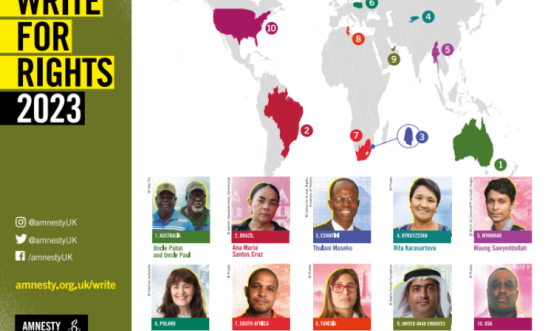
Amnesty International launched its flagship Write for Rights campaign to help people facing human rights abuses around the world. Millions of letters and emails will be sent to support these individuals and urge authorities to end injustices. While sending a letter may seem like a small gesture for any single one of us, the collective action of many of us has the potential to transform lives’ said Sacha Deshmukh, Chief Executive of Amnesty International UK.

Taking place across November and December, Write for Rights will see people around the world send millions of cards, emails and social media posts of solidarity to individuals whose fundamental rights are being threatened or denied, while urging those in power to put a halt to the abuses.

This year, the global Write for Rights campaign will focus on 10 cases of individuals and communities from across the world who are facing human rights violations, including:

  • Rocky Myers, a Black man, has been on death row in Alabama, USA, since 1994. A nearly all-white jury convicted and sentenced him to life without the possibility of parole for the murder of his white neighbour. The trial judge overrode their decision and imposed a death sentence – a practice now outlawed in Alabama. No evidence linked Rocky to the murder, except for a VCR stolen from the victim, which he maintains he had found abandoned in the street. In 2018, Rocky and others on death row were given 30 days to choose if they wanted to die by nitrogen gas asphyxiation or by amended lethal injection protocols. Rocky chose the former, and his execution could be reset as soon as the new protocol for execution by nitrogen gas asphyxiation is finalised and ready to be implemented, which is expected by the end of this year.
  • Rita Karasartova, a Kyrgyzstan-based human rights defender who works for the Institute of Civic Analysis – a human rights organisation and think-tank. Rita was arrested in October 2022 for joining group of activists who objected to a border demarcation agreement with Uzbekistan. After the group called for a public assembly and formed a committee to oppose the agreement, Rita and others were charged with attempting to violently overthrow the government, which carries a maximum sentence of 15 years imprisonment. Rita is now under house arrest and a strict curfew.
  • Ahmed Mansoor is a human rights defender and previously won the prestigious Martin Ennals Award for Human Rights Defenders in 2015. Ahmed has documented human rights abuses in the UAE since 2006, until he was arrested in early 2011 and March 2017, he was given a 10-year prison sentence. He has been held in solitary confinement since the beginning of his detention, and continues to be denied a mattress, access to books, and to be permitted to go out in a yard. See: https://humanrightsdefenders.blog/tag/ahmed-mansoor/ and https://www.trueheroesfilms.org/thedigest/laureates/074ACCD4-A327-4A21-B056-440C4C378A1A]
  • Justyna Wydrzyńska is a reproductive rights defender in Poland and is one of the co-founders of the Abortion Dream Team, an activist collective campaigning against abortion stigma and offering advice on accessing safe abortion in Poland, where abortion laws are among the most restrictive in Europe. In March 2023 Justyna was convicted to 8 months’ community service for helping a pregnant woman to access abortion pills in Poland, setting a dangerous precedent in a country where abortion is almost completely banned.

Amnesty International’s Write for Rights campaign dates back to the origins of Amnesty International in 1961. In the organisation’s early days, Amnesty campaigners wrote letters of support to individuals facing human rights violations. Now, Write for Rights is Amnesty’s flagship campaign, running every year to raise awareness about individuals whose rights are being seriously threatened.

Last year’s Write for Rights saw:

  • Over 5.3 million actions worldwide – of which at least 234,801 letters and cards were solidarity actions.
  • Letters were sent from around the world, from Zimbabwe to Hong Kong.
  • Amnesty’s International Secretariat digitally collected almost double the number of digital actions from 2021.

For 2021 see: https://humanrightsdefenders.blog/2021/11/08/write-for-rights-2021-launched/

https://www.amnesty.org.uk/press-releases/write-rights-global-letter-writing-movement-stands-victims-human-rights-abuses

Call for nominations of the 2024 Front Line Defenders Award for human rights defenders

November 2, 2023

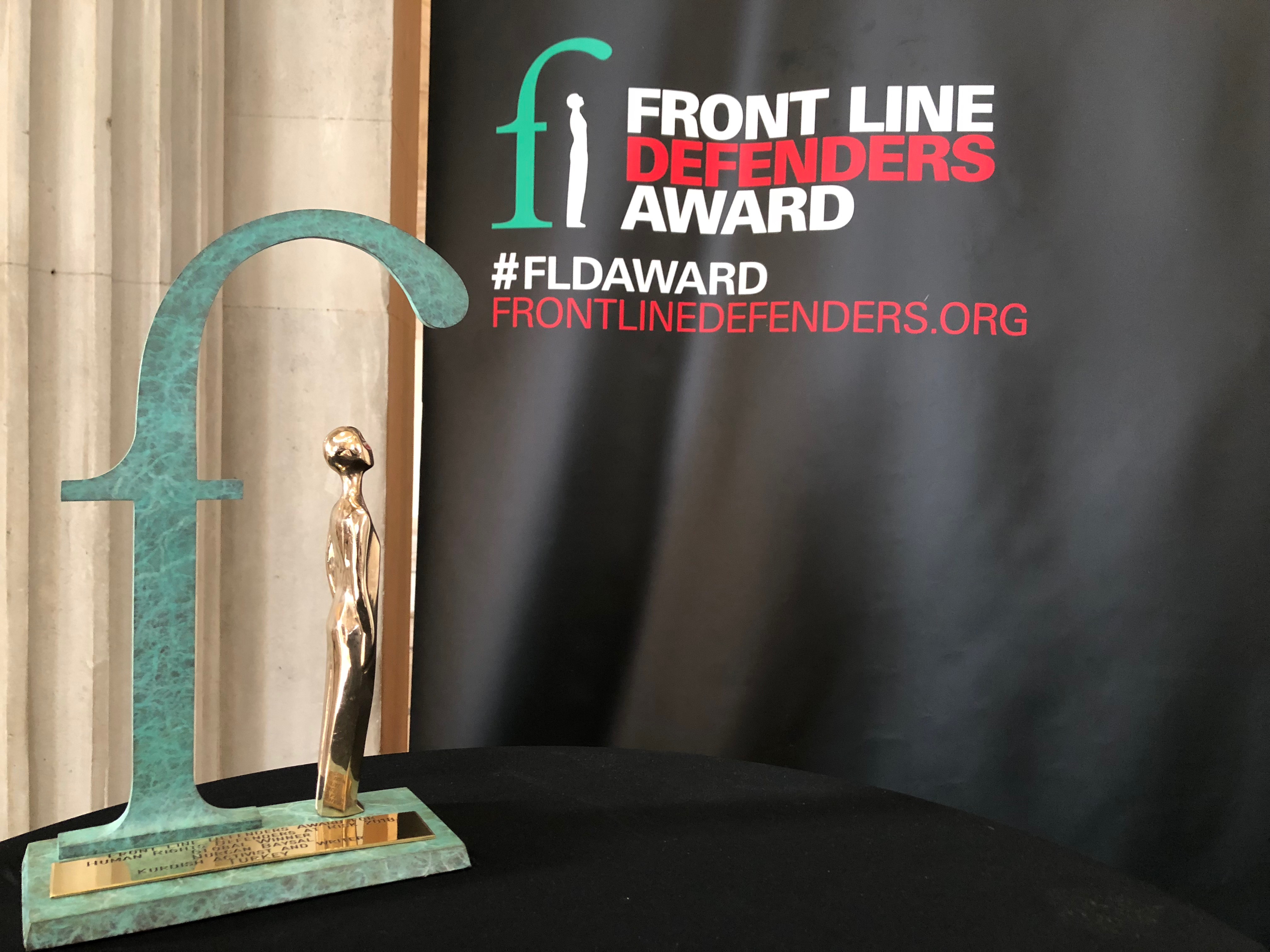
Front Line Defenders is currently accepting nominations for the 2024 Front Line Defenders Award for Human Rights Defenders at Risk:

award banner

For more on the annual Front Line Defenders Award and its laureates see: https://www.trueheroesfilms.org/thedigest/awards/2E90A0F4-6DFE-497B-8C08-56F4E831B47D

For each region of the world (Africa; Americas; Asia-Pacific; Europe & Central Asia; and Middle East & North Africa) there will be one winner selected and Front Line Defenders will recognize all five as the 2024 Front Line Defenders Award Laureates.

The nomination process is open for anyone to submit a nomination of a human rights defender, collective, organisation or community working on any human rights issue and facing significant risk due to their work or operating in an environment that itself is characterised as insecure. The purpose of the Award is to give visibility to HRDs who are not normally acknowledged or recognised at the international level. At the same time, the Award should not bring additional risk for which the HRD is not prepared. In addition to the Award, winners will receive:

  • a modest financial prize;
  • a security grant to improve their security measures;
  • collaboration with Front Line Defenders for media work in recognition of the Award;
  • advocacy by Front Line Defenders related to the Award and the work of the winners;
  • an event co-organized by the HRD, local partners and Front Line Defenders to give visibility to the Award in the winners’ countries (as determined and guided by the winners);
  • the Global Laureates will attend a ceremony in Dublin at a date to be determined;
  • ongoing security consultation with Front Line Defenders

For last year’s see:https://humanrightsdefenders.blog/2023/06/05/front-line-defenders-award-2023-goes-to-front-line-defenders/

If you would like to nominate a HRD for the 2024 Front Line Defenders Award for Human Rights Defenders at Risk, please follow this link to the secure online nomination form.

2024 Front Line Defenders Award – Nomination Form

https://www.frontlinedefenders.org/en/call-nominations-2024-front-line-defenders-award-human-rights-defenders-risk

Magomed Alamov’s life in Chechnya threatened

October 31, 2023

On 24 October 2023, human rights group Crew Against Torture reported that the Chechen Authorities had held Crew Against Torture member and Chechen human rights defender Magomed Alamov, and issued death threats. The authorities also threatened Magomed Alamov by threatening his family’s safety.

Magomed Alamov returned to the Chechen Republic after accompanying a young woman, who was a survivor of domestic, violence from Russia’s North Caucasus on 5 October 2023. Since his return, his colleagues have not been able to reach him.

Magomed Alamov is a human rights defender and lawyer of Chechen origin. Up until very recently, he has collaborated with the human rights group Crew Against Torture; an informal union of Russian lawyers who, individually, continue the work they used to do as a Russian-based human rights organisation “Committee Against Torture” (CAT). Following the listing of CAT as a foreign agent by Russian authorities on 10 June 2022, the organisation was forced to close its doors. Established in 2000, CAT was a prominent human rights organisation in Russia, investigating allegations of torture by state agents and representing victims of torture in the court system, including at the European Court of Human Rights. Human rights defenders who used to work with CAT were regularly subjected to defamation campaigns, physical attacks, detentions, and judicial persecution because of their peaceful human rights work.

On 5 October 2023, at the request of the human rights organisation ‘North Caucasus: SOS’, Magomed Alamov accompanied a survivor of domestic violence from Ingushetia to a safehouse. On 11 October 2023, the human rights defender started to receive phone calls from the General Administration for Combating Extremism (Centre E). The caller demanded that Magomed Alamov present himself for questioning in relation to his involvement in the alleged disappearance of the aforementioned survivor. In the absence of a subpoena, the human rights defender refused to present himself.

On 13 October, Chechen law enforcement officers unlawfully detained the human rights defender’s brother, at the Special Police Regiment #2, where the authorities threatened him, and demanded him to get in touch with Magomed Alamov and to convince the human rights defender to return to the Chechen Republic. Fearing for his brother’s life, Magomed Alamov travelled to the Chechen Republic; his colleagues from Crew against Torture are unsure about his current whereabouts.

On 23 October2023, the survivor of domestic violence got in touch with her relatives in the Chechen Republic, and reported that Magomed Alamov was present at their house during the call. She reported that the human rights defender addressed her and said “I am at your house, surrounded by your relatives. My life and the life of my family is in danger. They gave me a week for you to return home. If you are not home in a week – they will kill me.” On 23 October 2023 the Crew against Torture filed complaints to the Ministry of Interior and to the Office of the Prosecutor General of the Russian Federation demanding protection for the human rights defender.

Front Line Defenders condemns the harassment and death threats against the human rigths defender and lawyer Magomed Alamov. The organisation believes he is being targeted for his peaceful and legitimate human rights work. Front Line Defenders reminds the Russian authorities that the Chechen Republic is a part of the Russian Federation, and calls upon them to end systemic harassment against human rights defenders in the North Caucasus. Front Line Defenders urges the Russian authorities to confirm the whereabouts of Magomed Alamov, and ensure his safety in the Chechen Republic, as well as elsewhere in the country.

https://www.frontlinedefenders.org/en/case/chechen-authorities-hold-human-rights-defender-magomed-alamov-promising-kill-him-5-days

Matiullah Wesa, Afghan human rights defender, released but what about the others?

October 30, 2023
FILE - Matiullah Wesa, a girls' education advocate, reads to students in the open area in Spin Boldak district in the southern Kandahar province of Afghanistan on May 21, 2022. The Taliban have freed the Afghan activist who campaigned for the education of girls, a local nonprofit organization said Thursday, Oct. 26, 2023. Wesa was arrested seven months ago and spent 215 days in prison, according to the group, Pen Path.
Matiullah Wesa, a girls’ education advocate, reads to students in the open area in Spin Boldak district in the southern Kandahar province of Afghanistan on May 21, 2022. Siddiqullah Khan/AP

On 26 October 2023 AP reported that the Taliban have freed an Afghan activist who campaigned for the education of girls. Matiullah Wesa was arrested seven months ago and spent 215 days in prison, according to the group, Pen Path.

The Special Rapporteur on Human Rights of the United Nations Human Rights Council, Rina Amiri,, has welcomed the release of Matiullah Wesa, the founder of the “Rah-e-Qalam” organization and an education activist, and has called for the freedom of all human rights defenders in Afghanistan. Richard Bennett, the Special Rapporteur on Human Rights of the United Nations, has requested the immediate and unconditional release of all individuals detained “arbitrarily for defending their rights and the rights of others.”

Ataullah Wesa, Matiullah’s brother, announced on his social media account that he had been released after 215 days. However, some human rights activists and well-known members of Afghan civil society remain in prison.

Amnesty International said that Wesa should never have been jailed for promoting girls’ rights to education.

The Taliban de-facto authorities must release human rights defenders and women protesters Rasool Parsi, Neda Parwani, Zholia Parsi and Manizha Sediqi and all others who are unfairly kept behind bars for standing up for equality and denouncing repression,” the rights group tweeted.

https://www.ourmidland.com/news/education/article/taliban-free-afghan-activist-arrested-7-months-18449253.php

https://www.ohchr.org/en/press-releases/2023/10/taliban-must-immediately-release-women-human-rights-defenders-say-un-experts

National Human Rights Institutions of Egypt and Bahrain fail the Paris Principles

October 30, 2023
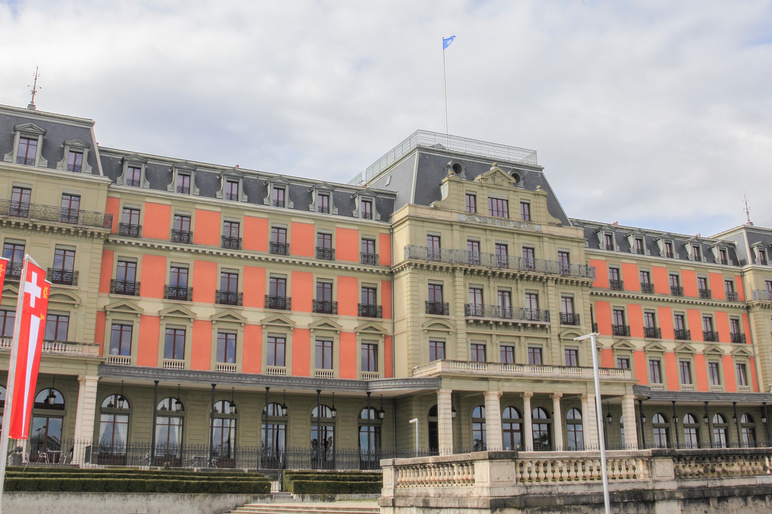
Palais Wilson shutterstock 1084789991

In a letter addressed to the Sub-Committee on Accreditation (SCA) of the Global Alliance of National Human Rights Institutions (GANHRI), civil society organisations, including the FIDH and the World Organisation Against Torture (OMCT), warn that Bahrain and Egypt do not comply with the Paris Principles, failing to respect the very pillars of these principles: pluralism, independence and effectiveness.

The undersigned civil society organisations believe that the two countries’ NHRIs have failed to comply with the Paris Principles and to implement recommendations outlined by the SCA’s previous reports in 2016 and 2018, respectively.

The Paris Principles define the minimal standards that NHRIs must abide by “in order to be considered credible and to operate effectively.” The pillars of these principles are pluralism, independence and effectiveness. NHRIs must be independent from the government, represent and cooperate with civil society, and effectively promote human rights by monitoring violations and addressing them. Based on civil society reports, the Bahraini and Egyptian NHRIs fall short of these standards.

In Bahrain, all the current members of the National Institution for Human Rights (NIHR) were appointed by King Hamad through a royal decree issued on 9 May 2021, and there is no democratic or independant mechanism through which these selections are made. The current Chairman of the NIHR, Ali al-Derazi, was reportedly implicated in abuses against migrant workers. Furthermore, the Vice-Chairperson of the NIHR, Mr. Khaled Abdulaziz Alshaer had previously called on those who criticised the Bahraini government to receive the death penalty.

In August 2022, the UN Committee on Economic, Social and Cultural Rights concluded that “[the NIHR] has not yet attained the independence required to perform its functions.” Previously in 2018, the UN Human Rights Committee had expressed similar concern and “[regretted] the lack of information on the complaints [the NIHR] has received and the investigations it has carried out in response to those complaints.”

In addition, Bahrain’s NIHR fails to address and outright denies the human rights abuses committed by the authorities, including arbitrary detention, ill-treatment and medical negligence in various detention facilities. This contradicts the UN Working Group on Arbitrary Detention’s findings regarding Abduljalil al-Singace, Abdulhadi al-Khawaja and Naji Fateel, three Bahraini human rights defenders who were arbitrarily detained, tortured, medically neglected and subjected to sham trials. [see also: https://humanrightsdefenders.blog/tag/bahrain/]

As for the Egyptian National Council for Human Rights (NCHR), it also lacks independence from the government. In 2021, new members of the NCHR were appointed for four years. The Chair, Ms. Moushira Khattab, and the Vice-President, Mr. Mahmoud Karem Mahmoud are both former Egyptian officials and diplomats. In both 2014 and 2018, Mahmoud was the coordinator of al-Sisi’s presidential campaign, which clearly demonstrates the NCHR’s close relationship with the executive.

In March 2023, the UN Human Rights Committee had echoed these concerns over the “lack of safeguards to ensure [the NCHR’s] full independence and effectiveness”, as well as over “the lack of information provided on the effective implementation of its recommendations.”

The NCHR has left hundreds of complaints unanswered and blatantly denies that certain human rights abuses are being committed. In 2020, the Council stated that findings of the UN Committee against Torture, according to which torture was “systematic” in Egypt, were a “politicized categorization” seeking to “undermine the efforts of the government”. The NCHR has also remained silent on prominent human rights issues such as the practice of enforced disappearance or the dire conditions of detention. In July 2023, the Council’s president compared a new correctional facility in Wadi al-Natroun to a “5-star hotel”. We believe that the Egyptian NCHR is far from acting as a NHRI with “A” status, which it has worryingly been granted since 2006 by the SCA. [see also: https://humanrightsdefenders.blog/tag/egypt/]

In light of the above, it is clear that the NHRIs of Bahrain and Egypt have consistently failed to comply with the Paris Principles and to implement the SCA’s recommendations.

We urge you to consider the aforementioned shortcomings of Bahrain and Egypt’s NHRIs when reviewing them during your upcoming session, and to not grant them status “A”.

Signatories:

  • Bahrain Institute for Rights and Democracy (BIRD)
  • CIVICUS
  • Democracy for the Arab World Now (DAWN)
  • Egyptian Commission for Rights and Freedoms
  • Egyptian Front for Human Rights (EFHR)
  • El Nadeem against Violence and Torture
  • Human Rights Foundation (HRF)
  • HuMENA for Human Rights and Civic Engagement
  • International Federation for Human Rights (FIDH) – within the framework of the Observatory for the Protection of Human Rights Defenders
  • International Service for Human Rights (ISHR)
  • Law and Democracy Support Foundation (LDSF)
  • MENA Rights Group
  • Rights Realization Centre (UK)
  • Salam for Democracy and Human Rights (SALAM DHR)
  • The #FreeAlKhawaja Campaign
  • The Freedom Initiative (FI)
  • World Organisation Against Torture (OMCT) – within the framework of the Observatory for the Protection of Human Rights Defenders

https://www.omct.org/en/resources/statements/bahrain-and-egypts-national-human-rights-institutions-do-not-comply-with-the-paris-principles

Death threats against Ecuadorian human rights defender Javier Medardo Feijoo Villa

October 22, 2023

On 20 October 2023 Front Line Defenders wrote that between 2 October 2023 and 16 October 2023, human rights defender Javier Medardo Feijoo Villa received several death threats via phone calls and voice messages towards both him and his family. The unidentified perpetrators claimed that they were keeping the human rights defender under surveillance, and maintained that they had access to his data and aware of all his moves within the community.l

Javier Medardo Feijoo Villa is the president of the Estero Piedras community, located in the coastal area of the Molleturo on Azuay province. This community is also part of the San Felipe de Molleturo Commune, an ancestral territory that has been of great importance to the region, given that it has fought to defend against attempts by transnational mining companies to dispossess the people in the region of their land and water sources. He is also president of the North Zone Road Committee, which represents 15 communities in the region. As a community leader, the human rights defender has sought support from the competent authorities to stop criminal acts and illicit activities, mainly assaults and robberies caused by criminal groups that threaten the area. Javier has played an important role in the defence of water, nature and the territories belonging to the communities who he represents.

Since 2 October 2023, human rights defender Javier Medardo Feijoo Villa has been the target of several death threats. Over the course of two weeks, he has received calls and voice messages threatening to kill him and his family. The callers claimed to be keeping the human rights defender under surveillance, and maintained that they had access to his data, as well as all his moves. The level of violence articulated in these threats increased over the weeks, causing the human rights defender to stop responding to messages or calls altogether, and provoking him to block the numbers of those who called him. The threats continued up until 16 October 2023. The human rights defender has been filing relevant complaints with the Prosecutor’s Office about the recent threats and has requested that the Police Commander of Zone 6 take the necessary measures protect him and his family.

Violence against human rights defenders working on indigenous, land and environmental rights has been on the rise in Ecuador; human rights defenders Andrés Durazno and Alba Bermeo were murdered in 2021 and 2022 respectively. Still to this day no one has been charged with their murder.

https://www.frontlinedefenders.org/en/case/ecuador-death-threats-against-human-rights-defender-and-community-leader-javier-medardo-feijoo