Wednesday 19 June 2024 from 1:00 pm- 2:00 pm CEST there will be a HRC56 Side Event for the launch of the Declaration+25, a civil society-led authoritative document endorsed by experts that supplements the UN Declaration on Human Rights Defenders and sets standards to protect them.
Palais des Nations Room XXV Geneva. This in-person event will be moderated by ISHR on behalf of a Secretariat of 18 organisations, and include a panel of exceptional human rights defenders.
In a new report of 6 June 2024, the Amnesty International insists the world governing body “must terminate any agreement to host the tournament if human rights are jeopardised or violated“.
Last year Fifa confirmed Spain, Portugal and Morocco will be co-hosts in 2030, with the opening three matches taking place in Uruguay, Argentina and Paraguay. Saudi Arabia is the sole bidder for the 2034 tournament. Amnesty says the Gulf kingdom has an “appalling human rights record and its bid carries a broad range of very serious risks”.
But it also warns the 2030 tournament “carries human rights risks primarily related to labour rights, discrimination, freedom of expression and assembly, policing, privacy and housing”. It adds that greenhouse gas emissions generated by travel related to the expanded 48-team tournament across three continents “are likely to be significant, despite Fifa’s stated commitment on climate change to halve carbon emissions by 2030 and be ‘net-zero’ by 2040”.
Amnesty claims Fifa has not responded to its requests to speak to consultants involved in human rights-based assessments of the bids.
Fifa has been approached for comment. It is set to formally confirm the hosts of the two tournaments later this year at a meeting of its congress. When unveiling its choices for hosting the World Cups, it said it was “fully committed” to ensuring the competitions were held to “sustainable event management standards and practices, safeguarding principles for the protection of children and adults at risk and to respecting internationally-recognised human rights in accordance with the United Nations Guiding Principles on Business and Human Rights”.
It has also said it will “conduct a targeted dialogue with bidders, to ensure complete, comprehensive bids are received and evaluated against the minimum hosting requirements….[It] will focus on the defined priority areas of the event vision and key metrics, infrastructure, services, commercial, and sustainability and human rights.”
Steve Cockburn, Amnesty’s Head of Labour Rights and Sports, said: “With only a single bid to host each tournament and major human rights concerns surrounding both, there are huge questions about Fifa’s willingness to stand by the pledges and reforms it has made in recent years, including exercising its right to reject any bid which does not meet its stated human rights requirements.
“History shows that the World Cup can be a source of dignity or exploitation, inclusion or discrimination, freedom or repression, making Fifa’s award of the hosting rights for the 2030 and 2034 tournaments among the most consequential decisions ever taken by a sporting organisation.”
Assessing the human rights risks related to the respective bids, Amnesty claims that in Spain, Morocco and Portugal “migrant workers are at risk of exploitation”, “excessive use of police forces is a proven risk” and “racial discrimination is an issue in all three countries”. It says an independent Fifa evaluation of Morocco’s previous bid – to host the 2026 World Cup – “noted its criminalisation of same-sex acts was particularly problematic” and that the country “restricts freedom of expression”.
It adds that “discrimination is deeply embedded in legislation and practices, and could impact fans, workers, players and journalists… women fans face the risk of unfair and disproportionate prosecution… and there have been sweeping arrests and imprisonment of journalists, human rights defenders, political activists.” Amnesty says reforms to prevent human rights violations related to the World Cup in Saudi Arabia would need “sweeping changes to labour laws to protect workers, and the release of activists and human rights defenders who’ve been unjustly imprisoned”.
Last year the Saudi Sports Minister rejected claims of ‘sportswashing’ and defended the country’s right to host the 2034 tournament, telling the BBC: “We’ve hosted more than 85 global events and we’ve delivered on the highest level. We want to attract the world through sports. Hopefully, by 2034, people will have an extraordinary World Cup.”
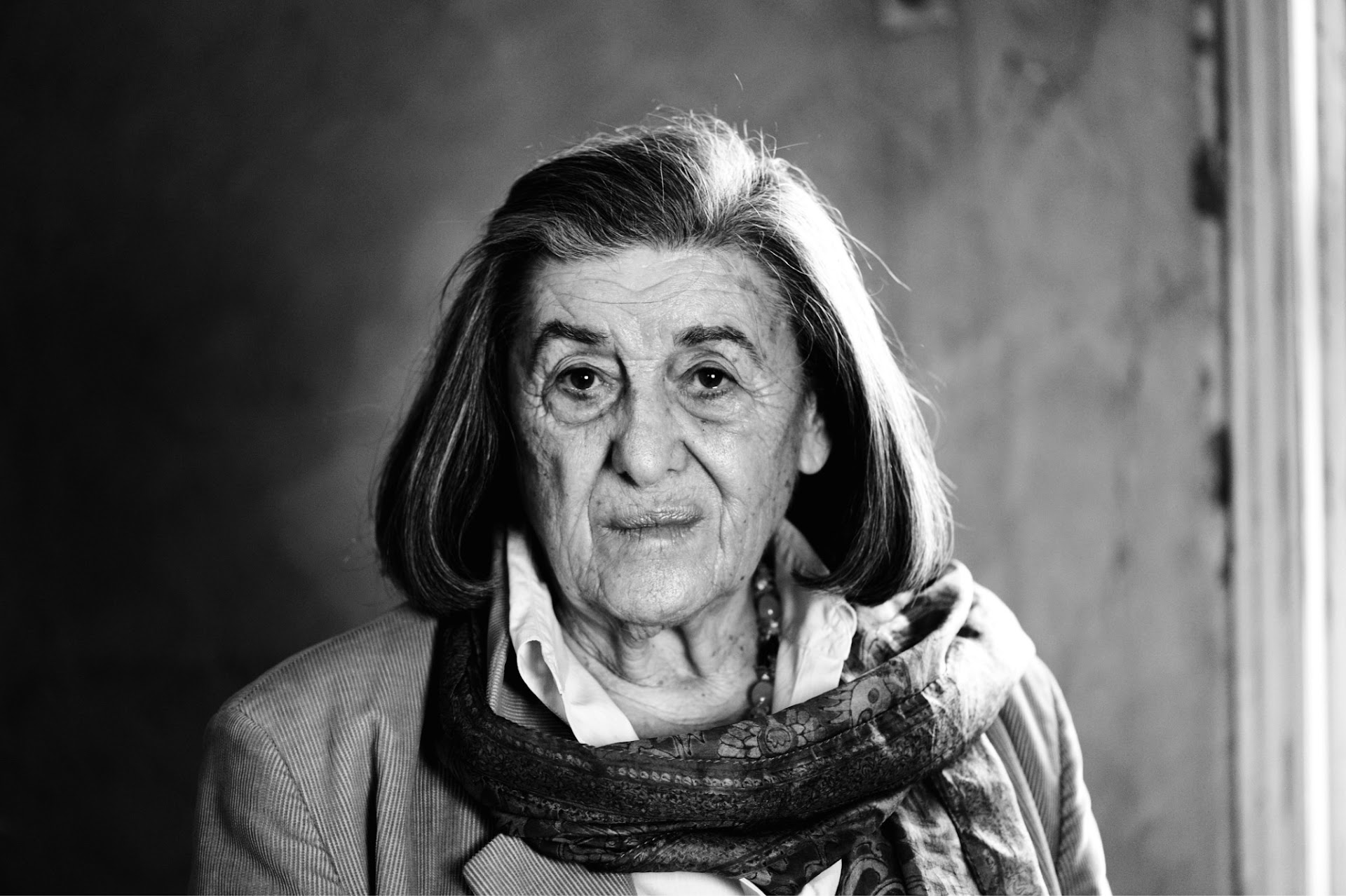
I am not a professional obituary writer, but I surely wished I were, as writing about my dear friend Leah Levin deserves the best possible skills. Fortunately, I received some excellent input from her caring family of which I am making good use. A celebration of Leah’s life will be held by the family on 13 June, 4 pm BST which can also be followed online.
Leah Levin, was a well-known figure in the international human rights movement of the 1970’s and onwards. She died of cardiac arrest on 25 May, 2024, at the formidable age of 98. For over half a century, she served and led a range of human rights organisations and collaborated globally with some of the world’s leading activists. For which she received an honorary doctorate from the University of Essex in 1992 and an OBE in 2001.
She was the author of UNESCO’s “Human Rights: Questions and Answers”, one of the world’s most widely disseminated books on human rights, (translated into more than 30 languages).
From 1982-1992, she was director of JUSTICE, a pioneering organisation that sought to right miscarriages of justice and which was a national section of the International Commission of Jurists . She served as a board member or trustee of the United Nations Association, the Anti-Slavery Society, International Alert, Redress, Readers International and The International Journal of Human Rights. But most of all, I remember her from the work she did to make sure that we would not forget one of our most impressive friends: Martin Ennals, who had led Amnesty from 1968 to 1980 and had been one of her closest friends until his death in 1981. [see his biography in the Encyclopedia of Human Rights, OUP, 2009, Vol 2, pp 135-138].
Frances D’Souza, said about Leah: “without any pretension she was nearly always right. She hit the nail on the head whether dealing with world affairs or people. She made a significant difference by her wise counsel and fact that she could really see what the issues were, read the situation and do something about it.”
Leah Levin had the special talent to draw other like-minded people to her and help coalesce a community of activists with whom she would collaborate throughout her entire life.
Her own life story is one of human rights struggle: Leah was born Sarah Leah Kacev on 1 April 1926 in Lithuania. She grew up as Leah Katzeff in Piketberg, South Africa, a small, rural town in Western Cape to where the family had to flee to escape poverty and anti-Semitism in the difficult years after the First World War and Russian revolution. Leah was the first of four children and the first person in her family to go to university. She graduated in 1945, when at the end of the second world war, the Katzeffs found out that their family along with their entire Jewish community in Mazeikiai, had been murdered by local Lithuanians organized by the Germans in the very first days of the Nazi advance in 1941.
In 1947 she married Archie Levin, fifteen years her senior. Like Leah, Archie was the child of European Jewish immigrants. Together they set up a new business, writing travel guides to Central and Southern Africa. In 1960, disgusted by the repression of anti-apartheid protest, the couple moved to the British colony of Southern Rhodesia (now Zimbabwe) with their two children Michal and Jeremy. A third son, David, was born in Salisbury (now Harare).
In Rhodesia, Leah completed a second degree in international relations at the University of Rhodesia and Nyasaland, while her husband became politically active. His activities angered those in power; shortly before Rhodesia unilaterally declared independence. Archie was tipped off that he was likely to be arrested. He rapidly left for the UK with his daughter Michal and later was joined by his son Jeremy; a few months later, Leah and her infant son David joined the rest of the family in the UK.
In London, Leah found a volunteer post as Secretary of the newly founded United Nations Association. The UNA human rights committee brought together people who became lifelong friends as well as colleagues: Martin Ennals, Sir Nigel Rodney, Amnesty’s first legal officer and later UN rapporteur on torture, and Kevin Boyle, who ran the Human Rights Centre of the University of Essex. After the death in 1977 of her husband Archie, Leah threw herself still more wholeheartedly into human rights work. In 1978, she took a job as Secretary of the Anti-Slavery Society, which connected her to the United Nations in Geneva. And in 1982 she moved to run JUSTICE for a decade. In 1992, she co-founded Redress, representing victims of torture to obtain justice and reparation for them.
Even when fully retired Leah continued to keep an active interest in children and grandchildren as well as her human rights “children”. I will bitterly miss her almost yearly phone calls to check on me to make sure I am doing the right thing.
On 23 May 2024 the IACHR Press Office (cidh-prensa@oas.org) informed us that the Inter-American Commission on Human Rights (IACHR) has issued Resolution 01/2024, recognizing national and international election monitors as human rights defenders based on the intrinsic connection between respecting and protecting human rights and defending democracy.
The Commission highlights the important role of election monitors for the defense of democracy and the rule of law. Through their activities, electoral observers stand up for civil and political rights including the rights to freedom of association, assembly, expression, access to information, equality before the law, and non-discrimination, as well as for the rights to a fair trial and to judicial protection.
The activities of election monitors help to protect the rights held in Article XX of the American Declaration of the Rights and Duties of Man and in Article 23 of the American Convention on Human Rights, both of which mention the right to vote and to be elected by universal suffrage in periodic elections.
In the case of national observers, election monitoring is a form of political participation and a way of exercising political rights by looking after, defending, and fostering the principles that should prevail in election processes, including transparency, certainty, legality, fairness, and universal suffrage by secret ballot among a plurality of political options.
The actions of electoral observers ultimately seek to ensure the integrity of election processes and therefore to preserve expressions of citizens’ sovereign will, which is one of the main tenets of representative democracy according to inter-American and international instruments for the protection of human rights.
In its resolution, the Commission acknowledges the importance of electoral observation missions. The IACHR calls on States to enable suitable conditions for independent and impartial election monitoring and to ensure that election monitors can do their work freely, without retaliation of any kind, and enjoy protection from any risks they may face as a result of their efforts.
On 3 June 2024, ISHR published Human rights defender’s story: Elham Kohistani, from Afghanistan
Elham Kohistani is a human rights defender from Afghanistan. Having witnessed successive governments trample human rights in her country since her childhood, she has dedicated her life to fighting for the basic rights of women and girls.
In an interview with ISHR, Elham spoke about her hopes for the future of Afghanistan, urging the international community to continue supporting human rights defenders in the long term to achieve peace and prosperity.
Stand in solidarity with Elham and other women human rights defenders (WHRDs) from Afghanistan: join us in our campaign to push for UN experts and States to explicitly and publicly recognise the situation in Afghanistan as a form of gender apartheid and the need for an accountability mechanism to address gross human rights violations against women.
On 31 May 2024, Front Line Defenders announced the five winners of its top distinction, the 2024 Award for Human Rights Defenders at Risk, at a special ceremony in Dublin this morning. Laureates from each of the major global regions travelled to Ireland to accept the Award, including:
Africa: Gamito dos Santos Carlos of AJOPAZ, the Youth Association for Peace (Mozambique)
Americas: The Trans women collective Muñecas de Arcoíris (Honduras), represented by Jennifer Bexara Córdova
Asia and the Pacific: Sammi Deen Baloch of the Voice for Baloch Missing Persons (Balochistan, Pakistan)
Europe and Central Asia: Doros Polykarpou of KISA (Cyprus)
Middle East and North Africa: We Are Not Numbers (Gaza, Palestine), represented by Ahmed Alnaouq
“Given the immensity of the challenges we face and the adverse forces working against human rights in many parts of the world, it might seem tempting to lose hope that a better world is even possible,” said Alan Glasgow, Executive Director of Front Line Defenders. “But these courageous human rights defenders have defied that temptation and inspire us to keep hope alive. They say ‘no’ to the perpetrators and ‘yes’ to optimism – they know a fairer, more equal, rights-respecting world is worth fighting for.
Gamito dos Santos Carlos, a human rights defender from Nampula, northern Mozambique, is the executive director of AJOPAZ, the Youth Association for Peace. His human rights work centres around social, civil and political rights and accountability. Gamito has been advocating for the protection of human rights activists and engaging with young people to advocate for significant social change in his community, to foster justice and sustainable decision-making by authorities. He is also a member of the Friends of Amurane Association for a Better Mozambique -KÓXUKHURO, as well as an analyst and Provincial Coordinatorof the Mozambican Network of Human Rights Defenders (RMDDH). He has faced ongoing intimidation for his human rights work, including repeated raids on his home and the loss of his job, and in March 2023 he was kidnapped and tortured after he organised a demonstration.
Muñecas de Arcoíris (Rainbow Dolls) is a collective of trans women from the city of Tegucigalpa and Comayagüela in Honduras, founded in 2008. Muñecas works under the LGTBI+ Arcoíris Association of Honduras with the aim of creating a safe space for trans sex worker women. The members of Muñecas started as volunteers of the Arcoíris Association, where they became more aware of the situation that trans people were facing in Honduras. With the support of the Arcoíris Association, Muñecas members received training related to their rights as LGTBI+ people. They then started to document human rights violations specifically against trans women in 2006 and two years later, on 31 October 2008, the collective was formally created as a trans women organisation. Most of its members are sex workers, informal workers, stylists, and housekeepers,among others.
Sammi Deen Baloch is a Baloch woman human rights defender from Mashkai, Awaran District of Balochistan province,Pakistan. She is the General Secretary of the Voice for Baloch Missing Persons (VBMP), a non-governmental organisation that represents and supports victims and relatives of enforced disappearances in Balochistan. In June 2009, at the age of 10, Sammi’s father, Dr Deen Mohammed Baloch, was forcibly disappeared in Khuzdar, Balochistan. She began persistently campaigning for the release of her father, which further led to her deeper, collective involvement in advocating against enforced disappearances in Balochistan by state forces.
Doros Polykarpou is a leading human rights defender and founding member of KISA (the Movement for Equality, Support, and Anti-Racism). He is an expert on migration, asylum, discrimination, racism, and trafficking in Cyprus. For over 27 years, he has dedicated himself to defending and advocating for the rights of people on the move and tackling discrimination and xenophobia in Cyprus, navigating the unique socio-political environment of the small island nation with strong conservative elements. This has exposed him and the organisation to a backlash, and earlier this year KISA’s office was targeted by a bomb attack. [see also: https://humanrightsdefenders.blog/2024/01/19/attack-against-cypriot-anti-racism-ngo-kisa/]
We Are Not Numbers (WANN) is a youth-led Palestinian nonprofit project established in the Gaza Strip in 2014, with the aim of telling the everyday, human stories of thousands of Palestinians. Their vision is to spread Palestinian voices and narratives, based on respect for human rights through the work of peaceful, non-violent, youth led Palestinians. When co-founder Ahmed Alnaouq lost his 23-year-old brother, Ayman, during an Israeli military attack on Palestinians in the summer of 2014, he was devastated, and sunk into a depression from which he thought he would never escape. During this time, he met American journalist Pam Bailey, who encouraged him to celebrate his brother’s legacy by writing a story about him. Like many young people in Gaza, Ahmed was majoring in English literature to improve his language skills. Pam published the story on a Western news website, which was well-received beyond expectation. Ahmed and Pam realised that writing the story had brought some healing to him and that this could be done on a much bigger platform.
Front Line Defenders issues regularly urgent appeals on behalf of Human Rights Defenders. This case is just an example: on 29 May 2024 FLD called for action on behalf of woman human rights defender Jina Modares Gorji in Iran who was sentenced to twenty-one years in prison.
Please get your own Front Line Defenders Appeals. By subscribing to this list [https://www.frontlinedefenders.org/secure/act-now.php] you will receive information on all cases that Front Line Defenders takes up on behalf of human rights defenders at risk. You will receive an average of 4 to 8 emails per week.
On 24 May 2024, Jina Modares Gorji was notified that Branch 1 of the Sanandaj Revolutionary Court has sentenced her to a total of twenty-one years in prison. In the verdict of the revolutionary court, the woman human rights defender has been sentenced to ten years in prison on the charge of “forming groups and association with the intention of disturbing the national security,” ten years in prison for “collaboration with a hostile government,” and one year in prison on the charge of “propaganda activities against the state.”
Jina Modares Gorji is a woman human rights defender, book seller, and feminist podcaster and blogger in Sanandaj, in the Kurdistan province in Iran. Her human rights work includes advocating for women among the Kurdish community, girls’ rights, and socio-cultural rights via holding book clubs and writing blogs. She has been arrested several times since September 2022, following the death of Mahsa (Jina) Amini in the custody of the Iranian morality police …
On 9 April 2024, the last hearing occurred for the woman human rights defender. The aforementioned charges are related to her peaceful human rights activities, which includes speaking to media, participating in international conferences and organising activities to promote women’s rights in the Kurdistan province in Iran. The woman human rights defender was arrested on 10 April 2023 and was arbitrarily detained for almost three months in solitary condiment and in the public Womens Ward of Sanandaj prison. She was also denied access to a lawyer. In mid-February 2023, she was informed that “spreading disinformation” had been added to the previous charges of “forming groups and association with the intention of disturbing the national security”, and “propaganda activities against the state”. On 3 July 2023, the woman human rights defender was released on a bail of one billion IRR.
In April 2023, Branch 1 of the Sanandaj Public and Revolutionary Court dismissed the lawsuit that Jina Modares Gorji filed against the physical and verbal assault during her arbitrary arrest.
On 12 February 2023, Jina Modares Gorji appeared with her lawyer before Branch 1 of the Sanandaj Revolutionary Court, where she did not sign the pardon scheme as she stated this would constitute an acknowledgement that the charges against her human rights work were legitimate. This scheme was announced by the Iranian judiciary in February 2023 on the occasion of the 44th anniversary of the Islamic Revolution.
The woman human rights defender had previously been arrested on 21 September 2022 for her work and participation in the “Woman, Life, Freedom” protests, and charged with “gathering and collusion against the national security” and “propaganda activities against the state.” She was released on a bail of 10 billion IRR on 30 October 2022, after going on hunger strike for three days in protest against the physical assault and detention she endured in the Sanandaj Correctional Centre.
The prosecution of Jina Modares Gorji is part of a wide crackdown on human rights defenders in Iran where, hefty sentences issued against human rights defenders on the charge of “forming groups and association with the intention of disturbing the national security,” against groups of human rights rights defenders reported by Front Line Defenders in April and May 2024.
Front Line Defenders is particularly concerned with the sentencing of the woman human rights defender Jina Modares Gorji , as it believes the judicial action is in reprisal for her peaceful and legitimate human rights work.
Nina Alizadeh Marandi of HRW on 28 May 2024 said that German environmental activists are facing increasingly harsh rhetoric and legal action from authorities as they mobilize to confront the climate crisis.
Last week, on 21 May, Germany’s efforts to curb environmental activism took a disturbing turn when authorities used an offence typically reserved for prosecutorial pursuit of serious organized crime to indict Letzte Generation (Last Generation), a climate activist group known for disruptive protests such as roadblocks and other acts of civil disobedience, as a criminal organization. A conviction under federal law would pave the way for prosecuting anyone who participates in or supports Letzte Generation, including administratively or financially.
The investigation into Letzte Generation as a criminal organization has involved armed police conducting predawn raids, storming private apartments while the activists were still asleep, and granting warrants for police to surveil the group’s communications, including calls made with media.
Last year the group’s website was temporarily seized during a fundraising campaign, with a notice from the police falsely labeling Letzte Generation a criminal organization and stating any donation constitutes illegal support for crime. This move by the police, despite no judicial assessment of the charges having taken place, exposes a deeply worrying bias against the group and raises questions about whether authorities are respecting due process.
International law protects the right to public participation in environmental matters and recognizes peaceful, nonviolent civil disobedience as a legitimate form of assembly. Disruptions like traffic blockades, while inconvenient, generally do not constitute violence under international standards, although damage to or destruction of private or public property may.
While civil disobedience often involves breaking national laws, authorities are required to respond proportionately, giving due weight to the right to protest and the importance to the public interest of the issues at stake.
The government’s extreme response to Letzte Generation’s activism appears disproportionate, threatens the very right to protest, and smears climate activists when their cause has never been more urgent. Instead of intimidating environmental defenders, Germany should live up to its commitment to ambitious climate action and investigate the concerns that groups like Letzte Generation raise.
Manuchehr Kholiqnazarov. Photo from personal Facebook page
On 29 May 2024, IPHR (International Partnership for Human Rights – an independent, non-governmental organization founded in 2008 in Brussels) published an Op-ed about Human Rights Defender Manuchehr Kholiqnazarov.
Tuesday marked the sad anniversary of the arrest of lawyer and human rights defender Manuchehr Kholiqnazarov in Tajikistan. First arrested on 28 May 2022, he has now spent two years behind bars, serving a 16-year-long prison sentence in retaliation for his human rights work.
The organisations issuing this statement – International Partnership for Human Rights (IPHR), the Tajikistan Civil Society Coalition against Torture and Impunity, Helsinki Foundation for Human Rights (HFHR, Poland), Norwegian Helsinki Committee (NHC), as well as International Federation for Human Rights (FIDH) and World Organisation against Torture (OMCT) within the framework of the Observatory for the Protection of Human Rights Defenders – are increasingly worried about Manuchehr’s state of health and call again on the Tajikistani authorities to immediately and unconditionally release him.
“Manuchehr was arrested and imprisoned for no other reason than his tireless work to help the most vulnerable victims of human rights violations. We will not give up fighting against his unjust sentence until he is released and allowed to return home to his family,” said Brigitte Dufour, Director of IPHR.
On 9 December 2022 Tajikistan’s Supreme Court found Manuchehr guilty under articles 187, part 2 (participation in a criminal organisation) and 307 (3), part 2 (participating in the activities of a banned organisation due to its extremist activities) of the Criminal Code, sentencing him to 16 years’ imprisonment in a strict regime penal colony.
Manuchehr is the Director of the Lawyers Association of Pamir (LAP), one of the few civil society organisations in Tajikistan’s Gorno Badakhshan Autonomous Region (GBAO) that works to promote and protect human rights.
On 25-28 November 2021, mass protests erupted in Khorog, GBAO, over the extrajudicial killing of a young man, Gulbiddin Ziyobekov. After the protests settled, Manuchehr joined the “Commission 44”, consisting of representatives of local civil society and law enforcement agencies, to investigate the events. Given his professional experience, Manuchehr was included in the Joint Investigation Team headed by the Prosecutor General’s Office and helped secure lawyers for victims of indiscriminate violence during the November 2021 protests.
However, May 2022 saw a renewed crackdown on protests in Khorog and Rushan District of GBAO. On 28 May 2022, Manuchehr was arrested along with a dozen members of Commission 44 for alleged “participation in a criminal association” and “publicly calling for violent change of the constitutional order”. Their trial began on 20 September 2022, and was held behind closed doors at a detention facility of the State Committee for National Security (SCNS) in Dushanbe. Following his conviction, Manuchehr was transferred to a prison facility in the capital.
Manuchehr’s health has deteriorated significantly in detention. In particular, he suffers from back problems. The authorities should ensure that he has access to adequate medical assistance for these health problems and that his treatment complies fully with international standards as long as he remains behind bars.
In addition to human rights NGOs, the United Nations Special Rapporteur on Human Rights Defenders and other international human rights experts have repeatedly raised concerns about Manuchehr’s imprisonment and called for his release. The Tajikistani authorities should heed to these calls, promptly release him and allow him to reunite with his family.
Sara Nabil is a human rights defender and artist from Afghanistan, forced into exile. She spoke to ISHR about her dream of one day seeing a ‘free democratic Afghanistan, where each human being [regardless of which] gender they are, man or woman, neutral or other genders, [would be] treated equally.’
‘Since the Taliban came to power, Afghanistan [has become] the only country where we see that women don’t have any kind of rights.’




 Hans Thoolen on Human Rights Defenders and their awards