The UN Human Rights Council will hold its 32nd regular session at Palais des Nations in Geneva from 13 June to 1 July 2016. The Geneva-based International Service for Human Rights published its preview called “Alert to the Human Rights Council’s 32nd session”. This special issue of the ISHR Monitor is worth reading in full, but for those with special interest in human rights defenders here are some of the highlights: Read the rest of this entry »
Archive for the 'ISHR' Category
Human Rights Defenders in National Action Plans on Business and Human Rights: Launch of Guide with public debate on 15 June
June 7, 2016
The International Service for Human Rights (ISHR) and the International Corporate Accountability Roundtable (ICAR) are planning a public discussion about how and why human rights defenders should be consulted in the development of National Action Plans on Business and Human Rights (NAPs) and protected by their provisions. This event will also launch ISHR and ICAR’s new guidance on this subject, situating NAPs in the broader contexts of extreme risks facing human rights defenders taking on business abuses. Wednesday 15 June 2016, 12h30 – 14h00, Palais des Nations, Geneva. (Room to be confirmed) Read the rest of this entry »
Profile of human rights defender Tuisina Ymania Brown, a Fa’afafine from Samoa
June 2, 2016Samoa does not figure often in this blog. So, courtesy of the International Service for Human Rights (Monitor 2 May 2016), here is the profile of Tuisina Ymania Brown of the Samoa Fa’afafine Association which represents and promotes the rights of indigenous lesbian, gay, bisexual, transgender and intersex (LGBTI) people in Samoa. Read the rest of this entry »
NGO Committee of the UN shows its bizarre bias against (human rights) NGOs
June 1, 2016I have written several times about the worrying trends in the ‘obscure’ “ECOSOC Committee on NGOs” (https://thoolen.wordpress.com/tag/ecosoc/) which is supposed to consider applications by NGOs for ECOSOC accreditation and, as such, is a key gateway for NGOs to gain access to the UN. The International Service of Human Rights (ISHR) recently came out with a statement that the “practice of the Committee is wholly unacceptable and must change” (https://thoolen.wordpress.com/2016/05/04/ishr-starts-campaign-to-monitor-committee-that-throttles-ngo-access-to-the-un/). As if it was necessary to illustrate the bias of this UN NGO Committee against NGOs here are two recent cases decided on 26 May 2016: Read the rest of this entry »
Profile of Pedan Marthe Coulibaly, human rights defender from Côte d’Ivoire
May 27, 2016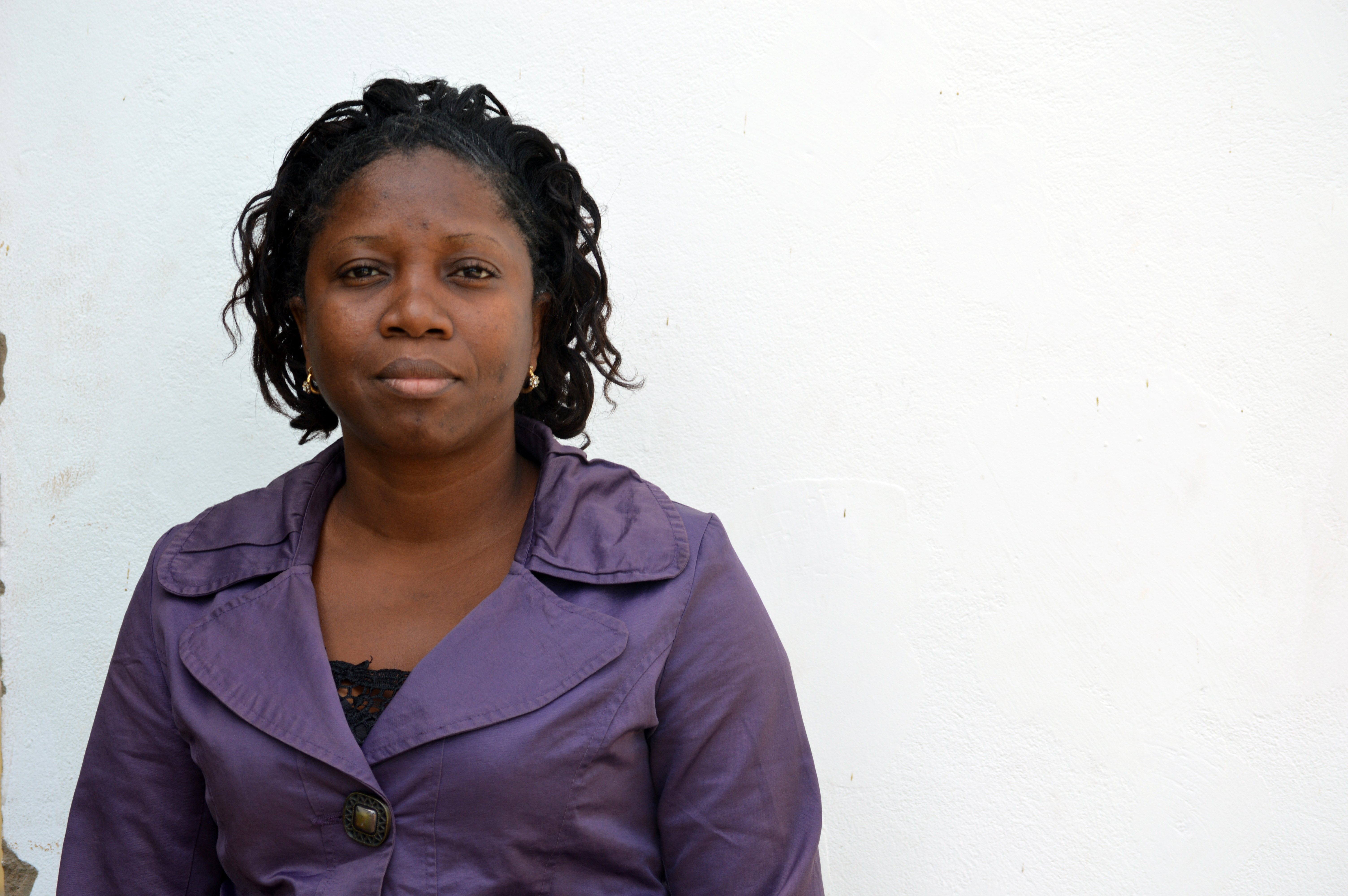
Pedan Marthe Coulibaly, human rights defender from Côte d’Ivoire
Ms Pedan Marthe Coulibaly is the national coordinator of the “Coalition Ivoirienne des défenseurs des droits humains” (human rights defenders coalition from Côte d’Ivoire). She was part of the NGO delegation sent by ISHR to participate in the 58th session of the African Commission on Human and Peoples’ Rights. On 11 April 2016 ISHR published the following interview on her work
The Coalition Ivoirienne des Défenseurs des droits humains (CIDDH) was founded in 2004 and gathers together more than a dozen national civil society organisations. Its two main missions are to protect human rights defenders and to promote their rights. This work mostly involves raising awareness of and increasing the capacity of defenders to make use of human rights protection mechanisms. A founding member of the Centre féminin pour la démocratie et les droits humains (Women’s centre for democracy and human rights) in Côte d’Ivoire, Ms Coulibaly has been advocating for human rights in general, and women’s rights in particular, for over a decade. She started engaging on these issues immediately after graduating, when she realised that during the 2002 national crisis women were among the most exposed to human rights violations.
What does the coalition do?
The first activity of CIDDH is to ‘connect with the member organisations on a regular basis and seek information about the realities of their work’. The aim is to stay in tune with the challenges facing grassroots human rights defenders and, when needed, to identify ways of assisting them.
When informed about a difficulty facing a defender, the coalition carries out a risk analysis of the situation. If the risk is deemed high, the coalition can decide to alert partners, such as the West African human rights defenders network; send communications to the United Nations and African Commission Special Rapporteurs on human rights defenders; or collect resources among its network in order to ‘move the defender to a safe place’. Sometimes, the coalition may also publish press releases for distribution at press conferences.
Who are the most exposed defenders in Côte d’Ivoire?
Given her pivotal role within CIDDH, Ms Coulibaly has been able to identify some of the most at risk defenders in Côte d’Ivoire, who are typically those working on sensitive issues, such as extractive industries.
‘When they go to the field, defenders working on extractive industries are often forced to hide their true identity and the name of their organisations. (…) They can be subject to intimidations or threats from industries, sometimes with the support of administrative authorities.’
Defenders who question certain cultural practices, such as female genital mutilation, are also often the targets of hostile community reactions.
The role of the coalition in the development of the HRD law
CIDDH was at the frontline throughout the drafting and adoption process of the recent law on human rights defenders in Côte d’Ivoire. The coalition was first invited by the Ministry of Human Rights to participate in the validation session of the draft law. CIDDH then initiated an intensive advocacy campaign to ensure the recommendations and concerns they shared at the validation session had been taken into account.
CIDDH also intended to check if the parliamentarians targeted during the advocacy campaign had appropriated the recommendations as their own and shared them during the adoption process. One of the concerns exposed by the coalition was the need to include the notion of ‘threat’ in the list of dangers facing women human rights defenders. This concern was duly included in the adoption process. Regretfully, the coalition’s opposition to the obligation for human rights defenders to submit annual reports to the State fell on deaf ears.
The coalition subsequently attended, as an observer, the parliamentary session to adopt the law, where they were relieved to witness that most of the recommendations made by human rights defenders had been retained.
Following the adoption, CIDDH focused on training human rights defenders so they could get to know the content of the law and ‘make it theirs so as to promote their own rights’. The coalition intends to continue advocating for the adoption of an implementation decree for the law, as well as for an implementation mechanism to be put in place.
More proactivity for better protection
While recognising the crucial role of ‘emergency funds’ provided by partners such as Frontline Defenders when defenders’ rights are violated, Ms Coulibaly insists on the need for and the difficulty in achieving a more proactive approach.
‘We should not wait to see real dangers before starting to collect resources to protect defenders (…) If the coalition had permanent resources for a staff member dedicated to the protection of defenders, this would make the work of defenders a lot easier.’
Ms Coulibaly also calls for the international community to step in for the protection of human rights defenders. She stresses that ‘collaboration with the international community should go beyond exchange of information, communications or reports’ and take the form of ‘concrete measures’ to protect defenders.
Putting defenders at the heart of the African Year of Human Rights
With 2016 being declared the African Year of Human Rights by the African Union there is an opportunity to make an assessment of the situation of human rights defenders in Africa, says Ms Coulibaly. The progress made to date and remaining challenges should be identified. It is also essential that each country sets up strategies to implement laws protecting human rights and that these laws have a real effect on the ground.
‘It is a real problem: protocols are being adopted, legal instruments are being adopted, but these documents have no impact on real life. No one can feel any change.’
Source: Defender profile : Pedan Marthe Coulibaly, woman human rights defender from Côte d’Ivoire | ISHR
2016 Annual Report of the International Service for Human Rights is out
May 15, 2016Today the International Service for Human Rights (ISHR) announced the publication of its annual report which highlights key developments during 2015 and its vision for 2016 and the years ahead.
Source: Our vision and achievements: ISHR’s 2016 Annual Report | ISHR
for more posts on the ISHR, see: https://thoolen.wordpress.com/tag/ishr/
ISHR starts campaign to monitor Committee that throttles NGO access to the UN
May 4, 2016I have written earlier about the worrying trends in the ‘obscure’ “ECOSOC Committee on NGOs” (https://thoolen.wordpress.com/tag/ecosoc/) which is supposed to consider applications by NGOs for ECOSOC accreditation and, as such, is a key gateway for NGOs to gain access to the UN.
The International Service of Human Rights (ISHR) – which issued earlier a guide [https://thoolen.wordpress.com/tag/practical-guide-to-the-un-committee-on-ngos/] -has now come out with a statement that the “practice of the Committee is wholly unacceptable and must change”.
It has addressed a letter to ECOSOC – the parent body of the Committee – and copied to all Member States, the UN Secretary General, President of the General Assembly, and the President of the Human Rights Council. The letter expresses concern regarding the practice of the Committee. It intends to signal the level of concern NGOs feel about restrictions on civil society participation at the UN. The ISHR hopes that a large number of others will sign.
In addition to the letter, on Tuesday 24 May the ISHR encourages all NGOs to join in the public gallery at the upcoming Committee session in New York. Although the sessions are public, few NGOs attend and the sessions are not webcast. It is important that Committee members are aware the sessions are being monitored and reported on.
If you have any questions, please contact the International Service for Human Rights: information@ishr.ch
Showing of the film The Opposition about land rights in Papua New Guinea cancelled until further notice
April 14, 2016As feared (see https://thoolen.wordpress.com/2016/04/12/controversial-film-opposition-geneva-australian-court-papua-new-guinea-joe-moses/) the showing of the documentary film
 ,which was planned for 19 April in Geneva, had to be cancelled until further notice due to the controversy it has created including a court case.
Controversial film ‘The Opposition’ to be shown in Geneva on19 April but Australian court to rule on 14 April
April 12, 2016
In the lead up to the Universal Periodic Review of Papua New Guinea, two NGOs – the International Service for Human Rights and Media Stockade -organise an exclusive screening of the documentary film ‘The Opposition’ and discussion with director Hollie Fifer and Dr Kristian Lasslet from International State Crimes Initiative. The Opposition asks how we can ethically build sustainable business in developing countries. In a David-and-Goliath battle over a slice of Papua New Guinea’s paradise, Joe Moses, leader of the Paga Hill Settlement, struggles to save his 3,000 people before they are evicted. Battling it out in the courts, Joe may find his community replaced with an international five-star hotel and marina. In a recent twist, production company Media Stockade and director Hollie Fifer have been hit with a legal suit over the upcoming release of the film. On Thursday 14 April, a judge in the New South Wales Supreme Court in Sydney, Australia will decide if the case will go to trial. At stake is whether the film will be able to be released or not. Media Stockade stands its director who has conducted a piece of legitimate investigative reporting in the public interest.
The screening takes place on 19 April 2016 at 15h30 in the Rue de Varembé 1, ground floor, Geneva. Please note this event is a private screening and is by invitation only (and places are strictly limited). If you want to be invited you have to contact the organizers before Friday 15 April.
Source: Film Screening: ‘The Opposition’, Tuesday 19 April, 3.30pm
 Hans Thoolen on Human Rights Defenders and their awards