Abdalaziz Alhamza and his team of citizen journalists risk their lives to smuggle video out of Syria to expose the shocking brutality of both the Assad regime and ISIS. Now ISIS has put a price on his head. Abdalaziz took the stage at the 2016 Oslo Freedom Forum of the Human Rights Foundation to talk about his work and his hopes for a brighter future in Syria.
On 28 March 2016 the New York based Human Rights Foundation strongly condemned the convictions and sentences handed down by a court in Angola against a group of 17 youth activists for reading a book that advocates nonviolent resistance to dictatorship. The court declared the activists — including prominent Angolan rapper Luaty Beirão — guilty of “rebellion against the president” and “planning a coup,” sentencing them to prison terms that range from two to eight years. Beirao, also known by his stage name Ikonoklasta, has been an outspoken critic of the government, calling for a fairer distribution of the southern African state’s oil wealth. His term is five-and-a-half years.
All the attention is on Turkey as the country where refugees will have to be processed. The more the question of fair trial becomes important. The following does not bode well:
In the early morning of 16 March 2016, police raided the houses of 9 lawyers in Istanbul, Turkey. After the search, lawyers Ramazan Demir, İrfan Arasan, Ayşe Acinikli, Hüseyin Boğatekin, Şefik Çelik, Adem Çalışçı, Ayşe Başar, Tamer Doğan and Mustafa Rüzgar were taken into custody. They are all members of the Libertarian Lawyers Association ÖHD). There has not been given any justification for these arrests and searches. The case file on the arrests is confidential. Allegedly the lawyers are arrested on suspicion of having ties with a terrorist organization. All the lawyers that were arrested represent the 46 lawyers who were arrested in 2011 on suspicion of “working for, or belonging to, a terrorist organization”. A hearing in the trial against these lawyers took place only one day after the arrests (!), on 17 March 2016. The arrest of their lawyers means that they are deprived from their legal defense.
Lawyers for Lawyersand Fair Trial Watchare extremely worried about the state of the rule of law in Turkey, which is quickly deteriorating. They sent a letter to the Turkish authorities in which they urge them to:
– Immediately release lawyers and drop the criminal investigation;
– Abstain from identifying lawyers with their clients or their clients’ causes;
– Put an end to all forms of harassment against lawyers in Turkey;
– Guarantee in all circumstances that all lawyers in Turkey are able to carry out their legitimate activities without fear of reprisals, intimidation, threats and free of all restrictions. For more information see: http://www.advocatenvooradvocaten.nl/11446/turkey-police-raid-on-and-arrest-of-9-lawyers
Meanwhile on 11 February, 2016 the Human Rights Foundation drew attention to the case of journalists Can Dündar and Erdem Gül, and urges the government of Turkey to drop the arbitrary charges imposed on them. On November 26, Dündar, the editor-in-chief of the newspaper Cumhuriyet, and Gül, the Ankara bureau chief, were arrested based on a criminal complaint filed against them by President Recep Tayyip Erdogan. The complaint stems from a report published in Cumhuriyet on May 29, 2015 with photos and video footage claiming that Turkey’s National Intelligence Organization secretly armed Islamist rebel groups in Syria. The two journalists are being held at the high-security Silivri prison west of Istanbul. They are currently awaiting trial and facing up to life in prison.
Source: Vedat Arik/AP
“The rise of authoritarianism in Turkey is blatant. Erdogan’s government crackdown on independent journalists is a step towards exerting dictatorial control over Turkey’s media,” said HRF president Thor Halvorssen.
On 2 March 2016) South Korea’s legislature passed the North Korean Human Rights Act. The new law mandates the promotion of freedom in North Korea by funding North Korean defector and and refugee organizations, creating a North Korean human rights foundation, and establishing an archive of human rights violations perpetrated against the North Korean people by the Kim regime. The US-based Human Rights Foundation welcomed the Act as the NGO has advocated for such an action and in 2015 established the Global Coalition for the North Korean Human Rights Act.
“This is an astonishing moment. The Republic of Korea has taken its head out of the sand and has finally confronted the cruelty and horror of the North Korean dictatorship. It is a victory for all who support human rights and human dignity,” said HRF chairman Garry Kasparov.“We in the Global Coalition are delighted that the South Korean government will—for the first time ever—finance the defector organizations that send films, e-books, radio broadcasts, and educational materials to the North Korean people.”
The North Korean Human Rights Act also establishes a public campaign to raise awareness about North Korea’s human rights violations and takes steps to ensure that South Korean humanitarian aid is not misused by the Kim regime. The goal of establishing the human rights archive, inspired by the post-war German model, is to monitor and document the crimes of the North Korean dictatorship. It is vital to note that no such archive or record has ever existed in South Korea.
The law’s passage comes at a time when the rest of the world unanimously agrees on the extent and gravity of the crimes of the North Korean dictatorship. Earlier today, the U.N. Security Council voted 15-0 to toughen sanctions on the regime. “People inside the North will know about the law’s enactment and it will put considerable pressure on the political elite in Pyongyang,” said South Korean politician Kim Moon-soo, who first drafted the law in 2005.
For more information contact: Noemi Gonzalo-Bilbao, (212) 246-8486, noemi@hrf.org
Health and holidays (in that order) have slowed down my blog production somewhat this summer, but perhaps this was a welcome break for many of my readers for reasons of holiday and health (in that order I hope). Anyway, during these summer months I read quite some instances of HRD repression related to countries involved in major ‘geo-political’ progress and I started wondering whether this is coincidental. Take the following three cases: Colombia, Iran and Cuba. Read the rest of this entry »
On 26 May 2015, at the 2015 Oslo Freedom Forum, Thai journalist Pravit Rojanaphruk describes his fight for democracy in his home country following the May 2014 military coup. Talking about his own arrest, Rojanaphruk denounces the limitations to the right to assembly, expression and movement in Thailand, as well as the regime’s efforts to build the illusion of a happy Thailand. Rojanaphruk concludes his presentation by reminding us that tolerance and dialogue are essential if Thailand is to become a democracy again.
At the 2015 Oslo Freedom Forum, on 27 May 2015, Tunisian human rights defender Amira Yahyaoui talks about the global youth as an underrepresented force in many governments. She draws attention to the fact that while the world’s citizenry is increasingly young, the global leadership remains old. She criticizes the lack of representation of women and youth by reminding us that these so-called “minorities” are, in fact, majorities in the world population. If we don’t fix this problem, she argues, more and more young people will be driven to extremist groups like the Islamic State where they are given the opportunity to lead.
Canadian-born Libyan activist Alaa Murabit speaking at 2015 Oslo Freedom Forum (26 May) shows how ongoing conflict has affected daily life in Libya. She stresses the importance of acknowledging and integrating local communities in peaceful solutions, and focuses on the key role women in particular should play in peacebuilding. Murabit shares how her organization, the Voice of Libyan Women, organized the largest grassroots campaign in the country to address security issues, the cycle of violence, and the rights of women. She emphasizes that by creating cohesive and cooperative societies, rather than ones divided into factions, Libya can achieve peace and stability.
Rayma Suprani, one of the few female cartoonists in Venezuela, spoke at the 2015 Oslo Freedom Forum on 26 May about the role that humor plays in resisting tyranny, and how cartoons are the thermometers by which we measure freedom. She believes that critical drawings are crucial to testing the strengths of a democracy. Suprani worked at El Universal, one of Venezuela’s largest newspapers, for 19 years before she was fired last year after publishing a cartoon that mocked the legacy of Hugo Chávez and the state of the Venezuelan health care system. She remains defiant, and reminds us that humor is the key to ending repression: we should teach our children to wield pens, not guns.

 Source: Vice News
 Source: Vedat Arik/AP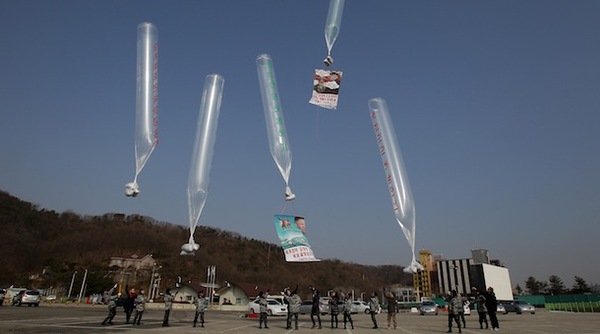
 Hans Thoolen on Human Rights Defenders and their awards