Archive for the 'HRW' Category

Today is the International Day of the Victims of Enforced Disappearances, also in Nepal 

August 30, 2021

Enforced disappearance refers to the arrest, detention or abduction of persons by agents of the State, or those acting with State authorization or support, whose whereabouts are unknown.

Once largely the product of military dictatorships, it has become a global problem, according to the UN, with hundreds of thousands of people “disappeared” in more than 80 countries. Impunity remains widespread.

While strictly prohibited under international human rights law, the SG, Mr. Guterres said enforced disappearance continues to be used across the world as a method of repression, terror, and stifling dissent.

Paradoxically, it is sometimes used under the pretext of countering crime or terrorism. Lawyers, witnesses, political opposition, and human rights defenders are particularly at risk,” he added. 

Having been removed from the protection of the law, victims, who can include children, are deprived of all their rights and are at the mercy of their captors. 

They are frequently tortured and know that it is unlikely anyone will come to their aid.  Some are even killed. 

Enforced disappearance deprives families and communities of the right to know the truth about their loved ones, of accountability, justice and reparation,” the Secretary-General said.

The COVID-19 pandemic has added to the agony and anguish of enforced disappearance, by limiting capacities to search for missing persons and investigate alleged enforced disappearance.”

It was established by the UN General Assembly, which adopted a resolution in December 2010 expressing deep concern about the rise in incidents in various regions, and increasing reports of harassment, ill-treatment and intimidation of witnesses of disappearances, or relatives of people who were disappeared.

The resolution also welcomed the adoption of the International Convention for the Protection of All Persons from Enforced Disappearance, which calls for countries to take measures to hold perpetrators criminally responsible.

“The Convention for the Protection of all Persons against Enforced Disappearances is indispensable in helping to tackle this cowardly practice. But it requires the will and commitment of those with the power to do so,” the Secretary-General said. “States must fulfil their obligations to prevent enforced disappearance, to search for the victims, and to investigate, prosecute and punish the perpetrators.”

Mr. Guterres reiterated his call for countries to ratify the Convention, and to work with the UN Committee that monitors its implementation, as well as the Working Group on Enforced Disappearances, which assists families in determining the fate of their loved ones.

On this day Amnesty International, Human Rights Watch and the International Commission of Jurists (ICJ) issued a statement that the government of Nepal should promptly enforce Supreme Court rulings and permit the regular courts to try cases of enforced disappearance and other grave international crimes. On the International Day of the Victims of Enforced Disappearances, August 30, 2021, thousands of Nepali families are no closer to knowing the truth of what happened to their missing loved ones than they were when the country’s armed conflict ended 15 years ago.

Nepal’s Supreme Court has repeatedly ordered the government to investigate gross violations of human rights and international humanitarian law during the conflict from 1996 to 2006, and to conduct a meaningful, effective transitional justice process to establish the truth and provide justice for thousands of cases of serious abuses.

The Nepali government stands in blatant violation of express orders of the Supreme Court by failing to conduct a credible, timely transitional justice process,” said Mandira Sharma, senior legal adviser for South Asia at the ICJ.

See also: https://humanrightsdefenders.blog/2021/03/17/where-is-somchai-a-brave-wifes-17-year-quest-for-the-truth/

The International Day of the Victims of Enforced Disappearances

https://www.hrw.org/news/2021/08/30/nepal-stop-stalling-enforced-disappearance-inquiries

Human right defender Sergei Kovalev died

August 19, 2021

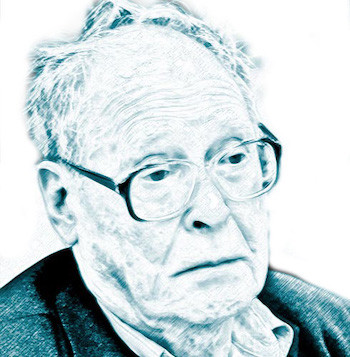
One of Russia’s most famous human rights defenders and former Soviet dissident, Sergei Kovalev, died aged 91 on Monday 9 August 2021 his family said. He won 9 international human rights awards, see: https://www.trueheroesfilms.org/thedigest/laureates/7B15D0E9-FDB2-4727-B94F-AA261BDB92D9

Kovalev was a biologist who became one of the leading members of the USSR’s pro-democracy movement. He was held for years in Soviet labour camps for his activism. After the collapse of the Soviet Union, he became a fierce critic of Moscow’s war in Chechnya and warned against democratic backsliding when President Vladimir Putin came to power in 2000.

His son Ivan Kovalev said on Facebook that his father died “in his sleep” in the early hours of Monday morning.

Russian rights group Memorial, which Kovalev co-founded, said he was “faithful to the idea of human rights always and in everything — in war and peace, in politics and every day life”.

The leading rights organisation — which has been labelled a “foreign agent” by Russian authorities under a controversial law — said Kovalev had campaigned for human rights since the 1960s. See also: https://humanrightsdefenders.blog/2013/04/26/russia-pursues-its-policy-of-labeling-human-rights-defenders-as-foreign-agents/

As a biology student, Kovalev had dreamed of devoting himself exclusively to science.

But he changed his mind after the arrests of dissident writers Yuli Daniel and Andrei Sinyavsky.

“I then understood that it was not possible to only be in science,” he said. “It would have been shameful.”

In 1968, Kovalev was fired from his job at a Moscow university laboratory for joining the Action Group for the Defence of Human Rights in the USSR — considered to be the Soviet Union’s first rights group.

He then grew close to the dissident academic Andrei Sakharov.

Kovalev was part of a group of dissidents writing the “Chronicle of Current Events”, an underground typed bulletin that reported on human rights violations in the USSR.

It reported the arrests and psychiatric internments of the Soviet regime’s opponents and on the situation in its labour camps.

He was arrested in 1974, accused of spreading “anti-Soviet propaganda” and sentenced to seven years in a Gulag camp, followed by three years of house arrest in the icy Siberian region of Kolyma.

He was only allowed to return to Moscow in 1987, thanks to the perestroika reforms launched by Soviet leader Mikhail Gorbachev.

He went on to help found Memorial, which recorded testimonies of Soviet political repression.

Kovalev was one of the few Soviet dissidents that entered post-USSR politics.

He contributed to writing Russia’s new constitution and was elected a parliamentary deputy twice.

In 1994, he was appointed as chairman of President Boris Yeltsin’s human rights commission in 1994. But he was forced to give up the post two years later for his outspoken criticism of Russia’s brutal intervention in the Chechen conflict.

Kovalev also criticised the political system created by Putin, from the beginning of the former KGB spy’s long rule. “A controlled democracy is being created in our country that seeks to create problems for ‘enemies inside as well as outside’,” he said in 2001, a year after Putin was inaugurated as president.

In 2014, he called on Western countries to “stop Russian expansion” into Ukraine after Moscow annexed Kiev’s Crimea peninsula.

According to Kovalev, the West had made “too many concessions” to Russia.

He also criticised Russian opposition leaders, whom he accused of being pragmatists without strong moral convictions. “I belong to the camp of idealists in politics,” he said.

https://www.france24.com/en/live-news/20210809-soviet-dissident-sergei-kovalev-dies

https://today.rtl.lu/news/world/a/1768110.html

https://www.hrw.org/news/2021/08/09/human-rights-watch-mourns-death-sergei-kovalev

https://www.theguardian.com/world/2021/aug/09/sergei-kovalev-soviet-dissident-who-clashed-with-yeltsin-putin-dies-aged-91

Human rights lawyer Semyon Simonov convicted under Russia’s foreign agents law

July 14, 2021

Nadia Murray-Ragg of Victoria U. Wellington Faculty of Law, in New Zealand reports on 12 July 2021 that human rights defender and lawyer Semyon Simonov was convicted under Russia’s foreign agents law in a controversial criminal trial on Sunday.

In December 2016, Russia designated the Southern Human Rights Center (SHRC) as a foreign agent, considering it to be engaging in political activity. The SHRC is an organization providing pro bono legal services on human rights issues in Russia. Given this status, Russian law required the SHRC to register as a foreign agent. According to Human Rights Watch (HRW), “foreign agent” connotes being a traitor or spy. [see: https://humanrightsdefenders.blog/2019/11/19/russias-foreign-agents-bill-goes-in-overdrive/]

In February of 2017, Russia fined the SHRC for its failure to register. A Russian court determined Simonov, the President of the SHRC, would be held liable to pay the fine in July of 2019 following the SHRC’s non-payment. Sunday’s ruling imposed a sentence of 250 hours of community service onto Simonov for failure to pay the fine.

Simonov has a long history of championing for human rights. He has documented the human rights violations endured by migrant workers preparing for the 2018 FIFA World Cup and the 2014 Winter Olympics.

Simonov’s criminal case has been heavily criticized by the human rights community. HRW’s Russia Researcher, Damelya Aitkhozhina, said “The criminal case against Semyon Simonov has been a sham from start to finish. It’s shocking and abhorrent that the authorities wasted so much time and resources on a case in which the accused did nothing but help people protect their rights.

Similarly, the country’s foreign agents law itself has faced calls for repeal. It has been criticized for quashing dissent and undermining the United Nations’ Declaration on Human Rights Defenders which provides in article one that everyone has the right “to promote and to strive for the protection and realization of human rights”.

The ‘foreign agents’ law is nothing more than a tool of repression,” said HRW. “[I]t should be immediately repealed.” See also: https://humanrightsdefenders.blog/2021/01/11/five-individuals-now-listed-as-foreign-agents-in-russia/

Radio Free Europe/Radio Liberty filed a lawsuit challenging the country’s foreign agents law, citing concerns about the controversial law’s “profound chilling effect”.

https://www.jurist.org/news/2021/07/russia-court-convicts-human-rights-lawyer-under-foreign-agents-law/

Remembering Suha Jarrar, young Palestinian Rights Defender

July 13, 2021

Omar Shakir wrote an obituary for Suha Jarrar, research and advocacy officer at Palestinian human rights organization al-Haq, who died at her home in Ramallah in the Israeli-occupied West Bank. Over her 31 years, Suha made an indelible impact on human rights advocacy in Palestine. He added that the Israeli Authorities should allow the detained mother, Parliamentarian Khalida Jarrar, to attend the funeral

A picture of Suha Jarrar and flowers prepared by the staff of the Palestinian human rights group al-Haq and displayed at a commemoration for Jarrar in Ramallah in the Israeli-occupied West Bank on July 12, 2021 
A picture of Suha Jarrar at a commemoration for Jarrar in Ramallah in the Israeli-occupied West Bank on July 12, 2021 © 2021 al-Haq

Suha conducted innovative research on the environmental impacts of the Israeli occupation, including a 2019 report arguing that discriminatory Israeli policies and practices impede the ability of Palestinians in the occupied West Bank to adapt to climate change. As point person on gender issues for al-Haq, she represented the organization when the United Nations Committee on the Elimination of Discrimination against Women deliberated on the situation of women in Palestine. She researched, advocated, and fearlessly pushed to mainstream within Palestinian civil society the full range of rights issues related to gender and sexuality, even where perilous and proscribed.

Suha died without her mother nearby, since Khalida Jarrar sits in an Israeli jail. For most of the last six years, Israeli authorities have detained Khalida, a 58-year-old elected member of the Palestine Legislative Council, over her political activism with the Popular Front for the Liberation of Palestine (PFLP). One of the more than 400 organizations that Israeli authorities have outlawed, the PFLP includes both a political party and an armed wing. The armed wing has attacked Israeli soldiers and civilians. Israeli authorities have never charged Khalida with involvement in armed activities.

Khalida spent long stretches, including between July 2017 and February 2019, in administrative detention without trial and charge. In March 2021, an Israeli military court sentenced her to two years in prison for “membership in an unlawful association,” based on a plea deal, with Israeli military authorities acknowledging that she “did not deal with the organizational or military aspects of the organization.” Detaining Khalida over her political activism violates her freedom of association, as Human Rights Watch has documented. The suspension of civil rights to the millions of Palestinians living in the Occupied Palestinian Territory is a central part of the Israeli government’s crimes against humanity of apartheid and persecution.

Suha’s infectious smile never faded, even though for much of her adult life, her mother was unjustly behind bars. Israeli authorities have reportedly denied a request for Khalida to attend Suha’s funeral. Having repeatedly detained Khalida in violation of her rights, Israeli authorities should at minimum allow her to say goodbye to her daughter.

https://www.hrw.org/news/2021/07/12/remembering-suha-jarrar-trailblazing-palestinian-rights-defender

Israel and the international crime of Apartheid: a response by Human Rights Watch worth studying in full

July 9, 2021

EJIL Talk!, the Blog of the European Journal of International Law, last week had a symposium (see: https://www.ejiltalk.org/), which has addressed a number of legal issues arising from HRW’s report released in late April 2021 “A Threshold Crossed: Israeli Authorities and the Crimes of Apartheid and Persecution.” This report has received significant media attention.

See also: https://humanrightsdefenders.blog/2021/01/18/israel-and-apartheid-israeli-human-rights-group-stirs-debate/ and https://humanrightsdefenders.blog/2021/05/10/israeli-government-sponsored-app-goes-after-hrw-for-apartheid-categorisation/

On 9 july 2021 Clive Baldwin, Senior Legal Adviser of HRW, uses the opportunity to contribute to a substantive discussion focusing primarily on the implications of the report for the broader international legal discourse.

After detailed discussion of the international LEGAL aspects, he concludes:

The discussion demonstrates the importance of considering the term “apartheid” under international criminal law as a specific crime against humanity, together with the closely related crime against humanity of persecution. This requires a legal understanding of its definition and constitutive elements, as well as of ways to apply it. To even begin the process of criminal justice, prosecutors – and in particular those at the ICC – will first need to understand and investigate these crimes. Legal discussions like this symposium can, we hope, help advance this objective. These are crimes against humanity that have been neglected for too long.

https://www.hrw.org/news/2021/07/09/human-rights-watch-responds-reflections-apartheid-and-persecution-international-law

Continued harassment of Mother Nature defenders in Cambodia

June 22, 2021

The Cambodian government should immediately drop baseless conspiracy and “insulting the king” charges against four environmental activists affiliated with the Mother Nature Cambodia environmental group and release the three in pretrial detention, Human Rights Watch said today.

On June 16, 2021, the police arrested Sun Ratha, 26, Ly Chandaravuth, 22, and Seth Chhivlimeng, 25, in Phnom Penh, and Yim Leanghy, 32, in Kandal province, apparently for their documentation that raw sewage has entered the Tonle Sap River near the Royal Palace. On June 20, the court charged Ratha and Leanghy with “conspiracy” and lese majeste (“insulting the king”) under articles 453 and 437 bis of Cambodia’s penal code, and Chandaravuth with “conspiracy.” If convicted, they face between 5 and 10 years in prison, and fines of up to 10 million riels (US$2,500). The authorities also charged in absentia aSpanish national, Alejandro Gonzalez-Davidson, the founder of Mother Nature Cambodia, who had been deported in 2015. Chhivlimeng was released without charge.

The Cambodian government has stepped up its campaign to silence activists peacefully advocating to protect the environment,” said Phil Robertson, deputy Asia director. “Foreign governments, the United Nations country team, and international donors should call on the Cambodian authorities to drop their absurd charges against the environmental activists and publicly condemn any further clampdown on peaceful activism.”

An Interior Ministry spokesperson alleged that the authorities had proof that “rebellious” Mother Nature Cambodia had used foreign funding to try to topple the government, but did not make any evidence public.

This case followed earlier harassment of five Mother Nature Cambodia activists. On May 5, the Phnom Penh court convicted three environmental activists – Long Kunthea, 22, Phuon Keoraksmey, 19, and Thun Ratha, 29 – of “incitement to commit a felony or disturb social order,” articles 494 and 495 of Cambodia’s penal code. The judge sentenced them to between 18 and 20 months in prison as well as a fine of 4 million riels ($1,000) for their peaceful activism protesting the authorities’ filling-in Phnom Penh’s Boeung Tamok lake.

All three activists had been arrested in September 2020 and spent almost eight months in pretrial detention. Gonzalez-Davidson and Chea Kunthin, another activist, were also convicted in absentia and sentenced to between 18 and 20 months in prison. [see: https://humanrightsdefenders.blog/2020/09/09/cambodia-arbitrary-arrest-of-mother-nature-activists/]

Amid the Covid-19 pandemic, the Cambodian authorities have stepped up their crackdown on youth and environmental activists engaged in peaceful activism and protest. The government has often used draconian new laws to arrest and prosecute activists in an apparent attempt to silence their voices and shut down their activism.

In March 2020 and early 2021, the authorities arrested environmental activists affiliated with the Prey Lang Community Network along with a prominent environmentalist and lawyer, Ouch Leng, to stop their efforts to document illegal logging and deforestation within the Prey Lang forest.

Human Rights Watch has documented cases of nearly 70 current political prisoners, including members of the political opposition, youth and environmental activists, trade union leaders, and journalists who are awaiting trial or are serving prison sentences. Many other activists have fled Cambodia to seek refuge abroad.

Because of the higher risks of getting Covid-19 in prison, Human Rights Watch has repeatedly appealed to the Cambodian authorities to conditionally release pretrial detainees not held for violent offenses. The Office of the UN High Commissioner for Human Rights and civil society groups have often criticized the government’s routine use of pretrial detention.

“Cambodia’s highly politicized courts mean that the environmental activists charged have no chance of getting a fair trial,” Robertson said. “Only international pressure on the Cambodian government holds out the possibility of saving these activists from unjust prison sentences.”

https://www.hrw.org/news/2021/06/23/cambodia-free-environmental-activists

https://www.jurist.org/news/2021/06/cambodia-court-charges-environmental-activists-with-conspiracy-insulting-king/

https://www.fidh.org/en/issues/human-rights-defenders/cambodia-arbitrary-detention-and-judicial-harassment-of-mother-nature

https://www.amnesty.org/en/latest/news/2021/06/cambodia-assault-on-environmental-defenders-escalates-as-four-more-charged-imprisonment/ 

The intriguing case of Artur Ligęska who was in prison with Ahmed Mansoor in the UAE

June 9, 2021

Mirage news of 8 June 8, 2021 tells the sad story of Artur Ligęska, a 40-year-old Polish citizen who has spoken out widely about torture and ill-treatment in Emirati prisons. He was found dead in his apartment in Amsterdam, the Netherlands on May 26, 2021. The Gulf Centre for Human Rights and Human Rights Watch are deeply saddened by the news of his death and extend their sincere condolences to his friends and family.

Following his release from al-Sadr prison in May 2019, Artur dedicated himself to seeking justice for the abuse he and other prisoners suffered in prison, especially Ahmed Mansoor, an award-winning human rights defender who is on the advisory boards of GCHR and Human Rights Watch. [see: https://www.trueheroesfilms.org/thedigest/laureates/074ACCD4-A327-4A21-B056-440C4C378A1A]Artur was a uniquely valuable source of information on prison conditions in the United Arab Emirates (UAE).

He was an activist, author, and fitness expert and had recently celebrated the second anniversary of his acquittal on May 9. He had been sentenced to life in prison in the UAE following a deeply flawed trial on drug charges despite the absence of any evidence of drugs in his possession.

In a voice message to a friend at GCHR on May 9, Artur said, “My main wish for this new-life birthday is freedom for Ahmed Mansoor. I really do hope that this year will be special for him. I was thinking all day about him. I remember our last talk, and I was thinking about his wife and kids. …In the last days, Ahmed told me ‘Don’t forget about me.’

Artur said he was planning to organize a protest in The Hague soon to call for Ahmed’s release. Artur’s many actions to help Ahmed included advocacy with Polish and EU officials, providing human rights groups with information, taking part in human rights events, documentary films and TV appearances, and writing about Ahmed in his two books.

Artur first phoned GCHR staff in April 2019 to tell them that Ahmed was on a hunger strike and told them that he was worried that Ahmed might die because his health had deteriorated greatly. He told GCHR that Ahmed was being held in “terrible conditions” in a cell with no bed, no water, and no access to a shower. Ahmed today remains in a 2-by-2 meter isolation cell with no bed or mattress, serving a 10-year prison sentence for his human rights activities.

Despite suffering serious trauma after suffering abuse as a prisoner in the UAE, Artur again phoned GCHR to share the good news that human rights groups’ advocacy had been successful. Ahmed had ended his hunger strike after being allowed to phone his ill mother and to go outside to see the sun for the first time in two years. Artur sacrificed phone calls to his own family to make calls on behalf of Ahmed, referring to him as a brother.

Following his release, Artur was able to provide GCHR with more details about what he called the “medieval prison conditions” in al-Sadr prison, including periods when there was no running water despite extreme heat.

In a wide-ranging interview released by Human Rights Watch in January 2020, Artur described how he and Ahmed had become “prison mates in UAE hell.” Artur spent eight months in al-Sadr prison, in solitary confinement in a cell beside Ahmed’s. His friend suffered psychological torture from a near-total lack of human contact and access to the library, Artur said. See also: https://humanrightsdefenders.blog/2021/02/22/lawlor-urges-uae-to-free-ahmed-mansoor-mohamed-al-roken-and-other-hrds/

Artur told GCHR that after he left the UAE, he had undergone surgery and therapy to treat the damage done by the rape and psychological torture that he said he was subjected to but he was recovering well and taking classes to become a journalist and human rights professional.

On April 13, 17 European Parliament members wrote to the EU’s High Representative Josep Borrell to express their “deepest concern over the ongoing human rights violations in the United Arab Emirates, particularly with regards to the systematic crackdown on freedom of speech and expression and the subsequent retaliation received during detention.” The letter mentions Ahmed, and also refers to Artur, noting, “The use of torture has not been limited to Emirati nationals, as there have also been instances of EU citizens that have reported facing brutal torture at the hands of prison authorities.”

On October 22, 2020, Amnesty Westminster Bayswater and GCHR held an online event, The Prisoner and the Pen, featuring the writing, songs and poetry of prisoners who are human rights defenders and the work of writers and artists from the Middle East and North Africa region. The event, held on Ahmed ‘s birthday, included his poems. Artur read from his memoir, “The Sheikh’s Different Love,” published in 2019 in Polish. He has also written a second bestselling book in Poland, “Prison Diary.” His story is documented in a film by Hossam Meneai, Isolation Cell 32, which debuted at the Polish Film Festival in America in November. Artur also appears in an upcoming documentary about Ahmed Mansoor made by Manu Luksch.

Artur’s untimely and unexpected death comes as a great shock to those who knew him. The Dutch police are investigating the circumstances of his death.

https://www.miragenews.com/tribute-to-artur-ligeska-former-prisoner-in-uae-573024/

Documentary Film Calls for Justice for Kyrgyzstan’s Azimjon Askarov

June 3, 2021
Azimzhan Askarov Pictured here during hearings at the Bishkek regional court, Kyrgyzstan, October 4th, 2016.  
Ethnic Uzbek journalist Azimzhan Askarov. Pictured here during hearings at the Bishkek regional court, Kyrgyzstan, October 4th, 2016.© 2016 AP

Philippe Dam, Advocacy Director, Europe and Central Asia Division of Human Rights Watch, on 2 June 2O21, writes aavout Azimjon Askarov, a 69-year-old human rights defender from Kyrgyzstan, who died in prison after contracting pneumonia. Askarov had been in prison for 10 years, having been given a life sentence following an unjust and unfair trial in 2010, in retaliation for his investigations into the tragic wave of inter-ethnic violence that year in southern Kyrgyzstan. [see: https://www.trueheroesfilms.org/thedigest/laureates/D8B31FA3-E648-4F92-81B9-8C3A4270F80E]

His death was the result of cruelty and negligence by Kyrgyz authorities. A screening this week of a documentary about Askarov, to be attended by senior European Union officials, is a reminder to Kyrgyzstan that it is responsible for his death and needs to show accountability and to the EU to press Bishkek on this issue. See also: https://humanrightsdefenders.blog/2020/07/31/mary-lawlor-calls-death-of-human-rights-defender-askarov-a-stain-on-kyrgyzstans-reputation/

Askarov’s trial in 2010 was marred by serious procedural violations and allegations of torture that were never investigated. A United Nations human rights body ruled in 2016 his detention was illegal and called for his immediate release, but Kyrgyz authorities looked the other way.

Since his death, many have called for a full inquiry into the causes and responsibilities for his death.  A toothless internal inquiry ordered by Kyrgyzstan has gone nowhere. The documentary “Last Chance for Justice,” by filmmaker Marina Shupac, is a touching portrayal of the fight by Khadicha Askarova, Askarov’s wife, for justice and his release from prison.

The screening is on June 4 as part of the One World Film Festival in Brussels. The panel discussion of the film will be joined by Eamon Gilmore, the EU’s top human rights envoy; Heidi Hautala, a European Parliament vice-president; and a representative of the Office of the EU’s Special Representative to Central Asia.

On the same day as the screening, the EU is set to hold its highest-level annual meeting with Kyrgyz officials. This is a crucial opportunity for the EU to make it clear that closer ties with Kyrgyzstan will depend on the resolve of Kyrgyzstan President Japarov’s administration to investigate Askarov’s death, clean up his judicial record, and grant compensation to his family.

This week’s high-profile screening makes clear: Kyrgyzstan will continue to be in the international spotlight on Askarov until it fulfils its human rights obligations to account for his death.

https://www.hrw.org/news/2021/06/02/documentary-calls-justice-kyrgyzstans-azimjon-askarov

30 NGOs call on Google to drop plan for a Cloud region in Saudi Arabia

May 27, 2021
Groups call on Google to drop out of Saudi project over human rights concerns

© Getty Images

The Hill of 26 May 2021 reports that a coalition of more than 30 human rights and digital privacy rights groups called on Google to abandon its plans to establish a Google Cloud region in Saudi Arabia over concerns about human rights violations.

The groups, which include Amnesty International, Human Rights Watch and PEN America, wrote in their letter that Saudi Arabia’s record of tamping down on public dissent and its justice system that “flagrantly violates due process” made it unsafe for Google to set up a “cloud region” in the kingdom.

While Google publishes how it handles government requests for customer information and reports when requests are made through formal channels, there are numerous potential human rights risks of establishing a Google Cloud region in Saudi Arabia that include violations of the rights to privacy, freedom of expression and association, non-discrimination, and due process,” the groups said. See also: https://humanrightsdefenders.blog/2019/03/08/saudi-arabia-for-first-time-openly-criticized-in-un-human-rights-council/

The letter also pointed to Saudi authorities who have routinely sought to identify anonymous online dissenters and spy on Saudi citizens through digital surveillance. The groups also pointed to how they themselves are believed to have been put under surveillance by the Saudi government.

“Google has a responsibility to respect human rights, regardless of any state’s willingness to fulfill its own human rights obligations,” the letter continued, pointing to Google’s statement in which it expressed its commitment to human rights and to “improve the lives of as many people as possible.”

In order to address these concerns, the groups called on Google to conduct a “robust, thorough human rights due diligence process” and to “draw red lines around what types of government requests concerning Cloud regions it will not comply with” due to human rights concerns.

“The Saudi government has demonstrated time and again a flagrant disregard for human rights, both through its own direct actions against human rights defenders and its spying on corporate digital platforms to do the same,” the letter read. “We fear that in partnering with the Saudi government, Google will become complicit in future human rights violations affecting people in Saudi Arabia and the Middle East region.”

https://thehill.com/policy/technology/555597-groups-call-on-google-to-drop-out-of-saudi-project-over-human-rights

China – EU investment deal off the rail

May 21, 2021
Chinese foreign ministry spokesman Zhao Lijian said Beijing's sanctions were a 'necessary and justified response'
Chinese foreign ministry spokesman Zhao Lijian said Beijing’s sanctions were a ‘necessary and justified response’ GREG BAKER AFP

As earlier reported human rights defenders objected to the proposed EU-China investment deal {https://humanrightsdefenders.blog/2021/01/06/china-eu-deal-what-about-human-rights], now the European Parliament has rejected it. HRW said: “On May 21, only a few months after the conclusion of the Comprehensive Agreement on Investment (CAI), a trade deal between the EU and China, the European Parliament adopted a resolution to freeze its ratification. The deal has been controversial in the Parliament given concerns about forced labor in China, its rushed conclusion, and its lack of human rights protections and redress mechanisms. Beijing’s counter-sanctions against several European lawmakers and institutions managed to unite the European Parliament on CAI like nothing else has, and will now prevent any movement on ratification as long as they remain in place“.

But the European Parliament voted overwhelmingly Thursday to refuse any consideration of the EU-China investment deal as long as Chinese sanctions against MEPs and scholars were in place. France24 on 212 May gives China’s expected angry reaction:

China slammed the European Union’s “confrontational approach” after MEPs voted to block a landmark investment deal over Beijing’s tit-for-tat sanctions against EU lawmakers. Foreign ministry spokesman Zhao Lijian said Beijing’s sanctions were a “necessary and justified response” to previous EU measures against Chinese officials over human rights concerns in Xinjiang.

China has imposed sanctions on relevant institutions and personnel of the EU who spread Xinjiang-related lies and false information and who have seriously damaged China’s sovereignty and interests,” Zhao said at a regular press briefing.

He urged the EU to “immediately stop interfering in China’s internal affairs, abandon its confrontational approach” and push EU-China relations “back to the right track of dialogue and cooperation”.

Defenders of the pact see it as a much-needed opening of China’s economy to European companies, but it is set to face a difficult ratification process among the 27 member states and European Parliament.

The investment deal aims to open China’s market and eliminate discriminatory laws and practices preventing European companies from competing on an equal footing, according to the European Commission.

EU foreign direct investment in China since 2000 — excluding Britain — amounted to $181 billion. The corresponding sum from China is $138 billion.

Ties between the EU and China soured suddenly in March after an angry exchange of sanctions over human rights concerns.

The EU sanctioned four Chinese officials over suspected human rights violations in China’s far northwestern region of Xinjiang.

Beijing responded by imposing its own sanctions against European politicians, scholars and research groups.

Adding to the pressure, about 50 human rights defenders from China who have gone into exile in Europe — including the artist Ai Weiwei — asked the EU on Thursday to suspend extradition treaties with Beijing.

In an open letter to EU leaders, they asked Brussels to freeze or revoke arrangements made by 10 EU member states, including France, Belgium and Spain.

These bilateral treaties “not only present a potential threat to our freedom of movement within the European Union, but to our freedom of association and freedom of expression, as Beijing may seek our extradition for statements we make in Europe”, it said.

https://www.hrw.org/news/2021/05/20/european-parliament-freezes-trade-deal-china

https://www.france24.com/en/live-news/20210521-china-slams-eu-s-confrontational-approach-after-investment-deal-blocked