To celebrate the voices and actions of human rights defenders from Ireland and around the world, leading human rights organisations [Front Line Defenders, National LGBT Federation, the Irish Council for Civil Liberties, the National Women’s Council of Ireland, Fighting Words & LASC] have once again come together to bring a weekend with interactive workshops, panel discussions, artistic performances: Dublin Human Rights Festival 2018, 23-24 November 2018. If only more countries would be able to organize things at this scale! Read the rest of this entry »
Chinese authorities must immediately and unconditionally release citizen journalist and human rights defender Huang Qi, a group of 14 NGOs (and not the least, see below) said on November 5, 2018. Huang Qi (黄琦), the founder and director of 64 Tianwang Human Rights Center, is not receiving adequate medical care in detention and his health has seriously deteriorated, according to his lawyer who visited him on October 23. Huang’s condition is so serious that there is an immediate threat to his life. [see also: https://humanrightsdefenders.blog/2016/12/01/rsfs-press-freedom-prize-2016-goes-to-the-64-tianwang-website-in-china/]
The Chinese government must immediately and unconditionally release Huang, who has been detained solely for the peaceful exercise of his right to freedom of expression, and end its policy of denying prompt medical treatment to prisoners of conscience. Several human rights defenders and ethnic and religious minorities have died in detention in recent years due to a lack of prompt medical treatment, including Liu Xiaobo, Cao Shunli [see: https://humanrightsdefenders.blog/2015/03/27/china-or-the-un-must-ensure-independent-investigation-into-death-of-cao-shunli/], Yang Tongyan, and Tenzin Delek Rinpoche, intensifying fears that Huang Qi might suffer the same fate without urgent intervention.
Authorities have repeatedly rejected applications for release on medical bail despite Huang’s heath condition continuing to deteriorate. He faces charges of “illegally providing state secrets to foreign entities” and “leaking state secrets” due to his work with 64 Tianwang Human Rights Center, which documents and publishes reports on enforced disappearances, trafficking, human rights violations and complaints against government officials. Huang faces the possibility of life imprisonment. His 85-year-old mother has been campaigning for his release, fearing he may die in prison. Last month two of his associates received suspended prison sentences and were released, but authorities have continued to hold Huang. The UN Working Group on Arbitrary Detention issued an opinion in April 2018 that declared Huang’s detention arbitrary, but the Chinese government continues to ignore the Working Group’s recommendation that Huang be released and compensated.
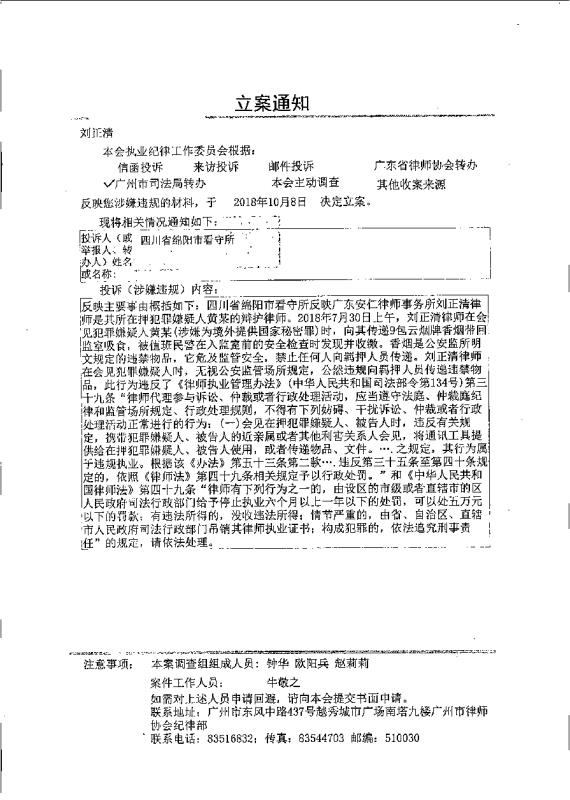
Lawyers representing Huang Qi have also faced retaliation. One of his lawyers, Sui Muqing, was disbarred in February 2018 for defending human rights defenders, such as Huang. [https://www.frontlinedefenders.org/en/case/human-rights-lawyer-sui-muqing-disbarred] Huang’s current lawyer, Liu Zhengqing, received a notice in October that he is under investigation for giving Huang cigarettes during a meeting in July. Liu faces suspension of his law license or a large fine.
On 3 October 2018 a number of NGOs published a Joint Statement on Ukraine deploying the many attacks against Human Rights Defenders:
More than 50 attacks on activists and human rights defenders in Ukraine have been recorded by local human rights organisations in just the last nine months, Amnesty International, Human Rights Watch, Freedom House and Front Line Defenders said today. Those under attack include people working to defend the rights of lesbian, gay, bisexual, and transgender (LGBT) people, protect the environment, and campaign against corruption.
The organisations criticised the lack of effective investigations into these incidents and of prosecutions of those responsible, which heightens the risk to human rights defenders and sends a message that the authorities tolerate such attacks and assaults. Recently, the prosecutor general suggested that civil society activists brought the attacks on themselves <https://www.pravda.com.ua/news/2018/09/27/7193378/>for criticising the authorities, giving an impression that human rights defenders can be openly targeted.
In most cases, the attacks have targeted individuals or groups that campaign against corruption in the local community, shine a light on the operation of local government and businesses, or defend people’s rights. The purpose of such attacks is clear: to silence activists and human rights defenders and to discourage others from speaking out against injustice and standing up for human rights.
Two recent examples of the kind of vicious attacks that have yet to be effectively investigated took place on 22 September, in Odessa and Kryvyi Rih. Oleh Mikhaylyk, an anti-corruption activist, was shot in Odessa, in southern Ukraine, and remains in the hospital. Mikhaylyk had campaigned with the Syla Lyudei (People’s Power) movement against illegal construction in Odessa. Three hundred kilometers away, in Kryvyi Rih, unidentified assailants broke into the home of Artem Moroka after he criticised the local police on Facebook. The assailants severely beat him, breaking his nose, Moroka told Ukrainian human rights monitors.
In June, an environmental activist, Mykola Bychko, was found dead under suspicious circumstances in a village in Kharkiv region. Villagers found Bychko hanged in the woods near the village of Eskhar on June 5. The local police initially started a suicide investigation, but have yet to investigate the possibility that he was killed in connection with his activism. At the time, Bychko was documenting the pollution of a local river, allegedly caused by a nearby waste treatment plant.A lawyer representing Bychko’s family questioned the conduct of the local police for ignoring the possibility that this was an intentional killing, and for allegedly intentionally delaying the investigation. The lawyer told Freedom House that police lost relevant evidence from the site where Bychko’s body was found, such as the rope from the improvised gallows. The authorities have also not pursued allegations that Bychko had received threats related to his documentation work, such as questioning people from the waste treatment plant.
On July 31, an unidentified assailant threw acid on Kateryna Handzyuk, a local council member who monitored police activities, in Kherson. ……….
The Ukrainian authorities should take effective steps to prevent further threats and attacks against activists and human rights defenders, and ensure prompt, thorough, impartial and independent investigations into such threats and attacks and bring those responsible to justice in fair trials.
The Interior Ministry, the National Police, the prosecutor general’s office, and other relevant institutions should explicitly recognise the important work of human rights defenders in protecting human rights and uncovering corruption. The authorities should publicly denounce any threats and attacks against human rights defenders. They should take decisive measures to ensure that government critics can work in a safe and enabling environment in which they can exercise the rights to freedom of expression, peaceful assembly and association, and conduct their activities without fear of reprisals.
The UN human rights experts did so in the context of terrorism charges – under the Unlawful Activities Prevention Act (UAPA) – laid against 10 human rights defendersworking with India’s poorest and most marginalised communities, including the Dalits, and urged authorities to ensure their cases are promptly heard in line with international law. All were arrested in June in connection with investigations into a public meeting organised a day before the 200th anniversary of the commemoration of a battle at Bhima-Koregaon, an important cultural event and a symbol of Dalit empowerment. Police subsequently claimed that the human rights defenders had links with ‘unlawful organisations’. “We are concerned that terrorism charges brought in connection with the commemoration of Bhima-Koregaon are being used to silence human rights defenders who promote and protect the rights of India’s Dalit, indigenous, and tribal communities,” the UN experts said. “We are very concerned about the charges against the human rights defenders and the continuing detention of nine of them,” the UN experts said. “All have been active in peacefully defending human rights, including those of marginalised and minority communities, political prisoners, and women, and their arrests appear to be directly related to their human rights work.
In June2018 Front Line Defenders listed as some of these:
Rona Wilson <https://www.frontlinedefenders.org/en/profile/rona-wilson>is a member of the Committee for the Release of Political Prisoners (CRPP), which has campaigned against the Unlawful Activities (Prevention) Act and other repressive laws.
On 5 July 2018, Front Line reported that human rights lawyer Advocate Sudha Bhardwaj released a statement refuting the false allegations and defamatory statements levelled against her by Arnab Goswami, news anchor and managing director of Republic TV. In a program that aired on 4 July 2018, Arnab Goswami alleged that the human rights defender was linked to Maoists. (https://www.frontlinedefenders.org/en/profile/sudha-bhardwaj). Sudha Bhardwaj firmly denied that the letter was written by her, and refuted the false allegations as defamatory and hurtful. She also expressed incredulity at the fact that the source of the letter had not been revealed, and that the letter had surfaced at the studio. She believes that the malicious and fabricated attack on her is a result of a press conference she had addressed in Delhi on 6 June 2018, condemning the arrest of Advocate Surendra Gadling. Front Line adds that This smear campaign comes as a part of an ongoing crackdown against human rights lawyers in India, especially those who work with Adivasi people and Dalits. Front Line Defenders condemns the smear campaign against human rights defender Sudha Bhardwaj, which it considers to be in retaliation to her legitimate and peaceful human rights work. Front Line Defenders expresses its concern for the security of Sudha Bhardwaj, particularly as the inflammatory allegations may motivate judicial harassment or other forms of retaliation.
Front Line Defenders is deeply saddened by the death of human rights defender Vitaly (Vito) Safarov, who passed away on 30 September 2018 in Tbilisi, Georgia.
Vitaly first got involved in human rights work in 2013 when he became a trainer in a multicultural camp for children in Georgia. He then worked for the Georgian NGO “Centre for Participation and Development” as a trainer of youth programs. For the past two years, Vitaly was a part of the Tbilisi Shelter Initiative that provides human rights defenders from across the region with a safe space, rest, medical aid and capacity-building programs. He accompanied defenders from different countries and backgrounds on a daily basis, helping them to adapt during their stay in Tbilisi and to benefit from the Shelter’s programs.
Svetlana Anokhina, journalist from Dagestan, who stayed at the Tbilisi shelter commented: “He took care of me during my three-month stay. When I arrived, I was told: here is Vitaly and he is your case manager. 20 minutes later, he became simply Vito to me. If someone asked what he meant to me and I could not explain, I responded: “Just imagine that you have a younger brother who you would call when you are having Internet connection problems; or if you need to go somewhere but you are too tired; or if you are in a hospital and don’t know who you should turn to; or if you are just feeling bad. Vitaly always responded in such a way to these problems that he would leave you feeling much better”.
Front Line Defenders’ Protection Coordinator and Board member of Tbilisi Shelter, Maria Chichtchenkova said: “At Front Line Defenders we were privileged to collaborate with Vitaly Safarov on many projects for human rights defenders at risk. He was especially involved in our work on digital security. He had a deep commitment to working with and for HRDs of all cultures, being himself of Jewish and Yazidi roots. He had a great sense of humour, which was sometimes quite dark, but he always showed incredible kindness and tenderness to people. One of our colleagues referred to him as “Vito, defender of defenders” and that’s exactly who he was.”
Vitaly Safarov will be missed and remembered by so many people.
One of the most admirable human rights defenders in the world, IranianNasrin Sotoudeh, has gone on hunger strike, Front Line Defenders reports on 25 August 2018. This time in protest against her judicial harassment and the continuing pressure which is being exerted on her family, relatives and friends. The defender was arrested in June and has been in the women’s ward of Evin Prison since.
On 25 August 2018, human rights defender Nasrin Sotoudeh began a hunger strike in protest against her judicial harassment and the continuing pressure which is being exerted on her family, relatives and friends. The next day, the Assistant Prosecutor and two other judicial authorities filed three new charges against her for “urging a referendum,” “assisting in the formation of house churches” and “organising protest rallies”. The human rights defender believes that these charges have been filed as a result of her failure to attend a court hearing on 15 August 2018, when she was sentenced to five years in prison in absentia for “propaganda against the state”, “assembly against national security” and “espionage”. The defender has lodged an appeal against these convictions. On 18 August 2018, at approximately 8 a.m., three agents of Iran’s Intelligence Ministry, holding a warrant from Branch 7 of the Revolutionary Court in Evin Prison, raided Nasrin Sotoudeh’s house while her children were asleep. The agents also raided the house of her sister-in-law. It is believed that the agents were searching for objects related to the defender’s human rights work, such as badges reading “I oppose the compulsory Hijab”.
“The defenders we’re honouring today work in some of the most dangerous areas of the world, sacrificing their own security to peacefully demand justice and human rights for their communities,” said Andrew Anderson, Executive Director of Front Line Defenders, as he announced the winners in Dublin.
—-
Nurcan Baysal, Turkey – Regional Winner for Europe & Central Asia & Global Laureate
Nurcan is a Kurdish journalist and human rights defender based in Diyarbakir. When the government launched a military offensive in the south-east in 2016, Nurcan spent months visiting Kurdish villages under bombardment, documenting human rights violations, and stopping to help families who’d lost everything in the conflict. Her writings are known for their critical focus on voice women living under the bombardment. When the authorities launched a military operation in Afrin, Nurcan took to social media to demand peace and condemn the violent assault. She was detained for speaking against the violence, and although later released she now faces up to 3 years in jail in a separate case related to her writing. Nurcan, according to authorities’ absurd claims, had “spread propaganda for armed terrorist organizations … and a call for provocative actions.” In addition to her reporting, Nurcan has also co-founded several NGOs, set up a camp to help Yazidi women fleeing the Islamic State, and been a key voice in countless reconciliation programs in the region. [see also: http://bianet.org/english/human-rights/197288-kurdish-journalist-baysal-wins-frontline-defenders-human-rights-prize]
Soni Sori, India – Regional Winner for Asia
Soni Sori is an indigenous and women’s rights defender in the militarised Bastar region of Chattisghar, India, where state-backed paramilitary forces are waging a violent campaign against local Adivasi tribes in the name of combating an armed Maoist insurgency. Soni documents and advocates against violence perpetrated by the paramilitary and police forces, which includes razing villages, burning homes, raping local women, and torturing and sexually assaulting tribes people detained without cause. Soni has also defended a number of educational centres from destruction by Maoist groups. In retaliation for her work, security forces detained and tortured Soni, pushing stones inside of her body and assaulting her for hours. Years later, men attacked her with acid and threatened to do the same to her daughter if she did not cease her advocacy on behalf of tribeswomen raped by the security forces. She has refused to stop her work, and continues to travel into the Maoist regions to speak with survivors of the ongoing conflict. [see also: https://feminisminindia.com/2018/05/18/soni-sori-wins-front-line-defenders-award/] and https://humanrightsdefenders.blog/2016/02/23/human-rights-defenders-in-india-democracy-is-not-enough/
Peaceful Resistance of the Micro-Region of Ixquisis, Guatemala – Regional Winner for the Americas
La Resistencia Pacífica de la Microregión de Ixquisis formed in response to grave rights violations committed in the name of economic advancement in Guatemala. The government has authorised destructive mining and hydroelectric mega-projects in the region despite the widespread opposite from the 59 villages and 7 communities in the municipality. HRDs in the Peaceful Resistance risk their lives to defend the territory. In 2016 alone, there were more than 75 reported attacks against HRDs in the Peaceful Resistance including killings, shootings, harassment, and defamation campaigns.
LUCHA, DRC – Regional Winner for Africa
LUCHA is a non-partisan youth movement formed in eastern Democratic Republic of Congo that struggles against chronic corruption and impunity in the DRC. Initially focused on
local issues like access to drinking water, electricity, and youth unemployment, in just 6 years the movement has developed into an extensive national-level network of powerful social organisers. Peaceful protests and demonstrations led by LUCHA are routinely attacked by authorities. In October 2017, 5 young protests were killed during a LUCHA-organised demonstration, and many of their members and leaders having been arrested and detained during peaceful assemblies. The Congolese national intelligence agency has detained several members, who have endured physical and psychological abuse in detention.
Hassan Bouras – Regional Winner for the Middle East & North Africa
Hassan Bouras is a journalist, blogger, leading member of the Algerian League of Human Rights, and founding member of the Rejection Front, a coalition against fracking to extract shale gas in Algeria. His reporting on both corruption and torture in Algeria spans more than two decades and because of this work he has been repeatedly targeted by Algerian authorities. He has continued his writing and advocacy despite years of judicial harassment, arbitrary detentions, violent raids on his home, and imprisonment.
The report, A Recipe for Criminalization: Defenders of the Environment, Territory and Land in Peru and Paraguay, outlined the three “ingredients” both countries use to undermine the efforts of human rights defenders. First, they delegitimize activists through smear campaigns. Second, they apply laws and regulations that allow for forced evictions. And, third, they misuse the criminal justice system to prosecute activists for unfounded reasons.
“Those who bravely stand up to defend their land and the environment are frequently targeted because of their work. These attacks have a devastating impact on their physical, mental and emotional wellbeing, as well as that of their families and communities,” Amnesty International Americas director Erika Guevara-Rosas said in a press release.
The report included examples of how these ingredients combine on the ground. For example, Amnesty International highlighted the case of community activists working to protect their home in Peru’s Cajamarca region from the gold and copper Conga mining project. On 26 April 2013, police arrested 16 protesters on trumped up charges of abduction and coercion. The state prosecutor sought 30-year prison sentences. But the evidence presented was secondhand and so spotty and contradictory that a court dismissed the case in 2017.
In Paraguay, the Tekoha Sauce community of the Avá Guaraní People was evicted from their ancestral lands by a court order following a dispute with local businessman German Hultz. The community was forced onto a nature reserve where they struggle to survive because hunting and fishing is not allowed. During the court proceedings leading up to the eviction, their opponents stigmatized the indigenous community by referring to them as a “gang of criminals.”
On 24 April 2018, Front Line reported that on 19 April 2018, Olivia Arévalo Lomas, a woman human rights defender and spiritual leader of the Shipibo-Konibo indigenous peoples, was killed by unknown assailants just a few feet from her home in the community of ‘Victoria Gracia’, in Peru. The defender was shot in the chest and died instantly. Her body was left on the street in full view of her local community (https://www.frontlinedefenders.org/en/profile/olivia-arevalo). The killing of Olivia Arévalo Lomas comes after a spike in violence, threats and intimidation against members of FECONAU communities in Ucayalí, such as Santa Clara de Uchunya. In the past six months, several members of FECONAU have been subjects of attacks. A representative of FECONAU, Edinson Mahua, was shot at close range and narrowly escaped serious injury, while community leaders in Ucayalí have received anonymous death threats.
In the meantime Colombia has seen a spike in assassinations of human rights defenders in 2018, according to study by Colombian NGO Somos Defensores. A total of 46 human rights leaders have been killed so far this year, up from 26 in the same period last year; paramilitary groups were responsible for three of the killings, four were murdered by guerrilla groups and another four were killed at the hands of security forces. The investigative body also recognized a total of 132 acts of aggression against public defenders so far this year. Of the registered acts, there were 12 attacks, 66 death threats and one case of forced disappearance. The provinces in which the aggression occurred were predominately in areas at the heart of the country’s conflict, with Cauca, Antioquia and Norte de Santander figuring heavily in the statistics.
The UN has said it is “extremely concerned” about the increase in violence surrounding social leaders while Inspector General Fernando Carrillo has “urged” authorities to “assume their commitments to defend the lives of social leaders.” While the government has attempted to reel in the varying armed criminal groups responsible for a lot of these acts — as seen with the 2016 peace deal with the FARC guerrilla organisation, and ongoing peace negotiations with the ELN rebel group — it has clearly failed to provide basic security, and protect human rights defenders, rural community leaders and other social activists.
The Frank Jennings Fellowship was set up to give an opportunity for dedicated and talented individuals to gain experience working for the protection of human rights defenders in an international NGO and at the Office of the UN High Commissioner for Human Rights. It is named after Front Line Defenders’ former Head of Research who died after a long illness in 2005. Frank made a huge contribution to the development of human rights activism in Ireland and candidates who have some experience of human rights work in Ireland will be given priority.
The Frank Jennings Fellow spends 3 months at Front Line Defenderswhere they will be trained in relation to Human Rights Defenders; the UN Declaration on Human Rights Defenders; the Mandate of the UN Special Rapporteur; the procedures and methodology of the mandate; the role of Front Line Defenders and other national and international organisations in the support and protection of Human Rights Defenders. The Fellow will then move to Geneva for a period 6 months before returning to Front Line Defenders for a further 3 months.
The Fellow will be able to draft well and have good analytical skills. They will have some knowledge of the UN system and international and human rights law. They must be able to work in both English and Spanish (required!). They will be able to work on own initiative and as a member of a team. They will have good oral and written communication skills and be computer literate. They will be flexible and co-operative. Previous work experience with organisations working in the field of Human Rights would be desirable.
Basic Terms of reference – Front Line Defenders Dublin
Provide support to Front Line Defenders’ Protection Coordinators including dealing with routine queries and correspondence with human rights defenders;
Cooperate closely with the Regional Fellows and Protection Coordinators in drafting urgent appeals on behalf of human rights defenders at risk around the world
Input HRD-related information on the Front Line Defenders database;
Undertake clerical tasks such as faxing, photocopying, word processing, sending press releases, data entry, collating, emailing
Support follow-up on cases taken up by Front Line Defenders or other specific projects relating to Human Rights Defenders as requested;
Draft as requested, minutes, briefings, reports, appeals;
Basic Terms of Reference – Geneva SR
Gather information on the situation of human rights defenders around the world (with a particular focus on themes of concern identified by the SR);
In coordination with other thematic mechanisms and with geographic desk officers, and under the supervision of the HRD assistant to the SR, draft urgent appeals and communications to Governments concerning human rights violations against human rights defenders;
Support follow-up of cases;
Analyse replies received from Governments and prepare summaries for inclusion in the annual Human Rights Council (HRC) report;
Assist in the drafting of annual reports to the HRC and the General Assembly;
Assist in the preparation of background materials for official missions by the Special Rapporteur;
Assist in liasing with non-governmental organizations for the smooth implementation of the mandate, as needed.
Honorarium: €1200 per month Dublin and €1400 per month Geneva.
The next Frank Jennings Fellowship will start on 1 April 2018.
Applications comprising a cover letter and CV should be sent to Ed O’Donovan, Head of Protection, at recruit@frontlinedefenders.orgby 30 November 2017.
Important: please indicate the FULL title of the position you are applying for in the subject heading of email: ‘Frank Jennings Internship’ or the application may be missed.