Archive for the 'FIDH' Category

Human Rights Defenders in India: democracy is not enough

February 23, 2016
India is often called the largest democracy on earth and it does merit praise for sticking to a fair degree of rule of law in spite of severe problems such as security and poverty. Still, regular and reliable reports on the fate of human rights defenders in India give us pause to think. What follows is a collection of just some recent cases, illustrating the well-argued piece by Srishti Agnihotri (a lawyer appearing in Trial Courts and the Delhi High Court, involved in research and advocacy on women and children) under the title “Who is defending the defenders in India: Human Rights” on 22 February 2016.

The article starts by mentioning the attack on Soni Sori (see more below on her). Reports suggest that oil paint mixed with chemicals was thrown on her face by unknown assailants. This attack, … and other reports of intimidation of persons such as lawyers and journalists working in the Jagdalpur area raises the question of the safety of human rights defenders and shows that there isn’t enough being done by the State machinery to defend the defenders….

Srishti Agnihotri then makes the interesting point that “it is not necessary to be correct to qualify as a human rights defender”. E.g. the criticism of Human Rights Defenders on a particular development project may not be legally correct. However, this does not and should not disentitle them to the protection of the State against violence and reprisals. The reason for this will become clear when we examine the role human rights defenders play in a society.

These Defenders face problems, in many parts of the world, and India is not an exception. Often the work being done by human rights defenders brings them in conflict with vested interests such as the land mafia, the mining lobby, or other corporations. A case in point is the story of Satyendra Dubey, an officer in the Indian Engineering Service, who lost his life due to exposing corruption in a highway construction project. At other times, the advocacy done by them requires them to be critical of the State action including in areas where there is considerable unrest….

This gives room for propaganda that human rights defenders or NGOs are ‘anti-development’ or even ‘anti-national’. It leads to them facing the wrath of more draconian security legislations, or attacks on them by vested interests. It is very easy to make the mistake of thinking ‘Why should we use state resources to protect those who are critical of the State? The obvious answer, is that the State may not always be correct. Given the great power state and corporate entities enjoy, their ability to make mistakes if unchecked is also correspondingly large. A hard reckoning of the work done by human rights defenders shows that they act as an essential check and balance on the State, and throw light on existing state-industry nexus, to protect the rights of people. The State derives its legitimacy from an implicit contract with its citizens, which necessitates a mechanism to check that the State adheres to this contract, and this is a function carried out by the human rights defenders. In this sense, human rights defenders are necessary for a healthy functioning democracy.

………

While there are general laws that can be (and are) used to protect these defenders, but those working for the enactment of a special law argue that the role of the law is also to play a certain ‘normative, expressive and educative’ function. By this, they mean that a special law to protect human rights defenders will also confer legitimacy on the work that they are doing, and create an enabling environment where they may do so peacefully.

Of course, the enactment of a special law is not adequate to ensure the protection of human rights defenders. It has to go hand in hand with better law and order, better legal services in areas where these defenders work, transparency in governance, toleration of dissent by the State machinery, and continued proactive action by the Focal Point for the protection of Human Rights Defenders, at the National Human Rights Commission.

This focal point is involved in providing assistance to such Rights defenders, and following alleged violations of their rights. Although there has been greater collaboration between the NHRC and Human Rights defenders, much needs to be done to ensure that defenders can work in a safe and enabling environment.

The Times of India of 10 February 2016 takes to task the State of Chhattisgarh – echoing Amnesty India  – that it should do more to protect a woman journalist, Malini Subramaniam, in Bastar. “This attack is another indicator of the increasingly hostile atmosphere in which journalists and human rights defenders operate in Chhattisgarh,” said Makepeace Sitlhou, Campaigner at Amnesty International India. Malini herself said: “This is not an attack on me as a person but as a journalist reporting incidents on the ground, something that they don’t want“. [The statement said, a group of over 20 people gathered outside the home of journalist Malini Subramaniam on February 7. They urged her neighbours to stone her house and chanted slogans suggesting that she was an agent for Maoist armed groups. Later that day, an anti-Maoist group released a public statement accusing her of presenting a distorted picture of Bastar and promoting Maoist ideology.]

On 21 February 2016 Saurav Datta in Catchnews poses the question “Why is Chhattisgarh govt scared of human rights defenders?“.  Isha Khandelwal, Shalini Gera and Nikita Agarwal, all in their late 20s, keep looking furtively behind their backs while packing her bags from Jagdalpur in western India’s Chhattisgarh district. They are afraid that a posse of policemen may descend upon them and subject them to custodial torture. They also fear that that they would be implicated under various provisions of the Chhattisgarh Special Security Act, a law roundly criticised by civil liberties activists as being dangerously oversweeping in its scope and ambit. The moot question here is – why should be a ragtag coalition of lawyers, operating on a shoestring budget, be subjected to state repression? The piece then goes into the background of the Indian system of legal aid and how the state administration undercuts all this in practice.

Frontline NEWlogo-2 full version - croppedhas covered a lot cases in India including in the State of Chhattisgarh such as those of Malini Subramaniam and the members of the Jagdalpur Legal Aid Group mentioned above (https://www.frontlinedefenders.org/node/29909 and https://www.frontlinedefenders.org/node/306160).


Front Line – on 22 February 2016 – also reported the attack on human rights defender Soni Sori who was assaulted on 20 February by three unidentified men as she travelled from Jagdalpur to her home. The perpetrators halted the vehicle and threw a black substance on her face, resulting in intense burning and her hospitalization. She is a human rights defender who advocates for the rights of indigenous peoples in India, with a focus on women’s rights. She works in Chhattisgarh, where the long-term conflict between Maoists and government security forces has greatly affected the indigenous people in the area.  During the attack, the perpetrators threatened to carry out a similar assault on the daughter of Soni Sori, lest the human rights defender halt the efforts she had undertaken to bring justice against a high-ranking police official from the Bastar district of Chhattisgarh. Soni Sori had recently been attempting to file a complaint against the police official in relation to their involvement in an alleged extra-judicial killing in the Mardum area of Bashar. In July 2015, the police official in question allegedly called for the “social exclusion” of the human rights defender and members of her family. [Soni Sori has previously been targeted by the authorities on several occasions https://www.frontlinedefenders.org/taxonomy/term/18892 and https://www.frontlinedefenders.org/node/29351]

On 8 January 2016, the Observatory for the Protection of Human Rights Defenders (a joint programme of the World Organisation Against Torture (OMCT) and the International Federation for Human Rights (FIDH), called on the Indian government to release on bail and stop the ongoing judicial harassment of Mr. Ajimuddin Sarkar.  Mr. Sarkar is a renowned human rights defender who has investigated cases of human rights violations perpetrated by the police and Border Security Forces (BSF), and who has been instrumental in denouncing several other human rights violations in Murshidabad district. He was arbitrarily arrested on 22 September 22 and only on 8 December, 2015 released on bail, since the de facto complainant filed an affidavit stating that she did not bring any allegation of rape against Mr. Sarkar and she had no knowledge of the related criminal case against him.  Mr. Sarkar is currently receiving medical treatment, both physical and psychological, as his mental and physical health conditions deteriorated significantly during the past months in detention.[The Observatory recalls that it is not the first time Mr. Sarkar has been intimidated, judicially harassed and ill-treated by the police – see background information].

See also my earlier: https://thoolen.wordpress.com/2016/01/17/india-human-rights-defenders-being-silenced-by-the-court/

Sources:

http://www.newsgram.com/who-is-defending-the-defenders-in-india-human-rights/ (first published at Kafila.org.)

Why is Chhattisgarh govt scared of human rights defenders?

http://timesofindia.indiatimes.com/city/raipur/Chhattisgarh-must-act-against-intimidation-of-woman-journalist-in-Bastar-Amnesty-says/articleshow/50934124.cms

http://www.omct.org/human-rights-defenders/urgent-interventions/india/2016/01/d23556/

Egypt: doctors protest police brutality but no human rights defenders can come and tell about it

February 15, 2016

While human rights organizations and the media around the world were remembering Egypt‘s Tahrir Square [https://thoolen.wordpress.com/2016/01/28/five-years-after-tahrir-square-there-is-stability-in-egypt-but-do-not-ask-at-what-price/] the space for demonstrations in Egypt itself was minimal. But a huge exception was made on 13 February 2016 when some 10.000 people gathered at noon in front of the Doctors Syndicate in Cairo. Heartening to see that the doctors have the courage to take up the case against police brutality. But you are unlikely to hear about this from an Egyptian human rights defender in person as they are systematically banned from traveling. Read the rest of this entry »

Five Years After Tahrir Square, there is “stability” in Egypt but do not ask at what price

January 28, 2016

Five years ago, human rights defender Ahmed Abdullah was among thousands of Egyptians who took to the streets for 18 days of mass protests in Cairo’s Tahrir Square, eventually forcing then-President Hosni Mubarak to step down and the security forces to retreat. Today, Ahmed is on the run. He dodged arrest by the thinnest of margins on January 9, after plainclothes police in Cairo raided his regular coffee shop. The NGO which he chairs, the Egyptian Commission for Rights and Freedoms, had recently exposed a surge in enforced disappearances, which has seen hundreds vanish at the hands of state security forces over the last year alone. He is not the only one whose activism has put him at risk. In recent weeks, security forces have been rounding up activists linked to protests and journalists critical of the government’s record. This how Amnesty International starts its assessment of the fifth anniversary and it concludes: “Five years since the uprising that ousted Mubarak, Egypt is once more a police state. The country’s ubiquitous state security body, the National Security Agency, is firmly in charge.”

The same sentiment is echoed in the long piece in the Huffington Post of 25 January 2016 by Karim Lahidji, President of FIDH and Bahey eldin Hassan, Director of Cairo Institute for Human Rights Studies.

MAHMOUD KHALED VIA GETTY IMAGES

Read the rest of this entry »

UN General Assembly adopts Resolution on human rights defenders with increased majority

December 18, 2015
For the record, the Resolution on the protection of human rights defenders was adopted by the plenary of the United Nations General Assembly on Thursday 17 December 2015, with 127 States voting in favour (i.e 10 more than in the Third Committee!). See: https://thoolen.wordpress.com/2015/12/05/follow-up-on-the-human-rights-defenders-resolution-in-the-un/.

127 States supported the resolution, including South Africa, which had voted against it in the Third Committee, while 14 States (Burundi, Cambodia, China, Cuba, North Korea, Iran, Myanmar, Nicaragua, Nigeria, Pakistan, Russia, Sudan, Syria and Zimbabwe) continue to vote against it. This list is not surprising (they figure regularly in this blog), although one would have hoped that Myanmar (after the elections) would have had a change of heart while Nigeria’s position remains a mystery.

Read the rest of this entry »

Merry Christmas in Angola: Nicki Minaj performs but not for human rights defenders

December 18, 2015

  Nicki minaj algora.

Nicki Minaj and Jose Eduardo dos Santos. Photo illustration by Sofya Levina. Images by Frazer Harrison/Getty Images and Alexander Joe/Getty Images.

The Human Rights Foundation (through  and ) is asking whether Nicki Minaj will “take the high road or a blood diamond paycheck“?  On Saturday afternoon the American rapper Nicki Minaj will bring her award-winning talent to the Angolan capital of Luanda. It isn’t a world tour stop, but a special engagement at a “Christmas Festival” sponsored by Unitel, a telecommunications company controlled by Angola’s dictatorship.

[Two years ago, Mariah Carey was paid $1 million to perform in Angola at another one of the regime’s holiday parties. Since she had promised to never perform for dictators again after singing for Libya’s Qaddafi family, the public wasn’t forgiving the second time around. The result was a global PR scandal that led Carey to sever ties with Jermaine Dupri, the manager who arranged the visit. – https://thoolen.wordpress.com/2013/12/19/mariah-carey-needs-better-informed-staff-and-donate-her-1-million-fee-to-human-rights-defenders-in-angola/].

The situation of human rights defenders in Angola is most precarious:

15 pro-democracy activists were detained in June 2015 and their trial started only after almost five months of arbitrary detention. The persons on trial include rapper (!) Henrique Luaty Beirão (a.k.a. Brigadeiro Mata-Frakuxz), Manuel Nito Alves, Nuno Alvaro Dala, Nelson Dibango Mendes Dos Santos, Alfonso Jojo Matias (a.k.a. Mbanza Hamza), Sedrick de Carvalho, Fernando António Tómas (a.k.a. Nicola Radical), Hitler Chiconda (a.k.a. Samussuku), Italiano Arante Kivuvu, Benedito Dali (a.k.a. Dito Dali), Albano Bingobingo (a.k.a. Albano Liberdade), José Gomes Hata (a.k.a. Cheik Hata), Inocénio De Brito (a.k.a. Drux), Domingos da Cruz as well as of Osvaldo Caholo. (Ms. Rosa Kusso Conde and Ms. Laurinda Manuel Gouveia are also facing the same charges, but are not detained. [The Angola 15 are youth activists arrested in June 2015 for discussing democratic reforms and peaceful protest. Most of them are known pro-democracy activists, who have been organizing peaceful protests often repressed by the authorities against the 35-year-regime of Angolan President Eduardo Dos Santos since 2011. On September 16, 2015, they were charged with “preparatory acts of rebellion” and “plotting against the President and other institutions”, both of which constitute crimes against the security of the Angolan State. Several experts and international institutions have called for their release, including the European Parliament and the UN Special Rapporteur on the situation of human rights defenders, Michel Forst.]

On 15 December 2015 the Luanda Provincial Tribunal approved the request of the Public Prosecutor to place the pro-democracy activists detained since June 2015 under house arrest as of December 18. According to a public statement made by the General Attorney, this decision precedes the entry into force on December 18, 2015, of a new legislation on preventive measures adopted in September 2015, aimed at reducing prison overcrowding and excessive pre-trial detentions – and thus not the result of international pressure!. “The decision to place the Angola 15 under house arrest is a positive step towards the recognition of their rights. The Angolan authorities must now end all forms of judicial harassment against the activists and put an end to their ordeal by immediately and unconditionally releasing them”, FIDH President Karim Lahidji said

On 18 June 2015 the Observatory for the Protection of Human Rights Defenders condemned the sentencing of journalist Rafael Marques de Morais to a six month suspended jail term, despite an out of court settlement previously announced. [see also: https://thoolen.wordpress.com/tag/rafael-marques-de-morais/]

Interesting is also to note here how two quasi-NGOs (in the NGO world, called GONGOs – Governmental Non-Governmental Organizations –  masquerading as protectors of the rights of the people while working as the mouthpiece for the government) tried to block a resolution by the NGO forum surrounding the session of the African Commission on Human and Peoples’ Rights in November 2015.

Front Line Defenders also has followed the case of the Angola 15 and other human rights defenders in detail: https://www.frontlinedefenders.org/search/node/angola 

Sources:

Nicki Minaj shouldn’t perform for Angolan dictator Jose Eduardo dos Santos.

http://www.omct.org/human-rights-defenders/urgent-interventions/angola/2015/12/d23533/

https://www.fidh.org/en/issues/human-rights-defenders/angola-the-angola-15-must-be-released-and-their-right-to-a-fair-trial

http://newint.org/blog/2015/12/16/angola-human-rights-trial/

http://allafrica.com/stories/201511051396.html

https://www.fidh.org/en/region/Africa/angola/angola-rafael-marques-de-morais-sentenced-to-a-six-month-suspended

Burundi: what more ‘early’ warning does one need?

November 10, 2015
Pierre Claver Mbonimpa is President of the Association for the Protection of Human Rights and Detained Persons (APRODH) in Burundi. He was the Laureate of the MEA 2007 and on 27 October 2015 he received the Pan African Human Rights Defenders Network’s East Africa Shield Award. What happened to him in the last months is telling (for earlier items see: https://thoolen.wordpress.com/tag/pierre-claver-mbonimpa/):

MEA Laureate Mbonimpa, Burundi

MEA Laureate Mbonimpa, Burundi

  • On 3 August 2015, prominent human rights defender Pierre Claver Mbonimpa – laureate of the MEA 2007 – was shot in the face and neck. He was forced to seek medical treatment abroad.
  • His son-in-law, Pascal Nshimirimana, was shot dead outside his home in Bujumbura on 9 October.
  • On 6 November, the body of Welly Nzitonda, the son of Mbonimpa, was found dead a few hours after he was arrested in the Mutakura neighborhood of Bujumbura where protests have taken place.
  • Just before that – on 3 November – Mbonimpa spoke out on a video message from the place where is recovering: https://www.defenddefenders.org/2015/11/voices-that-cannot-be-silenced-pierre-claver-mbonimpa-speaks-out-on-burundi/

On 9 November 2015 eleven leading human rights NGOs addressed an Open Letter to the UN Human Rights Council urging them to organize a special session to prevent (further) atrocities in Burundi.

Read the rest of this entry »

Tunisian national dialogue quartet laureates of 2015 Nobel peace prize

October 9, 2015

The Tunisian national dialogue quartet, a coalition of civil society organisations, has won the 2015 Nobel peace prize.  The quartet is comprised of four NGOs in Tunisian civil society: the Tunisian General Labour Union, the Tunisian Confederation of Industry, Trade and Handicrafts, the Tunisian Human Rights League [the national affiliate of the FIDH – see press link below] and the Tunisian Order of Lawyers.

Kaci Kullmann Five, the chairman of the Norwegian Nobel committee, said the quartet had formed an alternative peaceful political process in 2013 when the country was on the brink of civil war and subsequently guaranteed fundamental rights for the entire population. Committee says the prize awarded for quartet’s decisive contribution to the building of a pluralistic democracy in Tunisia in the wake of the 2011 Jasmine Revolution

The Tunisia director of Human Rights Watch, Amna Guellali said the prize was being seen in the country as a reward for sticking with democratic principles. “The Quartet enabled the democratic process to go ahead, it was a political crisis that could have led to civil war,” she said. “People here will hope the award is not just a token celebration, but will bring Tunisia real help.

https://www.fidh.org/en/region/north-africa-middle-east/tunisia/national-dialogue-quartet-in-tunisia-2015-peace-nobel-prize-mabrouk
(French:) https://www.fidh.org/fr/regions/maghreb-moyen-orient/tunisie/le-quartet-tunisien-prix-nobel-de-la-paix-2015-mabrouk

Source: Tunisian national dialogue quartet wins 2015 Nobel peace prize | World news | The Guardian

Mutabar Tadjibayeva wins landmark case in UN Human Rights Committee against Uzbekistan

October 8, 2015

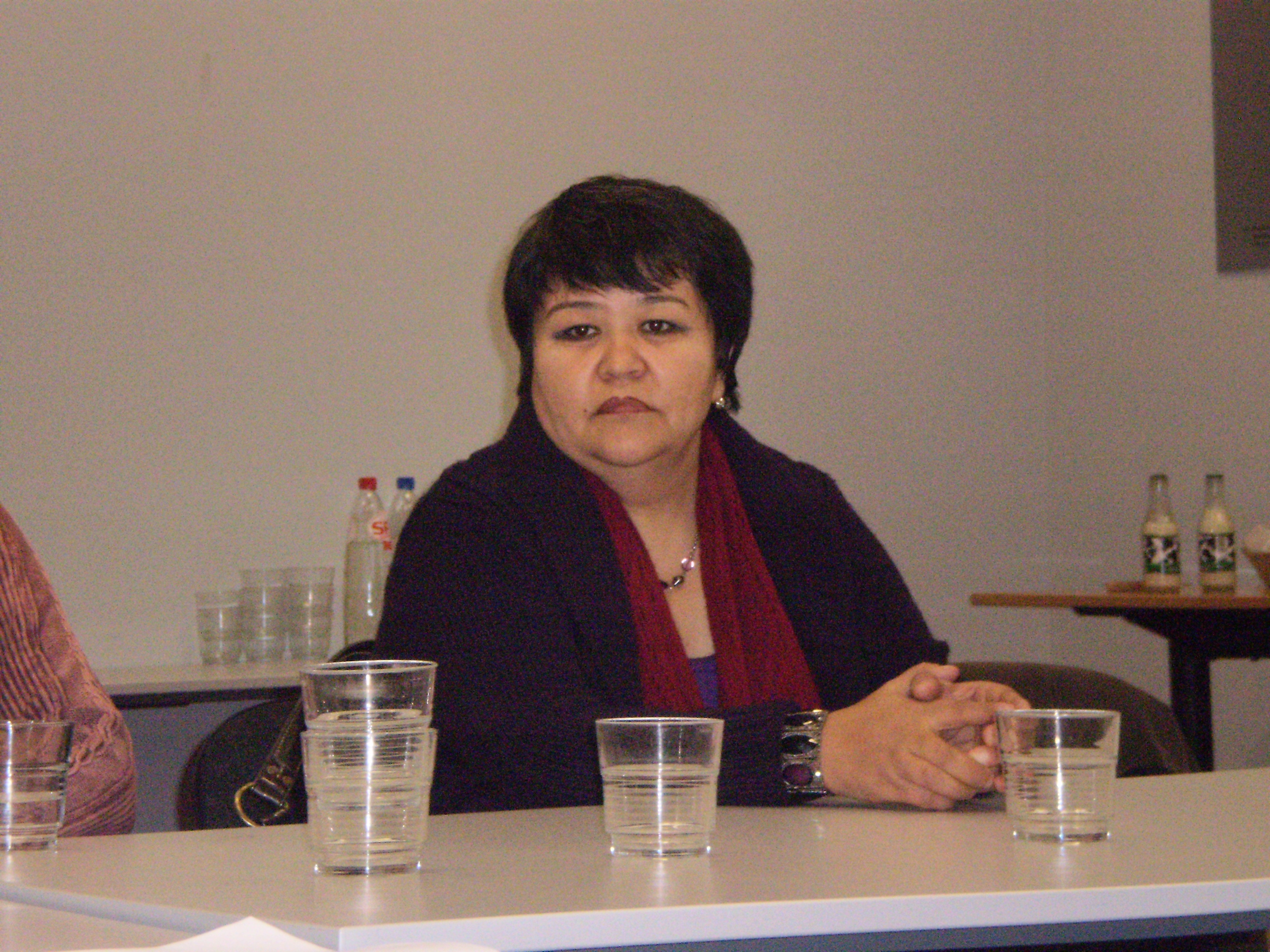
Mutabar Tadjibayeva is remarkable, even among human rights defenders. Her story is well-known in human rights circles: arrested, detained and tortured in Uzbekistan’s prisons, she was released on medical grounds and allowed to leave the country in 2008. That year she came to Geneva to receive in person the Martin Ennals Award for Human Rights Defenders [see: http://www.martinennalsaward.org/index.php?option=com_content&view=article&id=73&Itemid=116&lang=en and https://thoolen.wordpress.com/tag/mutabar-tadjibayeva/].OLYMPUS DIGITAL CAMERA

But she does not just live quietly in exile in Paris. She continues fight for her rights, lodged a complaint to the UN Human Rights Committee in 2012 and this body found on 6 October 2015 that there had been “multiple violations” of her rights, according to a press release issued by three human rights NGOs on 8 October (the Fiery Hearts Club, Redress and FIDH).   Read the rest of this entry »

Further on Bahrain where the Judiciary is helping the State to repress Human Rights Defenders

July 8, 2015

Further to my post today on Nabeel Rajab [https://thoolen.wordpress.com/2015/07/08/bahrain-freenabeel-campaign-more-urgent-than-ever-in-view-of-resumption-usa-security-assistance/], I draw attention to the recent report by the Observatory for the Protection of Human Rights Defenders (FIDH/OMCT) “Bahrain: Publication of an International Mission Report: Imprisonment, torture and statelessness: The darkening reality of human rights defenders in Bahrain”.

Report OBS Bahrain_English
44 pages / 870 KB

Human rights defenders in Bahrain are operating in a shrinking space, says the Observatory in a report published on 25 June 2015. The report documents the judicial harassment of 11 human rights defenders including lawyers, teachers, doctors or bloggers. All have suffered or been threatened with imprisonment, torture or statelessness as a consequence of their activities in defense of human rights. Read the rest of this entry »

Portrait of Nasrin Sotoudeh in Iran: Activism With A Defiant Smile

July 8, 2015

Nasrin makes a brief appearance in Jafar Panahi’s recent film “Taxi,  which was awarded the Golden Bear for best film at the Berlin international film festival 2015.

On 8 July FIDH published an update on the situation of Iranian human rights defender Nasrin Sotoudeh:With A Defiant Smile – A Portrait of Nasrin Sotoudeh“. For more posts on her see: https://thoolen.wordpress.com/tag/nasrin-sotoudeh/

Nasrin Sotoudeh is among the most prominent human rights lawyers in Iran (recipient of the 2012 Sakharov Prize, which she shared with the Iranian filmmaker Jafar Panahi, and the PEN/Barbara Goldsmith Freedom to Write Award). Known for her work in defending women’s rights activists, minors on death row, journalists, Kurdish rights activists and other human rights lawyers, including the Nobel prize winner Shirin Ebadi, she is a national hero to many Iranians.

In January 2011, she was sentenced to 11 years in prison on charges of “propaganda against the system,” and “acting against national security“. Following persistent calls for her release from the UN, governments, and NGOs her sentence was reduced to six years, to be spent in the notorious Evin prison.

In 2013, after three years in prison, Sotoudeh was unexpectedly released, without explanation from the authorities. During her incarceration, she spent time in solitary confinement and went on several hunger strikes in protest of the inhumane prison conditions and the 2012 travel ban imposed on her husband and young daughter. One of the hunger strikes lasted 49 days and resulted in her losing 95 pounds. Upon her release, despite her weakened physical state, Sotoudeh got right back to work fighting for the respect for human rights in Iran.

Since then she has reactivated the Professional Women Lawyers Association and the Children’s Rights Committee, both of which she had helped found before her imprisonment. However, she has been spending much of her energy on a new campaign to abolish the death penalty in Iran, called Step by Step to Stop the Death Penalty (LEGAM). The initiative focuses on amending Iranian legislation to gradually reduce and eventually abolish the use of the death penalty.

Until recently, her ability to push for legislative reforms remained greatly limited due to the Iran Bar Association’s October 2014 decision (under pressure from the Judiciary) to suspend her license to practice law for a period of three years. In protest, Sotoudeh staged daily sit-ins in front of the Bar Association’s offices in Tehran. Her perseverance and that of her supporters finally paid off when, on 23 June 2015, Sotoudeh was informed that the Bar Association had revised the ban and reduced it to a period of nine months [Sotoudeh declared that she would be applying to renew her license].

When asked how she became a human rights defender, Sotoudeh says that as a lawyer, she was forced to make a choice: “When a lawyer witnesses unfair trials, when a lawyer witnesses the execution of minors, either they must turn their back or they must face up to the problem they are witnessing. I think I entered the field of human rights on the day I decided not to avoid such issues.

Sotoudeh seeks to change Iran from the inside, by arguing cases and convincing others that protecting human rights is necessary. As she said recently regarding the conflict with the Iran Bar Association: “The channel for negotiations should never be closed. However, there are prerequisites for negotiations. If they are fulfilled, we should welcome such negotiations. If not, we should not insist only on negotiations. We should use civil action to persuade the other party to engage in negotiations.

In the brief appearance in Jafar Panahi’s recent film “Taxi,” (see above) Sotoudeh explains the trials and tribulations human rights defenders face in Iran all the time with a smile on her face, but a defiant smile!

With A Defiant Smile – A Portrait of Nasrin Sotoudeh.