Archive for the 'FIDH' Category

Interpol: UAE Major General and Chinese Public Security Official are not good candidates for Interpol!

November 16, 2021

INTERPOL is going to have its General Assembly on the 23 – 24 November 2021 in Lyon. The election of both its President and a member of the Executive Committee look terrible. Already in 2017 there was a problem: see https://humanrightsdefenders.blog/2017/04/20/interpol-headed-by-chinese-police-official-human-rights-defenders-fearsome/. (The former chairman of Interpol Meng Hongwei was also a ministry of public security official, serving as vice-minister. However, Meng’s Interpol term ended prematurely in 2018 when he disappeared during a visit to China and was later jailed for 13 years on bribery charges, amid Xi Jinping’s anti-graft campaign targeting millions of officials.)

Several prominent members of the European Parliament (MEPs) have warned that the appointment of the Emirati official Major General Ahmed Nasser Al-Raisi to the position of president of Interpol would “undermine the mission and reputation” of the global police organisation. In a letter sent to the European Commission president, three MEPs urged European Union (EU) states to elect an Interpol chief that comes “from a country with an established criminal justice system and longstanding respect for human rights”.

The Gulf Center for Human Rights (GCHR), the French League for Human Rights and the International Federation for Human Rights are also concerned about the candidacy of Major General Ahmed Nasser Al-Raisi call to reject him.

Ahmed Al-Raisi has been Inspector General of the UAE’s Interior Ministry since 2015 and is also in charge of the UAE police force. Under his leadership, forces have carried out repeated and systematic arbitrary detentions and tortured prisoners of conscience and human rights defenders with complete impunity. One of the most emblematic cases concerns human rights defender Ahmed Mansour. Winner of the 2015 Martin Ennals Award and member of the GCHR steering committee, Ahmed Mansour has been imprisoned since March 2017 and sentenced to ten years’ imprisonment in 2018 for, according to the authorities, criticising the Emirati government and tarnishing his country’s image on social networks. Since 2017, he has been held in solitary confinement in Al-Sadr prison, in a 4m2 cell, without access to medical, hygiene, water or sanitary facilities. The inhumane conditions of Ahmed Mansour’s imprisonment have been the subject of several appeals without any favourable response from the Emirati authorities. [see: https://humanrightsdefenders.blog/tag/ahmed-mansoor/]

According to reports of several NGOs, torture is used systematically in detention centres in order to obtain confessions of guilt or testimonies against other detainees, particularly in the prisons of Al-Razeen, Al-Wathba and Al-Sadr. In addition, some prisons, such as Al-Awair prison and the Al-Barsha police detention centre, are overcrowded and unsanitary, making it extremely difficult to comply with social distancing and recommended hygiene practices in the context of the COVID-19 pandemic….In addition, prisoners are regularly denied medication and medical treatment for pre-existing health problems or illnesses developed during detention. Several UN experts have condemned these practices and expressed their concerns to the UAE authorities in recent years, but the authorities have not changed their practices.

Such inhumane treatment is recurrent in the UAE and is in flagrant contravention of international law and the Nelson Mandela Rules on the Treatment of Prisoners. While Major General Al-Raisi is, by virtue of his office, responsible for investigating complaints of abuse by the police and security forces in his country, none have been conclusively investigated. In the absence of any enforceable accountability mechanisms in the UAE, the GCHR has filed a complaint in France, against General Major Al-Raisi for acts of torture. Unfortunately, Interpol did not listen: https://www.businessinsider.com/interpol-president-uae-official-accused-of-torture-elected-2021-11

Another problematic candidate is Hu Binchen, the deputy director-general of the Chinese Ministry of international cooperation department, who is one of three candidates vying for two seats as Asia delegates on the committee.

The 13-member executive committee oversees the work of Interpol’s general secretariat and helps set future policy. Interpol controls a number of databases containing identifying details of people and property, which assist in global policing. It also operates the system of red notices, which are requests “to locate and provisionally arrest an individual pending extradition”.

However, there are long-running concerns over governments or authorities misusing the system to track down dissidents. While there are clear rules against the use of red notices on refugees, high-profile cases have shown countries are repeatedly able to obtain red notices, against Interpol policy.

Activists and advocacy groups, as well as 50 members of an international cross-party group of legislators, the Inter-parliamentary Alliance on China, have lodged their objections at Hu’s potential election to the committee, noting alleged attempts by China to use the red notice system to target exiled Uyghur activists.

“By electing Hu Binchen to the executive committee, the general assembly would be giving a green light to the PRC government to continue their misuse of Interpol and would place the tens of thousands of Hong Kong, Uyghur, Tibetan, Taiwanese and Chinese dissidents living abroad at even graver risk,” said the letter from the Alliance, citing the July detention of Uyghur activist Idris Hassan in Morocco.

Allowing Interpol to be used as a vehicle for the PRC government’s repressive policies does great harm to its international standing.”

The human rights group Safeguard Defenders said the Chinese ministry’s international cooperation department, in which Hu is a senior official, oversaw operations named Sky Net and Fox Hunt, chasing down fugitives overseas. It alleged “teams were sent by the ministry “to intimidate and harass ethnic Chinese to force them to return to China ‘voluntarily’”. In a report also released on Monday, Safeguard Defenders said there had been a tenfold increase in the issuance of Chinese red notices between 2000 and 2020.

A later development is that 259 organizations, call on INTERPOL to immediately ban the Myanmar military junta from representing Myanmar as a member of INTERPOL. They demand that the military junta is excluded from the upcoming 89th INTERPOL General Assembly and all benefits and future cooperation that membership entails. [see: https://www.forum-asia.org/?p=36143]

https://www.fidh.org/en/issues/litigation/open-letter-to-the-representatives-of-the-member-states-of-the

https://www.middleeasteye.net/news/eu-lawmakers-say-uae-police-chief-would-undermine-interpols-reputation

https://www.theguardian.com/world/2021/nov/15/chinese-official-seeks-interpol-role-sparking-fears-for-dissidents

https://www.business-standard.com/article/news-ani/china-s-nominee-to-interpol-committee-opposed-by-lawmakers-from-20-countries-121111600231_1.html

https://www.theguardian.com/world/2021/nov/20/uae-nominee-interpol-ahmed-naser-al-raisi-torture-claims

https://www.thestar.com/news/world/europe/2021/11/22/interpol-election-raises-rights-concerns-about-fair-policing.html

Chinese Journalist Zhang Zhan at imminent risk of death

November 6, 2021

On 4 November 2021 the Observatory for the Protection of Human Rights Defenders, a partnership of the World Organisation Against Torture (OMCT) and FIDH, has received new information and requests your urgent intervention in the following situation in China.

New information:

The Observatory has been informed by the Network of Chinese Human Rights Defenders (CHRD) about the imminent risk of death of freelance journalist Zhang Zhan, who has been detained since May 2020 as a reprisal for her coverage of the Covid-19 pandemic from February 2020 until her arrest. Ms. Zhang is a former lawyer whose licence was suspended in retaliation for her activism and a well-known and outspoken journalist on the situation of human rights in China. See also: https://humanrightsdefenders.blog/2021/01/06/china-eu-deal-what-about-human-rights/

According to the relatives of Zhang Zhan, the journalists’ life is at imminent risk of death as a result of the partial hunger strike she started in June 2020 to protest her arbitrary detention and later her sentencing. The mother of Zhang Zhan was allowed to have a videocall with her daughter on October 28, 2021, after which she reported that the journalist weights less than 40 kg, is unable to walk unassisted and cannot raise her head without assistance. Her health is extremely poor, as she suffers from severe malnutrition, a gastric ulcer and swollen legs and feet. During her detention, she has been restrained and force-fed via a nasal tube.

The relatives of Zhang Zhan have been consistently denied their right to visit the journalist and only been allowed to communicate with her by video calls on two occasions, on October 28 and February 2021, and by a phone call on August 2021. Moreover, Zhang Zhan’s mother requested the Chinese security police the permission to visit the journalist in prison to persuade her to abandon the hunger strike. At the time of publication of this Urgent Appeal, she had not received a reply.

The Observatory recalls that Zhang Zhan was hospitalised in a prison hospital between July 21 and August 11, 2021 due to her deteriorating health conditions. During her hospitalisation, she was tied to a hospital bed and force-fed by prison authorities. On August 11, she was transferred back to the Shanghai Women’s Prison, where she remained detained at the time of this Urgent Appeal.

The Observatory further recalls that on May 14, 2020, Zhang Zhan went missing in Wuhan, Hubei Province, one day after releasing a video that criticised the government’s measures to contain the virus, claiming the authorities were being negligent. Zhang Zhan had travelled to Wuhan from her home in Shanghai in early February 2020 to report from the epicenter of the Covid-19 pandemic. She reported numerous stories, including the detention of other independent reporters and harassment of families of victims seeking accountability, via her WeChat, Twitter, and YouTube accounts.

After seven months of pre-trial detention, on December 28, 2020, the Shanghai Pudong People’s Court found Zhang Zhan guilty of “picking quarrels and provoking trouble” (Article 293 of China’s Criminal Law) and sentenced her to four years in prison. The court rejected the application filed by Zhang Zhan’s lawyers to request bail, live streaming of the trial, and a time extension of the proceedings. Their requests to have the defense witnesses appear in court to present exculpatory evidence was also rejected by the court. Zhang Zhan attended her trial in a wheelchair because of her poor health.

The Observatory is deeply concerned about the health conditions and risk of death of Zhang Zhan and urges the Chinese authorities to immediately and unconditionally release her and grant her immediate access to adequate and comprehensive medical treatment.

https://www.fidh.org/en/issues/human-rights-defenders/china-journalist-zhang-zhan-at-imminent-risk-of-death

https://www.republicworld.com/world-news/china/human-rights-watch-calls-for-immediate-release-of-chinese-journalist-who-reported-on-covid.html

FIDH launches “SEE YOU IN COURT” campaign

September 29, 2021

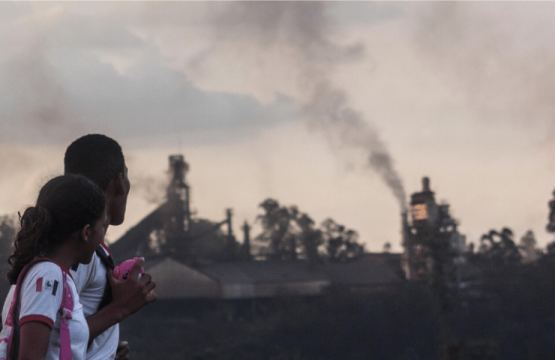
The disastrous impact that multinationals have on the environment can no longer be denied. The human right to live in a healthy environment concerns us all, therefore, FIDH and its member organisations are launching coordinated legal actions across the world. The companies implicated and States which allow it to happen must be held accountable.

The first legal actions

It is time to recognize the right to a healthy environment as a fundamental human right and to hold companies accountable for their actions.

  • Environmental impact = human impact Because human rights and the environment are interdependent, it is crucial that States recognise the right to a healthy environment as a fundamental human right. Hundreds of organisations are fighting for a UN resolution to achieve international recognition of this.
  • Restoring a healthy environment to affected communities In the face of environmental disasters and human rights violations, the balance is still too often tipped in favour of the companies involved. Ensuring access to justice for those most affected and passing laws which hold multinationals accountable are also means to protect the planet.

https://seeyouincourt.fidh.org/?lang=en#

69 NGOs address worsening situation in Eswatini

July 22, 2021

On 21 July 2021 FIDH and many other NGOs addressed an open letter to the Government of Eswatini and the international community:

We, the undersigned 69 civil society organisations, are deeply concerned about the eruption of state violence in Eswatini. We stand in solidarity with the people of Eswatini in condemning the government’s violent repression of mass protests demanding democracy and economic justice.

We support the UN Human Rights Commissioner’s call urging the authorities to fully adhere to human rights principles and reminding them that peaceful protests are protected under international human rights law. We call on the Government of Eswatini to immediately cease its brutal crackdown against civilians, restore and maintain internet access, and engage in inclusive dialogue with pro-democracy groups and politicians.

We call on the international community, including the United Nations, African Union, Southern African Development Community, and individual governments, to demand that the Government of Eswatini respect human rights, allow a thorough, independent investigation of who authorised violence against protesters, including shoot to kill orders, and support a peaceful transition to a democratic form of government.

Reports out of Eswatini indicate that, since late June, the army and police forces have killed dozens of unarmed civilians and injured around 1,000 people, including by shooting indiscriminately at and wounding protesters. The government has reportedly imprisoned hundreds of people, many of them young people, and shut down internet access across the country for several weeks, which Amnesty International calls “a brazen violation of the rights to freedom of expression and information.” Reports further indicate that security
forces have sought to intimidate human rights defenders and activists with unlawful surveillance, imposed a curfew, and restricted public gatherings and petition deliveries to the government. This political crisis caused by state-sponsored violence risks creating a humanitarian crisis, as hospitals struggle to treat the influx of people injured by security forces, food and fuel supplies become limited, and people’s movement and ability to conduct basic commerce is restricted.

Specifically, we lend our support to the demands of civil society organisations, political organisations, and people’s movements within Eswatini calling for a long-term resolution to the current political crisis through an inclusive political dialogue, the total unbanning of political parties, a transitional authority, new democratic Constitution, and a multiparty democratic dispensation.In the immediate term, we join democracy defenders in Eswatini in the following demands, calling for action from the Government of Eswatini to cease violence, restore and maintain communications services, and provide urgently needed humanitarian support:

● The immediate cessation of the killing of civilians and the return of the army to the
barracks;

● The immediate restoration of civic services such as the rapid issuing of death
certificates for those killed in the past days;

● Mandatory independent pathologists to conduct post-mortems on the deceased;

● Urgent humanitarian support to the affected families, workers and citizens who
need basic necessities such as food, sanitary towels, baby food, etc.

● The provision of direct financial support to resuscitate affected small and medium
enterprises;

● The full and permanent restoration of internet and communication services and
peoples’ right to freedom of expression; and

● The urgent availability of vaccines to all emaSwati and the end of unnecessary
lockdowns.

As the Government of Eswatini, Africa’s only remaining absolute monarchy, violates the human rights of residents, suppresses freedom of speech and assembly, and jails young people for demanding a brighter future, the international community cannot remain silent.

We call on partners in international civil society, regional governmental bodies, and diplomats to join us in amplifying the demands of the Eswatini people and seeking the protection of people’s human rights.

https://www.fidh.org/en/region/Africa/swaziland-eswatini-civilian-killings-must-stop-now

FIDH Launches Website Tracking Systematic Human Rights Violations in Belarus

June 28, 2021

SIARHEI LESKIEC / AFP

On 25 June 2021 the FIDH issued a press release announcing a new website on Belarus. Since May 2020, the administration of Aliaksandr Lukashenka, the de facto president of Belarus, has intensified repression, aiming to crush the country’s democratic movement. A new website launched by the International Federation for Human Rights (FIDH) tracks, compiles, and presents detailed information on the human rights situation in the country, including on political prisoners, violations against vulnerable groups, and efforts to advance accountability for the regime’s crimes.

FIDH and its member organisation in Belarus, Viasna Human Rights Center, have been closely monitoring and documenting the human rights situation in Belarus over the past year. The website launched today is intended as a comprehensive resource compiling up-to-date data and statistics, and offering analysis and insight into violations, including from our local partners such as Viasna. The website tracks and provides detailed information on political prisoners—particularly human rights activists, lawyers, journalists, and other human rights defenders, describes violations against vulnerable groups currently imprisoned by the regime—and details ongoing efforts to further accountability for the regime’s crimes.

The website has four main sections, updated daily, reflecting the most recent developments in four key areas: monitoring events and reactions, exposing crimes and furthering justice, defending human rights activists, and supporting vulnerable groups.

Monitoring events and reactions

On Monday, the EU approved new sanctions against 78 individuals and eight companies believed to support the crackdowns on the democratic movement and the forced landing of Ryanair flight with Raman Pratasevich on board late last month. The same day, the UK, Canada, and the US joined this initiative and introduced new sanctions. At the European Council yesterday, the EU also approved economic sanctions against parts of Belarus’ potash, oil, and tobacco exports, as well as telecommunication and banking sectors. We are monitoring this situation and will publish updates as soon as further information is available.

Exposing crimes and furthering justice

On 19 June, the law “On Amendments to the Laws on Ensuring the National Security of the Republic of Belarus” came into force. Among other provisions, it grants law enforcement the right to use military and special equipment to suppress riots and stipulates that officers not be liable for harm caused as a result of the use of force and weapons. This is one of a series of recent laws—including one that expands the definition of extremism—that threaten protesters’ lives and liberties, under the guise of ensuring public order and national security, and that violate the International Covenant on Civil and Political Rights. FIDH, which is on the Advisory Council of the International Accountability Platform for Belarus, regularly issues statements analysing such laws, as well as communications to the UN Special Procedures, in order to further justice in the country.

Defending human rights activists

Many human rights defenders (HRDs) in Belarus face persecution due to their professional activity. To date, at least 21 of them have been charged with supposed crimes in an attempt to thwart their human rights activities. Most recently, on 18 June, lawyer Andrei Machalau, who was a defense attorney in many criminal cases against protests activists and HRDs, including TUT.by journalist Katsiaryna Barysevich, was disbarred for alleged violation of professional ethics. Machalau is one of at least 17 lawyers whose licenses have been revoked since May 2020. We endeavour to defend each and every one of them and gather the available information in a dedicated section of our website.

Supporting vulnerable groups

The current regime demonstrates a blatant disregard for human rights of children, women, pensioners, persons with disabilities, and other vulnerable groups. Despite the overwhelmingly peaceful nature of the protest movement, hundreds of representatives of these groups have been detained, and sometimes beaten, for simply displaying the white-red-white flag: the main symbol of the democratic movement. On Monday, the Belarusian Ministry of Interior proposed that the KGB add the white-red-white flag and slogan Zhyve Belarus (Long live Belarus) to the list of banned Nazi symbols. Should this initiative be approved, public use of such symbols could lead to administrative or even criminal liability—potentially devastating news for many minors, women, and other Belarusians who have galvanised the protest movement using these symbols. We will be following the situation and supporting those who may suffer restrictions on freedom of speech due to this and other legislation.

https://www.fidh.org/en/region/europe-central-asia/belarus/mobilising-for-justice-in-belarus-fidh-launches-website-tracking

Continued harassment of Mother Nature defenders in Cambodia

June 22, 2021

The Cambodian government should immediately drop baseless conspiracy and “insulting the king” charges against four environmental activists affiliated with the Mother Nature Cambodia environmental group and release the three in pretrial detention, Human Rights Watch said today.

On June 16, 2021, the police arrested Sun Ratha, 26, Ly Chandaravuth, 22, and Seth Chhivlimeng, 25, in Phnom Penh, and Yim Leanghy, 32, in Kandal province, apparently for their documentation that raw sewage has entered the Tonle Sap River near the Royal Palace. On June 20, the court charged Ratha and Leanghy with “conspiracy” and lese majeste (“insulting the king”) under articles 453 and 437 bis of Cambodia’s penal code, and Chandaravuth with “conspiracy.” If convicted, they face between 5 and 10 years in prison, and fines of up to 10 million riels (US$2,500). The authorities also charged in absentia aSpanish national, Alejandro Gonzalez-Davidson, the founder of Mother Nature Cambodia, who had been deported in 2015. Chhivlimeng was released without charge.

The Cambodian government has stepped up its campaign to silence activists peacefully advocating to protect the environment,” said Phil Robertson, deputy Asia director. “Foreign governments, the United Nations country team, and international donors should call on the Cambodian authorities to drop their absurd charges against the environmental activists and publicly condemn any further clampdown on peaceful activism.”

An Interior Ministry spokesperson alleged that the authorities had proof that “rebellious” Mother Nature Cambodia had used foreign funding to try to topple the government, but did not make any evidence public.

This case followed earlier harassment of five Mother Nature Cambodia activists. On May 5, the Phnom Penh court convicted three environmental activists – Long Kunthea, 22, Phuon Keoraksmey, 19, and Thun Ratha, 29 – of “incitement to commit a felony or disturb social order,” articles 494 and 495 of Cambodia’s penal code. The judge sentenced them to between 18 and 20 months in prison as well as a fine of 4 million riels ($1,000) for their peaceful activism protesting the authorities’ filling-in Phnom Penh’s Boeung Tamok lake.

All three activists had been arrested in September 2020 and spent almost eight months in pretrial detention. Gonzalez-Davidson and Chea Kunthin, another activist, were also convicted in absentia and sentenced to between 18 and 20 months in prison. [see: https://humanrightsdefenders.blog/2020/09/09/cambodia-arbitrary-arrest-of-mother-nature-activists/]

Amid the Covid-19 pandemic, the Cambodian authorities have stepped up their crackdown on youth and environmental activists engaged in peaceful activism and protest. The government has often used draconian new laws to arrest and prosecute activists in an apparent attempt to silence their voices and shut down their activism.

In March 2020 and early 2021, the authorities arrested environmental activists affiliated with the Prey Lang Community Network along with a prominent environmentalist and lawyer, Ouch Leng, to stop their efforts to document illegal logging and deforestation within the Prey Lang forest.

Human Rights Watch has documented cases of nearly 70 current political prisoners, including members of the political opposition, youth and environmental activists, trade union leaders, and journalists who are awaiting trial or are serving prison sentences. Many other activists have fled Cambodia to seek refuge abroad.

Because of the higher risks of getting Covid-19 in prison, Human Rights Watch has repeatedly appealed to the Cambodian authorities to conditionally release pretrial detainees not held for violent offenses. The Office of the UN High Commissioner for Human Rights and civil society groups have often criticized the government’s routine use of pretrial detention.

“Cambodia’s highly politicized courts mean that the environmental activists charged have no chance of getting a fair trial,” Robertson said. “Only international pressure on the Cambodian government holds out the possibility of saving these activists from unjust prison sentences.”

https://www.hrw.org/news/2021/06/23/cambodia-free-environmental-activists

https://www.jurist.org/news/2021/06/cambodia-court-charges-environmental-activists-with-conspiracy-insulting-king/

https://www.fidh.org/en/issues/human-rights-defenders/cambodia-arbitrary-detention-and-judicial-harassment-of-mother-nature

https://www.amnesty.org/en/latest/news/2021/06/cambodia-assault-on-environmental-defenders-escalates-as-four-more-charged-imprisonment/ 

History writing in Russia suppressed

June 10, 2021

A new FIDH report published on 10 June 20212 finds that human rights abuses targeting historians, activists, journalists, and NGOs working on historical memory of the Soviet past have become systematic since at least 2014. Legal impediments and implementation of laws designed to stifle free speech and freedom of association, arbitrary arrests and prosecutions, censorship, public smear campaigns, and failure to provide effective remedies for past abuses are just some of the violations detailed.

In recent years, control over the historical narrative of the Soviet past has become an essential tool for consolidating authoritarian rule. Building Russia’s collective identity around Soviet victory in the Second World War, the current regime attacks historians, journalists, civil society activists, and non-governmental organisations that work to keep alive a historical memory of the Soviet past that focuses on identification of the perpetrators and victims of the likes of the Great Terror, Joseph Stalin’s 1937-38 campaign of deadly political repression.

The new FIDH report, Russia: Crimes Against History, catalogues these violations, analyses them from the viewpoint of international human rights law, and makes recommendations to national authorities and international organisations on how to improve the situation of so-called “history producers.”

Our report is the first comprehensive analysis of the issue of manipulation of historical memory in Russia from the vantage point of human rights law,” said Ilya Nuzov, head of FIDH’s Eastern Europe and Central Asia desk who conceived and co-authored the report. “Our findings show that the authorities have created a climate of fear and repression for all independent voices working on historical past in Russia, reminiscent of the worst practices of the Soviet period.”

Specifically, the report details how, in recent years, the government has methodically attempted to discourage independent work in the historical field while actively promoting its own “historical truth” that centers on Soviet victory in the Second World War.

In 2020, the official historical narrative was set in stone in the Constitution, which was amended contrary to domestic and international law. In the Constitution, Russia is presented as the “successor” regime of the Soviet Union, which must “honour the memory of the defenders of the fatherland” and “protect the historical truth.” This narrative is actively promoted by government institutions. On the other hand, the authorities have stigmatised and penalised internationally supported civil society organisations, such as International Memorial, with the likes of foreign agent laws; it has criminalised interpretations that diverge from the state’s interpretation of history through the adoption of “Exoneration of Nazism” and other memory laws; and it has organised show trials against independent historians like Yuri Dmitriev, who received a draconian 13-year sentence for his tireless work to identify and commemorate victims of the Great Terror. Seae also: https://humanrightsdefenders.blog/2020/10/01/dunja-mijatovic-calls-on-russia-to-end-judicial-harassment-of-human-rights-defenders/

“The report is important not only for Russia,” remarked Valiantsin Stefanovic, FIDH vice president. “Its findings and recommendations could be applied to other countries in the region and around the world that manipulate historical memory. In Belarus for instance, we see a similar use of memory laws to crack down on the pro-democracy movement.”

The report formulates a number of recommendations, such as the establishment of legal guarantees and protections to safeguard the independence of historians’ work. It also proposes the official recognition of historians as human rights defenders by United Nations special procedures, in addition to the creation of a “historians’ day” by UNESCO.

Garifuna rights defenders in Honduras should be released.

March 16, 2021
Defensoras garífunas

Sunday March 7 2021 an initial hearing was held in the court at Trujillo, Colón, in which Marianela Solórzano and Jennifer Solórzano, women human rights defenders belonging to the Black Fraternal Organization of Honduras (OFRANEH), are on trial. Both were arrested by the Public Security Force (FUSEP) on March 3rd, and charged with damages, threats, robbery and usurpation of lands. 

In the trial records they are incriminated for the offenses of land usurpation, involving other Garifuna defenders, as well. The charges against them are related to the historic process of resistance by the Garifuna people to the plunder of their lands. Private businesses and governments alike have participated in the illegal appropriation of the ancestral territory of the Garifuna people, particularly the ownership of more than seven thousand hectares of land in the Cristales and Rio Negro communities confirmed by ancestral property deeds.  

Marianela is a defender of the rights of the LGBTI Garifuna community, and Jennifer, a defender of the ancestral Garifuna territories. Their arrests took place in the context of the continuous persecution and attacks against the Garifuna people organized in OFRANEH.

Historically, the communities belonging to OFRANEH have been the target of harassment, threats by armed groups, assassinations, and the disappearance of community leaders, among other highly serious rights violations. During the last ten years, these have only worsened due to the authoritarian criminal government model headed by Juan Orlando Hernández. Eight months ago, five Garifuna comrades were disappeared by armed men wearing uniforms of the Office of Police Investigations (DPI) of Honduras. As of now, their whereabouts are unknown. 

National Network of Women Human Rights Defenders in Honduras, the Mesoamerican Initiative of Women Human Rights Defenders (IM-Defensoras), and many other groups and networks of women human rights defenders in Mesoamerica, as well as the FIDH call on all feminist and LGBTI social movements and the international community to stay on the alert for developments in this case and to demand a hearing with full guarantees for the rights of the criminalized Garifuna defenders. 

See also: https://humanrightsdefenders.blog/2019/07/25/four-honduran-woman-human-rights-defenders-say-why-funders-need-to-prioritize-social-movmements/

They demand the immediate freedom and point out that Marianela and Jennifer are human rights defenders, not criminals.  

http://im-defensoras.org/2021/03/urgent-alert-honduras-arrested-garifuna-rights-defenders-will-have-hearing-this-sunday-march-7th-the-international-community-demands-their-release/

https://www.fidh.org/es/temas/defensores-de-derechos-humanos/honduras-criminalizacion-de-las-defensoras-garifunas-marianela-y

NGO Statement remembers the one-year anniversary of the ban on the Maldivian Democracy Network

December 19, 2020

Today – 19 December 2020 – marks one year since the Government of the Maldives arbitrarily shut down the longest serving human rights group in the country, the Maldivian Democracy Network (MDN) and arbitrarily confiscated all of its funds. Since then, the Government has not reversed any of its unconstitutional actions related to the dissolution of MDN.

We remind the Government of the Maldives that Article 30(b) of the country’s Constitution guarantees the right to establish societies and non-governmental organisations (NGOs). Article 43 affords everyone the right to fair administrative action that adheres to basic fairness and procedural propriety. MDN has been deprived of these rights through arbitrary action taken without due process.

An administrative decision was taken based on allegations of a criminal offence, depriving the organisation and the human rights defenders involved of their right to appeal in the criminal and civil processes initiated by the Government of the Maldives. The right to appeal is guaranteed by Article 56 of the Constitution. Furthermore, the organisation has not been given the right of reply or to defend itself against what is widely seen as a biased decision based on the interpretation of an academic research.

We are disappointed that the Parliament of the Maldives has refused to investigate the matter and hold the government accountable. We urge the Parliament not to use its mandate selectively, and call on it to conduct its affairs equally, uphold the Constitution and the rule of law.

The Government of the Maldives, by taking arbitrary and unconstitutional actions to silence civil society, has set a dangerous precedent that has resulted in a violent witch-hunt of human rights defenders and civil society organisations. We call on President Ibrahim Mohamed Solih to conduct a fair and open enquiry into these deplorable actions and stop the harassment of the human rights community in the Maldives, as several United Nations Member States recommended during the third Universal Periodic Review of the Maldives in November 2020[1].

Signed by:

The Asian Forum on Human Rights and Development (FORUM-ASIA)

CIVICUS

The International Federation for Human Rights (FIDH),

The Commonwealth Human Rights Initiative (CHRI)

The Maldivian Democracy Network (MDN) is a non-partisan civil society organisation based in the Canton of Geneva, Switzerland, operating under the Swiss civil code. MDN, registered  in the Maldives from 2006 until December 2019, was one of  the longest-running human rights groups in the country until the Government of  Maldives forcefully shut down the organisation.

See also; https://humanrightsdefenders.blog/2017/06/26/maldives-mohamed-nasheed-from-human-rights-defender-to-president-to-exile/

[1] Recommendations made to the Maldives at the 36th session of the Universal Periodic Review

Cambodia: Arbitrary arrest of Mother Nature activists

September 9, 2020

On 8 September 2020 the Observatory for the Protection of Human Rights Defenders, a partnership of the World Organisation Against Torture (OMCT) and FIDH, requests  urgent intervention in the arbitrary arrest of Mother Nature activists Thun Ratha, Long Kunthea and Phoun Keo Reaksme in Cambodia.

The three environmental activists and members of “Mother Nature”, were arrested for denouncing the exploitation of Phnom Penh‘s Bueng Ta-mouk lake. The project aims to build a military base, which will destroy the habitat of many bird species and damage biodiversity, and is also expected to cause significant flooding in Phnom Penh.  According to the information received, on September 3, 2020, Ms. Long Kunthea and Ms. Phoun Keo Reaksmey were arrested by police in Phnom Penh as they were about to walk from Wat Phnom to Prime Minister Hun Sen’s house in order to request a meeting with the Prime Minister to share their concerns over a number of environmental issues, including the development of Bueng Ta-mouk lake. On the same day, Mr. Thun Ratha was arrested at his home in Khan Pur Sentchey District, Phnom Penh, by around 25 police officers, who surrounded the property for approximately two hours before arresting him. The police padlocked the property shut and left a letter displayed on the door informing that the operation was taken on the grounds that Mr. Thun Ratha “published the information without legal permission”, without specifying which information was published or what the legal grounds were for requiring permission over such a publication.

On September 6, 2020, the three were charged with “incitement to cause societal chaos” (articles 494 and 495 of the Cambodian Criminal Code) and placed in pre-trial detention. They could face up to two years in prison. Mr. Thun Ratha was taken to the Correctional Center 1 while Ms. Long Kunthea and Ms. Phoun Keo Reaksmey were taken to the Correctional Center 2.

The Observatory reiterates its deepest concern about the fact that Cambodian authorities regularly use legal harassment and the politicised judicial system to target land and environmental activists and recalls in particular that this is not the first time that Mr. Thun Ratha and other Mother Nature activists have faced harassment.

https://www.rfa.org/english/news/cambodia/incitement-09082020201342.html

https://www.aljazeera.com/news/2021/5/13/jailed-in-hiding-expelled-cambodias-mother-nature-crackdown

https://www.omct.org/human-rights-defenders/urgent-interventions/cambodia/2020/09/d26068/