Archive for the 'FIDH' Category

NGOs protest harassment of Ambika Satkunanathan in Sri Lanka

February 17, 2022

On 14 February 2022 FIDH published a joint statement to support Sri Lankan human rights defender Ambika Satkunanathan:

We the undersigned human rights organizations, express our deep concern about the statement issued by the Sri Lankan Foreign Ministry on February 4, 2022, in which the government denounced testimony given by Ambika Satkunanathan, a leading human rights lawyer, to the European Parliament on January 27. The government statement clearly constitutes an act of harassment and intimidation. We condemn the Sri Lankan government’s tactics to intimidate human rights defenders, and express our full solidarity with Ms. Satkunanathan, a well-known, respected and courageous human rights defender. Targeting her for providing accurate testimony about the human rights situation in Sri Lanka to the European Parliament is completely unacceptable, and sends a chilling message to all Sri Lankan civil society, especially those in the north and east, who are already operating under considerable duress under the current administration.

Sri Lanka’s international partners, including the European Union, should publicly condemn the Sri Lankan government’s statement and express solidarity with Ms. Satkunanathan, who has been targeted for her international engagement, and increase their efforts to engage with Sri Lankan civil society at large.

The Foreign Ministry’s statement contains numerous false claims in an attempt to disparage and delegitimize a distinguished human rights advocate, placing her at risk of physical danger in retribution for her brave work. The government’s claim that her testimony was “reminiscent of LTTE [Liberation Tigers of Tamil Eelam] propaganda that once stoked hatred among communities,” and that “such allegations need to be refuted in the interest of social harmony” Is particularly insidious and dangerous.

The government’s statement mirrors its repeated practice of falsely equating human rights defenders and human rights advocacy with those pursuing “terrorism.” The statement’s language aligns these baseless allegations with vague and frequently abused provisions under the Prevention of Terrorism Act (PTA), exposing Ms. Satkunanathan to a heightened risk of threats, attacks and persecution.

Ms. Satkunanathan was a commissioner of the National Human Rights Commission of Sri Lanka before that body’s independence was compromised under the current administration and led the first national study on Sri Lanka’s prisons. Prior to that, she was for many years a legal consultant to the Office of the United Nations High Commissioner for Human Rights. She is the author of an important recent report on abuses committed during the so-called “war on drugs.”

We are concerned that the government’s statement seeks to place the blame on human rights defenders if the European Union determines that Sri Lanka failed to meet its human rights commitments under GSP+, the preferential tariff system. The European Union should remind the Sri Lankan government that the responsibility to uphold its international human rights obligations rests with the government. The government’s treatment of human rights defenders reflects its lack of respect for international human rights law.

We support Ms. Satkunanathan’s testimony to the European Parliament, which accurately described a situation already reported by the United Nations and many domestic and international human rights organizations. The government’s response contains numerous false statements, including:

- The government claims to be “engaged in long standing cooperation with the UN human rights mechanisms and the UN Human Rights Council.” On the contrary, in February 2020, soon after taking office, the government of President Gotabaya Rajapaksa withdrew Sri Lankan support from consensus resolutions of the council, repudiating commitments made by the previous government. Special Procedures mandate holders of the Council issued a statement on February 5, 2021, noting that their recommendations, including on torture, the independence of the judiciary, arbitrary detention, enforced disappearances, minority rights, counterterrorism, freedom of religion or belief, and freedom of assembly and association, had been ignored.

- The government claims to be “strengthen[ing] rule of law, access to justice and accountability.” However, President Rajapaksa campaigned on a platform of protecting “war heroes” from prosecution, and has appointed individuals implicated in war crimes to senior government posts. His presidential commission on “political victimization” has sought to interfere in judicial proceedings and block trials and investigations in human rights cases implicating the president’s associates and the president himself. The president pardoned Sunil Ratnayake, one of very few members of the armed forces ever convicted of human rights violations, who murdered eight Tamil civilians including children.

- The government denies that civic space is shrinking, as Ms. Satkunanathan described in her testimony. Yet under the current government, many human rights defenders have said that they are subjected to continual government intimidation, intrusive surveillance, and attempts to block their access to funds. In her most recent update to the Human Rights Council, High Commissioner Michelle Bachelet wrote that, “surveillance, intimidation and judicial harassment of human rights defenders, journalists and families of the disappeared has not only continued, but has broadened to a wider spectrum of students, academics, medical professionals and religious leaders critical of government policies.” The UN Special Rapporteur on contemporary forms of slavery in his end-of-mission statement last December documented government intimidation of civil society and a “shrinking civic space.”

- The government claims there is no “concrete evidence of discrimination against minorities.” In fact, for nearly a year the government banned the burial of people said to have died with Covid-19, causing immense distress to the Muslim community without any medical justification in what is only but one example of discrimination against ethnic and religious minorities. Such burials are now permitted only at a single remote site. In January 2021 High Commissioner Bachelet found that, “Tamil and Muslim minorities are being increasingly marginalized and excluded in statements about the national vision and Government policy… Sri Lanka’s Muslim community is increasingly scapegoated.” The High Commissioner’s findings are in line with reports by Amnesty International, Human Rights Watch, and others that the Prevention of Terrorism Act is used almost exclusively against members of the Tamil and Muslim communities. The government continues to deny efforts to commemorate war victims belonging to the Tamil community.

- The government denies Ms. Satkunanathan’s description of alleged extrajudicial killings committed in the context of Sri Lanka’s “war on drugs.” However, these abuses are widely documented. In September, High Commissioner Bachelet said, “I am deeply concerned about further deaths in police custody, and in the context of police encounters with alleged drug criminal gangs, as well as continuing reports of torture and ill-treatment by law enforcement officials.”

The Sri Lankan government’s statement attacking Ambika Satkunanathan for her testimony to the European Parliament’s Sub-Committee on Human Rights exemplifies threats faced by human rights defenders, particularly when they engage with foreign and international forums, and it further shows the government’s refusal to address the ongoing serious human rights violations taking place in the country. Instead of trying to silence those who seek to defend human rights, the government should give serious consideration to their input and contributions, and take urgent action to ensure that they can work in a safe environment without fear of reprisals.

https://www.fidh.org/en/region/asia/sri-lanka/sri-lanka-organisations-express-solidarity-with-human-rights-defender

https://en.wikipedia.org/wiki/Ambika_Satkunanathan

Anti-terror laws in India keep being used against human rights defenders

January 28, 2022

On 26 January 2022 four major NGOs made a strong joint statement on India:

We, the undersigned civil society organizations, are deeply concerned about the ongoing harassment of 18 human rights defenders under the Unlawful Activities (Prevention) Act (UAPA) in reprisal for their advocacy work against the Citizenship (Amendment) Act (CAA) 2019. Thirteen of those arrested under the UAPA are currently in Rohini, Tihar, and Mandoli jails, New Delhi. We call for the immediate and unconditional release of all the human rights defenders arrested, and the dismissal of all charges against them.

The CAA has been widely criticized by activists, human rights defenders, civil society organizations, students and the international community for being openly sectarian and discriminatory against Muslims. After the CAA’s adoption, protesters across the country took the street to voice their concerns against the legislation, which goes against India’s Constitutional principles of secularism and equality. Police authorities responded by arresting human rights defenders and activists who spoke up against the CAA. Most of them were student activists and human rights defenders from the minority Muslim community.

The arrests of human rights defenders began in February 2020 and are still ongoing. Many of them had multiple First Information Reports (FIR) registered against them and were charged with serious offenses, including under UAPA. Of those arrested, only five human rights defenders – Natasha Narwal, Devangana Kalita, Safoora Zargar, Asif Iqbal Tanha, and Md. Faizan Khan – were released on bail. Thirteen others – Sharjeel Imam, Umar Khalid, Khalid Saifi, Tahir Hussain, Saleem Malik, Mohd. Saleem Khan, Meeran Haider, Shadab Ahmed, Tasleem Ahmed, Shifa Ur Rehman, Athar Khan, and women human rights defenders Ishrat Jahan and Gulfisha Fatima– remain in jail. Despite prolonged incarceration, the trial for their case has not commenced yet.

See also: https://humanrightsdefenders.blog/2020/06/01/eu-human-rights-committee-condemns-indias-arrest-of-human-rights-defenders/ and https://humanrightsdefenders.blog/2020/06/27/un-experts-address-3-big-ones-usa-china-and-india/

On 24 January 2022, a Delhi court framed charges against human rights defender Sharjeel Imam while rejecting his application for bail. The charges include Sections 124A (“sedition”), 153A (“promoting enmity between different groups on grounds of religion), 153B (“imputations, assertions prejudicial to national integration”), 505 (“statements conducing to public mischief”), along with Section 13 (“punishment for unlawful activities”) of the UAPA.

Khalid Saifi, Ishrat Jahan, and Gulfisha Fatima have reported custodial violence and torture by the Delhi police. There has been no effective investigations into these allegations or responsibility taken for their treatment. Shifa Ur Rehman, who has been in detention since 26 April 2020, suffers from severe kidney disease and has been denied access to adequate medical care in prison.

We express our deep concern over the harassment and arbitrary detention of human rights defenders that appear to be in retaliation to their peaceful activism and the legitimate expression of dissent against a discriminatory law. Despite the risks, human rights defenders have raised their voice for those oppressed by the CAA and in support of the Constitutional values that represent India.

We call on the Indian authorities to protect those defending human rights values and principles enshrined in national laws and to uphold international human rights commitments. We stand in solidarity with those who cannot speak out due to their incarceration, threats by Indian authorities, or due to a prevailing sense of fear. The treatment of these human rights defenders highlights a pattern of perpetrated abuse and violence, which is also exerted through legal mechanisms. This is especially concerning given India’s membership in the United Nations Human Rights Council and its pledge to preserve and protect human rights.

We urge the relevant authorities in India to:

1. Immediately and unconditionally release all human rights defenders arrested for protesting against the CAA, dismiss all charges, and cease all forms of harassment against them.
2. Guarantee under all circumstances that the arrested human rights defenders are not subjected to any form of torture and other ill-treatment while in police custody, and guarantee their access to adequate medical care and treatment.
3. Initiate a thorough judicial review of the Unlawful Activities (Prevention) Act and the Citizenship (Amendment) Act in genuine consultation with independent civil society organizations and human rights defenders, with a view to aligning these laws with India’s obligations under international human rights law.
4. Guarantee in all circumstances that all human rights defenders in India are able to carry out their legitimate human rights activities without fear of reprisals, and free of all restrictions—including police and judicial harassment.

Please inform us of any actions that may be taken with regard to the above case.

-FIDH
· Civicus:
· Front Line Defenders
· World Organisation Against Torture (OMCT)

https://www.fidh.org/en/region/asia/india/india-ongoing-targeting-of-18-human-rights-defenders-under-anti

Ground breaking conviction of Syrian torturer in Germany

January 17, 2022
Group of framed portraits
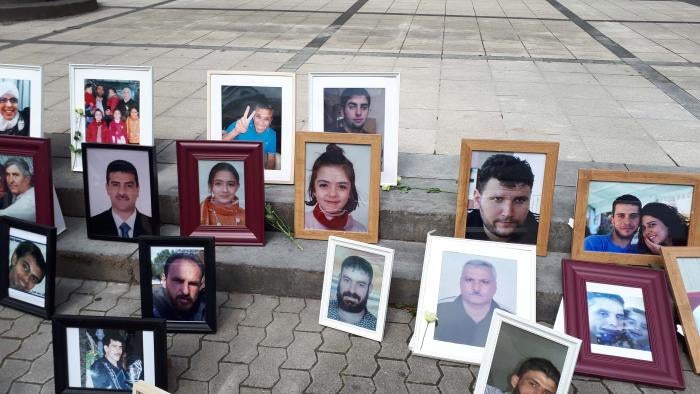
Photos of Syrians who have been detained or disappeared set up by Families for Freedom, as part of a protest in front of the court in Koblenz, July 2, 2020. © 2020 Alexander Suttor

The conviction of a former Syrian intelligence officer for crimes against humanity by a German court is a ground-breaking step toward justice for serious crimes in Syria, Human Rights Watch said today. The judgment is a meaningful moment for civilians who survived torture and sexual abuse in Syria’s prisons.  

On January 13, 2022, a German court delivered its judgment in the trial of Anwar R., a former member of Syria’s General Intelligence Directorate, one of the country’s four main intelligence agencies commonly referred to collectively as the mukhabarat. Anwar R. is the most senior former Syrian government official to be convicted for serious crimes in Syria.  

German prosecutors accused Anwar R. of overseeing the torture of detainees in his capacity as head of the investigations section at the General Intelligence Directorate’s al-Khatib detention facility in Damascus, also known as “Branch 251.” 

The judges found Anwar R. guilty of committing crimes against humanity and sentenced him to life in prison. Following the verdict in the case, Anwar R. has one week to appeal.  

“More than 10 years after the violations were committed in Syria, the German court’s verdict is a long-awaited beacon of hope that justice can and will in the end prevail,” said Balkees Jarrah, associate international justice director at Human Rights Watch. “Other countries should follow Germany’s lead, and actively bolster efforts to prosecute serious crimes in Syria.”  

Human Rights Watch issued a question and answer document and a feature article on the trial and how it is situated in the larger context of the Syrian conflict on January 6, 2022. The trial against Anwar R. and Eyad A., who was found guilty of aiding and abetting crimes against humanity in February, began in April 2020 and was the first anywhere in the world for state-sponsored torture in Syria. Eyad A.’s appeal against his conviction remains pending. 

Syrian survivors, lawyers, and activists have been central to making this trial a reality, not only pressing for justice but laying the groundwork that makes justice possible, Human Rights Watch said.  

More than 80 witnesses testified, including former detainees, former Syrian government employees, German police investigators, and experts in Syrian affairs. The testimony included well-documented accounts of torture and sexual abuse in Branch 251, descriptions of mass graves, and details of Syria’s government policy to violently crack down on peaceful protesters in 2011. Several of the witnesses were able to identify Anwar R. in the courtroom.  

One of the major challenges of this trial was witness protection. Several witnesses living in Germany and other European countries cancelled their appearance in court out of fear for their lives and safety, or that of their families. Several witnesses, some who were also victims, testified that they feared a risk to themselves and their families given their role in the trial. German authorities should ensure that witnesses and victims are sufficiently informed about their rights to protective measures, including to appear anonymously before the court. 

Tens-of-thousands of people have been detained or disappeared in Syria since 2011, the vast majority by government forces using an extensive network of detention facilities throughout the country. The Syrian government continues to detain and forcibly disappear thousands of people. 

Many of those detained have died from torture and horrific detention conditions. Comprehensive justice for these and other unchecked atrocities in Syria has been elusive. Syria is not a member of the International Criminal Court. And in 2014, Russia and China blocked efforts at the United Nations Security Council to give the court a mandate over serious crimes in Syria. 

The trial of Anwar R. and Eyad A. is possible because Germany’s laws recognize universal jurisdiction over certain of the most serious crimes under international law. That allows for the investigation and prosecution of these crimes no matter where they were committed and regardless of the nationality of the suspects or victims. Universal jurisdiction remains one of the few viable pathways to justice for crimes committed in Syria.  

Germany has several elements in place to allow for the successful investigation and prosecution of grave crimes in Syria. It has above all a comprehensive legal framework, well-functioning specialized war crimes units, and previous experience with prosecuting such crimes. Countries with universal jurisdiction laws should establish specialized war crimes units within law enforcement and prosecution services, and ensure that such units are adequately resourced and staffed. 

“Germany’s trial against Anwar R. is a message to the Syrian authorities that no one is beyond the reach of justice,” Jarrah said. “The Koblenz case has shown that with other avenues blocked, national courts can play a critical role in combating impunity.” 

The first such reaction came immediately, see: https://www.ncr-iran.org/en/news/human-rights/after-german-conviction-of-syrian-official-focus-may-turn-to-swedish-trial-of-iranian/

https://www.hrw.org/news/2022/01/13/germany-conviction-state-torture-syria

https://www.fidh.org/en/region/north-africa-middle-east/syria/syria-landmark-ruling-offers-hope-to-regime-s-victims

https://www.ecchr.eu/en/case/first-criminal-trial-worldwide-on-torture-in-syria-before-a-german-court/

Harassment of Adilur Rahman Khan and other Human Rights Defenders in Bangladesh

December 21, 2021

On 14 December 2021 a Statement “Bangladesh: Stop Harassment of Human Rights Defenders” was published by Forum Asia, FIDH and other NGOs: “Bangladesh authorities must end the harassment of Adilur Rahman Khan and ASM Nasiruddin Elan, respectively Secretary and Director of the human rights group Odhikar, who have been targeted through the misuse of the criminal justice system”, eleven rights groups said.

On December 15, 2021, the Cyber Tribunal of Dhaka will continue the examination of prosecution witnesses in the case brought against Adilur Rahman Khan, also a member of OMCT General Assembly and FIDH Secretary-General, and ASM Nasiruddin Elan, for charges brought against them in Case No. 1 of 2013 under the notorious Section 57 of the Information and Communication Technology (ICT) Act, 2006 (amended in 2009), in relation to a fact-finding report issued by Odhikar on the killing of at least 61 people by security forces and law-enforcement agencies in May 2013. Khan and Elan face up to ten years in prison. See also; https://www.trueheroesfilms.org/thedigest/laureates/88F17E2F-F919-580F-2FDA-59B8E24ACBF6

“The government should stop using vague laws to silence human rights defenders and start holding perpetrators of abuses to account, ” said Kerry Kennedy, President of Robert F. Kennedy Human Rights. “Odhikar’s findings not only should have led to investigations and reforms, but also should have been welcomed by the government as an opportunity to strengthen their commitment to upholding human rights.”

Following Odhikar’s 2013 report, Khan and Elan were arbitrarily detained for respectively 62 and 25 days until they were both released on bail. On February 14, 2021, the Appellate Division of the Supreme Court of Bangladesh rejected Odhikar’s appeal to quash the case on its legal merits. On September 12, 2021, the Cyber Tribunal of Dhaka resumed the trial in the case against the two while their review petition is still pending hearing before the Appellate Division of the Supreme Court, contravening the right to a fair trial. On October 5, November 9, and November 24, 2021, the Cyber Tribunal of Dhaka started to examine prosecution witnesses in the case.

We express our deepest concern over the ongoing harassment of Adilur Rahman Khan and ASM Nasiruddin Elan, which is manifestly a form of reprisals against Odhikar for their legitimate human rights work, including for cooperating with UN human rights mechanisms in documenting enforced disappearances, extra-judicial executions and torture in Bangladesh.

It is further a matter of great concern that since 2013, attacks, unlawful surveillance, smear campaigns and harassment against Odhikar and its staff and management have been incessant. Odhikar is also facing serious difficulties to conduct its work due to violations of the right to freedom of association, since its registration has not been renewed by the NGO Affairs Bureau of the Government of Bangladesh and is still pending since 2015. Moreover, all of its bank accounts have been frozen and the organization has been forbidden from receiving funding from foreign or international sources, impacting its operations considerably.

The trial against Khan and Elan resumes in a context where human rights in Bangladesh are under attack from all sides. Human rights violations committed by security forces, including enforced disappearances, extrajudicial executions, and torture remain pervasive throughout the country, with absolute impunity. Authorities regularly crackdown on human rights defenders and journalists who speak out against these violations, including through the use of the Digital Security Act – 2018, the Special Powers Act – 1974, and other draconian laws. See also: https://humanrightsdefenders.blog/2014/12/02/adilur-rahman-khan-speaks-out-against-torture/

Cases such as these question the Bangladeshi government’s commitment to protecting human rights. The international community, including the United Nations and the diplomatic corps in Bangladesh, should monitor the case against Adilur Rahman Khan and ASM Nasiruddin Elan and take a clear stand to ensure that the government of Bangladesh respects the rights of the two defenders to a fair and public trial and, more generally, guarantees the right to defend human rights and puts an end to all acts of harassment against all human rights defenders in Bangladesh.

Our organisations call on the authorities of Bangladesh to immediately and unconditionally drop all charges against Adilur Rahman Khan and ASM Nasiruddin Elan, and to ensure in all circumstances that human rights defenders in Bangladesh are able to carry out their legitimate activities without any hindrance and fear of reprisals.

“This trial is in reality an indictment of the authorities and a crucial test case for the country’s judiciary to be closely watched by the international community,” said Gerald Staberock, OMCT Secretary General, speaking on behalf of the Observatory. “The true culprits are those responsible for extra-judicial killings not those who report on it. Prosecuting human rights activists will not stifle dissent but will isolate Bangladesh from the international community.”

The NGOs:

Amnesty International

Anti-Death Penalty Asia Network (ADPAN),

Asian Human Rights Commission (AHRC),

Asian Network for Free Elections

Capital Punishment Justice Project (CPJP)

CIVICUS: World Alliance for Citizen Participation,

Eleos Justice, Monash University, Associate Professor

FIDH, within the framework of the Observatory for the Protection of Human Rights Defenders, i

FORUM-ASIA

Robert F. Kennedy Human Rights

World Organisation Against Torture (OMCT), within the framework of the Observatory for the Protection of Human Rights Defenders

https://www.fidh.org/en/region/asia/bangladesh/bangladesh-government-must-act-to-address-rule-of-law-crisis

Interpol: UAE Major General and Chinese Public Security Official are not good candidates for Interpol!

November 16, 2021

INTERPOL is going to have its General Assembly on the 23 – 24 November 2021 in Lyon. The election of both its President and a member of the Executive Committee look terrible. Already in 2017 there was a problem: see https://humanrightsdefenders.blog/2017/04/20/interpol-headed-by-chinese-police-official-human-rights-defenders-fearsome/. (The former chairman of Interpol Meng Hongwei was also a ministry of public security official, serving as vice-minister. However, Meng’s Interpol term ended prematurely in 2018 when he disappeared during a visit to China and was later jailed for 13 years on bribery charges, amid Xi Jinping’s anti-graft campaign targeting millions of officials.)

Several prominent members of the European Parliament (MEPs) have warned that the appointment of the Emirati official Major General Ahmed Nasser Al-Raisi to the position of president of Interpol would “undermine the mission and reputation” of the global police organisation. In a letter sent to the European Commission president, three MEPs urged European Union (EU) states to elect an Interpol chief that comes “from a country with an established criminal justice system and longstanding respect for human rights”.

The Gulf Center for Human Rights (GCHR), the French League for Human Rights and the International Federation for Human Rights are also concerned about the candidacy of Major General Ahmed Nasser Al-Raisi call to reject him.

Ahmed Al-Raisi has been Inspector General of the UAE’s Interior Ministry since 2015 and is also in charge of the UAE police force. Under his leadership, forces have carried out repeated and systematic arbitrary detentions and tortured prisoners of conscience and human rights defenders with complete impunity. One of the most emblematic cases concerns human rights defender Ahmed Mansour. Winner of the 2015 Martin Ennals Award and member of the GCHR steering committee, Ahmed Mansour has been imprisoned since March 2017 and sentenced to ten years’ imprisonment in 2018 for, according to the authorities, criticising the Emirati government and tarnishing his country’s image on social networks. Since 2017, he has been held in solitary confinement in Al-Sadr prison, in a 4m2 cell, without access to medical, hygiene, water or sanitary facilities. The inhumane conditions of Ahmed Mansour’s imprisonment have been the subject of several appeals without any favourable response from the Emirati authorities. [see: https://humanrightsdefenders.blog/tag/ahmed-mansoor/]

According to reports of several NGOs, torture is used systematically in detention centres in order to obtain confessions of guilt or testimonies against other detainees, particularly in the prisons of Al-Razeen, Al-Wathba and Al-Sadr. In addition, some prisons, such as Al-Awair prison and the Al-Barsha police detention centre, are overcrowded and unsanitary, making it extremely difficult to comply with social distancing and recommended hygiene practices in the context of the COVID-19 pandemic….In addition, prisoners are regularly denied medication and medical treatment for pre-existing health problems or illnesses developed during detention. Several UN experts have condemned these practices and expressed their concerns to the UAE authorities in recent years, but the authorities have not changed their practices.

Such inhumane treatment is recurrent in the UAE and is in flagrant contravention of international law and the Nelson Mandela Rules on the Treatment of Prisoners. While Major General Al-Raisi is, by virtue of his office, responsible for investigating complaints of abuse by the police and security forces in his country, none have been conclusively investigated. In the absence of any enforceable accountability mechanisms in the UAE, the GCHR has filed a complaint in France, against General Major Al-Raisi for acts of torture. Unfortunately, Interpol did not listen: https://www.businessinsider.com/interpol-president-uae-official-accused-of-torture-elected-2021-11

Another problematic candidate is Hu Binchen, the deputy director-general of the Chinese Ministry of international cooperation department, who is one of three candidates vying for two seats as Asia delegates on the committee.

The 13-member executive committee oversees the work of Interpol’s general secretariat and helps set future policy. Interpol controls a number of databases containing identifying details of people and property, which assist in global policing. It also operates the system of red notices, which are requests “to locate and provisionally arrest an individual pending extradition”.

However, there are long-running concerns over governments or authorities misusing the system to track down dissidents. While there are clear rules against the use of red notices on refugees, high-profile cases have shown countries are repeatedly able to obtain red notices, against Interpol policy.

Activists and advocacy groups, as well as 50 members of an international cross-party group of legislators, the Inter-parliamentary Alliance on China, have lodged their objections at Hu’s potential election to the committee, noting alleged attempts by China to use the red notice system to target exiled Uyghur activists.

“By electing Hu Binchen to the executive committee, the general assembly would be giving a green light to the PRC government to continue their misuse of Interpol and would place the tens of thousands of Hong Kong, Uyghur, Tibetan, Taiwanese and Chinese dissidents living abroad at even graver risk,” said the letter from the Alliance, citing the July detention of Uyghur activist Idris Hassan in Morocco.

“Allowing Interpol to be used as a vehicle for the PRC government’s repressive policies does great harm to its international standing.”

The human rights group Safeguard Defenders said the Chinese ministry’s international cooperation department, in which Hu is a senior official, oversaw operations named Sky Net and Fox Hunt, chasing down fugitives overseas. It alleged “teams were sent by the ministry “to intimidate and harass ethnic Chinese to force them to return to China ‘voluntarily’”. In a report also released on Monday, Safeguard Defenders said there had been a tenfold increase in the issuance of Chinese red notices between 2000 and 2020.

A later development is that 259 organizations, call on INTERPOL to immediately ban the Myanmar military junta from representing Myanmar as a member of INTERPOL. They demand that the military junta is excluded from the upcoming 89th INTERPOL General Assembly and all benefits and future cooperation that membership entails. [see: https://www.forum-asia.org/?p=36143]

https://www.fidh.org/en/issues/litigation/open-letter-to-the-representatives-of-the-member-states-of-the

https://www.middleeasteye.net/news/eu-lawmakers-say-uae-police-chief-would-undermine-interpols-reputation

https://www.theguardian.com/world/2021/nov/15/chinese-official-seeks-interpol-role-sparking-fears-for-dissidents

https://www.business-standard.com/article/news-ani/china-s-nominee-to-interpol-committee-opposed-by-lawmakers-from-20-countries-121111600231_1.html

https://www.theguardian.com/world/2021/nov/20/uae-nominee-interpol-ahmed-naser-al-raisi-torture-claims

https://www.thestar.com/news/world/europe/2021/11/22/interpol-election-raises-rights-concerns-about-fair-policing.html

Chinese Journalist Zhang Zhan at imminent risk of death

November 6, 2021

On 4 November 2021 the Observatory for the Protection of Human Rights Defenders, a partnership of the World Organisation Against Torture (OMCT) and FIDH, has received new information and requests your urgent intervention in the following situation in China.

New information:

The Observatory has been informed by the Network of Chinese Human Rights Defenders (CHRD) about the imminent risk of death of freelance journalist Zhang Zhan, who has been detained since May 2020 as a reprisal for her coverage of the Covid-19 pandemic from February 2020 until her arrest. Ms. Zhang is a former lawyer whose licence was suspended in retaliation for her activism and a well-known and outspoken journalist on the situation of human rights in China. See also: https://humanrightsdefenders.blog/2021/01/06/china-eu-deal-what-about-human-rights/

According to the relatives of Zhang Zhan, the journalists’ life is at imminent risk of death as a result of the partial hunger strike she started in June 2020 to protest her arbitrary detention and later her sentencing. The mother of Zhang Zhan was allowed to have a videocall with her daughter on October 28, 2021, after which she reported that the journalist weights less than 40 kg, is unable to walk unassisted and cannot raise her head without assistance. Her health is extremely poor, as she suffers from severe malnutrition, a gastric ulcer and swollen legs and feet. During her detention, she has been restrained and force-fed via a nasal tube.

The relatives of Zhang Zhan have been consistently denied their right to visit the journalist and only been allowed to communicate with her by video calls on two occasions, on October 28 and February 2021, and by a phone call on August 2021. Moreover, Zhang Zhan’s mother requested the Chinese security police the permission to visit the journalist in prison to persuade her to abandon the hunger strike. At the time of publication of this Urgent Appeal, she had not received a reply.

The Observatory recalls that Zhang Zhan was hospitalised in a prison hospital between July 21 and August 11, 2021 due to her deteriorating health conditions. During her hospitalisation, she was tied to a hospital bed and force-fed by prison authorities. On August 11, she was transferred back to the Shanghai Women’s Prison, where she remained detained at the time of this Urgent Appeal.

The Observatory further recalls that on May 14, 2020, Zhang Zhan went missing in Wuhan, Hubei Province, one day after releasing a video that criticised the government’s measures to contain the virus, claiming the authorities were being negligent. Zhang Zhan had travelled to Wuhan from her home in Shanghai in early February 2020 to report from the epicenter of the Covid-19 pandemic. She reported numerous stories, including the detention of other independent reporters and harassment of families of victims seeking accountability, via her WeChat, Twitter, and YouTube accounts.

After seven months of pre-trial detention, on December 28, 2020, the Shanghai Pudong People’s Court found Zhang Zhan guilty of “picking quarrels and provoking trouble” (Article 293 of China’s Criminal Law) and sentenced her to four years in prison. The court rejected the application filed by Zhang Zhan’s lawyers to request bail, live streaming of the trial, and a time extension of the proceedings. Their requests to have the defense witnesses appear in court to present exculpatory evidence was also rejected by the court. Zhang Zhan attended her trial in a wheelchair because of her poor health.

The Observatory is deeply concerned about the health conditions and risk of death of Zhang Zhan and urges the Chinese authorities to immediately and unconditionally release her and grant her immediate access to adequate and comprehensive medical treatment.

https://www.fidh.org/en/issues/human-rights-defenders/china-journalist-zhang-zhan-at-imminent-risk-of-death

https://www.republicworld.com/world-news/china/human-rights-watch-calls-for-immediate-release-of-chinese-journalist-who-reported-on-covid.html

FIDH launches “SEE YOU IN COURT” campaign

September 29, 2021

The disastrous impact that multinationals have on the environment can no longer be denied. The human right to live in a healthy environment concerns us all, therefore, FIDH and its member organisations are launching coordinated legal actions across the world. The companies implicated and States which allow it to happen must be held accountable.

The first legal actions

It is time to recognize the right to a healthy environment as a fundamental human right and to hold companies accountable for their actions.

  • Environmental impact = human impact Because human rights and the environment are interdependent, it is crucial that States recognise the right to a healthy environment as a fundamental human right. Hundreds of organisations are fighting for a UN resolution to achieve international recognition of this.
  • Restoring a healthy environment to affected communities In the face of environmental disasters and human rights violations, the balance is still too often tipped in favour of the companies involved. Ensuring access to justice for those most affected and passing laws which hold multinationals accountable are also means to protect the planet.

https://seeyouincourt.fidh.org/?lang=en#

69 NGOs address worsening situation in Eswatini

July 22, 2021

On 21 July 2021 FIDH and many other NGOs addressed an open letter to the Government of Eswatini and the international community:

We, the undersigned 69 civil society organisations, are deeply concerned about the eruption of state violence in Eswatini. We stand in solidarity with the people of Eswatini in condemning the government’s violent repression of mass protests demanding democracy and economic justice.

We support the UN Human Rights Commissioner’s call urging the authorities to fully adhere to human rights principles and reminding them that peaceful protests are protected under international human rights law. We call on the Government of Eswatini to immediately cease its brutal crackdown against civilians, restore and maintain internet access, and engage in inclusive dialogue with pro-democracy groups and politicians.

We call on the international community, including the United Nations, African Union, Southern African Development Community, and individual governments, to demand that the Government of Eswatini respect human rights, allow a thorough, independent investigation of who authorised violence against protesters, including shoot to kill orders, and support a peaceful transition to a democratic form of government.

Reports out of Eswatini indicate that, since late June, the army and police forces have killed dozens of unarmed civilians and injured around 1,000 people, including by shooting indiscriminately at and wounding protesters. The government has reportedly imprisoned hundreds of people, many of them young people, and shut down internet access across the country for several weeks, which Amnesty International calls “a brazen violation of the rights to freedom of expression and information.” Reports further indicate that security
forces have sought to intimidate human rights defenders and activists with unlawful surveillance, imposed a curfew, and restricted public gatherings and petition deliveries to the government. This political crisis caused by state-sponsored violence risks creating a humanitarian crisis, as hospitals struggle to treat the influx of people injured by security forces, food and fuel supplies become limited, and people’s movement and ability to conduct basic commerce is restricted.

Specifically, we lend our support to the demands of civil society organisations, political organisations, and people’s movements within Eswatini calling for a long-term resolution to the current political crisis through an inclusive political dialogue, the total unbanning of political parties, a transitional authority, new democratic Constitution, and a multiparty democratic dispensation.In the immediate term, we join democracy defenders in Eswatini in the following demands, calling for action from the Government of Eswatini to cease violence, restore and maintain communications services, and provide urgently needed humanitarian support:

● The immediate cessation of the killing of civilians and the return of the army to the
barracks;

● The immediate restoration of civic services such as the rapid issuing of death
certificates for those killed in the past days;

● Mandatory independent pathologists to conduct post-mortems on the deceased;

● Urgent humanitarian support to the affected families, workers and citizens who
need basic necessities such as food, sanitary towels, baby food, etc.

● The provision of direct financial support to resuscitate affected small and medium
enterprises;

● The full and permanent restoration of internet and communication services and
peoples’ right to freedom of expression; and

● The urgent availability of vaccines to all emaSwati and the end of unnecessary
lockdowns.

As the Government of Eswatini, Africa’s only remaining absolute monarchy, violates the human rights of residents, suppresses freedom of speech and assembly, and jails young people for demanding a brighter future, the international community cannot remain silent.

We call on partners in international civil society, regional governmental bodies, and diplomats to join us in amplifying the demands of the Eswatini people and seeking the protection of people’s human rights.

https://www.fidh.org/en/region/Africa/swaziland-eswatini-civilian-killings-must-stop-now

FIDH Launches Website Tracking Systematic Human Rights Violations in Belarus

June 28, 2021

SIARHEI LESKIEC / AFP

On 25 June 2021 the FIDH issued a press release announcing a new website on Belarus. Since May 2020, the administration of Aliaksandr Lukashenka, the de facto president of Belarus, has intensified repression, aiming to crush the country’s democratic movement. A new website launched by the International Federation for Human Rights (FIDH) tracks, compiles, and presents detailed information on the human rights situation in the country, including on political prisoners, violations against vulnerable groups, and efforts to advance accountability for the regime’s crimes.

FIDH and its member organisation in Belarus, Viasna Human Rights Center, have been closely monitoring and documenting the human rights situation in Belarus over the past year. The website launched today is intended as a comprehensive resource compiling up-to-date data and statistics, and offering analysis and insight into violations, including from our local partners such as Viasna. The website tracks and provides detailed information on political prisoners—particularly human rights activists, lawyers, journalists, and other human rights defenders, describes violations against vulnerable groups currently imprisoned by the regime—and details ongoing efforts to further accountability for the regime’s crimes.

The website has four main sections, updated daily, reflecting the most recent developments in four key areas: monitoring events and reactions, exposing crimes and furthering justice, defending human rights activists, and supporting vulnerable groups.

Monitoring events and reactions

On Monday, the EU approved new sanctions against 78 individuals and eight companies believed to support the crackdowns on the democratic movement and the forced landing of Ryanair flight with Raman Pratasevich on board late last month. The same day, the UK, Canada, and the US joined this initiative and introduced new sanctions. At the European Council yesterday, the EU also approved economic sanctions against parts of Belarus’ potash, oil, and tobacco exports, as well as telecommunication and banking sectors. We are monitoring this situation and will publish updates as soon as further information is available.

Exposing crimes and furthering justice

On 19 June, the law “On Amendments to the Laws on Ensuring the National Security of the Republic of Belarus” came into force. Among other provisions, it grants law enforcement the right to use military and special equipment to suppress riots and stipulates that officers not be liable for harm caused as a result of the use of force and weapons. This is one of a series of recent laws—including one that expands the definition of extremism—that threaten protesters’ lives and liberties, under the guise of ensuring public order and national security, and that violate the International Covenant on Civil and Political Rights. FIDH, which is on the Advisory Council of the International Accountability Platform for Belarus, regularly issues statements analysing such laws, as well as communications to the UN Special Procedures, in order to further justice in the country.

Defending human rights activists

Many human rights defenders (HRDs) in Belarus face persecution due to their professional activity. To date, at least 21 of them have been charged with supposed crimes in an attempt to thwart their human rights activities. Most recently, on 18 June, lawyer Andrei Machalau, who was a defense attorney in many criminal cases against protests activists and HRDs, including TUT.by journalist Katsiaryna Barysevich, was disbarred for alleged violation of professional ethics. Machalau is one of at least 17 lawyers whose licenses have been revoked since May 2020. We endeavour to defend each and every one of them and gather the available information in a dedicated section of our website.

Supporting vulnerable groups

The current regime demonstrates a blatant disregard for human rights of children, women, pensioners, persons with disabilities, and other vulnerable groups. Despite the overwhelmingly peaceful nature of the protest movement, hundreds of representatives of these groups have been detained, and sometimes beaten, for simply displaying the white-red-white flag: the main symbol of the democratic movement. On Monday, the Belarusian Ministry of Interior proposed that the KGB add the white-red-white flag and slogan Zhyve Belarus (Long live Belarus) to the list of banned Nazi symbols. Should this initiative be approved, public use of such symbols could lead to administrative or even criminal liability—potentially devastating news for many minors, women, and other Belarusians who have galvanised the protest movement using these symbols. We will be following the situation and supporting those who may suffer restrictions on freedom of speech due to this and other legislation.

https://www.fidh.org/en/region/europe-central-asia/belarus/mobilising-for-justice-in-belarus-fidh-launches-website-tracking

Continued harassment of Mother Nature defenders in Cambodia

June 22, 2021

The Cambodian government should immediately drop baseless conspiracy and “insulting the king” charges against four environmental activists affiliated with the Mother Nature Cambodia environmental group and release the three in pretrial detention, Human Rights Watch said today.

On June 16, 2021, the police arrested Sun Ratha, 26, Ly Chandaravuth, 22, and Seth Chhivlimeng, 25, in Phnom Penh, and Yim Leanghy, 32, in Kandal province, apparently for their documentation that raw sewage has entered the Tonle Sap River near the Royal Palace. On June 20, the court charged Ratha and Leanghy with “conspiracy” and lese majeste (“insulting the king”) under articles 453 and 437 bis of Cambodia’s penal code, and Chandaravuth with “conspiracy.” If convicted, they face between 5 and 10 years in prison, and fines of up to 10 million riels (US$2,500). The authorities also charged in absentia aSpanish national, Alejandro Gonzalez-Davidson, the founder of Mother Nature Cambodia, who had been deported in 2015. Chhivlimeng was released without charge.

“The Cambodian government has stepped up its campaign to silence activists peacefully advocating to protect the environment,” said Phil Robertson, deputy Asia director. “Foreign governments, the United Nations country team, and international donors should call on the Cambodian authorities to drop their absurd charges against the environmental activists and publicly condemn any further clampdown on peaceful activism.”

An Interior Ministry spokesperson alleged that the authorities had proof that “rebellious” Mother Nature Cambodia had used foreign funding to try to topple the government, but did not make any evidence public.

This case followed earlier harassment of five Mother Nature Cambodia activists. On May 5, the Phnom Penh court convicted three environmental activists – Long Kunthea, 22, Phuon Keoraksmey, 19, and Thun Ratha, 29 – of “incitement to commit a felony or disturb social order,” articles 494 and 495 of Cambodia’s penal code. The judge sentenced them to between 18 and 20 months in prison as well as a fine of 4 million riels ($1,000) for their peaceful activism protesting the authorities’ filling-in Phnom Penh’s Boeung Tamok lake.

All three activists had been arrested in September 2020 and spent almost eight months in pretrial detention. Gonzalez-Davidson and Chea Kunthin, another activist, were also convicted in absentia and sentenced to between 18 and 20 months in prison. [see: https://humanrightsdefenders.blog/2020/09/09/cambodia-arbitrary-arrest-of-mother-nature-activists/]

Amid the Covid-19 pandemic, the Cambodian authorities have stepped up their crackdown on youth and environmental activists engaged in peaceful activism and protest. The government has often used draconian new laws to arrest and prosecute activists in an apparent attempt to silence their voices and shut down their activism.

In March 2020 and early 2021, the authorities arrested environmental activists affiliated with the Prey Lang Community Network along with a prominent environmentalist and lawyer, Ouch Leng, to stop their efforts to document illegal logging and deforestation within the Prey Lang forest.

Human Rights Watch has documented cases of nearly 70 current political prisoners, including members of the political opposition, youth and environmental activists, trade union leaders, and journalists who are awaiting trial or are serving prison sentences. Many other activists have fled Cambodia to seek refuge abroad.

Because of the higher risks of getting Covid-19 in prison, Human Rights Watch has repeatedly appealed to the Cambodian authorities to conditionally release pretrial detainees not held for violent offenses. The Office of the UN High Commissioner for Human Rights and civil society groups have often criticized the government’s routine use of pretrial detention.

“Cambodia’s highly politicized courts mean that the environmental activists charged have no chance of getting a fair trial,” Robertson said. “Only international pressure on the Cambodian government holds out the possibility of saving these activists from unjust prison sentences.”

https://www.hrw.org/news/2021/06/23/cambodia-free-environmental-activists

https://www.jurist.org/news/2021/06/cambodia-court-charges-environmental-activists-with-conspiracy-insulting-king/

https://www.fidh.org/en/issues/human-rights-defenders/cambodia-arbitrary-detention-and-judicial-harassment-of-mother-nature

https://www.amnesty.org/en/latest/news/2021/06/cambodia-assault-on-environmental-defenders-escalates-as-four-more-charged-imprisonment/