Male relatives of Palestinian human rights activist Nizar Banat gather at the family home to mourn his death in Palestinian Authority custody Mosab SHAWER AFP
On 24 June 2021, France24 reported that a Palestinian human rights activist Nizar Banat, 43, a PA critic from the city of Hebron, was arrested in a dawn raid Thursday by Palestinian security forces, Hebron governor Jibrin al-Bakri said. He died Thursday shortly after being arrested. His family reported that he was beaten to death.
“Following… a summons from the public prosecution to arrest citizen Nizar Khalil Muhammad Banat, a force from the security services arrested him at dawn,” Bakri said in a statement carried by the official WAFA news agency.
No reason was given for his arrest.
Banat’s family accused security forces of “hitting him on the head with wooden sticks and bits of iron” and “deliberately murdering” him, they told the Palestinian news site Quds.
The governor only said that during Banat’s arrest, “his health deteriorated”.
Banat was known for his videos posted on Facebook, in which he denounced alleged corruption in the PA. He had registered as a candidate in the Palestinian parliamentary election which had been due to be held in May before president Mahmud Abbas postponed it indefinitely.
Bakri gave no indication of the cause of death, but both he and prime minister Mohammad Shtayyeh said an investigation had been launched.
The European Union delegation to the Palestinians said it was “shocked and saddened” by Banat’s death, adding that a “full, independent and transparent investigation should be conducted immediately”. The EU had voiced concern last November after Banat spent four days in custody in Jericho, and again expressed concern in May after Palestinian security forces raided Banat’s home.
On Tuesday, another Hebron-based Palestinian human rights activist, Issa Amro, said he was briefly detained after posting criticism of political detentions on Facebook.
Philippe Dam, Advocacy Director, Europe and Central Asia Division of Human Rights Watch, on 2 June 2O21, writes aavout Azimjon Askarov, a 69-year-old human rights defender from Kyrgyzstan, who died in prison after contracting pneumonia. Askarov had been in prison for 10 years, having been given a life sentence following an unjust and unfair trial in 2010, in retaliation for his investigations into the tragic wave of inter-ethnic violence that year in southern Kyrgyzstan. [see: https://www.trueheroesfilms.org/thedigest/laureates/D8B31FA3-E648-4F92-81B9-8C3A4270F80E]
Askarov’s trial in 2010 was marred by serious procedural violations and allegations of torture that were never investigated. A United Nations human rights body ruled in 2016 his detention was illegal and called for his immediate release, but Kyrgyz authorities looked the other way.
Since his death, many have called for a full inquiry into the causes and responsibilities for his death. A toothless internal inquiry ordered by Kyrgyzstan has gone nowhere. The documentary “Last Chance for Justice,” by filmmaker Marina Shupac, is a touching portrayal of the fight by Khadicha Askarova, Askarov’s wife, for justice and his release from prison.
The screening is on June 4 as part of the One World Film Festival in Brussels. The panel discussion of the film will be joined by Eamon Gilmore, the EU’s top human rights envoy; Heidi Hautala, a European Parliament vice-president; and a representative of the Office of the EU’s Special Representative to Central Asia.
On the same day as the screening, the EU is set to hold its highest-level annual meeting with Kyrgyz officials. This is a crucial opportunity for the EU to make it clear that closer ties with Kyrgyzstan will depend on the resolve of Kyrgyzstan President Japarov’s administration to investigate Askarov’s death, clean up his judicial record, and grant compensation to his family.
This week’s high-profile screening makes clear: Kyrgyzstan will continue to be in the international spotlight on Askarov until it fulfils its human rights obligations to account for his death.
Chinese foreign ministry spokesman Zhao Lijian said Beijing’s sanctions were a ‘necessary and justified response’ GREG BAKER AFP
As earlier reported human rights defenders objected to the proposed EU-China investment deal {https://humanrightsdefenders.blog/2021/01/06/china-eu-deal-what-about-human-rights], now the European Parliament has rejected it. HRW said: “On May 21, only a few months after the conclusion of the Comprehensive Agreement on Investment (CAI), a trade deal between the EU and China, the European Parliament adopted a resolution to freeze its ratification. The deal has been controversial in the Parliament given concerns about forced labor in China, its rushed conclusion, and its lack of human rights protections and redress mechanisms. Beijing’s counter-sanctions against several European lawmakers and institutions managed to unite the European Parliament on CAI like nothing else has, and will now prevent any movement on ratification as long as they remain in place“.
But the European Parliament voted overwhelmingly Thursday to refuse any consideration of the EU-China investment deal as long as Chinese sanctions against MEPs and scholars were in place. France24 on 212 May gives China’s expected angry reaction:
China slammed the European Union’s “confrontational approach” after MEPs voted to block a landmark investment deal over Beijing’s tit-for-tat sanctions against EU lawmakers. Foreign ministry spokesman Zhao Lijian said Beijing’s sanctions were a “necessary and justified response” to previous EU measures against Chinese officials over human rights concerns in Xinjiang.
“China has imposed sanctions on relevant institutions and personnel of the EU who spread Xinjiang-related lies and false information and who have seriously damaged China’s sovereignty and interests,” Zhao said at a regular press briefing.
He urged the EU to “immediately stop interfering in China’s internal affairs, abandon its confrontational approach” and push EU-China relations “back to the right track of dialogue and cooperation”.
Defenders of the pact see it as a much-needed opening of China’s economy to European companies, but it is set to face a difficult ratification process among the 27 member states and European Parliament.
The investment deal aims to open China’s market and eliminate discriminatory laws and practices preventing European companies from competing on an equal footing, according to the European Commission.
EU foreign direct investment in China since 2000 — excluding Britain — amounted to $181 billion. The corresponding sum from China is $138 billion.
Ties between the EU and China soured suddenly in March after an angry exchange of sanctions over human rights concerns.
The EU sanctioned four Chinese officials over suspected human rights violations in China’s far northwestern region of Xinjiang.
Beijing responded by imposing its own sanctions against European politicians, scholars and research groups.
Adding to the pressure, about 50 human rights defenders from China who have gone into exile in Europe — including the artist Ai Weiwei — asked the EU on Thursday to suspend extradition treaties with Beijing.
In an open letter to EU leaders, they asked Brussels to freeze or revoke arrangements made by 10 EU member states, including France, Belgium and Spain.
These bilateral treaties “not only present a potential threat to our freedom of movement within the European Union, but to our freedom of association and freedom of expression, as Beijing may seek our extradition for statements we make in Europe”, it said.
Ahval on 20 May 2021 reports that the European Parliament said the EU’s membership talks with Turkey should be formally suspended unless the country reverses its democratic backsliding.
Parliamentarians said they were alarmed by the “authoritarian nature of the presidential system” in Turkey in a report adopted on Wednesday. The resolution was probably the toughest and most critical yet of Turkey, said rapporteur Nacho Sánchez Amor.
“It reflects all that has unfortunately happened in the country in the last two years, in particular in the fields of human rights and rule of law, which remain the main concern for the European Parliament, and in its relations towards the EU and its members,” Amor said.
EU institutions should now make any positive agenda on Turkey conditional on democratic reform, he said.
Turkey began membership talks with the EU in October 2005. The negotiations were partly frozen a year later due to Turkey’s refusal to open its ports to ships from the Greek part of Cyprus. The EU informally approved a freeze in the membership process in 2016 citing a deterioration in democracy.
Turkey reacted angrily to the report, saying it was unacceptable in a period when relations with the EU were based on a positive agenda and a membership perspective.
The text contains “false allegations regarding human rights, democracy, the rule of law, our governmental system and political parties; and views Turkey’s effective, solution-oriented, humanitarian and enterprising foreign policy as a threat,” the Turkish Foreign Ministrysaid in a statement. See also my recent: https://humanrightsdefenders.blog/2021/03/22/turkey-arrests-and-backsliding-on-femicide/
EU lawmakers pointed to a “continued hyper-centralisation of power in the presidency” and called on Turkey’s relevant authorities to release all imprisoned human rights defenders, journalists, lawyers, academics and others, who it said the government had detained on unsubstantiated charges.
Turkey adopted a full presidential system of government at elections in 2018, awarding President Recep Tayyip Erdoğan vast executive powers, including the ability to rule by decree.
MEPS also highlighted Turkey’s “hostile” foreign policy, including towards Greece and Cyprus, and over its involvement in Syria, Libya, and the disputed region of Nagorno-Karabakh, which they said consistently collided with the EU’s priorities.
Lawmakers also urged Turkey to recognise the Armenian Genocide, which they said would pave the way for genuine reconciliation between the Turkish and Armenian people.
Differenceday.com of 5 May 2021 reports on how World Press Freedom Day was celebrated in Brussels as Difference Day
At a time when independent and free media reporting is more essential than ever, press freedom continues to be under threat. In a declaration ahead of World Press Freedom Day on Monday, EU High Representative Josep Borrell states that journalists continue to experience harsh working conditions with increasing financial and political pressure, surveillance, arbitrary prison sentences or violence for doing their work.
According to the UNESCO Observatory, 76 journalists were killed since 2020, while many more were arrested, harassed or threatened worldwide. Of particular concern is gender-based violence targeting women journalists.
“Press freedom is a fundamental value for the European Union underpinned by many recent initiatives. Media freedom and the safety of journalists are key priorities of the new Human Rights and Democracy Action Plan and of the European Democracy Action Plan.”
In 2020, more than 400 journalists benefited from the EU mechanism for protection of Human Rights Defenders, while the EU took important actions to support journalists, independent media and the fight against disinformation in the context of the pandemic in many regions.
The EU is determined to do more, in Europe and abroad, the declaration continues. The EU will continue coordinating with international organisations and mechanisms and pioneer new approaches. One example is the European Commission’s proposal for a Digital Services Act aimed at holding the major platforms accountable to make their systems fairer, safer and more transparent.
EU will also continue its action to counter disinformation and seek with all partners effective means to support sustainable business models for independent media.
“Press freedom means security for all,” the declaration concludes.
The World Press Freedom Day on 3 May was declared by United Nations General Assembly in 1993. The day raises awareness of the importance of freedom of the press and reminds governments of their duty to respect and uphold the right to freedom of expression enshrined under Article 19 of the 1948 Universal Declaration of Human Rights.
Freedom of expression implies the respect for opinions of others. In Brussels the day is commemorated annually as Difference Day because it recognises the difference in people and their convictions.
“To celebrate freedom of expression is to celebrate diversity,” the Free University of Brussels and other organisers of Difference Day in Brussels stated. In the past, investigative journalism has been in the focus of the event. This year the attention is drawn to women journalists behind the news and on the front line.
Noelyn Nassuuna in KFM of 30 April 2021 reports that Ugandan women’s rights activist Rita Aciro is the winner of the 2021 European Union Human Rights Defenders’ Award.
The award is given annually by the European Union and Norway to recognise a human rights defender in Uganda for their outstanding contribution.
Speaking during the award ceremony last evening, the Germany Ambassador to Uganda Matthias Schauer said human rights need to be defended all over the world especially for disadvantaged groups.
While receiving the award, Aciro said it was an honour of the invisible Human Rights Defenders in homes, and public spaces who never have the spot light yet do an incredible job in giving a voice to women and girls.
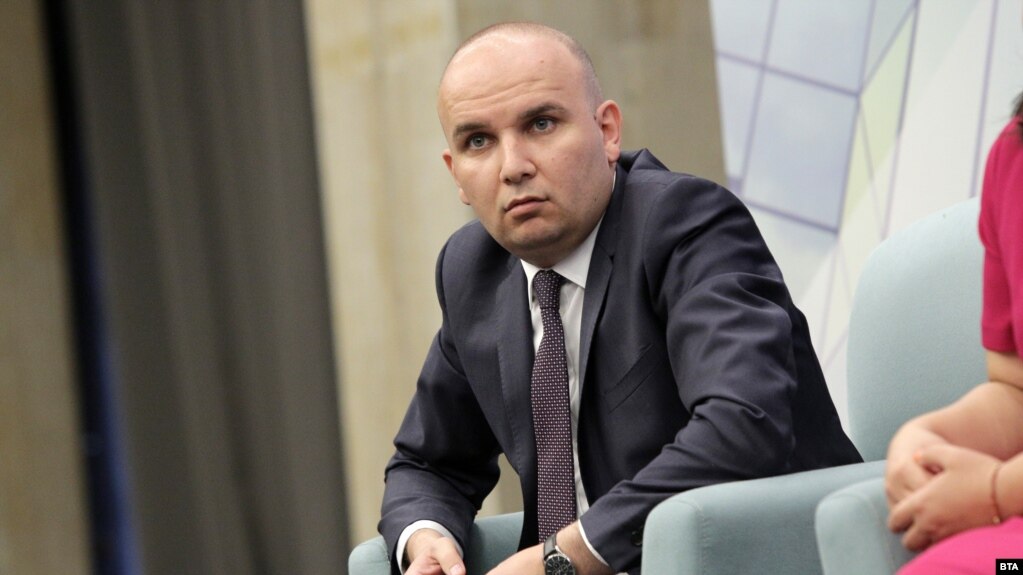
“I think it’s because of my active role in nominating Professor Ilham Tohti for the Sakharov Prize,” Ilhan Kyuchyuk told RFE/RL when asked why he was among 10 European individuals blacklisted by Beijing on March 22.
China’s Foreign Ministry announced that Kyuchyuk was on its tit-for-tat blacklist list after coordinated Western sanctions were imposed against Chinese officials and companies over the abuse of the rights of the mainly Muslim ethnic-Uyghur community in the Xinjiang region.
In addition to Kyuchyuk, Beijing sanctioned four other members of the European Parliament – Reinhard Butikofer and Michael Gahler from Germany, Raphael Glucksmann from France, and Miriam Lexmann from Slovakia.
TRT World published a summary of a report by the South Asia Collective “India and Pakistan no different on how they treat minorities”. Please note that Turkish Radio and Television Corporation is the national public broadcaster of Turkey. One looks there in vain for information on human rights violations in Turkey itself. Still the report referred to (produced with the financial support of the European Union and the Norwegian Agency for Development Cooperation) is of interest:
The past ten years have been abysmal for minorities and civil rights activists in South Asian countries including India, Pakistan and Sri Lanka, according to the South Asia State of Minorities Report 2020.
Governments have introduced repressive laws that curb freedom of expression, persecute journalists and bar people from organising peaceful demonstrations, says the report published by the South Asia Collective, an international group of activists and NGOs. Some laws disproportionately target minorities such as Muslims in India and Sri Lanka, and Christians in Pakistan. One policy that transcends almost all the regional governments is their attempt to restrict the role of NGOs – especially if they receive funding from abroad.
India, where minorities have faced state-sanctioned violence since the Hindu nationalist Bharatiya Janata Party (BJP) was re-elected last year, has handicapped foreign NGOs by setting limits on how they can spend money received from international donors. Most of the affected NGOs are the ones that work in areas which highlight abuse of power, government indifference towards the plight of minorities, and the brutality of security forces. [see also: https://humanrightsdefenders.blog/2020/07/06/istanbul-court-jails-four-human-rights-defenders-on-terror-charges-seven-acquitted/]
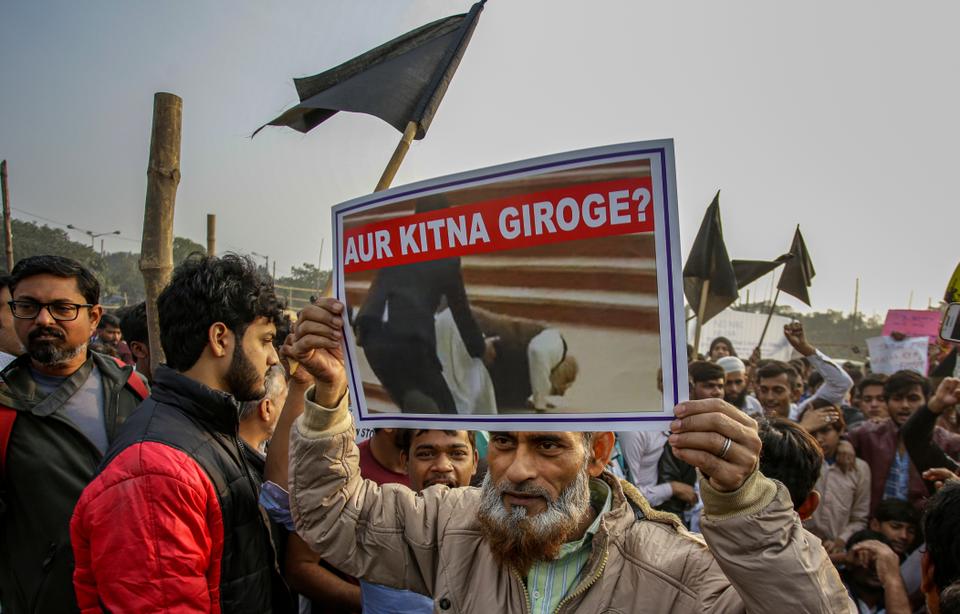
New Delhi’s discriminatory amendment to citizenship law has further alienated India’s Muslims. (AP Archive)
Other policy changes such as requiring NGOs to register with income tax authorities every five years are a similar tool of “administrative harassment”. ..
The intimidation is not limited to NGOs as journalists reporting on creeping BJP authoritarianism often feel the wrath of the state. “…between 25 March and 31 May 2020, at least 55 Indian journalists faced arrest, physical assaults, destruction of property, threats or registration of FIRs (police reports),” the report said.
New Delhi increasingly relies on internet controls to curb dissent. Internet shutdowns jumped to 106 in 2019 from only six in 2014 as authorities used different laws to control the flow of information. Kashmir faced a complete internet blackout for months after the Muslim-majority region’s nominal autonomy was withdrawn last year…
India is also using the draconian Unlawful Activities Prevention Act to target Dalits, a caste of Hindus who face widespread discrimination under the country’s hierarchical caste system… Changes in the Citizenship Act that target Muslim migrants and the brutal police reponse to subsequent protests — in which 22 people were shot dead in Utter Pradesh state in a single day — further illustrate the worsening status of minorities in India.
In neighbouring Pakistan, India’s archrival, minorities and those activists trying to help them, fare no better.
“NGOs and INGOs (international NGOs) are subject to extensive regulation involving multiple, lengthy procedures of registration, security clearance, and approvals for funding,” the report said.
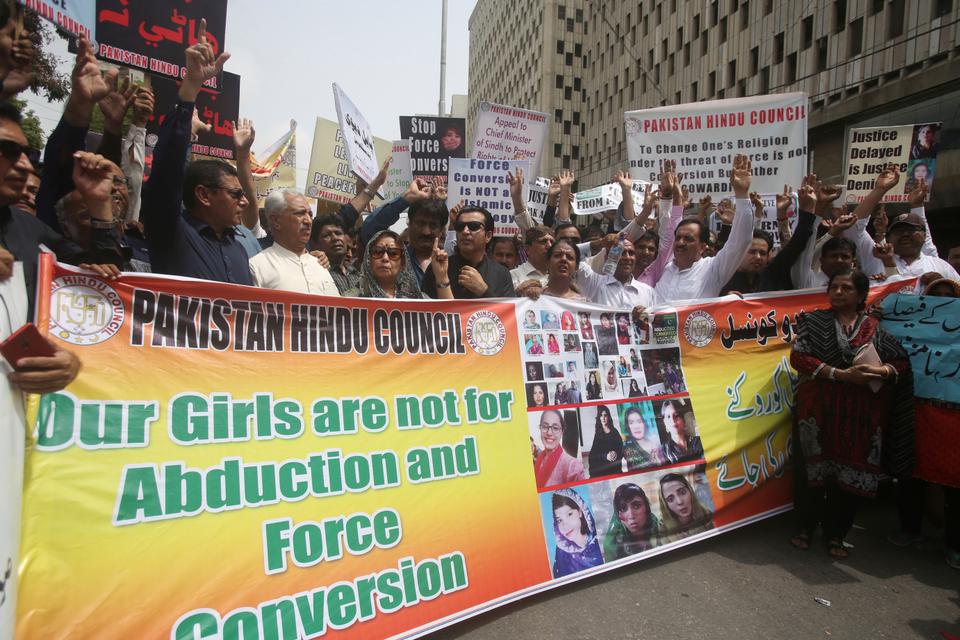
The Christians and Hindus in Pakistan regularly complain that young girls are forced to convert to Islam. (AP Archive)
In recent years, Islamabad has increased vigilance on NGOs which it fears might be working on a foreign agenda to promote dissent. What will particularly bother Pakistan’s policymakers is the report’s focus on how the country’s Blasphemy Law, meant to protect religious sentiments, continues to be misused against minorities.
“In reality, the law explicitly discriminates against Ahmadiyas since parts of it criminalise public expression of Ahmadiya beliefs and prohibit Ahmadiyas from calling themselves Muslims, praying in Muslim sites of worship and propagating their faith.” Just this week, a report by the United States Commission on International Rights Freedom pointed out that Pakistan accounts for nearly half of the incidents of mob violence against alleged blasphemers.
At times, people accused of blasphemy are killed in court in front of police and lawyers. Christians, another minority, are frequently targeted while authorities do little to protect them. For instance, a church constructed in the Toba Tek Singh district of Punjab province had to be sealed in 2016 after local Muslims agitated against it. This alienation doesn’t stop at the places of worship – young Chrsitan students are continuously harassed by their peers to convert to Islam, the report said.
Similarly, Sri Lanka witnessed rising levels of intolerance towards minorities in recent years, especially as successive governments tried to pacify extremist Buddhists to garner their votes. Muslims in Sri Lanka have felt a wave of discrimination and official apathy after the suicide attacks that killed more than 200 people last year. “After the Easter attacks, Muslims, particularly a large number of Muslim men, were arrested seemingly without reasonable cause.” Jingoistic government-aligned media has helped paint Muslims as the villain in Sri Lanka.
“The incitement of hatred and vitriol by media outlets continues unabated. For example, Muslim Covid-19 patients were identified by their faith, unlike other patients, and blamed by the media for spreading coronavirus.”
On 11 December 2020 Bernd Lange, Vice-chair of the Group of the Progressive Alliance of Socialists and Democrats in the European Parliament, wrote in New Europe the following piece about how after 6 years there has come an European agreement on stricter rules for the export of dual-use goods, which can be used for both civilian and military ends.
All good things are worth waiting for. After long six years negotiators from the European Parliament, the Commission and member states finally agreed on stricter rules for the export of dual-use goods, which can be used for both civilian and military ends. Parliament’s perseverance and assertiveness against a blockade by some of the European Union member states has paid off in the sense that as of now respect for human rights will become an export standard.
Up until now, export restrictions applied to aerospace items, navigation instruments or trucks. From now on, these rules will also apply to EU produced cyber-surveillance technologies, which demonstrably have been abused by authoritarian regimes to spy on opposition movements; for instance, during the Arab Spring in 2011.
This is a breakthrough for human rights in trade by overcoming years of various EU governments blocking the inclusion of cyber-surveillance technology in the export control rules for dual-use goods. Without a doubt: Technological advances, new security challenges and their demonstrated risks to the protection of human rights required more decisive action and harmonised rules for EU export controls.
Thanks to the stamina of the Parliament, it will now be much more difficult for authoritarian regimes to abuse EU produced cybersecurity tools such as biometric software or Big Data searches to spy on human rights defenders and opposition activists. Our message is clear: economic interests must not take precedence over human rights. Exporters have to shoulder greater responsibility and apply due diligence to ensure their products are not employed to violate human rights. We have also managed to increase transparency by insisting on listing exports in greater detail in the annual export control reports, which will make it much harder to hide suspicious items.
In a nutshell, we are setting up an EU-wide regime to control cyber-surveillance items that are not listed as dual-use items in international regimes, in the interest of protecting human rights and political freedoms. We strengthened member states’ public reporting obligations on export controls, so far patchy, to make the cyber-surveillance sector, in particular, more transparent. We increased the importance of human rights as licensing criterion and we agreed on rules to swiftly include emerging technologies in the regulation.
This agreement on dual-use items, together with the rules on conflict minerals and the soon to be adopted rules on corporate due diligence, is establishing a new gold standard for human rights in EU trade policy.
I want the European Union to lead globally on rules and values-based trade. These policies show that we can manage globalisation to protect people and the planet. This must be the blueprint for future rule-based trade policy.
Efi Koutsokosta in Euronews of 8 December 2020 writes that the European Union has agreed to establish a regime similar to the Magnitsky Act in America that will allow the 27 member bloc to sanction those responsible for human rights abuses. The decision came at a meeting of European foreign ministers in Brussels on Monday and will allow the EU to freeze assets and impose travel bans on individuals involved in serious human rights abuses. [see also: https://humanrightsdefenders.blog/2015/05/08/the-case-for-smart-sanctions-against-individual-perpetrators/]
The new measures will allow for travel bans on involved individuals and the freezing of their funds too. It could also be forbidden from making funds available to those being sanctioned.
“This unanimity rule is a real problem. Another problem with the EU Magnitsky Act is that it doesn’t include kleptocracy, it only includes human rights abuse. And what we found is that kleptocracy and human rights abuse go hand in hand, they are intertwined. Of course, we are celebrating today because this is a huge milestone but tomorrow the work begins to put pressure on sanctioning bad actors in countries like Russia and China and to make sure that the law that the EU has, is upgraded to include corruption,” Browder said.
The criteria for sanctions will apply to acts such as genocide, crimes against humanity, as well as. torture, slavery, extrajudicial killings, arbitrary arrests, or detentions.
It will then be up to the European Council, which consists of all 27 national governments, to act upon a proposal from a member state or from the High Representative of the EU for Foreign Affairs and Security Policy, to establish, review and amend the sanctions list.