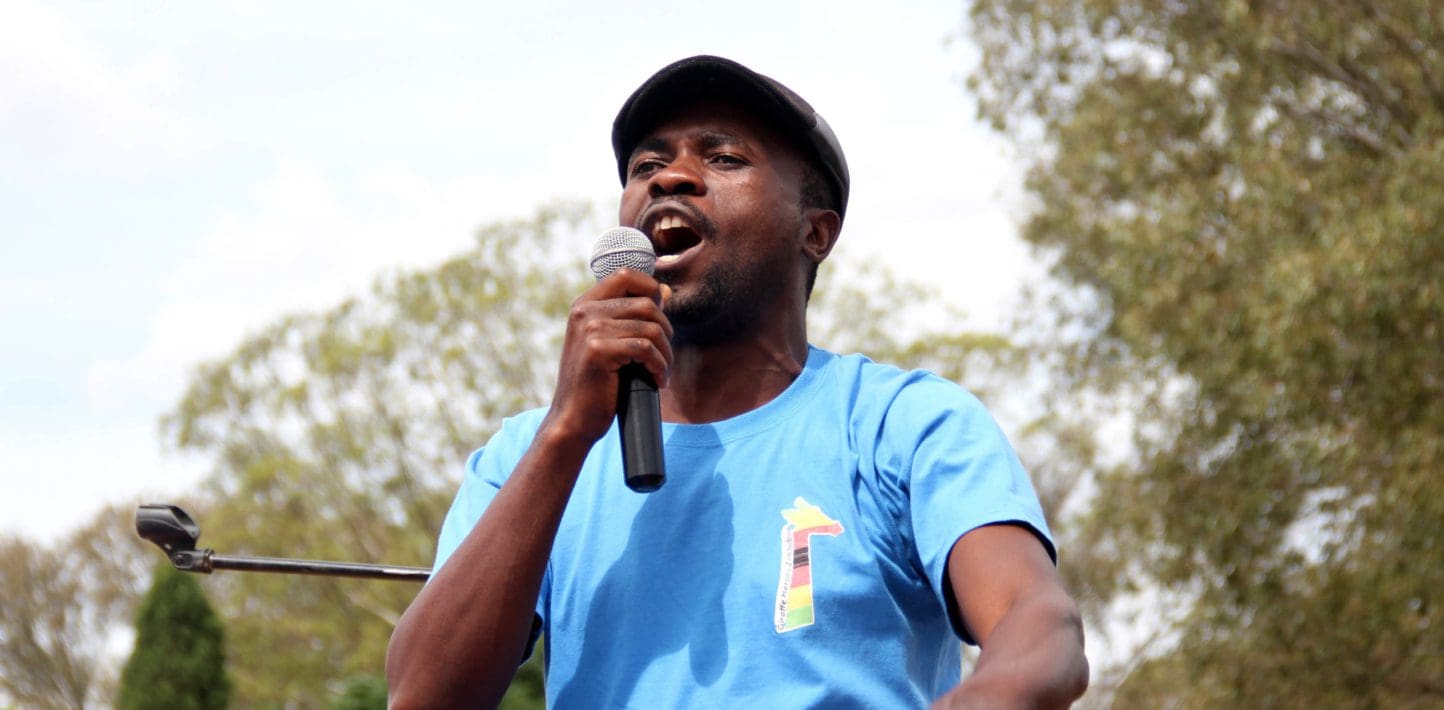
Ahead of the 10-year anniversary of the enforced disappearance of Zimbabwean journalist and pro-democracy activist Itai Peace Dzamara, Amnesty International 7 March 2025 called on authorities to urgently establish an independent, impartial and transparent investigation into his whereabouts.
Dzamara was a leader of the Occupy Africa Unity Square, a pro-democracy protest group. Two days before his enforced disappearance, Dzamara addressed an opposition rally where he called for mass action against Zimbabwe’s deteriorating economic conditions.
Immediately after Dzamara’s abduction, his wife filed a missing person report at Glen Norah Police Station in Harare. The next day, Zimbabwe Lawyers for Human Rights approached the High Court to try to force the state to expend all available resources to investigate and locate Dzamara.
The High Court of Zimbabwe ordered police and state security agents to search for Dzamara and report on their progress every two weeks. However, according to his lawyer, none of the security services have fully complied with the order. Police have reportedly not given any substantial information on the details of their supposed investigation when they submitted reports to the court, and have stopped submitting reports.
“Authorities have yet to conduct any credible inquiry into Itai Dzamara’s fate or whereabouts,” said Tigere Chagutah. “It is time for the authorities to stop pretending and get serious about finding Itai Dzamara and holding accountable whoever is suspected of responsibility for his enforced disappearance.” ..
Since Dzamara’s enforced disappearance, many other activists and human rights defenders in Zimbabwe have suffered harassment, intimidation or torture. In the last two years alone, at least ten opposition activists have been abducted.
Six people were abducted after disputed elections in 2023, including opposition activist and church leader Tapfumaneyi Masaya whose body was later found dumped on a farm. Others were allegedly tortured, some reported being injected with an unknown substance.
Last year, amid a massive crackdown on dissent opens in a new tab before a regional summit held in Harare, security agents pulled four activists off a plane and reportedly tortured them for up to eight hours.
Authorities have not conducted investigations into any of these cases.
“With the perpetrators of Itai Dzamara’s enforced disappearance enjoying complete impunity, it should be no surprise that similar human rights violations continue in Zimbabwe,” said Tigere Chagutah. “Zimbabwe’s government must protect human rights defenders, activists and opposition political parties to ensure they are able to do their work.”
One in four countries report backlash on women’s rights in 2024
Women’s and girls’ rights are facing unprecedented growing threats worldwide, from higher levels of discrimination to weaker legal protections, and less funding for programmes and institutions that support and protect women.
Despite important progress, only 87 countries have ever been led by a woman, and a woman or girl is killed every 10 minutes by a partner or member of her own family. Digital technology and artificial intelligence spread harmful stereotypes, while the digital gender gap limits women’s opportunities.
In the past decade, the world registered a disturbing 50 percent increase in the number of women and girls living in conflict, and women’s rights defenders confront daily harassment, personal attacks and even death. Recent global crises—like COVID-19, the climate emergency, soaring food and fuel prices—are only increasing the urgency to respond.
“UN Women is committed to ensuring that ALL Women and Girls, everywhere, can fully enjoy their rights and freedoms,” affirmed UN Women Executive Director Sima Bahous. “Complex challenges stand in the way of gender equality and women’s empowerment, but we remain steadfast, pushing forward with ambition and resolve. Women and girls are demanding change—and they deserve nothing less.”…
Today’s report also features the new Beijing+30 Action Agenda, a courageous roadmap to complete our unfinished business by focusing on:
A digital revolution for all women and girls: We must ensure equal access to technology, equip women and girls to lead in AI and digital innovation, and guarantee their online safety and privacy.
Freedom from poverty: Investments in comprehensive social protection, universal health coverage, education, and robust care services are needed for women and girls to thrive and can create millions of green and decent jobs.
Zero violence: Countries must adopt and implement legislation to end violence against women and girls, in all its forms, with well-resourced plans that include support for community-based organizations on the front lines of response and prevention.
Full and equal decision-making power: Temporary special measures like gender quotas have proven their effectiveness in rapidly increasing women’s participation.
Peace and security: Fully finance national plans on women, peace and security and gender-responsive humanitarian aid are essential. Frontline women’s organizations, so often the first responders to crisis, must receive dedicated, sustained funding to build lasting peace.
Climate justice: We must prioritize women’s and girls’ rights in climate adaptation, center their leadership and knowledge, and ensure they benefit from new green jobs.
Across these six Actions, putting young women and girls at the heart of our efforts is the best way to guarantee success, both today and tomorrow. These six plus one actions have the potential to unleash progress on women’s rights and put us back on track for 2030.
The Beijing+30 commemoration and the forthcoming UN Commission on the Status of Women (CSW69) are clear opportunities to enshrine this Action Agenda into national policies, regional strategies, and global agreements.
In a pivotal year for women and girls, that is also a year of pushback and crises like no other, let us push women’s rights forward to create a world where all women and girls enjoy equal rights and equal opportunities. We can be the first generation that can live in an equal world.
Ahead of International Women’s Day, Amnesty International’s Secretary General, Agnès Callamard, said:
“The significance of International Women’s Day 2025 cannot be overstated. It is no longer a case of addressing unfinished business on the gender justice front, but one of bracing ourselves to resist active regression and a mounting assault on our rights.
“Thirty years ago, 189 governments came together at the Fourth World Conference on Women to adopt the Beijing Declaration and Platform for Action, a groundbreaking blueprint for strengthening women’s rights endorsed by thousands of activists. Despite significant progress since then, the world has failed to fully deliver on all the promises. From rape and femicide to coercion, control and assaults on our reproductive rights, violence against women and girls still threatens their safety, happiness and very existence in a multitude of ways.
“And crucially, we are now going backwards. The aggressive patriarchal crusade led by President Trump and other powerful leaders against the rights and bodily autonomy of women and gender-diverse people has already had devasting consequences not just in the United States but all over the world. By dismantling domestic efforts to tackle gender-based, racial and other forms of discrimination, erasing recognition of transgender identity, and ending international funding for abortion counselling or referrals, the US administration is shamefully erasing years of hard-fought gains.
“Let us be clear, this trend has deeper roots than President Trump’s recent election. For several years now, brazen anti-rights movements have conspired to turn back the clock to an age when patriarchal oppression was the norm. We cannot afford to be complacent in the face of this gathering storm, for women, girls and LGBTQI+ people are under attack the world over.
“Amnesty International calls on states and non-state actors who believe in universal values and a rule-based international order to resist this accelerated and well-resourced attack against women’s rights. We call on them to strengthen protections of women, girls, LGBTQI+ people and other marginalized groups against gender-based violence. We urge them to recognize and support the vital work of all women human rights defenders and all those on the frontlines of the fight for sexual and reproductive rights, and to implement concrete measures to protect and empower them.
“We appeal to all to respect sexual and reproductive rights and prevent rollbacks, including by revoking any laws that criminalize or punish people for exercising these rights, as well as fully decriminalizing, providing and funding universal access to abortion.
“Finally, this International Women’s Day, Amnesty International reiterates its call on states to recognize gender apartheid under international law as a crime against humanity. Doing so would fill a major gap in the global legal framework and help to combat institutionalized and systematic domination and oppression on the basis of gender, no matter where it occurs.
“Despite suffering setbacks and facing countless attempts to block, divide and undermine us throughout history, feminist, LGBTI+ and grassroots movements keep marching forward. We may be walking a rocky path, but we will never stop fighting for a world where women, girls and gender-diverse people are free to enjoy the full range of human rights without discrimination or fear of reprisal.”
On 7 March 2025 SaferWorld carried a post “Still standing: The resilience of women peacebuilders in a time of crisis”
As we mark International Women’s Day 2025, women’s rights organisations (WROs) and frontline activists in crisis and conflict settings are standing strong despite immense challenges. ..Yet, while their work is more critical than ever, the harsh reality is that many are being forced to operate with dwindling resources, due to global funding cuts and shifting donor priorities towards militarisation, over a genuine investment in long-term peace, security and gender justice.
At a time when conflict, displacement and violence against women are escalating, and misogyny is a core pillar of the far-right agenda, these cuts will only deepen existing inequalities and undermine efforts to build sustainable peace and security globally. The reduction in funding for gender equality and Women, Peace and Security (WPS) initiatives threatens to reverse decades of progress and compounds the global rollback on women’s equality, safety and security. For example, cuts to the UK official development assistance (ODA) budget in 2021 led to a 30 per cent reduction in funding to programming with a focus on gender equality and to a 66% reduction in funding to WROs compared to 2017. WROs and women-led organisations – many of which are small community groups – often struggle to access direct, flexible and long-term funding, despite being the first responders in humanitarian crises and leading conflict prevention and peace efforts. When funding disappears, so do vital services, safe spaces for survivors of gender-based violence and conflict-related sexual violence, safe spaces for women peacebuilders to re-mobilise, legal aid for women and girls who have been displaced, and advocacy that ensures women’s voices are central in peace processes. But despite these constraints, WROs and women peacebuilders are still standing. Their resilience is evident in their ability to adapt, mobilise local resources and continue working in the most difficult circumstances. But resilience alone is not enough – they need meaningful and sustained support.
As the world commemorates International Women’s Day and gathers at the United Nations Commission on the Status of Women (CSW) to discuss gender equality and sustainable development, we reaffirm our commitment to ensuring that women and girls play a central role in peacebuilding and conflict prevention efforts around the world.
The international community, donors, funders and philanthropists will need to act urgently to ensure that WROs are not just surviving but thriving. This means:
Increasing direct, flexible and long-term funding and shifting power to local women-led organisations, women activists and women’s groups – we have seen the value in our work of providing sustained core funding to WROs, moving beyond short-term, project-based grants to ensure continuity of their critical efforts in conflict prevention, peacebuilding and humanitarian response. To make this shift meaningful, international organisations and donors should prioritise direct and flexible funding to frontline WROs rather than channelling resources through large intermediaries. This will ensure that funding reaches those who are best placed to drive lasting change within their communities.
Ensuring women’s leadership in conflict prevention, peace and humanitarian processes – women from all backgrounds and marginalised communities must have a seat at decision-making tables, not just as implementers but as equal partners in shaping policies and solutions that affect their lives.
Standing up for gender equality and women’s rights – urgently pushing back against reversals in women’s rights and gender equality, especially in fragile and conflict-affected contexts, where regressive policies and shrinking civic space are eroding hard-won gains. Women peacebuilders, human rights defenders and frontline activists are already standing up to these challenges, demanding that women’s voices remain central. Their leadership must be protected, amplified and meaningfully supported to sustain progress and counteract the global rollback on gender equality.
Protecting and supporting women human rights defenders and peacebuilding organisations – governments and international actors must recognise and safeguard the work of women human rights defenders and peacebuilding organisations in conflict zones, ensuring they can operate without fear of reprisals.
Strengthening accountability mechanisms – governments and multilateral bodies must hold themselves accountable to their commitments to the WPS agenda and support localisation of the UN Security Council Resolution 1325 on WPS.
Women’s rights organisations are the backbone of peace and resilience in crisis and conflict settings. This International Women’s Day, we celebrate their unwavering commitment – but celebration is not enough. The global community must act with urgency to fund, support and protect these organisations so they can continue to drive meaningful change.
Amnesty International invites applications for an 18-month part-time fellowship to explore the global phenomenon of shrinking civic space and document grassroots resistance strategies from marginalized and overlooked voices. Fellows will analyze current trends in civic space restrictions, investigate emerging resistance and human rights movements, and convene activists to co-create a practical toolkit for defending civic space worldwide. The fellowship aims to ensure that Amnesty’s work remains innovative, grounded in lived experience, and contributes to new knowledge on resistance strategies.
Deadline for all applications: 06/03/2024
Rate: Fixed Rate of USD 25,000 for the duration of the fellowship
Location: This fellowship does not include relocation. The consultant must work from their preferred location and possess the necessary work authorization.
OBJECTIVES AND DELIVERABLES
The Fellowship project aims to:
Support human rights defenders, academics, and practitioners with lived experience to document and analyze grassroots resistance strategies against authoritarianism and civic space restrictions in their regions.
Use this research to develop concrete recommendations and practical tools that can inform Amnesty’s global civic space advocacy.
Produce regular short written outputs, including blog posts and opinion pieces, to be independently published.
Convene activists and thought leaders in the region through virtual, in-person, or hybrid meetings to share ideas, incubate new strategies, and foster collective learning.
Deliver a final in-depth think-piece for Amnesty International’s internal strategy and advocacy, with external publication at Amnesty’s discretion.
ESSENTIAL REQUIREMENTS
Fluency in written and spoken English; fluency in a relevant regional language is desirable.
Demonstrated experience working on civic space resistance—either formally (academia, NGOs, journalism, law, policy) or through grassroots activism.
Strong writing and research skills, with experience producing publications related to civic space and human rights activism.
No formal academic qualifications or certifications are required to apply.
To apply, please submit:
A short bio (maximum one page) outlining your recent experience.
Relevant case studies or descriptions of past work on civic space issues.
Your proposed approach to this fellowship opportunity, including how you would structure your research and engagement.
Applications must be in PDF, Word, PowerPoint or Excel format.
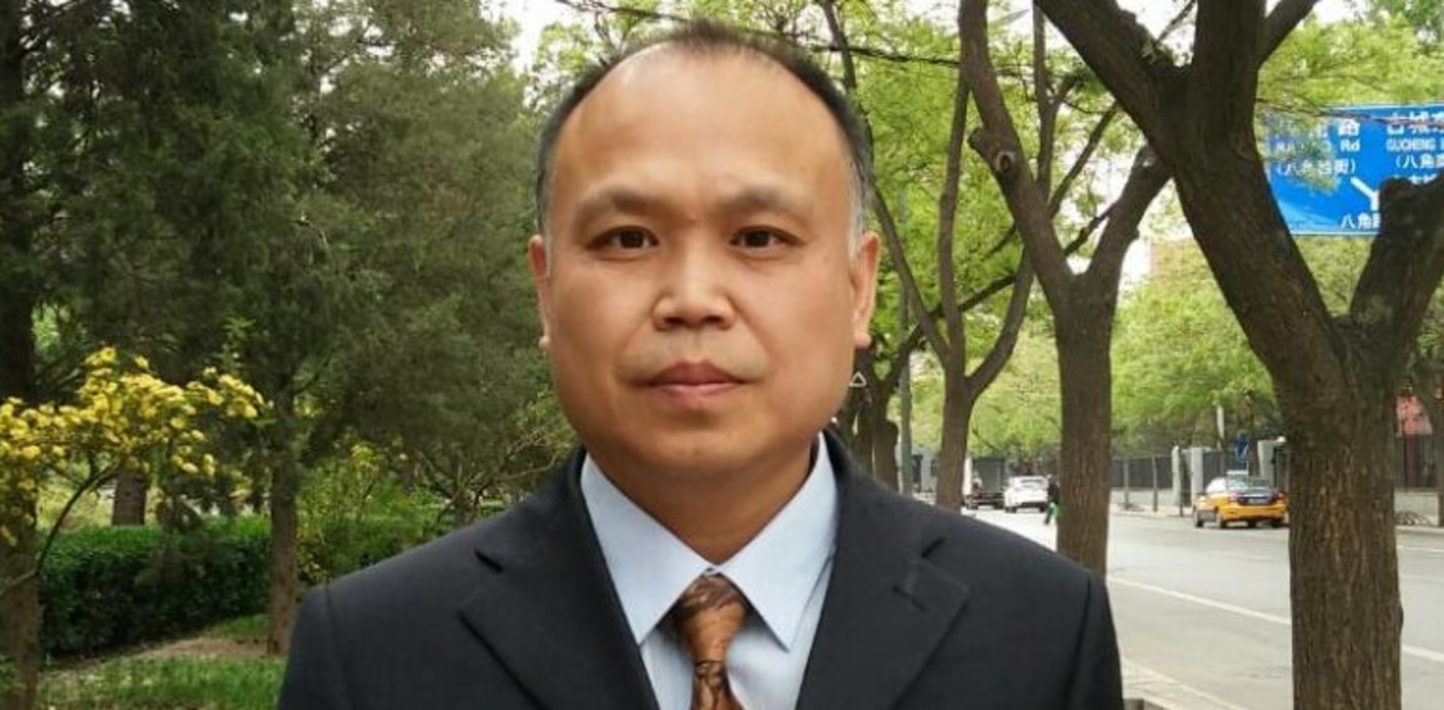
Responding to the rejection of Chinese human rights lawyer see also:s appeal against his three-year prison sentence for “inciting subversion of state power”, Amnesty International’s Interim Regional Deputy Director for Research Kate Schuetze said on 6 January, 2025: “The charges against Yu Wensheng and his wife, activist Xu Yan – who was convicted of the same offence – are entirely baseless. They reveal the authorities’ inability to provide any legitimate justification for their imprisonment.
“The Chinese government has used Yu’s online comments and his numerous international human rights awards as an excuse to label him a threat to national security. But all this really demonstrates is Beijing’s deep fear of human rights defenders who dare to dissent.
“Yu Wensheng and Xu Yan have been imprisoned solely for exercising their right to freedom of expression and they must be released immediately and unconditionally.”
On 2 January 2025 Amnesty Tech – a global collective of advocates, hackers, researchers, and technologists – announced the launch of the third Digital Forensics Fellowship (DFF).
This innovative Fellowship is an opportunity for 5 – 7 human rights defenders (HRDs), journalists, and/or technologists working in civil society organisations around the world to train with Amnesty Tech’s Security Lab to build skills and knowledge on advanced digital threats and forensic investigation techniques. This is a part-time Fellowship that will last 3-4 months and will come with a stipend.
Fellowship start and end date: The Fellowship is expected to run from April – July 2025.
Application Deadline, 23 January 2025 Location: dependent upon the suitable applicant’s location.
Remuneration: Successful applicants will be given a stipend of £500/month for their time.
Background
Across the world, hard-won rights are being weakened and denied every day. Increasingly, much of the repression faced by HRDs and journalists begins online. Since 2017, Amnesty Tech’s investigations have exposed vast and well-orchestrated digital attacks against activists and journalists in countries such as Morocco, Egypt, Azerbaijan, Qatar, Serbia, Mexico and Pakistan.
Advanced technical capacity is needed in all world regions to tackle the mercenary spyware crisis. By fostering a more decentralised, global, and diverse network of well-trained incident responders and investigators, we can jointly contribute to more timely and effective protection of HRDs and journalists against unlawful surveillance.
Participants in the Digital Forensics Fellowship will be expected to:
Attend an in-person, week-long convening where the majority of trainings will be conducted. This training will take place in June 2025, the exact location is set to be confirmed shortly.
Dedicate approximately 10 – 12 hours per month to the Fellowship, outside of the convening, by participating in remote training sessions and through independent work outside of scheduled sessions to deepen understanding of training topics.
Engage with the programme cohort and the Security Lab during the in-person and remote trainings, and in discussion groups on an ad-hoc basis.
Essential Requirements
An understanding of the technical threats, digital attacks and challenges faced by journalists, HRDs, and civil society organisations in their local contexts.
Demonstrated interest in conducting investigations to identify digital attacks against civil society, with the goal of building resilience among civil society actors in the face of surveillance after the Fellowship.
Familiarity using command line tools and basic knowledge of scripting languages like Bash and Python to analyse data.
An understanding of how internet infrastructure works, for example the role of IP addresses, TLS certificates, and DNS queries.
Technical familiarity with GNU/Linux operating systems, as well as Android and iPhone systems.
Engaging with the English language as the primary language throughout the Fellowship.
Application instructions:
To apply, applicants will be required to submit the following via our recruitment system eArcu – please upload all relevant documents to the CV section of the application portal.
A copy of your most recent CV.
A cover letter explaining your motivation and interest in the Fellowship and outlining how you meet the essential requirements outlined in the job description.
Applications must be in PDF, Word, PowerPoint or Excel format.
Application Process:
Shortlisted applicants will be invited to complete a record video interview week commencing 10th February, answering a series of pre-set questions via video, which allows us to learn more about you and your suitability for the Fellowship. Successful applicants from this process will be invited to a Microsoft Teams interview with the panel week commencing 3rd March.
Every year, people from around the world take part in Amnesty International’s Write for Rights campaign. It’s a really easy way to make a big difference by doing something “little”. It doesn’t take much time – all you need to do is write a letter, send a post or sign a petition.
Since Write for Rights started in 2001, millions of people have changed the lives of those whose human rights have been taken away. In fact, over the past 20 years more than 56 million actions have been taken, while over 100 people featured in our campaign have seen a positive outcome in their case. For this years toolkit see:
This year’s campaign will feature nine individuals and groups from all around the world. From a TikToker in Angola to a women’s rights defender in Saudi Arabia, these inspiring people are connected because their human rights have been violated.
For results from the recent past: Meet three incredible people whose lives have been changed for the better and find out what people power means to them.
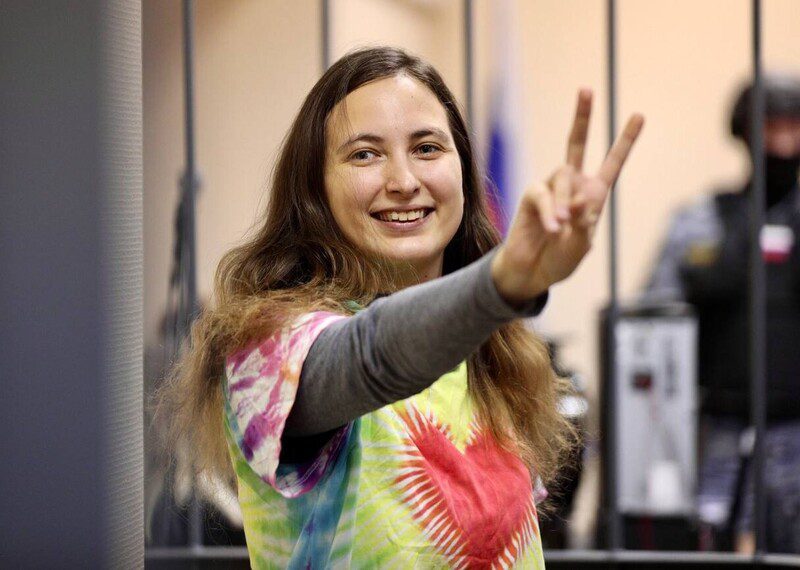
After huge public campaigning, artist and anti-war activist Aleksandra (Sasha) Skochilenko was freed in a historic prisoner swap in August 2024. The deal was brokered between Russia and Belarus on the one hand and Germany, Norway, Poland, Slovenia and the USA on the other.
Aleksandra Skochilenko on the day of sentencing, November 16, 2023.
Rita Karasartova is a human rights defender and expert in civic governance from Kyrgyzstan. For over a decade she dedicated her life to providing independent legal advice, helping people whose rights had been violated. Charged with attempting to “violently overthrow the government”, which carries a maximum sentence of 15 years’ imprisonment, Rita and 21 other defendants were acquitted on 14 June 2024.
In August 2017, Myanmar’s military unleashed a deadly crackdown on Rohingya Muslims – an ethnic minority who have faced decades of severe state-sponsored discrimination in Myanmar. Over 620,000 Rohingya fled to Bangladesh after security forces unleashed a campaign of violence, killing an unknown number of Rohingya; raping Rohingya women and girls; laying landmines; and burning entire Rohingya villages.
Fearing for their lives, then 17-year-old Maung Sawyeddollah and his family walked 15 days to Bangladesh, where they reached Cox’s Bazar refugee camps. Fuelled by his desire to become a lawyer, Sawyeddollah wanted to seek justice for the suffering around him.
Alongside his studies, he started a campaign calling for Facebook’s owner, Meta, to take responsibility for the way its algorithms amplified anti-Rohingya incitement on the Facebook platform, fuelling the Myanmar military’s violence.
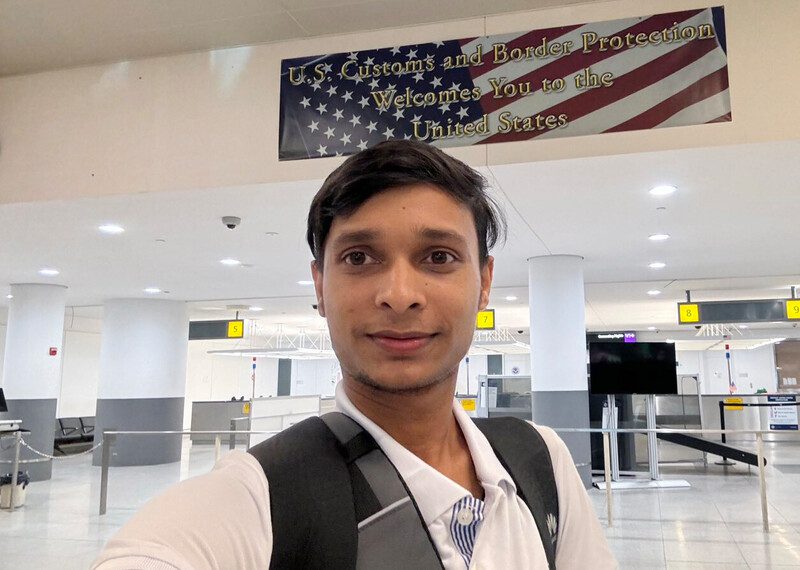
In 2023 Sawyeddollah was facing serious security risks in the refugee camps. Together with partners Victim Advocates International and Dev.tv, Amnesty International put together resources to help ensure Sawyeddollah’s safety. Through Amnesty’s Global Relief Team he was provided with urgent financial assistance to support his security needs throughout the year. In August 2024, Sawyeddollah was granted a student visa and moved to the USA to study. He landed in New York City on 19 August 2024, and he is now an international student at New York University.
Are you an artist passionate about human rights and social justice? We’re looking for talented creators to develop original art pieces for our 2024 Write for Rights campaign. This is your chance to use your creative skills to fight injustice and show your solidarity with people who are advocating for change.
What We’re Looking For
We are looking for a wide range of artistic expressions, including but not limited to:
Graphic design artwork
Videos of spoken-word art
Musical pieces (vocal, instrumental…etc.)
Videos of dances, skits
Animations
Paintings
Comic Illustrations
Project Details
Objective: Create an original art piece representing a specific Write for Rights case. Compensation: TBD Timeline: September 15, 2024 – October 15, 2024 Submission Deadline: August 30th, 2024
How to Apply
Submit your application including:
A brief introduction of yourself, your artistic background and your interest in social justice
A short proposal outlining:
Two Write for Rights cases you are interested in working on and why
A short description of your artistic vision for the piece
Don’t miss this chance to make a global impact with your art. Join us in advocating for human rights through powerful, creative expression.
Write for Rights Cases
Manahel al-Otaibi (Saudi Arabia)
Manahel al-Otaibi is a fitness instructor and a brave outspoken advocate for women’s rights in Saudi Arabia. In November 2022, she was arrested after posting to Snapchat photos of herself at a shopping mall. In the photos, she was not wearing the traditional long-sleeved loose robe known as an abaya. Manahel has been sentenced to 11 years in prison.
Wet’suwet’en Nation Land Defenders (Canada)
The Wetʼsuwetʼen Nation are deeply connected to their ancestral lands, but this is threatened by the construction of a fossil fuel pipeline through their territory. Their Hereditary Chiefs did not consent to this construction. Land defenders have been charged for blocking pipeline construction sites, even though these sites are on their ancestral lands. They could face prison and a criminal record.
Maryia Kalesnikava (Belarus)
Political activist Maryia Kalesnikava dared to challenge the repressive Belarus government. On 7 September 2020, Maryia was abducted by the Belarus authorities. She was taken to the border where she resisted deportation by tearing up her passport. She was detained and later sentenced to 11 years in prison on false charges. Maryia’s family haven’t heard from her for more than a year.
Floraine Irangabiye (Burundi)
Floriane Irangabiye is a mother, journalist, and human rights defender from Burundi. In 2010 she relocated to Rwanda where she co-founded a radio station for exiled Burundian voices. In August 2022 she was arrested while visiting family in Burundi. In January 2023 she was sentenced to 10 years in prison for “undermining the integrity of the national territory”, all for criticizing Burundi’s human rights record.
Kyung Seok Park (South Korea)
Kyung Seok Park is a dedicated disability rights activist. Holding peaceful protests on Seoul’s public transport systems, Kyung Seok Park has drawn attention to how hard it is for people with disabilities to easily access trains and subways safely – denying them the ability to travel to work, school, or to live independently. Kyung Seok Park’s activism has been met with police abuse, public smear campaigns and punitive litigation.
On July 1, 2024 AI published the findings of a survey which says that three out of five child and young human rights defenders face online harassment in connection with their activism, according to a new analysis of 400 responses to an Amnesty International questionnaire, distributed to young activists across 59 countries. More than 1400 young activists participated in the survey conducted as a part of Amnesty International’s global campaign to “Protect the Protest.”
Of those, 400 youth activists aged between 13 to 24 years agreed to the publication of their data.
They faced harassment in the form of hateful comments, threats, hacking and doxing which is often linked to offline abuse and political persecution often perpetrated by state actors with little or no response from Big Tech platforms resulting in the silencing of young people.
The highest rates of online harassment were reported by young activists in Nigeria and Argentina.
“I have been harassed […] by a stranger because of my pronouns. The stranger told me it is not possible to be a ‘they/them’ and kept sending messages about how I am crazy for identifying the way I identify. I had to ignore the person’s messages,” said a 17-year-old Nigerian queer LGBTI activist who asked not to be identified.
Another young activist – 21-year-old male Nigerian LBGTI rights activist said, “People disagree with my liberal progressive views, and immediately check my profile to see that I am queer Nigerian living in Nigeria, and they come at me with so much vitriol. I am usually scared to share my opinion on apps like TikTok because I can go viral. The internet can be a very scary place,” he said adding that, “Someone cat fishing as a gay man, lured me into coming out to see him after befriending me for a while, and then he attacked me with his friends. This is Nigeria, I couldn’t go to the police for secondary victimization.”
Twenty-one percent of respondents say they are trolled or threatened on a weekly basis and close to a third of the young activists say that they have censored themselves in response to tech-facilitated violence, with a further 14 percent saying they have stopped posting about human rights and their activism altogether.
“I always think twice before making a comment, when I express my political position, I start to get many comments that not only have to do with my position, but also with my body, my gender identity or my sexuality,” said Sofía*, a 23-year-old human rights defender from Argentina shared her experience on X formerly known as Twitter.
The survey respondents said they faced the most abuse on Facebook, with 87 percent of the platform’s users reporting experiences of harassment, compared to 52 percent on X and 51 percent on Instagram.
The most common forms of online harassment are upsetting and disrespectful “troll” comments (60 percent) and upsetting or threatening direct messages (52 percent).
Five percent of the young activists say they have faced online sexual harassment, too, reporting that users posted intimate images (including real and AI-generated images) of them without consent.
For many of the survey participants harassment in relation to their online activism is not limited to the digital world either. Almost a third of respondents reported facing offline forms of harassment, from family members and people in their personal lives to negative repercussions in school, police questioning and political persecution.
Twenty-year-old non-binary activist Aree* from Thailand shared their experience of facing politically motivated prosecution in five different cases whilst they were still a child.
Abdul* a 23-year-old Afghan activist reported being denied work at a hospital after authorities found out about his social media activism.
The Israel-Gaza war currently stands out as an issue attracting high levels of abusive online behaviour, but the threat of online harassment appears to be omnipresent across all leading human rights issues. Peace and security, the rule of law, economic and gender equality, social and racial justice, and environmental protection all served as “trigger topics” for the attacks.
However, the way young activists are targeted varies and appears to be closely linked to intersectional experiences of discrimination, likely harming survivors of identity-based abuse in longer lasting ways than issue-based harassment.
Twenty-one percent of respondents say they have been harassed in connection with their gender and twenty percent in connection with their race or ethnicity. Smaller percentages said they face abuse in connection with their socio-economic background, age, sexual orientation and/or disabilities.
“At first it was simply hateful comments since the posts I published were daring and spoke openly about LGBT rights, which later made me receive threats in private messages and it went further when my account was hacked,” said Paul a 24-year-old activist from Cameroon, on being targeted for his LGBTI related activism adding that, “For 2 years, I have been living in total insecurity because of the work I do as an advocate for the rights of my community online.”
For Paul and many other young activists, online harassment is having deep effects on their mental health. Forty percent of the respondents say they have felt a sense of powerlessness and nervousness or are afraid of using social media. Some respondents have even felt unable to perform everyday tasks and felt physically unsafe. Accordingly, psychological support is the most popular form of support which young activists call for, ahead of easier to use reporting mechanisms and legal support.
Many of the young activists voiced frustrations over leading social media platforms’ failure to adequately respond to their reports of harassment saying the abusive comments are left on the platforms long after being flagged.
Some respondents also felt that social media platforms are playing an active part in silencing them; multiple activists reported that they found posts about the war in Gaza removed, echoing previous reports of content advocating for Palestinian rights being subject to potentially discriminatory moderation by various platforms.
Others highlighted platforms’ role in enabling state-led intimidation and censorship campaigns, undermining activists’ hope for government regulation to provide answers to the challenge of tech-facilitated violence.
On 12 June 2024, a group of important NGOs addressed the following letter to Josep Borrell, EU High Representative for Foreign Affairs:
We, the undersigned civil society organisations, are writing to reiterate our request for the European Union to suspend its human rights dialogue with China, and to consider other, more impactful measures at the EU’s disposal to address the Chinese government’s assault on human rights at home and abroad.
While appreciative of the open and frank discussion and engagement with the EEAS in preparation of each round of human rights dialogue with China, we regret that the EU continues this exercise despite its amply proven ineffectiveness over 38 rounds. While the EU raises concerns during these dialogues, it knows that the Chinese government will not acknowledge abuses, will not undertake any effort to secure accountability, and will not be persuaded to undertake any policy or legislative action to comply with China’s international human rights obligations. The EU’s reluctance to establish any measurable benchmark of progress, or even to establish clearly defined objectives beyond having a dialogue, exacerbates the ineffectiveness of this exercise.
This year’s human rights dialogue would also entail EU officials sitting down with authorities in Beijing to “engage… through dialogue and cooperation” on human rights, days after the 35th anniversary of the Tiananmen massacre.
Since Xi Jinping came to power in 2013, the Chinese government has intensified its crackdown on dissent, harassing and imprisoning human rights defenders and activists including the Swedish bookseller Gui Minhai, the Uyghur economist and Sakharov Prize laureate Ilham Tohti [7 human rights awards, see: https://www.trueheroesfilms.org/thedigest/laureates/37AE7DC4-16DB-51E9-4CF8-AB0828AEF491], the Hong-Kong barrister and human rights activist Chow Hang-tung and human rights lawyers Yu Wensheng and his wife Xu Yan, who were arrested a little over a year ago on their way to meet with the EU delegation [see: https://www.trueheroesfilms.org/thedigest/laureates/69fc7057-b583-40c3-b6fa-b8603531248e and https://humanrightsdefenders.blog/2023/07/12/new-wave-of-repression-against-human-rights-lawyers-unleashed-in-china/]. The Chinese government has committed egregious violations against Uyghur and other Turkic communities in Xinjiang/The Uyghur Region, which a report of the UN High Commissioner for Human Rights in August 2022 stated “may constitute international crimes, in particular crimes against humanity.” Beijing has also intensified its repression in Tibet, while in Hong Kong the creation of a new national security architecture at Beijing’s behest has severely restricted the rights and freedoms long enjoyed by Hong Kong’s people.
Beijing’s foreign policy has also been increasingly detrimental to human rights, both in the region and beyond. The Chinese government continues to support highly abusive governments, to challenge international efforts to secure accountability for grave abuses, and to intensify efforts to undermine the international human rights system and rewrite its norms. The Chinese government has also engaged in increasingly brazen transnational repression – abuses committed outside its borders – including in EU countries.
The EU has already suspended human rights dialogues with highly repressive countries such as Russia, Syria, Belarus, and Myanmar, among others, in light of the nature, scale and pervasiveness of their authorities’ human rights abuses and violations of international law. The Chinese government has committed serious crimes amounting to crimes against humanity. It has long been evident that the human rights dialogue is not an appropriate nor an effective tool to address them. There is no reason to expect the 39th round will prove more beneficial to the rights of people in China than the previous 38. The EU and its member states should pursue different, more effective actions to press the Chinese government to end its crimes against humanity and other serious violations – and to hold accountable those responsible for failing to do so.
We have long been suggesting alternative action, latest in this February 2023 letter. We stand ready to discuss these and other options with you any time.
Signatories: Amnesty International Front Line Defenders Human Rights Watch International Service for Human Rights World Uyghur Congress
In a new report of 6 June 2024, the Amnesty International insists the world governing body “must terminate any agreement to host the tournament if human rights are jeopardised or violated“.
Last year Fifa confirmed Spain, Portugal and Morocco will be co-hosts in 2030, with the opening three matches taking place in Uruguay, Argentina and Paraguay. Saudi Arabia is the sole bidder for the 2034 tournament. Amnesty says the Gulf kingdom has an “appalling human rights record and its bid carries a broad range of very serious risks”.
But it also warns the 2030 tournament “carries human rights risks primarily related to labour rights, discrimination, freedom of expression and assembly, policing, privacy and housing”. It adds that greenhouse gas emissions generated by travel related to the expanded 48-team tournament across three continents “are likely to be significant, despite Fifa’s stated commitment on climate change to halve carbon emissions by 2030 and be ‘net-zero’ by 2040”.
Amnesty claims Fifa has not responded to its requests to speak to consultants involved in human rights-based assessments of the bids.
Fifa has been approached for comment. It is set to formally confirm the hosts of the two tournaments later this year at a meeting of its congress. When unveiling its choices for hosting the World Cups, it said it was “fully committed” to ensuring the competitions were held to “sustainable event management standards and practices, safeguarding principles for the protection of children and adults at risk and to respecting internationally-recognised human rights in accordance with the United Nations Guiding Principles on Business and Human Rights”.
It has also said it will “conduct a targeted dialogue with bidders, to ensure complete, comprehensive bids are received and evaluated against the minimum hosting requirements….[It] will focus on the defined priority areas of the event vision and key metrics, infrastructure, services, commercial, and sustainability and human rights.”
Steve Cockburn, Amnesty’s Head of Labour Rights and Sports, said: “With only a single bid to host each tournament and major human rights concerns surrounding both, there are huge questions about Fifa’s willingness to stand by the pledges and reforms it has made in recent years, including exercising its right to reject any bid which does not meet its stated human rights requirements.
“History shows that the World Cup can be a source of dignity or exploitation, inclusion or discrimination, freedom or repression, making Fifa’s award of the hosting rights for the 2030 and 2034 tournaments among the most consequential decisions ever taken by a sporting organisation.”
Assessing the human rights risks related to the respective bids, Amnesty claims that in Spain, Morocco and Portugal “migrant workers are at risk of exploitation”, “excessive use of police forces is a proven risk” and “racial discrimination is an issue in all three countries”. It says an independent Fifa evaluation of Morocco’s previous bid – to host the 2026 World Cup – “noted its criminalisation of same-sex acts was particularly problematic” and that the country “restricts freedom of expression”.
It adds that “discrimination is deeply embedded in legislation and practices, and could impact fans, workers, players and journalists… women fans face the risk of unfair and disproportionate prosecution… and there have been sweeping arrests and imprisonment of journalists, human rights defenders, political activists.” Amnesty says reforms to prevent human rights violations related to the World Cup in Saudi Arabia would need “sweeping changes to labour laws to protect workers, and the release of activists and human rights defenders who’ve been unjustly imprisoned”.
Last year the Saudi Sports Minister rejected claims of ‘sportswashing’ and defended the country’s right to host the 2034 tournament, telling the BBC: “We’ve hosted more than 85 global events and we’ve delivered on the highest level. We want to attract the world through sports. Hopefully, by 2034, people will have an extraordinary World Cup.”