ISHR, Amnesty International and Human Rights Watch organise a meeting on STRENGTHENING AND LEVERAGING HUMAN RIGHTS COUNCIL MEMBERSHIP on Monday 1 July 2019, 13h00-14h30 Restaurant des Délégués, 8th Floor, Palais des Nations, Geneva.The composition of the HRC has captured significant public attention over the past year – with people around the world rightly asking: how can States accused of gross and systematic human rights violations become members of the United Nations’ Human Rights Council? And what does that mean for the credibility and effectiveness of this body? Clearly, for the HRC to be effective, and to be credible and relevant to the wider human rights community, and the wider public, it needs members committed to the promotion and protection of human rights at home and abroad in its 47 seats, as foreseen by UNGA resolution 60/251. Of course, no State has a perfect human rights record, and a wide and diverse range of States should be encouraged to address their shortcomings and enhance their commitment to human rights through HRC participation and engagement. While the argument does not apply to candidates that are in clear breach of the membership criteria, HRC membership may be an important incentive for national-level change, particularly where States, as candidates, make voluntary pledges and commitments, and are willing and able to implement them. The framing and implementation of those pledges and commitments is, however, rarely discussed at national or international level. Against this backdrop, in February 2019, Amnesty International, Human Rights Watch, the International Service for Human Rights (ISHR) and HRC-net convened a one-day dialogue bringing together national and regional actors – including human rights defenders and NHRIs – with a cross-regional group of State representatives, OHCHR officials and international civil society, to address two important and interlinked questions regarding HRC membership: 1) how can we encourage greater respect and application of the membership criteria clearly set out in GA resolution 60/251; and 2) how can a State’s membership of the HRC be leveraged for positive change on human rights at national level? Drawing on good practices and lessons learned, participants identified a range of challenges, opportunities and practical recommendations. A report of the one-day dialogue will be presented during a lunch time reception at the Restaurant des Délégués on 1 July, in the side-lines of the 41st session of the Human Rights Council. The reception will provide an opportunity for the presentation of some of the key challenges, opportunities and practical recommendations identified in the report, including with regards to good practice relating to candidacy and membership of the HRC.
Speakers:
- Ambassador Nazhat Shameem Khan, Permanent Representative of Fiji to the UN
- Salma El Hosseiny, ISHR’s Human Rights Council Advocate
- Hilary Power, Amnesty International’s Senior UN Advocate
Please RSVP by clicking here <https://crm.ishr.ch/sites/all/modules/civicrm/extern/url.php?u=884&qid=111418> by 19 June 2019 to confirm your participation at this event.
Archive for the 'Amnesty international' Category
One-day dialogue on Human Rights Council membership on 1 july 2019
June 12, 2019World Environment Day: seven stories of human rights defenders
June 9, 2019Amnesty International marked 5 June – World Environment Day – by focusing on environmental human rights defenders, who often face the gravest risks to protect their homes and communities. Being an environmental human rights defender has deadly consequences, making it among the deadliest types of activism. According to the NGO Global Witness, in 2017 almost four environmental defenders were killed each week for protecting their land, wildlife and natural resources. In 2017, 207 environmental activists were killed. The vast majority of them hailed from South America, making it the most dangerous region in the world. [see: https://humanrightsdefenders.blog/2019/01/09/global-witness-report-2018-on-environmental-defenders-bad-but-2017-was-worse/]
Amnesty highlights the stories of seven environmental activists from the Americas who remind us of why we need to stand up for Earth’s defenders.
BERTA CÁCERES, COPINH (HONDURAS)
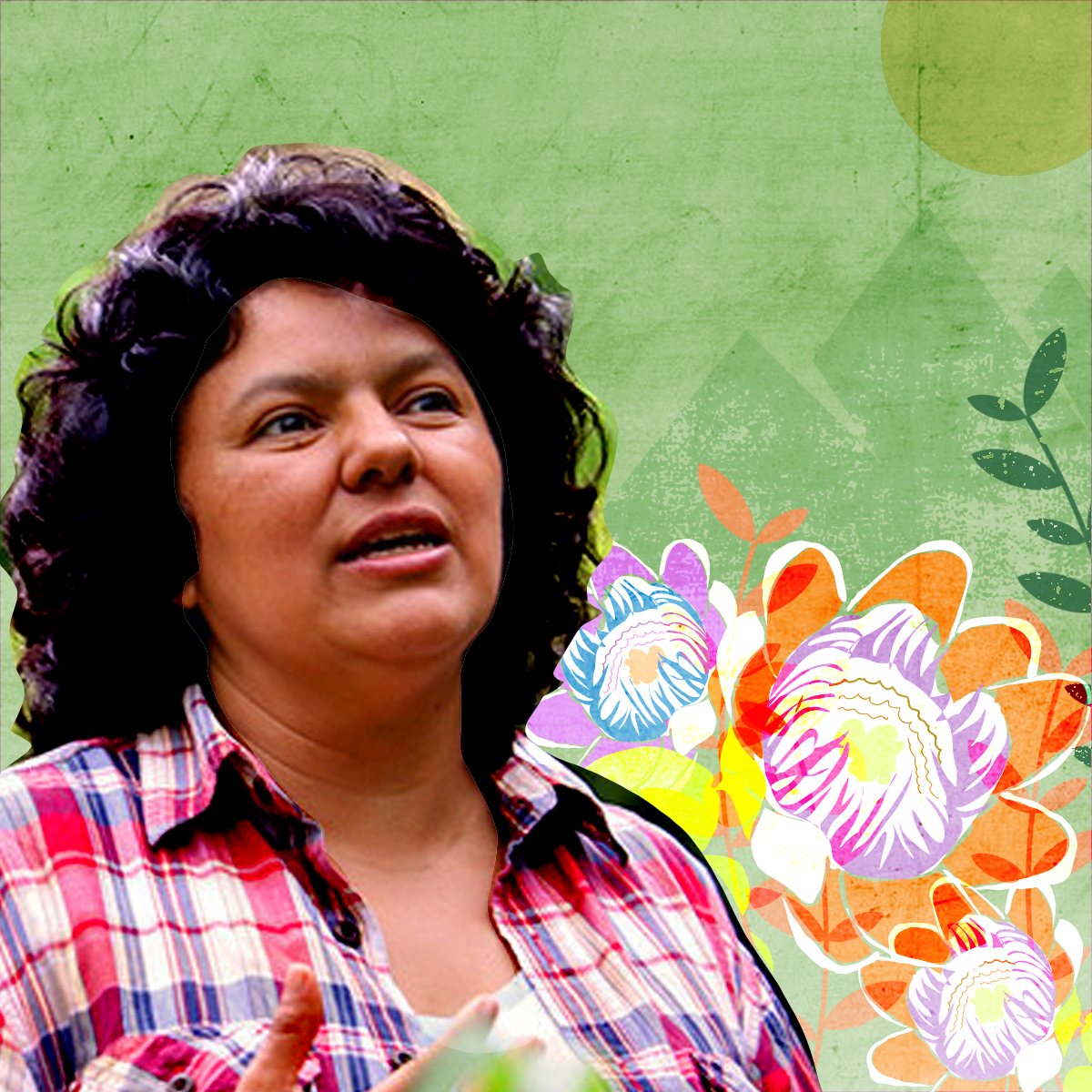
Berta Cáceres cofounded the National Council of Popular and Indigenous Organizations of Honduras (Consejo Cívico de Organizaciones Populares e Indígenas de Honduras, COPINH) in 1993 to address the growing threats posed to the territorial rights of the Lenca communities and improve their livelihoods. For more on her case see: https://humanrightsdefenders.blog/tag/berta-caceres/
JULIÁN CARRILLO AND THE COLORADAS DE LA VIRGEN COMMUNITY (MÉXICO)
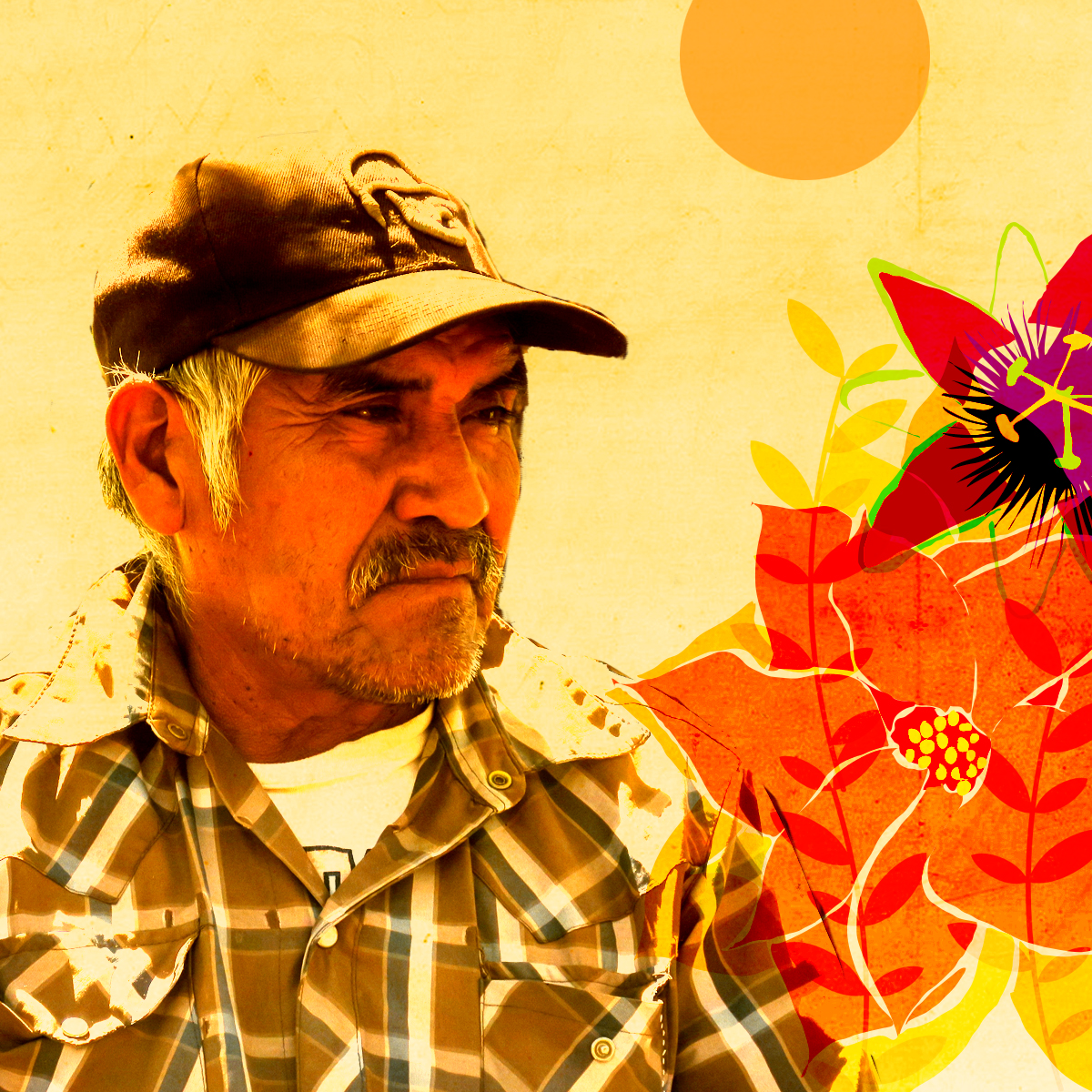
Julián Carrillo was a leader of the Coloradas de la Virgen community. His job was to take care of the territory, the water, the forest and the wildlife. He had publicly denounced logging and mining by landlords in their ancestral land, as well as violence by criminal armed groups against his community. See also: https://humanrightsdefenders.blog/2018/11/07/reprehensible-says-un-about-mexican-killing-of-human-rights-defender/%5D
PARAGUAY: AMADA MARTÍNEZ, INDIGENOUS DEFENDER OF THE ENVIRONMENT AND TERRITORY
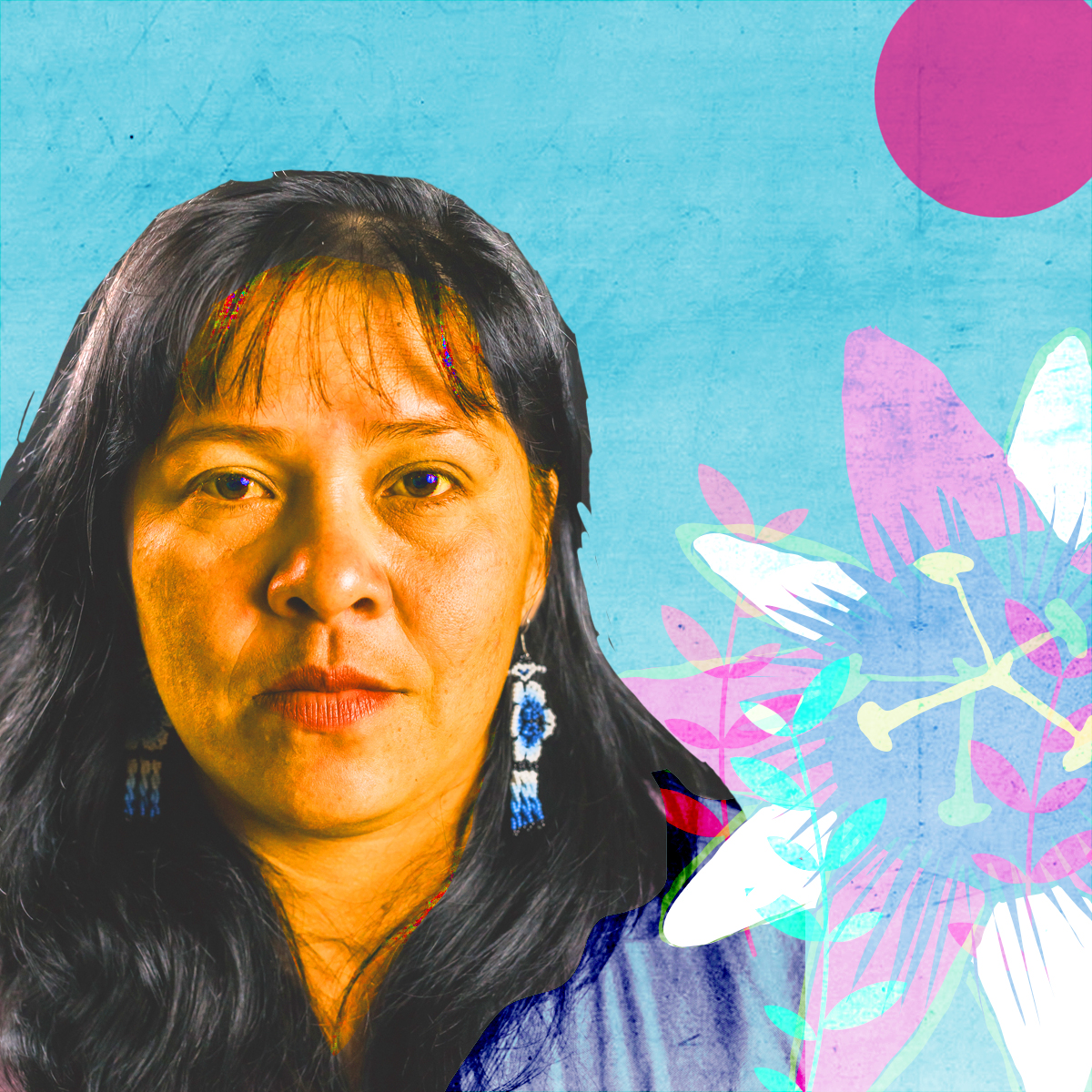
Amada is an Avá Guaraní Indigenous environment defender from the Tekoha Sauce community.
In the 1970s, the construction of the Itaipú Binational hydroelectric plant, in the border between Paraguay and Brazil, forcibly displaced her community from its ancestral territory, putting their survival at risk. Since then, she has defended the right of her community to have a territory in which they can thrive in harmony with nature and has denounced the serious impacts of hydroelectric projects on nature and Indigenous Peoples’ lives. On 8 August 2018, a group of armed men threatened to kill her. Amada was leaving the community in a taxi along with his seven-year-old son, his sister and two young nephews, when the vehicle in which they were traveling was intercepted by a pickup truck with the logo of the hydroelectric plant. Amada Martínez believes that the threat against her was due to her work defending Indigenous Peoples rights and the environment.
PATRICIA GUALINGA, INDIGENOUS DEFENDER OF THE ENVIRONMENT AND TERRITORY

“We are united and we will continue our struggle to defend Mother Earth.”
Patricia is an Indigenous leader of the Kichwa people of Sarayaku community. She defends her people’s rights to their territory and to live in a healthy environment in the face of damaging oil activities there. Patricia is also protecting the Amazonian environment and promoting sustainable development. In 2012, the Indigenous Sarayaku community achieved a historic victory for Indigenous Peoples against the Ecuador government after reporting an oil concession that had installed explosives on their territory without consulting them. In the early hours of 5 January 2018, an unknown man made death threats to Patricia and attacked her at her home in Puyo, in the east of Ecuador., The man shouted, “Next time we’ll kill you, bitch!” before fleeing. Patricia and her family had to leave their home after the attack because the property owner “was terrified that something would happen to her.”
NEMA GREFA, INDIGENOUS DEFENDER OF THE ENVIRONMENT AND TERRITORY
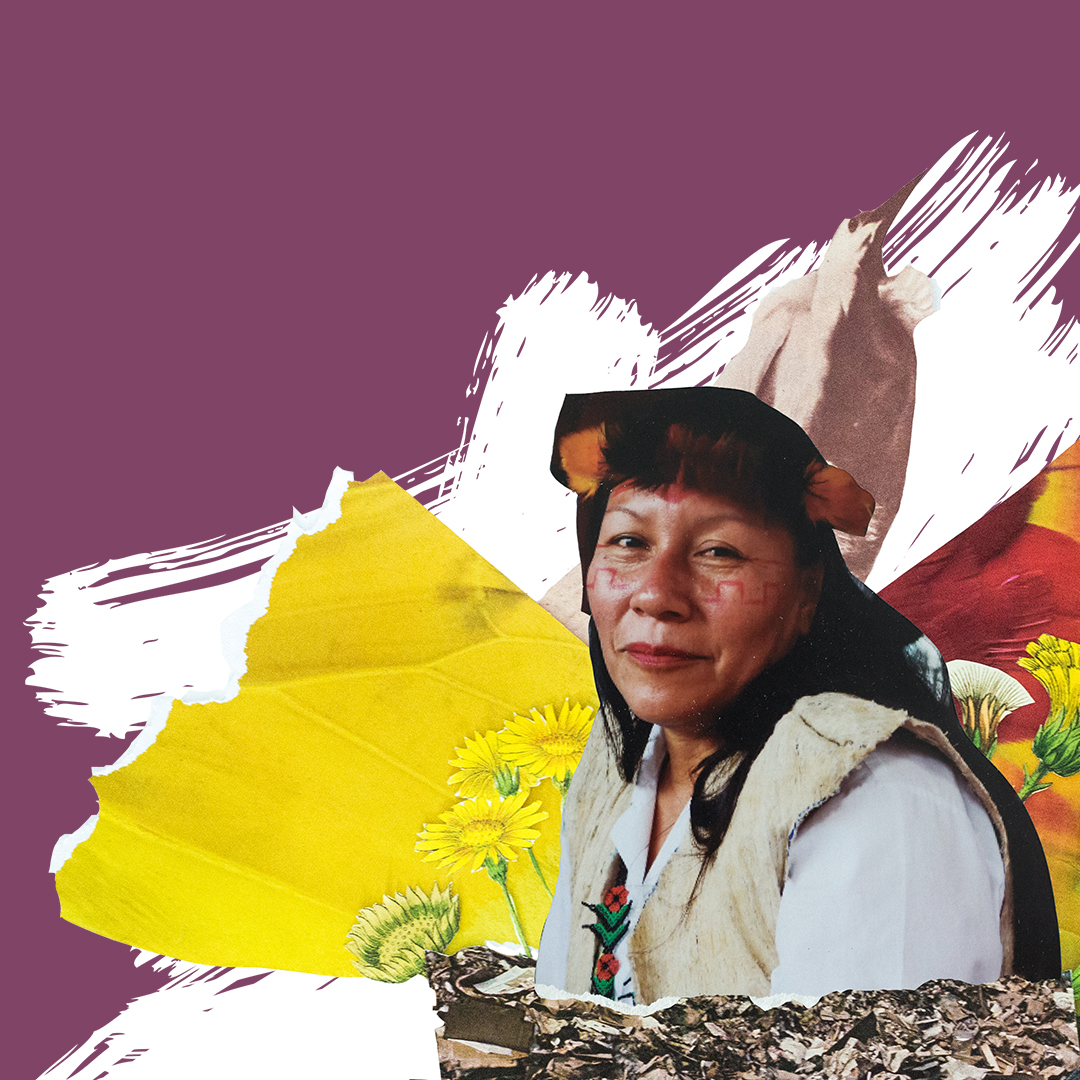
Nema is defending the Amazon environment and her people’s right to protect their territory from the possible negative effects of oil activity. After being legally recognized as President of the Sápara nationality of Ecuador in January 2018, her appointment was challenged by a group of people who Nema says are supportive of oil activities on the Sápara territory. Nema’s appointment was revoked in April 2018 as a result. Later that month a video was shared on social media featuring a man armed with a spear, identified by Nema as belonging to the group who had challenged her appointment, issuing her with a death threat: “Those present here are united in rejecting her and are thus going to kill Nema Grefa; she has no territory.” One year on, the Attorney’s Office has yet to open in investigation into the death threat. On 19 October 2018 Nema was finally recognized as president but still faces serious threats to her life. In April this year, despite the Ecuadorian authorities’ promises to protect her and her family, unknown individuals forcibly broke into her home to steal two computers containing sensitive information on her human rights work.
SALOMÉ ARANDA, INDIGENOUS ENVIRONMENTAL AND WOMEN’S RIGHTS DEFENDER
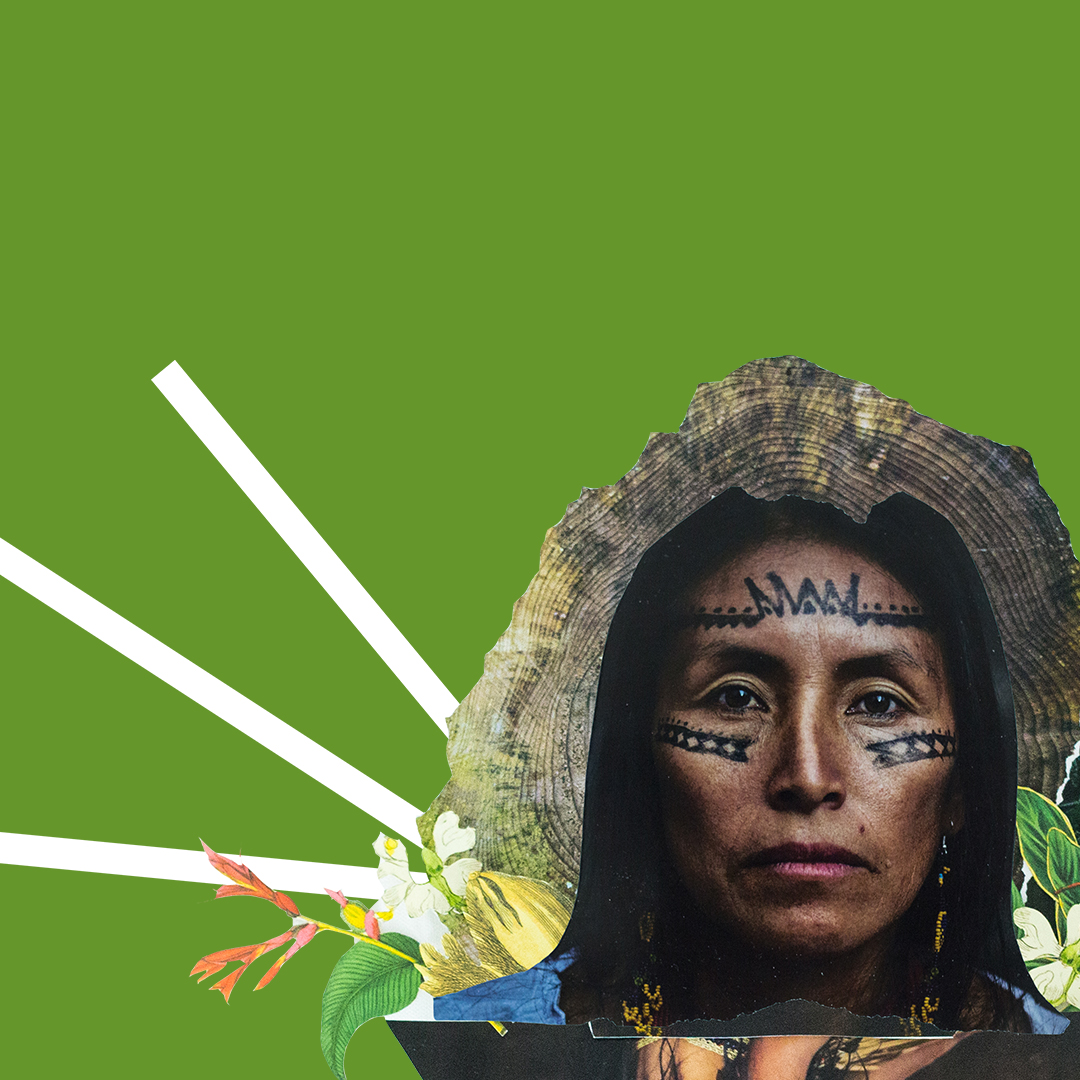
Salomé is an Indigenous leader from the Kichwa people who is defending the Amazonian environment and the right of women in her community to live in a healthy environment, free from sexual violence. Salomé is the Women and Family Leader in Moretecocha commune, Pastaza province. Salomé has publicly denounced the possible environmental impacts of oil operations in the Villano River basin, Pastaza province, and the sexual abuse of Indigenous women that have occurred in this context. In the early hours of 13 May 2018, a number of unidentified individuals attacked and threatened her and her family at home. Despite making a formal complaint, the Pastaza Provincial Attorney’s Office has yet to make any significant progress in this investigation. The authorities have not even offered her protection measures to address the risk facing her and her family.
MARGOTH ESCOBAR, ENVIRONMENTAL AND INDIGENOUS PEOPLES’ RIGHTS DEFENDER
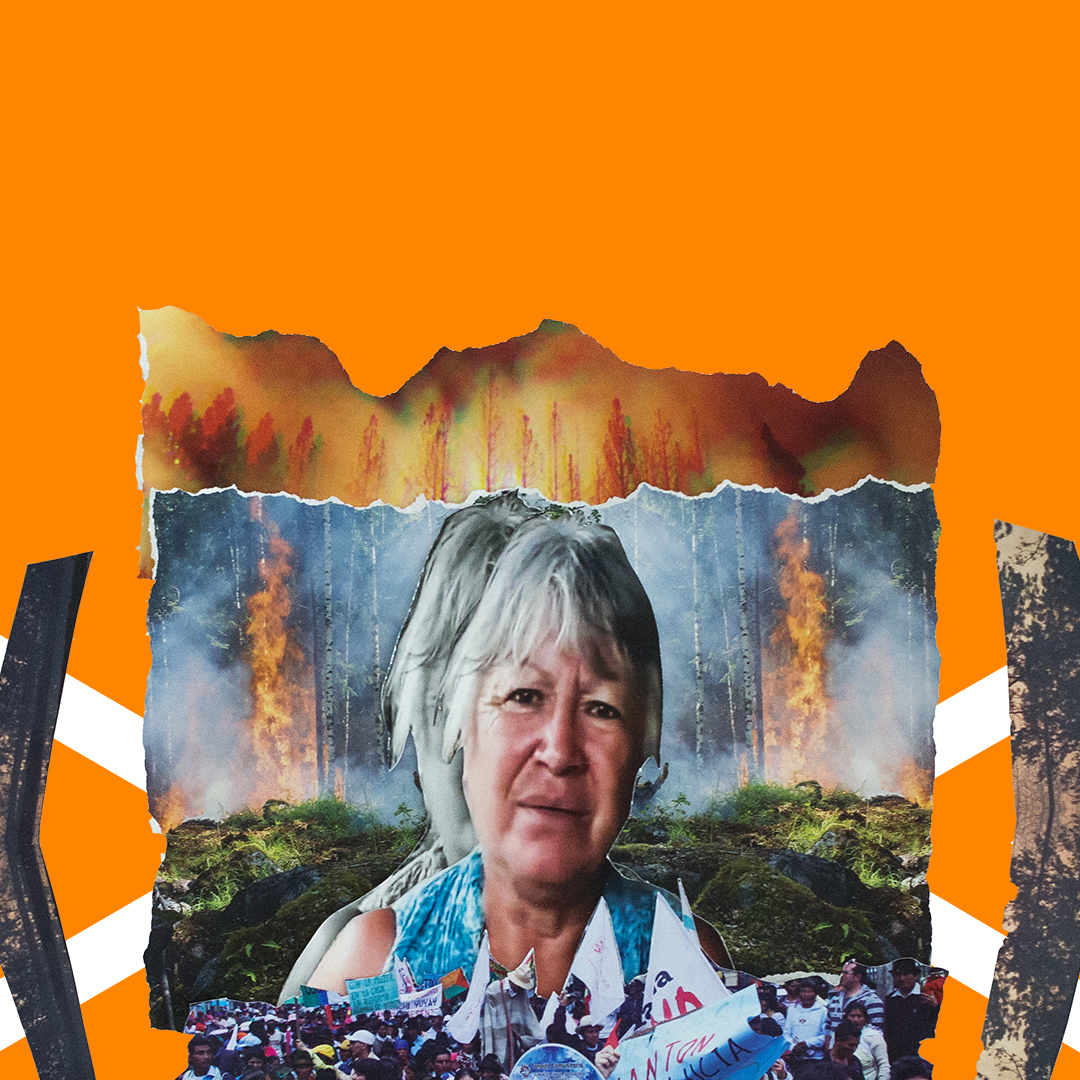
Margoth has devoted her life to defending the environment and Indigenous Peoples’ rights. In August 2015, Margoth was physically attacked by police officers at a protest and national strike called by the social and Indigenous movements in Puyo, Pastaza province. She was held on pre-trial detention for more than a week despite poor health caused by her injuries. She was charged with “attack and resistance”, which she was eventually acquitted of. In September last year Margoth’s house was set on fire, destroying all her belongings. On 1 October 2018, the Puyo Fire Brigade Commander stated that the fire at Margoth’s house had been intentional. Margoth lodged a criminal complaint with the Pastaza Provincial Attorney’s Office to investigate the attack, yet no progress has been made in her case. Margoth refused to join the country’s witness protection program because of her previous experience at the hands of the police: “I didn’t want to join the victim and witness protection system because I have no faith in the current government, I have no faith in the independence of the legal system in Ecuador, nor in the military or police forces.”
Positive communication is the (only) way forward for effective human rights work!
May 30, 2019“For a human rights movement dedicated to exposing abuses, positive communication does not come naturally. But to make the case for human rights, we need to promise a brighter future” says Thomas Coombes – head of brand and deputy director of communications at Amnesty International – in a piece in Open Global Rights of 19 February 2019. I have perhaps also contributed to the gloom with many posts about the decline of the international guman rights regime [with some more constructive posts e.g. https://humanrightsdefenders.blog/2018/12/26/barbara-von-ow-freytag-argues-well-for-a-new-communication-based-approach/ ]. I think rightly Thomas argues: “to break this cycle and sell hope to the media, we need two things: challenging ideas and surprising stories“. Please read the full (short) piece:

For a human rights movement dedicated to exposing abuses, positive communication does not come naturally. We in the human rights community are driven by a desire to make known the suffering and injustice we see in the world, yet what people need from us is not information about what is going wrong, but hope and a means of making it better.
To make the case for human rights, we need to promise a brighter future. At Amnesty International we have a saying: better to light a candle than curse the darkness. But in the human rights movement, we spend a lot more time cursing the darkness. We want to expose terrible suffering so that people are shocked into action. But when we only show the abuses, people start to believe that we live in a world of crisis with no alternative. They accept that reality, give up, or turn to people who preach division, fear and a false sense of safety.
While the human rights movement will always have to expose abuses, we also need to give people a chance to unite behind a cause, challenge governments to live by their values and build support for our way of seeing the world. Hope-based communication is simply a smart strategy for shifting public opinion not by saying what is popular, but by making popular what needs to be said.
Hope-Based Communication is about illustrating what we want to see, not just what other people are doing. Because the human mind adapts easily to bad news, every dose of shock that we administer to the global conscience inoculates people. Without a tangible, believable alternative vision of how things should be, we risk reinforcing current rights abuses as a regrettable but inevitable reality.
Constant stories of crisis create an alarming picture of the world in our minds. When news is all about negative, sensational and exceptional events, it skews our view of other people, cultivates distrust and blinds us to important but unsurprising developments, as Rob Wijnberg, has argued in his manifesto for constructive news outlet The Correspondent. To break this cycle and sell hope to the media, we need two things: challenging ideas and surprising stories.
The environmental movement has already made that first step from dire warnings to big ideas that convince people that another world is possible. For example, in This Changes Everything, Naomi Klein writes about how promises of a bright green future offered a way forward: “What this part of the world has clearly shown is that there is no more potent weapon in the battle against fossil fuels than the creation of real alternatives.”
The human rights movement must now do the same thing, and new research offers us a way to completely reframe the way we talk about human rights. For example, Amnesty International Australia now says “Bring them here” of refugees, rather than asking the government to stop treating them like criminals. Anat Shenker-Osorio’s linguistic analysis of how advocates in Australia, the UK and USA make the case for human rights shows that we talk about human rights as an object that is given to individuals, rather than a tool for people to improve their communities and live together. It encourages us to be more specific about power relations and use the language of journeys instead of war.
We want to take society on a journey to a better place, but when we lean heavily on the language of conflict: we fight, recruit, mobilise, resist, defend, protect and counter. We build coalitions. We wage campaigns. We seek to win battles. We ask people to take sides. This language is divisive—it won’t power a constructive, unifying movement. Instead, we need to talk about building, growing and sticking together.
Research from the Common Cause Foundation shows that altruism is as great a motivator to good causes as self-interest, if not more. Successful movements are propelled forward by enthusiasm and passion. While Donald Trump united his base with the simple red baseball cap, ordinary people demanding women’s rights queued for hours to buy “Together for Yes” buttons in Ireland and thronged the streets wearing green scarves in Argentina.
More and more research points to the fact that fear and pessimism triggers conservative and suspicious views, while, hope and optimism tend to more liberal views. Joyful, inspiring content like Planned Parenthood’s Unstoppable campaign serves not just to inspire, it creates political momentum. Anger mobilizes, hope organizes.
New approaches to stories about people seeking refuge highlight not what they flee but what they create in their new home, how the act of welcome transforms the host, or the power of friendships that face adversity and politics.
The stories we tell become our reality, so we need stories of humanity and compassion, reinforcing the idea that human rights are about people standing up for each other
How do we talk about hope and opportunity when human rights defenders are under attack and we need to defend ourselves, to fight back? How can we be positive when it is our duty to document despair?
Human rights defenders have “long been on the front line”, as Kathryn Sikkink argues in Dejusticia’s Playbook for Human Rights Actors. She warns that the frame of crisis and peril inadvertently harms perceptions of the movement’s effectiveness and legitimacy.
The most urgent challenge is to rebrand what it means to do human rights. The space that we most need to create for civil society is a conscious space apart from today’s struggles in which we allow ourselves to envisage bold possibilities of a better world. Human rights should take pride in being the “slow change” movement, that brings about generational attitudinal and societal progress, offering the path out of the darkest times.
Check out this virtual guide for how you can make a shift towards hope based communications in your human rights work.
There is still a place for anger and sadness, if we balance them with a sense of how we make things better. For no matter how dark the story, there is always some glimmer of hope. And it is our job to kindle that flame. The darker the crisis, the more people exhausted by fear and anger will turn to extreme options. So, we have to give people what every human needs: hope. After all, you light a candle when it gets dark. Hope, like a candle, shines brightest in the dark.
Arsenal and Chelsea are not the only ones strugggling in Azerbaijan on 29 May
May 23, 2019Baku’s Olympic Stadium is hosting the Europa League final between Arsenal and Chelsea Wednesday 29 May 2019 and is also the venue for four games in next year’s European Championship. I will certinaly watch the match but will keep in mind Amnesty International’s warning that we should not let Azerbaijan hide human rights abuses behind football. Sports washing is a phenomenon that deserves more attention, see e.g.:
https://humanrightsdefenders.blog/2019/05/22/andrew-anderson-the-dangerous-game-of-sportswashing/
https://humanrightsdefenders.blog/tag/sports-and-rights-alliance/

The decision to stage the Europa League final in Baku has drawn criticism from fans and human rights groups. Photograph: Robert Prezioso/Getty Images
“We must ensure that Azerbaijan isn’t allowed to sportswash its appalling human rights record as a result of the football fanfare,” Amnesty International’s UK director, Kate Allen, said. “Azerbaijan is in the grip of a sinister human rights crackdown, with journalists, bloggers and human rights defenders being ruthlessly targeted. Unfair trials and smear campaigns remain commonplace.
“LGBTI people have been arrested, and even people fleeing the country have been harassed and pressured to return. Fans, players and backroom staff can help prevent Azerbaijan’s likely attempt to sportswash its image by informing themselves about the human rights situation behind the glitzy facade of Wednesday’s match….All too often, governments are using high-profile sporting competitions to distract attention from repressive policies and human rights violations, to instead project an image of openness. This couldn’t be further from the truth with the current administration, and the Arsenal-Chelsea clash is just the latest reminder of this.”
European governments should stop treating solidarity and compassion as a crime
May 15, 2019Two recent cases of criminalization of human rights defenders in Europe helping people at sea:
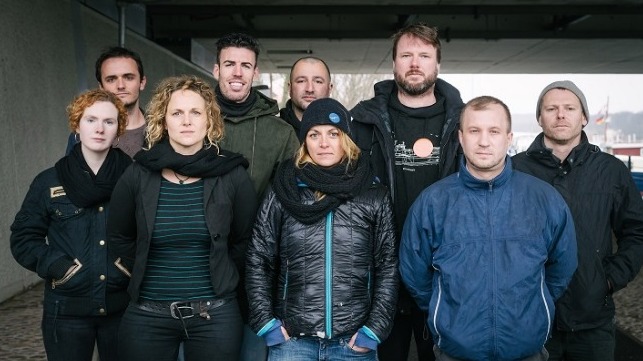
On 13 May 2019 MarEx reported that the crew of the rescue ship Iuventa operated by the German NGO Jugend Rettet has received the Swiss Paul Grüninger human rights award for saving the lives of around 14,000 of men, women and children in the central Mediterranean. For more on this award, see: http://www.trueheroesfilms.org/thedigest/awards/paul-grueninger-award
The award is seen as a statement against the criminalization of those helping people at sea and comes whilst the crew is under criminal investigations in Italy for “aiding and abetting illegal immigration.” They face up to 20 years in prison and fines of 15,000 Euro ($16,900) per saved person. The prize money of 50,000 Swiss francs contributes to the defense.
The Iuventa was the first rescue vessel seized in Italy in August 2017. Captain Dariush was master of the Iuventa for three voyages off the Libyan coast: “We’re being charged for saving lives. This is absurd,” he said. “It is European politicians who block any safe way for people in need, so we had to act.”
The crew says: “Although we have to stand trial, it is us who accuses Europe. We accuse European politicians of turning their backs on people in need. We accuse the E.U. of collaborating with regimes who violate human rights.” The Italian public prosecutor’s office has been investigating the crew for almost two years. Covert investigators claim to have observed the Iuventa crew cooperating with smugglers. However, the NGO claims that scientists at Goldsmiths, University of London have said there is no evidence for this. “They have compared the accusations of the Italian police with all available data, meteorological measurements, logbooks and recordings of the Reuters agency. In their study for Forensic Architecture, they conclude that the allegations are false.” The trial is expected to begin in autumn, and it is expected that charges will be brought against the 10 crew members. It is a precedent for Europe, says lead lawyer Nicola Canestrini: “This trial will show whether Europe can continue to stand for fundamental rights and solidarity in the world.”
——–
Tom Ciotkowski is facing up to five years in prison and a fine of up to 7,500 Euros on trumped up charges. In July 2018, he was observing French riot police preventing volunteers from distributing food to migrants and refugees in Calais. He was charged with contempt and assault after he challenged the violent actions of a policeman against another volunteer. “Tom Ciotkowski is a compassionate young volunteer who was taking action to support migrants and refugees when he was arrested. He has committed no crime and is being unjustly targeted for documenting the abusive behaviour of the police in Calais,” said Amnesty International’s Senior Campaigner on Migration Maria Serrano.
“Tom’s case is sadly emblematic of the harassment, intimidation and attacks that human rights defenders supporting migrants and refugees face at the hands of police in Calais. His case also reflects a wider European trend of criminalizing acts of solidarity, as a way of discouraging others from standing up for human rights. We need courageous, compassionate people like Tom more than ever
[BACKGROUND At the end of July 2018, Tom Ciotkowski was observing French riot police ID-checking volunteers who were trying to distribute food to migrants and refugees. He recorded on his mobile phone an official pushing and kicking a volunteer. When Tom complained about the behaviour of the police, an officer approached him and another female volunteer, who he hit with a baton. When Tom asked the officer for his identification number and told the policeman not to hit women, he was pushed hard by an officer and fell backwards over a metal barrier separating the pavement from the road. As Tom fell backwards, a passing lorry narrowly missed him. He was then arrested, put in custody for 36 hours and charged with contempt and assault (“outrage et violence”). In May 2019, Tom filed a complaint against the police officer who pushed him and against other officers who provided reports stating false facts against Tom to support his arrest and prosecution.]
Human Rights Council: Reprisals instead of responses is the answer by many States
March 21, 2019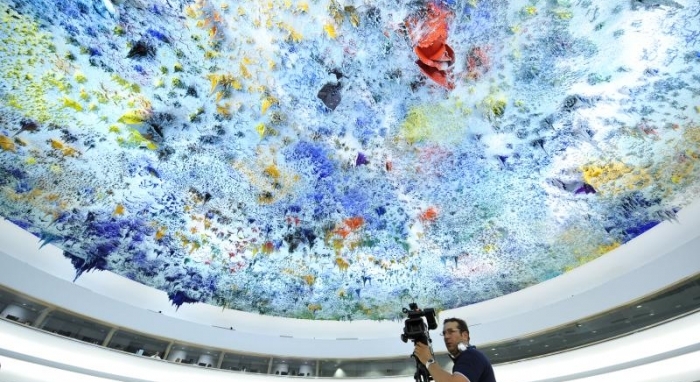
In two statements delivered to the 40th Session of the Human Rights Council, ISHR and Amnesty International reacted to the latest Joint Communications Report of the UN Special Procedures – independent human rights experts, appointed to monitor and report on human rights violations and to advise and assist in promoting and protecting rights. The report cites nine cases of reprisals against human rights defenders cooperating with the UN, and reveals that 95 states have not responded to letters from the UN experts concerning human rights violations.
There are two, related issues at stake here: (1) non-response to letters from the UN, and even worse (2) reprisals against human rights defenders who cooperate with the UN.
When I started my blog in 2010 (and one of the motivations) a main concern was the lack of response and enforcement [see https://humanrightsdefenders.blog/2011/03/20/taking-on-non-response-this-bloggers-lone-response/ and : https://www.linkedin.com/pulse/20140603192912-22083774–crime-should-not-pay-in-the-area-of-international-human-rights ].
As Helen Nolan of ISHR explains, 35 States have recently failed to respond to two or more of these letters. 13 of these nations are members of the Council. ‘Repeat offenders are a particular concern,’ says Nolan. ‘India has failed to reply to a staggering 8 communications, Mexico 6, Italy 5, and Bangladesh and Nepal 4 each.’ Nolan emphasises that a failure to reply is a failure to cooperate, and welcomes the fact that the recently published report of the Annual Meeting of Special Procedures focuses on non-cooperation, including ‘more subtle forms’, such as selective cooperation with particular mandates. ‘To encourage cooperation, the Council must make non-cooperation more costly,’ says Nolan. ‘We urge the President of the Council to work closely with the Coordinating Committee of the Special Procedures to find ways to do this,‘ adds Nolan.
ISHR and Amnesty International’s second statement noted that under GA Resolution 60/251, Council members must ‘fully cooperate with the Council.’ Yet, the report cites nine cases of reprisals involving these members:
- China sought to revoke the Society for Threatened Peoples’ ECOSOC status after vexatiously alleging that a person accredited by them, Dolkun Isa, participated in incitement and funding of separatism and terrorism, in retaliation for cooperation with the UN;
- Egypt carried out forced evictions, and violations of the rights to physical integrity, liberty and security against individuals who cooperated with the Special Rapporteur on the right to adequate housing during her recent visit;
- Iraq carried out unlawful arrest, enforced disappearance and torture against Imad Al Tamimi and intimidated and threatened Israa Al Dujaili for cooperating with the UN;
- Libya arrested an individual in retaliation for taking steps to clarify the fate and whereabouts of his father, including with UN mechanisms;
- The Philippines labeled defenders “terrorists” in reprisal for their engagement with the UN;
- Russia surveilled, intimidated and harassed Yana Tannagasheva and her husband, for speaking out about impacts of coal mining on indigenous people in Siberia and in possible reprisal for their communication with UN mechanisms;
- Turkmenistan carried out reprisals against a defender and her husband for her cooperation with the UN; and
- In Yemen, forces loyal to President Hadi and the Saudi-led coalition detained human rights defenders Radhya Al-Mutawakel and Abdulrasheed Al-Faqih for cooperating with the UN.
‘We call on the President of the Council to request updates on the cases from Iraq, Libya, Russia, Turkmenistan and Yemen, as there has been no response from the States concerned,’ said Nolan. For an older post on reprisals, see: https://humanrightsdefenders.blog/2014/03/13/zero-tolerance-for-states-that-take-reprisals-against-hrds-lets-up-the-ante/
Full text of the first statement (on failure to reply) available here.
Full text of the second statement (on cases of reprisals) available here.
You can also watch the videos of the statements via the link below:
Iran cracks down on Nasrin Sotoudeh and other human rights defenders
March 12, 2019
Sotoudeh was charged with spying, spreading propaganda and insulting Iran’s supreme leader. Photograph: Behrouz Mehri/AFP/Getty Images
Only yesterday I hoped that Nasrin Sotoudeh‘s invitation to the G7 would set a good precedent [https://humanrightsdefenders.blog/2019/03/11/does-g7-set-a-precedent-with-sotoudeh-for-inviting-human-rights-defenders/], now Reuters reports that she has been handed a new sentence that her husband said was 38 years in prison and 148 lashes! The news comes days after Iran appointed a hardline new head of the judiciary, Ebrahim Raisi, who is a protege of Ali Khamenei. The appointment is seen as weakening the political influence of the Iranian president, Hassan Rouhani. (NOTE: Her husband clarified later that she will be serving 10 years of the 33 he had announced on his Facebook page and in an interview with Radio Farda)
In the meantime AI reports that a series of videos shared on social media in recent weeks have shed light on the daily harassment and violent attacks women in Iran face at the hands of morality police and pro-government vigilantes seeking to enforce the country’s forced hijab (veiling) laws. The videos show members of the public or plain-clothes morality police aggressively confronting or attacking women for defying Iran’s degrading forced hijab laws, in the name of defending “public decency”. Perpetrators of such attacks appear to be getting bolder in their assaults in response to efforts by women to film the violence they face and share the videos on social media. “The video footage that has emerged in recent weeks demonstrates the shocking levels of abuse women in Iran face on a daily basis from morality police or pro-government thugs simply for daring to defy the country’s abusive forced hijab laws,” said Philip Luther of Amnesty International. Iranian women’s rights defenders have courageously filmed these incidents as part of the My Camera My Weapon campaign, which aims to raise awareness of the constant harassment and assault that women and girls face in Iran’s streets as a result of forced hijab laws.
Amnesty added:…..The charges on which Nasrin Sotoudeh was convicted include “inciting corruption and prostitution” and “openly committing a sinful act… by appearing in public without a hijab”. Some of the activities that the authorities have cited as “evidence” against her include: opposing forced hijab; removing her headscarf during prison visits; defending women who peacefully protested against forced hijab; giving media interviews about the violent arrest and detention of women protesting against forced hijab; and placing flowers at the scene where a woman protester was violently arrested.
The UN Human Rights Council also was dealing with Iran this week: Worrying patterns of intimidation, arrest, prosecution, and ill-treatment of human rights defenders, lawyers, and labour rights activists in Iran signal an increasingly severe State response to protests and strikes in the country, Javaid Rehman, the Special Rapporteur on human rights in Iran, said on 12 March 2019. “Today, the people of Iran face a myriad of challenges,” he told the Human Rights Council in Geneva. “Many have voiced their concern through protests, demonstrations, and strikes. People from diverse sections of society – from truck drivers to teachers to factory workers – across the country have protested.” “It is in this context of increased challenges that concerns are mounting about human rights, including the rights to freedom of peaceful assembly and to association in Iran,” he said, calling on the Government to release all those detained for exercising such rights. Presenting his first report to the Council, Rehman said the re-imposition of secondary sanctions by the United States of America had further increased concerns for the welfare of ordinary Iranians.
The Special Rapporteur also highlighted the alarming health situations of numerous imprisoned individuals such as human rights defender Arash Sadeghi [see also: https://humanrightsdefenders.blog/2016/09/30/iran-shameful-sentences-for-narges-mohammadi-issa-saharkhiz-arash-sadeghi-no-detente-in-human-rights/]. Rehman also highlighted the situation of prominent woman human rights lawyer Nasrin Sotoudeh who was reportedly convicted last week of charges related to her work and could face a lengthy prison sentence. Other issues raised in his report include concerns regarding the right to life and to fair trial, the situation of detained foreign and dual nationals, and the treatment of religious and ethnic minorities.
Human Rights Watch commented that the Iranian judiciary’s draconian sentence for a prominent human rights lawyer Nasrin Sotoudeh was an “appalling travesty of justice“.
http://www.scoop.co.nz/stories/WO1903/S00091/iran-un-expert-concerned-by-crackdown-on-protests.htm
https://www.hrw.org/news/2019/03/12/iran-decades-long-sentence-womens-rights-defender
Amnesty launches report on Laws designed to silence human rights defenders
February 21, 2019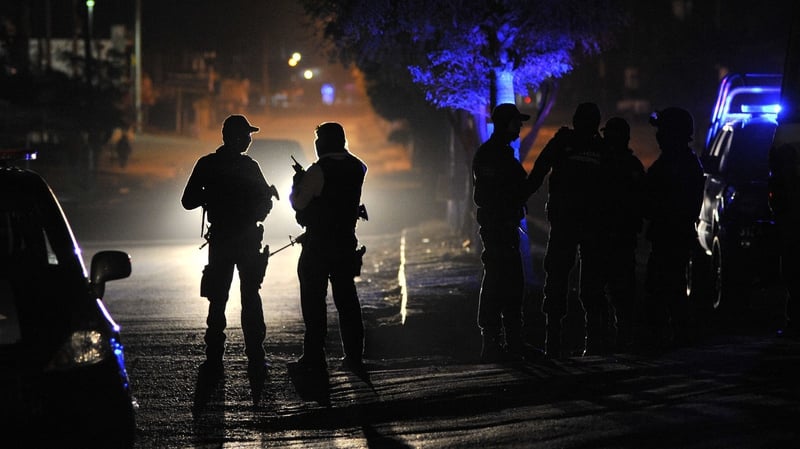
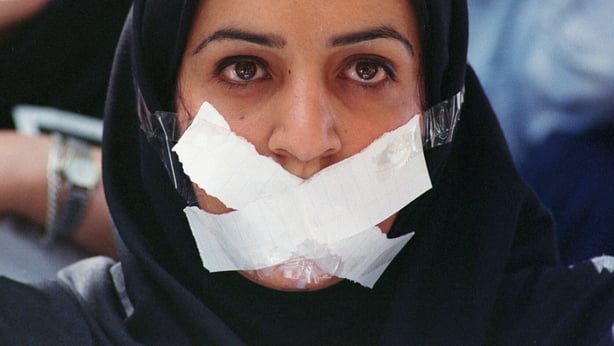
The report lists 50 countries worldwide where anti-NGO laws have been implemented or are in the pipeline
https://www.rte.ie/news/2019/0221/1031852-amnesty_assault_on_ngos/
Working environment at Amnesty International severely judged by own staff
February 8, 2019 That human rights NGOs are severely criticized is nothing new but that it comes from its own staff is rare. Still here is a report that states that “Amnesty International has had a “toxic” working environment going back as far as the 1990s”. This does not mean that AI is specially bad compared to other larger NGOs, just that there are very few other such public reports.
Sports and human rights: focus on ‘sports washing’ – big names play for big money
February 1, 2019Sports and human rights (or as some like to say ‘sports and politics‘) remains a hotly disputed topic. While the organized sport world (FIFA, IOC) is slowly coming around to take these matters more seriously [see e.g. https://humanrightsdefenders.blog/2018/12/03/fifas-second-report-on-human-rights-misses-sustainable-approach/ and https://humanrightsdefenders.blog/2018/12/03/olympic-committee-tries-its-hands-on-human-rights-cautiously/], it seems that less progress is made with sports events organized by repressive regimes simply to boost their image. Recently called ‘sports washing‘ [The term was coined in relation to a planned tennis exhibition match in Jeddah last December between Novak Djokovic and Rafael Nadal, – https://humanrightsdefenders.blog/2018/10/19/novak-djokovic-and-rafael-nadal-have-a-chance-to-score-a-point-for-human-rights-defenders/. It never went ahead due to an injury of Nadal.]. Azerbaijan in 2015 tried to make good use of sporting events (see e.g. https://humanrightsdefenders.blog/2015/06/12/baku-games-starting-today-with-avalanche-of-human-rights-criticism/; and https://humanrightsdefenders.blog/2015/04/21/azerbaijan-a-formula-for-combining-sports-and-repression/).
Now the regime of Saudi Arabia hopes that it can buy its way to a better image with hosting sport events and Amnesty International has warned sports stars not to become a propaganda tool. Saudi Arabia said it has hired the former England captain, David Beckham, to lead an exhibition team against his former Real Madrid teammate Zinedine Zidane. The game, to be held later this year, is part of a £60-billion re-launch of the entertainment industry in Saudi Arabia, called the National Transformation Programme. According to an article in the Sun, it would earn Beckham an estimated £1million. [Beckham also has a lifetime endorsement deal worth £120million with Adidas which I think doesn’t sit well with Adidas’ claimed stance in favor of human rights – see e.g. https://humanrightsdefenders.blog/2018/12/13/first-time-major-companies-say-that-human-rights-defenders-are-essential-for-profitable-business/].
Announcing the match in front of big screen images of the football legends, Saudi sports minister Turki Al-Sheikh said: “This is an exhibition match including two big worldwide stars – Zinedine Zidane and David Beckham playing against each other…If God wills, you will see it this year in the Kingdom of Saudi Arabia.”
The UN children’s aid group UNICEF, for whom Beckham is a goodwill ambassador, has criticised the Saudi-led coalition saying its bombing attacks there have had catastrophic consequences for the local population. Saudi Arabia has detained more than a dozen women’s rights activists such as Loujain al-Hathloul who once appeared in a Vanity Fair. Loujain’s sister, Alia, has criticised US singer Mariah Carey for playing a concert on Thursday at the King Abdullah Economic City. She said: “My own baby sister said she is being whipped, beaten, electrocuted and harassed on a frequent basis.” She stated: “Remember, thanks to my sister @LoujainHathloul, you r able to perform in Saudi Arabia. I wish she can attend your concert. But she’s locked behind bars because she tried to improve women’s condition. Don’t forget to thank her on stage,” she wrote to Carey on Twitter. [but Mariah Carey is an old hand when it comes to selling her soul: see e.g. https://humanrightsdefenders.blog/2013/12/19/mariah-carey-needs-better-informed-staff-and-donate-her-1-million-fee-to-human-rights-defenders-in-angola/].
My post yesterday was about golfers: https://humanrightsdefenders.blog/2019/01/31/amnesty-international-calls-on-golfers-not-to-play-the-saudi-propaganda-game/] who were being paid $ 1million when the European Tour staged a tournament in Saudi Arabia. While Paul Casey decided not to take part on human rights grounds, Justin Rose and Ian Poulter did play.
—
How difficult if not impossible it is to try and separate sports and politics can be illustrated by the recent case of soccer player, Hakeem al-Araibi, a Bahrain-born soccer player for a team in Australia has been held in detention in Thailand [see https://humanrightsdefenders.blog/2019/01/02/craig-foster-australian-footballer-and-human-rights-defender/]. Hannah Beech in the NYT on 31 January 2019 puts the question “Can Big Global Sports Come Around to Human Rights Advocacy?“

Hakeem al-Araibi, center, a former member of Bahrain’s national soccer team who has refugee status in Australia, at court in Bangkok in December.CreditCreditAthit Perawongmetha/Reuters
The global sports market is worth hundreds of billions of dollars a year. Now, this powerful industry is coming together to promote an unlikely cause: human rights. Since late November, a Bahrain-born soccer player for a minor team in Australia has been held in detention in Thailand. The player, Hakeem al-Araibi, 24, is not a famous athlete. He has no lucrative sponsors. But he has spoken out against one of the most powerful men in international soccer, who is also a member of the ruling family of Bahrain. His testimony of torture at the hands of Bahrain’s repressive government earned him refugee status in Australia, which determined that he faced credible threats of persecution should he return to the Gulf state. Still, over the past week, Mr. Araibi has collected an impressive list of supporters in the world of international sports.
- Fatma Samoura, the secretary general of FIFA, has called for Thailand to return him to Australia “as a matter of urgency.”
- Thomas Bach, the head of the International Olympic Committee, raised the issue with the United Nations High Commissioner for Refugees.
- Praful Patel, of the Asian Football Confederation, issued a statement asking the Prime Minister of Thailand to ensure Mr. Araibi’s return to his adopted home.
[By the way, the head of the Asian Football Confederation is Sheikh Salman bin Ebrahim al-Khalifa, the Bahraini official whom Mr. Araibi accused of not stopping the persecution of athletes in his charge. Sheikh Salman also serves as a FIFA vice president.!]
Mary Harvey, the chief executive of the Center for Sports and Human Rights, said: “Hakeem is a historic test case, because it’s the first time that we’ve seen these big, powerful sports bodies all come together publicly to address the fate of a single person”. [see also: https://humanrightsdefenders.blog/2018/12/12/mary-harvey-her-goal-is-now-human-rights/]. The court ordered al-Araibi, who is in the Bangkok Remand Prison, to appear before it at 8.30am on Monday to answer whether or not he is willing to be extradited, lawyer Bergman said.
—–
 Hans Thoolen on Human Rights Defenders and their awards