Archive for the 'Amnesty international' Category

New shocking report by AI re prisoners’ abuse in Iran

September 3, 2020

Iran’s police, intelligence and security forces, and prison officials have committed, with the complicity of judges and prosecutors,  a catalogue of shocking human rights violations, including arbitrary detention, enforced disappearance, torture and other ill-treatment, against those detained in connection with the nationwide protests of November 2019, said Amnesty International in a new report published today.

The report, Trampling humanity: Mass arrests, disappearances and torture since Iran’s 2019 November protests, documents the harrowing accounts of dozens of protesters, bystanders and others who were violently arrested, forcibly disappeared or held incommunicado, systemically denied access to their lawyers during interrogations, and repeatedly tortured to “confess”. They are among the 7,000 men, women and children arrested by the Iranian authorities within a matter of days during their brutal repression of the protests.

Victims include children as young as 10 and injured protesters and bystanders arrested from hospitals while seeking medical care for gunshot wounds, as well as human rights defenders including minority rights activists, journalists, and individuals who attended ceremonies to commemorate those killed during the protests. Hundreds have since been sentenced to prison terms and flogging and several to the death penalty following grossly unfair trials which were presided over by biased judges behind closed doors, frequently lasted less than an hour, and systematically relied on torture-tainted “confessions”.

“In the days following the mass protests, videos showing Iran’s security forces deliberately killing and injuring unarmed protesters and bystanders sent shockwaves around the world. Much less visible has been the catalogue of cruelty meted out to detainees and their families by Iranian officials away from the public eye,” said Diana Eltahawy, Amnesty International’s Deputy Regional Director for the Middle East and North Africa.

Instead of investigating allegations of enforced disappearance, torture and other ill-treatment and other crimes against detainees, Iranian prosecutors became complicit in the campaign of repression by bringing national security charges against hundreds of people solely for exercising their rights to freedom of expression, association and peaceful assembly, while judges doled out guilty verdicts on the basis of torture-tainted ‘confessions’. This litany of crimes and violations, committed with total impunity, has been accompanied by a wave of forced televised ‘confessions’ in state propaganda videos and grotesque statements from top officials who have praised intelligence and security forces as heroes for their role in the brutal crackdown.

Amnesty International has recorded the names and details of more than 500 protesters and others, including journalists and human rights defenders, who have been subjected to unfair criminal proceedings in connection with the protests.

Prison terms meted out to those convicted have ranged from between one month and 10 years for vague or spurious national security charges such as “gathering and colluding to commit crimes against national security”, “spreading propaganda against the system”, “disrupting public order” and “insulting the Supreme Leader”.

Of these, at least three, Amirhossein Moradi, Mohammad Rajabi and Saeed Tamjidi, were sentenced to death for “enmity against God” (moharebeh) through acts of vandalism, and another, Hossein Reyhani, is awaiting trial on a charge carrying the death penalty.

More than a dozen known to Amnesty International have received flogging sentences, in addition to prison terms, and at least two have had their flogging sentences implemented.

The organization believes that the real number of individuals prosecuted and sentenced in connection with the November 2019 protests is far higher, given the large number of arrests carried out and the patterns of prosecution and sentencing in the country in cases of arbitrary arrests and detention involving intelligence and security bodies.

Amnesty International is urging member states of the UN Human Rights Council and the Office of the UN High Commissioner for Human Rights to address the prolonged, systematic impunity for gross violations of human rights in Iran, including by supporting the establishment of a UN-led inquiry with a view to ensuring accountability and guarantees of non-repetition.

The organization is also urging all UN member states to forcefully call on the Iranian authorities to immediately and unconditionally release anyone who continues to be imprisoned solely for exercising their rights to freedom of expression, association and peaceful assembly in connection with the November 2019 protests; quash all convictions resulting from unfair trials, including those that relied on statements obtained through torture or other ill-treatment; and hold those responsible to account.

Torture epidemic

Amnesty International’s research found that there was widespread use of torture and other ill-treatment by police, intelligence and security agents and prison officials against men, women and children, both during arrest and later in detention.

Prosecution and judicial authorities failed in their legal obligations to conduct independent and impartial inspections of detention facilities, including those run by security and intelligence bodies, and to ensure that legal provisions banning the use of secret detention and torture and other ill-treatment against detainees are respected.

Torture was used to punish, intimidate and humiliate detainees. It was also routinely used to elicit “confessions” and incriminating statements, not just about their involvement in the protests, but also about their alleged associations with opposition groups, human rights defenders, media outside Iran, as well as with foreign governments.

The organization’s research found that victims were frequently hooded or blindfolded; punched, kicked and flogged; beaten with sticks, rubber hosepipes, knives, batons and cables; suspended or forced into holding painful stress positions for prolonged periods; deprived of sufficient food and potable water; placed in prolonged solitary confinement, sometimes for weeks or even months; and denied medical care for injuries sustained during the protests or as a result of torture.

Other documented methods of torture included stripping detainees and spraying them with cold water, and subjecting detainees to extreme temperatures and/or bombardment of light or sound; forcible extraction of the nails from fingers or toes; pepper spraying; forced administration of chemical substances; using electric shocks; waterboarding; and mock executions.

Information received by Amnesty International from primary sources also reveals that interrogators and prison officials perpetrated sexual violence against male detainees, including through stripping and forced nakedness, sexual verbal abuse, pepper spraying the genital area, and administering electric shocks to the testicles.

One victim from Khorasan Razavi province who was subjected to waterboarding told Amnesty International:

“They [my interrogators] would drench a towel in water and place it over my face. Then they would pour water slowly over the towel, which made me feel like I was suffocating… They would stop… until I started to feel better and then they would start torturing me this way again. They also punched, kicked and flogged me on the soles of my feet with a cable.”

One man who was subjected to electric shocks recounted:

“The electric shocks were the worst form of torture… It felt like my entire body was being pierced with millions of needles. If I refused to answer their questions, they would raise the voltage levels and give me stronger electric shocks. I would shake violently and there would be a strong burning sensation coursing through my whole body…. The torture has had lasting effects on my mental and physical health. To this day, I still can’t sleep at night.”

A victim from Tehran province who was suspended from his hands and feet from a pole in a painful method his interrogators referred to as “chicken kebab” told the organization:

“The pain was excruciating. There was so much pressure and pain in my body that I would urinate on myself… My family know that I was tortured, but they don’t know how I was tortured. I feel choked with tears because there is no one here I can speak to.”

In all cases documented by Amnesty International, victims reported various forms of psychological torture to give forced “confessions”, including the use of degrading verbal insults and profanities; the intimidation and harassment of their family members; threats to arrest, torture, kill or otherwise harm their family members, including elderly parents or spouses; and threats to rape detainees or their female family members.

Enforced disappearances

Amnesty International’s research shows that many detainees were subjected to enforced disappearance for weeks or even months while held in undisclosed locations run by the security and intelligence bodies including the ministry of intelligence or the Revolutionary Guards. Other detainees were held in overcrowded prisons or police stations, military barracks, sports venues and schools.

Distressed relatives told the organization that they visited hospitals, morgues, police stations, prosecution offices, courts, prisons and other known detention centres to enquire about the fate or whereabouts of their loved ones, but the authorities refused to provide them with information and threatened them with arrest if they kept seeking information or publicly spoke out about them.

In one case documented by Amnesty International, the authorities arrested a family member of two people who were forcibly disappeared for enquiring about their fate and whereabouts.

Amnesty International is aware of three ongoing cases of enforced disappearance, where the authorities continue to conceal their fate and whereabouts from their families. They include brothers Mehdi Roodbarian and Mostafa Roodbarian from Mahshahr, Khuzestan province.

On 11 September followed this: https://en.radiofarda.com/a/human-rights-organizations-call-for-un-investigation-into-suppressing-iranian-protesters/30833918.html
https://www.amnesty.org/en/latest/news/2020/09/iran-detainees-flogged-sexually-abused-and-given-electric-shocks-in-gruesome-post-protest-crackdown-new-report/


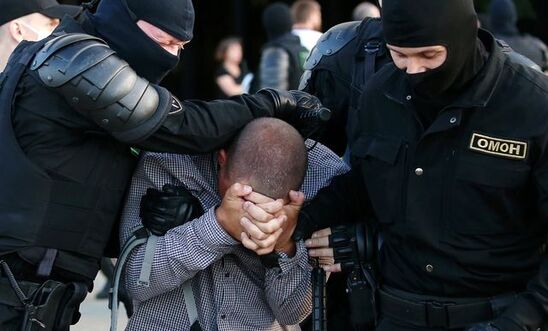
16 NGOs call on UN to convene special session on crackdown in Belarus

August 27, 2020
Police officers detaining a protester in Minsk on 10 August © Natalia Fedosenko/TASS

An open letter has been signed by: Article 19, Assembly of Pro-Democratic NGOs of Belarus, Barys Zvozskau Belarusian Human Rights House, Belarusian Association of Journalists, Belarusian Helsinki Committee, Civil Rights Defenders, Human Constanta, Human Rights House Foundation, Human Rights Watch, International Federation for Human Rights (FIDH), La Strada International, Legal Initiative, Legal Transformation center (Lawtrend), Viasna Human Rights Center and World Organisation Against Torture (OMCT).

The UN Human Rights Council must urgently convene a special session to address the human rights crisis in Belarus. The joint letter expresses the organisations’ “utmost concern” over “widespread violations of human rights, including arbitrary arrests, prosecutions under trumped-up charges, and torture and other ill-treatment”.

The letter calls on the council to adopt a resolution requesting the UN High Commissioner for Human Rights to monitor and report on human rights abuses in Belarus with “a view to ensuring full accountability”.

See also: https://humanrightsdefenders.blog/2020/08/13/what-can-we-do-about-the-result-of-the-belarussian-election-on-line-discussion-today-at-14h00/

[In the three days after the 9 August presidential election, the authorities in Belarus confirmed the arrest of at least 6,700 protesters. According to Viasna Human Rights Center, at least 450 of the detainees reported being tortured or otherwise ill-treated – including through severe beatings, being forced to perform humiliating acts, being threatened with rape and other forms of violence – while held in incommunicado detention for up to ten days.

Since 12 August, the authorities have taken steps to de-escalate the situation, refraining from mass arrests and releasing those detained. However, the threats against peaceful protesters recently made by President Alyaksandr Lukashenka and his subordinates together with the recent deployment of the armed forces in the country’s capital Minsk and elsewhere, signal a possible new spiral of violence and accompanying human rights violations.]

Here the Letter in full:

Click to access civil-society-organizations-call-on-the-united-nations-human-rights-council-to-convene-a-special-session-on-belarus.pdf

What can we do about the result of the Belarussian “election”? On line discussion

August 13, 2020
The Human Rights House Foundation, in partnership with Barys Zvozskau Belarusian Human Rights House, will host on THURSDAY, AUGUST 13, 2020 AT 14 PM an on -line  panel discussion with individuals closely following events on the ground. It will investigate what the European Union, United Nations, and individual states must do immediately to prevent further violence and seek a political solution to this growing crisis and how the international community should continue to occupy this space once this crisis moves off of the front pages.
On August 9, Belarusian President Alyasandr Lukashenka claimed a landslide re-election victory. This claim was widely anticipated, condemned by the political opposition, and met with large-scale peaceful protests across the country. Belarusian authorities responded with what international organisations label disproportionate violence against protesters. Since Monday, local human rights organisations report thousands detained, many of them arbitrarily, and facing further violence and abuse while in detention. More than 60 journalists – both domestic and foreign – have been arrested with the whereabouts of several unknown. In many ways, these early days of the post-election environment point towards a more violent crackdown than the country faced following the last presidential elections in 2010.
What can and should the international community do to pressure Belarusian authorities to cease their violent attacks on protesters and human rights defenders?
Speakers:
Anaïs Marin
UN Special Rapporteur on the human rights situation in Belarus

Oleg Kozlovsky

Amnesty International
Franak Viačorka
Vice President of the Digital Communication Network
Hanna Liubakova
Journalist, Outriders

Valiantsin Stefanovic

Viasna. Human rights in Belarus

and

Tanya Lokshina
Associate director, Europe and Central Asia, Human Rights Watch
Moderation by Dave Elseroad, Human Rights House Foundation.
Also today, 13 August 2020, 5 UN human rights experts strongly criticised Belarus for police violence against peaceful protesters and journalists and large scale detention following a controversial presidential election, and called on the international community to put pressure on Belarus to stop attacking its own citizens: https://yubanet.com/world/belarus-must-stop-attacking-peaceful-protesters-un-human-rights-experts-say/

Amnesty asks Bangladesh to stop harassing families of human rights defenders:

August 10, 2020

The Staff Correspondent of Newagebd published on 8 August 2020 an appeal by Amnesy Intenational to the Bangladeshi government to stop harassing and intimidating the family members of exiled blogger Asad Noor and other human rights defenders immediately.

The Human rights organisation also said that defending human rights in Bangladesh has become increasingly challenging as many bloggers and human rights defenders fled persecution at home and sought protection abroad in recent years while continuing their activism. The authorities are now targeting their families remaining in the country in an effort to silence them, said that statement.

In July, Asad Noor published several video blogs protesting against the persecution of the minority Buddhist community in Rangunia upazila in Chattogram. A local youth leader of the ruling Awami League sued Asad on 14 July 2020 under the draconian Digital Security Act, accusing him of ‘hurting religious sentiments’ and ‘running propaganda against the spirit of the liberation war.’ Amnesty found that the local police raided Asad’s parental house in Amtali village in the southern district Barguna times and again on July 14, 15, 16 and 18, and being unable to find Asad, harassed his parents.

The local police kept the family members in detention for 40 hours before releasing them in the night of July 19. ‘The harassment of Asad’s family is not an isolated incident. It is part of a worrying pattern targeting families of human rights defenders in exile,’ said Sultan Mohammed Zakaria.

Amnesty’s South Asia researcher Sultan Mohammed Zakaria said that harassment of families, to muzzle human rights defenders in exile from Bangladesh, was utterly reprehensible. Such tactics of intimidation must be stopped immediately. Instead, the authorities have the responsibility to prevent and effectively address allegations of human rights abuses and ensure a safe and enabling environment for human rights defenders, by carrying out prompt and independent investigations and bringing suspected perpetrators to justice, he said.

See also: https://humanrightsdefenders.blog/2018/03/05/bangladesh-government-depicted-as-against-human-rights-defenders/

https://www.newagebd.net/article/112959/stop-harassing-families-of-rights-defenders-ai


Human Rights Compliance test for football clubs

August 7, 2020

Saudi Arabia’s protracted effort to purchase Newcastle United finally came to an end last week © Getty Images

Amnesty International UK has called on the English Premier League to update its Owners’ and Directors’ test, and has sent a proposed updated test to the Premier League’s Chief Executive, Richard Masters. Criticising the current test as “hopelessly unsuited” to the task of ensuring proper scrutiny of the human rights records of those trying to buy into English football clubs, Amnesty has commissioned a new human rights-compliant test from corporate lawyers David Chivers QC and Seamus Woods of Erskine Chambers, together with a detailed legal analysis.

The Premier League has recently been supportive of Black Lives Matter solidarity protests from players and clubs, while Amnesty has also praised clubs – including many in the Premier League – for their part in the Football Welcomes project celebrating the contribution refugees make to the game.

Amnesty’s intervention comes as the highly controversial attempt by a consortium of buyers – including Saudi Arabia’s Public Investment Fund – to purchase Newcastle United Football Club has thrown a spotlight on human rights issues surrounding the ownership of Premier League clubs.[https://humanrightsdefenders.blog/2020/07/31/saudi-backed-investors-pull-out-of-newcastle-deal/] Amnesty’s legal analysis shows that the league’s current Owners’ and Directors’ test has numerous serious shortcomings. For example, the test bars someone on the sex offenders register from becoming an owner or director, but has no such prohibition for those complicit in acts of torture, slavery, human trafficking or even war crimes.

Amnesty’s analysis – “Proposed change to the Premier League Rules Owners’ and Directors’ test to address international human rights and discrimination” – points out that the phrase “human rights” does not even appear in the text of the test despite English football supposedly adhering to FIFA standards – article 3 of FIFA’s statutes says that the international football body is “committed to respecting all internationally recognised human rights”.

Among other things, the new test from Amnesty calls for the Premier League Board to consider whether a prospective owner or director has been complicit in serious violations of international human rights law or any conduct that is at odds with the Premier League’s anti-discrimination policy.

Premier League must act on sportswashing

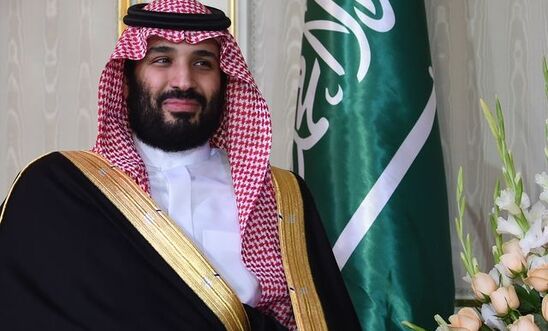
In April, Amnesty wrote to Richard Masters raising concerns about the Newcastle takeover, warning it was part of Saudi Arabia’s efforts to “sportswash” its human rights record – with investment in top-level sport used as a “rebranding” tool to deflect attention away from human rights issues. Under Crown Prince Mohammed bin Salman’s leadership there has been a crackdown in Saudi Arabia, with government critics and human rights defenders arrested – including prominent women’s rights activists – tortured and put on trial. In October 2018, the journalist Jamal Khashoggi was murdered in the Saudi consulate in Istanbul, a killing which the UN has said was “overseen, planned and endorsed by high-level officials” of the Saudi state. (For more information on the human rights situation in Saudi Arabia, go here).

Amnesty warned that the Premier League risked “becoming a patsy” of Saudi sportswashing efforts unless it fully considered the human rights situation in Saudi Arabia as part of its scrutiny of the Newcastle deal – scrutiny its current Owners’ and Directors’ test failed to provide. After the collapse of the Saudi-Newcastle deal last week, Amnesty said the attempted purchase had been a “blatant attempt” at sportswashing, with the Saudi authorities attempting to “buy into the passion, prestige and pride of Tyneside football”.

Amnesty’s new letter to Mr Masters urges the Premier League boss to give “careful consideration” to the proposed improved test, and offers to set up a meeting between the Premier League, Amnesty and David Chivers QC to discuss the matter further.

Football Welcomes is an Amnesty UK initiative celebrating the contribution players from a refugee background make to the game, while highlighting the role football and football clubs play in creating welcoming communities for refugees and people seeking asylum. Over the Football Welcomes weekend in April, clubs nationwide stage special matches or tournaments, offer free tickets to games, arrange stadium tours and player visits. In 2019, nearly 180 clubs took part, including more than half of Premier League clubs. The weekend also highlights the work many football club community trusts do during the year to welcome refugees. Through the Football Welcomes Community Project, Amnesty works closely with Leicester City in the Community, Aston Villa Foundation, Middlesbrough FC Foundation, Club Doncaster Foundation and Liverpool County FA/Liverpool FC on creating more welcoming communities.

Exclusion of human rights defenders from COVID-release measures is the norm

August 6, 2020
Governments who were lauded for releasing prisoners in response to COVID-19 outbreaks have in fact excluded human rights defenders from the measures and continue to make new arrests of activists, journalists and critics.

In a new briefing, “Daring to Stand up for Human Rights in a Pandemic”, which documents attacks on human rights defenders during the pandemic, the organization highlights the hypocrisy of governments including Egypt, India, Iran and Turkey, who have left prisoners of conscience to languish in appalling conditions despite widely publicized prisoner release programmes.

“COVID-19 has been an added punishment for human rights defenders who are unjustly imprisoned, and has also been used as a pretext for further harassment, prosecution and even killings,” said Lisa Maracani, Amnesty International’s Researcher on Human Rights Defenders. “The exclusion of human rights defenders from release measures underscores the political nature of their imprisonment. In Turkey for example, journalists, lawyers, activists and opposition politicians held in pre-trial detention on baseless charges remain behind bars despite government measures that have seen over 100,000 people released since April. It is plain to see that the Turkish government still fears criticism more than the pandemic.”

The new briefing documents attacks on human rights defenders during the COVID-19 period in 46 countries, and shows how “fake news” laws, movement restrictions, reduced police protection and heightened intolerance to criticism have led to new crackdowns around the world, including against whistle-blowers in the health sector and those highlighting inadequate responses to the pandemic.

Amnesty International has identified 131 people who speak up for human rights globally who have been harassed, prosecuted, killed or imprisoned on COVID-19-related pretexts – this figure is likely to be the tip of the iceberg.

On 25 March 2020, the UN High Commissioner for Human Rights urged all states to release “every person detained without sufficient legal basis, including political prisoners, and those detained for critical, dissenting views” in response to the COVID-19 pandemic. However, several countries excluded human rights defenders from decongestion measures in prisons and other places of detention. [see also: https://humanrightsdefenders.blog/2020/05/30/virutal-human-rights-council-adopts-presidents-statement-on-implications-of-covid-19/]

In India, for example, many students and activists who had participated in peaceful protests against India’s discriminatory citizenship law continue to be unjustly detained.

In Egypt, the government failed to release human rights defenders detained solely for expressing their views, as well as thousands of other pre-trial detainees, many of whom are facing overly vague “terrorism”- related charges amid concerns over breaches of due process.

In Turkey, decongestion measures have explicitly excluded those who are held in pre-trial detention, and those who are on remand for or have been convicted of offences under Turkey’s overly broad anti-terrorism laws. They include political and human rights activists, journalists, academics, and others who have spoken out against the government.

In Iran, authorities announced that they had temporarily released 85,000 prisoners but many human rights defenders continue to be held on politically motivated charges in appalling conditions.

They include Narges Mohammadi, a human rights defender who suffers from serious pre-existing health conditions and is showing suspected COVID-19 symptoms. The authorities continue to deny Narges Mohammadi health care in prison, and refuse to inform her of the results of a COVID-19 test taken on 8 July. Note that today (6 Augusrt 2020) th Voice of America reported: “in a written message sent to VOA Persian on Tuesday, Mohammadi’s husband, Taghi Rahmani, living in exile in Paris, said the dangerous phase of his wife’s illness had passed. Rahmani said his wife had been at risk of serious health complications if the illness had spread to her lungs, which already had been hobbled by a preexisting disease.”[https://www.voanews.com/middle-east/voa-news-iran/jailed-iranian-journalist-mohammadi-out-danger-coronavirus-husband-says]

Amid the crisis, Iranian authorities have also continued to arbitrarily arrest and imprison human rights defenders. In other countries where prisons are already severely overcrowded, governments have continued to arrest human rights defenders on trumped-up charges, exacerbating the problem and putting more people at risk.  In Azerbaijan for example, the government has mounted a new wave of arrests and prosecutions of dozens of political activists, journalists and human rights defenders, often in response to their criticism of the government’s handling of the pandemic. Among those arrested are opposition activist Tofig Yagublu on bogus charges of hooliganism, and human rights defender Elchin Mammad, who was arrested on theft charges days after he published a report on the human rights situation in the country.

New arrests of human rights defenders have also been reported in Tunisia, Morocco, Niger, Zimbabwe and Angola, among others.

“International cooperation must also include pressuring governments to release people who are in prison simply for peacefully exercising their human rights, and who are now at serious risk of contracting COVID-19.” said AI/

In Honduras, the most serious recent incident includes the possible forced disappearance of five young men, four of whom are activists with the Black Fraternal Organisation of Honduras (OFRANEH). They were taken from their homes on 18 July by men wearing police uniforms and have not been seen since.

In Colombia, civil society organization INDEPAZ has reported 166 killings during the first six months of 2020. Among them was Carlota Isabel Salinas Pérez, a women’s rights activist killed outside her home in March. Carlota was a community leader and had been collecting foodstuffs for families in need on the day she was killed.

Now more than ever, the work of human rights defenders is essential in fighting for equal access to healthcare, food and shelter, and informing the public about the virus and ways to protect themselves. Governments who exploit this crisis to attack human rights defenders should know they are being closely watched,” said Lisa Maracani. “It is vital that governments provide effective protection to human rights defenders and ensure they are safe from those attempting to exploit the pandemic and silence them.”

https://www.amnesty.org/en/latest/news/2020/08/attacks-on-hrds-during-pandemic-report/

Absurd prosecution of the crew of the ship Iuventa continues in Italy

July 31, 2020

AI has started a campagiun to call on the Italian prosecutor to drop the absurd investigation against the crew of the rescue ship “Iuventa 10”. Despite having saved more than 14,000 lives, they are accused of “facilitating the irregular entry” of migrants into Italy, which carries a sentence of up to 20 years. The criminalization of rescue at sea has hampered vital lifesaving activities in the Central Mediterranean, and it is part of a wider crackdown on acts of solidarity across Europe

Three years after the baseless criminal investigation began, the Iuventa 10 crew remain in limbo with the threat of long jail terms hanging over them,” said Maria Serrano, Amnesty campaigner on migration.

[see: https://humanrightsdefenders.blog/2019/05/15/european-governments-should-stop-treating-solidarity-and-compassion-as-a-crime/

The criminalization of rescue at sea has hampered vital lifesaving activities in the Central Mediterranean, and it is part of a wider crackdown on acts of solidarity across Europe. Wrapped up with the fate of these ten men and women are the fates of hundreds of others and thousands of refugees and migrants they are helping.” .

We could no longer stand by and watch people disappearing in the Mediterranean mass grave. We chose to use our privilege to be eyewitnesses, reporters, and a safe harbour for thousands of people on the move,” said one of the Iuventa10

“It was, still is and will remain the task of all of to save human lives wherever possible, to offer protection to those who need it, to treat everyone with dignity and to fight with them for the world in which we want to live.”

Forensic Architecture reconstructionhttps://forensic-architecture.org/investigation/the-seizure-of-the-iuventa

BACKGROUND:

The Iuventa case is not an isolated one. Across Europe people standing in solidarity or assisting refugees and migrants have been threatened, smeared, intimidated, harassed and dragged through the courts simply for helping others. Authorities have misused and abused anti-smuggling laws to criminalize human rights defenders and punish solidarity.  https://www.amnesty.org/en/documents/eur01/1828/2020/en/

Fewer rescue assets had led to an increase of the death rate in 2018 and 2019. Since 2016 more than 50,000 women, men and children have been intercepted at sea by the Libyan Coast Guard and returned to Libya, where they are exposed to arbitrary detention, torture, extortion and rape.

The Iuventa case was the first judicial proceeding launched against a rescue NGO in Italy, following a smear campaign in which NGOs were stigmatized.

https://www.amnesty.org/en/latest/news/2020/07/italy-crew-of-rescue-ship-face-20-years-in-jail-on-third-anniversary-of-smuggling-investigation/

On-line Discussion of candidate States’ visions for membership Human Rights Council

July 20, 2020

On Wednesday 9 September 9am-12pm (New York time) Amnesty International and the International Service for Human Rights will hold – as usual – an online pledging event for candidate States in advance of the Human Rights Council elections that will take place this autumn for the membership term 2021-2023,. State representatives and civil society are invited to participate actively in the events and pose questions to candidate States.

The link to attend the event will be shared closer to the date.

Have a question? Follow the event on Twitter and submit questions to candidates via:  @ISHRglobal #HRCpledging  #HRCelections2020

https://mailchi.mp/ishr/human-rights-council-elections-discussions-of-candidates-aspirations-and-visions-in-new-york-and-geneva-32806?e=d1945ebb90

Amnesty International’s bid to block spyware company NSO fails in Israeli court

July 15, 2020

Amnesty International’s bid to block spyware company NSO Group’s international export licence has been shut down in a Tel Aviv court, apparently due to a lack of evidence, reported several media, here in the New Statesman of 14 July 2020. [see: https://humanrightsdefenders.blog/2019/09/17/has-nso-really-changed-its-attitude-with-regard-to-spyware/ ]

The case argued that the Israeli defence ministry should revoke the group’s export licence in light of numerous allegations that its phone-hacking Pegasus spyware has been used by governments (including Mexico, Saudi Arabia, Morocco and the UAE) to spy on civilians including an Amnesty International employee, human rights activists, lawyers and journalists..

The district court judge Rachel Barkai wrote in a statement that there was not enough evidence to “substantiate the claim that an attempt was made to monitor a human rights activist”. She wrote that in reviewing materials provided by the Ministry of Defence and Ministry of Foreign Affairs, she was persuaded that export licences were granted as part of a “sensitive and rigorous process”, and closely monitored and revoked if conditions were violated, “in particular in cases of human rights violations.”

Amnesty International decried the court’s decision. Danna Ingleton, acting co-director of Amnesty Tech, said in a statement: “Today’s disgraceful ruling is a cruel blow to people put at risk around the world by NSO Group selling its products to notorious human rights abusers. […] The ruling of the court flies in the face of the mountains of evidence of NSO Group’s spyware being used to target human rights defenders from Saudi Arabia to Mexico, including the basis of this case – the targeting of one of our own Amnesty employees.

NSO said: “Our detractors, who have made baseless accusations to fit their own agendas, have no answer to the security challenges of the 21st century. Now that the court’s decision has shown that our industry is sufficiently regulated, the focus should turn to what answer those who seek to criticise NSO have to the abuse of encryption by nefarious groups.”

The NSO Group is currently embroiled in another lawsuit brought by WhatsApp, which alleges that Pegasus spyware was used to hack more than a thousand of the messaging platform’s users. [see: https://humanrightsdefenders.blog/2019/10/30/nso-accused-of-largest-attack-on-civil-society-through-its-spyware/]

https://tech.newstatesman.com/security/amnesty-international-nso-group-export-licence

UN Rapporteur and Amnesty seek freedom for those “punished for daring to drive.”

July 9, 2020

On 9 june 2020 Agnes Callamard, the UN special rapporteur on extrajudicial, summary or arbitrary executions, urged member states to pressure Saudi Arabia to free women activists before a G20 nations summit which Riyadh will be hosting in November. At least a dozen prominent women’s rights activists were arrested in Saudi Arabia in 2018 as it lifted a ban on women driving cars, a step that many of the detainees had long campaigned for. The women were rounded up as part of a broader crackdown on dissent that extended to clerics and intellectuals.

Several of the arrested women have alleged torture and sexual assault in detention. Saudi officials deny this and said the detainees were suspected of having harmed Saudi interests and offered support to hostile elements abroad.

Some of the activists are now on trial, but few charges have been made public. Charges against at least some of the activists relate to contacts with foreign journalists, diplomats and human rights groups. Their prosecution has drawn global criticism, particularly following the 2018 murder of journalist Jamal Khashoggi by Saudi agents inside the kingdom’s Istanbul consulate. (as Rapporteur Agnes Callamard also dealt with Khashoggi’s killing: https://humanrightsdefenders.blog/2019/12/23/the-unsatisfactory-end-to-the-khashoggi-investigation/)

The families of some of the activists, included Loujain al-Hathloul, raised concerns earlier this year when they were unable to contact their detained relatives in prison for several weeks. Contact was eventually restored. [https://humanrightsdefenders.blog/2019/10/07/lina-al-hathloul-speaks-out-for-her-sister-loujain-imprisoned-in-saudi-arabia/].

Earlier Amnesty International had called on Saudi Arabian authorities to immediately release women human rights activists, including those who are “being punished for daring to drive.“…. Amnesty UK has launched a “Beep for freedom” campaign in support of the persecuted women’s rights defenders. The campaign involves supporters sharing photos of themselves behind the wheel of a car or sharing the campaign’s “Beep For Freedom” car horn symbol, with an appeal to the Saudi authorities to “immediately and unconditionally” release the activists and drop all charges against them.

https://www.dailystar.com.lb/News/Middle-East/2020/Jul-09/508775-un-investigator-calls-on-saudi-arabia-to-free-female-activists.ashx

https://www.aa.com.tr/en/middle-east/amnesty-intl-urges-sarabia-to-release-female-activists/1889626