On 1 December 2020, Amnesty International published a new report on how Facebook and YouTube are allowing themselves to become tools of the Vietnamese authorities’ censorship and harassment of its population, in an alarming sign of how these companies could increasingly operate in repressive countries. [see also: https://humanrightsdefenders.blog/2020/06/03/more-on-facebook-and-twitter-and-content-moderation/].
The 78-page report, “Let us Breathe!”: Censorship and criminalization of online expression in Viet Nam”, documents the systematic repression of peaceful online expression in Viet Nam, including the widespread “geo-blocking” of content deemed critical of the authorities, all while groups affiliated to the government deploy sophisticated campaigns on these platforms to harass everyday users into silence and fear.
The report is based on dozens of interviews with human rights defenders and activists, including former prisoners of conscience, lawyers, journalists and writers, in addition to information provided by Facebook and Google. It also reveals that Viet Nam is currently holding 170 prisoners of conscience, of whom 69 are behind bars solely for their social media activity. This represents a significant increase in the number of prisoners of conscience estimated by Amnesty International in 2018.
“In the last decade, the right to freedom of expression flourished on Facebook and YouTube in Viet Nam. More recently, however, authorities began focusing on peaceful online expression as an existential threat to the regime,” said Ming Yu Hah, Amnesty International’s Deputy Regional Director for Campaigns.
“Today these platforms have become hunting grounds for censors, military cyber-troops and state-sponsored trolls. The platforms themselves are not merely letting it happen – they’re increasingly complicit.”
In 2018, Facebook’s income from Viet Nam neared US$1 billion – almost one third of all revenue from Southeast Asia. Google, which owns YouTube, earned US$475 million in Viet Nam during the same period, mainly from YouTube advertising. The size of these profits underlines the importance for Facebook and Google of maintaining market access in Viet Nam.”
In April 2020, Facebook announced it had agreed to “significantly increase” its compliance with requests from the Vietnamese government to censor “anti-state” posts. It justified this policy shift by claiming the Vietnamese authorities were deliberately slowing traffic to the platform as a warning to the company.
Last month, in Facebook’s latest Transparency Report – its first since it revealed its policy of increased compliance with the Vietnamese authorities’ censorship demands – the company revealed a 983% increase in content restrictions based on local law as compared with the previous reporting period, from 77 to 834. Meanwhile, YouTube has consistently won praise from Vietnamese censors for its relatively high rate of compliance with censorship demands.
State-owned media reported Information Minister Nguyen Manh Hung as saying in October that compliance with the removal of “bad information, propaganda against the Party and the State” was higher than ever, with Facebook and Google complying with 95% and 90% of censorship requests, respectively.
Based on dozens of testimonies and evidence, Amnesty International’s report shows how Facebook and YouTube’s increasing censorship of content in Vietnam operates in practice.
In some cases, users see their content censored under vaguely worded local laws, including offences such as “abusing democratic freedoms” under the country’s Criminal Code. Amnesty International views these laws as inconsistent with Viet Nam’s obligations under international human rights law. Facebook then “geo-blocks” content, meaning it becomes invisible to anyone accessing the platform in Viet Nam.
Nguyen Van Trang, a pro-democracy activist now seeking asylum in Thailand, told Amnesty International that in May 2020, Facebook notified him that one of his posts had been restricted due to “local legal restrictions”. Since then, Facebook has blocked every piece of content he has tried to post containing the names of senior members of the Communist Party.
Nguyen Van Trang has experienced similar restrictions on YouTube, which, unlike Facebook, gave him the option to appeal such restrictions. Some appeals have succeeded and others not, without YouTube providing any explanation.
Truong Chau Huu Danh is a well-known freelance journalist with 150,000 followers and a verified Facebook account. He told Amnesty International that between 26 March and 8 May 2020, he posted hundreds of pieces of content about a ban on rice exports and the high-profile death penalty case of Ho Duy Hai. In June, he realized these posts had all vanished without any notification from Facebook whatsoever.
Amnesty International heard similar accounts from other Facebook users, particularly when they tried to post about a high-profile land dispute in the village of Dong Tam, which opposed local villagers to military-run telecommunications company Viettel. The dispute culminated in a confrontation between villagers and security forces in January 2020 that saw the village leader and three police officers killed.
After Facebook announced its new policy in April 2020, land rights activists Trinh Ba Phuong and Trinh Ba Tu reported that all the content they had shared about the Dong Tam incident had been removed from their timelines without their knowledge and without notification.
On 24 June 2020, the pair were arrested and charged with “making, storing, distributing or disseminating information, documents and items against the Socialist Republic of Vietnam” under Article 117 of the Criminal Code after they reported extensively on the Dong Tam incident. They are currently in detention. Their Facebook accounts have disappeared since their arrests under unknown circumstances. Amnesty International considers both Trinh Ba Phuong and Trinh Ba Tu to be prisoners of conscience.
The Vietnamese authorities’ campaign of repression often results in the harassment, intimidation, prosecution and imprisonment of people for their social media use. There are currently 170 prisoners of conscience imprisoned in Viet Nam, the highest number ever recorded in the country by Amnesty International. Nearly two in five (40%) have been imprisoned because of their peaceful social media activity.
Twenty-one of the 27 prisoners of conscience jailed in 2020, or 78%, were prosecuted because of their peaceful online activity under Articles 117 or 331 of the Criminal Code – the same repressive provisions that often form the basis of ‘local legal restrictions’ implemented by Facebook and YouTube. For every prisoner of conscience behind bars, there are countless people in Viet Nam who see this pattern of repression and intimidation and are understandably terrified about speaking their mind. Ming Yu Hah
These individuals’ supposed “crimes” include peacefully criticizing the authorities’ COVID-19 response on Facebook and sharing independent information about human rights online.
“For every prisoner of conscience behind bars, there are countless people in Viet Nam who see this pattern of repression and intimidation and are understandably terrified about speaking their minds,” said Ming Yu Hah.
Amnesty International has documented dozens of incidents in recent years in which human rights defenders have received messages meant to harass and intimidate, including death threats. The systematic and organized nature of these harassment campaigns consistently bear the hallmarks of state-sponsored cyber-troops such as Du Luan Vien or “public opinion shapers” – people recruited and managed by the Communist Party of Viet Nam (CPV)’s Department of Propaganda to engage in psychological warfare online.
The activities of Du Luan Vien are complemented by those of “Force 47”, a cyberspace military battalion made up of some 10,000 state security forces whose function is to “fight against wrong views and distorted information on the internet”.
While “Force 47” and groups such as Du Luan Vien operate opaquely, they are known to engage in mass reporting campaigns targeting human rights –related content, often leading to their removal and account suspensions by Facebook and YouTube.
Additionally, Amnesty International’s investigation documented multiple cases of bloggers and social media users being physically attacked because of their posts by the police or plainclothes assailants, who operate with the apparent acquiescence of state authorities and with virtually no accountability for such crimes.
Putting an end to complicity
The Vietnamese authorities must stop stifling freedom of expression online. Amnesty International is calling for all prisoners of conscience in Viet Nam to be released immediately and unconditionally and for the amendment of repressive laws that muzzle freedom of expression.
Companies – including Facebook and Google – have a responsibility to respect all human rights wherever they operate. They should respect the right to freedom of expression in their content moderation decisions globally, regardless of local laws that muzzle freedom of expression. Tech giants should also overhaul their content moderation policies to ensure their decisions align with international human rights standards.
In October 2020, Facebook launched a global Oversight Board – presented as the company’s independent “Supreme Court” and its solution to the human rights challenges presented by content moderation. Amnesty International’s report reveals, however, that the Board’s bylaws will prevent it from reviewing the company’s censorship actions pursuant to local law in countries like Vet Nam. It’s increasingly obvious that the Oversight Board is incapable of solving Facebook’s human rights problems. Ming Yu Hah
“It’s increasingly obvious that the Oversight Board is incapable of solving Facebook’s human rights problems. Facebook should expand the scope of the Oversight Board to include content moderation decisions pursuant to local law; if not, the Board – and Facebook – will have again failed Facebook users,” said Ming Yu Hah.
[see also: https://humanrightsdefenders.blog/2020/04/11/algorithms-designed-to-suppress-isis-content-may-also-suppress-evidence-of-human-rights-violations/]
“Far from the public relations fanfare, countless people who dare to speak their minds in Viet Nam are being silenced. The precedent set by this complicity is a grave blow to freedom of expression around the world.”
https://www.amnesty.org/en/latest/news/2020/12/viet-nam-tech-giants-complicit/
https://www.theguardian.com/world/2020/dec/01/facebook-youtube-google-accused-complicity-vietnam-repression
https://thediplomat.com/2020/07/facebook-vietnams-fickle-partner-in-crime/

 Lina al-Hathloul, whose sister Loujain is being held by Saudi authorities, speaks at the 10th Anniversary Women In The World Summit at David H. Koch Theater at Lincoln Center on April 10, 2019, in New York City. Photo by Photo by Mike Coppola/Getty Images.

Thailand: joint statement by International NGOs on Pro-Democracy Protests
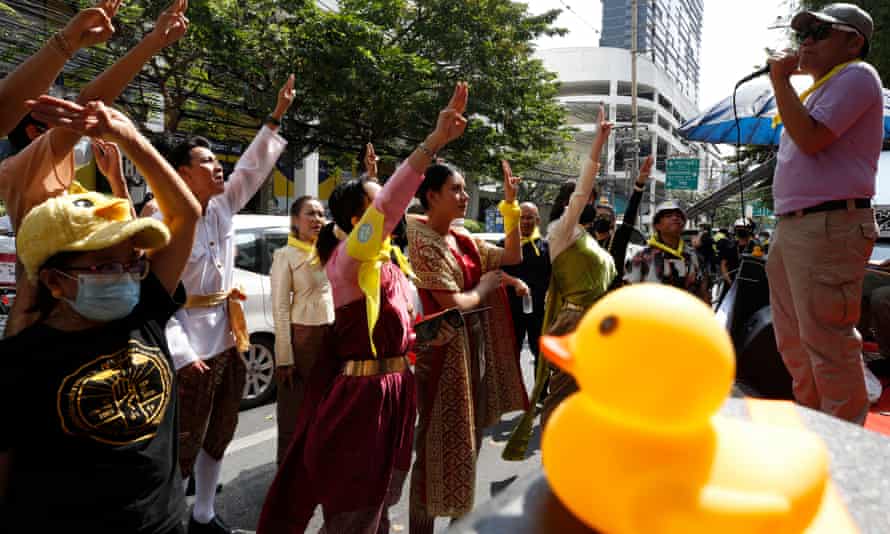
November 29, 2020A group of 13 important human rights NGOs – in a joint statement – condemn the Thai police’s unnecessary and excessive use of force against peaceful protesters marching to the national parliament in Bangkok on November 17, 2020. They are concerned that authorities could employ similar measures when facing protesters who have declared they will march to the Siam Commercial Bank headquarters on November 25.
On November 17, police set out barriers and barbed wire to prevent a peaceful march organized by pro-democracy movements from reaching the parliament. Protesters planned to protest outside the parliament as members of parliament and senators debated seven different proposals for constitutional amendments, including an amendment proposed by the lawyers’ non-governmental organization iLAW (Internet Law Reform Dialogue), which was supported by the People’s Movement and its allies. Police refused to let protesters through the barriers, and when the demonstrators acted to breach those barriers, police crowd control units used water cannons laced with purple dye and an apparent teargas chemical, as well as teargas grenades and pepper spray grenades, to forcibly disperse thousands of demonstrators, including students, some of whom are children. Water cannons were first used at approximately 2:25 pm and police continued their efforts to disperse protesters, with constant use of water cannons, teargas and pepper spray into the evening.
Police also failed to prevent violence between pro-democracy protesters and royalist “yellow shirts” near the Kiak Kai intersection, near the parliament. Initially, riot police separated the two groups. However, video posted on social media later showed police officers informing the royalist protesters that they would withdraw and seconds later they vacated their position between the two groups. During the ensuing skirmishes, both sides were filmed throwing rocks and wielding clubs. Live broadcasts included sounds that appeared to be gunfire.
The Erawan Medical Centre reported that there were at least 55 protesters injured, mostly from inhaling teargas. It also reported that there were six protesters who suffered gunshot wounds. The injured included children: a kindergartener and elementary school students….
On November 18, the spokesperson for United Nations Secretary-General António Guterres “expressed concern about the [human rights] situation in Thailand … it’s disturbing to see the repeated use of less lethal weapons against peaceful protesters, including water cannons … it’s very important that the government of Thailand refrain from the use of force and ensures the full protection of all people in Thailand who are exercising a fundamental peaceful right to protest.”
We call on the Thai government to respect, protect and fulfill the right of demonstrators to peacefully protest, in line with Thailand’s international obligations under the ICCPR and customary international law. Specifically, Thailand should:
1. Permit the People’s Movement march to proceed on November 25 and allow for non-violent protesters, including those who are children, to peacefully protest in front of the Siam Commercial Bank headquarters.
2. Protect the rights of protesters, including those who are children, in accordance with the Human Rights Committee’s General Comment No. 37 on the Right of Peaceful Assembly.
3. Facilitate the exercise of the right to peacefully assemble and refrain from dispersing assemblies by using weapons, including less-lethal weapons, against protesters in line with the United Nations Basic Principles on the Use of Force and Firearms by Law Enforcement Officials and UN and other guidance on less-lethal weapons.
4. Protect protesters, including those who are children, from violence and interference by non-State actors, while also protecting the rights of counter-demonstrators.
5. Take steps to ensure accountability for rights violations associated with the government’s crackdown on the protest movement and to ensure that those whose rights have been violated enjoy the right to an effective remedy, as guaranteed under ICCPR article 2(3).
Signed by:
Amnesty International
Article 19
ASEAN Parliamentarians for Human Rights
Asia Democracy Network
Asian Forum for Human Rights and Development (FORUM-ASIA)
Asian Network for Free Elections (ANFREL)
CIVICUS: World Alliance for Citizen Participation
Civil Rights Defenders
FIDH – International Federation for Human Rights
Fortify Rights
Human Rights Watch
International Commission of Jurists
Manushya Foundation
———–
https://www.hrw.org/news/2020/11/25/statement-international-ngos-pro-democracy-protests-november-17-and-25-2020
Posted in AI, Civil Rights Defenders (NGO), Front Line, HRW, human rights, Human Rights Defenders, ICJ | Leave a Comment »
Tags: freedom to demonstrate, General comment ICCPR, joint statement, NGOs, police violence, students, Thailand