Tep Vanny, second from left, gestures upon arrival at her home in Phnom Penh, Aug. 20, 2018. – AP Photo
Cambodia’s King Norodom Sihamoni on 20 August 2018 granted royal pardons to prominent land rights activist Tep Vanny and three others convicted for their roles in a protest over a land grab in the capital Phnom Penh’s Boeung Kak Lake community. Tep Vanny, 38, was arrested on 15 August 2016 after participating in a demonstration, handed six days in prison for “insulting a public official” and, instead of being released when the sentence was served, charged with “aggravated intentional violence” for a protest she held more than three years earlier in front of the home of Prime Minister Hun Sen.
On Feb. 23, 2017, the Phnom Penh Municipal Court convicted Tep Vanny of assaulting two security officers during the 2013 protest at Hun Sen’s home, sentencing her to 30 months in prison and making her pay 9 million riels (U.S. $2,250) in compensation to the officers. Three other female activists—Heng Mom, Bo Chhorvy, and Kong Chantha—were also convicted for “obstructing public officials” during the protest, but released on bail.
On Monday, King Sihamoni issued a royal decree at the behest of Hun Sen, overturning the convictions of all four activists without providing any reason for the decision. Speaking to RFA’s Khmer Service, Tep Vanny said: “I was given no prior notice that I would be released,”. “The prison guards came to inform me just before 8:30 p.m. that I would be freed soon and said I should get my things ready. I told them they had come to tell the wrong person.” “Although I am happy tonight for the freedom to meet with my family, relatives, and community members, my pain remains with me, as I have spent over two years in jail,”.
Tep Vanny was awarded the 2013 Vital Voices Global Leadership Award for her work campaigning on behalf of the community evicted from Boeung Kak Lake, which was later filled with sand to make way for a development project with ties to Hun Sen and the ruling Cambodian People’s Party (CPP). On Monday, she appealed to Hun Sen to release all of the country’s remaining political prisoners, including former RFA reporters Uon Chhin and Yeang Sothearin, who have spent nine months behind bars on “espionage” charges.
Various rights groups had demanded Tep Vanny’s release in the lead up to the 15 August anniversary marking her two years in prison, with New York-based Human Rights Watch’s deputy Asia director Phil Robertson calling her conviction “just one of many outrageous cases in which the authorities have misused Cambodia’s justice system to harass and imprison peaceful land rights activists.” On Monday, London-based Amnesty International’s senior director of global operations Minar Pimple welcomed Tep Vanny’s release in a statement, but called it “long overdue.”
Still this is only SOME good news as in the meantime Front Line reported that on 12 August 2018, human rights defender Nay Vanda received a court summon dated 9 August 2018 issued by the Vice Prosecutor of the Phnom Penh Municipal Court, summoning him to attend a trial at 7:30am on 27 August 2018 at the Phnom Penh Municipal Court. Subsequently, human rights defender Ny Chakrya also received the same court summons.These summons are related to charges brought against five human rights defenders on 2 May 2016. Nay Vanda, Ny Sokha, Yi Soksan and Lim Mony were charged<https://www.frontlinedefenders.org/en/case/five-adhoc-members-detained#case-update-id-3050> with bribing a witness under Article 548 of the Criminal Code, and Ny Chakrya was charged as an accomplice to bribery of a witness in accordance with Articles 28 and 548 of the Criminal Code. If convicted, they face between five to ten years imprisonment. It is anticipated that the three human rights defenders who have not received the court summons will receive them in the coming days.
The Cambodian Human Rights and Development Association (ADHOC) <https://www.frontlinedefenders.org/en/profile/adhoc>is a human rights organisation founded in December 1991 by a group of former political prisoners aiming to address violations of rights and freedoms. See also: https://humanrightsdefenders.blog/tag/adhoc/
Russian President Vladimir Putin (L) Indian Prime Minister Narendra Modi (C) and Turkish President Recep Erdogan (R) interact during a family photo during the BRICS summit meeting in Johannesburg, South Africa, 27 July 2018. EPA-EFE/GIANLUIGI GUERCIA / POO
As they met in Johannesburg last week, BRICS leaders focused on the economy, development, peacekeeping, health and industrialisation issues within the bloc (accounting for 40% of the world’s population). However, equally important issues such as the protection and realisation of human rights in the respective countries remained off the agenda. Jennifer Wells, an intern with AI South Africa, on 30 July 2018, gave a useful reminder of what could and should have been also addressed:
Brazil
Brazil has one of the highest murder rates in the world, with around 60,000 people murdered each year…Brazil’s failure to protect black Brazilians from police violence remains critical as this year marks the 25th anniversary of the Candelaria killings. The tragedy, in which eight young black boys were killed by off-duty police officers in Rio de Janeiro in 1993, represents the endemic racism within the Brazilian security forces. The situation was aggravated by the murder of Rio de Janeiro human rights defender and councilwoman Marielle Franco on 14 March 2018. [https://humanrightsdefenders.blog/2018/03/16/marielle-franco-38-year-old-human-rights-defender-and-city-councilor-of-rio-assassinated/]
Russia
…human rights defenders and civil society activists continued to face harassment, intimidation and arbitrary arrests across the country. The trial of human rights defender Oyub Titiev started in Chechnya. He, like several other human rights defenders, is being prosecuted on trumped-up criminal charges. Law enforcement agencies continue to launch cases on fabricated “extremism” and “terrorism” charges. [https://humanrightsdefenders.blog/2018/01/15/chechen-human-rights-defender-oyub-titiev-arrested-on-trumped-up-charges/] The Ukrainian film director Oleg Sentsov, serving 20 years on “terrorism” charges, is on day 75 of a hunger strike demanding the release of “64 political prisoners from Ukraine”. The right to freedom of peaceful assembly has been increasingly restricted in Russia since 2012 and remains under severe clampdown. …. The rights of LGBTI people are trampled upon daily and the authorities continue to refuse to investigate the horrific gay purge in Chechnya. The World Cup has come and gone, but the suppression of freedoms and shrinking of civil liberties continues unabated.
India
It’s a similar story in India where human rights defenders are consistently under threat, attacked and threatened, often from security forces. India has witnessed horrific instances of alleged extrajudicial executions by security forces for years as police and federal forces have effective immunity from prosecution. In the North-Eastern state of Manipur, human rights defenders who have lost their loved ones in alleged extrajudicial executions and are now campaigning for justice, face unprecedented attacks. Salima Memcha, a widow who lost her husband to an alleged extrajudicial execution, was verbally threatened by security personnel. Her house was also vandalised by them. Three other human rights defenders in Manipur have faced similar reprisals for campaigning for justice for their loved ones.
China
In China, the government continues to enact repressive laws under the guise of “national security” that present serious threats to human rights. Nobel Peace Prize laureate Liu Xiaobodied in custody whilst other human rights defenders are detained, prosecuted and sentenced on vague charges such as “subverting state power”, “separatism” and “picking quarrels and provoking trouble”. Controls on the internet have been strengthened and freedom of expression and freedom of association are under attack.[see also:https://humanrightsdefenders.blog/2018/04/12/how-china-extracts-televised-confessions-from-human-rights-defenders/]
South Africa
In the host nation, nearly a quarter of century after adopting arguably one of the most progressive constitutions in the world, the country is bedevilled by profound inequalities, which persistently undermine economic, social and cultural rights. Failures in the criminal justice system continue to present barriers to justice for victims of human rights abuses and violations, including the state’s failure to hold perpetrators accountable for the killing of 34 striking mineworkers in Marikana in 2012 by the South African Police Service. Access to sexual and reproductive health services remain a human rights issue as does the provision of quality education.
As some of you would know, after eight great years with Amnesty International, I am moving on. My time as Secretary General formally drew to a close on 8 July after the annual gathering of our global leadership in Poland. I wanted to take this opportunity to thank you for your important and generous support through this period – a turbulent time in the world at large, and a crucial transformation process internally. It is difficult to sum up eight years in a pithy way, but as we look back on the so-called Arab Spring, the Syrian conflict, spiralling refugee numbers, the social impact of government policies in the aftermath of the 2008 financial crisis, and the rise of popular authoritarians in many countries, it is clear that we have lived – and continue to live – through very challenging times. The voices of those who stand up against oppression and the abuse of power are more isolated but more important than ever. And Amnesty has played a vital role in supporting these voices. We have seen much fruit from the work in virtually every region of the world we have done together during this period – from the adoption of the Arms Trade Treaty to some important breakthroughs on corporate accountability, from another 10 countries abolishing the death penalty to the release of innumerable prisoners unjustly detained. We have built a new body of work on technology and human rights, ready to confront important new challenges ahead. We have also seen some crucial steps forward on women’s rights and have good reason to hope for much more progress in the coming months and years. Above all, it has been a privilege to work with so many extraordinary people from every part of the world. I will treasure the memories of so many courageous activists I have met during my time with Amnesty. For me, the biggest source of hope has always been people at the local level who refuse to accept injustice. During the past eight years we have had a strong focus on building a truly global human rights movement, particularly by rebalancing the centre of gravity from our traditional strongholds in the richer countries of the world towards a more distributed centre with a much stronger voice for the global south. The growth of Amnesty’s membership in key southern powerhouses such as Brazil, India, Indonesia, Egypt and Nigeria, has been very encouraging, and gives us stronger foundations for the future.
…….. I am delighted to hand over to my successor, Kumi Naidoo from South Africa, who will take up the reins on 15 August. Kumi is a well-respected activist and leader in the international NGO sector, having previously led Greenpeace International and CIVICUS. …
Joe Odell (press officer for the International Campaign for Freedom in the UAE) wrote on Wednesday 6 June 2018 a long piece in the Middle East Eye about the “UAE‘s shameful imprisonment of Ahmed Mansoor“. As the last dissident voice in the Emirates is silenced, it remains to be seen who is left to speak out about injustice in the UAE, he states rightly. As I have posted regularly on him (see e.g. https://humanrightsdefenders.blog/2018/04/13/update-on-mansoor-in-uae-after-one-year-detention-appears-in-court/), will only refer to a few highlights in Odell’s article:
“Last week Abu Dhabi’s Supreme Court sentenced the awarded-winning Emirati human rights activist Ahmed Mansoor to 10 years in prison after finding him guilty of using his social media account to “defame the nation” by spreading “rumours and lies about the UAE” and promoting “sectarian feelings and hatred” among its citizens. It is a ruthless ruling for one of the region’s most prominent rights campaigners, who in 2015 won the prestigious Martin Ennals Award for Human Rights Defenders after his tireless struggle for basic political and civil rights in the UAE.……
It was almost as if the UAE wanted to get this news out in a way that created as little fanfare as possible. Many hours were to pass before the UAE state-owned publication the National confirmed that this was indeed Ahmed Mansoor; international media promptly picked up the story within minutes – no doubt to the ire of the UAE government. Emirati authorities, however, are yet to give an official comment on the court decision. More pertinently, Mansoor’s exact whereabouts remains unknown, leaving the 48-year-old father of four at grave risk of torture and other forms of ill-treatment.
…..Perhaps, in his heart, Ahmed knew this day would come. But he always refused to place himself above the struggle, telling journalist Bill Law prior to his arrest: “The only way to counter repression is by revealing it. And, yes, there is always that possibility that I will go back to jail. But if activists do not talk, who will?”
This knock-on effect has already begun. In the UK, pressure is now mounting on Manchester mayor Andy Burnham to issue a statement on Ahmed’s case after a coalition of 34 NGOs, including Amnesty International and the European Centre for Democracy and Human Rights, demanded intervention. This is a sensitive and fought over issue in a city whose council have burgeoning commercial links with the UAE, and whose football club is owned outright by the Emirates’ deputy prime minister, Sheikh Mansoor bin Zayed al-Nahyan. [see below]
…….Meanwhile, in north London, Arsenal supporters are now questioning their club’s links with the UAE, which began with their move to the Emirates Stadium more than 10 years ago. In response to Ahmed’s sentence, leading Arsenal fan website the Daily Cannon published an editorial calling for a review of the club’s sponsorship deal with Emirates Airline. Perhaps for the first time the UAE’s soft-power project in the UK now lies on contested ground, not only from regional foes, but increasingly from ordinary people across Britain….[ see also my: https://humanrightsdefenders.blog/2015/09/15/fly-emirates-if-the-emirs-let-you/]
And indeed on Friday 3 June 2018, campaigners in Manchester, UK, held a “street renaming” ceremony for Ahmed Mansoor and to highlight the city’s close links with the UAE government. Activists raised a banner saying “Ahmed Mansoor Street” in Manchester, to pressure the city’s council to bring up the case of the blogger who was sentenced to a decade in jail by UAE authorities this week.
The protest took place on Thomas Street, in the city’s fashionable Northern Quarter district. Supporters of Mansoor in the UK have asked Manchester Mayor Andy Burnham to help secure the release of the free-speech activist. The campaigners believe one way that could help is for Burnham to name a street after the 2015 Martin Ennals Award for Human Rights Defenders laureate.
“As the first directly-elected Mayor of Greater Manchester you are in a unique position to show leadership on this issue,” a letter by Mansoor’s supporters to Burnham stated. “Your public support for a street named after Ahmed Mansoor – and calling for his immediate and unconditional release – would demonstrate your commitment to this heritage and these ideals.”
Manchester has deep ties with the Gulf state, including companies and investment groups tied to Abu Dhabi Crown Prince Mohammed bin Zayed al-Nahyan, the de-facto ruler of the UAE. The football club, Manchester City, is also owned by leading Emirati royal Sheikh Mansour bin Zayed al-Nahyan.
Saudi authorities detained seven women human rights defenders since 15 May 2018, say Human Rights Watch (HRW) and the Gulf Centre for Human Rights. “Crown Prince Mohammad bin Salman’s ‘reform campaign’ has been a frenzy of fear for genuine Saudi reformers who dare to advocate publicly for human rights or women’s empowerment,” HRW Middle East Director, Sarah Leah Whitson, said in a statement. Among the detained women are Eman al-Nafjan, a Saudi blogger, and Lujain al-Hathloul, a women right’s activist who had been arrested previously and held for 75 days for attempting to drive back into Saudi Arabia from neighbouring United Arab Emirates (UAE).
Rothna Begum, a women’s rights researcher at Human Rights Watch, said the government is trying to silence critics, particularly those who champion women’s rights reforms. “While it’s not clear why they were arrested, today we have seen Saudi press reports come to suggest that these women are traitors and have been arrested because they are undermining the national unity of the country,” Begum told Al Jazeera.
Amnesty International condemned the commentary of the arrests as a “chilling smear campaign” and an “extremely worrying development for women human rights defenders” in the country.
[Since 2011, nearly 30 activists and dissidents have been convicted in Saudi courts, many of whom received sentences of up to 15 years, according to HRW.]
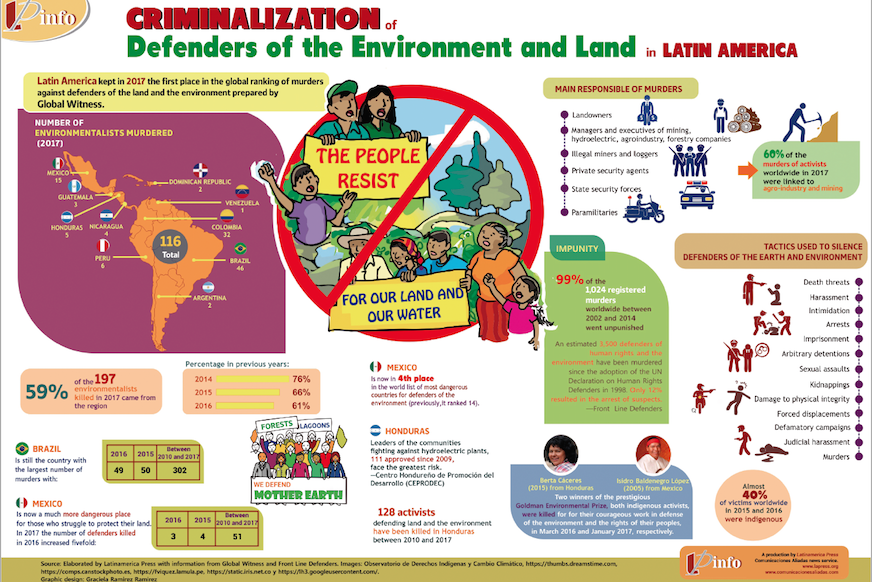
The report, A Recipe for Criminalization: Defenders of the Environment, Territory and Land in Peru and Paraguay, outlined the three “ingredients” both countries use to undermine the efforts of human rights defenders. First, they delegitimize activists through smear campaigns. Second, they apply laws and regulations that allow for forced evictions. And, third, they misuse the criminal justice system to prosecute activists for unfounded reasons.
“Those who bravely stand up to defend their land and the environment are frequently targeted because of their work. These attacks have a devastating impact on their physical, mental and emotional wellbeing, as well as that of their families and communities,” Amnesty International Americas director Erika Guevara-Rosas said in a press release.
The report included examples of how these ingredients combine on the ground. For example, Amnesty International highlighted the case of community activists working to protect their home in Peru’s Cajamarca region from the gold and copper Conga mining project. On 26 April 2013, police arrested 16 protesters on trumped up charges of abduction and coercion. The state prosecutor sought 30-year prison sentences. But the evidence presented was secondhand and so spotty and contradictory that a court dismissed the case in 2017.
In Paraguay, the Tekoha Sauce community of the Avá Guaraní People was evicted from their ancestral lands by a court order following a dispute with local businessman German Hultz. The community was forced onto a nature reserve where they struggle to survive because hunting and fishing is not allowed. During the court proceedings leading up to the eviction, their opponents stigmatized the indigenous community by referring to them as a “gang of criminals.”
On 24 April 2018, Front Line reported that on 19 April 2018, Olivia Arévalo Lomas, a woman human rights defender and spiritual leader of the Shipibo-Konibo indigenous peoples, was killed by unknown assailants just a few feet from her home in the community of ‘Victoria Gracia’, in Peru. The defender was shot in the chest and died instantly. Her body was left on the street in full view of her local community (https://www.frontlinedefenders.org/en/profile/olivia-arevalo). The killing of Olivia Arévalo Lomas comes after a spike in violence, threats and intimidation against members of FECONAU communities in Ucayalí, such as Santa Clara de Uchunya. In the past six months, several members of FECONAU have been subjects of attacks. A representative of FECONAU, Edinson Mahua, was shot at close range and narrowly escaped serious injury, while community leaders in Ucayalí have received anonymous death threats.
In the meantime Colombia has seen a spike in assassinations of human rights defenders in 2018, according to study by Colombian NGO Somos Defensores. A total of 46 human rights leaders have been killed so far this year, up from 26 in the same period last year; paramilitary groups were responsible for three of the killings, four were murdered by guerrilla groups and another four were killed at the hands of security forces. The investigative body also recognized a total of 132 acts of aggression against public defenders so far this year. Of the registered acts, there were 12 attacks, 66 death threats and one case of forced disappearance. The provinces in which the aggression occurred were predominately in areas at the heart of the country’s conflict, with Cauca, Antioquia and Norte de Santander figuring heavily in the statistics.
The UN has said it is “extremely concerned” about the increase in violence surrounding social leaders while Inspector General Fernando Carrillo has “urged” authorities to “assume their commitments to defend the lives of social leaders.” While the government has attempted to reel in the varying armed criminal groups responsible for a lot of these acts — as seen with the 2016 peace deal with the FARC guerrilla organisation, and ongoing peace negotiations with the ELN rebel group — it has clearly failed to provide basic security, and protect human rights defenders, rural community leaders and other social activists.
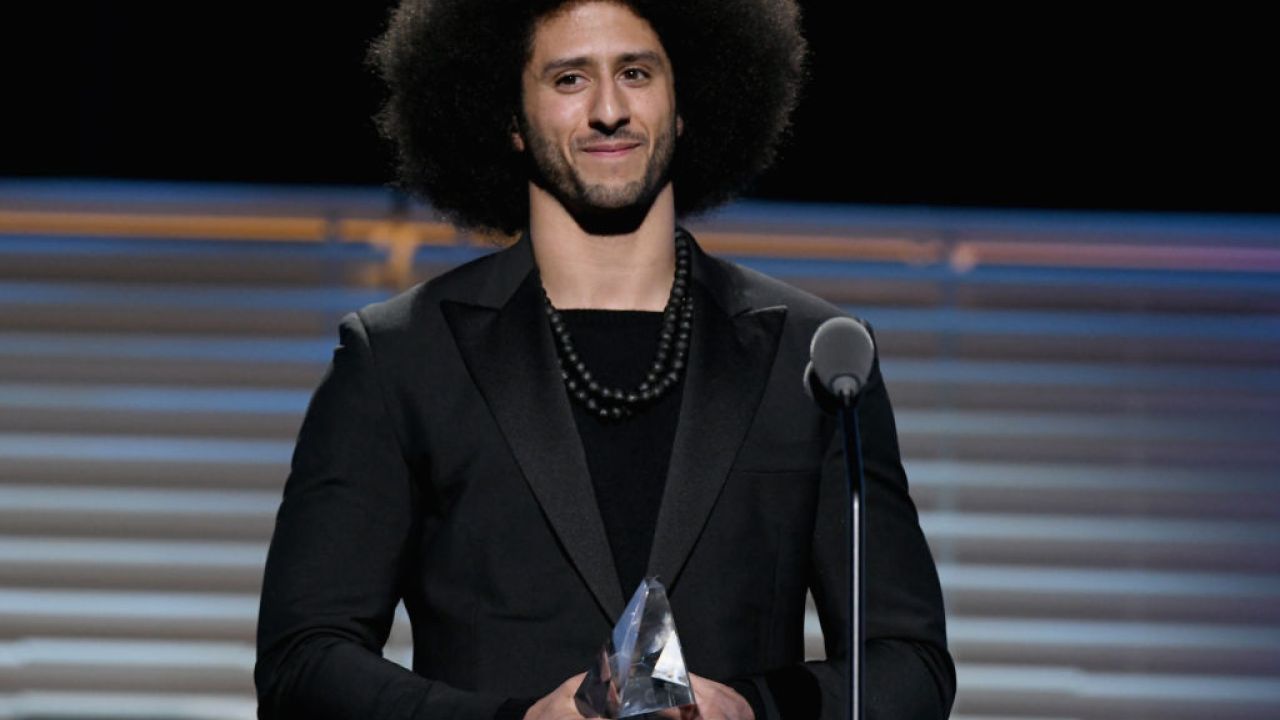
SPORTS ILLUSTRATED 2017 Sportsperson of the Year Show on December 5, 2017 at Barclays Center in New York City.
USA athlete and activist Colin Kaepernick has been honoured with Amnesty International’s Ambassador of Conscience Award for 2018. The award was officially presented at a ceremony in Amsterdam, Netherlands, on 21 April 2018, to coincide with the 50th anniversary of AI Netherlands.
“The Ambassador of Conscience award celebrates the spirit of activism and exceptional courage, as embodied by Colin Kaepernick. He is an athlete who is now widely recognised for his activism because of his refusal to ignore or accept racial discrimination,” said Salil Shetty, Secretary General of Amnesty International. [for more on this and other human rights awards see: http://trueheroesfilms.org/thedigest/awards/ambassador-of-conscience-award]
[During the 2016 pre-season of the American National Football League, Colin Kaepernick knelt during the US national anthem, as a respectful way of calling for the country to protect and uphold the rights of all its people. The bold move was a response to the disproportionate numbers of black people being killed by police. It sparked a movement that follows a long tradition of non-violent protests that have made history. While the polarised response to the “take-a-knee” protest has ignited a debate about the right to protest and free speech, Colin Kaepernick has remained focused on highlighting the injustices that moved him to act. His charity, the Colin Kaepernick Foundation, works to fight oppression around the world through education and social activism, including through free “Know Your Rights” camps which educate and empower young people.]
“I would like to thank Amnesty International for the Ambassador of Conscience Award. But in truth, this is an award that I share with all of the countless people throughout the world combating the human rights violations of police officers, and their uses of oppressive and excessive force. …said Colin Kaepernick. “While taking a knee is a physical display that challenges the merits of who is excluded from the notion of freedom, liberty, and justice for all, the protest is also rooted in a convergence of my moralistic beliefs, and my love for the people.“
See also: https://humanrightsdefenders.blog/2016/05/07/ais-ambassador-of-conscience-award-2016-shared-by-angelique-kidjo-and-african-youth-groups/
The targeted assassination of Marielle Franco, a 38-year-old human rights defender and Rio de Janeiro city councilor known for denouncing police abuses and extrajudicial executions, is a sickening development that must be fully investigated, said Amnesty International 0n 15 March. Marielle was shot dead in Rio de Janeiro’s Estacio neighborhood on Wednesday 14 March 2018. Her driver was also killed and a press officer was injured in the attack.
“This a chilling development and is yet another example of the dangers that human rights defenders face in Brazil. As a member of Rio de Janeiro’s State Human Rights Commission, Marielle worked tirelessly to defend the rights of black women and young people in the favelas and other marginalized communities,” said Jurema Werneck, Amnesty International’s Brazil director.
In 2016, Marielle was elected to the Rio de Janeiro city council. Two weeks ago, she was appointed rapporteur for a special commission that the city council created to monitor the ongoing federal intervention in Rio de Janeiro and the militarization of public security.
Gunmen riding in another vehicle carried out the attack, shooting indiscriminately before fleeing the scene without stealing anything, the Civil Police of Rio de Janeiro State said. The attack came a day after the 38-year-old city councilor had posted a message on social media criticizing the deployment of army soldiers to Rio’s sprawling “favelas”.
On 13 February 2018 fourteen international and regional rights organizations stated that the Egyptian government has trampled over even the minimum requirements for free and fair presidential elections (planned 26-28 March). The government of President Abdel Fattah al-Sisi has relentlessly stifled basic freedoms and arrested potential candidates and rounded up their supporters. “Egypt’s allies should speak out publicly now to denounce these farcical elections, rather than continue with largely unquestioning support for a government presiding over the country’s worst human rights crisis in decades,” the groups said.
The authorities have successively eliminated key challengers who announced their intention to run for president….The current atmosphere of retaliation against dissenting voices and the increasing crackdown against human rights defenders and independent rights organizations have made effective monitoring of the elections extremely difficult for domestic and foreign organizations. Media reports have said that the number of organizations that were granted permission to monitor the elections was 44 percent fewer than in the last presidential election in 2014 and that the number of requests, in general, has gone down. Several opposition parties called for boycotting the elections. A day later al-Sisi threatened to use force, including the army, against those who undermine “Egypt’s stability and security.” On February 6, the Prosecutor-General’s Office ordered an investigation against 13 of the leading opposition figures who called for a boycott, accusing them of calling for “overthrowing the ruling regime.” “Seven years after Egypt’s 2011 uprising, the government has made a mockery of the basic rights for which protesters fought,” the groups said. “Egypt’s government claims to be in a ‘democratic transition’ but move further away with every election.”
So, the two side events that are coming up are extremely valuable as the national space for dissent is nihil:
The Situation of Human Rights and Upcoming Elections in Egypt: Facilitating Radicalisation is an event organised by the Cairo Institute for Human Rights Studies (CIHRS) and co-sponsored by ISHR, that will take place on 9 March at 13:30 to 15:00 in Room XXIII. The event will address the deterioration of the human rights situation in Egypt and the dangers of the international community’s failure to respond.
Human rights violations in Egypt and in the Gulf States is an event organised by FIDH, CIVICUS, the Gulf Center for Human Rights. It will take place on 15 March 2018 at 15:00 till 16:00 in Room XXIII. The event will focus on the interlinked plight of human rights defenders in Egypt and the Gulf States as both are facing ongoing targeting by their own governments as well as explore measures for coordination and advocacy at the international level.
In the same context there is the press release of Friday 2 February 2018 in which a number of organisations, under the umbrella Committee for Justice (CFJ), condemned Tuesday’s execution of Egyptian Tayseer Odeh Suleiman after he was convicted in Ismalia’s military court in what they said was a flawed trial inconsistent with international legal and human rights standards. Suleiman, 25, was hanged after the Supreme Military Court of Appeals rejected the defence put foward by his lawyer without explaining the reasons behind the rejection….CFJ confirmed that there had been an unprecedented increase in the implementation of death sentences in Egypt, based on illegal proceedings, with 26 people executed between the end of December last year and the present. CFJ further asserted that the reason for the death penalties “under the guise of combating terrorism” were misleading and in violation of basic standards of a fair trial indicating significant flaws in Egypt’s judicial process.
On only a few days ago (2 March 2018), responding to reports from his family and colleagues that Ezzat Ghonim – a prominent Egyptian human rights lawyer and director of the NGO, Egyptian Coordination for Rights and Freedoms – failed to return home from work yesterday, Najia Bounaim, Amnesty International’s North Africa Campaigns Director, said: “Given the highly-charged political climate in Egypt and the clampdown on dissent in the lead-up to the presidential elections, we are deeply concerned that Ezzat Ghonim may have been forcibly disappeared. ”
Amnesty International published on 26 February 2018 an insightful interview with an Egyptian youth arrested in the august 2013 protests.
Weeks after his release Ibrahim Halawa spoke to AIu about his time in an Egyptian prison. Now walking the streets of Dublin his freedom has changed his life forever. Ibrahim Halawa was arrested aged just 17 along with hundreds of others during protests on 16 and 17 August 2013 around al-Fath Mosque in downtown Cairo. The protests descended into violence which the security forces responded to by using excessive lethal force that left at least 97 people killed, but according to Amnesty International’s research there is no evidence to indicate he was involved in any of the violence. The organization believes he was jailed for peacefully protesting. He was eventually acquitted on 18 September 2017, but 442 others were sentenced after a deeply unfair mass trial. Amnesty International is calling for all others who have been sentenced for peacefully exercising their rights to be immediately released.