Hans Thoolen on Human Rights Defenders and their awards

share information on human rights defenders, with special focus on human rights awards and laureates


Archive for the 'human rights' Category

« Older posts
Newer posts »

Women human rights defenders and climate: a treasure of references

February 5, 2020
14961626755_df9d75d853_c

On 4 February 2020 Marisa O. Ensor wrote in the New Security Beat an informative piece “Unsung Sheroes, Climate Action, and the Global Peace and Security Agendas“.

The December 2019 workshop on Gender, Peace and the Environment convened by the London School of Economics’ Centre for Women, Peace and Security and the University of Rosario’s Law School in Bogotá, Colombia, brought all of these interrelated perspectives together. Among other conclusions, the workshop acknowledged that indigenous women and girls are vital to more effective climate solutions, including building climate resilience in communities affected by violent conflict. However, their work is becoming increasingly fraught with danger. Criminal gangs, paramilitary groups, and private security forces from industries like mining, logging, dam construction, and agribusiness often target these indigenous environmental and human rights activists……

London School of Economic’s Keina Yoshida, one of the participants in the workshop on Gender, Peace and the Environment, reminded us of the “gender power structures, which result in violence against environmental, indigenous and women’s rights defenders such as Berta Cáceres.” Yet, as Ambassador Melanne Verveer notes in her Foreword to the Georgetown Institute for Women, Peace and Security’s report on Women and Climate Change, women are contributing to both adaptation and mitigation efforts and are creating innovative and localized solutions to build resilient communities. There is a reason for hope.

The article contains a helpful listing of relevant reports and documents on the role of women human rights defenders and climate change:

  • Indigenous women and girls are making significant contributions to the parallel Women, Peace and Security (WPS) and Youth, Peace and Security (YPS) global agendas. With their traditional knowledge of natural resource management, they can offer valuable insights on how to cope with the negative impacts of climate change. Yet, they are often the targets of violence.
  • Resolution 1325 on Women, Peace and Security (WPS), which the Security Council adopted in 2000, was the first resolution to link women’s experiences of conflict to international peace and security. Seven related resolutions have been adopted since then. Among them, Resolution 2242 (2015) is particularly relevant, given that it was the first to recognize that climate change connects with the WPS framework.
  • The joint UN report,  Women and Natural Resources: Unlocking the Peacebuilding Potential (2013). It views women’s access to natural resources as a key component of peacebuilding and conflict prevention.
  • The 2016 UN Women report, Indigenous Women & The Women, Peace and Security Agenda, also examined these linkages.
  • Subsequent related efforts include the UN Framework Convention on Climate Change’s 2017 adoption of a global Gender Action Plan (GAP), which seeks to achieve gender-responsive climate policy and action.
  • Resolution 2250 on Youth, Peace and Security (YPS) adopted in 2015 was the first international policy framework to recognize young people’s positive role in this field. It was followed by Resolution 2419 (2018), which stressed the need to consider young people’s views in security‑related discussions.
  •  Impacts of Climate Change on Youth, Peace and Security (2017),
  • The Missing Peace: Independent Progress Study on Youth, Peace and Security (2018),
  • Young Women in Peace and Security: At the Intersection of the YPS and WPS Agendas (2018).

For some of my earlier posts: https://humanrightsdefenders.blog/tag/women-human-rights-defenders/


Unsung Sheroes, Climate Action, and the Global Peace and Security Agendas


Posted in human rights, Human Rights Defenders | Leave a Comment »
Tags: climate, conflict and peace, documentation, environmental defenders, gender issues, indigenous groups, Latin America, Marisa O. Ensor, New Security Beat, UN Resolution, women human rights defenders

EU’s Fundamental Rights Agency has new website to serve mobile users better

February 5, 2020

On 3 February 2020 the Fundamental Rights Agency (FRA) of the EU announced a modern website which promises better user experience. The new-look website allows users to quickly and simply find the key fundamental rights information they need. FRA re-designed its website drawing on extensive user testing to meet their needs better, making it fully responsive across all mobile devices.

The EU’s bill of rights, the Charter of Fundamental Rights, takes centre stage, underlining its vital role in the respect, promotion and protection of rights across the European Union. The website offers an enhanced theme-based structure. This groups related information on hate crime, asylum or data protection, for example, so users have faster access to relevant information that interests them most. It also signposts the multitude of different types of material that users can browse from publications for downloading to videos to watch, from datasets to explore to infographics to share.

It prominently highlights useful tools like FRA’s EU Fundamental Rights Information System (EFRIS). This section steers users to key resources, such as promising practices from across the EU on how to combat hate crime or collect equality data, which they could use in their own work. In addition, country-specific information is more prominent so users can find local information from their country. It also flags which information is available in other EU languages. Users can also sign up for project updates via email so they can keep abreast of the latest agency developments. The site reflects FRA’s convening power as a hub for all human rights defenders which they can draw on for their work. It also aims to mirror FRA’s communicating rights mantra to maximise impact and outreach, helping to make a difference for people across the EU.

Accessibility remains a key consideration in the new design of the site.

https://fra.europa.eu/en/news/2020/new-modern-fra-website-promises-better-user-experience

  • Support for human rights systems and defenders

Posted in EU, human rights | Leave a Comment »
Tags: Charter of Fundamental Rights (EU), documentation tools, EU, european region, FRA, Fundamental Rights Agency (FRA), human rights documentation, mobile phones, website

Daily Maverick in South Africa keeps a weekly calendar of civil society events

February 3, 2020

South Africa‘s Daily Maverick has a weekly feature to inform readers of a cross-section of events organised by civil society organisations, including those by human rights defenders. Here some excerpts as illustration: .

2020 is in full swing. Last week the Maverick Citizen team met in Cape Town to discuss civil society plans and priorities for 2020 in South Africa and internationally and how best to report them. As our popular Civil Society Outlook showed, it’s going to be a pivotal year, and the reports we provided of activists’ plans were only the tip of the iceberg:

starting on Monday 3 February, civil society and human rights defenders from 30 countries will be meeting a few kilometres down the road at the Alternative Mining Indaba (AMI). The AMI is in its eleventh year and is hosted by the Economic Justice Network of the Fellowship of Christian Councils in Southern Africa (EJN of FOCCISA). Its theme is “environmental and economically sustainable mineral economies in an era of climate change catastrophe”.
Monday 3 February, watch out for the judgment of the Constitutional Court in Malawi on the fairness and legality of last year’s presidential elections in that country. Since the elections, Malawian civil society organisations have been at the forefront of protests. NGOs such as the Malawi Human Rights Defenders Coalition and Freedom House are calling on the Malawian government to respect the rule of law and the decision of the court.
Wednesday February 5th is the 38th anniversary of the murder of Neil Aggett by the brutal apartheid security police. Next week will mark the third week of the inquest into his death. (FAWU) to South Gauteng High Court to demand the prosecution of his murderers.
Important public hearings are underway on the controversial and highly contested Traditional Courts Bill. However, Parliament, through omission or commission, seems to want to keep them as unpublic as possible. Last week, hearings took place in the Northern Cape. However, the Land and Accountability Research Centre (LARC), one of the bill’s most informed and vocal critics, only received a notification on Tuesday 28 January. The Gauteng hearings are scheduled to take place in February but dates are not yet confirmed.
Finally, an issue that should occupy us all every day. The Climate Justice Coalition is asking for your input on the draft Climate Justice Charter which it intends to present to Parliament later this year.
February: SONA, the budget and the civil society campaigns that attempt to arc society towards social justice. 

…… On Friday we will continue with our weekly profile of women activists who lead civil society.  

(If you have events or meetings which you think other activists ought to know about, write to us at: maverickcitizen@dailymaverick.co.za)


https://www.dailymaverick.co.za/article/2020-02-02-civil-society-watch-3-10-february-2020/

Posted in human rights | Leave a Comment »
Tags: civil society activists, Daily Maverick, environmental issues, events, national campaign, South Africa

Compilation of recommendations to companies and investors on HRDs and civic freedoms

February 1, 2020

The NGO Bussines and Human Rights Resource Centre has made a useful “Compilation of recommendations to companies and investors on HRDs & civic freedoms” (last updated January 2020)

Several national and international non-governmental organizations, think-tanks, coalitions and UN bodies and experts have made recommendations to businesses and investors about how to ensure respect for human rights defenders and civic freedoms. This non-exhaustive list brings together these recommendations.

Recommendations for companies and investors:

Name / Title:

Description:

Business sector:

Authors – type of organization(s): 

Date and Year:

Zero Tolerance Initiative – The Geneva Declaration Declaration made by defenders of human rights and environment and supporting NGOs, with recommendations for states, companies and investors  All sectors Affected communities’ representatives, national and international NGOs November 2019
Action plan from the World HRDs Summit  Action plan made by defenders of human rights and environment and supporting NGOs, with recommendations for states, companies and investors  All sectors Affected communities’ representatives, national and international NGOs December 2018
Situation of human rights defenders – A/72/170 UN Special Rapporteur on HRDs’ report on HRDs working on business and human rights, with recommendations to states, companies and investors All sectors UN Expert July 2017

Recommendations for companies:

Human rights defenders and civic space – the business and human rights dimension Working Group on Business and Human Rights, as part of its mandate to promote the UN Guiding Principles, decided to give focused attention to the issue of HRDs and civic space – this is the summary of UNWG’s efforts on this issue to date and includes draft guidance for companies  All sectors  UN Working Group Ongoing
Shared Space under pressure: Business Support for Civic freedoms and HRDs Guidance document on business support for civic freedoms and HRDs All sectors International NGOs (informed by interviews with business representatives, HRDs, national and international NGOs) August 2018
Thematic overview: Civil society and the private sector CIVICUS’ 2017 State of Civil Society Report addressed the theme of civil society and the private sector, gathering a range of informed views from 27 different stakeholders that wrote about different aspects and produced a set of recommendations for the private sector  All sectors  National and international NGOs January 2017
Cross-regional group of human rights defenders called on business to take action for their engagement and protection Joint statement from 40+ civil society organizations, with guidance for businesses All sectors National and international NGOs 2016
Human Rights Defenders and Business: Searching for Common Ground Report with case studies, analysis and recommendations for businesses  All sectors International NGOs (informed by HRDs and national NGOs) December 2015

Recommendations for investors and financial institutions:

 Uncalculated Risks: Threats and attacks against human rights defenders and the role of development finance Report with 25 case studies and recommendations for international financial institutions  Finance & banking International and national NGOs June 2019
Guide for independent accountability mechanisms on measures to address the risk of reprisals in complaint management Toolkit that aims to assist independent accountability mechanisms (IAMs) to address the risk of reprisals within the context of their complaint management process  Finance & banking Independent Consultation and Investigation Mechanism (IDBG) January 2019

This list will continue to be updated – please notify the NGO at zbona(at)business-humanrights.org, if there is a set of recommendations missing from it.

https://www.business-humanrights.org/en/compilation-of-recommendations-to-companies-and-investors-on-hrds-civic-freedoms

Posted in human rights, Human Rights Defenders | Leave a Comment »
Tags: Business and human rights, Business and Human Rights Resource Centre, Civil society, corporate accountability, documentation tools, Human Rights Defenders, recommendations

Newcastle’s takeover bid from Saudi Arabia welcomed by many fans but it remains ‘sportswashing’

January 30, 2020

On Monday 27 January 2020, Football365.com carried the story about Amnesty International calling the take-over of footbal club Newcastle by Saudi Arabia a case of ‘sportswashing’. Two days later the BBC reported on the conflicting feelings within the supporters group.

A Saudi takeover of Newcastle United would be “sportswashing, plain and simple” according to human rights body Amnesty International.The Premier League club are in talks with two potential buyers, including a consortium which features the Saudi Arabian Sovereign Wealth Fund, controlled by Crown Prince Mohammed bin Salman. Saudi Arabia has recently engaged on a large scale in buying a positive image with events such as Anthony Joshua’s heavyweight boxing match against Andy Ruiz, Spain’s Super Cup and the Dakar ralley.[see also: https://humanrightsdefenders.blog/2020/01/13/saudi-arabia-finds-that-celebrities-are-easier-to-buy-than-human-rights-ngos/ ]

Amnesty sees this as an attempt to use sport to clean up its image, describing the country’s human rights record as “abysmal”.“ It’s not for us to say who should own Newcastle, but players, back-room staff and fans alike ought to see this for what it is – sportswashing, plain and simple,” Amnesty’s UK head of campaigns Felix Jakens said.

The Wall Street Journal has reported that Newcastle owner Mike Ashley is considering a £340million bid by the consortium, which is led by Amanda Staveley a businesswoman and financier, who failed to buy the club two years ago.

Alistair Magowan of BBC Sport spoke to some of the people involbed and concluded that ‘Saudi Arabian takeover could leave fans ‘conflicted’. A poll in the Newcastle Chronicle suggested that 80% of fans would back the bid, but Riley, who is also a member of the 9,000-strong Newcastle United Supporters Trust, told BBC Sport he was  very conflicted by the idea of the club being owned by a country which has committed and commits human-rights abuses. “A lot of Saudi government policy, I find abhorrent, so if the deal goes through I will have to re-assess my relationship with the club, absolutely no doubt about it. “I wouldn’t take the poll as a reflection of how people feel. I think there will be a lot of people feeling conflicted. A lot of people will still support the club, I will still support the club, but the level of support might be the difficult part. “If it goes through, I think there will be a lot of soul searching. In general, people care about human rights. There is a desperation to get rid of Mike Ashley, it’s just how far people are willing to go in that desperation.” A statement from a collection of Newcastle fans groups said: “Ashley should not stand in the way of this once in a lifetime opportunity for our club, our communities and our proud city.”
On 15 April 2020 the Guardian reported that is seem to be happening: https://www.theguardian.com/football/2020/apr/15/newcastle-expect-green-light-saudi-takeover-despite-amnesty-misgivings

(Premier League club Sheffield United are also owned by Saudi Prince Abdullah bin Mosaad bin Abdulaziz Al Saud. And Amnesty have also criticised Manchester City’s Abu Dhabi owners for “sportswashing” their country’s “deeply tarnished image” by pouring money into the Premier League champions. See e.g. https://humanrightsdefenders.blog/2018/06/07/ahmed-mansoor-ten-years-jail-for-tweeting-and-a-street-named-after-you/)

Also Khashoggi’s fiance came out against the sale: https://english.alaraby.co.uk/english/news/2020/4/29/khashoggi-fiancee-slams-saudi-takeover-of-newcastle-united

https://www.football365.com/news/amnesty-international-labels-newcastle-takeover-bid-sportswashing

https://www.bbc.co.uk/sport/football/51299845

see also: https://www.metro.news/deep-pockets-matter-more-to-fans-than-human-rights/1893025/

Posted in human rights | 2 Comments »
Tags: AI, Amanda Staveley, Anthony Joshua, BBC, football, Newcastle, Saudi Arabia, sports washing, sportswashing, UAE

After 30 years Salvadoran military involved in killing of Jesuit priests banned from USA

January 30, 2020
On 29 January 2020, Nelson Renteria of WTVB (The Voice of Branch County) came with the surprising report that the U.S. State Department issued a public designation for 13 current and former Salvadoran military officials for what it called gross human rights violations during El Salvador’s civil war three decades ago, for their alleged involvement in the planning and execution of the extrajudicial killings of six Jesuit priests and two others on a university campus in 1989.

The crime is one of the most emblematic of the Central American country’s civil war that pitted then-leftist guerrillas the Farabundo Marti National Liberation Front (FMLN) against the U.S.-backed Salvadoran army. The FMLN is now a political party. The case had a lot in common with the killings of the Dutch IKON TV crew a few years earlier [see: https://humanrightsdefenders.blog/2018/09/25/murder-of-dutch-ikon-journalists-in-1982-in-el-salvador-revisted/]

In a statement, the U.S. Secretary of State said it had “credible information” that the current or former officials were directly or indirectly involved in “a gross violation of human rights or significant corruption.” It was not clear what had prompted the United States to issue the designation at this point in time.

[In El Salvador, the Supreme Court of Justice declared a 1993 amnesty law unconstitutional in 2016 and ordered lawmakers to create a new law that would guarantee justice and reparation for victims. However, the process has been delayed.]

https://wtvbam.com/news/articles/2020/jan/30/us-bans-13-salvadorans-over-1989-jesuit-priest-killings/979853/?refer-section=world

Posted in human rights | Leave a Comment »
Tags: ban, El Salvador, extrajudicial killings, IKON, impuntiy, Jesuit, military, Nelson Renteria, USA

Rural women in South Africa win landmark case in court

January 30, 2020

Kim Harrisberg for the Thomson Reuters Foundation reported on 29 January 2020 that an elderly black women in South Africa won property rights in a landmark ruling. Two weeks ago I wrote about Sizani Ngubane and her struggle for land rights for women [see: https://humanrightsdefenders.blog/2020/01/07/more-about-mea-finalist-sizani-ngubane-from-south-africa/] and this is a similar case:

Facing destitution when her marriage broke down, 72-year-old Agnes Sithole went to court – with the help of the Legal Resources Centre (LRC) – to challenge a sexist law – and won not only a share of her husband’s property but a legal victory that will protect some 400,000 other black South African women. Under South African law, married couples own all their assets jointly and both must consent to major transactions.

But for black women married prior to 1988, the husband owned all matrimonial assets and could sell them without consulting his wife – until Sithole’s landmark High Court win this month which overturned the discriminatory law. “This is a major judgment for South African women,” said Aninka Claassens, a land rights expert at the University of Cape Town, responding to the ruling against sections of the Matrimonial Property Act of 1984 and amendments made in 1988. “If you haven’t got property rights as a woman, you are more vulnerable to stay in an abusive marriage. This case changes these rights,” she told the Thomson Reuters Foundation.

Traditionally, women are regarded as inferior to men in Sithole’s KwaZulu-Natal province, said women’s land rights activist Sizani Ngubane, who has campaigned against evictions and abuse of women in rural areas for more than 40 years. Male-dominated tribal authorities hold great sway over rural communities, with the Zulu King Goodwill Zwelithini controlling 2.8 million hectares of land, an area the size of Belgium, under an entity called the Ingonyama Trust. Ngubane, nominated as one of three finalists in the 2020 Martin Ennals Award, said this month’s Durban court ruling was significant.

“This will make a difference in terms of women’s land and property inheritance,” said Ngubane [https://humanrightsdefenders.blog/2019/11/26/breaking-news-mea-has-3-women-hrds-as-finalists-for-2020/]. Ngubane has gone to court to challenge the Ingonyama Trust, which she said only leases land under its control to men, with widows being evicted from their homes when their husbands die. Despite the legal victory, women’s rights experts were wary of celebrating too soon…….For Ngubane, such grassroots work is critical in improving the lives of rural South African women. “We know the courts can protect women,” she said. “The biggest challenge for us is changing attitudes of men on the ground who believe that women are children. We are so much more than that.”

https://www.reuters.com/article/us-safrica-land-women-trfn/elderly-black-women-in-south-africa-win-property-rights-in-landmark-ruling-idUSKBN1ZS1FV

Posted in human rights | 1 Comment »
Tags: Agnes Sithole, human rights of women, Kim Harrisberg, land rights defender, Legal Resources Centre (LRC), MEA finalists 2020, Sizani Ngubane, South Africa, thomson reuters foundation

Turkey defies European Court on Kavala and undergoes UPR review

January 29, 2020

As Turkey underwent its third Universal Periodic Review (UPR) before the UN Human Rights Council in Geneva on Tuesday 28 January 2020, Human Rights Watch (HRW) issued a review of the situation in Turkey and the country’s dramatic erosion of its rule of law framework. [see: https://humanrightsdefenders.blog/2020/01/22/side-event-preparing-the-upr-process-on-turkey/]

Over the past four years, Turkish authorities have detained and prosecuted perceived government opponents, journalists, activists and human rights defenders on broad and vague terrorism and other charges for peacefully exercising their freedom of expression and other non-violent activities. The rights to assembly and association have been severely curtailed across the country, and the government has exerted heavy political control over the courts, whose judges have all too easily handed down convictions and harsh sentences in defiance of human rights norms, HRW said in a statement on Monday.

“The huge number of journalists, politicians, and perceived government critics in prison and on trial flies in the face of the Turkish government’s public statements about the state of human rights in the country,” said Hugh Williamson, Europe and Central Asia director at HRW. “Countries at the UN review should urgently press Turkey to address the sharp decline in respect for fundamental rights and freedoms and to carry out real reform.”

In the post-coup period, President Erdoğan has assumed greater powers with the introduction of a presidential system that removes checks and balances and brings the judiciary under executive control. HRW said UN member states participating in Turkey’s UPR review should urge President Erdoğan’s administration to end the arbitrary and prolonged detention of activists, politicians, human rights defenders, journalists and writers and prosecutions based on their non-violent activities instead of credible evidence of criminal activities; ensure an impartial judiciary; remove political pressure on judges and prosecutors and put laws in place that protect human rights; end the use of blanket bans to impose arbitrary and disproportionate restrictions on the right to peaceful assembly; carry out the European Court of Human Rights’ rulings that jailed businessman Osman Kavala (see more below) and jailed Kurdish politician Selahattin Demirtaş be immediately released from their prolonged and arbitrary detention; and review all articles of the Turkish Penal Code, the Anti-Terror Law and other laws that are used to restrict the rights to freedom of expression, association and assembly and the right to access to information, with a view to repealing or amending them to comply with international human rights standards.

“Turkey’s disregard of human rights is a disservice to its citizens, who deserve to live with dignity and freedom,” Williamson said.

———–

The same day – 28 January, 2020 – Dorian Jones for the Voice of America reports that an Istanbul court has defied the European Court of Human Rights, ruling in favor of the continued detention of philanthropist Osman Kavala. In December, the European Court demanded the immediate release of Kavala, who is on trial for sedition.
FILE - A journalist stands in front of a poster featuring jailed philanthropist Osman Kavala, during a press conference given by his lawyers, in Istanbul, Turkey, Oct. 31, 2018.
A journalist stands in front of a poster featuring jailed philanthropist Osman Kavala, during a press conference given by his lawyers, in Istanbul, Turkey, Oct. 31, 2018.

Kavala and 15 other civil society activists are accused of supporting anti-government protests in 2013 against then-Prime Minister Recep Tayyip Erdogan, who is now president. The protest action came to be known as the Gezi movement, named after an Istanbul park where the unrest started. Prosecutors are calling for life imprisonment without parole. The ECHR condemned the case, calling for an end to Kavala’s more than two years in prison and describing it as “arbitrary” and “politically motivated.”

The Istanbul court ruled Tuesday the ECHR decision was provisional because Ankara was appealing the verdict and that Kavala should remain in jail. The court’s decision is flawed because the European Court ruling was clear in its call for Kavala’s immediate release,” said Emma Sinclair Webb, Turkey researcher for New York-based Human Rights Watch.

“We saw multiple signs of how unfair this trial is,” said Webb, speaking after attending Tuesday’s court hearing. “The lawyers for Kavala raised many objections to the way witness evidence is used in this case. The court turns a deaf ear to all objections. It’s a shocking indication that once again, Turkey’s judiciary seems to be under heavy pressure of the executive.”

Tuesday’s court hearing was marred by chaos, with Kavala’s lawyers challenging the judge’s decision to hear some witnesses without their presence, prompting the lawyers to walk out of the room. Ankara strongly rejects the ECHR verdict, maintaining that the judiciary is independent. But observers note the case has strong political undertones. Three months ahead of Kavala’s prosecution, Erdogan accused him of “financing terrorists” and that Kavala was a representative for “that famous Jew [George Soros,] who tries to divide and tear up nations.” Erdogan did not elaborate on the comments about George Soros, who is an international philanthropist. Erdogan’s allegations against Kavala resemble the prosecution case against the jailed activist. Kavala is a pivotal figure in Turkey, using his wealth to help develop the country’s fledgling civil society after a 1980 military coup.

“Osman Kavala is very prominent within the civil society in this country,” said Sinan Gokcen, Turkey representative of Swedish-based Civil Rights Defenders. “He is not a man of antagonism; he is a man of preaching dialogue, a man of building bridges.”….

With the U.N. having few tools to sanction Turkey, the European Union is seen as offering the best hope by human rights advocates of applying pressure on Ankara. Turkey’s EU membership bid is already frozen, in part due to human rights concerns. But Ankara is seeking to extend a customs union, along with visa-free travel for its citizens with the EU. “It’s time all European countries should be speaking out very loud and clear on cases like this [Kavala],” said Sinclair-Webb. But even high-profile cases like Kavala’s have seen Brussels offer only muted criticism of Ankara. German Chancellor Angela Merkel’s visit to Istanbul Friday for talks with Erdogan saw little criticism of Turkey’s human rights record. Instead, discussions focused on Ankara’s recent deployment of soldiers to Libya and the upholding of an EU-Turkish agreement controlling migrants entering Europe. “There are many issues to talk about with Turkey,” said Sinclair Webb. “Syria, Libya, Turkey, hosting so many refugees from Syria, and this often takes priority over Turkey’s domestic human rights crisis. This means there isn’t sufficient clarity on cases like this. What we are seeing is Turkey defying Europe’s human rights court.” Some analysts suggest Brussels could yet be lobbying behind the scenes for Kavala’s release, tying Ankara’s calls for extra financial assistance for refugees to gestures on human rights.

https://www.forum-asia.org/?p=30836

HRW urges UN to address human rights violations in Turkey

https://www.voanews.com/europe/turkish-court-defies-europe-leaves-philanthropist-behind-bars

Posted in Civil Rights Defenders (NGO), HRW, human rights, Human Rights Council, Human Rights Defenders, UN | 3 Comments »
Tags: Civil Rights Defenders, EU, Europe, European Court of Human Rights, Hugh Williamson, Human Rights Watch, illegal detention, Osman Kavala, Sinan Gokcen, Turkey, UPR, VOA

26 January is Kuchu Memorial Day in Uganda

January 29, 2020
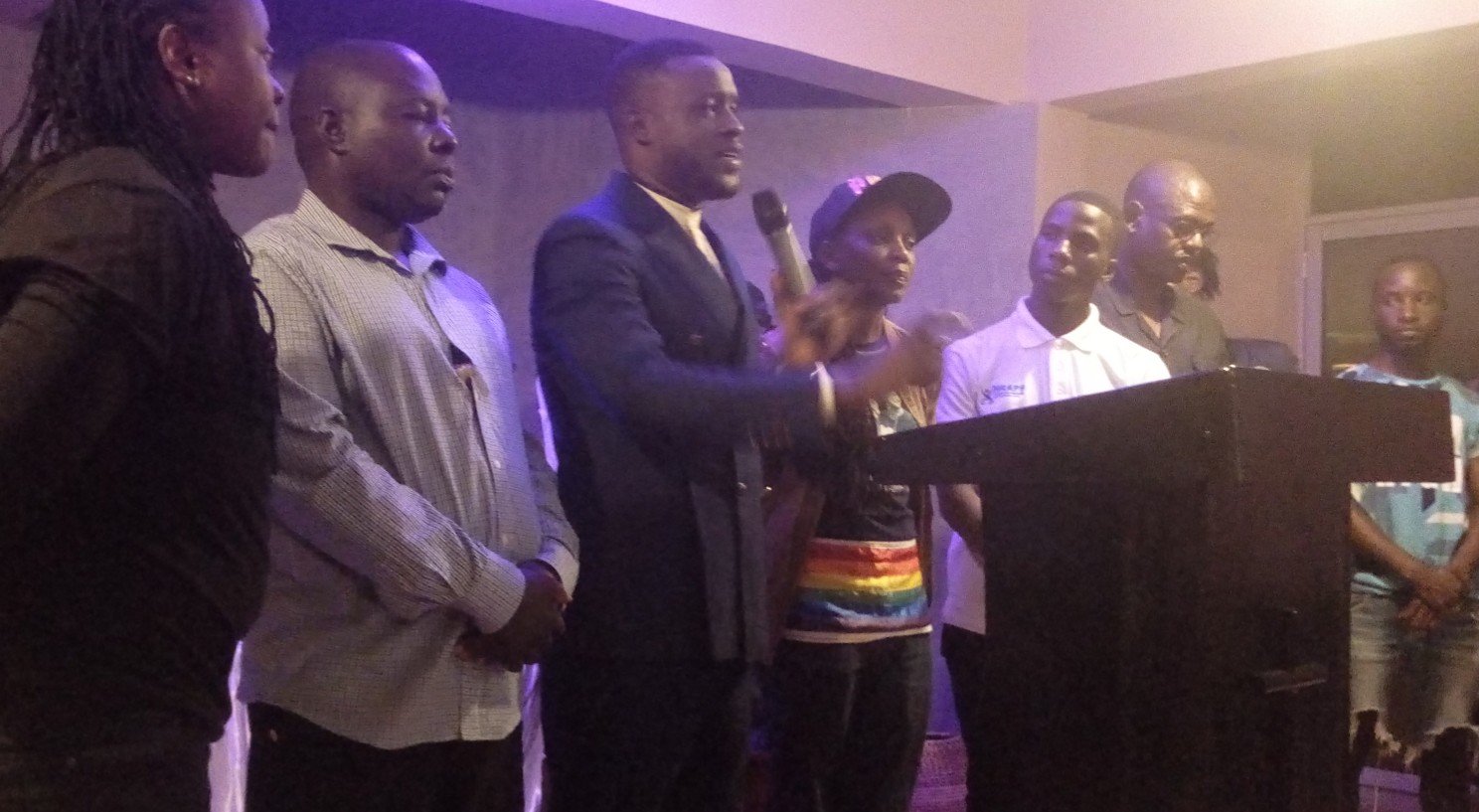
A report on how Ugandan LGBT rights defenders celebrated Kuchu Memorial Day was posted by Kikonyogo Kivumbi on 28 January 2020 in ‘Erasing 76 Crimes’. Human rights defenders in Uganda have earmarked January 26 as Kuchu Memorial Day to remember and celebrate the life of David Kato and other LGBT human rights defenders killed because of their activism and sexuality.

Pastor Simon Anthony addresses the Kuchu Memorial Day service in Kampala. Kasha Nabagesera stands beside him. (UhspaUganda photo)
At a memorial church service on Sunday, 26 January in Kampala, human rights defenders paid tribute to David Kato (murdered that day in 2011, at his home).

)

Kato was killed a few weeks after he helped to secure a court injunction against a Ugandan tabloid that had printed the names, photographs and addresses of gay Ugandans, including Kato, with the tagline “Hang them.” [see also: https://humanrightsdefenders.blog/2012/11/17/the-kuchu-chronicles-a-must-see/]

The  remembrance service was led by Pastor Simon Anthony, a senior pastor from The Fellowship of Affirming Ministries (TFAM) Uganda. The fellowship embraces all people with love, irrespective of their sexuality or any other considerations.

Kasha Nabagesera, one of the founding members of the Ugandan LGBT movement, spoke passionately about Kato’s work and the need to love one another, drawing from Kato’s inspiration and exemplary life. She said many LGBT persons are suffering in silence and need to work together and overcome the fears and challenges they face in life. [see also: https://humanrightsdefenders.blog/2013/02/08/uganda-anti-gay-bill-coming-up-again-mea-laureate-2011-kasha-speaks-out-and-faces-persecution/]

The organizers of the Kuchu Memorial Day hope to make it an annual event.

Ugandan LGBT activists celebrate David Kato on Kuchu Memorial Day

Posted in human rights | Leave a Comment »
Tags: David Kato, Erasing 76 Crimes, Kasha Nabagesera, lgbt human rights, LGBTI Human Rights Defenders, Simon Anthony, Uganda

In Memory of Tunisian human rights defender Lina Ben Mhenni

January 29, 2020

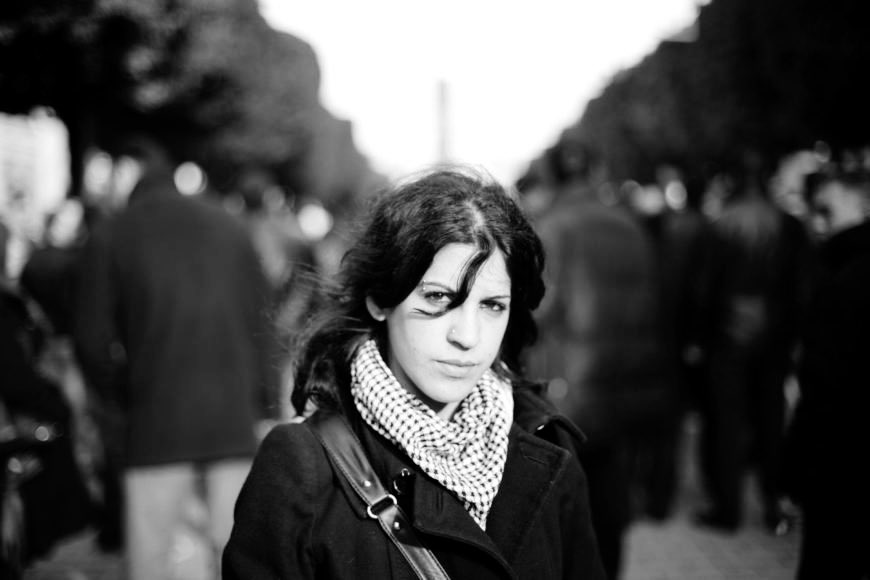
On 28 January 2020 The Human Rights Foundation in New York expressed its sadness at the passing of Tunisian activist, journalist, and educator Lina Ben Mhenni, after a long battle with a chronic illness (1983-2020).

“Lina was a force who fought tenaciously until her last breath. She fought censorship, corruption, and human rights abuses, all while grappling with serious illness. But nothing stood in her way. Her voice and cause will resonate with generations to come,” said Thor Halvorssen, president of HRF. “She will forever be an inspiration to all of us at HRF and in the Oslo Freedom Forum community to never give up even in the darkest moments. We will truly miss our beloved friend Lina.”

Lina was one of the only Tunisians to criticize the repressive government openly on international broadcasts before the Jasmine Revolution began in 2011. She is often described as one of the bravest bloggers in the world, whose work was instrumental in documenting, informing, and mobilizing citizens during the Revolution. Lina’s impactful achievements led her to be nominated for the 2011 Nobel Peace Prize. She authored and published a book the same year entitled, “Tunisian Girl: A Blogger for an Arab Spring.” Much of her writing was focused on freedom of expression and rights of women and students in Tunisia.


“Lina’s life experiences went beyond her 36 years. Many people know about Lina – whether through the media or different social platforms – but no amount of reporting on her could do justice to the values and principles for which she fought during Tunisia’s era of tyranny and after the Revolution,” said Aymen Zaghdoudi, MENA Legal Advisor at Article 19 in Tunisia. “Lina stood with the weak, the deprived, and the oppressed – even at the expense of her own health – and turned her pain into inspiration and hope for those around her.”

Lina spoke at the 2011 Oslo Freedom Forum, urging the outside world to continue to pay attention to events in Tunisia and other Arab countries where recent revolutions appeared to have ended. Upon joining the HRF community that year, she was actively involved in the discussions unfolding about the Arab Spring.

In recent years, Lina continued to press for human rights and continued democratic reform. In 2016, she started a campaign called “Books to Prison,” to counter extremism within Tunisia’s prisons. She was inspired by her father, who was a political prisoner, and had once told her that prisoners had so little to read to change their minds or be inspired. By November 2019, her campaign had collected more than 45,000 books, helping to free the minds of tens of thousands of people.  Apart from her calls for democratic reform, Lina taught linguistics at a university in Tunisia and was a professional translator. She also brought awareness to the issue of organ donation and after a kidney transplant, amazingly received silver medals in the World Transplant Games.

You can read Lina Ben Mhenni’s blog “A Tunisian Girl” here.

https://mailchi.mp/609e2865ee85/hrf-mourns-the-passing-of-suleiman-bakhit-287648?e=f80cec329e

Posted in human rights, Human Rights Foundation | Leave a Comment »
Tags: Arab spring, Aymen Zaghdoudi, blogger, freedom of expression, Human Rights Foundation, in memoriam, Journalist, Lina Ben Mhenni, obituary, Tunisia, woman human rights defender

« Older posts
Newer posts »
  • Enter your email address to subscribe to this blog and receive notifications of new posts by email.

    Join 1,786 other subscribers
  • Recent Posts

    • Amnesty Reports Attacks on Indonesian Human Rights Defenders in 2024 – four acquitted in 2026
    • After 16 years of outstanding leadership, Gerald Staberock is stepping down as Secretary General of the OMCT
    • Human rights defender’s story: Nathalia Bonilla from Ecuador
    • On 2 March 2026 woman human rights defender Yanar Mohammed was killed in Baghdad.
    • 9 March 2026: important Geneva event on transnational repression of human rights defenders
    • Tunisian authorities should immediately drop the unfounded charges and release Ahmed Souab
    • Kyrgyz human-rights defender Aziza Abdirasulova awarded 2026 Raoul Wallenberg prize of CoE
    • Human Rights Foundation launched the Tyranny Tracker
Blog at WordPress.com.
Entries and comments feeds.Valid XHTML and CSS.
  • Subscribe Subscribed
    • Hans Thoolen on Human Rights Defenders and their awards
    • Join 441 other subscribers
    • Already have a WordPress.com account? Log in now.
    • Hans Thoolen on Human Rights Defenders and their awards
    • Subscribe Subscribed
    • Sign up
    • Log in
    • Report this content
    • View site in Reader
    • Manage subscriptions
    • Collapse this bar
 

Loading Comments...