ISHR’s report documents a disturbing pattern of intimidation and reprisals that must be addressed. Cases of intimidation and reprisals featured in the submission range from States maligning and stigmatising defenders to banning them from travel and detaining them. ‘Such reprisals violate human rights and fundamental freedoms that regional and international systems are obliged to promote and protect. Moreover, they also seriously impede bodies and mechanisms’ abilities to discharge their mandates effectively, threaten their integrity, and undermine the credibility of their work in the field of human rights’, said Adelaïde Etong Kame, ISHR Africa Programme Manager.
In Malawi and Cameroon, defenders engaging with the ACHPR are threatened, stigmatised, harassed and attacked. In Burundi, increased monitoring by regional and international human rights mechanisms has been met with increased risk, stigmatisation and harassment of defenders working with the mechanisms. In Mauritania, human rights defenders continue to be vilified by the government and accused of being terrorists. In Egypt, defenders engaging with the African human rights system have been maligned, intimidated, and detained.
The report also documents how recent hosts of ACHPR sessions, in particular Mauritania and Egypt, have hindered and restricted access to the sessions, through visa denials, intimidation, harassment, and undue restrictions at the sessions themselves. ..
ISHR’s submission also documents undue restrictions on accreditation, namely the case of the Coalition of African Lesbians (CAL), who have had their observer status to the ACHPR withdrawn, in violation of the rights of freedom of expression, association, and unhindered access to and communication with international bodies of CAL and its members, on discriminatory bases.
The primary duty to prevent and remedy reprisals lies with States—who must do more to prevent, investigate and ensure accountability for reprisals. ‘In that regard, the task for the Focal Point and the ACHPR is now to take up these cases and ensure they are addressed with the perpetrating governments. Otherwise, reprisals ‘work’ to dissuade engagement, and perpetrators will be emboldened’, said Etong Kame.
In a statement, Senator Francis Pangilinan said “The silencing of critics and the attacks on the media has been going on for three years now,” he said. “And unless we stand up, speak out, and vigorously oppose the tyranny in our midst, their conviction will not be the last” he added… Ressa and Santos are the first journalists to be found guilty of cyber libel.
In this context ABS-CBN was forced off the air after its television and radio broadcast operations nationwide were ordered shut a day after its 25-year-franchise expired.
Detained Senator Leila de Lima joined her colleagues in condemning Ressa and Santos’ conviction, saying it was “another demonstration” of the Duterte administration’s “weaponization of law against those who dare speak truth to power.” “Jailing me for over three years now is only one of the thousand sinister ways they are causing fear in the hearts of Filipinos who fight for what is just and right,” the senator said in a dispatch from Camp Crame. [see also: https://humanrightsdefenders.blog/2018/07/30/senator-de-lima-in-detention-in-philippines-receives-her-award/]
Meanwhile, former Senator Antonio Trillanes IV said the guilty verdict against the Rappler CEO was an “obvious attack” against press freedom and an “attack against our democracy itself.” “We are now but a few steps away from Martial Law,” Trillanes, who has been critical of the Duterte administration, said in a statement.
Meanwhile in June 2020 a film on Maria Ressa won a film award:
Families hold photographs of missing loved ones during a protest in Colombo, Sri Lanka’s largest city, in February 2020. (TNH)
Rights groups are warning of a crackdown on dissent and rising authoritarianism in Sri Lanka, raising fears for the future of long-stalled civil war reconciliation efforts. Since President Gotabaya Rajapaksa took office after November elections, local rights activists have reported a rise in surveillance by state security forces, threats, and other measures more common during the country’s 26-year civil war, which ended in 2009, as well as its aftermath. A long piece in the New Humanitarian of 10 june 2020 gives the details:
“Surveillance has always been there, but since the election what we have seen is that it’s more open and more rampant,” said Shreen Saroor, a women’s rights activist…
Human Rights Watch says Rajapaksa is re-establishing a “state of fear” in Sri Lanka, citing interviews with dozens of activists and journalists. Many local journalists say they are self-censoring as threatening phone calls and other pressures escalate, acutely aware of the country’s history of unsolved murders and abductions. At least two reporters have already fled the country, according to the Committee to Protect Journalists.
In February, Sri Lanka announced it was backing out of commitments made to the UN Human Rights Council in 2015 by a previous administration. These promised a range of measures to investigate abuses during the civil war. ..
[see also: from my blog post https://humanrightsdefenders.blog/2020/02/24/human-rights-defenders-issues-on-the-agenda-of-43rd-human-rights-council/ Sri Lanka: Civil society groups are concerned over the backsliding on the commitments made by Sri Lanka in Human Rights Council Resolution 30/1. The recently elected president, Gotabaya Rajapaksa, along with his brother Mahinda Rajapaksa, who has been appointed prime minister, have been implicated in war crimes and numerous human rights violations when they were defence secretary and president respectively from 2005 to 2015. The new Government has made clear its intention to walk away from the Council process on Sri Lanka, a process that is currently the only hope for victims of human rights violations that truth, justice, reparations, and guarantees of non-recurrence are possible. [see https://www.nwaonline.com/news/2020/feb/23/sri-lanka-details-un-case-pullout/] Meanwhile, the relatively open climate for human rights defenders and journalists of the past few years seems to be rapidly closing. More than a dozen human rights and media organisations have received intimidating visits by members of law enforcement and intelligence agencies, while death threats against journalists have resumed. ISHR calls on States to urge for continued cooperation of the Government of Sri Lanka with OHCHR and the Special Procedures. The Council should reiterate the reference in Resolution 40/1 to “the adoption of a time-bound implementation strategy” for implementation of all elements of Resolution 30/1. [see also: https://humanrightsdefenders.blog/2020/01/22/sri-lankan-government-accused-of-embarking-on-process-to-silence-critics/]
And, this month, Rajapaksa created two “task forces” with vague mandates, which rights groups fear could operate parallel to existing institutions. One, a body created to combat “anti-social activities”, is led by security and intelligence officials. Another task force mandated to protect cultural heritage appears to exclude non-Buddhists and non-Sinhalese. Rajapaksa’s first six months in office, the International Crisis Group said in a May report, have been “aggressively Sinhala nationalist, family-centred, and authoritarian”.
….“All these years of looking for justice would be then wasted,” said Yogeshwari, 45, whose husband disappeared 15 years ago.TNH Families of Sri Lanka’s missing thousands fear the government is aiming to curb investigations into unsolved civil war disappearances.
In announcing his country’s withdrawal from its UN Human Rights Council commitments in February, Sri Lanka’s foreign minister, Dinesh Gunawardena, said the previous pledges would infringe on “the sovereignty of [the] people of Sri Lanka”…
A government body tasked with investigating disappearances, the Office on Missing Persons (OMP), didn’t begin its work until 2018. It’s effectively the only government body actively working on reconciliation issues. Ruki Fernando, an advisor with Inform, a Colombo-based human rights documentation centre, expects the Rajapaksa government to take a similar line domestically by clipping the OMP’s powers. “It is not about shutting them down,” Fernando said. “It is more about making them administratively limp.”…
Saroor believes the Rajapaksa government will likely ramp up its stance against investigations and reconciliation efforts. “Sri Lanka transitional justice and truth-seeking will come to a standstill,” she said.
This piece was reported by a freelance journalist whose name is being withheld over concerns for their safety.
The video of the gruesome murder of George Floyd ignited protests around the world in solidarity against racism and white supremacy supported by the government and enforced by police. But we know for every video of police violence, there are many deaths that were not recorded that still deserve our attention and support.
Founded on the power of video to bring attention to the breach of human rights during the Rodney King arrest, beating, filming, and subsequent uprising 28 years ago, WITNESS continues to train and guide people to use their cell phone video camera to record incidents of human rights abuse, then share it with the media and justice system to prosecute wrongdoers.
Today, the systems and patterns of police abuse are as rampant as ever. What has changed is our collective ability to document these moments.
We help people document state violence, push for accountability, and implement structural change. In the past few weeks, we’ve seen a spike in demand for our guidance on how to shoot and share footage of police violence safely, ethically, and effectively. Our tips continue to inform ethical and strategic filming of police misconduct and protests. Video is a tool to show violence. But more importantly, it’s a tool to show patterns. It forces the broader public to pay attention, and authority to change. We have seen commitments from local and state leaders and we encourage more people around the world to break down military and police power. And to film it. Ambika Samarthya-Howard Head of Communications WITNESS
The European Court of Human Rights (ECHR) ruled that France violated the freedom of expression of pro-Palestinian activists who were convicted of campaigning for a boycott of Israeli products and pressuring that country to end the occupation of Palestine.
The ruling refers to a 2009 French justice conviction against 11 activists from the BDS (Boycott, Divestment and Sanctions) movement for “economic discrimination” for protesting and distributing leaflets against Israeli products in a supermarket in eastern France.
BDS has called for boycotts against Israeli companies, universities and cultural institutions in what it says is a non-violent campaign against Israeli abuses in Palestine, while Israel claims that the movement masks attempts to delegitimize or destroy the Jewish state.
“This important court ruling is a decisive victory for freedom of expression, for human rights defenders and for the BDS movement for Palestinian freedom, justice and equality,” said Rita Ahmad of the Palestinian-led movement. Most of the international community considers Israeli settlement in the West Bank illegal.
The ECHR ruling orders the French government to pay € 101,000 in general damages to the activists, as the criminal conviction “had no relevant and sufficient basis” and violated the freedom of expression of the protesters. The French government has three months to appeal the decision
Israel promotes a number of legislative initiatives against BDS abroad, particularly in the United States and Europe. The United States House of Representatives passed a bipartisan resolution last year condemning the boycott of Israel as detrimental to peace efforts. The German Parliament passed a resolution last year describing the movement’s methods as “anti-Semitic” and reminiscent of Nazi-era calls to boycott Jews. BDS activists deny the charges of anti-Semitism and say discrimination laws have been used to unfairly attack them. See also: https://humanrightsdefenders.blog/2019/09/25/revoking-of-kamila-shamsies-dortmund-book-award-is-fiercely-contested/
Amnesty International expressed hope that the ruling “will send a clear message to all European states that they must stop the prosecution of peaceful activists.”
On 11 June 2020 Visiting Fellow William Burke-White posted on the website of Brookings an informative piece “Order from Chaos” in which he reviews the danger of Trump’s new sanctions on the International Criminal Court and human rights defenders. It is worth reading and studying in full….:
In March, the Appeal’s Chamber of the International Criminal Court (ICC) authorized an investigation of potential war crimes alleged to have occurred more than a decade ago in Afghanistan, including those by the United States. While the U.S. military under President Obama did conduct investigations of its activities in Afghanistan, there remain concerns that those investigations did not go far enough up the chain of command and did not adequately include conduct by the U.S. intelligence community. In a post on this blog just after the decision, I argued that the Trump administration’s threats to prevent such a case may have actually pushed the court toward such an investigation.
Today, the Trump administration issued unprecedented sanctions against the ICC, as well as the international lawyers and human rights investigators involved in the case. This sanctions regime is fundamentally misguided. It will do little to stop the ICC’s investigation, erodes the U.S. longstanding commitment to human rights and the rule of law, and may undermine one of the most powerful tools in the U.S. foreign policy arsenal — economic sanctions.
What emergency? In a moment of real national emergencies — ranging from the COVID-19 pandemic, to police misconduct, to the highest unemployment rate in a generation — the fact that President Trump, in an executive order on June 11, “declare[d] a national emergency to deal with” the threat posed by the ICC investigation in Afghanistan seems almost farcical. An underfunded court with relatively little to show for two decades of work trying to end impunity would likely be surprised to learn that, in Trump’s view, it has the power to “impede the critical national security and foreign policy work of United States Government and allied officials, and thereby threaten the national security and foreign policy of the United States.” Admitting that a duly authorized investigation of U.S. conduct in Afghanistan constitutes such a threat is both a recognition of the power of international law and a suggestion that the U.S. has something to hide.
Of course, declaring a national emergency is a necessary precondition for the sanctions imposed on the ICC and its officials. While the U.S. has had a complicated history with the ICC — from President Bill Clinton’s signing of its founding treaty to President George Bush’s early efforts to undermine the court — the new sanctions go further than any past U.S. actions in their direct attack on the ICC and its staff. Bush’s “unsigning” of the Rome Statute was largely symbolic. So, too, was the American Service members Protection Act that threatened to invade the Netherlands to rescue any U.S. citizens that might be prosecuted in The Hague.
In contrast, today’s sanctions directly target individual international lawyers and investigators working for a legitimate international organization undertaking lawful actions under its statute. More specifically, today’s sanctions seize the property of to-be-designated ICC officials who undertake investigation or prosecution of U.S. personnel and any other foreign nationals who are deemed to have assisted such efforts. So too, the new sanctions prohibit the entry into the United States of such individuals and their immediate family members.
The sanctions language is sufficiently broad that it could, in theory, apply to a victim or witness who provided information incidental to the court’s investigation or an academic whose scholarship the court relied upon in framing a legal argument. This new sanctions regime draws strong parallels to those imposed by the U.S. in the past against terrorist groups, dictators, and human rights abusers. Those same sanctions are now turned on international lawyers and human rights defenders.
The sanctions imposed today on ICC officials are unlikely to achieve Trump’s objective of blocking the investigation of U.S. conduct in Afghanistan. If anything, the sanctions will redouble those efforts. Unlike most corrupt dictators or terrorist organizations, individuals who choose to work for the ICC or in international human rights more generally are motivated by conscience, not wealth. They rarely have significant assets in U.S. bank accounts or meaningful real property for the U.S. to seize. Similarly, the foreign victims of crimes in Afghanistan who might testify before the ICC are not likely to have assets subject to seizure.
Hence, the threat of such a seizure under this new sanctions regime will do little to deter investigation or cooperation. Even blocking ICC employees from entering the U.S. will have minimal impact. Effective investigation of crimes in Afghanistan more than a decade ago does not require on-the-ground presence in the U.S. today. In fact, given the moral compass of most human rights advocates and international criminal prosecutors, treating them like terrorists under this new sanctions regime will more likely be a call to action under the law than an effective threat.
This new sanctions regime is a direct affront to international human rights and, particularly, individuals who have dedicated their lives to enforcing international law and ending impunity. President Trump has a long history of attacking international institutions that he doesn’t like. His recent criticisms of the World Health Organization are case in point. This new attack on the ICC is, however, different because it targets not just another international institution, but also the individuals who work for that institution. As such, it is an effort to directly sanction human rights defenders and officials of international justice for doing their jobs. The new sanctions regime seeks to punish those individuals, working for an international organization created by a treaty the United States signed in 2000, and undertaking a legal investigation authorized by a panel of international judges. It flies in the face of every U.S. and international effort to protect human rights defenders and offers a powerful example for despots around the world to follow suit.
Other, better tools
Finally, the use of U.S. sanctions against ICC personnel is a dangerous step toward undermining one of the most powerful and important tools of U.S. foreign policy — international sanctions. In a world where the use of force is difficult and often ineffective, carefully crafted and strategically applied sanctions are a key tool of U.S. power. For sanctions to work, however, they must be used judicially and viewed as broadly legitimate. Overuse of sanctions creates incentives for actors to find work-arounds to avoid the pain. Sanctions that are seen as illegitimate fail to garner international cooperation for enforcement and compliance. Applying tough sanctions against the personnel of an international organization undermines their efficacy and legitimacy for times when they could actually advance U.S. national security.
So, what should Trump have done instead? Simply investigate and prosecute any crimes that the U.S. may or may not have committed in Afghanistan years ago. The Rome Statute of the ICC makes clear that the court is a backstop to national prosecutions and that it will not investigate or prosecute when national governments have held themselves and their soldiers accountable. If the U.S. did nothing wrong in Afghanistan, it could simply submit to the ICC evidence of a genuine investigation with respect to both military and intelligence agency activities that reached that conclusion. And if there are violations of the laws of war in Afghanistan that have yet to be adequately investigated and prosecuted, then the U.S. has a legal and moral duty to ensure that those perpetrators are held accountable. To do so would uphold the rule of law and provide a concrete step toward renewing America’s human rights leadership.
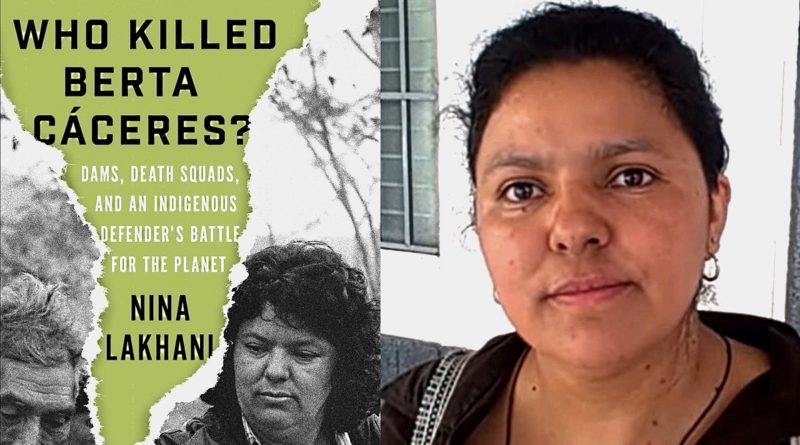
“They build dams and kill people.” These words, spoken by a witness when the murderers of environmental defender Berta Cáceres were brought to trial in Honduras, describe Desarrollos Energéticos SA (DESA), the company whose dam project Berta opposed. DESA was created in May 2009 solely to build the Agua Zarca hydroelectric scheme, using the waters of the Gualcarque River, regarded as sacred by the Lenca communities who live on its banks. As Nina Lakhani makes clear in her book Who Killed Berta Cáceres?, DESA was one of many companies to benefit from the 2009 coup d’état in Honduras, when the left-leaning President Manuel Zelaya was deposed and replaced by a sequence of corrupt administrations. The president of DESA and its head of security were both US-trained former Honduran military officers, schooled in counterinsurgency. By 2010, despite having no track record of building dams, DESA had already obtained the permits it needed to produce and sell electricity, and by 2011, with no local consultation, it had received its environmental licence.
..Lakhani quotes a high-ranking judge she spoke to, sacked for denouncing the 2009 coup, as saying that Zelaya was deposed precisely because he stood in the way of this economic model and the roll-out of extractive industries that it required. The coup “unleashed a tsunami of environmentally destructive ‘development’ projects as the new regime set about seizing resource-rich territories.” After the post-coup elections, the then president Porfirio Lobo declared Honduras open for business, …….
Lakhani’s book gives us an insight into the personal history that brought Berta Cáceres to this point. She came from a family of political activists. As a teenager she read books on Marxism and the Cuban revolution. But Honduras is unlike its three neighbouring countries where there were strong revolutionary movements in the 1970s and 1980s. The US had already been granted free rein in Honduras in exchange for “dollars, training in torture-based interrogation methods, and silence.”… At the age of only 18, looking for political inspiration and action, Berta left Honduras and went with her future husband Salvador Zúñiga to neighbouring El Salvador. She joined the FMLN guerrilla movement and spent months fighting against the US-supported right-wing government. Zúñiga describes her as having been “strong and fearless” even when the unit they were in came under attack. But in an important sense, her strong political convictions were tempered by the fighting: she resolved that “whatever we did in Honduras, it would be without guns.”
Inspired also by the Zapatista struggle in Mexico and by Guatemala’s feminist leader Rigoberta Menchú, Berta and Salvador created COPINH in 1993 to demand indigenous rights for the Lenca people, organising their first march on the capital Tegucigalpa in 1994. From this point Berta began to learn of the experiences of Honduras’s other indigenous groups, especially the Garífuna on its northern coast, and saw how they fitted within a pattern repeated across Latin America….
In Río Blanco, where the Lenca community voted 401 to 7 against the dam, COPINH’s struggle continued. By 2013, the community seemed close to winning, at the cost of activists being killed or injured by soldiers guarding the construction. They had blocked the access road to the site for a whole year and the Chinese engineering firm had given up its contract. The World Bank allegedly pulled its funding, although Lakhani shows that its money later went back into the project via a bank owned by the Atala Faraj family. In April 2015 Berta was awarded the Goldman Prize for her “grassroots campaign that successfully pressured the world’s largest dam builder to pull out of the Agua Zarca Dam.”
…….
The horrific events on the night of Wednesday March 2 are retold by Nina Lakhani. Armed men burst through the back door of Berta’s house and shot her. They also injured Gustavo Castro, who was visiting Berta; he waited until the men had left, found her, and she died in his arms. ,,,By the first anniversary of Berta’s death the stuttering investigation had led to eight arrests, but the people who ordered the murder were still enjoying impunity. Some of the accused were connected to the military, which was not surprising since Lakhani later revealed in a report for The Guardian that she had uncovered a military hit list with Berta’s name on it. In the book she reports that the ex-soldier who told her about it is still in hiding: he had seen not only the list but also one of the secret torture centers maintained by the military.
Nina Lakhani is a brave reporter. She had to be. Since the coup in Honduras, 83 journalists have been killed; 21 were thrown in prison during the period when Lakhani was writing her book. She poses the question “would we ever know who killed Berta Cáceres?” and sets out to answer it. Despite her diligent and often risky investigation, she can only give a partial answer. Those arrested and since convicted almost certainly include the hitmen who carried out the murder, but it is far from the clear that the intellectual authors of the crime have been caught. In 2017 Lakhani interviewed or attempted to interview all eight of those imprisoned and awaiting trial, casting a sometimes-sympathetic light on their likely involvement and why they took part.
….
In September 2018, the murder case finally went to trial, and Lakhani is at court to hear it, but the hearing is suspended. On the same day she starts to receive threats, reported in London’s Press Gazette and duly receiving international attention. Not surprisingly she sees this as an attempt to intimidate her into not covering the trial. Nevertheless, when it reopens on October 25, she is there. The trial reveals a weird mix of diligent police work and careful forensic evidence, together with the investigation’s obvious gaps. Not the least of these was the absence of Gustavo Castro, the only witness, whose return to Honduras was obstructed by the attorney general’s office. Castillo, though by then charged with masterminding the murder, was not part of the trial. Most of the evidence was not made public or even revealed to the accused. The Cáceres family’s lawyers were denied a part in the trial.
“The who did what, why and how was missing,” says Lakhani, “until we got the phone evidence which was the game changer.” The phone evidence benefitted from an expert witness who explained in detail how it implicated the accused. She revealed that an earlier plan to carry out the murder in February was postponed. She showed the positions of the accused on the night in the following month when Berta was killed. She also made clear that members of the Atala family were involved.
When the verdict was delivered on November 29 2018, seven of the eight accused were found guilty, but it wasn’t until December 2019 that they were given long sentences. That’s where Nina Lakhani’s story ends. By then Honduras had endured a fraudulent election, its president’s brother had been found guilty of drug running in the US, and tens of thousands of Hondurans were heading north in migrant caravans. David Castillo hasn’t yet been brought to trial, and last year was accused by the School of Americas Watch of involvement in a wider range of crimes. … Daniel Atala Midence, accused by COPINH of being a key intellectual author of the crime as DESA’s chief financial officer, has never been indicted.
...And a full answer to the question “Who Killed Berta Cáceres?” is still awaited.
A multi-year investigation by Citizen Lab has unearthed a hack-for-hire group from India that targeted journalists, advocacy groups, government officials, hedge funds, and human rights defenders.
Jay Jay – a freelance technology writer – posted an article in Teiss on 9 June 2020 stating that Citizen Lab revealed in a blog post published Tuesday that the hack-for-hire group’s identity was established after the security firm investigated a custom URL shortener that the group used to shorten the URLs of phishing websites prior to targeting specific individuals and organisations. Citizen Lab has named the group as “Dark Basin“.
“Over the course of our multi-year investigation, we found that Dark Basin likely conducted commercial espionage on behalf of their clients against opponents involved in high profile public events, criminal cases, financial transactions, news stories, and advocacy,” the firm said.
It added that the hack-for-hire group targeted thousands of individuals and organisations in six continents, including senior politicians, government prosecutors, CEOs, journalists, and human rights defenders, and is linked to BellTroX InfoTech Services, an India-based technology company.
….The range of targets, that included two clusters of advocacy organisations in the United States working on climate change and net neutrality, made it clear to Citizen Lab that Dark Basin was not state-sponsored but was a hack-for-hire operation.
…As further proof of Dark Basin’s links with BellTroX, researchers found that several BellTroX employees boasted capabilities like email penetration, exploitation, conducting cyber intelligence operations, pinging phones, and corporate espionage on LinkedIn. BellTroX’s LinkedIn pages also received endorsements from individuals working in various fields of corporate intelligence and private investigation, including private investigators with prior roles in the FBI, police, military, and other branches of government.
The list of organisations targeted by Dark Basin over the past few years includes Rockefeller Family Fund, Greenpeace, Conservation Law Foundation, Union of Concerned Scientists, Oil Change International, Center for International Environmental Law, Climate Investigations Center, Public Citizen, and 350.org. The hack-for-hire group also targeted several environmentalists and individuals involved in the #ExxonKnew campaign that wanted Exxon to face trial for hiding facts about climate change for decades.
A separate investigation into Dark Basin by NortonLifeLock Labs, which they named “Mercenary.Amanda”, revealed that the hack-for-hire group executed persistent credential spearphishing against a variety of targets in several industries around the globe going back to at least 2013…
Human rights activist Nabeel Rajab gestures as he leaves a police station in Manama, Bahrain, on May 28, 2012. Rajab, who had been sentenced to five years in prison for tweets alleging abuse at Bahrain’s prisons, has been released amid the ongoing coronavirus pandemic HASAN JAMALI/AP
Nabeel Rajab, 55, wore a garland of white roses after his release, smiling while posing with his family for the first time since being detained in June 2016. Bahrain has been releasing inmates amid the pandemic, but largely had avoided freeing political prisoners. In September, a court denied Rajab’s request to serve out the rest of his sentence at home.
Rajab received a five-year prison sentence over tweets alleging torture at one of the country’s prisons and criticism of the Saudi-led war in Yemen. He separately received a two-year prison sentence over television interviews he gave that included criticism of Bahrain, a small island nation off Saudi Arabia that’s home to the U.S. Navy’s 5th Fleet. Fo rmore posts on Rajab, see: https://humanrightsdefenders.blog/tag/nabeel-rajab/
“Bahrain’s prisons remain crowded with peaceful human rights defenders and opposition leaders, whose lives are threatened by the government’s inadequate response to COVID-19,” said Husain Abdulla, the executive director of the group Americans for Democracy and Human Rights in Bahrain.
Resistance inspires. Defiance in the face of a violent, oppressive culture can inspire another person’s defiance. Even when an uprising is only beginning, when the path forward is unclear, it is essential to resist. All together. The goal: to defeat a system fundamentally, historically, and intentionally based on mass exploitation in the interest of profit for a privileged few.
The environmental movement can learn from those who come from a tradition of resistance and have organized their struggle in movements like Black Lives Matter and Idle No More, founded by First Nations. The protests enveloping our country today are seeded by centuries of injustice and violence, by underlying power imbalances and inequalities that have never been truly addressed. The founders of these social movements knew then and now that they cannot combat violent oppressors through pure persuasion. So they resist.……….
Environmentalists and justice activists cannot stay isolated in their movements. To be effective at combating climate change and countless other social and environmental injustices, we must acknowledge the links between the abuse of nature and people, and devise strategies to protect the planet, to resist its demise – even when doing so is frightening. Especially then. Ultimately, resisting mass exploitation on all fronts is the only thing that will make us safer.
For many — especially people of color — the impacts of climate change and the degradation of environmental harm are not a future concern. It is life or death, and it’s happening now. If we want to reverse the losses, we need to begin to speak honestly to each other about the long history of abuse that has led to the unrest, rage, and grief that we feel today. We need to confront how power works in society, including in regions where exploitation of indigenous people and the ecosystems they call home go unnoticed by mainstream media….
In addition to poverty, lack of clean air, safe drinking water, health care, and more—all of which lead to “preexisting conditions”—many communities of color are confronted with the threat of coronavirus and are more vulnerable to the pandemic. Reports estimate that people of color are twice as likely to die from COVID-19…….
The author provides several examples from her own field work and experience……
How can we endeavor to protect the planet when its frontline defenders are being killed or intimidated by state-sanctioned violence? How can we expect to solve the climate crisis if our strategies do not include protecting life above corporate, government, and elite interests? Again, environmental advocates can learn from movements born from violent exploitation who are organizing to resist that violence.
Viable movements need supportive cultures to sustain them. They require healthy norms of behavior, processes to handle conflict, and ways to defeat destructive internal divisions and competition that stymie even the best-intentioned efforts toward progress. Horizontal hostility—a concept defined by Florynce Rae Kennedy, an African American lawyer, feminist, civil rights advocate, lecturer, and activist—occurs when activists fight against each other over differences rather than vertically against the oppressor. This behavior leaves relationships, activist networks, and movements in shreds.
A livable planet for all requires solidarity, using our shared principles and humanity to rise together to protect nature and banish injustice.
Cayte Bosler is a student in Columbia’s Sustainability Management masters program.

 Families hold photographs of missing loved ones during a protest in Colombo, Sri Lanka’s largest city, in February 2020. (TNH)
 TNH Families of Sri Lanka’s missing thousands fear the government is aiming to curb investigations into unsolved civil war disappearances.


 Hans Thoolen on Human Rights Defenders and their awards