On Thursday, 3 December 2020 Scoop carries the recent report by the Euro- Med Monitor which shows actions in a number of countries covered by the NGO

Hungary
The European Commission issued a new notice/ procedure against Hungary in which it considers Hungary’s new laws against refugees and asylum seekers illegal and violates the European Union laws for asylum seekers. The Hungarian government closed its transit areas and approved a new law prohibiting asylum seekers from entering the country. Under the new law, asylum seekers must first submit “a declaration of intent” at the embassies of Hungary in Serbia or Ukraine, and if they were approved by the National Directorate-General for Aliens Policing (formerly the Office of Immigration), asylum seekers can then enter the territory of Hungary to formally submit an asylum application.
During a lobbying and advocacy campaign extending for more than three years, Euro-Med Monitor has worked with partner international organizations to pressure the EU governments to accommodate more asylum seekers and distribute the burden among them. Euro-Med Monitor called on the EU to search for the best mechanisms to redistribute refugees and asylum seekers in Hungary in a fair manner between the EU member states, pressure the Hungarian government to take full responsibility for migrants and asylum seekers in its custody, and put an end to violations of their basic rights.
Croatia
The EU Ombudsman announced on 10 November that an investigation has been opened into the possible complicity of the EU’s Executive in mismanaging funds allocated for overseeing the conduct of the Croatian border officers accused of participating in violence against asylum seekers, including shootings of refugees.
On May 19, Euro-Med Monitor addressed the Croatian government and concerned parties in the EU to immediately put an end to all illegal and discriminatory practices against asylum seekers and to conduct an independent investigation into violations committed by the Croatian police against refugees.
Spain
On 30 November, the Spanish authorities have cleared and dismantled dock camp in Gran Canaria, which was used to accommodate thousands of migrants and asylum seekers in very adverse conditions since last August.
On November 26, Euro-Med Monitor issued an urgent appeal to the Spanish authorities to end the overcrowding conditions in refugee camps in the Canary Islands, to deal with unsanitary conditions, to increase alternative reception centers, to transfer asylum seekers to the Spanish mainland in a quicker manner, and to establish fair asylum procedures for migrants and asylum seekers.
The Palestinian Territories
The EU called on the Israeli government to halt its policy of home demolitions in the occupied Palestinian territories (oPt), including demolishing housing units funded by the EU. This comes amid the high rate of demolitions this year.
In lobbying and advocacy campaigns that spanned over years, Euro-Med Monitor representatives met with members of the European Parliament and launched an intensive correspondence campaign revealing the high number of demolitions against projects funded by the EU in the Palestinian territories. Euro-Med Monitor brought the case to the United Nations Human Rights Council (UNHRC), providing a number of reports and statements, and contacted the Special Rapporteur on housing to exert pressure on Israel to put an end to its violations and demolitions last September.
The Jericho Magistrate’s Court issued a decision to release Palestinian activist Nizar Banat after he was arrested for publishing a video on Facebook criticizing the resumption of relations between the Palestinian Authority (PA) and Israel.
On November 22, Euro-Med Monitor called on concerned bodies in the PA and its Public Prosecutor to immediately release Banat, and urged the PA to to review its security policies in dealing with opponents and to put an end to all violations committed against the rights guaranteed by relevant international laws and treaties.
Saudi Arabia/United Arab Emirates
Negotiators in the European Council and the European Parliament approved new rules on November 8 that would control the export of dual-use goods such as electronic surveillance equipment to third countries that might use these technologies to harm their own citizens and are involved in human rights violations.
During the past months, Euro-Med Monitor, in cooperation with partner organizations, addressed several European Parliament members and representatives. The Euro-Med released several reports revealing the grave human rights violations committed by both Saudi Arabia and the UAE against civilians, including the war in Yemen, enforced disappearances, and arrest campaigns against journalists and activists for opposing the regime. Euro-Med Monitor, in cooperation with its partners in the region, called on the European Union (EU) countries to stop the export of weapons and modern surveillance technologies to countries that violate human rights in the Middle East.
Europe
On November 10, members of the European Parliament called for ensuring accountability for the European Border and Coast Guard Agency (Frontex) over returning migrants and asylum seekers from Greece to Turkish territorial waters. On May 6, 2020, Euro-Med Monitor addressed members of the European Parliament and the EU to impose transparency and accountability measures against Frontex practices and to establish an independent oversight committee to investigate and prevent any violations.


Thailand: joint statement by International NGOs on Pro-Democracy Protests
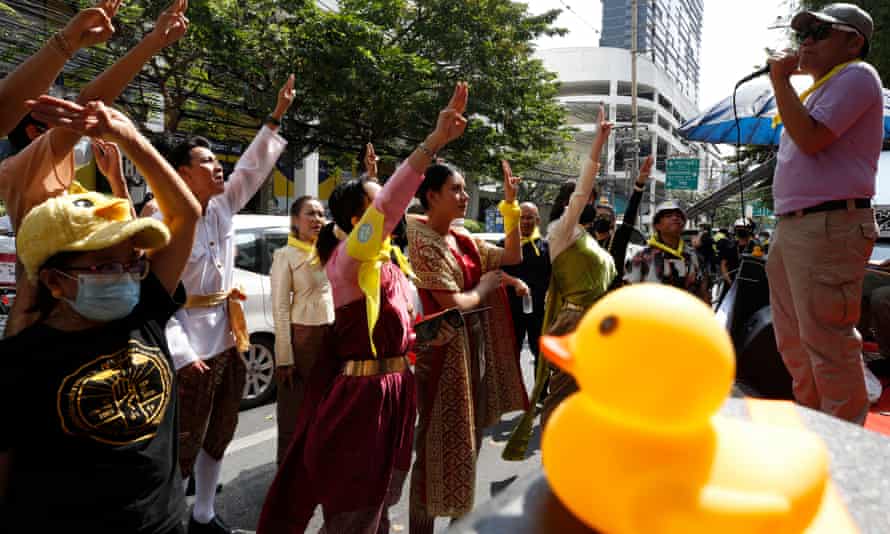
November 29, 2020A group of 13 important human rights NGOs – in a joint statement – condemn the Thai police’s unnecessary and excessive use of force against peaceful protesters marching to the national parliament in Bangkok on November 17, 2020. They are concerned that authorities could employ similar measures when facing protesters who have declared they will march to the Siam Commercial Bank headquarters on November 25.
On November 17, police set out barriers and barbed wire to prevent a peaceful march organized by pro-democracy movements from reaching the parliament. Protesters planned to protest outside the parliament as members of parliament and senators debated seven different proposals for constitutional amendments, including an amendment proposed by the lawyers’ non-governmental organization iLAW (Internet Law Reform Dialogue), which was supported by the People’s Movement and its allies. Police refused to let protesters through the barriers, and when the demonstrators acted to breach those barriers, police crowd control units used water cannons laced with purple dye and an apparent teargas chemical, as well as teargas grenades and pepper spray grenades, to forcibly disperse thousands of demonstrators, including students, some of whom are children. Water cannons were first used at approximately 2:25 pm and police continued their efforts to disperse protesters, with constant use of water cannons, teargas and pepper spray into the evening.
Police also failed to prevent violence between pro-democracy protesters and royalist “yellow shirts” near the Kiak Kai intersection, near the parliament. Initially, riot police separated the two groups. However, video posted on social media later showed police officers informing the royalist protesters that they would withdraw and seconds later they vacated their position between the two groups. During the ensuing skirmishes, both sides were filmed throwing rocks and wielding clubs. Live broadcasts included sounds that appeared to be gunfire.
The Erawan Medical Centre reported that there were at least 55 protesters injured, mostly from inhaling teargas. It also reported that there were six protesters who suffered gunshot wounds. The injured included children: a kindergartener and elementary school students….
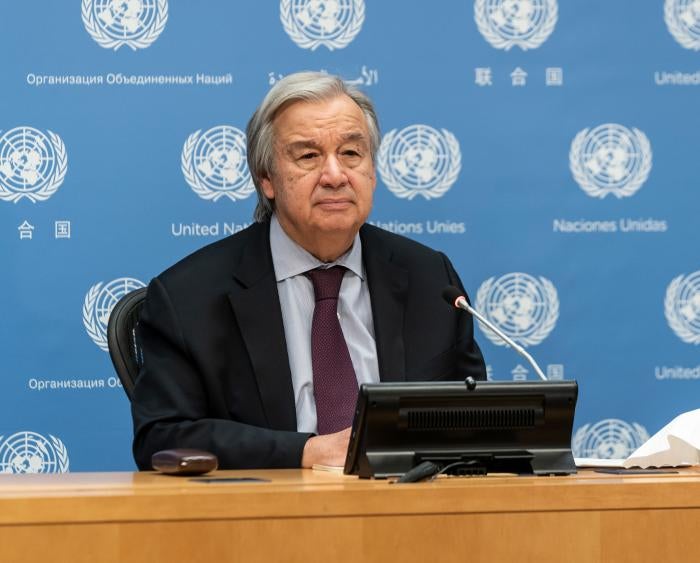
On November 18, the spokesperson for United Nations Secretary-General António Guterres “expressed concern about the [human rights] situation in Thailand … it’s disturbing to see the repeated use of less lethal weapons against peaceful protesters, including water cannons … it’s very important that the government of Thailand refrain from the use of force and ensures the full protection of all people in Thailand who are exercising a fundamental peaceful right to protest.”
We call on the Thai government to respect, protect and fulfill the right of demonstrators to peacefully protest, in line with Thailand’s international obligations under the ICCPR and customary international law. Specifically, Thailand should:
1. Permit the People’s Movement march to proceed on November 25 and allow for non-violent protesters, including those who are children, to peacefully protest in front of the Siam Commercial Bank headquarters.
2. Protect the rights of protesters, including those who are children, in accordance with the Human Rights Committee’s General Comment No. 37 on the Right of Peaceful Assembly.
3. Facilitate the exercise of the right to peacefully assemble and refrain from dispersing assemblies by using weapons, including less-lethal weapons, against protesters in line with the United Nations Basic Principles on the Use of Force and Firearms by Law Enforcement Officials and UN and other guidance on less-lethal weapons.
4. Protect protesters, including those who are children, from violence and interference by non-State actors, while also protecting the rights of counter-demonstrators.
5. Take steps to ensure accountability for rights violations associated with the government’s crackdown on the protest movement and to ensure that those whose rights have been violated enjoy the right to an effective remedy, as guaranteed under ICCPR article 2(3).
Signed by:
Amnesty International
Article 19
ASEAN Parliamentarians for Human Rights
Asia Democracy Network
Asian Forum for Human Rights and Development (FORUM-ASIA)
Asian Network for Free Elections (ANFREL)
CIVICUS: World Alliance for Citizen Participation
Civil Rights Defenders
FIDH – International Federation for Human Rights
Fortify Rights
Human Rights Watch
International Commission of Jurists
Manushya Foundation
———–
https://www.hrw.org/news/2020/11/25/statement-international-ngos-pro-democracy-protests-november-17-and-25-2020
Posted in AI, Civil Rights Defenders (NGO), Front Line, HRW, human rights, Human Rights Defenders, ICJ | Leave a Comment »
Tags: freedom to demonstrate, General comment ICCPR, joint statement, NGOs, police violence, students, Thailand