Speculating about the Nobel Peace Prize is a sport that keeps some media busy most of the year.
Although thousands of people, from members of parliaments worldwide to former winners, are eligible to propose candidates (see list in link), it is the group of Norwegian parliamentarians that has nominated the eventual laureate every year since 2014 (with the exception of 2019), according to Henrik Urdal, Director of the Peace Research Institute Oslo. And for this year Russian dissident Alexei Navalny, the World Health Organization and climate campaigner Greta Thunberg are among those nominated by backed by Norwegian lawmakers.
The Norwegian Nobel Committee, which decides who wins the award, does not comment on nominations, keeping secret for 50 years the names of nominators and unsuccessful nominees. But the nominators themselves can choose to reveal their choice and often do.
On 31 January 2021 Gwladys Fouche and Nora Buli started off the guessing season by reporting that, according to a Reuters survey of Norwegian lawmakers, nominees include Thunberg, Navalny, the WHO and its COVAX programme to secure fair access to COVID-19 vaccines for poor countries.
Other names are Belarusian activists Sviatlana Tsikhanouskaya, Maria Kolesnikova and Veronika Tsepkalo for their “fight for a fair election and inspiration for peaceful resistance”, one nominator, Geir Sigbjoern Toskedal, said. Another, Jette Christensen, also named the Hungarian Helsinki Committee, a human rights group, and IUSTITIA, a group of Polish judges defending civil rights. “My nomination this year is … for the fight to preserve democracy as a form of government in Europe,” Christensen said.
Freedom of information is a recurring theme with nominees including the U.S.-based Committee to Protect Journalists; former Charlie Hebdo journalist Zineb el Rhazoui; news website Hong Kong Free Press, the U.S.-based International Fact-Checking Network and Paris-based Reporters without Borders (RSF). Also mentioned are: the Black Lives Matter movement and Stacey Abrams, the former Georgia gubernatorial candidate who has become a leading voting rights advocate.
Other nominees include former U.S. President Donald Trump (by Jaak Madison, a member of the right-wing populist EKRE party) as well as Kushner and Berkowitz for negotiating deals between Israel and the United Arab Emirates, Bahrain, Sudan and Morocco), .
Also on the list are NATO and again the U.N. refugee agency (UNHCR) as well as Aminatou Haidar, for her peaceful campaigning towards an independent Western Sahara, the International Space Station and the International Scout Movement.
Gulalai Ismail, one of Pakistan’s boldest human rights defenders and a stalwart critic of Pakistan’s security services, succeeded in escaping to the United States in 2019, humiliating the authorities who had been persecuting her. Now Pakistan has taken aim at her parents, accusing them of terrorism, and throwing her father, who was recovering from Covid-19, into jail.
A bail hearing ended with Mohammed Ismail being led away in handcuffs. He faces charges of sedition and terrorism financing, which human rights defenders say are bogus and thinly veiled revenge against the family for embarrassing the state security services.
Ms. Ismail, who now lives in New York and has applied for political asylum in the United States, said the charges against her and her parents were “malicious and false.” “This is about setting a precedent,” she said on Wednesday, by phone from Brooklyn. “If a woman raises her voice, the whole family will face consequences.”
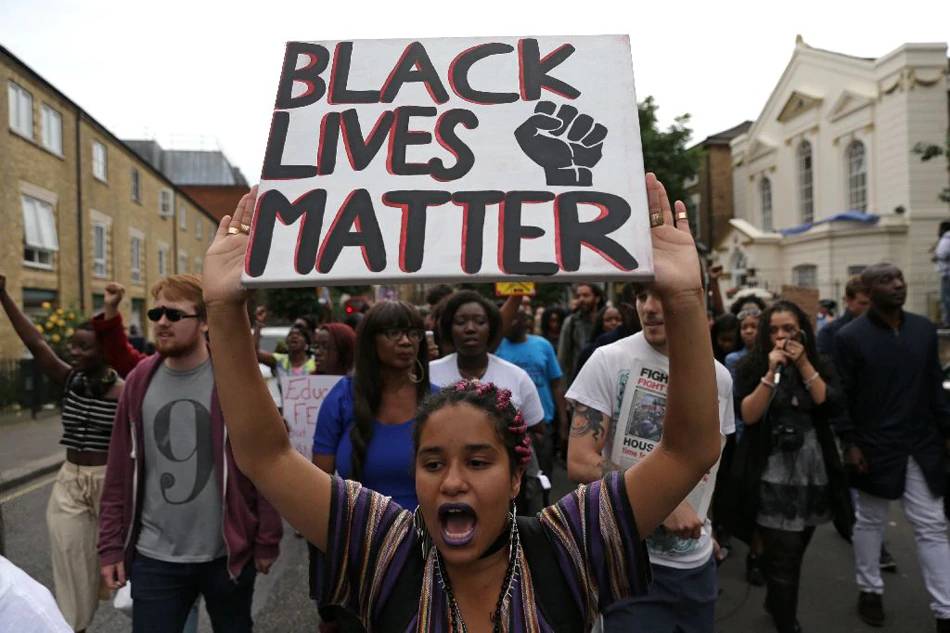
A woman holds up a placard with the slogan “Black Lives Matter” as people march in Brixton, south London to protest against police brutality in the US after two recent incidents where black men have been shot and killed by police officers. Daniel Leal-Olivas, AFP
AFP reported on 30 January that the international civil rights movement Black Lives Matter Global Network Foundation on Friday won Sweden’s Olof Palme human rights prize for 2020.
The foundation was honored for its work promoting “peaceful civil disobedience against police brutality and racial violence all over the world,” prize organizers said in a statement.
The Black Lives Matter movement, founded in 2013 in the United States, has “in a unique way exposed the hardship, pain, and wrath of the African-American minority at not being valued equal to people of a different color,” the statement said.
The movement had its major international breakthrough in the summer of 2020 following several cases of extreme brutality in the US, including the deaths of George Floyd and Breonna Taylor. Prize organizers noted that an estimated 20 million people have taken part in Black Lives Matter protests in the US alone, and millions more around the world.
“This illustrates that racism and racist violence is not just a problem in American society, but a global problem.”
More must be done to thwart neo-Nazis and white supremacists who are using the COVID-19 pandemic to target minorities, increase their ranks and re-write history, the UN Secretary-General has said. António Guterres made the appeal in a video message for the International Day of Commemoration in Memory of the Victims of the Holocaust, observed on Wednesday 27 January, which honours the six million Jews and millions of others murdered by the Nazis during the Second World War.
As this year’s anniversary is taking place under the shadow of the pandemic, he noted that the crisis has exposed longstanding injustices and contributed to a renewed rise in antisemitism and xenophobia.
“Today, white supremacists and neo-Nazis are resurgent, organizing and recruiting across borders, intensifying their efforts to deny, distort and rewrite history including the Holocaust”, the UN chief said.
The UN High Commissioner for Human Rights, Michelle Bachelet, has also voiced concern over the “frightening” increase in hate crimes, and “sharp rise” in antisemitism online, over the past year.
“With renewed vigour, conspiracy theorists increasingly link extreme political ideologies and antisemitic delusions – weaving elaborate lies and falsehoods that lay responsibility for every kind of government failing on individual Jews or the Jewish community as a whole”, she said. “We need to push back against lies. We need to ensure that public discourse is based on facts, which objectively reflect truth – including the fundamental truth of our equal rights and dignity as human beings”, she said.
Global church leaders such as Pope Francis and the head of the World Council of Churches have joined international leaders on World Holocaust Remembrance Day, calling for decisive action against antisemitism and warning of its danger to morph into other hate. “Remembering is an expression of humanity. Remembering is a sign of civilization,” said Francis. “Remembering is a condition for a better future of peace and fraternity.”
Join us and light a candle: Share a message of solidarity with the Jewish community by tweeting a photo of your candle with the hashtags #LightTheDarkness #WeRemember and #MuslimsAgainstAntisemitism
Learn more: Find out more about the Holocaust and educate others around you
Join us: Get involved with MAAS and volunteer to help us in the fight against antisemitism!
Let’s all light a candle this Holocaust Memorial Day – let’s all stand up against antisemitism. Note that this blog was first published by Muslims Against Antisemitism (27/01/2021).
The human rights organization Amnesty International published a scathing report on 25 January 2021 decrying the inhumane conditions in Egyptian prisons. The report comes a decade after the Arab Spring uprising.
The report detailed the experiences of 67 individuals in detention, 10 of whom died in custody and two who died shortly after being released. It was carried out primarily between February 2020 and November 2020 and focused on 16 prisons. It found that:
Prisoners were kept in squalid conditions and received unhealthy food;
There was no proper access to health care, which may have resulted in death;
Overcrowding, poor ventilation and limited access to water and toilets led inevitably to outbreaks of coronavirus.
The report also found that some prisoners were deliberately denied access to health care due to their political affiliations. Activists, politicians and human rights defenders were denied basic treatments available to other inmates. There was also evidence of prison authorities “targeting prisoners critical of the government and denying them adequate food or family visits,” Markus Beeko, Secretary General of Amnesty International in Germany, asserted. According to UN estimates, there are 114,000 people incarcerated in the north African country.
On 22 January 2021 Mary Lawlor also deplored the arrest and prolonged pre-trial detention of human rights defenders and bloggers, and their accusation of being members of a terrorist organisation, continuing Egypt’s practice to intimidate and criminalise human rights defenders, journalists and their families.
“I am extremely concerned by the seemingly unrelenting efforts of the Egyptian authorities to silence dissent and shrink civic space in the country, despite repeated calls from UN mechanisms and the international community,” said Mary Lawlor, UN Special Rapporteur on the situation of human rights defenders.
The Special Rapporteur said she was disturbed by the detention since 2018 of human rights defender and blogger Mohamed Ibrahim Radwan, also known as ‘Mohamed Oxygen’, on charges of “membership of a terrorist organisation” and “misuse of social media” in retaliation for his posts and videos reporting on human rights issues. He was granted conditional release by the Cairo Criminal Court in November last year but was attached to a new case on charges of joining a terrorist organisation and kept in detention. He remains in pre-trial detention in Al-Aqrab Prison, south of Cairo.
Lawlor said that human rights defenders such as researcher and post-graduate student Patrick Zaki, who was arrested in February last year, have endured repeated renewals of detention without trial. “Pre-trial detention should only be used as the exception to the rule, rather than the default approach,” said Lawlor.
“Not only are these human rights defenders, journalists and other civil society actors unduly targeted for their legitimate and peaceful defence of human rights and fundamental freedoms, they are wrongfully accused of belonging to terrorist organisations and portrayed as a national security threat under vague legal provisions,” the Special Rapporteur said. “This is an issue which I and a number of UN experts have previously communicated our concern about to the Egyptian authorities.”
Ten years after the Tahrir square protests in Cairo, Egypt’s human rights record is disastrous. On the occasion of the anniversary of the 2011 revolution, several international campaigns are calling for the release of imprisoned activists writes Sofian Philip Naceur in Qantara.de Violent, authoritarian and extremely paranoid: since his bloody takeover in 2013, Egypt’s President Abdul Fattah al-Sisi has restored a regime whose brutality far outstrips even the reign of long-term ruler Hosni Mubarak. Hopes for real political and social change after the mass uprising that forced Mubarak out of office after 30 years in power have faded away, leaving a disillusionment that is omnipresent.
Egyptian opposition figures are using the current media attention around the tenth anniversary of the “25 January Revolution” to highlight the fate of those currently in prison for their political engagement. Some have been sentenced to heavy jail terms, while others are subjected to pre-trial detention lasting years by the Egyptian security forces and the country’s judiciary. European opposition politicians are also participating in corresponding campaigns.
Eight politicians from Germany’s left-wing party – Die Linke – have signed a solidarity statement calling for the immediate release of all political detainees, which explicitly highlights the fate of six detained leftist activists, journalists and trade unionists. Although the campaign specifically highlights six individual cases, it expresses solidarity not only with Egyptian leftists, but with all those “who are resisting Sisi’s dictatorship”. In addition to journalist Hishem Fouad, who advocated for striking workers and independent trade unions long before 2011, the German politicians are also calling for the release of novelist Ayman Abdel Moati, lawyer and trade union activist Haitham Mohamadeen and trade unionist Khalil Rizk. All four are detained on flimsy, terrorism-related charges.
The Danish government should renew and strengthen efforts to secure the immediate and unconditional release of prominent human rights defender and dual Danish-Bahraini citizen, Abdulhadi Al-Khawaja, 108 international and Bahraini rights groups said on 24 January 2021 in a joint letter to Prime Minister Mette Frederiksen of Denmark. As reported by the AhlulBayt News Agency (ABNA).
The human rights defender, Abdulhadi Al-Khawaja, 59, is serving a life sentence in Bahrain’s Jaw prison for his peaceful political and human rights activities, in violation of his right to freedom of expression. [see also https://humanrightsdefenders.blog/tag/abdulhadi-al-khawaja/]
“There is no doubt that the conviction and sentencing of Abdulhadi al-Khawaja was unfair and oppressive and tried to silence his prominent voice demanding the rights of Bahrainis,” said Joe Stork, deputy Middle East director at Human Rights Watch. “Al-Khawaja should not have had to spend a single minute behind bars, yet he has been unjustly detained for almost a decade.”
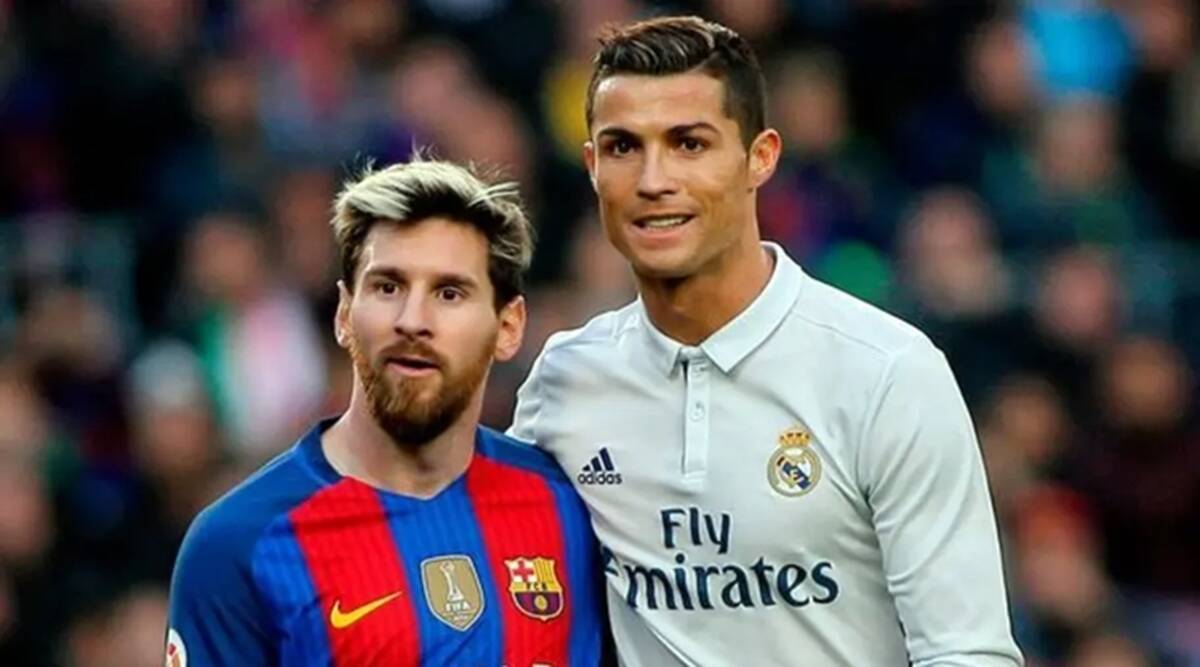
To all those who have been campaigning against sports washing, the latest news regarding Saudi Arabia missing out on football stars Ronaldo and Messi must come as a relief.
Alan Feehely – reports on in Football Espana that Cristiano Ronaldo has rejected an offer to advertise tourism in Saudi Arabia according to The Telegraph and carried by Marca.
The Portuguese was offered a reported figure of €6m per year. The agreement would have required Ronaldo to feature in commercial campaigns and visit the country. Lionel Messi also received an offer from Saudi Arabia, but like his great rival didn’t accept.
Yu Wensheng was detained in Beijing in January 2018 in front of his young son just hours after he wrote an open letter calling for constitutional reforms, including multi-candidate elections.
“His physical state is very poor. His right hand is deformed and trembles so much that he cannot write,” his wife Xu Yan told AFP. Last week, she was allowed to have a 25-minute video call with her husband, who is being held in a detention centre in the eastern province of Jiangsu. It was their first such meeting in three years, she said. Four of Yu’s teeth were missing and he was unable to chew food properly, Xu said, and that there was no heating in the detention centre.. “There are probably a lot of things he cannot say right now, we will only know the full extent of what he experienced after he is released,” she said.
Xu said her husband’s nomination “not only supports and honours (him), but is also encouragement and affirmation to other human rights lawyers and defenders”. Yu’s defence lawyer Lu Siwei had his legal licence revoked by authorities last week after handling several sensitive human rights cases..
Beijing denied knowledge of either Yu or the Martin Ennals Award on Tuesday. “There are indeed some people abroad who are always using human rights as a pretext to create a disturbance,” said foreign ministry spokeswoman Hua Chunying at a regular briefing on Tuesday. “I think this behaviour has no meaning whatsoever.”
It has now been made public that Fatima Al-Bahadly, a human rights defender from the city of Basra, has received the 2020 Frontline Defenders Award.
The award was granted to Al-Bahadly for her role in founding Al-Firdaws Society, an organisation that focuses on protecting women affected by war and strengthening their role in peace building.
Nominations are to be submitted through the online form on the Submittable platform, found at the clickable button below.
Any living person or organisation can be nominated for a Right Livelihood Award. There are no restrictions on who may submit a nomination, individuals or organisations can submit a nomination – except Right Livelihood Award jury and staff members. We do not accept self-nominations, therefore nominations for oneself, close relatives or their own organisations will not be considered for a Right Livelihood Award. The Right Livelihood Foundation reserves the right to refuse clearly unsuitable proposals.
Normally, the Foundation makes three cash awards and one honorary award each year. The cash awards are intended for work in progress or the extension of existing activities; they are never given for personal use. For more information on this and other awards see: https://www.trueheroesfilms.org/thedigest/award/97238E26-A05A-4A7C-8A98-0D267FDDAD59
The deadline for nominations to be submitted for the 2021 Right Livelihood Award is 3rd March 2021.