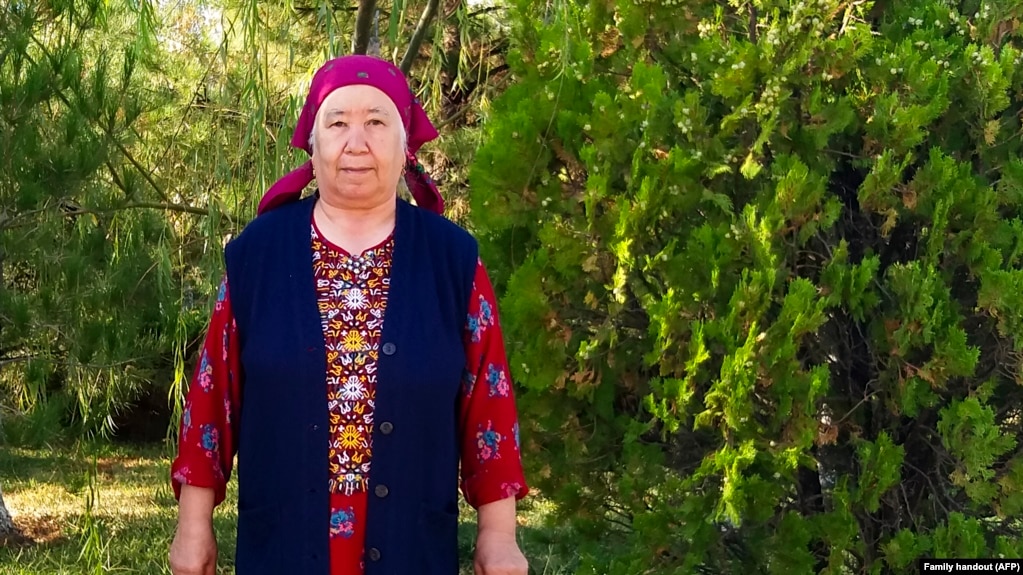
It now transpired that Turkmenistan on March 8 stopped broadcasting the news TV channel Euronews, which showed the footage about the 2021 Martin Ennals Award Ceremony for Human Rights Defenders and one of its finalist, the Turkmen journalist Soltan Achilova, independent foreign-based news website Chronicles of Turkmenistan reported.
The 2021 Award Ceremony of the most prestigious award for human rights defenders was held in an online format on 11 February.
Akhal-Teke is a weekly Eurasianet column compiling news and analysis from Turkmenistan. It added on 9 March: Euronews is about as anodyne a news channel as one could hope to find. So much so that the Turkmen Foreign Ministry in January 2020 hosted the channel’s chief business development officer, Roland Nikolaou, for talks on future cooperation. That makes the inclusion of Euronews among the ranks of undesirables all the more remarkable.
Turkmenistan has the backup option of Mir 24, a Euronews clone based out of Moscow and focused on news from Commonwealth of Independent States members. Turkmenistan is an associate member of the post-Soviet bloc. The station began broadcasting inside the country in December 2020, following a cooperation deal signed with the Turkmen state broadcaster a month earlier.
Mir 24 also produces content, of the most unimaginably inoffensive kind, from inside the country. Recent reports have included one on a highly chaste beauty contest for female students, several touching upon celebrations for International Women’s Day and a piece about the creation of a national annual holiday devoted to the Alabai dog breed.
Blocking Euronews is of little import in the larger scheme of things. As RFE/RL wrote on March 7, police are adopting invigorated measures to make sure that smartphone owners are not using VPN services to circumvent censorship. The broadcaster said that authorities in the city of Mary are stopping people in the street for spot inspections of their phones.
The cause of this alarm is the continued seepage of news belying the absurd government insistence that the country has experienced no cases of COVID-19.
Human rights groups called on the Philippine government to investigate what they said was the use of “lethal force” during police raids on Sunday that left at least nine activists dead. The raids in four provinces south of Manila resulted in the death of an environmental activist as well as a coordinator of left-wing group Bagong Alyansang Makabayan, among others, and resulted in the arrest of four others, activist groups said.
“These raids appear to be part of a coordinated plan by the authorities to raid, arrest, and even kill activists in their homes and offices,” Human Rights Watch Deputy Asia Director Phil Robertson said in a statement.
These incidents, he said, were “clearly part of the government’s increasingly brutal counter-insurgency campaign“. “The fundamental problem is (that) this campaign no longer makes any distinction between armed rebels and noncombatant activists, labour leaders, and rights defenders.” The United Nations has warned in a report that “red-tagging”, or labelling people and groups as communists or terrorists, and incitement to violence have been rife in the Southeast Asian nation.
“The Philippines government should act now to investigate the use of lethal force in these raids, stop the mayhem and killings that has gone hand in hand with the practice of red-tagging,” Robertson said.
Sunday’s raids, which human rights group Karapatan condemned, came two days after President Rodrigo Duterte ordered the police and military to “kill” communist rebels and “ignore human rights”.
“Nothing could be more apt than calling this day a ‘Bloody Sunday,’” Karapatan’s Cristina Palabay said.
Lieutenant General Antonio Parlade, head of an anti-rebel task force, told Reuters the raids were “legitimate law enforcement operations”, and authorities acted on the basis of search warrants for possession of firearms and explosives.
“As usual these groups are so quick in assuming that the subjects were activists and that they were killed. If (the) motive was to kill them they should all be dead but there were those who did not resist arrest so they were collared,” Parlade told Reuters in a phone message. — Reuters
In the meantime on 7 March 2021 Rappler.com reported that UK lawmakers called for release of jailed Duterte critic De Lima
Signatories include Rt Hon Dame Diana Johnson, MP (chair, All Party Parliamentary Human Rights Group), Tonia Antoniazzi MP, Harriett Baldwin MP, Paul Blomfield MP, Tracy Brabin MP, Lyn Brown MP, and Dawn Butler MP, according to the Office of Senator Leila de Lima.
“President Duterte’s self-styled ‘war on drugs’ has seen an estimated 30,000 extra-judicial killings – along with increased targeting of journalists and human rights defenders, and the undermining of judicial independence,” they added.
A Muntinlupa court on Friday, March 5, dismissed her second drug case appeal, even as she was earlier acquitted in another case. A third case against her is pending before another court.
Revealed for the first time: Reminiscent of what is happening in Hong Kong today, this is a story about underground film-making, radical art, and censorship. In 1979, Chi Xiaoning created his “Film of Star Group Activities of 1979.” It is the only known video documenting the radical activities of the Stars Group, avant-garde artists from China who championed individuality and freedom of expression. The only copy of the footage is in the M+ Collections in Hong Kong. American film-maker Andy Cohen, a regular Global Insights Magazine contributor, portrays this story in his 2020 film ‘Beijing Spring’, which is being premiered internationally at the Geneva Human Rights Film Festival (FIFDH) in March, 2021. [see https://fifdh.org/en/2021/film/120-beijing-spring]
In Global Geneva of 11 February 2021 Andy Cohen writes about the challenges behind Chi Xiaoning’s daring film-making during a period that was subject to severe censorship in favour of official propaganda art.
Before the 1980s, documentary films in China were mostly propaganda made to serve the ideological purposes of the Communist Party. Views critical of the party were prohibited. Only one official voice could be heard: that of the government. Film-makers obeyed Mao Zedong’s dictum that artists’ works should reflect the lives of the masses — the workers, peasants, and soldiers—for whom they were made. These films, scripted and staged using ‘model people’ instead of ordinary subjects, were crafted in a dogmatic, formulaic style that put a positive spin on government policies.
By 1979, however, the political tide in the People’s Republic had turned and the scent of reform began to fill the air, heralding what would become known as the Beijing Spring. Mao Zedong had died a few years earlier, and the nation had begun to reawaken after thirty years of oppression that had claimed more than fifty million lives. Deng Xiaoping, the new ‘paramount leader’, experimented with not only economic reforms but also loosening restrictions on freedom of speech. He even tolerated the open postings of government criticisms in one easily monitored locale in central Beijing — a long brick wall running along Xidan Street just west of Tiananmen Square that came to be known as Democracy Wall.
Originally intended for workers and peasants to post the grievances they’d suffered during the Cultural Revolution, the wall was quickly overtaken by artists and activists, who seized the opportunity to post their radical works in such a prominent place. These artworks and writings not only exposed the suffering the country had been through but also focused on the present plights of ordinary people, emphasising that every individual is unique, equal, and imbued with the right to openly express thoughts and emotions without being crushed or silenced.
A young Beijing film-maker named Chi Xiaoning used this moment to shoot an unofficial documentary about the Democracy Wall movement in a style different from its predecessors. Chi chose to focus his film on the daring activities of one specific group that had arisen from the underground magazine Today: a band of artists who called themselves the Stars Group (Xingxing). Explaining the imagery behind the choice of the name, the group’s co-founder Ma Desheng said: ‘When I was growing up there was only one star in the sky: the red sun, Mao Zedong. Many stars mean many people. Every individual is a star.’
In order to realise his vision, Chi needed to overcome one major obstacle: finding a camera and film stock, both of which were unavailable to the average person. Luckily for Chi, his faithful friend Ren Shulin was among the precious few who not only knew how to operate a camera but actually had access to one.
In May 1979, Ren was assigned to work at the Institute of Coal and Carbon Science. His job was to film official documentaries about safety in coal mines. ‘To smuggle one or two boxes of film out of my service was easy. To get more? That took some time. And to get the movie camera out — that racked my brains,” Ren later stated. In the end, Ren succeeded and the two began filming on 27 September, 1979, the first day that the Stars Group hung an unofficial exhibition on the perimeter fence outside of Beijing’s China Art Gallery (now known as the National Art Museum of China). Simultaneously, an official propaganda art show was being held inside the space.
Adding to this paradox was the name of the film Ren had smuggled out: Every Generation Is Red (Dai Dai Hong). Ren’s knowledge and courage enabled him to play the crucial role of camera assistant, steadily unloading and reloading the reels under the cover of trees at the eastern wall of the gallery. By keeping the film stock safe from the crowds, avoiding the scrutiny of undercover police, and feeding him reels, Ren enabled Chi to continuously film the Stars exhibition on the fence.
The camera Ren smuggled out was a hand-wound Gansu’s Light model (Gan Guang). This made Chi’s already difficult task all the more so, as he aimed to capture real events unfolding in real time. A fully wound camera could shoot for only thirty seconds, and an entire box of film produced only three minutes of footage. This time constraint, coupled with having to avoid the police, tested Chi’s improvisational style.
Chi climbed the back of the fence to capture the impressions of onlookers as they stared at the artworks with shock and awe. Chi’s method, like the Stars artists’, focused on ordinary people such as factory workers, teachers with students, and the elderly. He recorded their genuine emotions and free expressions typically hidden beneath the outer masks that had become the default after years of toeing the party line.
The fact the Stars artists also employed original, modernist styles and content, utilising free forms and abstraction, added a meta-artistic layer to the undertaking. Chi shot an avant-garde film about avant-garde artists during a time when the act of filming was also considered an act of protest. This was art for art’s sake, produced about and with the aim of freedom of expression. Chi’s lens revealed faces viewing never-before-seen artworks that challenged the aesthetic conventions of the party, and that depicted the naked female body in twisted modern forms. The first day was a success for both the Stars artists and the greater artistic principle.
Early the next morning, Chi and Ren were back at the fence, locked, loaded, and ready to film, when the police suddenly arrived to take down the Stars Group exhibit. As the police closed in, Chi wound his way through the crowds, in and out of the chaos ‘like a wartime journalist in a battlefield’, as Ren later described it. After tearing the art off the fence, the police surrounded Chi and Ren. They had no chance to escape. The police confiscated the camera from Chi. From Ren, they took the camera bag containing the used and unused film stock.
“I was very nervous,” Ren recounted. “If the camera was confiscated, I’d be fired from my job at the institute. But Xiaoning was calm, arguing with the other side.” After being kept in a windowless room inside the museum for hours, the film and the camera were abruptly and inexplicably returned to Chi and Ren. For some reason, the authorities’ mood was sympathetic to the artists that day.
The Stars Group artists, on the other hand, were angry that their show had been terminated and their artworks confiscated. Together with other political activists, they planned a protest rally and march. Everyone knew this could mean jail time for the ringleaders.
The Stars rally was an enormous provocation to the Communist leaders — it was reported on and documented by foreign media at the time — and it was planned for 1 October: National Day and the thirtieth anniversary of the founding of the People’s Republic. The big parade had been cancelled in light of Mao’s death in 1976; now, in its stead, the Stars and their supporters took it upon themselves to march from Democracy Wall to the Municipal Building. Chi planned to film it but told Ren not to assist him. If caught, there was no sense in both of them going to jail, as he would need Ren to develop the reels and edit the film.
Chi stood atop Democracy Wall, filming as the rally began. When the group headed for the Municipal Building, Chi and his camera weaved in and out. He went inside factories and shot from windows to capture workers’ perspectives; he zoomed in on passengers’ reactions as they peered from the windows of passing buses; he filmed the crowds of protestors marching along rainy streets, zooming in on their puddle-pounding feet.
While the crowds marched on, Ren waited anxiously all day for news of his friend. This was an era before cell phones and pagers. It was inevitable that, with a 16mm camera in hand, filming in highly visible locations, Chi once again attracted the omnipresent authorities’ attention. When asked how Chi had saved his film, Stars Group artist and friend Wang Keping recounted that Chi had told him he’d exposed the part that had not yet been filmed, tricking the police into thinking it was useless. Beyond showcasing his enormous talent, what makes Chi’s footage even more spectacular and immediate is the constant risk of arrest he faced while filming.
In stark contrast to his main action footage of the protest march, Chi also shot B-roll focusing on scenes by the lake in the park of the Old Summer Palace. In its deceptively quiet manner, however, the B-roll is just as avant-garde. From the weather conditions it is evident that he filmed on two different occasions. On the first day, the water was calm, as were the demeanours of the subjects—rowing on the lake, playing guitars or mah-jong, strolling along tree-lined trails, and picnicking. This idleness was diametrically opposed to the ‘heroic’ actions of the ‘model people’ in official documentaries. The calmness of the lake mirrors the first quiet day of the exhibit.
On the second day of B-roll, the wind was flapping the red flags on the bridge and bending the branches of trees, reflecting the chaos of the protest march. Chi’s use of contrasting weather filmed at the park echoes the inner emotions of his subjects as well as the political events surrounding them. The B-roll shows close-ups of everyday objects with an anthropomorphic introspection: the empty rowboats lined up like cadres, crates of empty soda bottles (Coca-Cola had just entered China in December 1978), goldfish swimming in a vendor’s water-filled plastic bag—all shots considered unsuitable for documentaries at the time.
When asked why the style of this footage can now be considered groundbreaking, Ren replied, “Documentary films in China were almost all propaganda, not the expression of the author himself. We were conscious of this, so our film, from idea to structure to visual language, was different from documentaries of that time.”
Despite its significance, almost no one knew about this unfinished film until recently. In total, it comprises forty-seven minutes of raw footage, out of sequence, that was hidden from the authorities for the past thirty-five years. Fearing for the safety of his friends and his family, Chi hid the salvaged footage in a confidant’s home, swearing him to secrecy.
After Chi’s untimely death in 2007, no one knew the whereabouts of the footage, not even Ren, as it had been kept underground, passed from friend to friend. The footage was eventually recovered and the only copy now resides in the M+ Collections.
Film of Star Group Activities of 1979 by Chi Xiaoning and Ren Shulin reflects on and documents the social, cultural, and political changes that took place during the Beijing Spring. This treasure trove will be mined for years to come by film-makers, historians, and art historians alike. This pivotal moment in China’s history, which gave birth to its democracy movement, could not have been possible without the powerful combination of art and activism that coalesced at Democracy Wall. And because of the courageous feats of one documentarian and his assistant cameraman, history will forever have the visual accounts of those exciting times.
Andy Cohen is an American documentary film-maker, journalist and author based in Geneva. Much of his work is investigative and human rights-based. Cohen’s films have been shown at the FIFDH Geneva, Venice Film Festival, Telluride, Tribeca, Traverse City, Toronto International Film Festival, Berlin Film Festival, and the Sundance Film Festival, among others, and broadcast on PBS, BBC, UK Ch4, ARTE, Netflix, and Amazon.For more information about AC Films, please go to his website.
A version of this article was first published byM+ HK.
The future of human rights must be hopeful.When we only show the abuses, people start to believe that we live in a world of crisis with no alternative. We believe that the image of human rights needs to be reimagined so we can bring more people on board.
Reimagining Human Rights is a project by Fine Acts, in partnership with hope-based comms. We are building the largest collection of free, evergreen, hopeful visual content around human rights, for activists and nonprofits around the world to use in their campaigns.
We commissioned a selection of amazing artists from around the world. We also opened a call for existing works to creatives everywhere. We received close to 1000 illustrations (THANK YOU) from the global creative community, and selected to feature over 100 (and counting). See all the powerful and uplifting illustrations below and enjoy new works every week until January 2021. Below a few examples of the many beautiful illustrations.
Americans for Democracy and Human Rights in Bahrain (ADHRB) posted on 18 the following profile on Hasan Radhi AlBaqali who was a 28-year-old security personnel at a private company when he was arrested by Omani authorities on 22 February 2016 at Muscat Airport Oman based on Bahrain’s allegations, via INTERPOL, that he was a fugitive from justice. During his detention, he was subjected to torture and to several human rights violations. Recently, his health condition has been deteriorating, and he has not been provided with adequate medical care. He is currently held in Jau Prison.
At the end of 2012, Hasan left Bahrain into exile. While being in exile between 2012 and 2016, he was convicted in absentia with: 1) Disturbing the peace, 2) rioting, 3) placement of objects resembling explosive devices, 4) arson, 5) possession and fabrication of combustible or explosive materials, 6) possession of arms, 7) travelling to Iran to receive military training, and 8) membership in a terrorist cell. Consequently, he was sentenced in absentia to nearly 100 years in prison. It is believed that Hasan’s conviction was due to his peaceful participation in the 2011 pro-democracy protests in Bahrain.
On 22 February 2016, airport security officers at Muscat Airport Oman arrested Hasan based on Bahrain’s allegations, via INTERPOL, that he was a fugitive from justice. Then, he was turned over to Bahraini security forces, who put him aboard one of their private planes, drugged him via several injections which knocked him unconscious, and flew him back to Bahrain. His personal belongings including phone, money, passport, and national ID card were taken from him en route and have not since been returned to him or his family. After arriving in Bahrain, Hasan was transferred to the Criminal Investigations Directorate (CID) building in Adliya.
From the date of arrest till the next day, 23 February, Hasan was subject to enforced disappearance until 10 p.m. of 23 February when he was able to call his family, telling them that he was in the CID building. The family received this call after multiple attempts to reach him through the Omani Embassy and through several human rights organizations.
Hasan was interrogated for 15 days between the CID and Building 15 of Jau Prison, where he was tortured by National Security Agency (NSA) officers and CID officers in order to give a false confession. He was beaten on his head, neck, and stomach, subjected to electric shocks to his testicles, placed naked in a cold room and submerged in cold water, deprived from sleep, and threatened with his life and wife. As a result, he confessed to the charges attributed to him. During this period, Hasan’s lawyer was unable to attend the interrogations, and Hasan was unable to meet his parents. Instead, he was able to only call them four times during this entire period, where the duration of each call was less than one minute.
Hasan was prevented from attending his trial, and he was brought to court once but was forced to remain in the police vehicle outside under the pretext that there were not enough police officers present to guard him inside the courtroom. Consequently, he was convicted in November 2016 of attempting to kill a policeman, although he was outside Bahrain when this incident happened. Therefore, he was sentenced to an additional 7 years in prison. Hasan appealed his sentence, and on 2 February 2017, the Appeals Court reduced his sentence from seven years to five years. On 15 May 2018, in an unfair mass trial that involved 138 individuals, the Bahraini Fourth High Criminal Court convicted Hasan of: 1) training to the use of firearms and explosive devices for terrorist purposes, (2) possession of firearms without a license and using them for purposes contrary to safety and public order for terrorist aims, and (3) the charge of joining a terrorist group, Zulfiqar Brigades, whose purpose violates the provisions of the constitution. Consequently, he was sentenced to another 7 years in prison, in addition to the revocation of his nationality.
In November 2016, following the issuance of the seven-year sentence against him, Hasan was subjected to a second and more severe round of torture. He was beaten on his head, stomach, and waist, and he was repeatedly electroshocked on his testicles. This torture led to a severe deterioration in Hasan’s health. He suffered from loss of focus due to frequent head injuries, severe injury to his testicles as he began to urinate blood, and chronic abdominal pain.
At that point, the Office of the Public Prosecutor (PPO) ordered that he be examined at Salmaniya hospital. The decision may have been motivated by the fact that Hasan’s sister filed complaints with both the Office of the Ombudsman and the Special Investigations Unit. An examination at the hospital on 19 November 2016 found that he had suffered “testicular trauma,” with edematic swelling of the left testicle and epididymis to more than one third larger than the normal size. He was removed from the hospital and returned to prison before he could complete a proper course of treatment, and the family has not been given full access to his hospital records. The PPO insists that the medical records should stay under their custody and that if the family wants any medical information they should seek it through the prosecutor’s office. Throughout this second round of interrogations, Hasan was also denied access to an attorney, was not allowed to receive visits from his family, and his phone calls to family were limited to a single minute.
Recently, Hasan’s health has been deteriorating since the injuries sustained from torture were not treated properly. He was seeing blood in his urine and feces as well as feeling severe pain in his stomach, kidneys, and bladder. In light of this, in the beginning of January, he was taken to an appointment in the Military Hospital and did the PCR test ahead of a surgery for varicose in his testicles which was scheduled for the third week of January 2021. However, instead of being returned to Building 14 and placed in isolation, he was taken to solitary confinement in the isolation building, Building 15 of Jau Prison. He was not informed of the steps to be followed ahead of the surgery, leaving him with no knowledge about his situation. Additionally, he was not given any medication to ease the pain he was feeling. Finally, within the closed cell, he could not know day from night and as such could not pray. These conditions took a psychological toll on Hasan since the pain, coupled with the isolation and lack of knowledge about his fate, brought him to the point of hysteria. Furthermore, he had been prohibited from contacting his family since his transfer, therefore making him forcibly disappeared. He was only able to call them on 16 January after going on a hunger strike in order to pressure authorities to grant him the right to call. In that call, he explained to them what occurred over the last two weeks and requested that they contact governmental bodies in order to alleviate his suffering. Although the family did contact the Ombudsman Office, because they are not routinely informed about his medical situation, they could not provide all the relevant information.
Hasan’s arrest, confiscation of his belongings, torture, unfair mass trial, denial of medical treatment, and enforced disappearance violate both the Bahraini Constitution as well as international obligations to which Bahrain is party, namely, the Convention against Torture and Other Cruel, Inhuman or Degrading Treatment or Punishment (CAT), the International Convention on Civil and Political Rights (ICCPR), and the International Covenant on Economic, Social and Cultural Rights (ICESCR). Since Hasan was arrested for political reasons and given that his conviction depended on forced false confessions, we can conclude that he is arbitrarily detained by Bahraini authorities.
Accordingly, Americans for Democracy & Human Rights in Bahrain (ADHRB) calls on Bahraini authorities to uphold their human rights obligations by investigating all allegations of torture, enforced disappearance, and denial of proper medical treatment to ensure accountability. ADHRB also demands that Hasan be provided with the required medical treatment for all the injuries and health problems resulting from torture within safe and healthy conditions. ADHRB reiterates its demand for Bahraini authorities to release Hasan immediately, along with all political prisoners that were tried based on confessions taken under torture.
Using the accusation of terrorism against human rights organisations is an old trick. Adriaan Alsema in Colombia reports of 22 February 2021 relates how the Americas director of Human Rights Watch (HRW) is called a “FARC activist,” by Colombia’s former President Alvaro Uribe in response to criticism over war crimes.
HRW Americas director Jose Miguel Vivanco said Uribe and his far-right Democratic Center party were lying and distorting the truth about the civilians who were murdered and presented as guerrillas killed in combat when Uribe was in office. Colombia’s war crimes tribunal announced last week that it would prioritize investigations into the extrajudicial executions of 6.400 civilians between 2002 and 2008 when Uribe was president. Last week’s announcement of the Special Jurisdiction for Peace to prioritize the military’s mass killing of civilians implied that almost half of the 12908 combat kills reported by the Defense Ministry between 2002 and 2008 in fact referred to executed civilians.
Uribe has spent decades falsely accusing anyone who criticizes him of links to the FARC. It is time for the former president to learn to discuss without insults, respect the work of defending human rights and end his dangerous stigmatizations.
Colombia’s former president has been accusing critics, journalists and detractors of all kinds of things, including “terrorism accomplices,” in response to criticism.
Individual security provisions offered to some activists by the government are not sufficient, HRW Americas director Jose Miguel Vivanco told Reuters. “The murders of defenders aren’t going to be solved just with bodyguards and cars,” he said.
“We’re lacking a comprehensive response from the state to protect the population, dismantle armed groups, guarantee justice and encourage local development,” Vivanco said.
The letter was written in English. It said that “Viasna” was seriously concerned about increasing violations of citizens’ rights to freedom of expression and peaceful assembly in a number of European countries and called for investigations into such cases. Added to the text were 28 photos, probably downloaded from public sources on the Internet.
The letter came from an email account at viasna.spring97@gmail.com, which never belonged to or was affiliated with the Human Rights Center “Viasna”.
“We officially declare that we did not send any letters from this e-mail box and we have not disseminated any appeals to European countries. We consider such a letter written on behalf of “Viasna” a dirty provocation by the Belarusian special services,” the head of the organization Ales Byaliatski wrote [Ales is a widely respectdd HRD, see: https//www.trueheroesfilms.org/thedigest/laureates/72682FFF-628F-4A5D-B6B3-52A776FF0E47
On 19 February 2021 RFE/RL reported that 71-year-old Turkmen journalist Soltan Achilova has issued a rare rebuke of the Central Asian nation’s authoritarian President Gurbanguly Berdymukhammedov, criticizing him and his government in a video posted on YouTube for failing to provide proper heating and water supply to Ashgabat residents during winter.
In the video statement that appeared on YouTube late on February 18, Achilova, who has previously worked as a reporter for RFE/RL’s Turkmen Service, said she will no longer call Berdymukhammedov “respected” because “millions of Turkmen had stopped respecting you long ago.”
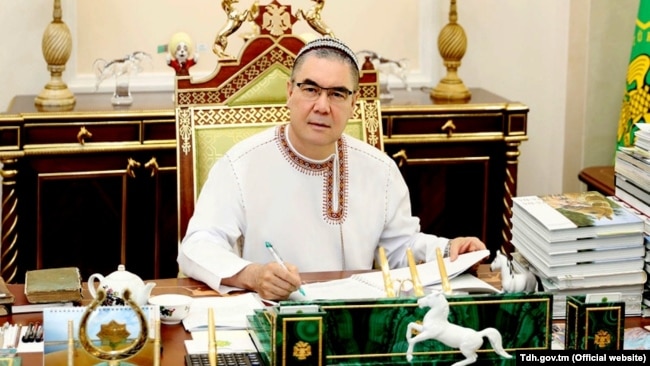
Turkmen President Gurbanguly Berdymukhammedov (file photo)
Such an act of public dissent is a rare occurrence in Turkmenistan, where Berdymukhammedov has run the former Soviet republic with an iron fist since 2006, becoming the center of an elaborate personality cult
Achilova also criticized Berdymukhammedov and his government for what she called a “failure to provide” ordinary people with decent food at acceptable prices, adding that “miserable pensions and salaries in the country” do not provide people with the means to shop for regular items at local markets. Achilova added that the heating system in her apartment had been switched off several times in recent days, which she called an intentional warning over her journalistic activities.
“Our fellow Turkmen citizens working in foreign countries have staged several protests recently demanding your resignation. We join those protests and demand your resignation as well because you are incapable of carrying out your duties. We are suffering and you do not even care about it. All you are capable of is ruining our homes and causing our people to suffer,” Achilova said.
Based in Ashgabat, Achilova is currently a contributor to the Vienna-based independent news website Khronika Turkmenistana (Chronicles of Turkmenistan), which focuses on news and developments in Turkmenistan. Turkmen authorities, who don’t tolerate an independent press, have targeted Achilova in the past for her work as a journalist. SEE ALSO: RFE/RL Correspondent Roughed Up — Again — In Turkmenistan
“Reports … indicate that the conditions and treatment that these human rights defenders are subjected to, such as prolonged solitary confinement, are in violation of human rights standards and may constitute torture,” said Mary Lawlor,
The UAE government media office did not immediately respond to a request for comment. UAE authorities have previously dismissed such accusations as false and unsubstantiated.
Lawlor described the three rights defenders’ jail sentences as an attempt to silence them and “intimidate and deter others from engaging in this legitimate work“.
The statement said Mansoor went on hunger strike twice in 2019 to protest his conditions, including reportedly being held in a cell measuring four square metres with no mattress, and limited access to sunlight, a shower or portable water.
It said Bin Ghaith went on hunger strike in 2017 and 2018 to protest against being denied access to medication, as well as physical assault by prison authorities and periods in solitary confinement.
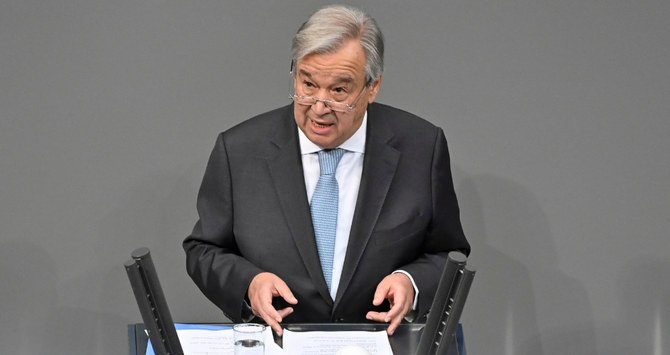
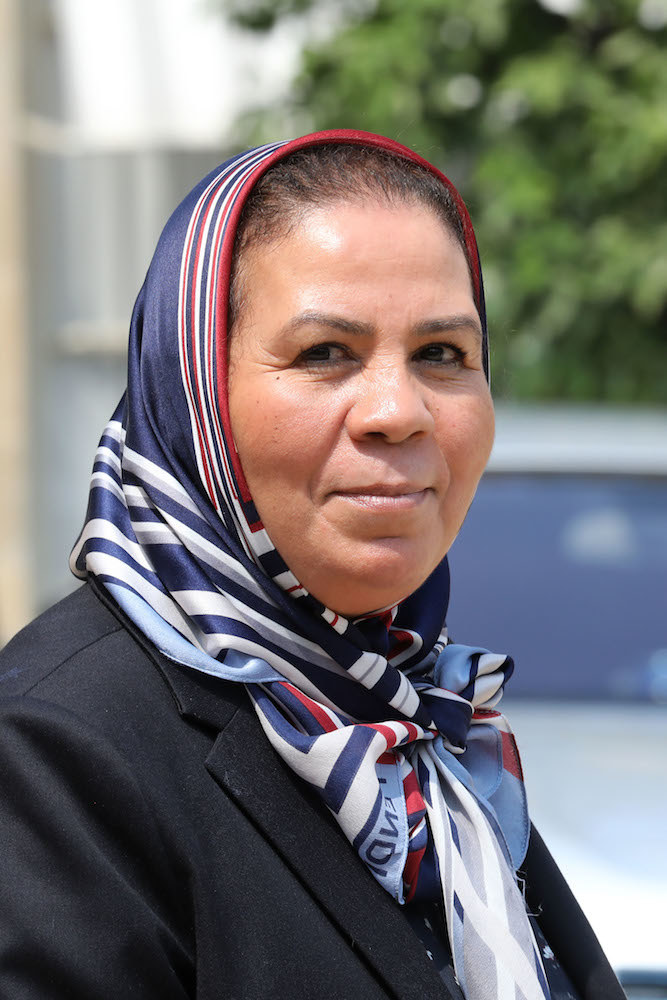
Arab News of 4 February 2021 writes about the Zayed Award for Human Fraternity 2021 which recognises French-Moroccan activist Latifa ibn Ziaten and Antonio Guterres.
The Zayed Award recognizes the institutions and community of people who are spreading the work of human fraternity and coexistence around the world. It was inspired by the Document on Human Fraternity which was signed by His Eminence the Grand Imam Dr. Ahmed El-Tayeb and His Holiness Pope Francis on February 4, 2019 in Abu Dhabi, the capital of the United Arab Emirates.
HCHF’s mission is to act on the aspirations outlined in the Document on Human Fraternity by meeting with religious leaders, heads of international organizations, and others across the world, to support and spread the values of mutual respect and peaceful coexistence. In addition, the committee provides counsel on a variety of initiatives, including the Abrahamic Family House, which is being built in Abu Dhabi. See also: https://humanrightsdefenders.blog/2018/01/23/emirates-at-the-upr-in-geneva-two-sides-of-the-same-medal/y.
Guterres praised fellow recipient Ibn Ziaten for “her dedicated efforts to support young people and promote mutual understanding, arising out of immense personal tragedy, (that has) won admirers at home and beyond.”[see: https://humanrightsdefenders.blog/2016/04/08/us-state-department-international-women-of-courage-awards-2016-yulan/ Ibn Ziaten’s son, Imad, was the first person to die at the hands of terrorist Mohamed Merah during a series of shootings in the cities of Toulouse and Montauban in southwestern France between March 11 and 22, 2012. When Ibn Ziaten visited Les Izards in Toulouse, where the Merah had lived, to find out more about the man who took her son’s life she was shocked to find young people there hailing the killer as a hero of Islam. “I had the impression they were killing my son all over again,” she said at the time. This motivated her to found the Imad ibn Ziaten Youth Association for Peace to help young people in deprived areas and promote interreligious dialogue. Guterres reiterated that discrimination, racism and extremist violence continue to surge around the globe, fueled by the COVID-19 pandemic, an economic recession, a climate emergency and continuing threats to peace and security. Unity is more important now than ever, he added. Guterres said he will donate the $500,000 prize that accompanies the award to the Office of the High Commissioner for Refugees to support its work with “the most vulnerable members of the human family: the forcibly displaced.”