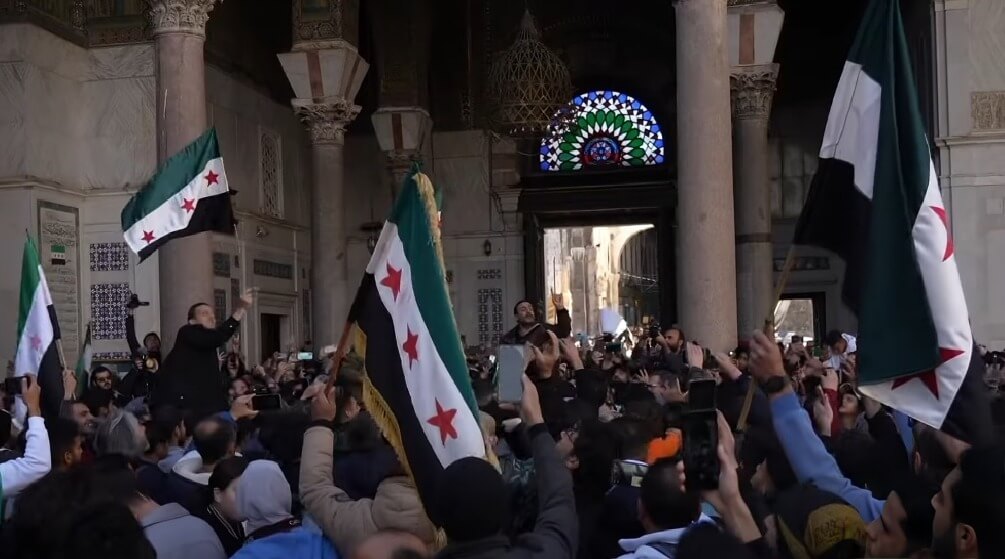
Historic examples in countries such as Portugal and Greece show how military defeats can catalyze democratic transitions by exposing the incompetence of authoritarian regimes. After the recent change in Syria, I thought that this piece with its focus on HRDs deserves wider attention:
The Stimson Center published this anonymously on January 9, 2025 as the author is a Tehran-based analyst who has requested anonymity out of legitimate concern. The writer is known to appropriate staff, has a track record of reliable analysis, and is in a position to provide an otherwise unavailable perspective.
While the world focuses on regional turmoil, Iran is undergoing significant transformation domestically, albeit at a slow pace.
At the heart of this evolution is a surprisingly robust society-based reform movement that is actively challenging the existing power structure, leading to a noticeable weakening of the regime. This emerging dynamic holds the potential to produce a system more representative of wishes of the Iranian population than the theocracy/flawed democracy in place for the past 46 years.
Fundamental reform of the existing constitution, along with empowering civil society, can lead to more democracy provided that Iranians do not get caught up in radical movements and wars. The implications of such changes could extend beyond Iran’s borders to neighboring Arab states. Historian Robert D. Kaplan has argued that Iran serves as the Middle East’s geopolitical pivot point, and that nothing could change the region as profoundly as the emergence of a more liberal regime in Iran.
Iranian people have paid a high price in pursuit of democracy. One metric is the number of political prisoners. While it is difficult to give an accurate estimate, human rights organizations have estimated that hundreds of Iranians are being held on vague national security charges and denied due process. Conditions in Iranian prisons are abysmal, with reports of poor healthcare, abuse, and medical neglect. High-profile cases have drawn international condemnation, but the government shows little willingness to address these systematic abuses. The continued detention and mistreatment of political prisoners remains a major concern, reflecting the Islamic Republic’s intolerance of dissent and disregard for fundamental civil liberties.
Yet despite the repression, protests continue and at an accelerated pace. They include the “Bloody November” 2019 protests sparked by fuel price increases, the popular reaction to the U.S. assassination of Gen. Qassem Soleimani in January 2020 and the accidental Iranian downing of a Ukrainian passenger plane that followed, and the “Women, Life, Freedom” movement of 2022 against enforced veiling These developments, coupled with recent military defeats of Iran and its non-state partners, have dampened the Islamic Republic’s regional power while undercutting its domestic legitimacy, which had rested on electoral and ideological pillars.
Since the Hamas attack on Israel on October 7, 2023, and the devastating Israel response, the region has witnessed repeated and dramatic setbacks for Iran and its partners in Gaza, Lebanon and most recently in Syria. Historic examples in countries such as Portugal and Greece show how military defeats can catalyze democratic transitions by exposing the incompetence of authoritarian regimes. In Iran, the ongoing erosion of both electoral and ideological legitimacy may compel the regime to seek a more democratic approach to governance.
The path toward society-based reform in Iran is centered on strengthening civil society. Other strategies – such as seeking change through foreign intervention as advocated by some in the diaspora – would not produce a better outcome.
The society-based reform movement in Iran encompasses various grassroots efforts aimed at addressing social, political, and economic issues. Reformists emphasize grassroots engagement and building connections with the public. Key aspects include empowering local communities, promoting decentralized decision-making, rebuilding trust between citizens and political entities, and encouraging participatory decision-making. The movement prioritizes social issues and adopts a long-term vision for sustainable development.
The challenges to change remain significant. The regime continues to arrest and otherwise repress activists and economic constraints limit participation. Many Iranians are disillusioned and society is fragmented by cultural barriers. Despite these obstacles, society-based reform aims to facilitate meaningful change by leveraging the strengths and voices of local communities.
The reform movement in Iran has deep historical roots, predating the Constitutional Revolution of 1905-1911, which created the first elected parliament in the Middle East. The oil nationalization movement in the early 1950s was another significant turning point, leading to widespread social mobilization and civil society involvement, including the emergence of political organizations, intellectual activism, popular protests, and women’s participation. While then Prime Minister Mohammad Mossadegh is often credited with initiating nationalization, his true achievement lay in strengthening civil society, establishing an independent Bar Association, labor unions, and implementing reforms that favored peasants and small businesses.
Mossadegh was deposed in 1953 in a CIA-led coup which restored the monarchy and led to severe repression of civil society. The Shah’s regime viewed civil society organizations as threats, leading to political repression, media censorship, and the targeting of student and labor movements. This suppression dismantled the civil society infrastructure, contributing to widespread discontent and ultimately the Iranian Revolution of 1979.
The theocracy ushered in a new era of repression but that eased following the election of reformist President Mohammad Khatami in 1997. Iran’s reform movement split at the time into two factions: society-centered intellectuals and a power-centered left within the regime. Differences in approach emerged during 2001 presidential elections as well as the 2009 Green Movement against the fraud-tainted re-election of then President Mahmoud Ahmadinejad.
Since the 2022 protests, however, reformists who once favored participating in elections and government have shifted toward embracing society-based efforts. Azar Mansouri of the Iran Reform Front noted this change, emphasizing the need for unity among reformists and the importance of community-centered reforms given government-imposed limits on reformist participation in officially sanctioned politics. Former president Khatami and theorist Mahmoud Mir-Lohi have also highlighted that the movement is transitioning from an “election-centered” to a “society-centered” focus, aiming to reconnect with citizens and address societal needs.
This movement is characterized by a range of actors who include those working on:
- Human Rights. Numerous organizations and activists, some with external links,are dedicated to promoting freedom of speech, press freedom, and the rights of minorities and marginalized groups as well as opposing arbitrary detention, torture, and the death penalty. The groups include HRANA, the Center for Human Rights in Iran and Defenders of Human Rights in Iran.
- Women’s Rights. Women’s rights activists are at the forefront of the reform movement, challenging discriminatory laws and advocating for gender equality. Activists such as Nasrin Sotoudeh, Narges Mohammadi, Parvin Ardalan and Sepideh Gholian promote the right of women to choose whether to wear the hijab and have garnered significant attention and support both domestically and internationally. These activists have paid a high price for their beliefs and many are in prison serving long terms although Mohammadi, a 2023 Nobel peace prize laureate, was recently allowed home for a brief period after undergoing medical treatment.
- Student Activism. Iranian students have a long history of political activism, often taking a leading role in protests and reform movements. Student organizations suchas the Independent Student Union advocate for educational reform, political freedom, and social justice.
- Labor Movements. Workers’ rights groups have organized to demand better working conditions, fair wages, and labor protections. During the 2022 Women, Life, Freedom movement, 14 unions formed a coalition to push for new labor laws as part of a broader reform agenda. The Haft-Tappeh Sugar Cane Company union succeeded in ousting the director of the company, returning laid-off workers and encouraging formation of more independent unions.
- Environmental Activism. Civil society groups are increasingly focused on environmental issues, advocating for sustainable development and government accountability regarding natural resource management and combating water scarcity and pollution.
- Social Media and Digital Activism. Social media has empowered activists to organize, share information, and mobilize more effectively despite government attempts to suppress or filter access to the internet.
Various other initiatives promote civic awareness and participation. One such entity, www.karzar.net has initiated hundreds of big and small campaigns on a wide range of issues, most recently opposing a new law meant to enforce veiling. In reaction to widespread public rejection of the law, the government of President Masoud Pezeshkian paused its implementation in December.
Despite facing significant challenges, the society-based reform movement remains a vital factor in Iran’s political landscape. The example set by the fall of the repressive Assad regime in Syria may embolden the Iranian public to demand reforms and increase international pressure on Iran to embrace democratic changes.