Archive for the 'human rights' Category
October 14, 2013
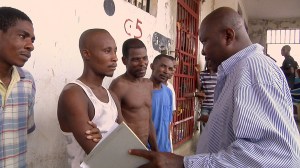
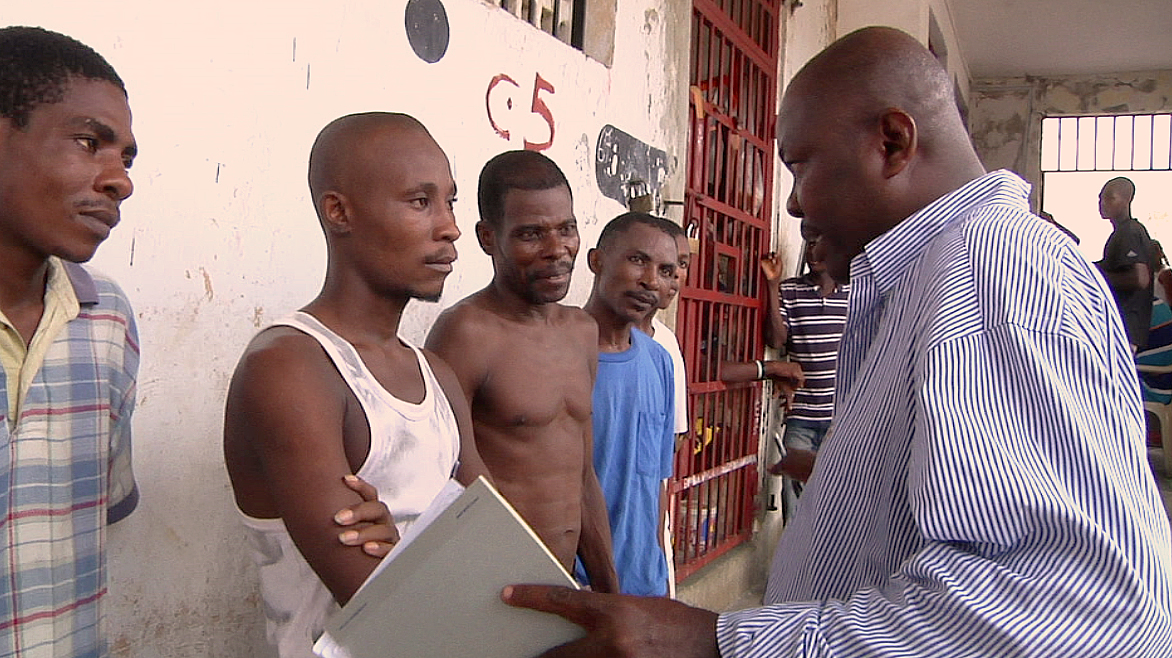
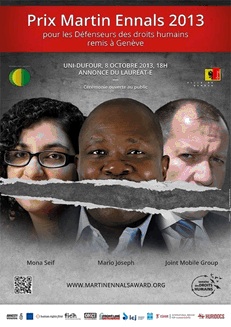
Mario Joseph, Haiti – Final Nominee MEA 2013
An unintended consequence of the MEA ceremony on 8 October was that Mario Joseph – one of the 3 Final Nominees for this award – used his speech to make clear how disturbed he was by the UN’s refusal to assume its responsibility for the cholera epidemic caused by UN troops in Haiti. Mrs Pillay – the UN High commissioner for human rights – in her speech replied to the challenge by repeating an earlier position that had mostly gone unnoticed: “I have used my voice both inside the United Nations and outside to call for the right — for an investigation by the United Nations, by the country concerned, and I still stand by the call that victims of — of those who suffered as a result of that cholera be provided with compensation”. Associated Press reported this on 8 October but left out the context by just stating: ‘Pillay said at an awards ceremony for human rights activists in Geneva… streamed live on the Internet.’ So, now you know!
via UN human rights official urges compensation for Haiti cholera victims – Washington Post.
Posted in human rights, Human Rights Defenders, MEA | 2 Comments »
Tags: Associated Press, Cholera, compensation, Geneva, Haiti, immunity, Mario Joseph, Martin Ennals Award for Human Rights Defenders, MEA, MEA ceremony, MEA nominees 2013, Office of the United Nations High Commissioner for Human Rights, United Nations, Washington Post
October 12, 2013
On Thursday 3 October the Robert F. Kennedy Center for Justice and Human Rights [RFK Center] launched its third annual “Speak Truth to Power Student Video Contest“. This year, the contest is for the first time open to student filmmakers from all of the USA in partnership with the American Federation of Teachers, the New York State United Teachers and the Tribeca Film Institute. The video competition, originally launched in New York State in 2011, invites students to create a 3-6 minute video examining a human rights issue or violation and profiling the defenders who are fighting to restore justice.
Last year’s prize went to students of the Young Women’s Leadership School of Brooklyn, who made a film about the work of sexual slavery and trafficking activist Juliana Dogbadzi of Ghana.
Additional details can be found at http://www.speaktruthvideo.com
via Teachers, RFK Center Expand Annual Human Rights Video Contest to Students and Schools across America – The Paramus Post – Greater Paramus News and Lifestyle Webzine.
Posted in human rights | 1 Comment »
Tags: American Federation of Teachers, documentary, films, Ghana, human rights, Human Rights Defenders, human rights education, human rights films, Juliana Dogbadzi, New York State United Teachers, Paramus New Jersey, RFK, Robert F. Kennedy Center for Justice and Human Rights, Speak Truth to Power, student filmmakers, Tribeca Film Institute, United States, video clips, woman human rights defender
October 10, 2013

(Malala Yousafzai during ceremony for the Amnesty International Ambassador of Conscience Award 2013 – (c) AFP/Peter Muhly)
On 5 October I reported that Malala got the RAW award – after receiving quite a few others (as seen above in the picture). Since yesterday she is also laureate of the European Parliament’s Sacharov award, beating Edward Snowden and dissidents from Belarus. In the meantime the rumors are that she also gets the Nobel Peace Prize.
Posted in human rights, Human Rights Defenders | 1 Comment »
Tags: Amnesty International, awards, Belarus, Edward Snowden, European Parliament, human rights awards, Malala, Malala Yousafzai, Nobel Peace Prize, Sacharov, Sakharov Prize
October 10, 2013
24 hours after the event, those who missed the 2013 ceremony of the Martin Ennals Award for Human Rights Defenders can already see the highlights on Vimeo. Gives absolutely good impression of the impressive evening.
Posted in human rights, Human Rights Defenders, MEA | Leave a Comment »
Tags: 2013 ceremony, Advocacy Organizations, Chechnya, City of Geneva, Egypt, Haiti, Human right, Human Rights and Liberties, Joint Mobile Group, Mario Joseph, Martin Ennals, Martin Ennals Award, Martin Ennals Award for Human Rights Defenders, MEA, Mona Seif, Russia, Vimeo
October 8, 2013
 The Joint Mobile Group was selected by the International Human Rights Community (See Jury Below) as the Laureate 2013 of the Martin Ennals Award for Human Rights Defenders. Read the rest of this entry »
Posted in human rights, Human Rights Defenders, MEA | 1 Comment »
Tags: award, Chechnya, Civil society, Egypt, Geneva, Haiti, Human right, human rights, human rights awards, Human Rights Defenders, international community, Joint Mobile Group, Jury MEA, Mario Joseph, Martin Ennals, Martin Ennals Award for Human Rights Defenders, MEA 2013, Micheline Calmy Rey, Mona Seif, NGOs
October 7, 2013
This blog tends to prioritize news on human rights defenders who are in trouble. This makes one overlook perhaps too often the contribution made by those who are working for the cause in other ways. To rectify I want to pay tribute to another woman who has contributed enormously to the creation and growth of the Martin Ennals Award for Human Rights Defenders: Simia Ahmadi. After 20 years she is leaving the Board of the Foundation on 7 October, just before the 20th ceremony tomorrow.
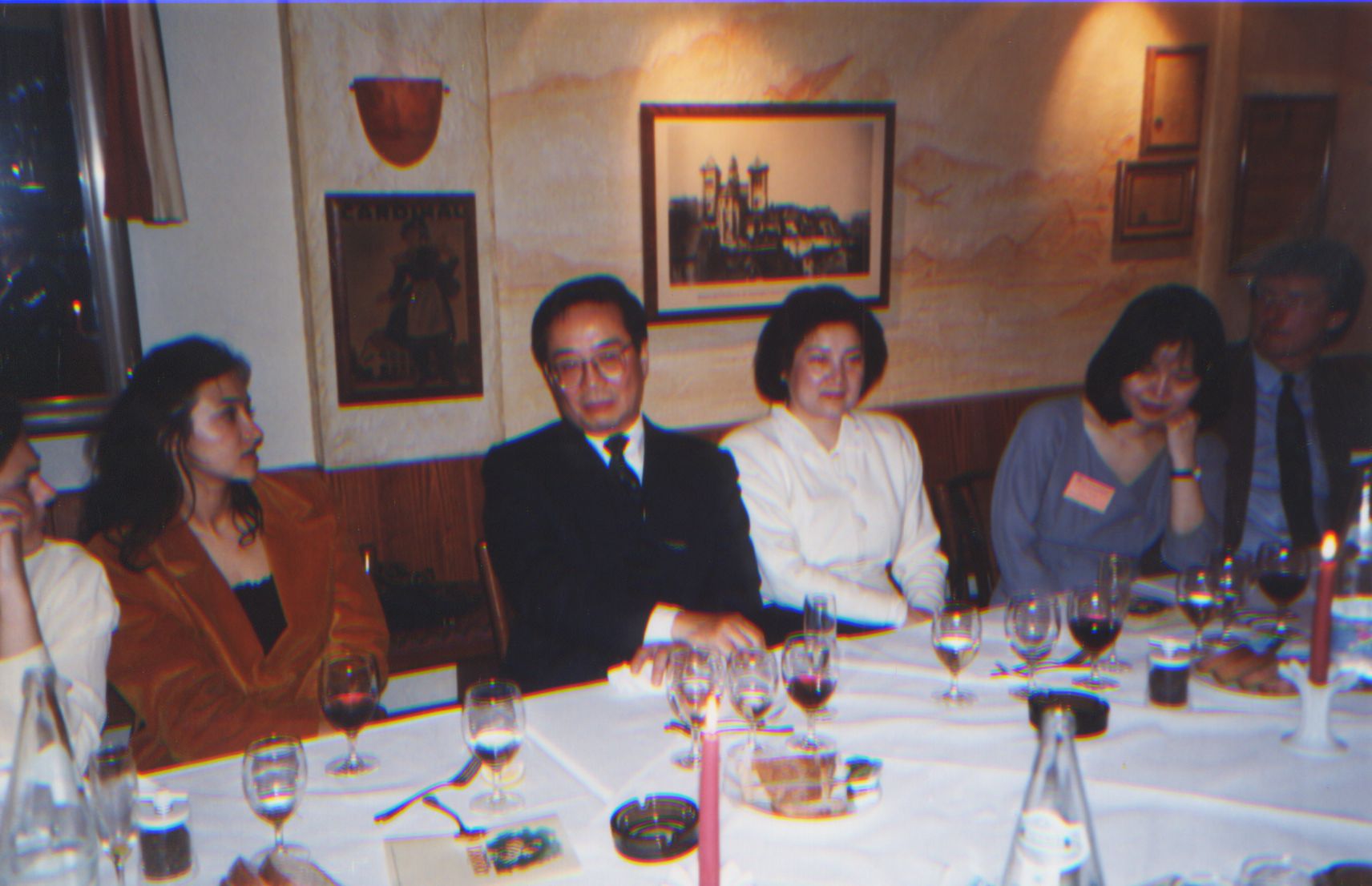
In 1992 Simia was a young, upcoming human rights worker who had just finished an internship with the UN. To her great regret she never met Martin Ennals in person. Her main motivation was that an award could be effective and volunteered to help it being set up. After successful initial fundraising she was the part-time Secretariat in the first year.

(Simia, left of first Laureate Harry Wu in 1994, Geneva)
After that, she worked several years for the International Federation for Human Rights (FIDH). Thereafter she was Programme Coordinator of the Legal and Human Rights Centre in Tanzania and from 2006-2009 she served as FIDH’s Representative to the UN in Geneva. After her move to Kenya in 2010, she served as the Chief of Party of the Public International Law and Policy Group in Kenya. Now she devoting her considerable energy to Kahesa, of which she is the Director-Founder and undertakes consultancy work such as evaluations KAHESA is a social enterprise that produces decorative and environmentally-sound paper through the employment of mentally-challenged Kenyans. Check out her www.kahesa.com and Facebook page: Kahesa paper
For being at the cradle of the MEA and making sure that the there is no grave for long time she deserve the deepest thanks from all especially Human Rights Defenders around the world.
Posted in FIDH, human rights, Human Rights Defenders, MEA | Leave a Comment »
Tags: FIDH, Geneva, Harry Wu, human rights, International Federation for Human Rights, Kahesa, Kenya, Legal and Human Rights Centre, Martin Ennals, Martin Ennals Award, Martin Ennals Award for Human Rights Defenders, Martin Ennals Foundation, MEA, Tanzania, United Nations, woman human rights defender
October 6, 2013
 Foto: EPA
Finally a tiny bit of good news from the Chinese front: After 2,5 years in jail the Chinese human rights defender Ni Yulan has been freed. In 2011 she won the Dutch Tulip for HRDs award. She has never been able to receive the award in person and even her daughter had not been allowed to leave the country for that purpose.
As reported by the ANP via Chinese mensenrechtenactiviste Ni weer vrij | nu.nl/buitenland | Het laatste nieuws het eerst op nu.nl.
Posted in human rights, Human Rights Defenders | 1 Comment »
Tags: Advocacy Organizations, China, forced evictions, harassment, Human Rights and Liberties, human rights awards, Human Rights Defenders, Ministry of Foreign Affairs Netherlands, Netherlands, Ni Yulan, prison, the Chinese human rights, Tulip award, woman human rights defender, Yulan
October 5, 2013
The 20th Ceremony of the Martin Ennals Award for Human Rights Defenders will take place on Tuesday 8 October and can be followed live on www.martinennalsaward.org as from 18h00 Central European (Geneva) time. The moment of the announcement of the laureate will be approximately 18:30.

As a reminder, the 3 Final Nominees are: Read the rest of this entry »
Posted in human rights, Human Rights Defenders, MEA | 1 Comment »
Tags: broadcast, Chechnya, City of Geneva, Egypt, Final Nominees for the Martin Ennals Award 2013, Geneva, Haiti, human rights, human rights abuses, human rights activists, human rights awards, international community, internet, Jean-Claude Duvalier, Joint Mobile Group, Mario Joseph, Martin Ennals Award for Human Rights Defenders, MEA, MEA ceremony, media, Micheline Calmy Rey, Mona Seif, Russia, streaming
October 5, 2013
14 September 2013 marked three years since renowned human rights defender David Ravelo Crespo, member of the director’s board of the Regional Corporation for the Defense of Human Rights (CREDHOS) based in the city of Barrancabermeja, was detained. Over NGOs reiterated on that occasion their concerns regarding a series of irregularities that were reported throughout the proceedings which resulted in his conviction and sentencing to 220 months in prison. Reiterating their respect for the independence of the judiciary in Colombia, the NGO statement lists a series of irregularities (see statement in full). The NGOs stress that David Ravelo Crespo is an internationally renowned human rights defender. He has won several awards such as the San Pedro Claver Award from the Diocese of Barrancabermeja in 2009; was one of the finalists for the 2013 Front Line Defenders Award fand has been nominated for the National Human Rights Defenders Awards in Colombia . His NGO was nominated for the 2013 Human Rights Award for the city of Weimar (Germany).
Two weeks later Front Line reports that human rights defender and campesina leader Adelinda Gómez Gaviria was killed in Almaguer, Cauca region. Adelinda Gómez Gaviria worked with the Comité de Integración del Macizo Colombiano – CIMA. She played an active role in the Mining and Environmental Forum in Almaguer, which has 1,500 indigenous and farming members. On 30 September as Adelinda Gómez Gaviria was returning home after a meeting, she and her 16 year-old son were approached and shot at by two unidentified men. Adelinda Gómez Gaviria suffered five bullet wounds and was killed, whilst her son is in a critical state in the Clínica La Estancia in Popayán city. One month prior to her killing Adelinda Gómez Gaviria had received a threatening telephone call from strangers who warned her to: “Stop messing around with this miners’ thing. It’s risky and it’ll get you killed.” The Red por la Vida y los Derechos Humanos del Cauca (Cauca Network for Life and Human Rights) has registered the murders of fourteen women human rights defenders in Cauca so far this year, primarily from rural areas of Cauca. Twelve death threats against human rights defenders have been reported, with five of those against women.
Colombia: On the third anniversary of the detention of renowned Colombian human rights defender David Ravelo Crespo, International organisations express concern / September 13, 2013 / Urgent Interventions / Human rights defenders / OMCT.
Posted in Front Line, human rights, Human Rights Defenders | Leave a Comment »
Tags: Adelinda Gómez Gaviria, Barrancabermeja, campesinos, Civil society, Colombia, David Ravelo Crespo, due process, environmental issues, fair trial, Front Line Defenders, Germany, Human right, human rights awards, Human rights defender, Human Rights Defenders, illegal detention, killing, Mining, Non-governmental organization, Ravelo Crespo, social and economic rights, World Organisation Against Torture
October 5, 2013
Malala Yousafzai has been declared the winner of an award for female defenders of human rights in war and conflict. The 16-year-old from Pakistan was due to accept the 2013 RAW in WAR Reach All Women in WAR Anna Politkovskaya Award at a London-based ceremony on 4 October. The award is named after Politkovskaya, a Russian human rights journalist and outspoken government critic, who was murdered in October 2006 – and whose assassin has still not been brought to justice. Named one of TIME’s 100 most influential people in April 2013, Malala began blogging for the BBC in 2009 about her life in Pakistan’s Swat Valley region and her desire to attend school freely and safely, reported the BBC. Her increasingly public profile led to her being shot in the head by a Taliban gunman on her way home from school in October last year. She was then flown to the U.K. for treatment and currently lives in Birmingham, where she continues to campaign for education for girls and boys.
via Malala Yousafzai Receives Women’s Human Rights Award | TIME.com.
Posted in human rights | Leave a Comment »
Tags: Anna Politkovskaya, award, BBC, blogger, defenders of human rights, freedom of expression, human rights, human rights awards, Human rights defender, London, Malala, Malala Yousafzai, Pakistan, RAW in WAR, WAR Reach All Women in WAR Anna Politkovskaya, woman human rights defender

 Hans Thoolen on Human Rights Defenders and their awards