Archive for the 'human rights' Category

Human Rights Day: a selection of articles from Asian media that you may have missed

December 10, 2014
 I call on states to honour their obligation to protect human rights every day of the year. I call on people to hold their governments to account. And I call for special protections for the human rights defenders who courageously serve our collective cause,” UN Secretary-General stated in his message for Human Rights Day.  There is so much to report on this day, that I decided to focus on stories from 4 Asian countries (China (Hong Kong), India, Thailand, Bangladesh) which give an impression (not more than that) of how Human Rights Day is reflected in the media.
The first article “Responsibility for the protection of human rights is in our hands” appeared in the South China Morning Post of Tuesday, 09 December, 2014

Read the rest of this entry »

Human Rights Day: exceptional chance to put questions to 3 women human rights defenders

December 9, 2014

To mark Human Rights Day tomorrow, Wednesday 10 December, the Guardian organises a live chat with three women human rights defenders who will answer your questions on their campaigning work and the challenges they face in uncovering abuses. The panel looks most promising:

Read the rest of this entry »

Asma Jahangir speaks on human rights restrictions justified in name of religion

December 9, 2014

From left: Asma Jahangir, Bill McKibben, Alan Rusbridger and Basil Fernando (photo: Wolfgang Schmidt/Right Livelihood Award Foundation)

(The four winners of this year’s Right Livelihood Award (from left): Asma Jahangir, Bill McKibben, Alan Rusbridger and Basil Fernando. US whistle-blower Edward Snowden (not pictured) also received an honorary award)

Qantara.de 2014 on 9 December 2014 published an interesting interview by Roma Rajpal Weiss with Asma Jahangir, a prominent human rights defenders, winner of the Right Livelihood Award of this year and Laureate of the MEA as far back as 1995. The title “Every restriction is justified in the name of religion” is taken from Asma’s statement that most restrictions on the human rights of women in Pakistan are justified by arguments (perhaps rather feelings) based on religious or tradition. Read the rest of this entry »

Mexico and human rights defenders: shoot the messenger

December 9, 2014

Vidulfo Rosales (Center)

(Vidulfo Rosales (Center) | Photo: Clayton Conn/ teleSUR)
A lengthy report entitled: “Ficha Cisen a abogado de normalistas” written in the electronic investigative journal, Reporte Indigo, shows that Mexico’s Intelligence Agency (CISEN) has opened dossiers on human rights defenders from the Human Rights Center of the Mountain “Tlachinollan” calling them “dangerous to governance.” The report details that Vidulfo Rosales, lawyer and representative of the 43 families of the Ayotzinapa students as well as Tlachinollan’s director, Abel Barrera are “elements” that pose a “threat” to the government and that the two participate in “subversive” activities.   Telesur of 8 December refers to a public letter signed by over a dozen reputable human rights organizations: “It is outrageous that public resources are used to weaken the human rights movement instead of using intelligence capabilities to combat infiltration and corruption by narco-governments and guarantee that serious human rights violations do not go unpunished”.

Mexico Intelligence Agency Investigates Rights Defenders | News | teleSUR.

Lithuanians better educated about their access to human rights defenders

December 8, 2014

It doesn’t always have to be gloom in this blog:  Petras Vaida, from Vilnius, reports on 8 December 2014 that a survey shows that more than half Lithuanians would know where to address in case they think their rights were violated (against 27,9% of respondents  in 2012.)

141208_ombudsm_lit.jpg
Each year the Seimas Ombudsmen ask Lithuanians whether they have enough information about the human rights defenders who may help them in case their rights are violated in municipal and governmental institutions. This year’s survey based showed that fifty-four% of respondents would know where to request help in case their rights were violated, including 42% who would address the Seimas Ombudsmen. The researchers observed that younger, more educated, urban and richer respondents knew better where to address in case their rights were violated.

More than half Lithuanians would know where to address in case their rights were violated :: The Baltic Course | Baltic States news & analytics.

NGOs call for United Nations to pressure Laos on human rights during UPR

December 8, 2014

On 3 December 2014 the Center for Public Policy Analysis (CPPA), the Lao Movement for Human Rights (LMHR), and a coalition of other NGOs called for United Nations to urge the government of Laos to cease ongoing human rights violations and to restore fundamental human freedoms. They are also calling for the release of Sombath Somphone and other imprisoned Lao and Hmong political and religious dissidents.

In advance of Lao People’s Democratic Republic (LPDR)’s Universal Periodic Review (UPR) scheduled for 20 January 2015 in Geneva, the Geneva-based UPR-Info invited diplomats to hear the concerns of civil society organizations at a UPR pre-session in Geneva. Twenty one representatives from the Geneva-based missions attended the pre-session.

We have deep concerns about violations of freedom of expression, enforced disappearances and religious freedom in Laos. Regretting that Lao PDR has not implemented recommendations it accepted at its first UPR in 2010, she urged States to raise concerns on these human rights abuses and presented concrete recommendations for human rights progress in Laos,” stated Thephsouvanh, speaking on behalf of the LMHR, which is also a member of the International Federation for Human Rights (FIDH).

NGOs Call for United Nations to Pressure Laos | Scoop News.

http://www.centerforpublicpolicyanalysis.org

UN High Commissioner for Human Rights writes about Women’s Human Rights Defenders

December 8, 2014
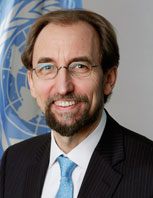
UN HCHR Al Hussein

On 5 December 2014, Zeid Ra’ad Al Hussein, United Nations High Commissioner for Human Rights, wrote a piece in the Huffington Post in which he eloquently calls on all to ‘Stand in Solidarity With Courageous Women’s Human Rights Defenders’. 

In the article he explains that his Office has decided to launch a campaign to pay tribute to women and men who defy stereotypes and fight for women’s human rights. The campaign runs from Human Rights Day, December 10 this year, to International Women’s Day, March 8, 2015. We encourage everyone to join the ranks of these strong and inspiring advocates, on social media (#reflect2protect) and on the ground. Below the text in full:


Almost two decades ago, in Beijing, 189 countries made a commitment to achieve equality for women, in practice and in law, so that all women could at last fully enjoy their rights and freedoms as equal human beings.

They adopted a comprehensive and ambitious plan to guarantee women the same rights as men to be educated and develop their potential. The same rights as men to choose their profession. The same rights to lead communities and nations and make choices about their own lives without fear of violence or reprisal. No longer would hundreds of thousands of women die every year in childbirth because of health care policies and systems that neglected their care. No longer would women earn considerably less than men. No longer would discriminatory laws govern marriage, land, property and inheritance.

In the years that followed, the world has witnessed tremendous progress: the number of women in the work force has increased; there is almost gender parity in schooling at the primary level; the maternal mortality ratio declined by almost 50 percent; and more women are in leadership positions. Importantly, governments talk about women’s rights as human rights, and women’s rights and gender equality are acknowledged as legitimate and indispensable goals.

However, the world is still far from the vision articulated in Beijing. Approximately 1 in 3 women throughout the world will experience physical and/or sexual violence in their lifetime. Less than a quarter of parliamentarians in the world are women. In over 50 countries there is no legal protection for women against domestic violence. Almost 300,000 women and girls died in 2013 from causes related to pregnancy and childbirth. Approximately 1 in 3 married women aged 20 to 24 were child brides. In many parts of the world, women and girls cannot make decisions on their most private matters — sexuality, marriage, children. Girls and women who pursue their own life choices are still murdered by their own families in the dishonorable practice of so-called honor killings. All of our societies remain affected by stereotypes based on the inferiority of women, which often denigrate, humiliate and sexualize them.

Today we have the responsibility to protect the progress made in the past 20 years and address the remaining challenges. In doing so, we must recognize the vital role of women who defend human rights, often at great risk to themselves and their families precisely because they are viewed as stepping outside socially prescriptive gender stereotypes. We must recognize the role of all people, women and men, who publicly call for gender equality and often, as a result, find themselves the victim of archaic and patriarchal, but powerful, threats to their reputations, their work and even their lives. These extraordinary individuals — women’s human rights defenders — operate in hostile environments, where arguments of cultural relativism are common and often against the background of the rise of extremist, misogynistic groups, which threaten to dismantle the gains of the past.

Attacks against women who stand up to demand their human rights and individuals who advocate for gender equality are often designed to keep women in their “place.” In some areas of the world, women who participate in public demonstrations are told to go home to take care of their children. Consider the recent example of a newspaper publishing naked photos of a woman, claiming she was a well-known activist — an attack designed to shame this defender into silence. In other places, when women claim their right to affordable modern methods of contraception, they are labelled as prostitutes in smear campaigns seeking to undermine their credibility. Online attacks against those who speak for women’s human rights and gender equality by so-called “trolls” — who threaten heinous crimes — are increasingly reported.

These attacks have a common thread — they rely on gender stereotypes and deeply entrenched discriminatory social norms in an attempt to silence those who challenge the age-old system of gender inequality. However, these defenders will not be silenced, and we must stand in solidarity with them against these cowardly attacks.

This is why my Office has decided to launch a campaign to pay tribute to women and men who defy stereotypes and fight for women’s human rights. The campaign runs from Human Rights Day, December 10 this year, to International Women’s Day, March 8, 2015. We encourage everyone to join the ranks of these strong and inspiring advocates, on social media and on the ground.

As we approach the 20-year anniversary of Beijing, discrimination and violence against women, and the stereotypes that confine them into narrowly fixed roles must end. Women have the right to make their own decisions about their lives and their bodies. Guaranteeing and implementing these rights are non-negotiable obligations of all States. Women human rights defenders were instrumental in securing the ambitious program laid out in Beijing. Their work, their activism and their courage deserve our recognition, our support and our respect.”

Stand in Solidarity With Courageous Womens Human Rights Defenders | UN Women.

Amin Mekki Medani, President of the Sudan Human Rights Monitor, arrested

December 7, 2014

logo FIDH_seul

OMCT-LOGO

 On the evening of 6 December, 2014, the Sudanese National Intelligence and Security Services (NISS) arrested Dr. Amin Mekki Medani, a renowned human rights activist, President of the Sudan Human Rights Monitor (SHRM) from his house in Khartoum. Dr Medani was arrested shortly after he returned from Addis Ababa. There are serious concerns for the safety of Dr. Medani who is 76 years of age and suffers from high blood pressure and diabetes. According to the information received, the NISS refused to allow him to take his medications with him when he was arrested.

The Observatory for the Protection of Human Rights Defenders strongly denounces the arbitrary arrest and detention of Dr. Medani and considers it as a reprisal to sanction his legitimate human rights activities. [On December 3, 2014 Dr. Medani signed the “Sudan Call”, on behalf of civil society organisations. The “Sudan Call” is a Declaration on the “Establishment of a State of Citizenship and Democracy”, under which co-signatories committed to work towards the end of the conflicts raging in different regions of Sudan and towards legal, institutional and economic reforms. The Declaration, which commits signatories to end wars and conflicts as a priority, was co-signed in Addis Ababa by representatives from political and armed opposition parties, including the National Umma Party, the National Consensus Forces and the Sudan Revolutionary Front. Dr. Medani co-signed the Sudan Call on behalf of the Civil Society Initiative.]

Sudan: Arrest of the President of the Sudan Human Rights (…).

Video voices from the Geneva Forum of the International Commission of Jurists

December 6, 2014

icj_logo_pantone  Six prominent human rights defenders who participated in the ICJ’s Geneva Forum 2014 give their views on judicial protection of economic, social and cultural   rights  (ESCR) as well as on what needs to be changed to address obstacles to guarantee an effective remedy for victims of violations of their socio-economic rights:

  • Jacqueline Dugard
  • Hina Jilani
  • Rodrigo Uprimny Yepes
  • Gilles Badet
  • Alejandra Ancheita (MEA Laureate 2014) and
  • Harsh Mander

To see these short videos made by THF go to: On video: prominent voices from the Geneva Forum 2014 | ICJ.

UN special rapporteur urged to investigate human rights defenders in the Philippines

December 6, 2014

The UN special rapporteur on Human Rights Defenders, Michel Forst, has made a fast start with his mandate. Hardly back from Burundi and Morocco, he met with human rights defenders in  Quezon City, Philippines as reported by InterAksyon.com on 6 December 2014.

(Special Rapporteur on Human Rights Defenders, Michel Forst, with human rights defenders in Quezon City – photo from Karapatan)
United Nations Special Rapporteur on the Situation of Human Rights Defenders Michel Forst indicated his interest in filing a request for an official visit after a two-hour meeting late last week with members of Manilakbayan, a contingent of indigenous peoples’ groups and advocates, and representatives of the human rights group Karapatan from Mindanao and Southern Tagalog.

Karapatan secretary general Cristina Palabay, in a statement, urged the international community and human rights advocates worldwide to “press the Philippine government to accede to the request of the UNSR-HRD to look into the numerous reports of attacks against rights defenders in the country.” Forst’s predecessors — Hina Jilani and Margaret Sekaggya — both submitted several requests to conduct an official investigation in the Philippines, but did not obtain official invitations from the government.

UN special rapporteur wants to probe attacks on PH rights defenders.