Archive for the 'human rights' Category

Civil society calls on EU to intensify support for human rights defenders in the new EU Action Plan

December 16, 2014

Seven major NGOs (Amnesty International, Frontline Defenders, International Federation for Human Rights, Human Rights Watch, PBI, Protection International and the World Organisation Against Torture) have made a joint appeal to the EU to improve the European Union‘s support to human rights defenders. This is done in the form of comments on the new EU Action Plan on Human Rights and Democracy. That there is a need for more cohesion was demonstrated by the recent faux pas of the EU in giving a human rights award to Bahrain which can hardly be in line with the recommendations [see: https://thoolen.wordpress.com/2014/12/11/what-human-rights-day-means-in-bahrain-and-how-the-eu-made-it-worse/].

Effective and meaningful support to HRDs by the EU and its member states should aspire to [excerpts]: I draw attention especially to number 6!

1. Better protect

The EU can achieve better protection of HRDs – including better prevention of the risks associated with their work:

1. Institute a system for the centralised follow-up of all human rights defenders’ cases, and their treatment by the EU and Member states at headquarters and in delegations.

2. Ensure all staff in Delegations in diplomatic missions, and at headquarters, including at the highest level, are aware of the importance of working with and for HRDs, of the EU Guidelines and of the necessity to implement them fully, and of reporting back. Systematically train EU and member states’ staff at all levels on the full implementation of the EU HRD Guidelines;

3. Facilitate emergency measures such as relocation and emergency visas for HRDs, and ensure all staff are aware of procedures. Ensure the facilitation of visas for HRDs visiting decision-makers in the EU and member states in order to reinforce meaningful exchanges on how to support their vital work;

4. Monitor and provide systematic feedback to HRDs, civil society and the public on EU and member states’ actions on HRDs, encouraging meaningful public debate on how to reinforce their vital efforts;

5. Assist and support governments and promote participation of local civil society in developing and implementing public policies and mechanisms for the protection of HRDs; and/or in advocating for the amendment or abrogation of restrictive laws; and in the fight against impunity for human rights violations committed against HRDs;

6. Ensure that an annual Foreign Affairs Council meeting is dedicated to discussing EU efforts to pursue the release of HRD, journalists and others who exercise their rights peacefully. Foreign Ministers should adopt conclusions naming jailed rights advocates from around the world and call for their immediate and unconditional release.  Every three months PSC Ambassadors should take stock, in close collaboration with civil society, of EU efforts to pursue the release of jailed HRDs. EU delegations should be requested to clarify efforts they have undertaken, ahead of these meetings;

7. In the spirit of the EU Guidelines on HRDs, the EU and its member states should commit to documenting and reporting on effective best practices in support of HRDs, and working to reproduce them where relevant in future; organise annual regional workshops with civil society to exchange best practices and lessons learned, and build the capacity of HRDs, and of senior EU and member states’ diplomatic staff.

2. Reach out

EU policies in support of HRDs must also go beyond addressing their protection in emergency situations on an ad hoc basis. This means considering HRDs not only as victims of repression, but as key actors of change in their own country who can likewise provide a valuable contribution to the design of both EU and national policies and decision-making…

8. Implement burden-sharing between the EU and Member states, to ensure that human rights defenders in all regions of a country have access to, and contact with, the EU; that the responsibility for particularly logistically challenging tasks such as trial observation, prison visits or contacts with rural areas does not fall only on one diplomatic mission, and that continued buy-in on human rights issues by all is possible;

9. Actively support HRDs through a flexible combination of concrete actions and public diplomacy, on the basis of effective consultation with concerned HRDs, including public intervention whenever this can improve the security of HRDs at risk;

10. Conduct regular visits to HRDs outside large urban centres, and increase outreach to vulnerable, marginalised HRDs and women HRDs;

11. Clearly communicate the human rights priorities of EU country strategies to local HRDs to facilitate their work.

12. Systematically include meetings with HRDs when planning high level visits to third countries (including visits by member states’ representatives and Members of the European Parliament);

13. Translate the Guidelines on HRDs into local languages, and disseminate them amongst civil society, including different ethnic minority groups and indigenous communities.

3. Do no harm

The EU and its member states should evaluate all actions taken in regard to their compliance with human rights, and concretely monitor trade and development policies and programming to ensure they are consistent with EU and member states’ human rights commitments. The EU should offer HRDs recourse in case their human rights or those of the people they defend are violated. The ‘do no harm’ principle should be integrated in other actions foreseen in the revised Strategic Framework and Action Plan (under ‘trade’, ‘development’ etc…), which is why only key actions are proposed here:

14. Ensure the meaningful consultation/participation of HRDs, possibly through the development of a specific format for regular exchanges, in the preparation of EU and member states’ human rights dialogues, strategies, development programming, and in the context of EU trade and investment policy;

15. When debating national policy with third country governments, the EU should strive to facilitate dialogue between governments and HRDs (for example on security, development, health, etc), and ensure inclusion of HRDs and social organisations in decision-making on these issues;

16. Set up a complaint mechanism for HRDs who have become victims of human rights violations in the context of EU and member states’ policies and investments.

Intensifying the European Union‘s support to human rights defenders: Civil society proposals for the new EU Action Plan on Human Rights and Democracy / December 16, 2014 / Statements / Human rights defenders / OMCT.

Chinese Human Rights Defender Xu Youyu gets Olof Palme Prize

December 16, 2014

.Chinese activist wins Swedish rights prize

(Olof Palme – Photo: TT)

The Stockholm-based Olof Palme Memorial Fund said in a statement today that the Chinese pro-democracy activist Xu Youyu, who was among key signatories of a 2008 manifesto seeking sweeping political reforms in China, has won the Olof Palme human rights prize [http://www.brandsaviors.com/thedigest/award/olof-palme-prize]. Born in 1947, Xu is a philosophy professor at the Chinese Academy of Social Science and was one of the most prominent signatories of the 2008 Charter 08 manifesto that urged a series of reforms in China. He was detained in May this year in a crackdown on dissent ahead of the 25th anniversary of the Tiananmen Square massacre.

He has worked consistently for a democratisation of Chinese society, while condemning any form of violence as a political method,” the Fund stated. “Through his research and dialogue-oriented debate articles, Xu Youyu has made a great contribution to the peaceful and democratic development in China.”

http://www.thelocal.se/20141216/chinese-activist-xu-youyu-wins-swedish-rights-prize

62% of human rights organisations threatened from different quarters in Pakistan

December 15, 2014

A staff report in the Daily Times of 13 December 2014 mentions a report by the Democratic Commission for Human Development (DCHD) in Pakistan which concludes that 62% of human rights organisations received threats from one quarter or another, including religious extremist groups, feudal, political groups and law enforcement agencies.

The report on “Human Rights Organizations in Pakistan: Risk & Capacity Assessment” was launched on Friday 12 December 2014 in Lahore in the presence of the Minster for Human Rights Punjab Khalil Tahir Sindhu, journalist Hussain Naqi, Director National Commission for Justice and Peace (NCJP) Peter Jacob, human rights defender Dr Fauzia Waqar, Sandra Petersen from Norwegian Human Rights Fund and large number of civil society representatives.

Women rights, child rights, minority rights (blasphemy cases), labour rights, and gender-based violence emerged as thematic areas increasing risk for HRDs. Human rights defenders generally face high risks, with increasing volatile political climate and growth of religious fundamentalism. Yet, 57% of organizations made no changes in work strategies after being threatened.

‘62% organisations received threats from different quarters’.

Edward Snowden gets another human rights award in Berlin

December 15, 2014

Former NSA contractor turned whistleblower Edward Snowden was given the Carl von Ossietzky Medal in Berlin on Sunday, a medal which honors those who exhibit extraordinary civic courage or commitment to the spread and defense of human rights. According to website of the International League for Human Rights in Berlin, which has awarded the prize since 1962, Snowden was chosen because of his “momentous decision of conscience … to put [his] personal freedom on the line” to expose the “abuse of power” exercised by the US and Germany.

Verleihung des Alternativen Nobelpreises an Edward Snowden

Snowden shares the medal with Glenn Greenwald, the Guardian journalist who broke his story, along with Laura Poitras, the documentary filmmaker who was in Berlin to accept it on the whole trio’s behalf [Snowden appeared on skype]. Several speeches were given, including one from former federal Interior Minister Gerhart Baum and human rights lawyer Wolfgang Kaleck, who represents Snowden. Baum spoke of how the Snowden had “opened our eyes to the largest intelligence surveillance scandal I know.” See more: https://thoolen.wordpress.com/tag/snowden/

The von Ossietzky medal is named after the German Nobel Peace Prize winner who spoke out actively against the Nazi regime. Not to be confused with two other awards in the name of Ossietzky.

Edward Snowden gets human rights award in Berlin | News | DW.DE | 14.12.2014.

Russia: Grozny Office of Joint Mobile Group, Russian MEA Laureate 2013, burnt and staff threatened

December 14, 2014

Igor Kalyapin at Press ConferenceAFP, Front Line, Human Rights Watch’  Moscow office report that the office of the Joint Mobile Group (JMG) in Grozny, Chechnya, was torched after they criticised the Kremlin-supported Chechen leader, Ramzan Kadyrov, who had called for collective punishment against families of Islamist insurgents (such as burning their houses). It is only the latest chapter in years of harassment and murder of human rights defenders investigating torture, kidnapping and war crimes in Chechnya. Read the rest of this entry »

MEA laureate Kasha urges UK Home Office not to deport Ugandan lesbian

December 12, 2014

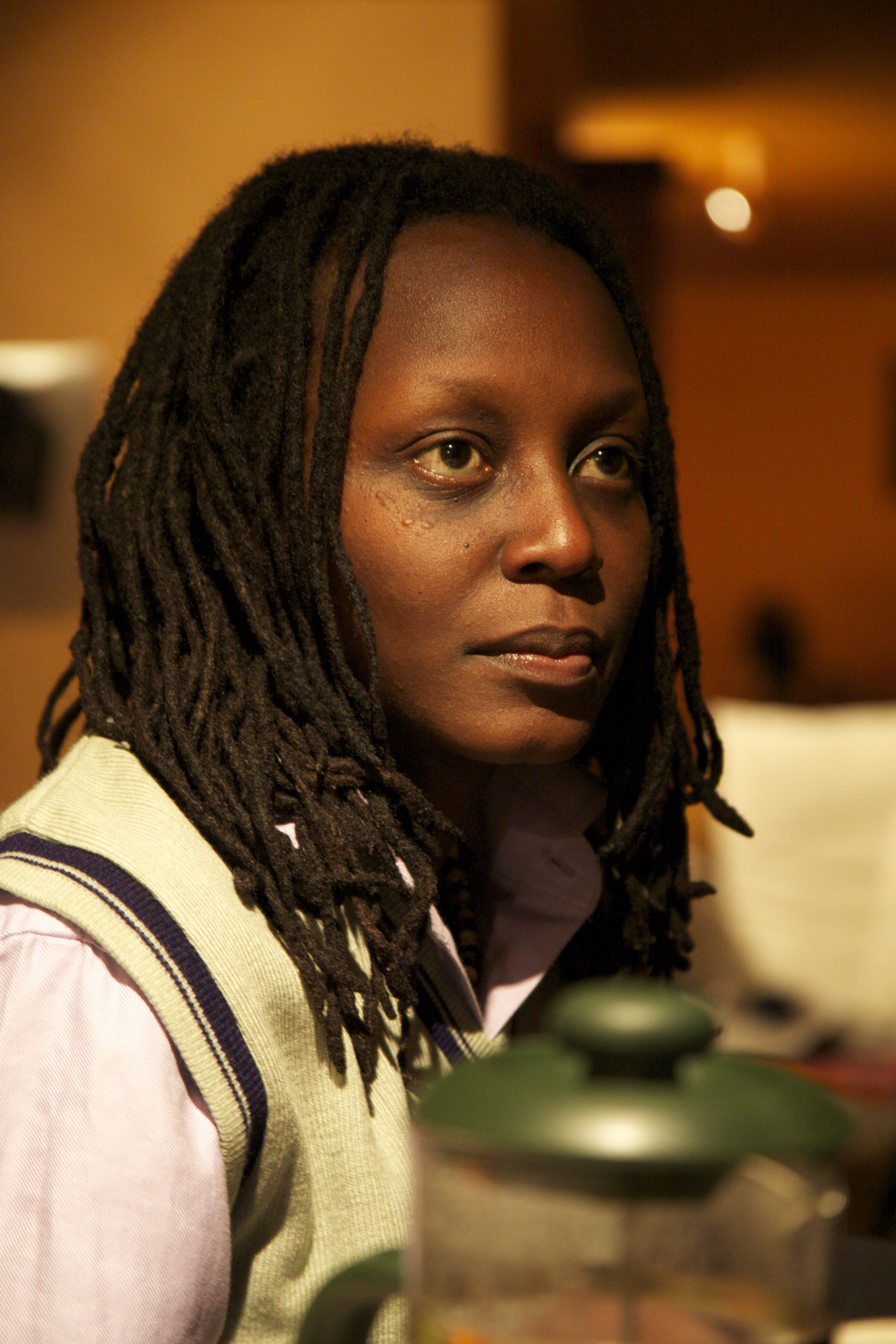
Under the title “FAMED UGANDAN ACTIVIST URGES UK HOME OFFICE NOT TO DEPORT LESBIANMelanie Nathan reports in her post of 11 December 2014 on O-blog-dee-o-blog-da that Kasha Jacqueline Nabagesera, the MEA laureate of 2011 has intervened strongly with the UK not to force Judith Twikiriz back to Uganda. “The UK has been very supportive of the Uganda Gay rights movement and it will be an embarrassment that your office doesn’t live up to its expectations in protecting those that need the protection most from persecution” Kasha writes in her letter. She would be sent back to the country where she already experienced torture and where she now faces likely persecution. The letter contains detailed arguments against deportation.

2011 Laureate Kasha


COPY OF THE LETTER to be found in the original post:


via Famed Ugandan Activist Urges UK Home Office Not to Deport Lesbian | O-blog-dee-o-blog-da.

Women Who Defend Human Rights – a series by Protection International

December 12, 2014


Protection Int'I_logo_final_vertical_72dpiTo shine a light on the courageous work of women human rights defenders (WHRDs) worldwide, the NGO Protection International announces the launch of a series of interviews with women who defend human rights across the globe, from December and continuing in 2015, each month will see a new portrait of a WHRD.

alejandra

This month’s conversation is with Alejandra Ancheita, a leading human rights defender from Mexico and winner of the 2014 Martin Ennals Award for Human Rights Defenders. Alejandra is the founder and executive director of The Project of Economic, Cultural, and Social Rights. To read the interview and watch the (Vimeo) video that goes with it go to Protection International’s website (see link below).
Other outstanding women lined up in the months to come include Rehana Hashmi (Pakistan), Eva Bande (Indonesia), María Martín (Spain), Porntip Honchai (Thailand).

Rehana Hashimi 
rehana

Eva Bande
eva


María Martín 
maria


Porntip Honchai
porntip


The Women Who Defend Human Rights – Alejandra AncheitaProtection International
.

In Memoriam Chan Soveth, Cambodian human rights defender

December 11, 2014

On Human Rights Day, FIDH reports that Chan Soveth, a prominent Cambodian human rights defender, has died at the early age of 51. He was a senior investigator at the Cambodian Human Rights and Development Association (ADHOC, a member organization of FIDH). “Chan Soveth was a voice for the voiceless. For decades, he selflessly worked for victims of human rights violations and abuses, in particular the poor and those living in remote areas, which ADHOC managed to reach out to”, said Karim Lahidji, FIDH President. “Soveth’s death is a great loss for his family, his colleagues and Cambodia’s human rights community, but the heritage of courage and commitment he left will last for generations”.

On many occasions, Soveth’s human rights work and personal commitment had caused him to be subjected to threats, intimidation and reprisals in the form of judicial harassment. In 2012, he had been forced to stay outside his country for several months. Upon his return, despite receiving another summon to appear before Cambodia’s flawed judicial system, and thus, despite the risk of being arbitrarily detained, he had decided to stay in Cambodia, amongst his fellow countrymen. Soveth relentlessly fought against human rights violations – from land grabbing and violations of people’s and communities’ rights to food, water or housing, to extrajudicial killings, arbitrary detention, torture, and violations of the rights to free expression and free assembly. He was not only a great investigator, trainer and human rights advocate, but also an inspiration to many. He was always eager to improve his impressive human rights and professional skills and to celebrate successes.logo FIDH_seul

Cambodia and the community of human rights defenders lose a (…).

more details in: http://www.phnompenhpost.com/national/rights-warrior-passes-age-51

Human Rights Day 2014: ODIHR Director Link wants to move from words to deeds for human rights defenders in the OSCE

December 11, 2014

On the occasion of International Human Rights Day, Michael Georg Link, Director of the OSCE Office for Democratic Institutions and Human Rights (ODIHR), called on all OSCE participating States to do more to protect human rights defenders in the OSCE region: “It is time for all OSCE participating States to move from words to deeds and to provide more effective protection to those who strive to promote and safeguard human rights in our countries.

The words must refer to the Guidelines on Human Rights Defenders which OSCE adopted this year: see: https://thoolen.wordpress.com/2014/06/11/osce-publishes-guidelines-on-the-protection-of-human-rights-defenders/

Unfortunately, in 2014 we have witnessed numerous attacks and threats against human rights defenders,” the ODIHR Director said. “This includes human rights defenders with whom ODIHR has worked, and I am particularly disturbed that those standing up for human rights in the OSCE region may be being targeted for activities they carry out in partnership with our Office.”

At the Budapest Summit, in 1994, OSCE participating States emphasized the need to protect human rights defenders, and at the OSCE Summit in Astana, in 2010, they underscored the important role played by civil society in helping to ensure full respect of human rights and fundamental freedoms. “That the environment in which human rights defenders operate has become more, not less, restricted across the region over the past few years is disturbing,” Link said. “Determined action is needed to reverse this trend.”

Human Rights Day 2014: Better protection of human rights defenders needed across the OSCE region, ODIHR Director says | OSCE.

Why is UNHCR Doing RSD Anyway? A UNHCR Report Identifies the Hard Questions

December 11, 2014

Not necessarily directly related to human rights defenders (although asylum seekers often are), this post is quite interesting and raises the issue of who is best placed to undertake refugee status determination.

Michael Kagan's avatar

Back in 2001 and 2002, when I was working on setting up legal aid for asylum-seekers applying to UNHCR for refugee status determination (RSD) in Egypt, UNHCR officials would sometimes tell me: “Why don’t you put your energy into getting the Egyptian government to live up to its responsibilities? UNHCR is not even supposed to be doing RSD.”

By this time, UNHCR had been doing RSD in Egypt for nearly five decades, and so many people in Cairo took it for granted that this was UNHCR normal role. But it was a provocative question. So, whenever I met up with an Egyptian lawyer or human rights activist, I would ask their opinion: “Do you think we should push the Egyptian government to take over from UNHCR and start deciding refugee cases?” I would always get the same answer: “Are you crazy? Why would anyone want to have the Egyptian Government…

View original post 1,743 more words