Archive for the 'human rights' Category

Three Navalny lawyers sentenced to years in Russian penal colony

January 20, 2025

On 17 January, 2025 Mark Trevelyan for Reuters reported that three lawyers for the late opposition leader Alexei Navalny were found guilty by a Russian court of belonging to an extremist group and sentenced to years in a penal colony.

Igor Sergunin, Alexei Liptser and Vadim Kobzev were arrested in October 2023 and added the following month to an official list of “terrorists and extremists”. They were sentenced respectively to 3-1/2, 5 and 5-1/2 years after a trial held behind closed doors in the Vladimir region, east of Moscow.

Vadim, Alexei and Igor are political prisoners and must be released immediately,” Yulia Navalnaya, the widow of the late politician, posted on X.

Human rights activists say the prosecution of lawyers who defend people speaking out against the authorities and the war in Ukraine crosses a new threshold in the repression of dissent under President Vladimir Putin.

“Lawyers cannot be persecuted for their work. Pressure on defence lawyers risks destroying the little that remains of the rule of law, whose appearance the Russian authorities are still trying to maintain,” rights group OVD-Info said in a statement.

It said Navalny’s lawyers were being prosecuted “only because the letter of the law still matters to them and they did not leave the man alone with the repressive machine”.

The Kremlin says it does not comment on individual court cases. Authorities have long cast Navalny and his supporters as Western-backed traitors seeking to destabilise Russia. Despite his imprisonment, Navalny was able via his lawyers to post on social media and file frequent lawsuits over his treatment in prison, using the resulting legal hearings as a chance to keep speaking out against the government and the war. The lawyers were accused of enabling him to continue to function as the leader of an “extremist group”, even from behind bars, by passing his messages to the outside world.

In court, a woman shouted “Boys, you are heroes” and supporters applauded the three men, standing together in a barred cage for the defendants, after their sentencing.

Yulia Navalnaya last month published video of secretly recorded meetings between Navalny and the lawyers in prison, something she said was illegal because an accused person has the right to confer privately with a lawyer. Russia’s federal prison service did not reply to a request for comment.

Navalnaya said the recordings were made by the authorities and handed to her team after it offered a reward for people to come forward with information about Navalny’s death.

She alleges her husband was murdered on Putin’s orders, an accusation that the Kremlin has strongly denied. Navalnaya herself is wanted in Russia for alleged extremist activity but has said she hopes to return to the country one day and run for president.

On 21 January 2025 the UN Special Rapporteur on the situation of human rights in the Russian Federation, Mariana Katzarova, urged authorities to end the severe crackdown on the legal profession in Russia and stop endangering the lives and safety of lawyers.

https://www.reuters.com/world/europe/three-navalny-lawyers-jailed-belonging-extremist-organisation-mediazona-news-2025-01-17/

https://www.ohchr.org/en/press-releases/2025/01/russia-special-rapporteur-appalled-prison-sentences-punish-navalny-lawyers

I owe Alaa Abd el-Fattah my life, which is why I am going on a hunger strike to help free him

January 19, 2025

If anybody represents the very British values of democracy, respect for human rights, justice and due process, it is the Egyptian activist, says Peter Greste in the Guardian of 15 January 2025. The piece is so rich in detail that I give here in full:

I first encountered Alaa Abd el-Fattah 11 years ago, as a disembodied whisper of reassurance from outside the bars of my grubby prison cell in Cairo. I had just been tossed in the box by Egypt’s El Mukhabarat– the malevolent general intelligence service responsible for internal security – and I was facing an indeterminate run in solitary confinement after being arrested on bogus terrorism charges for my work as a journalist.

Alaa knew the drill. Then just 32, he’d been imprisoned by each of the four previous regimes, and he understood both the institutional meat grinder we were confronting and the psychological stresses I’d have to grapple with.

“Welcome to Ward A, Political, in Tora prison,” he told me in a hushed voice through the door. “Here, you are surrounded by people who have been fighting for justice and democracy. We are a collection of activists, trade unionists, judges, writers and now you – a journalist. This is a very prestigious place, and you are with friends.”

A significant part of the prestige came from Alaa himself. He was – and remains – Egypt’s most prominent political prisoner. That also makes him the one the government fears the most. I owe him my life, which is why I am helping step up the campaign to free him.

When the country erupted in its chapter of the Arab spring revolution in January 2011, it was driven by a loose collection of young, middle-class, secular activists – including Alaa – who understood the power of social media.

He was already well known in Egypt as a software developer, online publisher and prolific writer from a long line of campaigners. His late father was a human rights lawyer, and his mother is a mathematics professor and pro-democracy activist. His aunt is a novelist and political activist. One sister helped set up a group fighting against military trials for civilians, and another is a film editor who co-founded a newspaper. Before the 2011 revolution, Alaa learned coding and built his own award-winning blog publishing site where he wrote about national politics and social justice.

In short, activism is in his DNA.

At the time we met, Egypt was still convulsing with revolutionary turmoil. The military had installed an interim administration after ousting the elected Muslim Brotherhood government. The streets were filled with police rounding up protesters who were fighting to stop the country sliding back into autocracy, and Alaa found himself in prison on charges of rallying, inciting violence, resisting authorities and violating an anti-protest law.

After my period in solitary ended, we would use the precious hours of exercise to stride up and down a dusty walled yard discussing Egyptian history and society, political theory, and his ideas of resistance and reform. I found him to be an extraordinarily intelligent political thinker and humanitarian dedicated to turning his country into a functioning, pluralist democracy, and whose powerful writing from prison inspired millions. But more than that, I found a good friend.

In our conversations, he helped me understand the politics of my own imprisonment. I and two Al Jazeera colleagues had been charged with broadcasting terrorist ideology, conspiring with a terrorist organisation, and broadcasting false news to undermine national security. I struggled to reconcile those very serious allegations with the relatively straight reporting we had actually been doing. But as we talked, I came to see that our arrest had nothing to do with what we had done, and everything to do with what we represented – a press freely reporting on the unfolding political crisis. Inspired by his writing, I wrote two letters of my own that we smuggled out and that helped frame the campaign that ultimately got me free.

In March 2019, Alaa was released from prison but ordered to spend 12 hours each night in a police cell, “not free … even in the sense of imperfect freedom common in our country,” he wrote at the time.

Six months later, he was once again arrested, this time for spreading “false news to undermine security”, and sentenced to five years.

By rights, his prison ordeal should have ended on 29 September last year, including the time he spent in pre-trial detention. But in an act of extraordinary cynicism and callousness, the authorities decreed that they’d count his stretch from the day he was sentenced, violating their own laws and adding another two years to his time behind bars.

In protest, his 68-year-old mother, Laila Soueif, began a hunger strike on the day he was supposed to walk free. She has vowed not to eat until he is once again out of prison, and she is now 108 days into the fast. That is an extraordinarily risky undertaking for anybody, let alone someone her age, and although she is showing remarkable resilience she is in serious danger.[see https://humanrightsfirst.org/library/dr-laila-souiefs-downing-street-hunger-strike-continues-as-her-son-alaa-remains-in-egyptian-prison/]

Laila is a British national now living in London, and through her, Alaa also has British citizenship. That gives the British government consular responsibility, and powerful diplomatic leverage to get him released.

If anybody represents the very British values of democracy, respect for human rights, justice, rule of law and due process, it is Alaa Abd el-Fattah.

That is why I feel compelled to join Laila, in London and in solidarity, also on a hunger strike for the next 21 days. It may not work – at least in the short term – and Alaa might not walk free. But I don’t think that matters.

While we were in prison together, Alaa’s father passed away. At a later memorial service, here is what he told the audience: “All that’s asked of us is that we fight for what’s right. We don’t have to be winning while we fight for what’s right, we don’t have to be strong while we fight for what’s right, we don’t have to be prepared while we fight for what’s right, or to have a good plan, or be well organised. All that’s asked of us is that we don’t stop fighting for what’s right.”

This injustice has gone on far too long. Alaa Abd el-Fattah is one of the most remarkable people I know, and he deserves to be free. I am determined to do whatever I can to help.

see also: https://humanrightsdefenders.blog/2024/11/28/ngos-appeal-to-un-working-group-on-arbitrary-detention-for-egyptian-alaa-abd-el-fattah/

  • Peter Greste is a professor of journalism at Macquarie University and the executive director for the Alliance for Journalists’ Freedom. In December 2013, he was arrested on terrorism charges while working for Al Jazeera and he was eventually convicted and sentenced to seven years. Under intense international pressure, the Egyptian president ordered his release after 400 days. He is undertaking this protest in his personal capacity

https://www.theguardian.com/commentisfree/2025/jan/16/i-owe-alaa-abd-el-fattah-my-life-which-is-why-i-am-going-on-a-hunger-strike-to-help-free-him

https://www.jurist.org/news/2025/05/un-panel-finds-detention-of-british-egyptian-activist-alaa-abd-el-fattah-illegal/

Sakharov Fellowship programme for human rights defenders from non-EU countries

January 19, 2025

The European Parliament’s Sakharov Fellowship is offering up to 14 human rights defenders selected from non-EU countries the opportunity to follow an intensive two-week training in Brussels and at the Global Campus of Human Rights in Venice. 

The empowering programme for human rights defenders has been organised annually since 2016, further to an initiative taken by the Sakharov Prize Community at the 25th Anniversary Conference of the Sakharov Prize.

The Brussels programme focuses on EU policies and tools in support of human rights defenders, accessing funding, developing communications skills, and raising awareness of specific security challenges facing human rights defenders. It further includes meetings with Members of Parliament, officials of the EU institutions and Brussels-based NGOs. The Fellows will also have space for individual advocacy and networking activities.

Training at the Global Campus of Human Rights in Venice combines academic teaching on international human rights law, instruments and mechanisms, with case studies, and provides practical tools for improving the work of human rights defenders to effect change on the ground. Lecturers include prominent academics, representatives of leading human rights NGOs, Sakharov Prize laureates and other outstanding human rights practitioners.

The programme will be organised in person in Brussels and Venice.

Candidates should have a proven record in campaigning for human rights in an NGO or other organisation or in an individual capacity. They must have a high level of English, sufficient to follow and contribute to discussion groups and workshops in Brussels and Venice.

The Fellowship covers return travel from the country of origin, accommodation in Brussels and Venice and a daily living allowance.

The deadline for applications is 26 January.

Fellowship or post-graduate

Venezuela: Carlos Correa is free!

January 18, 2025

Espacio Público, Carlos Correa’s NGO, informed on 16 January 2025 that Carlos Correa had been indeed arrested and has now been released from detention.  

Carlos Correa is a renowned human rights defender. On 7 January 2025, he was disappeared by hooded people. On 15 January, a prosecutor informed Carlos’ family that he was indeed detained by State security forces but could not confirm the charges and his whereabouts. On 16 January, Carlos was finally released from detention and able to reunite with his family.

Other human rights defenders such as Javier TarazonaRocio San MiguelCarlos Julio Rojas, and Kennedy Tejeda remain in arbitrary detention.

As explained in a public statement signed by ISHR and more than 80 organisations, the Venezuelan State is increasingly harassing and persecuting human rights defenders in an attempt to silence their work and their demands for respect for civil and political human rights in the aftermath of the elections of 28 July 2024. 

ISHR will continue to support Venezuelan human rights defenders and partners, and call for the release of all human rights defenders arbitrarily detained.

https://ishr.ch/latest-updates/thank-you-for-taking-action-carlos-correa-is-free

Egypt: Special Rapporteur concerned about use of anti-terrorism legislation HRDs

January 17, 2025

An independent human rights expert expressed on 15 January 2025 concern about the continued application of anti-terrorism legislation in Egypt to imprison human rights defenders.

Although there has been some progress with the release of some detainees and the development of a national human rights strategy, Egypt persists in routinely misusing counter-terrorism legislation and recycling criminal charges against human rights defenders,” said Mary Lawlor, Special Rapporteur on the situation of human rights defenders.

“What is particularly striking is the continued detention of human rights defenders past their release date by repeatedly charging them with similar, if not identical, terrorism-related accusations, in a practice commonly known as “rotation” or “recycling”,” Lawlor said.

The Special Rapporteur previously raised concerns in this regard in 22 communications sent to the Government of Egypt since May 2020. The practice of “rotation” was also highlighted by the UN Human Rights Committee in its concluding observations on Egypt’s last review in March 2023.

In particular, the Special Rapporteur expressed concern over the use of this practice to detain three human rights defenders for lengthy periods of time.

“It is shocking that instead of being released at the end of her five-year sentence on 1 November 2023, human rights lawyer Ms. Hoda Abdel Moneim was detained again under new charges. And one year later, a third set of charges was brought against her. She is now facing two new trials, with one of the new charges – ‘joining an unnamed terrorist organisation’ – being identical to that for which she had completed her sentence in 2023, in violation of the principle of double jeopardy”, Lawlor said.

In November 2024, the same terrorism-related charge was brought against another woman human rights defender, Aisha al-Shater, who was tried in the same case with Abdel Moneim. This charge is also identical to that for which she is currently serving a 10-year prison sentence.

In a third case, human rights defender and lawyer Ibrahim Metwally has been arbitrarily detained without trial for over four years. He was arrested in 2017 at Cairo Airport, while he was on his way to Geneva to meet with the UN Working Group on Enforced or Involuntary Disappearances. Although the Cairo Criminal Court has ordered his conditional release twice, he was repeatedly charged with new terrorism-related offences, one of which he supposedly committed in prison. The UN Working Group on Arbitrary Detention previously found Metwally’s detention to be arbitrary and noted that it amounts to an act of retaliation for cooperation with the UN.

“It is outrageous that Mr Metwally is facing trial in three cases, including that of ‘conspiring with foreign entities’, which appear to be in relation to his cooperation with the UN and his peaceful human rights work in Egypt prior to his detention,” Lawlor said.

The Special Rapporteur noted that the poor prison conditions in which the three human rights defenders are held were equally alarming. The human rights defenders have had health problems from the start of their arrest and have reportedly been denied adequate medical treatment despite the severity of their conditions, which may amount to physical and psychological ill-treatment.

“It is unacceptable for prison authorities to deny recommended surgery, bar the transfer of a detainee to a hospital, or withhold medical records from the detainee’s family and lawyer,” Lawlor said.

The Special Rapporteur is in contact with the authorities of Egypt on this issue and has urged them to meet their international human rights obligations, by which they must abide.

see also: https://humanrightsdefenders.blog/tag/egypt/

https://www.ohchr.org/en/press-releases/2025/01/egypt-special-rapporteur-concerned-about-use-anti-terrorism-legislation

https://african.business/2025/01/apo-newsfeed/egypt-special-rapporteur-concerned-about-use-of-anti-terrorism-legislation-against-human-rights-defenders

https://www.hrw.org/world-report/2025/country-chapters/egypt

Right Livelihood is looking for a full-time Head of Research

January 17, 2025

Right Livelihood is looking for a full-time Head of Research. The role will be based at one of our offices in Stockholm or Geneva and will lead the selection and research of new Laureates for the Right Livelihood Award.

About Right Livelihood

For over 40 years, Right Livelihood has honoured courageous people solving global problems, creating a community of change-makers committed to peace, justice, and sustainability. By recognising the actions of brave visionaries and building a continuous relationship with these change-makers, Right Livelihood boosts urgent and transformational societal change. With offices in Stockholm and Geneva, Right Livelihood has 20 staff and an annual budget of EUR 4 million. Every year, an international jury chooses the new Laureates: to date, 198 Laureates from 77 countries have been awarded for their impactful contributions. Read more about our approach.

Purpose of the role

You will oversee all aspects of the research and selection of new Laureates for the Right Livelihood Award, taking a leading role in implementing our strategic outlook, as well as developing and managing the research team. In this position, you will be collaborating with colleagues in the entire Right Livelihood team and communicating with nominees for the Award as well as external experts and other contacts. It is expected that you stay on top of global developments related to the work. It is your responsibility to ensure high quality in the research and present accurate, comprehensive, and timely research findings about the candidates. 

The Head of Research will report to the Deputy Director and lead the work of the research team, which currently has two staff members. 

Main responsibilities

  • Lead and develop the annual selection process of Laureates towards the goals defined in the organisational strategy and operational plan.
  • Provide leadership to the research team, manage and guide the research work, and be responsible for the research budget.
  • Coordinate and conduct investigative research about nominees for the Award, both remote and on-site, and lead the writing of the report presented to the jury, including all relevant research findings.
  • Ensure high-quality research to allow the jury to assess nominations from multiple perspectives.
  • In coordination with colleagues, make sure that our work is informed by current trends in global affairs and civil society movements.

Required experience and qualifications

  • Professional experience in leadership roles
  • Professional experience in conducting investigative research in fields such as activism and social transformation 
  • Experience with conducting interviews with a wide range of people, e.g. victims of environmental or human rights violations, both on-site or online
  • Full professional proficiency in English, including experience with research report writing

Terms of employment

This position will be located preferably at our head office in Stockholm or at our Geneva office. Regular international travel is expected in this role. This is a permanent full-time position with a probationary period.

Right Livelihood is committed to creating a diverse and inclusive workplace. We therefore strongly encourage applications from all backgrounds, identities and abilities to help us create a diverse, balanced and inclusive working environment.

Starting date

By agreement, preferably April 2025.

How to apply

We use a competency-based process for this recruitment. Therefore, you will not be asked to attach a letter of motivation to your application. Instead, we will ask you to complete the online application form accessed through the link below, attach your CV and submit a work sample. Instructions for the work sample are outlined here and in the application form.

go to application form

If you have further questions about the position or the application process, please contact us at jobs@rightlivelihood.org.

The deadline for applications is February 12, 2025 (EOD).

UN special rapporteur ‘dismayed’ at Turkey’s jailing of human rights lawyers

January 17, 2025

A United Nations special rapporteur on Thursday 16 January 2025 condemned Turkey’s continued use of counterterrorism laws to imprison human rights lawyers and activists, calling it a violation of international human rights obligations.

Mary Lawlor, the UN special rapporteur on human rights defenders, expressed alarm over the long-term detention of nine Turkish human rights lawyers and activists who were sentenced to lengthy prison terms on what she described as “spurious terrorism-related charges.”

[see also: https://humanrightsdefenders.blog/2019/02/07/turkey-not-a-good-place-to-be-a-lawyer-or-a-judge/]

The group includes eight members of the Progressive Lawyers’ Association (ÇHD) who were arrested between 2018 and 2019 and convicted under Turkey’s Anti-Terror Law: Barkın Timtik, Aytaç Ünsal, Özgür Yılmaz, Behiç Aşçı, Engin Gökoğlu, Süleyman Gökten, Selçuk Kozağaçlı and Oya Aslan. They were sentenced to up to 13 years in prison in what has been widely criticized as an unfair trial, known as the ÇHD II trial.

Another arrestee, lawyer Turan Canpolat of the Malatya Bar Association, was imprisoned in 2016 based on the testimony of a client who later admitted he had been coerced. Canpolat was convicted of alleged links to the Gülen movement, inspired by the late Turkish cleric Fethullah Gülen, which Ankara accuses of orchestrating a coup attempt in 2016, and sentenced to 10 years in prison. The Gülen movement denies involvement in the coup.

Canpolat was detained in 2016 after responding to a police search at a client’s residence, only to find himself accused based on doctored evidence and coerced testimony. Despite the dismissal of related charges against others implicated in his case and the recanting of key testimony, he remains in prison. His conviction was based on his legal representation of companies later closed by emergency decrees after the coup, a move critics argue criminalizes standard legal work. International legal groups have denounced his imprisonment as a miscarriage of justice, calling for his release.

All nine lawyers are currently held in high-security prisons, and Canpolat has reportedly been kept in solitary confinement for nearly three years without a disciplinary order, a practice the UN expert found “extremely disturbing.”

Lawlor has raised concerns about their cases since the beginning of her mandate in 2020, but Turkey has continued to criminalize their work. “I remain dismayed that the criminalization of their human rights work has not stopped,” she said.

She urged Turkish authorities to comply with international human rights law and guarantee fair appeal hearings for the detained lawyers. “I am ready to discuss this further with Turkish authorities,” she added.

The Turkish government has repeatedly been criticized for using broad anti-terror laws to silence political dissent and imprison journalists, lawyers and activists. Since the 2016 coup attempt, Turkey has arrested thousands on terrorism-related charges, often based on tenuous evidence such as social media posts or association with banned groups.

International human rights organizations, including Amnesty International and Human Rights Watch, have condemned Turkey for what they describe as politically motivated prosecutions and the erosion of due process. The European Court of Human Rights has ruled against Turkey in multiple cases, finding that it has violated the right to a fair trial and engaged in arbitrary detention.

https://www.turkishminute.com/2025/01/16/un-special-rapporteur-dismayed-at-turkeys-jailing-of-human-rights-lawyers-under-terrorism-laws4

seealsohttps://www.fidh.org/en/region/europe-central-asia/turkey/turkey-unacceptable-attacks-on-the-legal-profession

Urgent vacancy at FIDH for Delegate to the United Nations in Geneva

January 15, 2025

Posted on 6 January 2025 – Closing date 15 January 2025

The International Federation for Human Rights (FIDH) is an international non-governmental organisation (NGO) composed of nearly 200 national human rights organisations from more than 115 countries. FIDH is a nonpartisan, non-sectarian, apolitical, and not for profit organisation. Since 1922, FIDH has been defending all human rights – civil, political, economic, social, and cultural – as set out in the Universal Declaration of Human Rights.

https://www.fidh.org/en

FIDH are now recruiting : A Delegate to the United Nations (F∕M) – Indefinite-term contract based in FIDH Geneva office

The FIDH’s Delegation in Geneva

  • Represents FIDH before Geneva-based international organizations and institutions, the Office of the United Nations High Commissioner for Human Rights (OHCHR); in particular, the UN Human Rights Council (HRC) and the UN Human Rights Treaty Bodies;
  • Organizes the participation of FIDH’s member and partner organizations in the work of UN human rights bodies and mechanisms (support and assistance with regard to the submission of “parallel” or “alternative” reports, lobbying and advocacy, communication, etc.): mainly the UN Human Rights Council (including the Universal Periodic Review (UPR) mechanism), treaty monitoring bodies, and special procedures;
  • Prepares and implements the interventions of lobbying and advocacy at the Human Rights Council, and defines advocacy strategies;Feeds UN human rights protection bodies and mechanisms, in particular UN special procedures and OHCHR’s sections and branches, based on information from FIDH member and partner organizations and develops the strategic analysis of institutional developments and advocacy opportunities;

Relays and reports on activities and events to FIDH’s International Secretariat based in Paris.

Direct superviser : The representative, Head of the FIDH Delegation to the United Nations in Geneva

Applicants should send their CV and a brief cover letter (in English) by email recrutement@fidh.org quoting reference FIDH DELEGATE in the subject line.

https://reliefweb.int/job/4122938/delegate-united-nations-indefinite-term-contract-based-fidh-geneva-office

Yu Wensheng’s appeal rejected by Chinese court

January 8, 2025

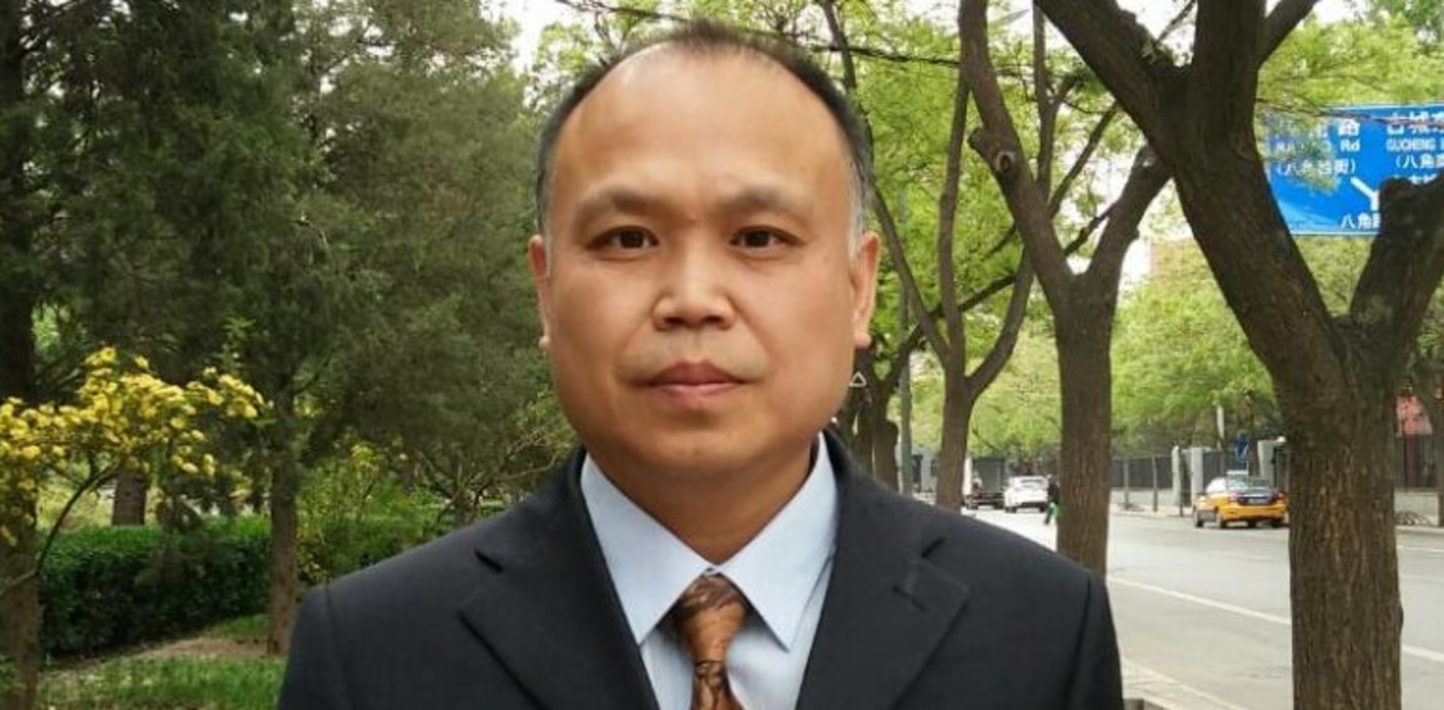
Responding to the rejection of Chinese human rights lawyer see also:s appeal against his three-year prison sentence for “inciting subversion of state power”, Amnesty International’s Interim Regional Deputy Director for Research Kate Schuetze said on 6 January, 2025: “The charges against Yu Wensheng and his wife, activist Xu Yan – who was convicted of the same offence – are entirely baseless. They reveal the authorities’ inability to provide any legitimate justification for their imprisonment.

“The Chinese government has used Yu’s online comments and his numerous international human rights awards as an excuse to label him a threat to national security. But all this really demonstrates is Beijing’s deep fear of human rights defenders who dare to dissent.

“Yu Wensheng and Xu Yan have been imprisoned solely for exercising their right to freedom of expression and they must be released immediately and unconditionally.”

Yu Wensheng is the winner of the 2021 Martin Ennals Award. [https://www.trueheroesfilms.org/thedigest/laureates/69fc7057-b583-40c3-b6fa-b8603531248e]

See also: https://humanrightsdefenders.blog/tag/yu-wensheng/

Nigerian atheist Mubarak Bala freed from prison (but fear still persists)

January 8, 2025

The President of the Humanist Association of Nigeria, Mubarak Bala, was apprehended at his home in Kaduna State on 28 April 2020. See:

The prominent Nigerian atheist, who was freed on 8 January 2024 after serving more than four years in prison for blasphemy, is now living in a safe house as his legal team fear his life may be in danger…

In 2024, the UN Working Group on Arbitrary Detention (UNWGAD) released its opinion that the Nigerian State violated international law by detaining Bala. Concluding that he was wrongfully imprisoned for exercising his right to freedom of thought, conscience, religion or belief and that because of this violation no trial should have taken place.

Humanists International welcomes news of the release of Mubarak Bala, however, it reiterates that he should never have been detained in the first place. The organization once again thanks all those individuals and organizations without whose support this work would not have been possible. The organization hopes that Bala will one day be able to return to his homeland, and resume his work.

[https://humanists.international/]

Andrew Copson, President of Humanists International stated:

Today, we celebrate Mubarak Bala’s release – a hard-won victory that fills us with immense joy and relief. This triumph would not have been possible without the unwavering dedication of Humanists International’s staff, the tireless advocacy of Leo Igwe, the expertise of James Ibor and Bala’s legal team, and the invaluable support of our partner organizations. We extend our deepest gratitude to each and every one of them. While we rejoice in Mubarak’s freedom, we remain committed to fighting for the countless others who remain unjustly imprisoned for their beliefs. Their struggle is our struggle, and we will not relent until they too are free.”

https://www.bbc.com/news/articles/c62zpk4nnxdo