Archive for the 'human rights' Category

Laureates of the European Parliament’s Sakharov Prize discussed human rights protection in the digital age

May 30, 2016


Nine former Sakharov prize laureates from different countries met in Brussels on 24 May 2016 to discuss how to adapt to the challenges facing human rights defenders in the digital era. The event was organised by the European Parliament (EP) in the framework of Sakharov prize network activities engaging former prize laureates and Members of EP to draw attention to human rights violations and to support former laureates and their causes.

Read the rest of this entry »

Patt Derian – the rare politician/human rights defender – no longer

May 30, 2016
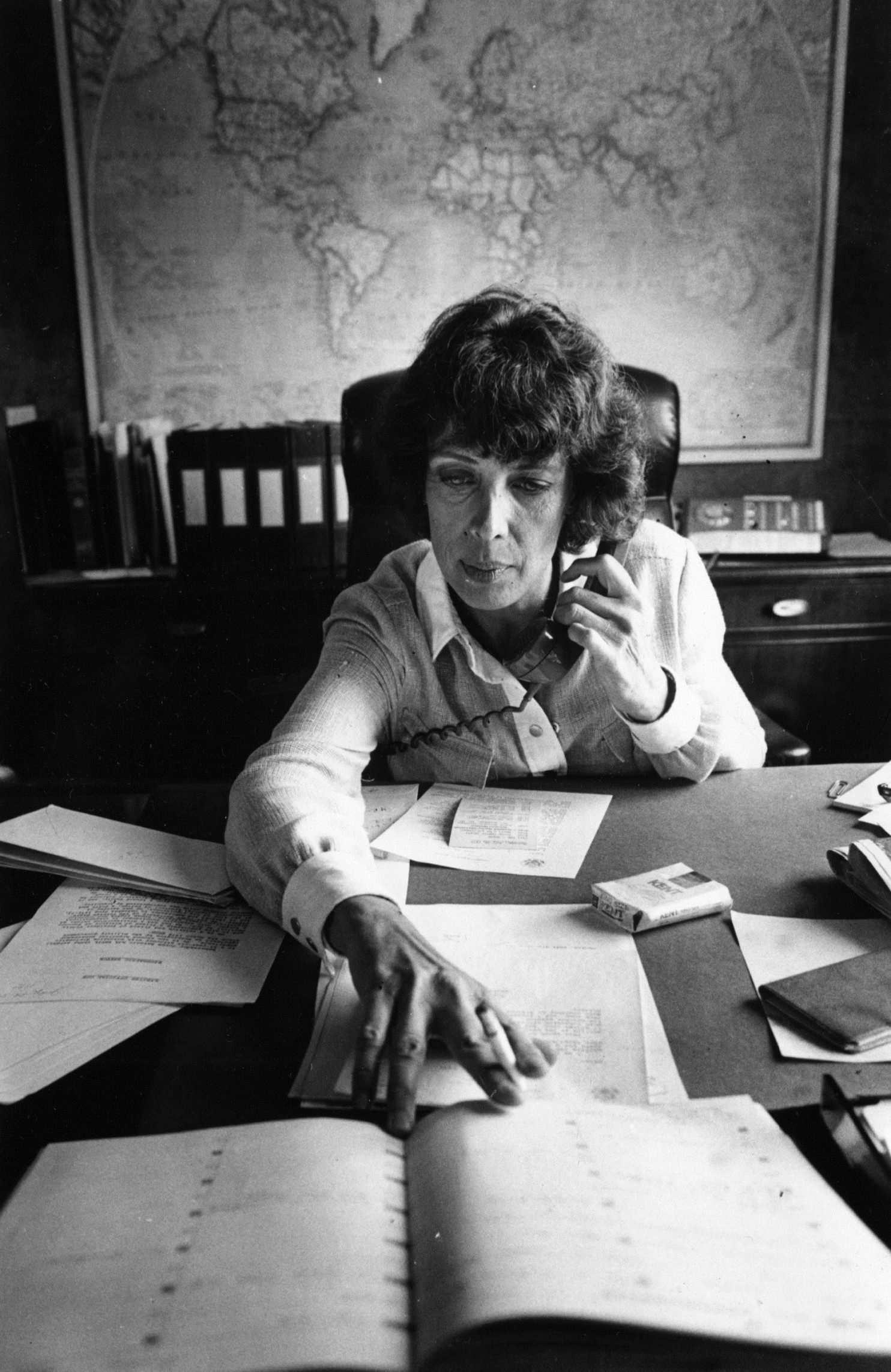
Being a leading politician and human rights defender does not always go together well. Patricia Murphy (“Patt”) Derian was one of the exceptions. She passed away on 20 May 2016 at the age of 86. She was an American civil rights and human rights activist, who served under President Carter from 1977 to 1981.DERIAN PATT

After Jimmy Carter won the election, he nominated Derian to be Coordinator for Human Rights and Humanitarian Affairs and elevated the post to that of Assistant Secretary of State for Human Rights and Humanitarian Affairs effective August 17, 1977, and Derian served in that capacity for the remainder of the Carter administration. In this post she worked to improve policy coordination on humanitarian issues such as human rights, refugees, and prisoners of war.

Derian was a vocal critic of Jeane Kirkpatrick and of the so-called Kirkpatrick Doctrine during the 1980s, which advocated U.S. support of anticommunist governments around the world, including authoritarian dictatorships, if they went along with Washington’s aims —believing they could be led into democracy by example. Kirkpatrick wrote, “Traditional authoritarian governments are less repressive than revolutionary autocracies.” Derian objected to Kirkpatrick’s characterization of some governments as only “moderately repressive,” arguing that this line of thinking allowed the U.S. to support “a little bit of torture” or “moderate” prison sentences for political dissenters. Derian pointed out that, when it comes to human rights, in terms of morality, credibility and effectiveness, “you always have to play it straight.” Read the rest of this entry »

Profile of Pedan Marthe Coulibaly, human rights defender from Côte d’Ivoire

May 27, 2016

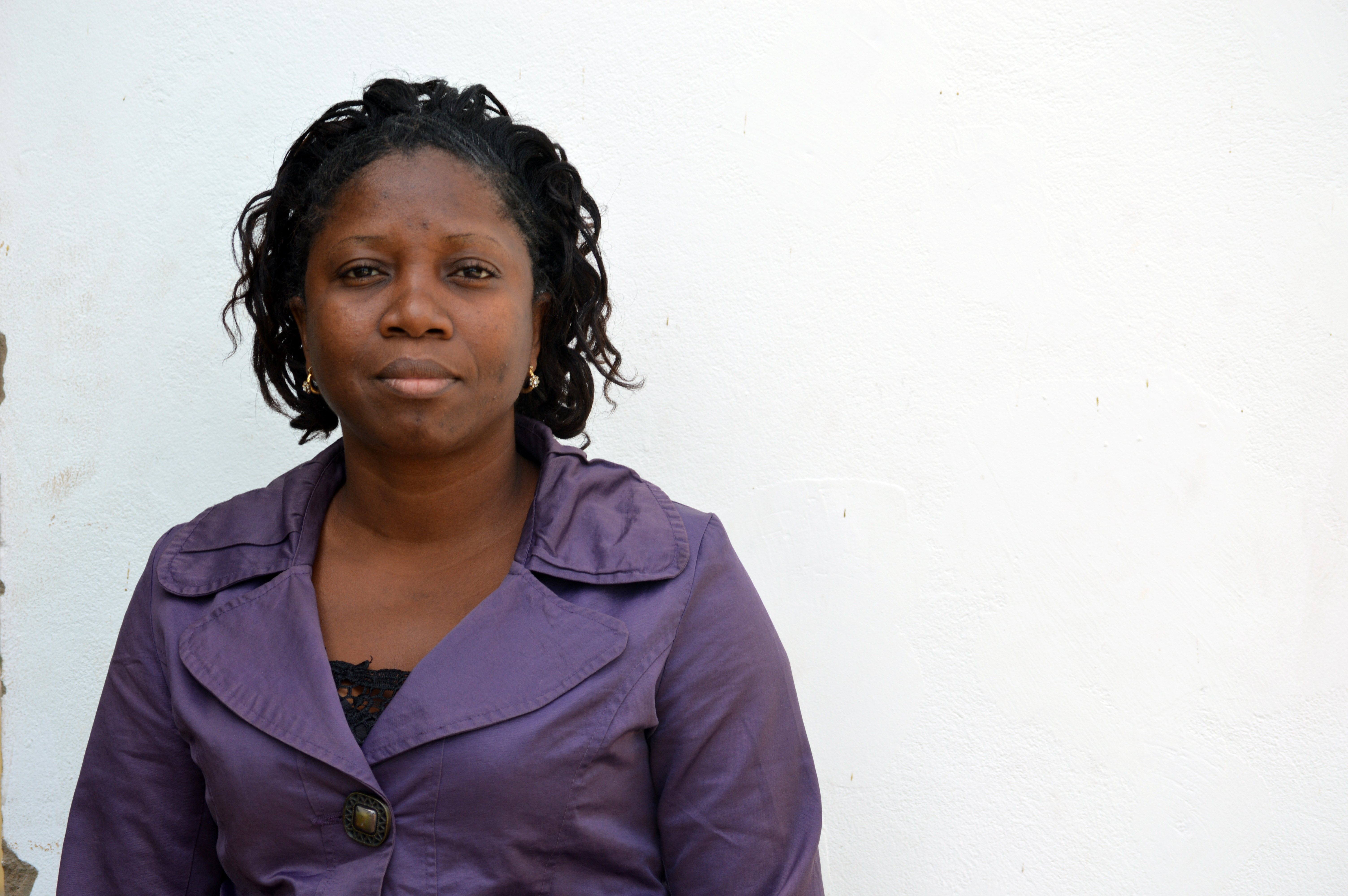
Pedan Marthe Coulibaly human rights defender Côte d'Ivoire.


Pedan Marthe Coulibaly, human rights defender from Côte d’Ivoire

Ms Pedan Marthe Coulibaly is the national coordinator of the “Coalition Ivoirienne des défenseurs des droits humains” (human rights defenders coalition from Côte d’Ivoire). She was part of the NGO delegation sent by ISHR to participate in the 58th session of the African Commission on Human and Peoples’ Rights. On 11 April 2016 ISHR published the following interview on her work

The Coalition Ivoirienne des Défenseurs des droits humains (CIDDH) was founded in 2004 and gathers together more than a dozen national civil society organisations. Its two main missions are to protect human rights defenders and to promote their rights. This work mostly involves raising awareness of and increasing the capacity of defenders to make use of human rights protection mechanisms. A founding member of the Centre féminin pour la démocratie et les droits humains (Women’s centre for democracy and human rights) in Côte d’Ivoire, Ms Coulibaly has been advocating for human rights in general, and women’s rights in particular, for over a decade. She started engaging on these issues immediately after graduating, when she realised that during the 2002 national crisis women were among the most exposed to human rights violations.

What does the coalition do?

The first activity of CIDDH is to ‘connect with the member organisations on a regular basis and seek information about the realities of their work’. The aim is to stay in tune with the challenges facing grassroots human rights defenders and, when needed, to identify ways of assisting them.

When informed about a difficulty facing a defender, the coalition carries out a risk analysis of the situation. If the risk is deemed high, the coalition can decide to alert partners, such as the West African human rights defenders network; send communications to the United Nations and African Commission Special Rapporteurs on human rights defenders; or collect resources among its network in order to ‘move the defender to a safe place’.  Sometimes, the coalition may also publish press releases for distribution at press conferences.

Who are the most exposed defenders in Côte d’Ivoire? 

Given her pivotal role within CIDDH, Ms Coulibaly has been able to identify some of the most at risk defenders in Côte d’Ivoire, who are typically those working on sensitive issues, such as extractive industries. 

‘When they go to the field, defenders working on extractive industries are often forced to hide their true identity and the name of their organisations. (…) They can be subject to intimidations or threats from industries, sometimes with the support of administrative authorities.’

Defenders who question certain cultural practices, such as female genital mutilation, are also often the targets of  hostile community reactions.

The role of the coalition in the development of the HRD law

CIDDH was at the frontline throughout the drafting and adoption process of the recent law on human rights defenders in Côte d’Ivoire. The coalition was first invited by the Ministry of Human Rights to participate in the validation session of the draft law. CIDDH then initiated an intensive advocacy campaign to ensure the recommendations and concerns they shared at the validation session had been taken into account.

CIDDH also intended to check if the parliamentarians targeted during the advocacy campaign had appropriated the recommendations as their own and shared them during the adoption process. One of the concerns exposed by the coalition was the need to include the notion of ‘threat’ in the list of dangers facing women human rights defenders. This concern was duly included in the adoption process. Regretfully, the coalition’s opposition to the obligation for human rights defenders to submit annual reports to the State fell on deaf ears.

The coalition subsequently attended, as an observer, the parliamentary session to adopt the law, where they were relieved to witness that most of the recommendations made by human rights defenders had been retained.

Following the adoption, CIDDH focused on training human rights defenders so they could get to know the content of the law and ‘make it theirs so as to promote their own rights’. The coalition intends to continue advocating for the adoption of an implementation decree for the law, as well as for an implementation mechanism to be put in place.  

More proactivity for better protection 

While recognising the crucial role of ‘emergency funds’ provided by partners such as Frontline Defenders when defenders’ rights are violated, Ms Coulibaly insists on the need for and the difficulty in achieving a more proactive approach.

 ‘We should not wait to see real dangers before starting to collect resources to protect defenders (…) If the coalition had permanent resources for a staff member dedicated to the protection of defenders, this would make the work of defenders a lot easier.’

Ms Coulibaly also calls for the international community to step in for the protection of human rights defenders. She stresses that ‘collaboration with the international community should go beyond exchange of information, communications or reports’ and take the form of ‘concrete measures’ to protect defenders.

Putting defenders at the heart of the African Year of Human Rights

With 2016 being declared the African Year of Human Rights by the African Union there is an opportunity to make an assessment of the situation of human rights defenders in Africa, says Ms Coulibaly. The progress made to date and remaining challenges should be identified. It is also essential that each country sets up strategies to implement laws protecting human rights and that these laws have a real effect on the ground.  

‘It is a real problem: protocols are being adopted, legal instruments are being adopted, but these documents have no impact on real life. No one can feel any change.’

Source: Defender profile : Pedan Marthe Coulibaly, woman human rights defender from Côte d’Ivoire | ISHR

Azerbaijan releases human rights defenders bit by bit: Khadijah Ismayilova now free

May 27, 2016

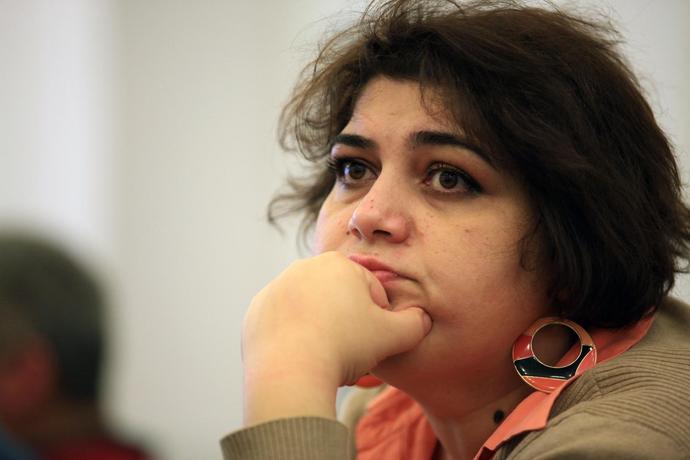
Khadija IsmayilovaOn Wednesday 25 May 2016 Azerbaijan finally released investigative journalist Khadijah Ismayilova [https://thoolen.wordpress.com/2015/12/18/azerbaijan-khadija-ismayilova-remains-in-jail-but-council-of-europe-takes-exceptional-step/] after a number of other human rights defenders were released bit by bit over the last months. Ismayilova was serving a seven-and-a-half year sentence on charges which included embezzlement, illegal business activities and tax evasion. The Supreme Court has now amended her imprisonment to 3 1/2 years of suspended sentence and released her from prison. She vowed to continue to fight to clear her name. “I will continue to fight until complete acquittal,” Ismayilova told reporters after her release. “I will also continue to work as a journalist.” The British-Lebanese lawyer Amal Clooney is representing Khadija Ismayilova at the European Court of Human Rights.

As an independent reporter and journalist of the Azerbaijani radio Azadliq (“Radio Freedom”) she has shown great courage (see: https://thoolen.wordpress.com/2014/12/11/khadija-ismayilova-azerbaijan-is-not-deterred/), and received several international prizes, such as the 2015 Alison Des Forges Award for Extraordinary Activism (HRW), the 2015 Freedom to Write Award, the 2012 Fritt Ord/Zeit Press Prize, and the 2012 Courage of Journalism Award by the Washington-based International Women’s Media Foundation.

Although there are still human rights defenders and journalists in prison, Azerbaijan provides a fine example of how awards and the combined international pressure from a variety of sources (States, NGOs and international organizations) can have an impact:

https://thoolen.wordpress.com/2016/03/18/azerbaijan-pardon-jafarov-ismayilova-aliyev/

https://thoolen.wordpress.com/2016/04/08/released-intigam-aliyev-azerbaijan-civil-rights-defender-of-the-year-award/

Source:

Reuters – Azerbaijan frees journalist whose case raised outcry in West

https://www.cpj.org/2016/05/-azerbaijani-reporter-khadija-ismayilova-ordered-r.php

Shlosberg awarded the inaugural Boris Nemtsov Prize

May 23, 2016

The Boris Nemtsov Foundation was established by Zhanna Nemtsova, a daughter of the murdered politician, Boris Nemtsov, and plans to work in the field of education and raising public awareness, expert evaluations and also in “helping political prisoners and those who are prosecuted on political grounds in Russia.” A new national award, the Boris Nemtsov Prize, was created which is awarded annually for “outstanding courage in fighting for democratic values, human rights and freedom in Russia.”

Lev Schlosberg, a member of the Yabloko Party and a former deputy of the Pskov regional parliament, was announced as the first recipient. The award ceremony will take place in Bonn, Germany, on Russia’s National Day, June 12.

Nemtsov was in 2015 runner-up in the European Parliament’s Sakharov prize: https://thoolen.wordpress.com/2015/10/29/saudi-blogger-raif-badawi-awarded-europes-sakharov-prize/

Source: Human rights activist Shlosberg awarded Boris Nemtsov Foundation Prize | Russia Beyond The Headlines

Rupert Abbott, a human rights defender about Phnom Penh

May 20, 2016

This blog features regularly profiles of human rights defenders. This time slightly different: a profile by a human rights defender. Rupert Abbott who has worked several years in Cambodia.  He spoke with Brent Crane and the interview appeared in the Phnom Penh Post of 20 May 2016 under the title: “MY PHNOM PENH”.


Rupert Abbott has worked at the Cambodian Center for Human Rights, for the UN at the Khmer Rouge Tribunal and as the deputy Asia Pacific director

Rupert Abbott has worked at the Cambodian Center for Human Rights, for the UN at the Khmer Rouge Tribunal and as the deputy Asia Pacific director of AI

S-21

Read the rest of this entry »

New travel guide “Cyber security policy for human rights defenders” issued by GPD

May 20, 2016

On 18 May 2016 Global Partners Digital (GPD) issued a new entry in its series of ‘Travel Guides to the Digital World‘: Cybersecurity Policy for Human Rights Defenders.

Just as a travel guide introduces tourists to the customs, language and geography of a foreign land, the series aims to equip human rights defenders with the information needed to navigate complex areas of internet-related policy from a human rights perspective. Previous guides in the series have focused on internet governance and digital surveillance. The latest entry,  shines the spotlight on an emerging, and increasingly crucial domain – and aims to fill a conspicuous gap. For while much valuable work has already been done on cybersecurity, there are currently few resources for human rights defenders on this issue.

A few years ago, cybersecurity was a word most likely to evoke dreary office trainings on password protection. Today, it is a top priority of states worldwide. 72 countries now have live national cybersecurity strategies, and 102 have National Computer Incident Response Teams (CIRTs). It remains however, a contested, elastic and shifting term which can cover a seemingly endless range of different issues, situations, and policy measures.

In spite of this, human rights defenders have so far been notable for their absence in cybersecurity policymaking spaces. Without the crucial scrutiny they provide, important decisions are being taken without any consideration for their broader implications on the enjoyment of basic human rights, including the right to freedom of expression, access to information, and privacy. The guide hopes in a small way to address this trend by helping human rights defenders to find their bearings and gain a solid grasp of the institutions, actors and issues at stake.

A few words on structure. In conceptualising the guide, an immediate challenge was the sheer range of definitions available within cybersecurity. We’ve tried to resolve this by grouping issues into three broad categories –  information security, cyber crime and cyber conflict – but we recognise that these overlap. Human rights defenders need to be active not only in challenging the impact of cybersecurity policies, but in reshaping its very meaning, which is why definition is a key focus of the guide.

The guide concludes with a list of recommendations, which are by no means prescriptive or comprehensive, but which hopefully offer some useful starting points for strategic engagement from a human rights perspective.

[GPD are a small team based in Shoreditch in London working with civil society groups, governments, international institutions and businesses to protect and promote human rights values online. Much of its work is carried out with partner organisations in the global South. Global Partners Digital started off in 2005 as Global Partners and Associates (GPA) which was set up to work in the areas of democracy, governance and human rights. As a team within GPA, it initially worked on human rights and traditional media issues. Since then, its work in this field has developed substantially. With the unprecedented growth of the internet and mobile phone technologies – and the challenges and opportunities that these bring – GPD have become increasingly focused on human rights and digital communications. Thus the rebranding as Global Partners Digital in 2013.]

see also: https://thoolen.wordpress.com/2014/06/05/new-book-on-internet-policy-and-governance-for-human-rights-defenders/

Source: Introducing GPD’s new travel guide to cybersecurity policy for human rights defenders | Global Partners Digital

In Somaliland lawyer has to choose: practicing law or human rights!

May 19, 2016

Frontline NEWlogos-1 condensed version - croppedreports that on 16 May 2016, human rights defender Mr Guleid Ahmed Jama received notification from the Somaliland Minister of Justice and Judicial Affairs that his licence to practice law had been terminated. Guleid Ahmed Jama [for profile see: https://frontlinedefenders.org/en/profile/guleid-ahmad-jama] is a lawyer and founder of the Human Rights Center, a human rights watchdog organisation in Somaliland.

He only learned about this when he saw on 16 May a letter (dated 10 April!) which was circulated to members of the Somaliland judiciary from the Minister of Justice and Judicial Affairs, Minister Ahmed Farah Adarre, requesting that the judiciary cease to allow Guleid Ahmed Jama to practice law, as his position as chairperson of the HRC and his work as a lawyer are incompatible. [The termination of the licence by the Minister of Justice is unprecedented as the duty of licensing permissions falls within the mandate of the Advocates Licensing and Disciplining Commission.]

Earlier harassment against him occurred in April 2015 when he was arrested, charged and detained in Hargeisa while working in his capacity as a lawyer at Hargeisa Regional Court. He was accused of ‘subversive or anti-national propaganda’, ‘instigation to disobey the laws’, ‘intimidation of the public’ and ‘publication or circulation of false, exaggerated and tendentious news capable of disturbing public order’. According to the Office of the Attorney General, the human rights defender had allegedly committed these offences through his work at the HRC. This case was later closed. <https://www.frontlinedefenders.org/en/case/case-history-guleid-ahmed-jama>

Seems to me to be a good case for (international) lawyers organizations.

See also: https://www.defenddefenders.org/2016/05/somaliland-minister-justice-revokes-license-human-rights-lawyer/


Peter Gabriel and Susan Sarandon encourage UN Rapporteur on Extrajudicial Executions, Christof Heyns, in visit Honduras on 23 May

May 19, 2016
Berta Cáceres, an indigenous environmental human rights defender was killed two months ago. Berta was leading the fight against the Agua Zarca hydroelectric dam project that is an environmental and cultural threat to the Lenca community [see: https://thoolen.wordpress.com/tag/berta-caceres/]. The UN Special Rapporteur is visiting Honduras as from 23 May. One should hope that the NGOs pressure [https://thoolen.wordpress.com/2016/03/07/exceptional-response-from-ngo-world-on-killing-of-berta-caceres/] as well as the short video messages by Peter Gabriel and Susan Sarandon published on 12 May by Witness will help to get justice:


The Special Rapporteur on extrajudicial, summary or arbitrary executions, Christof Heyns, Read the rest of this entry »

Possible funding for training independent journalists exposing human rights abuses

May 19, 2016

Photo_Asset_1

Giselle Portenier (CNW Group/Canadian Journalism Forum on Violence and Trauma)

Independent documentary-makers and freelance journalists working to expose human rights abuses can compete for a bursary to help them obtain hostile environment training, more usually made available to journalists working in war zones. The 2016 Portenier Human Rights Bursary competition, offered by the Canadian Journalism Forum on Violence and Trauma, opened on 16 May and closes on June 30. The annual bursary, introduced last year, is sponsored by the documentary-maker Giselle Portenier. Read the rest of this entry »