Archive for the 'human rights' Category

China wants us to forget Ilham Tohti, but we will not

September 21, 2016
It’s been two years since Ilham Tohti, [sometimes spelling Ilam Totti] a well-regarded ethnic Uyghur economist and peaceful critic of the Chinese government, was sentenced to life in prison by the Xinjiang People’s High Court for alleged “separatism” after a grossly unfair trial. Tohti and his family had already endured years of harassment and periods of house arrest by state agents, but in September 2014 Beijing evidently felt it necessary to take him off the grid permanently.”
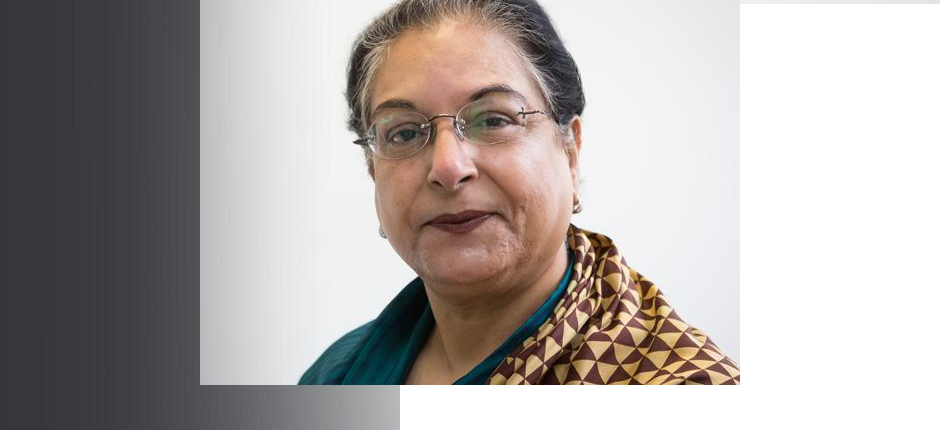
Ilham Tohti speaks to students at Beijing’s Minzu University of China in 2009.
Ilham Tohti speaks to students at Beijing’s Minzu University of China in 2009. © 2009 Associated Press

Since then, human rights defenders and the rule of law in China have been under sustained attack from President Xi Jinping’s government. But the dynamics in Xinjiang – a region synonymous with gross discrimination against the predominantly Muslim Uyghur population, restrictions on religion and speech, economic development plans that favor Han Chinese over Uyghurs, and now a highly politicized counterterrorism campaign to stem violence – provide fertile ground for further serious human rights violations.

The signs are ominous: restrictions on observing Ramadan are now an annual reality, and some Uyghurs are now being required to give DNA samples and other biodata in order to obtain passports. China’s state media reports on counterterrorism operations when it’s politically convenient to do so, but we don’t know how many local residents die in these raids, how those detained in connection with the operations are treated, or even whether the state is responding to a credible threat. Hundreds – perhaps thousands – of Uyghurs have fled the country, some of whom have been forcibly returned under Chinese government pressure.

The Martin Ennals Foundation [https://thoolen.wordpress.com/2016/04/27/breaking-news-final-nominees-2016-martin-ennals-award-tohti-zone-9-bloggers-razan-zaitouneh-annoucement/] and the European Parliament [https://thoolen.wordpress.com/2016/09/16/european-parliaments-sakharov-prize-2016-nominees-announced/] have recently announced that Professor Tohti is a finalist for their human rights awards this year. “But if Beijing was actually serious about stability, economic development, and respect for human rights in Xinjiang, it would give itself and many others the most important prize: Ilham Tohti’s freedom.”

For more posts on Ilham: https://thoolen.wordpress.com/tag/ilham-tohti/

Source: China Wants You to Forget Ilham Tohti | Human Rights Watch

How awards can get it wrong: four controversial decisions in one week!

September 20, 2016

This blog regularly covers human rights awards [e.g. https://thoolen.wordpress.com/tag/human-rights-awards/]. Most of the awards end up with the right people or – if needed – decisions get corrected [e.g. https://thoolen.wordpress.com/2016/07/10/russian-protest-artist-pavlensky-stripped-of-havel-prize-over-support-for-violent-partisans/]. This week four controversial cases have come to the fore although they ‘fortunately’ concern more political kind of awards given to more political kind of people. Still instructive for those who consider giving awards: Read the rest of this entry »

Thai court finds Andy Hall – British human rights defender – guilty of defamation

September 20, 2016

A Thai court found British labor activist, Andy Hall, guilty of defaming a fruit canning company, and gave him a suspended prison sentence in a case that has raised serious concerns among human rights workers and free speech advocates. He was found guilty of criminal defamation against Natural Fruit Company Ltd. in connection with a 2013 report he researched for the Finnish consumer organization Finnwatch that alleged labour abuses at the company’s facilities. [https://thoolen.wordpress.com/2013/04/11/defamation-charges-against-hall-will-chill-labor-rights-in-thailand-says-human-rights-watch/]

Andy-Hall-court

The case raises questions about Thailand’s punitive criminal defamation laws and the ease of being condemned for violating the Computer Crimes Act because the information was posted on the internet. Hall was given a suspended sentence of three years with a probationary period of two years, and a fine of 150,000 baht ($4,300). He said he will appeal the ruling. He was allowed to go free after his fine was paid. Two civil suits by the company against him are pending, as is an appeal against his acquittal on a previous criminal defamation charge.

I don’t feel any shame, I don’t feel any regret. But I feel it is an injustice, what’s happened here today,” Hall said. “I respect the decision of the court, but I feel real injustice, not for me, it’s not about me, this case was never about me, it was never about Andy Hall doing research about migrant workers. It was about a human rights activist doing research for the public interest.”

Sonja Vartiala, executive director of Finnwatch, said her organization was “shocked by today’s verdict.” “The report was authored and published by Finnwatch; we take full responsibility for it,” Vartiala said. “Andy has been made a scapegoat in order to stifle other voices that speak out legitimately in support of migrant worker rights.” “This is a sad day for freedom of expression in Thailand,” … “We fear that many other human rights defenders and victims of company abuse will be scared to silence by this ruling.”

Finnwatch was not sued, nor was the Al Jazeera news network, to whom Hall gave an interview that was the basis for part of the cases against him.

Virat Piyapornpaiboon, the owner of Natural Fruit, said justice was done. “I think that it’s not important whether he goes to jail or not, but what’s important is whether or not what he said was true,” Virat said. “This is proof that no matter who you are, if you are not just and you make up stories and cause damage to others, you must be punished.

Source: Thai Court Finds British Activist Guilty of Defamation – The New York Times

https://business-humanrights.org/en/thailand-court-finds-migrant-rights-defender-andy-hall-guilty-of-defamation

http://sea-globe.com/british-activist-andy-hall-found-guilty-defamation-thai-court/

Egypt court freezes assets of rights defenders and NGOs

September 18, 2016

Human rights activist Gamal Eid says the case is politically motivated revenge [Asmaa Waguih/Reuters]

An Egyptian court has approved a freeze on the assets of five prominent human rights activists and three non-governmental organisations in a case related to accepting foreign funds without government authorization. Saturday’s decision paves the way for criminal proceedings against the defendants, who have been accused of “pursuing acts harmful to national interests”. They face life sentences of up to 25 years each if found guilty. The rulings can be appealed.

Gamal Eid, a vocal critic of President Abdel-Fattah el-Sisi, is among those affected by the order of the Cairo Criminal Court. “We know from the start the case is political and the aim is revenge against NGOs that expose the state’s abuses,” said Eid, the head of the Cairo-based Arab Network for Human Rights Information.

The assets of Hossam Bahgat, the founder and former director of the Egyptian Initiative for Personal Rights, will also be frozen. The court also froze the assets of three organisations and their directors; the Cairo Institute for Human Rights Studies and its director Bahey el-Din Hassan, the Hisham Mubarak Law Centre and its director Mostafa al-Hassan, and the Egyptian Right to Education Centre and its director Abdelhafiz Tayel. Bahgat, Eid, and nine others are also banned from travel in connection to the case that has been going on since 2011.

Amnesty International described the court order as a “shameless ploy to silence human rights activism”. Egyptian rights activists say they are facing the worst assault in their history amid a wider campaign to erase freedoms won in a 2011 uprising that ended Hosni Mubarak’s 30-year rule. Independent United Nations experts said in April that Egypt is closing down domestic NGOs and putting travel bans on their staff in order to obstruct scrutiny of human rights issues. See earlier posts: https://thoolen.wordpress.com/tag/egypt/

Source: Egypt court freezes assets of rights defenders and NGOs – News from Al Jazeera

European Parliament’s Sakharov Prize 2016: nominees announced

September 16, 2016

The European Parliament awards the Sakharov Prize for Freedom of Thought every year to honor individuals and organisations defending human rights and fundamental freedoms. Nominations for the Sakharov Prize are made by political groups or by at least 40 MEPs. The 4 nominees for this year’s Sakharov Prize are:

Can Dündar, the former editor-in-chief of Turkish daily Cumhuriyet, was arrested last November after his newspaper reported on Turkey’s intelligence service smuggling arms to rebels in Syria. He was later sentenced to five years and 10 months in prison for “revealing state secrets”, survived an assassination attempt and now lives in exile. He was nominated by Greens/EFA, EFDD and GUE/NGL.

Mustafa Dzhemilev, former chair of Mejlis of the Crimean Tatars People (Tatar parliament), a former Soviet dissident and a Ukrainian MP, has been standing up for human and minority rights for more than half a century. He was six months old when he and his family were deported to central Asia along with all other Crimean Tatars and was only able to come back 45 years later. Now, after Russia annexed Crimea, the human rights activist is again barred from entering the peninsula. He was nominated by EPP and ECR.

Nadia Murad Basee and Lamiya Aji Bashar are advocates for the Yazidi community and for women surviving sexual enslavement by Islamic State. They are both from Kocho, one of the villages near Sinjar, Iraq, which was taken over  by Islamic State in the summer of 2014, and are among the thousands of Yazidi girls and women abducted by Islamic State militants and forced into sex slavery. Murad is also a promoter for recognition of the Yazidi genocide. They were nominated by S&D. Murad Basee was also nominated separately by ALDE.

Ilam Totti, a peaceful advocate of China‘s Uyghur minority,  is serving a life sentence in prison. He was convicted on charges of “separatism” for co-founding the website Uyghur Online, designed to promote understanding between Uyghurs and Han Chinese. He was nominated by MEP Ilhan Kyuchyuk and 42 other MEPs. Ilam Totti – also spelled as Ilham Totti – was announced on 27 April as one of the Final Nominees of the MEA [https://thoolen.wordpress.com/2016/04/27/breaking-news-final-nominees-2016-martin-ennals-award-tohti-zone-9-bloggers-razan-zaitouneh-annoucement/]

The vote for the shortlist of three finalists will be held during a joint meeting of the foreign affairs and development committee. The Conference of Presidents, made up of the Parliament President and the political group leaders, will announce the winner(s) of the 2016 Sakharov Prize on 27 October.

For more on the Sakharov award: https://thoolen.wordpress.com/tag/sakharov-prize/

Source: Sakharov Prize 2016: nominees revealed | News | European Parliament

Emirates response to UN High Commissioner’s could do more than calling for more dialogue

September 16, 2016

The UN High Commissioner’s opening speech at the 33rd session of the UN Human Rights Council [https://thoolen.wordpress.com/2016/09/14/un-high-commissioner-for-human-rights-states-may-shut-my-office-out-but-they-will-not-shut-us-up/] continues to makes waves and has led to interesting reactions. Here the one from the Emirates as reported by ArabianBusiness.com on 15 September 2016 under the heading: “UAE calls for open, transparent dialogue on human rights

Zeid Ra’ad Al Hussein, UN High Commissioner for Human Rights, in his statement at the 33rd session of the Human Rights Council, said he was “concerned by harassment and arrests of human rights defenders and political activists, and legislation which enables revocation of citizenship without due process” in Bahrain. The UAE’s Permanent Representative to the United Nations, Obaid Salem Al Zaabi said that the emirates shares the high commissioner’s concerns about several human rights issues in different parts of the world. He even gave careful endorsement of the HC’s statement on interference by saying: “The current experience shows that there is still a misunderstanding in the areas related to enhancing human rights at the national levels, which led the nations to deem them as interference in their respective internal affairs and a violation of their sovereignty,” Al Zaabi said, according to news agency WAM.

But then he had to add that he regretted that the High Commissioner ignored in his update the efforts made by Bahrain to provide a rapprochement ground for all parties to overcome this difficult stage. “Concentrating only on the negative aspects can create a wrong impression that others may exploit to further complicate the situation in Bahrain,” Al Zaabi said. He said the only way to resolve the situation in Bahrain is through objective and constructive dialogue, not confrontational and tense language.

Al Zaabi also renewed the UAE’s readiness to co-operate with the High Commissioner, through its continuous contributions to the relevant UN funds. This is fine of course but, more convincing would be if the Emirates would lift the travel ban on their most prominent human rights defender: Ahmed Mansoor: https://thoolen.wordpress.com/2015/10/06/ahmed-mansoor-leading-human-rights-defender-in-the-emirates-is-2015-laureate-mea/ and https://thoolen.wordpress.com/2015/09/15/fly-emirates-if-the-emirs-let-you/

Source: UAE calls for open, transparent dialogue on human rights – ArabianBusiness.com

Ethiopia: High Commissioner, Marathon runner and MEA Jury agree

September 16, 2016

Last week I reported that a number of NGOs had written to the UN Human Rights Council [https://thoolen.wordpress.com/2016/09/09/un-human-rights-council-urged-to-address-situation-in-ethiopia/]. Speaking at the opening session of the Council, Zeid Ra’ad Al Hussein, the UN High Commissioner for Human Rights, said: “While Ethiopia has made impressive gains in terms of economic development, we are deeply concerned about repeated allegations of excessive and lethal use of force against protestors, enforced disappearances, and mass detentions, including of children, as well as by worrying restrictions on civil society, the media and opposition.” The High Commissioner said it was “mystifying” that the Ethiopian government refused to allow his office access to parts of the country where human rights abuses – including the recent shooting of protestors – have been alleged.[https://thoolen.wordpress.com/2016/09/14/un-high-commissioner-for-human-rights-states-may-shut-my-office-out-but-they-will-not-shut-us-up/]. The UN High Commissioner used the occasion to criticise Ethiopia for a recent crackdown on opposition which has included the kidnapping and sentencing to death of a British man, Andargachew ‘Andy’ Tsege.

The Voice of America reported that Feyisa Lilesa, the Ethiopian silver medalist in the marathon at last month’s Rio Olympics, was in Washington this week, calling on the U.S. Congress to take action in solidarity with Ethiopians protesting their government. Lilesa gained worldwide attention when he crossed his wrists as a sign of protest as he approached the finish line during the Rio men’s marathon. He is Oromo and made the gesture in solidarity with Oromo protests that have occurred in Ethiopia since last November over issues including land rights and fair representation in the government. He met with Prince Zeid Ra’ad Al-Hussein, the U.N. high commissioner for human rights, in New York to discuss human rights issues in Ethiopia.

FILE - Silver medalist Feyisa Lilesa of Ethiopia crosses his writsts as he celebrates on the podium after the men's marathon at the 2016 Summer Olympics in Rio de Janeiro, Brazil, Aug. 21, 2016. He had made the same gesture of protest as he approached the finish line of the race.

Silver medalist Feyisa Lilesa of Ethiopia crosses his writsts as he celebrates on the podium after the men’s marathon at the 2016 Summer Olympics in Rio de Janeiro,

The Martin Ennals Award has in the meantime published a short video with comments by its Jury members about the Final Nominee from Ethiopia: Zone 9 Bloggers:


sources:

http://www.voanews.com/a/ethiopian-runner-calls-united-states-push-human-rights/3509965.html

http://www.commondreams.org/newswire/2016/09/13/un-human-rights-chief-deeply-concerned-over-ethiopia-abuses

EU and Human Rights NGOs urge Bahrain to end crackdown – as reported by Iranian news agency

September 15, 2016

The widely-supported call to free Bahraini human rights defender Nabeel Rajab [https://thoolen.wordpress.com/tag/nabeel-rajab/]was also taken up by the Iranian Tasnim News Agency (operating in English since 2013). This of course most welcome but begs the question why other such calls for human rights defenders, e.g. in Iran, do not get such attention [https://thoolen.wordpress.com/tag/iran/] or the persist lack of cooperation with the UN is not critically reported [see yesterday’s: https://thoolen.wordpress.com/2016/09/14/un-high-commissioner-for-human-rights-states-may-shut-my-office-out-but-they-will-not-shut-us-up/]

خبرگزاری تسنیم

The explanation is to be found in ‘about us’, where the agency says: Defending the Islamic Revolution against negative media propaganda campaign and providing our readers with realities on the ground about Iran and Islam, specially current wave of the Islamic Awakening in the region are top on our agenda in Tasnim News Agency. The Islamic nature of the developments in the region and similarities between the Islamic Awakening Movement, which swept the Middle East and North Africa since 2011, and Iran’s 1979 Islamic Revolution have unveiled Islamic Revolution’s inspiring role in the region. The development came despite efforts made by opponents and enemies of Iran to block the country’s growing influence in the region and in the world……Tasnim News Agency will do its best to bring to light the true aspects of events and developments in Iran and in the world, and will also cover the latest developments regarding the Islamic Awakening Movement.

That Nabeel Rajab is Shia may well be relevant.

Read the rest of this entry »

UN High Commissioner for Human Rights: “States may shut my Office out – but they will not shut us up”

September 14, 2016

Readers are forgiven for not remembering that in the 1980’s it was forbidden for UN officials to name and shame countries by name (with a few exceptions) and those that did usually paid a price for that (e.g. Theo van Boven in 1982 and the curtailing of terms for some High Commissioners). Now, in the span of one week the current High Commissioner for Human Rights, Zeid Ra’ad Al Hussein, has first named and shamed some politicians as dangerous demagogues (6 September 2016 in the Hague): Mr. Wilders. Mr. Trump, Mr. Orban, Mr. Zeman, Mr. Hofer, Mr. Fico, Madame Le Pen, and Mr. Farage. He followed this up in his opening statement at the 33rd session of the UN Human Rights Council on 13 September 2016 with a forceful attack on countries that refuses to cooperate with his Office or other UN procedures: foremost Syria but also Venezuela, Turkey, Ethiopia, Israel, North Korea, India, Pakistan, Mozambique, USA, Gambia, China, Nepal, Uzbekistan, Armenia, Dominican Republic, Belarus, Eritrea, Iran, and Burundi. The non-cooperation by those in control of areas such as Abkhazia, South Ossetia, Crimea, and Nagorno-Karabakh was also singled out.

The part that underpins the ‘legitimacy’ of his interference is of special relevance: “Under international law, wrongful “intervention” – as prohibited in Article 2(7) of the UN Charter – is by nature coercive. And it should be obvious that my Office has no coercive power. No activity that we undertake can possibly be considered constitutive of a prohibited “intervention”. …We request access so we can better work to help bring your laws and practices in line with international agreements which you, the States drafted and ratified – and to assist you to comply with recommendations which you have publicly, and often fulsomely, accepted….Are human rights exclusively a national issue? Governments have the responsibility to uphold their human rights obligations and to respect the standards. But the human rights of all people, in all countries, also require – unquestionably ­– our collective attention. The Vienna Declaration, adopted unanimously 23 years ago, confirmed this..”

“Human rights violations will not disappear if a government blocks access to international observers and then invests in a public relations campaign to offset any unwanted publicity. On the contrary, efforts to duck or refuse legitimate scrutiny raise an obvious question: what, precisely, are you hiding from us? I classify as refusals of access all unreasonable delays, elaborately ritualised and unreasonably prolonged negotiations, and responses to specific requests which seem to seek to fob us off with inadequate alternatives to real, fact-based assessment. Access delayed is access denied: two weeks is surely amply sufficient to secure a decision from all relevant officials. Claims that insecure conditions make it impossible to give my staff access are also less than acceptable. My staff work with great courage in some of the world’s most severely threatened communities, and will continue to do so when called upon – or at least, we could be the judge of that.

States may shut my Office out – but they will not shut us up; neither will they blind us. If access is refused, we will assume the worst, and yet do our utmost to nonetheless report as accurately as we can on serious allegations. Our remote monitoring is likely to involve witness testimony, credible third-party reports and use of satellite imagery, among other techniques. Certainly, remote monitoring is a poor substitute for in-person observation by expert analysts. It makes it more difficult to verify and confirm the competing allegations of any party – including the Government. I regret that imprecision, and encourage all States to assist us to correct it, by permitting my teams unhindered access to events on the ground when requested.

The two texts follow below in toto; summarizing them would not do justice to the elaborate and courageous words of this High Commissioner, who seems not to be concerned about securing a second term. Moreover, the one in the Hague stands out by its eloquence!

Read the rest of this entry »

UN Human Rights Council – How do the candidates for the 2017 elections rate?

September 13, 2016

The UN Human Rights Council – now in its 33rd session – has quite a few States on it that shouldn’t be there because of their own deplorable human rights record. In order to help influence the election process a number of procedures have been developed such as public pledges by the candidate States. NGOs, such as AI and the ISHR, have even organized public debates to which these States are invited [see: https://thoolen.wordpress.com/2014/07/17/some-states-have-the-courage-to-set-out-their-commitments-as-members-of-the-human-rights-council/]

The ISHR has now published ‘scorecards’ for each of the States seeking election to the UN Human Rights Council for 2017-2019. Read the rest of this entry »