Photo: Leader of Peru’s Ashaninka indigenous people, Ruth Buendia, was handed over the Bartolome de las Casas Prize from the Government of Spain. ANDINA/Difusión
Granted already in 2014, King Felipe VI of Spain presented the 23rd Bartolome de las Casas Award on Tuesday 4 July to Ruth Buendia, for her leadership skills as chairwoman of the Central Ashaninka del Rio Ene (CARE), a local organization in Peru that gathers 17 indigenous communities and works to defend the rights of the Ashaninka people in the Ene River Valley.the award honors her significant contribution to human and sustainable development, as well as her environmental protection work. The jury acknowledged Buendia’s efforts to provide access to public health and education services across the communities. Also, she managed to stop the construction of the Patizipatango hydroelectric dam, which prevented arable lands of 10 communities from being flooded.
The Bartolome de las Casas Award was also granted to Colombia‘s Fundacion Caminos de Identidad —FUCAI (Roads to Identity Foundation) for its constant work strengthening identity and autonomy of indigenous peoples in different fields: education, food sovereignty, family, childhood and youth.
Responding to the news that Nobel Peace Prize Winner Liu Xiaobo has passed away, Salil Shetty, Secretary General of Amnesty International commented on 13 July 2017 : “Today we grieve the loss of a giant of human rights. Liu Xiaobo was a man of fierce intellect, principle, wit and above all humanity…..For decades, he fought tirelessly to advance human rights and fundamental freedoms in China. He did so in the face of the most relentless and often brutal opposition from the Chinese government. Time and again they tried to silence him, and time and again they failed. Despite enduring years of persecution, suppression and imprisonment, Liu Xiaobo continued to fight for his convictions. Although he has passed, everything he stood for still endures. The greatest tribute we can now pay him is to continue the struggle for human rights in China and recognize the powerful legacy he leaves behind. Thanks to Liu Xiaobo, millions of people in China and across the world have been inspired to stand up for freedom and justice in the face of oppression… [https://humanrightsdefenders.blog/2017/06/26/breaking-liu-xiaobo-released-from-chinese-prison-with-late-stage-cancer/]
USA AI then mentions some of the many other HRDs who under the leadership of President Xi Jinping have suffered persecution:
The reaction of the Chinese government to criticism from abroad over Liu Xiaobo’s treatment is by the way typical. See e.g. in the Strait Times of 14 July: “Foreign ministry spokesman Geng Shuang also said China had lodged protests with “certain countries” for interfering in its “judicial sovereignty”…….”Conferring the prize to such a person goes against the purposes of this award. It’s a blasphemy of the peace prize”. [https://humanrightsdefenders.blog/2012/12/06/china-and-its-amazing-sensitivity-on-human-rights-defenders/]
AFP reported on 10 July from Khartoum that a court found that the journalist Amal Habani, winner of Amnesty International’s Ginetta Sagan Award, was ordered to pay 10,000 Sudanese pounds ($1,430) or face a jail term of four months. The court found her guilty in a case filed by a security officer who accused her of preventing him from doing his job during the March trial of three rights activists. “This is injustice. I was covering a trial of human rights activists when the security officer beat me,” Habani told AFP by telephone from the court on Monday. “When I complained against him, he filed a case against me. I will not pay the fine but rather go to jail.”
Her lawyer Ahmed Elshukri said he will file an appeal against the court’s order. Habani, who writes for online Sudanese newspaper Al-Taghyeer, said the incident with the security officer occurred when she was taking pictures on her mobile phone outside a court during the March trial.
An even more serous case is that of Dr. Mudawi Ibrahim Adam[https://www.frontlinedefenders.org/en/profile/dr-mudawi-ibrahim-adam] an internationally recognised human rights defender who was the winner of the inaugural 2005 Front Line Defenders Award for human rights defenders. Ibrahim Adam Mudawi and his colleague Idris Eldoma Hafiz face six serious charges such as “undermining the constitutional system” and “waging war against the state”. Rights groups have denounced the allegations as trumped up and linked to their human rights advocacy. The trial is underway in the capital Khartoum. “Human rights work is not a crime, so Dr Mudawi and Hafiz must be immediately and unconditionally released,” said Muthoni Wanyeki, Amnesty International’s regional director. “Their arrest and continued incarceration is a miscarriage of justice, plain and simple.” Mudawi has continuously been harassed for his human rights work in Darfur and across Sudan for more than a decade. See also: https://www.defenddefenders.org/2017/07/sudan-human-rights-defenders-detained-face-death-penalty/
Sudan regularly ranks near the bottom of international press freedom rankings. International NGOs have accused Sudan’s powerful National Intelligence and Security Service (NISS) of detaining human rights workers, opposition politicians and journalists.
Many NGOs and governments have expressed deep concern over what is happening in Turkey. The Parliamentary Assembly of the Council of Europe (PACE) probably matters more than most in this case as it is one of the few international institutions where Turkey still is a ‘functioning member’. Back in April it was put on a ‘watch list’ and Turkey reacted furiously [http://www.reuters.com/article/us-turkey-politics-councilofeurope-idUSKBN17R18U ]. Now, on 7 July 2017, the co-rapporteurs for the monitoring of Turkey, Marianne Mikko (Estonia, SOC) and Nigel Evans (United Kingdom, EC), have expressed serious concern at the arrest of several prominent human rights defenders in Istanbul on 5 July, including Amnesty International Director Idil Eser.
“These arrests, which took place during a training seminar on human rights defenders, are another devastating signal at a time when Turkey needs to address serious human rights issues, as pointed out by the Parliamentary Assembly in its most recent resolution.” “We ask for the immediate release of these human rights defenders, and urge the Turkish authorities to ensure that fundamental freedoms, including freedom of assembly and freedom of expression, are duly and effectively secured, and to refrain from further action which might have a chilling effect on society,” said the co-rapporteurs.
On 5 July 2017, ten human rights defenders were arrested and detained: Nalan Erkem and Özlem Dalkiran (Helsinki Citizens Assembly), Ilknur Üstün (Women’s Coalition), Idil Eser and Veli Acu (Amnesty International), Günal Kursun (Human Rights Agenda Association), Nejat Tastan (Association for Monitoring Equal Rights), Seyhmuz Özbekli (Rights Initiative) and moderators Ali Garawi and Peter Steudtner. [See also back in 2016: https://humanrightsdefenders.blog/2016/03/20/turkey-fair-trial-human-rights-lawyers-expression-l4l/]
Turkish author Elif Şafak / Elif Shafak urges her fellow writers to resist self-censorship and instead challenge tyranny and repression with their pens. However, it’s not enough for writers alone to defend democracy — we all must become activists and stand in solidarity with those who oppose tyranny worldwide. See her speak at the Oslo Freedom Forum this year:Oslo Freedom Forum
On 24 May 2017 Front Line Defenders urged that Turkish President Recep Tayyip Erdoğan – joining the leaders of other NATO nations to attend a summit of the military alliance in Brussels on 25 May – be held accountable for his treatment of HRDs. Front Line Defenders urged countries to call on the Turkish government to fulfil the country’s international human rights obligations and to cease the systematic targeting of human rights defenders (HRDs).
Farah Jamil published on 10 July 2017 a blog post “The Richest Poor Man” recalling the life of the great humanitarian Abdul Sattar Edhifrom Pakistan. Leading humanitarian and the most endearing person in the country. ‘Edhi’ left us at the age of 88 last year on July 8. He had been suffering from kidney failure since 2013 and was on dialysis. Edhi dedicated his life for the welfare of the poor irrespective of their caste, class and creed and that’s what makes him an asset for the whole universe. “He was not only an asset for this country but for the whole humanity because of his selfless work”.
It was in 1974 when a formal institution by the name of Edhi Foundation was set up. …..with more than 1,800 ambulances stationed across Pakistan, the Edhi Foundation is Pakistan’s largest welfare organization. In 1997, the foundation entered the Guinness World Records as the “largest volunteer ambulance organization”. The Edhi Foundation’s slogan is: “Live and help live”.….
Edhi Sahab received many national and international awards included the Ramon Magsaysay Award for Public Service, Lenin Peace Prize, Hamdan Award for volunteers, Peace and Harmony Award (Delhi), Peace Award (Mumbai), Gandhi Peace Award (Delhi), UNESCO-Madanjeet Singh Prize.
Throughout his life, Edhi sahab set examples for the world to follow through his actions. He was a simple man with a heart of gold. He slept in a windowless room adjoining the office of his foundation furnished with just a bed, a sink and a hotplate.…..
His last words were:
–Bury me in same clothes, donate all my body parts, and make sure my clothes are distributed among others.
—Take care of the poor people of my country.
…….Edhi sahib, you indeed were the richest poor man!
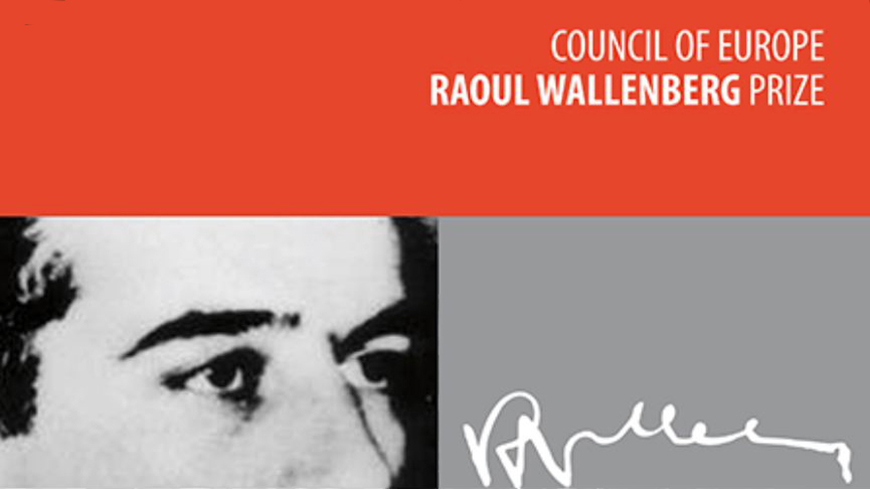
Since 2014, the Council of Europe Raoul Wallenberg Prize is awarded every two years in order to reward extraordinary humanitarian achievements by a single individual, a group of individuals or an organisation. The prize consisting of 10.000 € is awarded at a ceremony at the Council of Europe on 17 January – the date of Raoul Wallenberg’s arrest in Budapest in 1945.
The Jury consists of seven independent persons with recognised moral standing in the field of human rights and humanitarian work, appointed by: the Secretary General of the Council of Europe, the Swedish Ministry of Foreign Affairs, the municipality of Budapest, the Raoul Wallenberg Institute in Lund, the International Committee of the Red Cross, the United Nations High Commissioner for Refugees (UNHCR) and the Raoul Wallenberg family.
The deadline for submission of candidates for the “Raoul Wallenberg” prize 2018 is set for 31 October 2017.
Civil society participation at the UN is essential to ensure the relevance and value of debates and decisions at the international level along with the implementation of UN resolutions and recommendations on the ground. The International Service for Human Rights is organizing an interactive event to discuss NGO engagement with UN bodies and processes as well as opportunities and imperatives for reform. Monday 17 July,11:30 – 13:00, Room XXIV, Palais des Nations, Geneva
• Dianela Pi, Deputy Permanent Representative of the Uruguayan Mission to the UN in Geneva
• Iniyan Ilango, FORUM-ASIA
• Eleanor Openshaw, International Service for Human Rights
Moderator
• Tanya Bennett, Deputy Permanent Representative of the Australian Mission to the UN in Geneva
Concluding remarks:
• Peggy Hicks, OHCHR
[Attendance with UNOG pass only. If you are a member of civil society interested in attending but don’t have a UNOG pass, please contact information@ishr.ch.]
Otto Saki of the Ford Foundation contributed a piece “How companies are using law suits to silence environmental activists—and how philanthropy can help”. On 30 June 2017, the Business and Human Rights Resource Centre provided the following summary:
…While extrajudicial killings…[of human rights defenders] attract immediate condemnation, corporate interests are using other, less obviously violent means to undermine the important work of these activists: Strategic Lawsuits Against Public Participation (SLAPPs) are used to intimidate, harass, and silence activists who are working to expose corporate injustices and human rights violations. As intended, such lawsuits have a clear chilling effect on activism, silencing critical voices and stifling accountability…
…While there are strong laws aimed at protecting people’s rights, those laws too often fail to be applied. At the same time, big businesses have amassed great power and influence; they are armed literally and figuratively with high-value law firms, auditors, security experts, and investigators to defend their interests. Facing that kind of arsenal, it is difficult for individuals and organizations to fight back.
The use of SLAPP suits in South Africa is becoming a trend…
…South Africa needs to revise court procedures to make it easier for judges to scrutinize frivolous lawsuits without dragging the defendants into court. Second, civil society must recognize that SLAPP lawsuits are not isolated, but are part of a broad and purposeful strategy to distract and disable environmental activists and empower corporate interests.
…As philanthropy considers how to best support and build resilience for social justice activists and institutions, it is critical to consider their ability to withstand this kind of legal pressure…As funders, we need to have open conversations with our grantees about how they can be prepared before a crisis erupts…
An ambitious documentary project has 7 days left to find the funding via Kickstarter:
Baltasar Garzón, the Spanish judge who took the Chilean dictator Augusto Pinochet to justice, is leading a movement of legal ‘warriors’ from all over the world to guarantee the international punishment of major economic, financial and environmental crimes. The tool to achieve their goal can be summed up in two words: Universal Jurisdiction. The movement composed of judges, prosecutors and lawyers tries to promote the international denouncement of actions such as food speculation, issuing junk bonds, squandering public funds and large-scale contamination. These crimes should, as genocides and war crimes, be designated as Crimes Against Humanity and prosecuted internationally.
History is filled with visionaries who understood before others that practices such as slavery, colonialism and apartheid were not part of the natural order of things: they were immoral actions carried out by a minority and should be considered as crimes. Today, this international movement led by Baltasar Garzón tries to expose that financial fraud is not a systemic problem but a premeditated act, and should be considered as criminal behaviour. The aim of the group is to foster a new Universal Jurisdiction code of principles and fight alongside the civil society to ensure its application.
During the Universal Jurisdiction Congress (Buenos Aires, September 2015), a new list of Crimes Against Humanity was drafted. After countless debates between experts from the six continents, the list now includes economical and environmental infractions. All these efforts must now work their way to national legislations. On a planet with almost 8 billion people, irresponsible economic decisions can be disastrous. With all their effort, the legal warriors work together towards a common goal: cease with the impunity of economic and environmental crimes.
In the Kickstarter post, the Director, states “For me it’s an important task to help people understand the juridical language, given the historical isolation of the judicial power and its perverse use by the political and economic powers. Democratize juridical language, understand judicial mechanisms and point out their actors, all this with the support of a hundred of the most prestigious international jurists who have united to fight against impunity in major economic and environmental crimes, is a noble objective. This documentary is about heroes, brave jurists, classical characters of film noir
Our team has been working on this project for three years now and is very committed to it. We think that if the fight of the legal warriors is made public, citizens will be able to pressure their political powers to include changes in national legislations and international relations. We are talking about establishing a new code of social conduct, a code of human relationships, consistent with the challenges of living on a planet in constant evolution. We interviewed tens of professionals and filmed in three countries so far: Argentina, Spain and Senegal, where we attended in May 2016 to the end of Hissène Habré’s trial for crimes against humanity during his dictatorship in Chad.
We now need your support to finish the production and get this film out to the world where it can make a difference! After three years working on this project, we are launching a crowdfunding campaign to find the necessary funding to finish the film. All funds we raise will enable our team to finish production, access film footage, and cover the editing and postproduction costs. We are confident that if we meet our goal, we will be able to finish the film before the end of 2017.
We all assume that the biggest threat to human rights defenders comes from the State or similarly powerful actors. Now a report by the Human Rights Centre Uganda (led by former UN Rapporteur Margaret Sekaggya, pictured above) shows that it can be the local community that is the leading violator of the rights of HRDs. Juliet Kigongo of KFM, reports on 16 June 2017 that – at least in Uganda – 28% of complaints recorded were about members of the community, against 17% about government officials and 16% about politicians. The study was carried out in nine districts of Kasese, Mbarara, Lira, Soroti, Gulu, Mbale, Hoima and Kampala with Arua being the most affected.
[The report compiled by the Human Rights Centre Uganda also raises the red flag over the slow investigations of cases of violations against rights defenders, warning that the “slow pace of investigation could be seen as condoning attacks on Human Rights Defenders. While launching the report Margaret Sekaggya, the center’s Executive Director appealed to parliament to review existing laws that impede the work of human rights defenders and ensure that the legislative framework reflects provisions of the constitution and Uganda’s international commitments to ensure a safe and conducive environment.]




 Hans Thoolen on Human Rights Defenders and their awards