Archive for the 'human rights' Category

Human rights defenders to President Weah: the ball is in your camp

January 23, 2018

Africa on Line of 23 January 2018 report that human rights defenders NGOs have urged Liberian President Weah to prosecute war crimes.

The Center for Justice and Accountability describes the two phases of Liberia civil war, which caused the killings of an estimated 250,000 people and request that the atrocities are investigated and prosecuted. “A report by Liberia’s Truth and Reconciliation Commission (TRC) released in June 2009 found all sides responsible for serious violations of domestic and international law, including war crimes, crimes against humanity, widespread and systematic rape and sexual slavery, torture, use and recruitment of child soldiers, and mass executions of civilians,” the release said.

Although the TRC recommended the establishment of an Extraordinary Criminal Tribunal in Liberia to investigate and prosecute perpetrators of serious violations of international criminal and humanitarian law, the only prosecutions to date have been outside of Liberia,” it added. Hassan Bility, Executive Director of Monrovia based Global Justice and Research Project and one of the authors of the open letter said: “Justice must be one of the cardinal points of the President’s new agenda. There must be justice for war crimes, otherwise there will be no lasting peace in Liberia.” Mr. Bility, a former journalist and torture survivor of the civil war, helped initiate the arrests of several Liberian perpetrators in Europe and the U.S. in partnership with the Swiss based NGO, Civitas Maxima.

President Weah, during his inaugural address, assured that his administration would protect human rights and justice for all Liberians: “Today, we Liberians have reached an important milestone in the never-ending journey for freedom, justice, and democracy; a search that has remained central to our history as a nation,” .

Reacting to the speech on Monday, Mr. Bility told FrontPageAfrica the President’s commitment to social justice and human rights would make some difference…“This is an opportunity for him to right many of the things that probably slipped through the safety net of the Ellen administration,” he added.

Recent cases such as the conviction of Jungle Jabbah in Philadelphia and the indictments of other alleged war criminals in Europe and the U.S. have shown that prosecuting war criminals will not reignite the civil war in Liberia, as has often been feared, added  Nushin Sarkarati, Senior Staff Attorney at the Center for Justice and Accountability. “It is time to bring these examples of justice home, and make ending impunity in Liberia a priority.

However, as the the Economist on 4 January 2018 says: Yet there are doubts about the kind of leader Mr Weah will be. Since his election as a senator in 2014, he has rarely attended parliament. Nor has he introduced or co-sponsored any legislation. Mr Weah’s relative lack of education, though, only seems to make him more popular. His supporters see the former slum-dweller as one of them—a champion from their streets. Much will depend on the ministers and advisers with whom he surrounds himself. Liberia needs better roads and schools, more jobs and electricity, and a thousand other things. Presidents, unlike footballers, must aim at multiple goals.

http://www.frontpageafricaonline.com/index.php/news/6709-human-rights-groups-urge-president-weah-to-prosecute-war-crimes

https://www.economist.com/news/middle-east-and-africa/21734008-far-beautiful-game-champion-footballer-george-weah-wins-liberias

Emirates at the UPR in Geneva: two sides of the same medal?

January 23, 2018

Sometimes it hard t believe that media have observed the same meeting. Here the case of the Emirates (UAE) which was the subject of a UPR session on 22 January 2018. The Middle East Eye says that “At UN meeting, rights groups slam UAE for arbitrary detention“, while The National sees that “UAE strategy will advance human rights in Middle East, Gargash tells UN council”.

Portrait of UAE founder Zayd Bin Sultan Nahyan at UAE’s culture exhibition at the Palace of Nations, Geneva (MEE/Amandla Thomas-Johnson)
Amandla Thomas-Johnson's picture Amandla Thomas-Johnson reports that Minister of State for Foreign Affairs Anwar Gargash strongly denied allegations that the country practises arbitrary detention. Gargash, who led a high-level delegation to a peer-review process called the Universal Periodic Review (UPR), which each UN-member state undergoes every five years. “I would like to affirm that the UAE does not arrest or detain any person arbitrarily,” he said. “A person is immediately informed of the accusations against them. Everything that takes place is in line with our laws and done with concrete safeguards against arbitrary detention and arrest.
The remarks from the senior Emirati diplomat starkly contrasted with the opinion of four UN Special Rapporteurs – independent experts mandated to look into human rights violations – who in 2016 called on the UAE to respect the rights of several foreign nationals who were arbitrarily detained. Gargash’s comments came amid a quick-fire session held at the human rights conference room, with over 100 country-delegates given just over a minute each to speak. Rights organisations that took part in the UPR process by submitting documents detailing alleged human rights abuses, had mixed responses to the session;
  • Safwa Aissa, Executive Director of the Geneva-based International Centre for Justice and Human Rights, said of the session: “It’s not bad, but we wanted something better, especially from European countries. We had met with many countries beforehand and made them aware of the situation in the countries.”
  • Similarly, Julia Legner from Geneva-based Alkarama Foundation said: “It was slightly disappointing. I was expecting harsher criticism, given that it’s a peer review by states. It’s clear that some states will always congratulate the UAE.” “There could have been stronger comments on the total silencing of civil society, the crackdown on freedom of expression, which has reached a limit where there is no human rights defenders operating from within the UAE.” Responding to Gargash’s claim that arbitrary detention is not practised, she said: “We beg to differ and we have evidence.”
  • Toby Cadman, an international human rights barrister, said that while the UPR is “an important process,” it often has “the appearance of the Eurovision Song Contest of International Justice whereby friendly States, regional, diplomatic and trade partners pat each other on the back rather than offer constructive criticism and call for change”. “The UAE UPR was indicative of that approach today. There is a real need for fundamental reform in the UAE criminal justice and penal system.” 

David Haigh, who is bringing a legal case against UAE authorities for his arbitrary arrest and torture, criticised Gargash’s comments as untruthful. “I was arbitrarily detained for 15 months before I was charged. In the judgments against me one of the UAE courts confirmed that I had complained of arbitrary detention,” Haigh told MEE after the session. “Of course there is arbitrary detention.” Haigh, who has now established a foundation and law firm to assist others who suffer injustice in the UAE, said arbitrary detention happens “time and time again”.


Advancing human rights is a critical factor in ensuring stable societies and promoting development, ..The Minister of State for Foreign Affairs said that as a model nation for youth in the region, the UAE had sought to strengthen human rights and legal safeguards within the review framework overseen by the UN High Commissioner for Human Rights….In the context of a region where extremism creates division and polarisation, Mr Gargash said advancing human rights was a “powerful antidote” to pernicious forces.

“The promotion of tolerance and the rejection of extremism is fundamental to the advancement of human rights in the UAE and the wider region,” he told a packed chamber at the Palais des Nations. “Piece by piece, we have developed a comprehensive strategy to advance the cause of human rights in the UAE.” The UAE will establish a national human rights institution in line with the Paris Principles and guidance of the reporting process before the end of the year, he said. In responses to contributions from the floor, Dr Gargash said the country would also study joining additional protocols and extending invitations to special rapporteurs…

In response to allegations based on reporting about pre-trial detention, Dr Gargash said there was no detention without an arrest warrant…“The UAE is a bastion of stability where people from about 200 nationalities live peacefully in social and religious harmony. We are committed to finding the right balance between protecting our legitimate need for security and preserving our reputation as an open society.”….

He also pointed to the UAE’s role as the world’s largest donor of official development assistance as a proportion of its national income….

In its submission, the Office of the High Commissioner for Human Rights recognised considerable developments in the UAE in the past four years. “UAE’s efforts in combating trafficking are marked as a good example,” the office said. “This included the Adoption of Federal Act Law No 1 of 2015, which provides protection for victims of trafficking, and the 2012 and 2015 Amendments of Federal Law No 51 of 2006 on combating trafficking.” It also hailed the progress in raising the status of women. “The National Strategy for Empowerment of Emirati Women in the UAE for 2015-2021 … provides a framework for government, private sector and civil society organisations to establish work plans to increase women’s presence and empowerment mainly in the economic sector in the UAE.”

Anwar Gargash, UAE minister of state for foreign affairs, tours Michael Møller, Director-General of the UN Office at Geneva, around UAE culture exhibition (MEE/Amandla Thomas-Johnson)

Cultural diplomacy: Earlier in the day, Gargash had been the focus of attention as he hosted the director-general of the UN in Geneva, Michael Moller, around a new cultural exhibition the UAE had officially opened minutes before the human rights session began a floor above. Spread over two floors and including mock Bedouin tents and a photo exhibit, women took centre-stage at the UAE’s latest efforts at cultural diplomacy, with a troop of women clad in sequined abayas performing a fashion show for onlookers. But The Middle East Eye said that “UAE’s efforts at cultural diplomacy came under fire by Julia Legner, at Alkarama”:  “It’s part of the propaganda machine of the UAE, trying to portray an image of culture and tolerance and inclusion and progress. They’re using it as a chance to cover up the dark side.” 

For my earlier posts on the UAE, see: https://humanrightsdefenders.blog/tag/uae/

http://www.middleeasteye.net/news/un-meeting-uae-heavily-criticised-rights-groups-arbitrary-detention-888227605

https://www.thenational.ae/world/gcc/uae-strategy-will-advance-human-rights-in-middle-east-gargash-tells-un-council-1.697809

24 January 2018: Day of the Endangered Lawyer – focus on Egypt

January 22, 2018

I did not know about this special Day for Endangered Lawyers which is meant to call for the attention of lawyers all over the world for colleagues who are being harassed, silenced, pressured, threatened, persecuted, tortured, killed and disappeared.  Although relatively unknown, it has the support of several lawyers’ organizations such as:

The Association European Democratic Lawyers www.aeud.org
The European Association of Lawyers for Democracy & World Human Rights www.eldh.eu
Vereniging Sociale Advocatuur Nederland www.vsanadvocaten.nl
Lawyers for lawyers www.lawyersforlawyers.nl
Colombia Caravana UK Lawyersgroup www.colombiancaravana.org.uk
European Bar Human Rights Institute www.idhae.org
Avocats sans Frontières www.asf-network.org

The Foundation has devoted its attention to the situation in Iran, Turkey, Basque Country, Columbia and the Philippines in the past. In 2016 the focus was on the situation in Honduras. Detailed information and reports are available at www.aeud.org.

The UK Law Society president Joe Egan said: ‘We honour the courage and commitment of lawyers around the world who uphold justice, often despite considerable risk to themselves, their colleagues and their families.’ The country focus for the Day of the Endangered Lawyer 2018 is Egypt, where lawyers and human rights defenders face prosecution and travel bans for carrying out professional duties.

For other posts see: https://humanrightsdefenders.blog/tag/human-rights-lawyers/

http://dayoftheendangeredlawyer.eu/backgrounds/#EstablishingTheFoundation

Human Rights Watch and Kenneth Roth take a stand against Trump’s dictator friendly policies

January 19, 2018

In its annual report on the state of human rights around the world for 2017, Human Rights Watch (HRW) said growing intolerance in states like the US represented “an enormous threat” to minority groups in those countries. Donald Trump‘s public admiration for strongman leaders and breaking of “taboos against racism and xenophobia” have encouraged oppression around the world.

Its executive director, Kenneth Roth, struck out at the US President who he said “displays a disturbing fondness for rights-trampling strongmen”. He cited Russian President Vladimir Putin and Rodrigo Duterte, of the Philippines, as examples, saying: “This makes it much more difficult to stigmatise these authoritarian leaders when Trump says these are great guys.”

Mr Roth added in a post accompanying HRW’s 2018 world report that in the past year, ”Secretary of State Rex Tillerson largely rejected the promotion of human rights as an element of US foreign policy while more broadly reducing the role of the US abroad by presiding over an unprecedented dismantling of the State Department.” “He refused to fill many senior posts, dismissed several veteran diplomats, slashed the budget, and let the department drift. Many career diplomats and mid-level officials resigned in despair,” .

The report urges democratic governments to address the problems that allowed populism to prosper in 2017, such as income inequality, fears of terrorism and growing migration. HRW hailed Emmanuel Macron’s victory in France’s elections as a “turning point”, saying he had “openly embraced democratic principles” on his way to defeating the far-right Marine Le Pen.  HRW also criticised the “hesitancy” of the EU to intervene in specific cases of rights abuse: “President Recep Tayyip Erdoğan decimated Turkey’s democratic system as the EU focused largely instead on enlisting his help to stem the flight of refugees to Europe and security cooperation. President Abdel Fattah al-Sisi crushed public dissent in Egypt with little interference from the US or the EU, which accepted his claim that he was providing stability.

In the USA, HRW’s report said, “civic groups, journalists, lawyers, judges, many members of the public, and sometimes even elected members of Trump’s own party” had reacted against what it called the President’s “regressive” outlook.

(The Trump administration did make interventions in support of human rights in a limited number of countries such as Iran and Cambodia.)

Helas, the HRW report confirms what many feared earlier in 2017, see e.g.: https://humanrightsdefenders.blog/2017/02/24/2017-10-need-to-reset-for-human-rights-movement/.

———-

http://www.independent.co.uk/news/world/donald-trump-human-rights-watch-world-report-hrw-oppression-encourage-news-media-a8165381.html

http://fp-reg.onecount.net/onecount/redirects/index.php?action=get-tokens&js=1&sid=b8ofn3rfd1a65vca5imc12g270&return=http%3A%2F%2Fforeignpolicy.com%2F2018%2F01%2F18%2Fhow-to-stand-up-for-human-rights-in-the-age-of-trump%2F

Protection International’s next e-learning course on Security starts 19 February

January 17, 2018

Protection International announced its next e-learning course starting on 19 February 2018. There are limited places available and the deadline for registration is 26 January 2018(contact: e-learning@protectioninternational.org). 

The topic is: SECURITY AND PROTECTION MANAGEMENT FOR HUMAN RIGHTS DEFENDERS AND SOCIAL ORGANISATIONS

The course will help human rights defenders to:

  • Acquire tools and skills to assess risks and improve their security and protection
  • Contribute to the security and protection of those whose rights HRDs are defending
  • To improve HRDs security and protection strategies when protecting human rights defenders

The training is done  by human rights protection experts with extensive experience. 3. 5 hours per week (60 hours over 12 weeks). Tailored feedback on assignments given as well as direct tutorship.

For last year’s: https://humanrightsdefenders.blog/2016/04/09/on-line-training-course-for-better-protection-of-human-rights-defenders/

Gambia: Yahya Jammeh’s ex minister continues his detention in Switzerland

January 17, 2018
Yahya Jammeh campaign
Then-incumbent Gambian President Yahya Jammeh arrives escorted by his bodyguards for an electoral rally on November 24, 2016.  MARCO LONGARI/AFP/GETTY

Ousman Sonko, a former interior minister of Gambia suspected of human rights abuses who was arrested in January 2017, will have to remain in Swiss detention, the Swiss Federal Tribunal has ruled. Switzerland’s highest court has rejected an appeal by Sonko’s lawyers against a second prolongation of his detention. The Federal Tribunal said in a decision published in December that Sonko was still under urgent suspicion. As in a previous judgement on an appeal by Sonko, judges said they based their decision on independent reports by United Nations special observers on Gambia. These observers had not yet been questioned by the Office of the Attorney General (OAG) and the OAG also needed to go through files obtained from Gambia during the mutual assistance procedure, the latest judgement said. Trial International, an international justice organisation, accused Sonko of having personally taken part in what it described as torture between 2006 and 2016. Sonko served under ousted Gambian leader Yahya Jammeh. “As the head of detention centers, Sonko could not have ignored the large-scale torture that political opponents, journalists and human rights defenders suffered there,” said Benedict de Moerloose of TRIAL in a statement in 2017. 

Barrow, the new President, had stated that he plans to install a truth and reconciliation commissionin the country in order to take account of alleged abuses under Jammeh, before deciding whether to attempt to prosecute the former president. In May 2017 in the wake of the launch of its global ‘brave’ campaign”, the Regional Director for West and Central Africa of AI, Alioune Tine, had called for justice for United Democratic Party (UDP) activist Ebrima Solo Sandeng, and for all victims of the Jammeh regime. “There must be justice for Ebrima Solo Sandeng and for all victims,” Alioune Tine told Freedom Newspaper. Alioune Tine said that, during his meeting with President Adama Barrow, he received assurances from the Gambian leader that there would be ‘zero tolerance’ for human rights abuses.

See also: https://humanrightsdefenders.blog/2014/05/10/indian-star-celina-jaitly-shows-erykah-badu-the-way/

————–

https://www.swissinfo.ch/eng/ousman-sonko_gambian-ex-interior-minister-to-remain-in-custody/43758596

http://www.newsweek.com/adama-barrow-yahya-jammeh-exile-gambia-547615

http://www.newsweek.com/gambia-yahya-jammehs-ex-minister-detained-switzerland-crimes-against-humanity-549075

https://freedomnewspaper.com/2017/05/19/gambia-alioune-tine-calls-for-justice-for-solo-sandeng-as-amnesty-launches-new-gobal-campaign/

Nominations for the Rafto Prize close on 1 February

January 17, 2018

International Commission of Jurists joins criticism of Singapore for harassment of human rights defender Jolovan Wham

January 5, 2018

International Commission of Jurists urges Singapore to stop harassment of human rights defender Jolovan Wham


https://www.icj.org/singapore-stop-harassment-of-human-rights-defender-jolovan-wham/

https://www.theonlinecitizen.com/2017/12/13/international-commission-of-jurists-urges-singapore-to-stop-harassment-of-human-rights-defender-jolovan-wham/

https://asiancorrespondent.com/2017/12/singapore-human-rights-watch-repression/#CZ3VvbvQq6iQymK5.97

https://www.forum-asia.org/?p=25288

2017: a year to forget for human rights defenders – but don’t forget the human rights defenders

December 31, 2017

A bad year for human rights defenders comes to an end and it is fitting to so with drawing your attention (again) to Amnesty International‘s BRAVE campaign which has branded 2017 as a “bad year to be brave”. Since the adoption of the UN Declaration on Human Rights Defenders in December 1998, at least 3,500 activists have been killed – an average of 180 deaths a year – and the annual death toll shows no sign of diminishing. [e.g. in 2014, Front Line Defenders recorded 136 killings of human rights defenders; in 2016 that number had risen to 281 – and this year is set to be the deadliest year yet – see also my post: https://humanrightsdefenders.blog/2017/07/13/stop-the-killings-you-can-help-front-line/].

In the Brave campaign Amnesty highlighted a number of high profile deaths in 2017:

Amnesty warned of a wider “open season” on activists – which has seen alarming numbers of people imprisoned, threatened, beaten and abused in attempts to silence them. [ see also: https://humanrightsdefenders.blog/2017/12/06/amnesty-just-published-major-report-on-human-rights-defenders/]

Better forget this year and put our hope in 2018, but do not forget the human rights defenders themselves who are willing to pay the price as long as we pay attention…

have a good New Year…

RSDL: China’s legalization of disappearances

December 30, 2017

It would nice – for a change – to be able to report improvements in the situation of human rights defenders but as feared at the beginning of this year that has not happened. Here the case of China:

On 15 December 2017 China itself issued a White Paper hailing its ‘remarkable progress’ in the ‘law-based protection of human rights’ over the last five years. NGOs such as Human Rights Watch called it ‘hollow’ and a ‘self-congratulatory report’. Here some recent developments especially linked to the tactic of temporary disappearance RSDL:

There is a very informative blog post by Peter Dalin[https://humanrightsdefenders.blog/2016/01/21/confessions-abound-on-chinese-television-first-gui-minhai-and-now-peter-dahlin/] about his friend Wang Quanzhang  in the Hong Kong Free Press (30 December) under the title “The last missing lawyer: a victim of China’s new willingness to flout international human rights norms“. The piece details the system of Residential Surveillance at a Designated Location (RSDL) and points to its increasing use and danger that it may spread. (See below in green.)

One example of this practice came this week when a court sentenced Wu Gan to eight years in prison. Using social media and outlandish performance art, he went by the online handle “Super Vulgar Butcher” and likened himself to a meat cutter who was making short work of those who violate human rights. After the harsh sentence was imposed in Tianjin, Wu delivered an eloquent statement through his lawyers, speaking with clarity and courage. “For those living under a dictatorship,” he declared, “being given the honourable label of one who ‘subverts state power’ is the highest form of affirmation for a citizen. It’s proof that the citizen wasn’t an accomplice or a slave, and that at the very least he went out and defended, and fought for, human rights.” The authorities, he said, attempted to force him to plead guilty and co-operate in propaganda videos in exchange for a suspended sentence. “I rejected it all. My eight-year sentence doesn’t make me indignant or hopeless. This was what I chose for myself: when you oppose the dictatorship, it means you are already walking on the path to jail.”

This in contrast to the decision the same day in the case of human rights lawyer Xie Yang who was not sentenced to prison after he pleaded guilty to charges of “inciting subversion of state power.”
Xie was released on bail in May after what critics described as a show trial. He had previously claimed that police used “sleep deprivation, long interrogations, beatings, death threats, humiliations” on him. But on Tuesday he denied he had been tortured, according to a video on the court’s official Weibo social media account. “On the question of torture, I produced a negative effect on and misled the public, and I again apologize,” he told judges. The court said he would face no criminal penalties following his full confession. (Xie Yang is one of China’s “709 lawyers”, taken into custody in 2015 during an extensive government crackdown see: https://www.frontlinedefenders.org/en/profile/xie-yang). See also: https://humanrightsdefenders.blog/2015/07/29/the-remarkable-crackdown-on-lawyers-in-china-in-july-2015/

The United Nations Working Group on Arbitrary Detention, has also told China that it wrongfully arrested three prominent human rights activists accused of subversion and called on the government to release and compensate them. The panel, the Working Group on Arbitrary Detention, made up of five independent experts, said the three activists, Hu Shigen, Zhou Shifeng and Xie Yang, had been punished for promoting human rights. It said their treatment did not conform with China’s obligations under the Universal Declaration of Human Rights and urged Beijing to consider amending its laws to bring them into conformity with international norms. “The appropriate remedy would be to release Hu Shigen, Zhou Shifeng and Xie Yang immediately, and accord them an enforceable right to compensation and other reparations,” the working group concluded. (The findings were contained in a 12-page document that was first reported in October by The Guardian)——–

Peter Dalin’s post:

Some five years ago my friend Wang Quanzhang – China’s last missing lawyer – came over to my Beijing apartment for a Swedish-style Christmas. By this time he had learned to tolerate, if not appreciate, the meatballs, as it was his second Christmas at my house. Since then, I’ve been deported from China and banned for ten years under the Espionage Act.
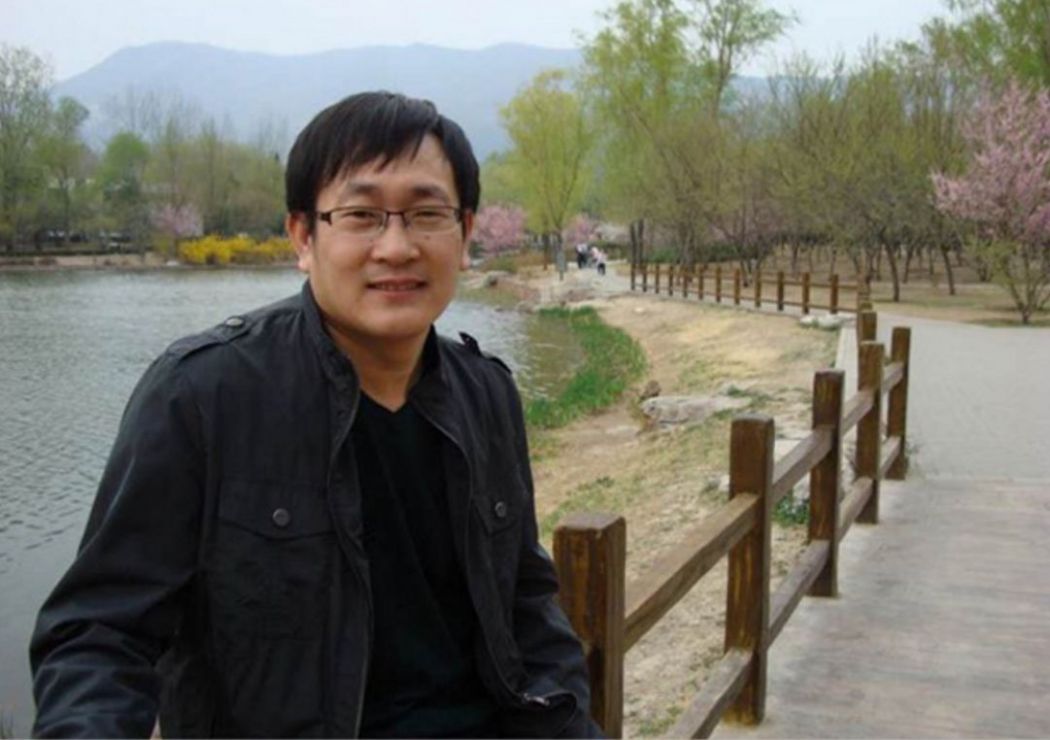
wang quanzhang

Wang Quanzhang. File photo: RFA.

I am unlikely to spend any more Christmases in China. Wang might never be allowed to spend any Christmas anywhere, outside of prison. Wang disappeared on 5 August 2015. For two and a half years his family, wife Li Wenzu and their young son, and the lawyers Wang had chosen for himself should he ever be detained, have not seen nor heard from him. There’s no trial in sight. It may strike anyone reading this that his case is simply another victim’s story. Frankly, there are so many that it’s hard to keep track or become engaged. However, his case represents something far worse, and is a window into the new China envisioned by Xi Jinping and the CCP.

China’s attempts to weaken UN mechanisms put in place to monitor how countries implement or follow basic rules and rights are well documented. What is happening in China now – an unprecedented disappearing of critics, lawyers and human rights defenders – goes far beyond being just another crackdown on civil society. It is another step towards weakening a core part of the international law system. One of the first major changes under Xi Jinping’s rule was to extend the power of the state even further by legalizing the use of Enforced Disappearances. For a Party usually known for its abysmal public relations management, it did so with a stroke of marketing “genius”, referring to it as a procedure known as Residential Surveillance at a Designated Location, or RSDL. At first, its use was limited to central government targeting key rights defenders, claiming they threatened national security. People would be secretly detained and placed in hotel rooms and government-run guesthouses. Slowly, they started using special custom-built secret prisons. In 2016, the procedure was adopted by local police. Now it’s being used to target critics of any sort, and for any type of “crime”, and not only those accused of threatening national security. Its use, by any measure, is expanding rapidly.

Rights activist Wu Gan and rights lawyer Xie Yang were sentenced the day after Christmas. Wu Gan will spend the next eight years in prison. Both men were disappeared for significant lengths of time before entering the normal judicial process; they were in RSDL. RSDL allows the state to simply take anyone it wishes, no court approval is needed, and disappear them for up to six months. The victim’s family does not need be notified of the victims’ whereabouts, they are denied access to legal counsel, and even more preposterously the prosecutor’s office is almost always barred from visiting the secret facility or victim – despite its nominal role to make sure rampant torture is not practiced. In fact, despite knowing many victims of RSDL myself, I have never heard of someone having had such a visit, and I myself certainly never met anyone from the Prosecutor’s office during my brief stay in RSDL.

In China, exceptions quickly become norms. The exceptions allowing all this have quickly become the norm. With these “exceptions”, RSDL becomes enforced disappearance. Enforced disappearances is not only a crime in international law, but a most severe one. It is even prohibited in war-time. If used systematically, or in a widespread manner, it qualifies as a crime against humanity.

The West’s tepid response to enforced disappearances, even of their own citizens, who have been kidnapped outside of mainland China, such as British citizen Lee Bo in Hong Kong and Swedish citizen Gui Minhai in Thailand, only encourages China to keep expanding its use. Why not, when there are no consequences. My only hope, or wish, for this Christmas season is that the further exposure of RSDL, through the first ever book on the subject, The People’s Republic of the Disappeared, edited by my former coworker Michael Caster, will help shed light on what is going on in China.

This should make the West realize that China’s legalization of what may constitute a crime against humanity is a blow to the whole UN system, and a threat to the West itself, and the rules-based system it advocates. Without a response, how long will it be before Cambodia, Laos, Vietnam and other countries in the Asia-Pacific, all with some history of using Enforced Disappearance themselves, realize the effectiveness of the system in silencing critics, and move to legalize their own versions?….It’s hard to say what 2018 has in store for Wang. His case is testament to the breakdown of any rule of law in China. Despite holding all the cards, China does not have the courage to try him in a court of law. He will, for now and who knows for how long, simply be disappeared.

https://www.hongkongfp.com/2017/12/30/last-missing-lawyer-victim-chinas-new-willingness-flout-international-human-rights-norms/

The People’s Republic of the Disappeared

https://www.thespec.com/opinion-story/8028958-the-clarity-and-courage-of-wu-gan/

http://www.phayul.com/news/article.aspx?id=39930&t=1

https://qz.com/1166056/over-christmas-china-sentenced-activist-wu-gan-or-super-vulgar-butcher-to-eight-years-in-prison/