Archive for the 'human rights' Category

Joint Statement by NGOs: Ukraine should address attacks against Human Rights Defenders

October 8, 2018

On 3 October 2018 a number of NGOs published a Joint Statement on Ukraine deploying the many attacks against Human Rights Defenders:

More than 50 attacks on activists and human rights defenders in Ukraine have been recorded by local human rights organisations in just the last nine months, Amnesty International, Human Rights Watch, Freedom House and Front Line Defenders said today. Those under attack include people working to defend the rights of lesbian, gay, bisexual, and transgender (LGBT) people, protect the environment, and campaign against corruption. 

The organisations criticised the lack of effective investigations into these incidents and of prosecutions of those responsible, which heightens the risk to human rights defenders and sends a message that the authorities tolerate such attacks and assaults. Recently, the prosecutor general suggested that civil society activists brought the attacks on themselves <https://www.pravda.com.ua/news/2018/09/27/7193378/&gt;  for criticising the authorities, giving an impression that human rights defenders can be openly targeted.

In most cases, the attacks have targeted individuals or groups that campaign against corruption in the local community, shine a light on the operation of local government and businesses, or defend people’s rights. The purpose of such attacks is clear: to silence activists and human rights defenders and to discourage others from speaking out against injustice and standing up for human rights. 

Two recent examples of the kind of vicious attacks that have yet to be effectively investigated took place on 22 September, in Odessa and Kryvyi Rih. Oleh Mikhaylyk, an anti-corruption activist, was shot in Odessa, in southern Ukraine, and remains in the hospital. Mikhaylyk had campaigned with the Syla Lyudei (People’s Power) movement against illegal construction in Odessa. Three hundred kilometers away, in Kryvyi Rih, unidentified assailants broke into the home of Artem Moroka after he criticised the local police on Facebook. The assailants severely beat him, breaking his nose, Moroka told Ukrainian human rights monitors.

In June, an environmental activist, Mykola Bychko, was found dead under suspicious circumstances in a village in Kharkiv region. Villagers found Bychko hanged in the woods near the village of Eskhar on June 5. The local police initially started a suicide investigation, but have yet to investigate the possibility that he was killed in connection with his activism. At the time, Bychko was documenting the pollution of a local river, allegedly caused by a nearby waste treatment plant.  A lawyer representing Bychko’s family questioned the conduct of the local police for ignoring the possibility that this was an intentional killing, and for allegedly intentionally delaying the investigation. The lawyer told Freedom House that police lost relevant evidence from the site where Bychko’s body was found, such as the rope from the improvised gallows. The authorities have also not pursued allegations that Bychko had received threats related to his documentation work, such as questioning people from the waste treatment plant. 

On July 31, an unidentified assailant threw acid on Kateryna Handzyuk, a local council member who monitored police activities, in Kherson. ……….

The Ukrainian authorities should take effective steps to prevent further threats and attacks against activists and human rights defenders, and ensure prompt, thorough, impartial and independent investigations into such threats and attacks and bring those responsible to justice in fair trials. 

The Interior Ministry, the National Police, the prosecutor general’s office, and other relevant institutions should explicitly recognise the important work of human rights defenders in protecting human rights and uncovering corruption. The authorities should publicly denounce any threats and attacks against human rights defenders. They should take decisive measures to ensure that government critics can work in a safe and enabling environment in which they can exercise the rights to freedom of expression, peaceful assembly and association, and conduct their activities without fear of reprisals. 

https://www.frontlinedefenders.org/en/statement-report/ukraine-address-attacks-against-activists-and-human-rights-defenders

https://freedomhouse.org/article/ukraine-address-attacks-against-activists-and-human-rights-defenders

Click to access EUR5092012018ENGLISH.pdf

 India: attacks on human rights defenders abound under Unlawful Activities Prevention Act

October 7, 2018

I recently wrote about India’s shameful place in the list of countries that practice reprisals [https://humanrightsdefenders.blog/2018/09/22/attack-on-human-rights-defenders-in-india-are-an-attack-on-the-very-idea-of-india/]. On 5 October 2018 this was followed by a joint statement by a large number of UN experts (Mr. Michel Forst, Special Rapporteur on the situation of human rights defenders; Ms. Fionnuala D. Ní Aoláin, Special Rapporteur on the promotion and protection of human rights and fundamental freedoms while countering terrorism; Mr. Fernand de Varennes, Special Rapporteur on minority issues; Mr. David Kaye, Special Rapporteur on the promotion and protection of the right to freedom of opinion and expression; Ms. Ivana Radacic (Chair), Ms. Meskerem Geset Techane (Vice Chair), Ms. Elisabeth Broderick, Ms. Alda Facio, Ms. Melissa Upreti, Working Group on the issue of discrimination against women in law and in practice; Ms. E. Tendayi Achiume, Special Rapporteur on contemporary forms of racism, racial discrimination, xenophobia and related intolerance; Mr. Seong-Phil Hong (Chair), Ms. Leigh Toomy (Vice-Chair), Ms. Elina Steinerte (Vice-Chair), Mr. José Guevara, Mr. Setondji Adjovi, Working group on arbitrary detention) saying that India uses terrorism charges as a pretext to silence human rights defenders

The UN human rights experts did so in the context of terrorism charges – under the Unlawful Activities Prevention Act (UAPA) – laid against 10 human rights defenders working with India’s poorest and most marginalised communities, including the Dalits, and urged authorities to ensure their cases are promptly heard in line with international law. All were arrested in June in connection with investigations into a public meeting organised a day before the 200th anniversary of the commemoration of a battle at Bhima-Koregaon, an important cultural event and a symbol of Dalit empowerment. Police subsequently claimed that the human rights defenders had links with ‘unlawful organisations’. “We are concerned that terrorism charges brought in connection with the commemoration of Bhima-Koregaon are being used to silence human rights defenders who promote and protect the rights of India’s Dalit, indigenous, and tribal communities,” the UN experts said. “We are very concerned about the charges against the human rights defenders and the continuing detention of nine of them,” the UN experts said. “All have been active in peacefully defending human rights, including those of marginalised and minority communities, political prisoners, and women, and their arrests appear to be directly related to their human rights work.


In June2018 Front Line Defenders listed as some of these:


Surendra Gadling <https://www.frontlinedefenders.org/en/profile/surendra-gadling> a human rights lawyer and General Secretary of the Indian Association of Peoples’ Lawyers (IAPL).

Rona Wilson <https://www.frontlinedefenders.org/en/profile/rona-wilson&gt;  is a member of the Committee for the Release of Political Prisoners (CRPP), which has campaigned against the Unlawful Activities (Prevention) Act and other repressive laws.

Sudhir Dhawale <https://www.frontlinedefenders.org/en/profile/sudhir-dhawale&gt;  is a Dalit rights activist and the editor of the Marathi magazine ‘Vidrohi’.

Shoma Sen <https://www.frontlinedefenders.org/en/profile/shoma-sen&gt;  is a professor at Nagpur University and a long time Dalit and women’s rights activist.

Mahesh Raut  <https://www.frontlinedefenders.org/en/profile/mahesh-raut&gt; is a land rights activist working with Gram Sabhas in the mining areas of Gadhchiroli.

On 5 July 2018, Front Line reported that human rights lawyer Advocate Sudha Bhardwaj released a statement refuting the false allegations and defamatory statements levelled against her by Arnab Goswami, news anchor and managing director of Republic TV. In a program that aired on 4 July 2018, Arnab Goswami alleged that the human rights defender was linked to Maoists. (https://www.frontlinedefenders.org/en/profile/sudha-bhardwaj). Sudha Bhardwaj firmly denied that the letter was written by her, and refuted the false allegations as defamatory and hurtful. She also expressed incredulity at the fact that the source of the letter had not been revealed, and that the letter had surfaced at the studio. She believes that the malicious and fabricated attack on her is a result of a press conference she had addressed in Delhi on 6 June 2018, condemning the arrest of Advocate Surendra Gadling. Front Line adds that This smear campaign comes as a part of an ongoing crackdown against human rights lawyers in India, especially those who work with Adivasi people and Dalits. Front Line Defenders condemns the smear campaign against human rights defender Sudha Bhardwaj, which it considers to be in retaliation to her legitimate and peaceful human rights work. Front Line Defenders expresses its concern for the security of Sudha Bhardwaj, particularly as the inflammatory allegations may motivate judicial harassment or other forms of retaliation.  

—–

https://www.jurist.org/news/2018/10/un-experts-decry-india-terrorism-charges-against-human-rights-defenders/

https://www.ohchr.org/EN/NewsEvents/Pages/DisplayNews.aspx?NewsID=23686&LangID=E

https://www.frontlinedefenders.org


in Memoriam Vitaly Safarov, Georgian Human Rights Defender

October 7, 2018
Vitaly Safarov.
1 OCTOBER 2018

Front Line Defenders is deeply saddened by the death of human rights defender Vitaly (Vito) Safarov, who passed away on 30 September 2018 in Tbilisi, Georgia.

Vitaly first got involved in human rights work in 2013 when he became a trainer in a multicultural camp for children in Georgia. He then worked for the Georgian NGO “Centre for Participation and Development” as a trainer of youth programs. For the past two years, Vitaly was a part of the Tbilisi Shelter Initiative that provides human rights defenders from across the region with a safe space, rest, medical aid and capacity-building programs. He accompanied defenders from different countries and backgrounds on a daily basis, helping them to adapt during their stay in Tbilisi and to benefit from the Shelter’s programs.

Svetlana Anokhina, journalist from Dagestan, who stayed at the Tbilisi shelter commented: “He took care of me during my three-month stay. When I arrived, I was told: here is Vitaly and he is your case manager. 20 minutes later, he became simply Vito to me. If someone asked what he meant to me and I could not explain, I responded: “Just imagine that you have a younger brother who you would call when you are having Internet connection problems; or if you need to go somewhere but you are too tired; or if you are in a hospital and don’t know who you should turn to; or if you are just feeling bad. Vitaly always responded in such a way to these problems that he would leave you feeling much better”.

Front Line Defenders’ Protection Coordinator and Board member of Tbilisi Shelter, Maria Chichtchenkova said: “At Front Line Defenders we were privileged to collaborate with Vitaly Safarov on many projects for human rights defenders at risk. He was especially involved in our work on digital security. He had a deep commitment to working with and for HRDs of all cultures, being himself of Jewish and Yazidi roots. He had a great sense of humour, which was sometimes quite dark, but he always showed incredible kindness and tenderness to people. One of our colleagues referred to him as “Vito, defender of defenders” and that’s exactly who he was.

Vitaly Safarov will be missed and remembered by so many people.

Third Committee of UN General Assembly 2018 will consider human rights issues

October 5, 2018
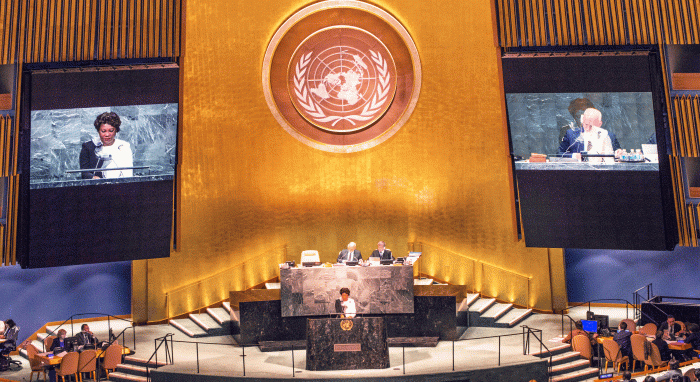
With the last session of the the Human Rights Council having been considered fruitful by civil society [https://humanrightsdefenders.blog/2018/09/29/in-spite-of-or-because-of-the-us-absence-the-39th-human-rights-council-considered-a-relative-success/], the focus is now on New York. This week, the UN General Assembly’s principal human rights committee – the Third Committee – kicked off its deliberations (Tuesday 2 October, running through to 21 November 2018).  This is a key moment in the year for UN member States to take action in support of the respect of human rights globally, through the negotiation and adoption of resolutions focused on thematic or country situations.   The ISHR provides the following insight:

Over 50 Special Rapporteurs, independent experts, chairs of working groups and treaty bodies will present findings and recommendations to the Committee, and engage in interactive dialogues with member States.  These reports and exchanges should inform the focus and shape of negotiated resolutions. 

The Committee will consider over 60 resolutions, this year focusing on a range of issues from extrajudicial, summary or arbitrary executions, to the rights of indigenous peoples, and the human rights situation in Syria.  Once adopted, resolutions will pass to the UN General Assembly plenary for confirmation in early December. 

While opportunities for civil society to interact with the Third Committee are more limited than those available at the Human Rights Council, NGOs can attend formal sessions, follow them on  UN Web TV and engage informally with individual member States.  For more on the Third Committee see here.  

ISHR will be working to see the inclusion of positive references to human rights defenders and civil society space, in Third Committee resolutions.  We will be monitoring the Third Committee closely, as well as the General Assembly plenary meetings, and reporting on key developments. Follow us on Facebook, Twitter and Instagram at @ISHRglobal and at #UNGA73for the latest updates.

Also, note that the ISHR will be hosting two side events during the Third Committee session. [see also: https://humanrightsdefenders.blog/2017/07/09/civil-society-participation-at-the-un-subject-of-ishr-event-on-17-july/]

The first event will be about implementing commitments on human rights defenders, and it will be held on Tuesday 23 October at 1:15 p.m-2.45pm. The location of the event is to be confirmed. See here for updates.

ISHR’s second event will focus on treaty bodies and the importance of ensuring transparent elections. ISHR aims to facilitate dialogue about ways to improve treaty bodies and election processes moving forward. Time and date for this event to be confirmed. See here for updates.

http://www.ishr.ch/news/alert-ga-73rd-session-agenda-third-committee

Iranian Human Rights Defenders in trouble

September 27, 2018
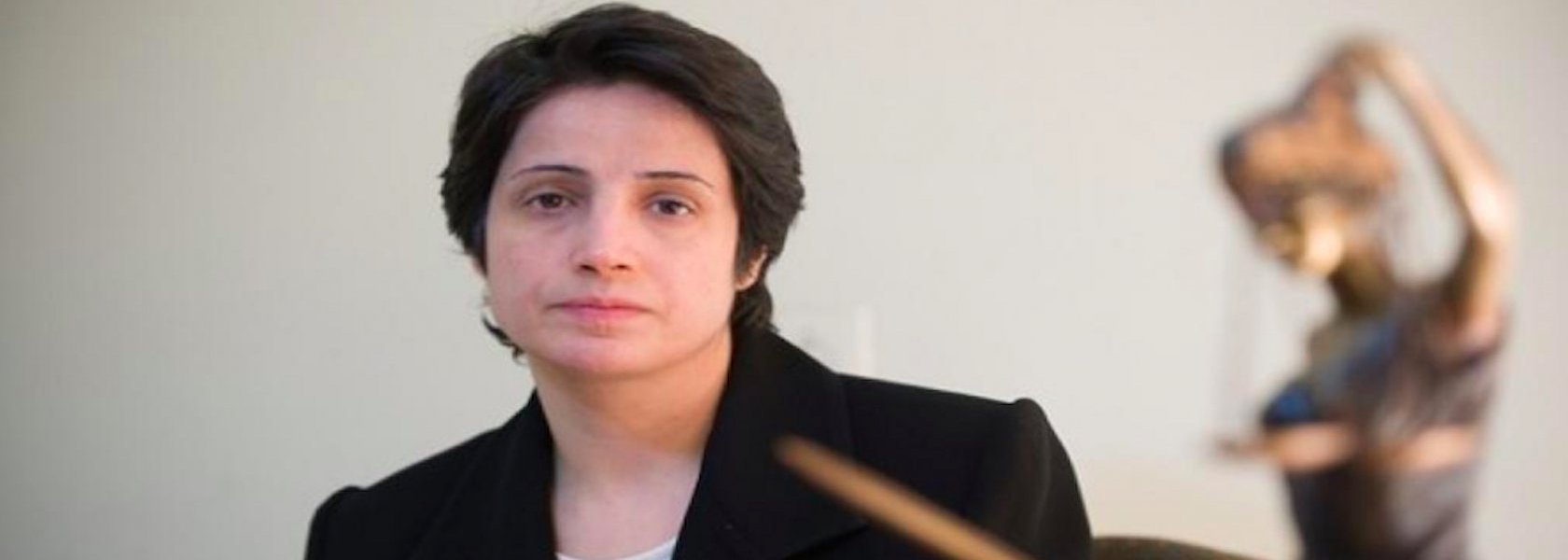
On 21 September 2018 the Observatory for the Protection of Human Rights Defenders (FIDH/ OMCT) petitioned the United Nations Working Group on Arbitrary Detention (WGAD) to seek the release of Iranian human rights lawyer Ms. Nasrin Sotoudeh. Ms. Nasrin Sotoudeh, a prominent defender and 2012 laureate of the European Parliament’s Sakharov Prize, was arrested on June 13, 2018 at her home in Tehran. [see: https://humanrightsdefenders.blog/2018/08/30/human-rights-defender-nasrin-sotoudeh-on-hunger-strike-in-iran/ ].. On September 16, 2018, Ms. Sotoudeh was informed that she would be denied her family visitation rights if she and her female visitors – including her daughter – did not wear a full hijab. Ms Sotoudeh has refused the condition and was denied the right to see her daughter on September 17, 2018.
The Observatory urges the Iranian authorities to immediately and unconditionally release Ms. Sotoudeh and to cease all acts of harassment and other abuses against her and all human rights defenders in Iran, in accordance with the provisions of the United Nations Declaration on Human Rights Defenders and with international human rights standards and international instruments to which Iran is a State party.

The semi-official ISNA news agency reported on Thursday 27 September that another human rights defender, Narges Mohammadi, has been granted a three-day leave from prison to visit her ailing father.

However, the recent terror attack in Iran may be expected to prompt the Guards to compensate by cracking down on domestic detractors and perceived opponents of their mission of defending and principles of the Islamic revolution. Certainly, some prominent figures within the Iranian activist and expatriate communities have been quick to raise alarms about the likelihood of this outcome. For instance, the Center for Human Rights in Iran quoted the Iranian human rights activist and Nobel Peace laureate Shirin Ebadi as saying of last Saturday’s attack, “Such actions lead to the justification of state violence and the arrest of many opponents in the name of fighting terrorism.” Meanwhile activists echoed the sentiment, saying, “Terrorism and violence in any form should be condemned in the strongest terms [but] such acts of violence should not become an excuse for state violence to suppress peaceful opposition.

Murder of Dutch IKON journalists in 1982 in El Salvador revisited

September 25, 2018

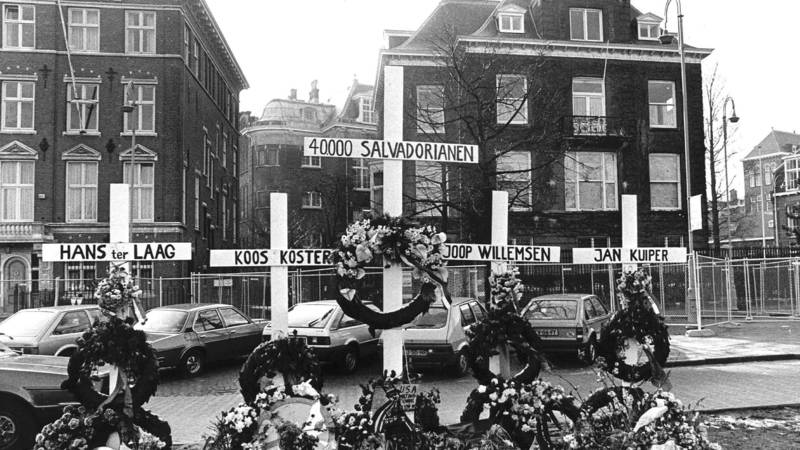
In the Dutch media a lot of attention is being paid at the moment to the 35-year old story of the IKON journalists who were killed in El Salvador in 1982. Some years ago I started to write up ‘human rights stories’ that I had been closely involved in, with the idea that some day they would be of interest. This seems a good moment to ‘publish’ for the first time the chapter on my involvment with the case of the IKON journalists:

1982 IKON journalists killing and El Salvador

…On 17 March 1982, three months before I took up my post as thea first director of the new Netherlands Institute for Human Rights (SIM), the world – and especially the Netherlands – were shocked by the kiliing of a team of television journalists of the TV channel IKON in El Salvador. The very uncivil conflict there had already costs thousands of people their lives including the internationally known cases of the 4 American nuns and the progressive bishop Oscar Romero 1980. The USA under Reagan had clearly changed course and was openly supporting the Duarte regime against the left-wing rebels. The Dutch government – especially its ‘atlanticist’ Minister of Foreign Affairs Hans van de Broek[1]– was caught between its desire to appease the US government and to respond to the public outcry back home. The compromise reached was that the Dutch Ambassador from a neighbouring country (Jan Willem Bertens) was exceptionally allowed to undertake an investigation on Salvadoran territory, but – if no evidence of government involvement was found – that would be the end of the affair. The fact-finding mission by the Dutch Ambassador did not find any strong evidence; the report was left with the Salvador government and submitted to the Dutch parliament.

One of the first visitors to SIM was Yata Matsuzaki who was the partner of one of the journalists killed and on behalf of the families – who were not convinced by the inconclusive Bertens report. She asked me to take on the case and see whatever else could to done to keep the matter alive. There was even some money set aside for this by the families which was very useful as later – when the Dutch Minister Van der Stoel queried whether this kind of activity (i.e. second-guessing him) was within SIM’s mandate – I was able to refer to the fact that SIM was supposed to find externally funded projects and this had been one of them.

In fact, I had to scratch the bottom of the barrel to find ways to keep the case alive but fortunately the UN had just establish a “Special Rapporteur on extrajudicial, summary or arbitrary executions”and I submitted the case there. With the help of the Lawyers Committee for Human Rights in NY I also tried to obtain copies of relevant telexes from the US State Department but most was blacked out.

This involvement with El Salvador led SIM to start a project on how to count human rights violations in general (with initial focus on Central America) and we tried to solve difficult issues such as killings by non-state actors and defining indirect victims. One of the persons helping in El Salvador was Marianella Garcia Villas who had come to SIM in early 1983. I offered to help her with obtaining political asylum in the Netherlands, but she insisted on going back as she was most needed there.  I felt not just sad and shocked but also ‘guilty’ when soon after her return she was murdered.

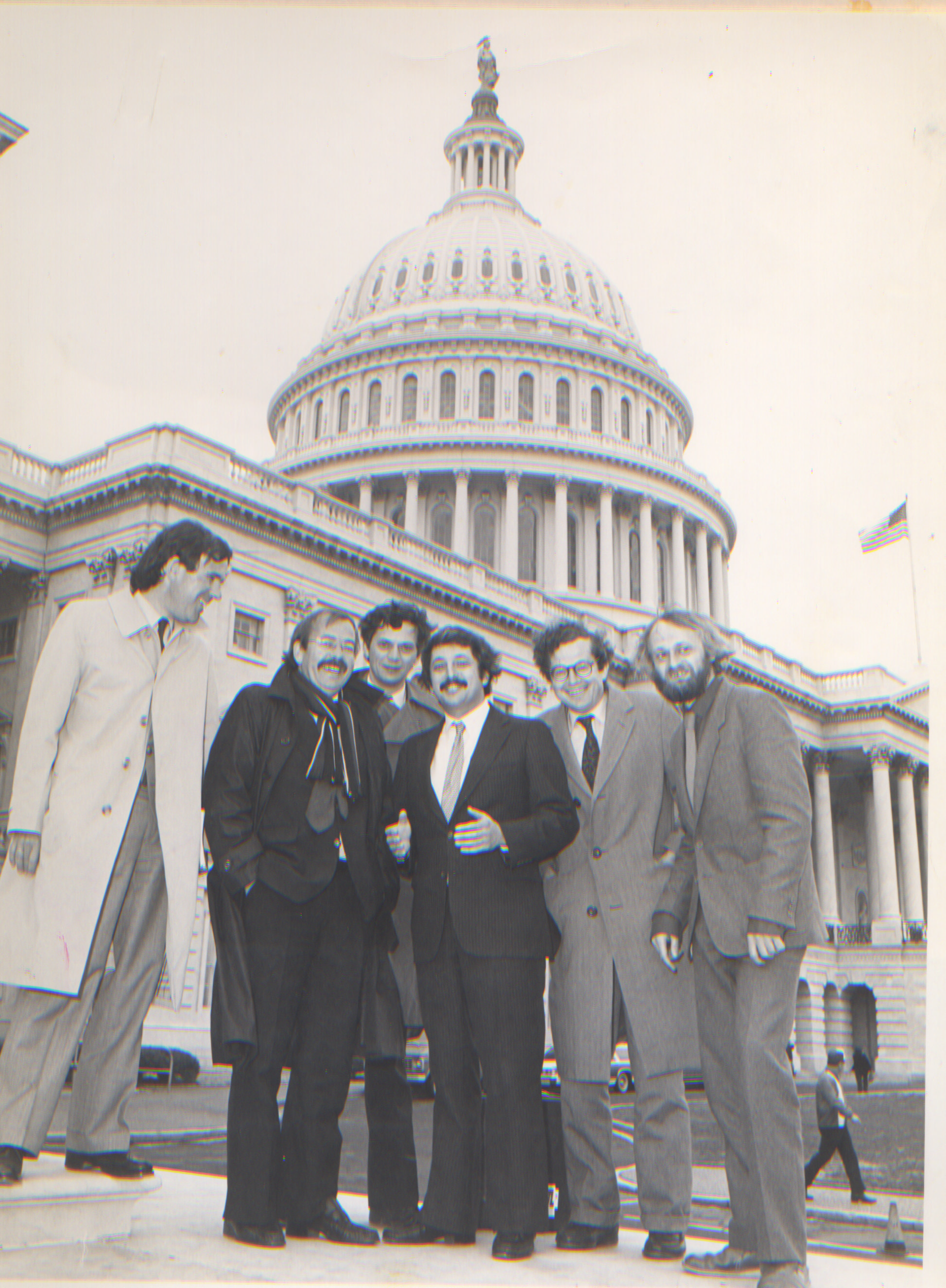
Then in May 1984 three Dutch parliamentarians (one from each main party) accepted to go on a mission to Central America (and the USA see picture) and I was asked to join as an independent ‘expert’. It became a memorable trip, including a shooting incident on the road in Nicaragua, but what crowned it was that in El Salvador I got a chance to meet with the Prosecutor’s office that was in charge of the IKON investigation. They kindly showed me the file and I was shocked to see that it contained almost nothing and especially that the report by the Dutch Ambassador – 2 years later! – had not been translated into Spanish.

Upon arrival in Schiphol airport, there was a well-attended press conference and when there were questions about the IKON investigation the parliamentarians agreed that I should answer as an independent expert. The journalists had clearly not forgotten their colleagues and fielded many questions. When asked what the Dutch government should do now, I replied that it is was time to re-open the investigation and that my colleagues on the mission representing a majority in parliament were well placed to formally ask for it, which they promptly said they would. When soon afterwards a majorly in parliament adopted a motion requesting this, the Minister of Foreign Affairs was not pleased and initially refused to carry out the motion. However, as this was not worth a government crisis the Prime Minster Lubbers engineered a compromise under which the Dutch government would follow up and at least translate the text.

In 1993 a Report of the Truth Commission of the United Nations on El Salvador concluded that the journalists had been killed in a planned ambush, that Reyes Mena was responsible and that El Salvador so far had failed to do research in order to sentence and punish those responsible. That same year an amnesty law was passed in El Salvador,…

and now (September 2018) I can add a final chapter:

A team of the Dutch television programme Zembla has traced the former colonel of the Salvadoran army, Mario Reyes Mena, who ordered the killings. The now 79-year-old Reyes Mena has been living in the United States for four years. Zembla found him through his three adult children, who are active on social media.

When confronted he claimed that the amnesty pronounced by the government of El Salvador covers his actions. However this amnesty law was cancelled in 2016. In August 2017, the investigation into the murders was already reopened administratively. Two Salvadoran human rights organizations, ‘Fundación Comunicándonos’ and ‘Associacíon de Derechos Humanos’, urged the Salvadoran judiciary to carry out the investigation and the ensuing prosecution.Gert Kuiper, de brother of one of the killed journalists has also started a procedure against the colonel and the Dutch Ambassador in El Salvador supports the move.

It is not known where we stand with this investigation but interesting is to note that in November 2017 another former Salvadoran army colonel, Inocente [SIC] Orlando Montano, was extradited from the USA to Spain to face charges relating to the 1989 killings of the 6 Jesuits priests.

Killings cannot have happy endings but justice is the next best thing.

[1]He succeeded in May 1982 the socialist Van der Stoel whose initial reaction to the killing had been more forceful.

Sources:

https://nltimes.nl/2018/09/25/investigation-ongoing-dutch-journalists-murders-el-salvador-1982

https://nos.nl/artikel/2251835-brein-achter-moord-op-ikon-journalisten-opgespoord.html

https://www.theguardian.com/world/2017/nov/29/former-el-salvador-colonel-extradited-to-spain-over-1989-of-jesuits

Laureates of the 2018 Right Livelihood Award announced

September 24, 2018

The Laureates of this year’s Right Livelihood Award, widely known as the ‘Alternative Nobel Prize’, have been announced this morning at the International Press Centre at the Ministry for Foreign Affairs in Stockholm, Sweden.  This years’ Honorary Award goes to anti-corruption champions Thelma Aldana (Guatemala) & Iván Velásquez (Colombia). The three cash awards go to civil and human rights defenders Abdullah al-Hamid, Mohammad Fahad al-Qahtani and Waleed Abu al-Khair (Saudi Arabia), the farmer Yacouba Sawadogo (Burkina Faso), known as “the man who stopped the desert”, and the agronomist Tony Rinaudo (Australia). See also: https://humanrightsdefenders.blog/2017/02/28/saudi-arabia-imprisoned-waleed-abu-al-khair-receives-another-human-rights-award/https://www.frontlinedefenders.org/en/profile/mohammad-fahd-al-qahtani; https://humanrightsdefenders.blog/tag/abdullah-al-hamid/

The Laureates’ trailblazing work for accountability, democracy and the regeneration of degraded land gives tremendous hope and deserves the world’s highest attention. At a time of alarming environmental decline and failing political leadership, they show the way forward into a very different future,” comments Ole von Uexkull, Executive Director of the Right Livelihood Award Foundation. For more on the award see: http://trueheroesfilms.org/thedigest/awards/right-livelihood-award

The Award presentation will take place on 23 November at the Vasa Museum in Stockholm, followed by public events and high-level meetings in Geneva, Zurich and Berlin.


Commonwealth Human Rights Initiative held meeting on Defend the Defenders

September 20, 2018

There are (fortunately) many conference devoted to human rights defenders, from the mega ones (such as the upcoming HRD Summit in Paris, see: https://humanrightsdefenders.blog/2018/07/24/announcement-of-the-human-rights-defenders-world-summit-in-paris-october-2018/ ] to smaller ons such as the one referred to here in Delhi by the Human Rights Law Network as reported by the Commonwealth Human Rights Initiative (CHRI) on 19th September 2018. Mr. Venkatesh Nayak , Programme Coordinator, Access to Information, CHRI moderated the inaugural session on “Attacks on RTI activists” at the day-long conference on Defending the Defenders organised by Human Rights Law Network in Delhi today. Panelists who spoke at this session included Anjali Bhardwaj, SNS & NCPRI; A K Parasher, former Focal Point for Human Rights Defenders, NHRC; Abhishek Singh, s/o slain RTI activist Late Ram Vilas Singh, Lakhisarai, Bihar and Sanjay Sahni, MGNREGA Watch, Muzaffarpur. Sanjoy Hazarika, International Director of CHRI made an intervention during the panel on “Attacks on Journalists.”

The Commonwealth Human Rights Initiative (CHRI) is an independent, non-partisan, international non-governmental organisation, headquartered in New Delhi, India, working for the practical realisation of human rights across the Commonwealth. In 1987, several Commonwealth associations founded CHRI as a response to South Africa’s policy of racism. These groups felt that while member countries had a common set of values and legal principles from which to work and a forum within which to promote human rights, there was relatively little focus on human rights issues.

CHRI’s objectives are to promote awareness of and adherence to the Harare Commonwealth Declaration, the Universal Declaration of Human Rights, and other internationally recognised human rights instruments, as well as domestic instruments supporting human rights in member states.

http://www.humanrightsinitiative.org/events/conference-on-defend-the-defenders-on-19th-september-2018

Florian Irminger moves from HRHF to Penal Reform International

September 19, 2018

In September 2018, Florian Irminger joined PRI as its Executive Director. He was previously the Head of Advocacy at Human Rights House Foundation (HRHF) in Geneva. Before joining HRHF, Florian co-founded ‘Stop Suicide’, a non-governmental organisation dedicated to the prevention of suicide among young people in Switzerland. Florian has been Chair of the Board of the House of NGOs in Geneva for four years. From 2009 to 2012, he was a member of the editorial team responsible for revising Geneva’s constitution, adopted in 2012, and was also a member of the young leaders’ programme of the World Economic Forum.

In his inaugural blog in PRI Newsletter, Florian reflects upon the organisation’s practical approach to penal reform, which has enabled PRI to play a key role in implementing international standards and provide effective and tailored solutions to criminal justice problems worldwide.

For my earlier posts on Florian: https://humanrightsdefenders.blog/tag/florian-irminger/

——-

https://www.penalreform.org/blog/pris-approach-as-needed-as-ever/

Many HRD issues at the 39th session of the UN Human Rights Council

September 8, 2018

The 39th session of the UN Human Rights Council is held from coming Monday to 28 September 2018. Human Rights Defenders issues abound. Thanks to the excellent overview of the ISHR I can provide a short summary. To stay up-to-date, follow @ISHRglobal and #HRC39 on Twitter.

Reprisals

On 19 September, the Council will hold its first dedicated interactive dialogue on reprisals. It will engage with the Assistant Secretary General for Human Rights (Andrew Gilmour) who as UN senior official on reprisals will present the Secretary General’s annual report on the United Nations’ “the reprisals report”. The dedicated dialogue to address acts of intimidation and reprisals was mandated by the resolution on reprisals in September 2017 and provides a key opportunity for States to raise concerns about reprisals, and demand that Governments involved in existing cases provide an update on any investigation or action taken toward accountability. [for some of my earlier posts on reprisals: https://humanrightsdefenders.blog/tag/reprisals/]

Other key thematic reports relevant to HRDs

The Council will hold interactive dialogues and consider the reports of the Working Group on Arbitrary Detention, including on their country visits to Argentina and Sri Lanka, as well as the Working Group on Enforced or Involuntary Disappearance including on their country visit to Gambia.

The Council will consider the human rights of indigenous peoples on several occasions: it will hold a panel on the issue (see further below), the annual reports by the High Commissioner,  the Special Rapporteur on the rights of indigenous peoples, including on her visits to Mexico and Guatemala, and the Expert Mechanism on the Rights of Indigenous Peoples.

The Special Rapporteur on the promotion of truth, justice, reparation and guarantees of non-recurrence will also present his annual report, followed by an interactive dialogue, in addition to discussing the Secretary General report on the prevention of genocide.

The Council will discuss the report of the Secretary-General on capital punishment and the implementation of the safeguards guaranteeing protection of the rights of those facing the death penalty.

The Council will also discuss the report of the High Commissioner on mechanisms concerned with ensuring the safety of journalists and the Council will consider a resolution on the issue. The first informal consultation is scheduled for 11 September at 15:30.

The Special Rapporteur on the implications for human rights of the environmentally sound management and disposal of hazardous substances and wastes will present a set of principles for States, businesses and other actors to protect workers, including the need to protect worker representatives and human rights defenders from reprisal.

Country-specific developments

Burundi. During its 36th session, the Council passed two resolutions on Burundi (read here ISHR’s analysis of these two resolutions). At the 39th session, the Council will hold an interactive dialogue with the High Commissioner on his final report on Burundi on 11 September from 15:00 to 18:00. The Council will also hold an interactive dialogue with the Commission of Inquiry on 17 September between 09:00 and 12:00. ISHR continues to remain highly concerned about the human rights situation in Burundi and its refusal to cooperate with the Council’s mechanisms, which clearly warrant an invitation to the General Assembly to consider the suspension of Burundi as a member of the Council. ISHR joined a group of NGOs in calling for the renewal of the mandate of the Commission of Inquiry. [for earlier posts on Burundi: https://humanrightsdefenders.blog/tag/burundi/]

Yemen. Last September, the Council appointed a Group of Eminent Experts to carry out a comprehensive examination of all alleged violations of international human rights law committed by all parties to the conflict since September 2014. They will present their report followed by an interactive dialogue on 26 September from 09:00 to 12:00. The Council will also consider a report of the High Commissioner on the human rights situation in Yemen and on the implementation of the technical assistance. The Group of Eminent Experts’ report strongly suggests that parties to the armed conflict have perpetrated, and continue to perpetrate, violations and crimes under international law. Over 50 civil society organisations have called on the Council to renew and strengthen the mandate of the Group of Eminent Experts through the enhancement of its reporting structure and strengthening language on accountability.

China. The 39th session is the final session before China’s Universal Periodic Review. [https://humanrightsdefenders.blog/2016/03/15/remember-2nd-anniversary-of-the-death-of-cao-shunli/; https://humanrightsdefenders.blog/2018/03/26/chinas-win-win-resolution-gets-the-votes-in-the-un-council/ and many more]

Other country situations where HRD issues are relevant

The Council will hear reports on and is expected to consider resolutions addressing a range of country situations, in some instances involving the renewal of the relevant expert mandates.

They include:

  • Interactive dialogue with the Commission on Syria
  • Interactive dialogue with the Commission on human rights in South Sudan
  • Interactive dialogue with the Fact-finding mission on Myanmar
  • Interactive dialogue on the High Commissioner’s oral update on Ukraine
  • Interactive dialogue on the High Commissioner’s report on the Democratic Republic of the Congo
  • Interactive dialogue on the High Commissioner’s oral update on Libya
  • Interactive dialogue with the Special Rapporteur on Cambodia
  • Interactive dialogue with the Independent Expert on Somalia
  • Interactive dialogue with the Independent Expert on Sudan
  • Interactive dialogue with the Independent Expert on the Central African Republic

Adoption of Universal Periodic Review (UPR) reports

During this session, the Council will adopt the UPR working group reports on Turkmenistan, Burkina Faso, Cabo Verde, Colombia, Uzbekistan, Tuvalu, Germany, Djibouti, Canada, Bangladesh, Russian Federation, Azerbaijan, Cameroon, and Cuba.

Appointment of mandate holders

The President of the Human Rights Council has proposed candidates for the following two vacancies of mandate holders to be filled at this session:

  1. Special Rapporteur on the situation of human rights in Belarus
  2. Special Rapporteur on the situation of human rights in Eritrea

Resolutions to be presented to the Council’s 39th session

At the organisational meeting the following resolutions relevant to HRDs were announced (States sponsoring the resolution in brackets):

  1. The human rights situation in Yemen (Yemen and a group of countries)
  2. The protection of human rights in the Democratic Republic of Congo (Togo on behalf of the African group)
  3. The protection of human rights in the Sudan (Togo on behalf of the African group)
  4. World Programme for Human Rights Education (Brazil, Costa Rica, Italy, Morocco, Slovenia, Senegal,  Philippines, Thailand)
  5. The human rights situation in Syria (France, Germany, Italy, Jordan, Kuwait, Morocco, Qatar, Saudi Arabia, Turkey, the United Kingdom)
  6. The human rights situation in Somalia (the UK and a group of countries)
  7. The safety of journalists (Austria, Brazil, France, Greece, Morocco, Qatar and Tunisia)
  8. The human rights of indigenous peoples (Guatemala and Mexico)
  9. The promotion and protection of the human rights of peasants and other people working in rural areas (Bolivia, Cuba, Ecuador, South Africa)
  10. The human rights situation in Burundi (the European Union)
  11. The human rights situation in Myanmar (the European Union)
  12. Equal participation in political and public affairs (Botswana, Czech Republic, Indonesia, Netherlands, Peru)
  13. The situation of Rohingya muslims and other minorities in Myanmar (Pakistan on behalf of the Organisation for Islamic Cooperation)

Panel discussions

During each Council session, panel discussions are held to provide member States and NGOs with opportunities to hear from subject-matter experts and raise questions. All panel discussions will be broadcast live and archived on http://webtv.un.org. Three panel discussions are scheduled for this upcoming session:

  • The high-level panel discussion to commemorate the seventieth anniversary of the Convention on the Prevention and Punishment of the Crime of Genocide will take place on 13 September from 10:00 to 12:00.
  • The annual half-day panel discussion on the rights of indigenous peoples will take place on 19 September from 9:00 to 11:00. The theme will be the participation and inclusion of indigenous peoples in the development and implementation of strategies and projects in the context of the 2030 Agenda for Sustainable Development.
  • The annual discussion on the integration of a gender perspective throughout the work of the Human Rights Council and that of its mechanisms will take place on 24 September from 16:00 to 18:00. The theme will be gender integration and human rights investigations: strengthening a victim-centred approach.

Side events. As always there will be many side events concerning HRDs to which I will refer in the future.

——

https://www.ishr.ch/news/hrc39-key-issues-agenda-september-2018-session