Archive for the 'Human Rights Defenders' Category

19 NGOs Call on US to Press the UAE to Release Ahmed Mansoor ahead of COP 28

September 1, 2023

On August 29, 2023, Amnesty International USA, Human Rights Watch, Project on Middle East Democracy (POMED) and 16 additional civil society organizations delivered an open letter urging U.S. Secretary of State Antony Blinken to encourage the United Arab Emirates (UAE) government to immediately and unconditionally release Emirati human rights defender Ahmed Mansoor ahead of the 28th Conference of Parties of the United Nations Framework Convention on Climate Change (COP28) that will take place from November 30 to December 12, 2023. [for more on UAE: see https://humanrightsdefenders.blog/tag/ahmed-mansoor/]
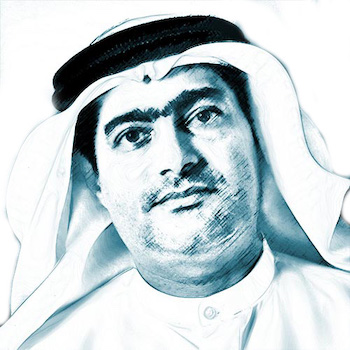
In the letter, the organizations urged Secretary Blinken to call on the UAE government to immediately and unconditionally release Ahmed Mansoor and other jailed human rights defenders and peaceful critics both privately and publicly at the highest levels. The organizations also called on the Secretary to signal deep concern about Mansoor’s well-being and request permission to visit him in prison as soon as possible.

“With the world’s attention on Dubai, the US government should deliver on this administration’s promise to center human rights in its foreign policy and press the Emirati authorities to finally release Ahmed Mansoor,” said Elizabeth Rghebi, Advocacy Director for the Middle East and North Africa, “As a participant in COP28, the US government can demand the UAE demonstrate through this high profile release its commitment to the human rights principles required for healthy civic space at this upcoming global gathering.”

Governments have an obligation to protect the civic space for protest, in particular guaranteeing the rights to freedom of peaceful assembly and freedom of expression. Subjecting human rights defenders and critics to unlawful use of force, arbitrary detention, unfair trials, and abusive detention conditions violate these and other rights. The US government should work to uphold its obligations both at home and when engaging diplomatic partners.

Mansoor was arrested by Emirati authorities in March 2017 for “spreading false news” to “harm the reputation of the state.” All the charges on which he was convicted were based solely on his human rights advocacy, including using email and WhatsApp to communicate with human rights organizations. Following more than a year in isolation in pre-trial detention and a grossly unfair trial, an Emirati state security court sentenced Mansoor to 10 years in prison. Mansoor is a laureate of the MEA [see: https://www.trueheroesfilms.org/thedigest/laureates/074ACCD4-A327-4A21-B056-440C4C378A1A]

Throughout his imprisonment, Mansoor has been subjected to treatment that violates the prohibition against torture and other cruel, inhuman, or degrading treatment, including being held in solitary confinement without access to reading materials, television, or radio. Since December 2017, he has been denied eyeglasses, most personal hygiene items and, at least until recently, a bed or mattress in his cell.

https://www.amnestyusa.org/press-releases/19-organizations-call-on-us-administration-to-press-uae-on-release-of-ahmed-mansoor/

https://www.hrw.org/news/2023/08/30/cop28-us-should-press-uae-activists-release
Human Rights Defenders in Europe fear George Soros retreat

September 1, 2023

Philip Oltermann on 19 August 2023 reports that ΗRDs fear the billionaire’s legacy will be lost as his Open Society Foundations curbs its activities across the EU

Soros survived the Nazi occupation of his native Hungary, made a fortune on Wall Street and became one of the most steadfast backers of democracy and human rights in the eastern bloc. But human rights activists and independent media fear the legacy of billionaire philanthropist George Soros, 93, could be about to be undone in his homelands, as his donor network announced it will curb its activities across the EU from 2024.

Several beneficiaries of Soros’s Open Society Foundations (OSF), chaired since the start of this year by his son Alex, told the Observer they would struggle without its support amid an authoritarian rollback.

When the Open Society Foundations left Budapest under severe political pressure in 2018, they said they would lose their physical presence but not their focus on the region,” said Márta Pardavi, co-chair of the Hungarian Helsinki Committee, a Budapest human rights NGO supported by the foundations. But she added: “Has there really been such a positive shift in Europe over the last five years that that promise has become less relevant?”

In a July email to staff, the OSF management announced a “radical redesign to help us deliver more effectively on our mission”. “Ultimately, the new approved strategic direction provides for withdrawal and termination of large parts of our current work within the European Union, shifting our focus and allocation of resources to other parts of the world,” it said.

While 40% of the charity’s global staff will be laid off, cuts will be severest in Europe, with the 180 headcount at its Berlin headquarters cut by 80%. Staff remaining in the German capital will mainly administer the foundation’s funds in Switzerland.

Its Brussels offices will be downsized, while a branch in Barcelona will be closed by the end of the year. Of an erstwhile seven branches in the post-Soviet area only three remain in Kyrgyzstan, Ukraine and Moldova.

Many European NGOs, think tanks and research groups working on issues ranging from media freedom and migrants’ rights to state surveillance and digital regulation rely on the foundations, which spent $1.5bn on philanthropic causes in 2021.

As traditional European media outlets have struggled to live up to their role amid a drop in advertising revenue, OSF has stepped in to support independent news projects including the Organized Crime and Corruption Reporting Project (OCCRP), London-based Bureau of Investigative Journalism and Forbidden Stories, an encrypted online platform that allows threatened journalists to securely upload their work and be continued by others.

Alex Soros, who grew up and was educated in the US, said: “The Open Society Foundations is changing the way we work, but my family and OSF have long supported, and remain steadfastly committed to the European project.”

The foundations say they will continue support for European Roma communities. Even critical employees expressed confidence the foundations could commit more to longer-term projects, just fewer of them.

Yet while a profound change to the structure of the organisation has long been signalled by Soros senior, the decision to achieve this via drastically reducing its headcount seems to have only emerged has been a priority under its new board of directors. Once jokingly referred to by employees as Soros’s “reading group”, the board has been slimmed down to a tighter unit dominated by family members since the baton was passed to Soros junior.

“The OSF is one of the few bodies that hand out unrestricted core funding,” said one grantee, who asked to remain anonymous amid uncertainty over the foundation’s future strategy. “It’s what keeps the light on for human rights defenders in Europe.”

Berlin has been the hub of the foundations’ European operations after the 2018 closure of the Budapest branch under pressure from the government of strongman Viktor Orbán, once a recipient of Soros’s support.

Last week the Hungarian prime minister’s political director Balázs Orbán (no relation) posted a message on social network X, formerly known as Twitter, in which he called the Open Society Foundation “the Soros empire”. “We only truly believe that the occupying troops are leaving the continent when the last Soros soldier has left Europe and Hungary,” he said.

“If you invest in democracy, you can never expect it to yield quick returns,” Márta Pardavi said. “The need for democracy-building never really goes away. And I think George Soros knew that.”

https://www.theguardian.com/business/2023/aug/19/george-soross-retreat-from-europe-could-turn-off-the-lights-for-human-rights

Mary Lawlor urges India to release HRD Saibaba

August 29, 2023
Mary Lawlor, UN Special Rapporteur on the situation of human rights defenders.

Mary Lawlor, UN Special Rapporteur on the situation of human rights defenders.

An independent UN human rights expert has called for India to release an activist imprisoned since 2017, expressing concern over his persistent detention and deteriorating health. GN Saibaba, a former English professor at Delhi University, was arrested in 2014 and accused of links to banned Maoist groups, according to media reports. See: https://humanrightsdefenders.blog/2023/07/07/g-n-saibaba-in-india-continues-from-his-cell/

He was sentenced to life imprisonment three years later for multiple offences under the country’s Unlawful Activities Prevention Act.

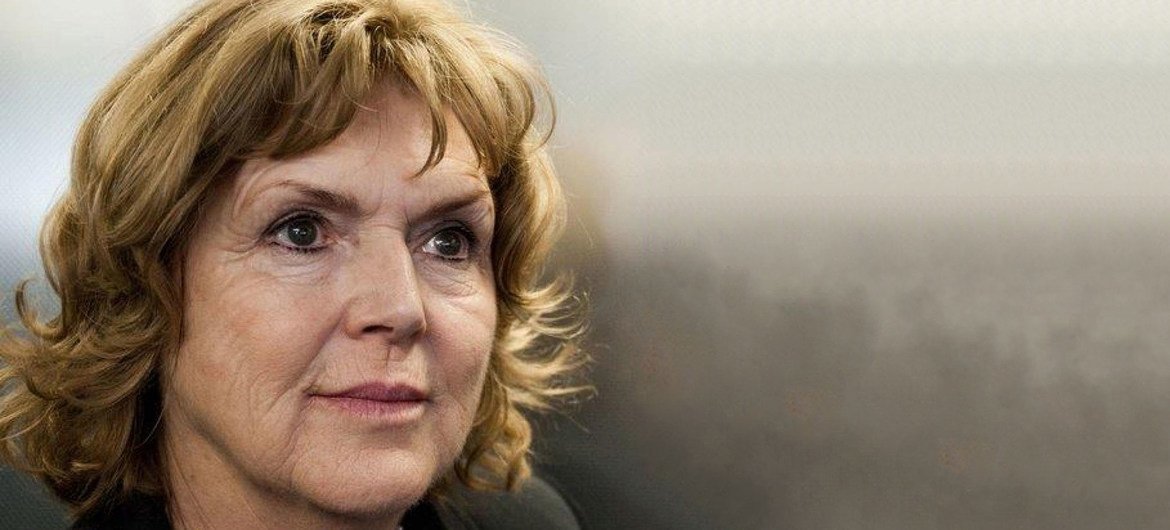
GN Saibaba is a long-standing defender of the rights of minorities in India, including the Dalit and Adivasi people,said Mary Lawlor, UN Special Rapporteur on the situation of human rights defenders on 21 August “His continued detention is shameful. It bears all the hallmarks of a State seeking to silence a critical voice,” she added.

UN human rights experts have repeatedly raised grave concerns about the prosecution of Mr. Saibaba, who has suffered from a spinal disorder and polio since childhood and uses a wheelchair. 

His detention was declared arbitrary by the UN Working Group on Arbitrary Detention in an opinion issued in 2021.

In March 2024 came the good news: The Nagpur bench of Bombay High Court set aside the conviction, Read more at:
http://timesofindia.indiatimes.com/articleshow/108246679.cms?utm_source=contentofinterest&utm_medium=text&utm_campaign=cppst

https://news.un.org/en/story/2023/08/1139932

https://english.mathrubhumi.com/news/world/un-expert-pitches-for-ex-delhi-university-professor-g-n-saibaba-s-release-1.8840381

Russia closes now also the Sakharov Center

August 29, 2023

After the closing of Memorial [see https://humanrightsdefenders.blog/2021/12/29/russias-supreme-court-orders-closure-emblematic-memorial/], Deutsche Welle reported on 18 August 2023 that it was now the turn of the Sakharov Centre, the organization, dedicated to Nobel Peace Prize winning rights activist Andrei Sakharov [https://www.trueheroesfilms.org/thedigest/laureates/B3C93212-FADC-4C30-B82A-3E5F2716F1D6] which was accused of illegally hosting conferences and exhibitions. It was created in Moscow almost three decades ago.

The closure of the human rights group is seen as part of the Kremlin’s campaign to crack down on liberal-leaning organizations that challenge official narratives, including those about Moscow’s military campaign in Ukraine.

Moscow City Court said in a statement that it had decided to liquidate the Sakharov Center at the request of the Justice Ministry for illegally hosting conferences and exhibitions.

Since its creation in 1996, the group has hosted hundreds of debates, exhibitions and other events. In 2015, thousands of people gathered there to pay their last respects to opposition politician Boris Nemtsov, who was murdered near the Kremlin walls.

Authorities declared the group a “foreign agent” in 2014 and this year ordered the eviction of the center from its premises.=

On Thursday, authorities charged Grigory Melkonyants, the leader of Golos, a prominent independent election monitoring group, with being involved with an “undesirable” organization. He faces up to six years in prison. [https://www.frontlinedefenders.org/en/case/three-human-rights-defenders-and-members-human-rights-movement-golos-arrested-following-raids]

In January, a court also ordered the closure of Russia’s oldest human rights organisation, the Moscow Helsinki Group.

Another rights group, Memorial, which established itself as a key pillar in civil society, was disbanded by Russian authorities in late 2021, just months before Putin sent troops to Ukraine.

https://www.dw.com/en/russia-closes-human-rights-group-sakharov-center/a-66572098

https://www.fidh.org/en/issues/human-rights-defenders/russia-liquidation-of-the-sakharov-center

See also: https://www.frontlinedefenders.org/en/case/human-rights-organisation-man-and-law-shut-down-court-order

500 Bahraini prisoners on hunger strike over conditions

August 20, 2023

On 18 August 2023 Brian Dooley posted for Human Rights First about the new crisis in Bahrain‘s prisons as at least 500 prisoners are on hunger strike refusing food in protest at their detention conditions. Among those denied the care they need are prominent rights activists Abdulhadi Al Khawaja, Abduljalil Al Singace, and Hassan Mushaima, who have been jailed since their peaceful protests in 2011. On 15 August 2023, human rights defender Abdulhadi Al-Khawaja was denied a prearranged video call with his daughter days after he was rushed to the intensive care unit where doctors declared his life was in danger. Abdulhadi Al-Khawaja is at imminent danger of losing his life since he has started a water-only hunger strike on 9 August 2023. [see: https://www.trueheroesfilms.org/thedigest/laureates/4d45e316-c636-4d02-852d-7bfc2b08b78d]

Bahrain’s main prison, Jau, currently holds an estimated 1300 prisoners, around half of whom are on a hunger strike. The current crisis could have been easily avoided – if Bahrain’s government had shown an iota of wisdom, it would have released those unjustly jailed years ago, and given all those who need medical treatment adequate care.

See also: https://humanrightsdefenders.blog/tag/bahrain/

It’s another mishandling of a situation that now threatens to spiral dangerously out of control. In March 2015 there was a prison riot at Jau. HRF predicted that the poor conditions, overcrowding, and poor medical care would erupt into large-scale disturbances, and they did.

I spoke to several former inmates of Jau last night. One recently released prisoner said “This frustration in the prison has to go somewhere, it’s been building for so long. The situation is getting worse every day with more and more prisoners joining the protest. Some have already collapsed.”

Some prisoners began refusing food on August 7, and many more have since joined the protest. International attention is starting to turn towards Jau. Yesterday I joined others in an overnight protest outside the Bahrain embassy in London, praying for those prisoners in urgent need of medical care.

But if any of the hundreds of prisoners on the hunger protest die, the consequences of Bahrain’s failure to resolve the crisis could be catastrophic, with unrest spilling onto the streets. The authorities in Bahrain need to act fast to prevent a similar outcome to 2015, when they responded to prison unrest by torturing and ill-treating dozens of detainees.  Better to make the smart move now, grant the prisoners’ basic demands including proper health care, and avert another disaster.

Among those in most acute danger are the leading rights activists. Human Rights First joined other NGOs this week urging the State Department to use its considerable influence with Bahrain to press for a speedy and humane resolution to the crisis.

https://www.theguardian.com/world/2023/aug/18/bahraini-prisoners-hunger-strike-conditions

https://www.frontlinedefenders.org/en/case/human-rights-defender-abdulhadi-al-khawaja-imminent-danger-losing-his-life

Shelter City Netherlands: latest call for applications for March 2024

August 19, 2023

Justice & Peace Netherlands is launching a new call for applications for human rights defenders at risk to participate in Shelter City. The deadline for applications is 14 September 2023 at 23:59 CEST. Shelter City is a global movement of cities, organizations and people who stand side by side with human rights defenders at risk. Shelter City provides temporary safe and inspiring spaces for human rights defenders at risk where they re-energise, receive tailormade support and engage with allies.

From March 2024 onwards, several cities in the Netherlands will receive human rights defenders for a period of three months. At the end of their stay in the Netherlands, participants are expected to return with new tools and energy to carry out their work at home. [see for previous call: https://humanrightsdefenders.blog/2023/03/22/call-for-applications-for-september-2023-by-shelter-city-netherlands/]

Journalists’ Safe Haven Initiative

Justice & Peace aims to promote the safety of journalists, and in particular women journalists, worldwide so that they can build new strategies and continue their important work for freedom of expression in their country of origin. With support from the Dutch Ministry of Foreign Affairs, Justice & Peace will be able to provide two additional temporary safe spaces per year in The Hague for journalists at risk and provide them with tailor-made support.

To apply for Shelter City, use the online application form below. Application forms must be submitted by 14 September 2023. An independent commission will select the participants.

Apply now to Shelter City for March 2024

Note that selected human rights defenders will not automatically participate in Shelter City as Justice & Peace is not in control of issuing the required visas to enter the Netherlands.

For more information, please contact us at sheltercity@justiceandpeace.nl.

UN experts demand detailed information on nine Tibetan environment defenders

August 18, 2023

From TibetanReview.net, on 11 August 2023:

Three UN human rights experts have issued a joint statement on Aug 10, asking the Chinese government to provide information about nine Tibetans imprisoned for their peaceful efforts to protect Tibet’s fragile environment.

The experts—the Special Rapporteur on the situation of human rights defenders (Ms Mary Lawlor); the Special Rapporteur on freedom of assembly and association (Mr Clément Nyaletsossi Voul); and the Special Rapporteur on human rights obligations relating to the enjoyment of a safe, clean, healthy and sustainable environment (Mr David Boyd)—have asked Beijing to provide details about the reason for the detention and the health conditions of the nine Tibetans, who were all taken in between 2010 and 2019.

“We urge the Chinese government to provide details on why and where they are being held and their health conditions, provide them with adequate medical care and permit their families access to visit them,” the Special Rapporteurs have said.

The experts have further made it clear that the lack of information shared by Chinese authorities could be interpreted as a “deliberate attempt” to hide the environmental defenders from global attention.

The nine Tibetans, identified in the release as Anya Sengdra, Dorjee Daktal, Kelsang Choklang, Dhongye, Rinchen Namdol, Tsultrim Gonpo, Jangchup Ngodup, Sogru Abhu and Namesy were all detained after they protested illegal mining activities or exposed the poaching of endangered wild lives.

Three of the activists are serving up to 11-years jail sentences. However, China has not made public the jail sentences of the remaining six, namely Dhongye, Rinchen Namdol, Tsultrim Gonpo, Jangchup Ngodup, Sogru Abhu and Namsey. [see also: https://humanrightsdefenders.blog/2022/08/31/enforced-disappearances-in-china/]

The experts have sought to know the extent of access to legal representation the imprisoned Tibetans had, and whether any of them had been provided with medical assistance while in prison.

Since the defenders were sentenced, the right to a clean, healthy and sustainable environment was recognised at the international level by the Human Rights Council and the General Assembly.

If China is committed to tackle the impacts of climate change, it should refrain from persecuting environmental human rights defenders and release all nine immediately,” the experts have said.

China has declared mining as one of its pillar industries in occupied Tibet, and has also continued to carry out massive environmentally devastating urbanization and infrastructure projects. These have led to increasing persecution and long-term imprisonment of many environment defenders.

In a report published in June 2022, Washington-based advocacy group International Campaign for Tibet had documented 50 known cases of such Tibetans arbitrarily detained, arrested, tried and/or sentenced since 2008. Of the 50 documented cases, the prison sentences imposed on 35 of the individuals are known. The sentences range from one year and nine months to 21 years, with an average sentence length of nine years, said the group Aug 10 while reporting on the UN experts’ statement.

The environmental health of Tibet has major global implications. As the world’s “Third Pole” and Asia’s “water tower,” the Tibetan Plateau holds the largest volume of frozen freshwater outside the polar regions and is the source of Asia’s eight great rivers, ultimately sustaining the livelihoods of up to 1.4 billion people living downstream, the group has pointed out.

http://www.phayul.com/2023/08/12/48800/

Report of the Special Rapporteur on the situation of women human rights defenders in conflict, post-conflict and crisis-affected settings

August 17, 2023

In the present report to the General Assembly [A/78/131, dated 7 July 2023], the Special Rapporteur on the situation of human rights defenders, Mary Lawlor, analyses the situation of women human rights defenders working in conflict, post-conflict and crisis-affected settings and highlights their contributions to peace and security, despite the often difficult and even hostile environments in which they work. The report contains examples of individual cases of women human rights defenders working in these contexts, as well as recommendations to States and other relevant stakeholders on providing a safe and enabling environment in which to carry out their legitimate human rights work.

In a submission for the present report, April Dyan Gumanao of Alliance of Concerned Teachers in the Philippines noted that “we work on the premise that, to achieve sustainable peace, there should be food on tables, decent work and opportunities, equality, respect for human rights and justice”.

Clips from young Human Rights Defenders

August 17, 2023
Mary Lawlor

Mary Lawlor, UN Special Rapporteur on Human Rights Defenders, shows on her LinkedIn page young human rights defenders who are the ones who will carry the human rights movement into the future, and to who we need to listen now.

👉 e.g. meet Zeinab, a young WHRD from #Kenya who took part in the 2023 Vienna Youth & Children HRD conference:

#YouthForRights #InternationalYouthDay #YouthLead #InSolidarityAndHope

Canada Doubles Resettlement Spaces for Human Rights Defenders

August 12, 2023
Canada Doubles Resettlement Spaces for Human Rights Defenders

Canada is doubling its resettlement spaces from 250 to 500 for human rights defenders (HRDs) and their family members and it that way continues its policy, see: https://humanrightsdefenders.blog/2021/07/19/canada-puts-its-money-where-its-mouth-is-human-rights-defenders-to-be-fast-tracked-as-refugees/

Canada firmly believes that the protection of human rights is the cornerstone of a just society. As the world grapples with numerous human rights challenges, Canada is reinforcing its role as a global leader in promoting human rights and protecting those who safeguard them,” said former Immigration Minister Sean Fraser.

“Together, we will continue to champion human rights and foster an environment where individuals can freely exercise their voices without fear of persecution.”

As per Voices at Risk: Canada’s Guidelines on Supporting Human Rights Defenders, HRDs are defined as people who, individually or in groups, act to peacefully promote or protect human rights, “such as by documenting and calling attention to violations or abuses by governments, businesses, individuals or groups.” See also: https://humanrightsdefenders.blog/2019/09/01/ngos-call-canadas-revised-guidelines-on-human-rights-defenders-a-step-in-the-right-direction/

Although these individuals make huge contributions to the building of inclusive and democratic societies that contribute to a peaceful international community, they are repeatedly the victims of criminalization, arbitrary arrest, and threats, with hundreds of HRDs being tortured and assassinated every year.

In responding to the needs of this vulnerable group, Canada has long fostered a tradition of HRD resettlement. In fact, it was ranked as the top resettlement country in the world for the fourth year in a row, welcoming over 47,500 refugees from over 80 countries in 2022.

Fraser furthered this initiative on July 25 by declaring the expansion of the global HRD stream – a government initiative that has resettled HRDs since 2021 through the Government-Assisted Refugee (GAR) Program (and was one of the first to offer a dedicated, permanent pathway for HRDs globally).

Over the following months, Canada is also looking to re-engage civil society organizations on the development of a temporary protection pathway for HRDs in need.