Meet the winners of the Kids 4 Human Rights International Art Contest, an initiative of the Queen Sofia Children’s Art Museum of the Gabarrón Foundation, in collaboration with UN Human Rights, to raise awareness of the importance of the Universal Declaration of Human Rights.
Archive for the 'Human Rights Defenders' Category
Young artists raise awareness of human rights
December 20, 202310 years Natalia bracelet
December 20, 2023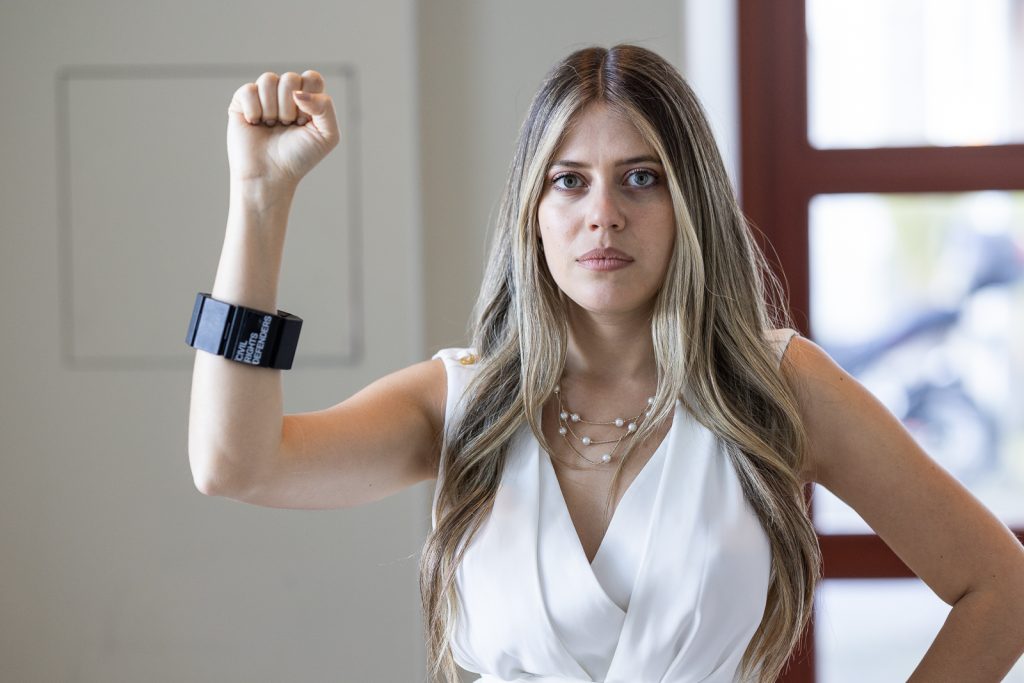
On 18 December 2023 Civil Rights Defenders published an account of 10 years Natalia [see: https://humanrightsdefenders.blog/2014/04/24/the-natalia-gps-alarm-bracelet-wins-golden-egg-awards-in-stockholm/]
10 years ago, Civil Rights Defenders launched the Natalia Project, the world’s first assault alarm and community-based security system for human rights defenders. In the event of an attack, participants in the project can send out a distress signal so they can be located quickly and get help.
Natalia Project participant Génesis Dávila is the director and founder of Defiende Venezuela, a human rights organisation fighting for accountability and justice for victims of political persecution, people in arbitrary detention, and others who have been subjected to government-sanctioned attacks in Venezuela. In Venezuela being a human rights defender puts Génesis at risk of the very same political persecution she is trying to document.
“I face different threats on a daily basis. In general, they come from the Venezuelan regime. They harass human rights defenders because we try to protect people who are in danger and victims of human rights violations. This is something that puts us at great risk.” “It is really exhausting because then you don’t have space for other things. It’s the feeling of being chased all the time. It puts you under stress. You feel that you are never safe, wherever you are.”
In the case of an attack, the alarm is activated, and a distress signal goes off. Civil Rights Defenders and a network of human rights defenders can start investigating the situation within minutes.
“For me, my Natalia has been a game changer. It helped me feel safe. Just having this tiny device with me, knowing that there was someone on the other side of the world just waiting for my call, being ready to act if something happens gave me such a confidence. That changed everything.”
The Natalia Project device is built to be durable and easy to use and take wherever is needed.
“Everywhere I go, I bring my Natalia. If I’m about to fly somewhere, I check my passport, cellphone and my Natalia. It makes me feel safe. It’s my lucky charm.”
“Anyone who wants to support human rights can do it. You don’t have to be a lawyer, or someone waving a flag. You just need to advocate for human rights, and that will be enough.”
CRD also runs an emergency fund, see: https://crd.org/emergency-fund/
In the deepfake era, we need to hear the Human Rights Defenders
December 19, 2023In a Blog Post (Council on Foreign Relations of 18 December 2023) Raquel Vazquez Llorente argues that ‘Artificial intelligence is increasingly used to alter and generate content online. As development of AI continues, societies and policymakers need to ensure that it incorporates fundamental human rights.” Raquel is the Head of Law and Policy, Technology Threats and Opportunities at WITNESS
The urgency of integrating human rights into the DNA of emerging technologies has never been more pressing. Through my role at WITNESS, I’ve observed first-hand the profound impact of generative AI across societies, and most importantly, on those defending democracy at the frontlines.
The recent elections in Argentina were marked by the widespread use of AI in campaigning material. Generative AI has also been used to target candidates with embarrassing content (increasingly of a sexual nature), to generate political ads, and to support candidates’ campaigns and outreach activities in India, the United States, Poland, Zambia, and Bangladesh (to name a few). The overall result of the lack of strong frameworks for the use of synthetic media in political settings has been a climate of mistrust regarding what we see or hear.
Not all digital alteration is harmful, though. Part of my work involves identifying how emerging technologies can foster positive change. For instance, with appropriate disclosure, synthetic media could be used to enhance voter education and engagement. Generative AI could help create informative content about candidates and their platforms, or of wider election processes, in different languages and formats, improving inclusivity or reducing barriers for underdog or outsider candidates. For voters with disabilities, synthetic media could provide accessible formats of election materials, such as sign language avatars or audio descriptions of written content. Satirical deepfakes could engage people who might otherwise be disinterested in politics, bringing attention to issues that might not be covered in mainstream media. We need to celebrate and protect these uses.
As two billion people around the world go to voting stations next year in fifty countries, there is a crucial question: how can we build resilience into our democracy in an era of audiovisual manipulation? When AI can blur the lines between reality and fiction with increasing credibility and ease, discerning truth from falsehood becomes not just a technological battle, but a fight to uphold democracy.
From conversations with journalists, activists, technologists and other communities impacted by generative AI and deepfakes, I have learnt that the effects of synthetic media on democracy are a mix of new, old, and borrowed challenges.
Generative AI introduces a daunting new reality: inconvenient truths can be denied as deep faked, or at least facilitate claims of plausible deniability to evade accountability. The burden of proof, or perhaps more accurately, the “burden of truth” has shifted onto those circulating authentic content and holding the powerful to account. This is not just a crisis of identifying what is fake. It is also a crisis of protecting what is true. When anything and everything can be dismissed as AI-generated or manipulated, how do we elevate the real stories of those defending our democracy at the frontlines?
But AI’s impact doesn’t stop at new challenges; it exacerbates old inequalities. Those who are already marginalized and disenfranchised—due to their gender, ethnicity, race or belonging to a particular group—face amplified risks. AI is like a magnifying glass for exclusion, and its harms are cumulative. AI deepens existing vulnerabilities, bringing a serious threat to principles of inclusivity and fairness that lie at the heart of democratic values. Similarly, sexual deepfakes can have an additional chilling effect, discouraging women, LGBTQ+ people and individuals from minoritized communities to participate in public life, thus eroding the diversity and representativeness that are essential for a healthy democracy.
Lastly, much as with social media, where we failed to incorporate the voices of the global majority, we have borrowed previous mistakes. The shortcomings in moderating content, combating misinformation, and protecting user privacy have had profound implications on democracy and social discourse. Similarly, in the context of AI, we are yet to see meaningful policies and regulation that not only consult globally those that are being impacted by AI but, more importantly, center the solutions that affected communities beyond the United States and Europe prioritize. This highlights a crucial gap: the urgent need for a global perspective in AI governance, one that learns from the failures of social media in addressing cultural and political nuances across different societies.
As we navigate AI’s impact on democracy and human rights, our approach to these challenges should be multifaceted. We must draw on a blend of strategies—ones that address the immediate ‘new’ realities of AI, respond to the ‘old’ but persistent challenges of inequality, and incorporate ‘borrowed’ wisdom from our past experiences.
First, we must ensure that new AI regulations and companies’ policies are steeped in human rights law and principles, such as those enshrined in the Universal Declaration of Human Rights. In the coming years, one of the most important areas in socio-technical expertise will be the ability to translate human rights protections into AI policies and legislation.
While anchoring new policies in human rights is crucial, we should not lose sight of the historical context of these technological advancements. We must look back as we move forward. As with technological advancements of the past, we should remind ourselves that progress is not how far you go, but how many people you bring along. We should really ask, is it technological progress if it is not inclusive, if it reproduces a disadvantage? Technological advancement that leaves people behind is not true progress; it is an illusion of progress that perpetuates inequality and systems of oppression. This past weekend marked twenty-five years since the adoption of the UN Declaration on Human Rights Defenders, which recognizes the key role of human rights defenders in realizing the Universal Declaration of Human Rights and other legally binding treaties. In the current wave of excitement around generative AI, the voices of those protecting human rights at the frontlines have rarely been more vital.
Our journey towards a future shaped by AI is also about learning from the routes we have already travelled, especially those from the social media era. Synthetic media has to be understood in the context of the broader information ecosystem. We are monetizing the spread of falsehoods while keeping local content moderators and third-party fact-checkers on precarious salaries, and putting the blame on platform users for not being educated enough to spot the fakery. The only way to align democratic values with technology goals is by both placing responsibility and establishing accountability across the whole information and AI ecosystem, from the foundation models researchers, to those commercializing AI tools, and those creating content and distributing it.
In weaving together these new, old, and borrowed strands of thought, we create a powerful blueprint for steering the course of AI. This is not just about countering a wave of digital manipulation—it is about championing technology advancement that amplifies our democratic values, deepens our global engagement, and preserves the core of our common humanity in an increasingly AI-powered and image-driven world. By centering people’s rights in AI development, we not only protect our individual freedoms, but also fortify our shared democratic future.
Secretary-General’s remarks at the Human Rights Prize Award Ceremony
December 18, 2023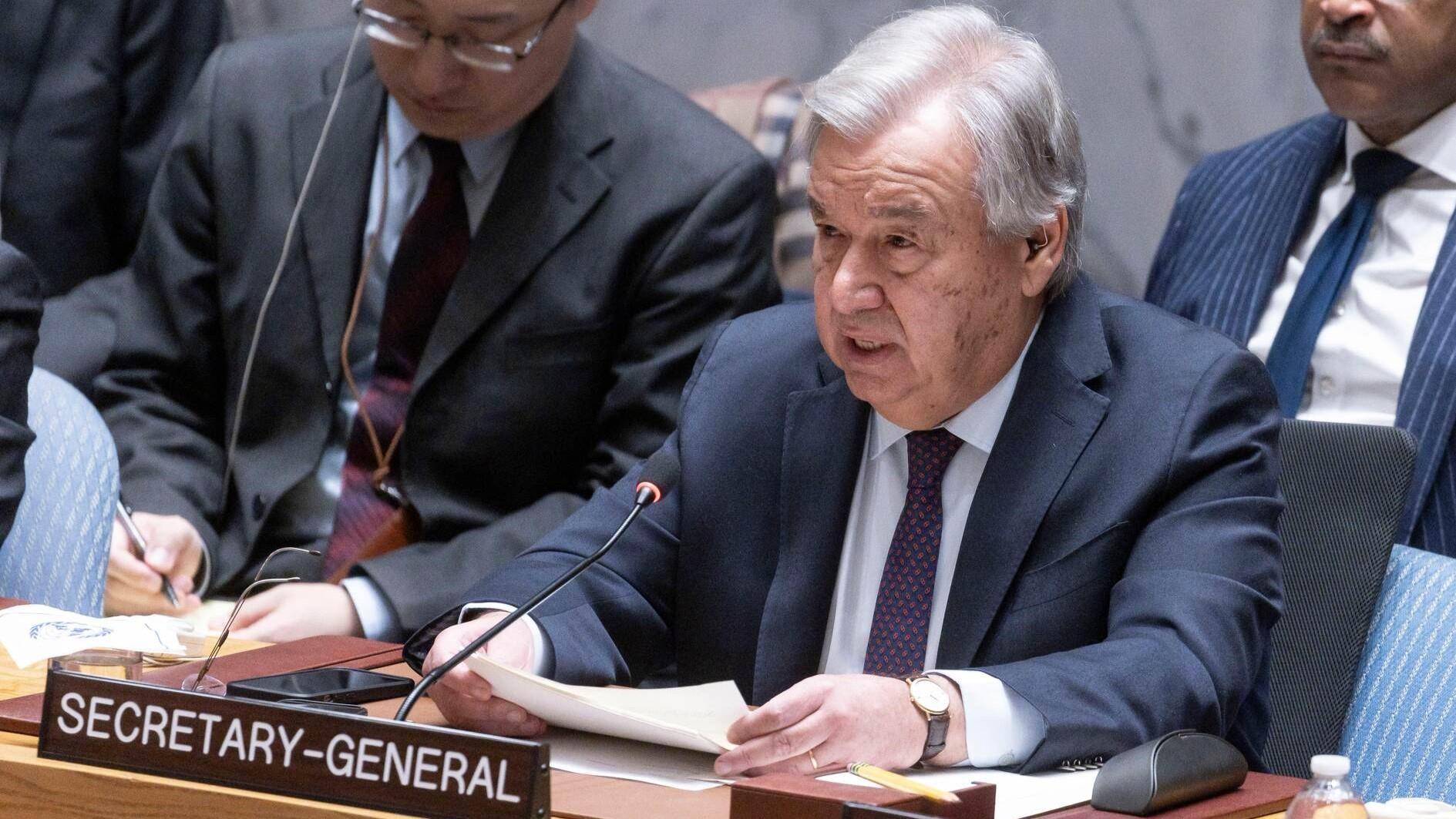
U.N. Secretary-General Antonio Guterres
It is a pleasure to join you to honour the achievements of human rights defenders across the globe. Three quarters of a century ago, in a world decimated by war, the United Nations General Assembly proclaimed that: “All human beings are born free and equal in dignity and rights”.
The Universal Declaration of Human Rights is a clarion call to act in accordance with a fundamental truth: that each of us is an equal member of a single human family.
Seventy-five years on, the world must recall that wisdom. And it must act on it. Because human rights are under attack around the world. Conflicts are raging, with appalling consequences for civilians as we are dramatically witnessing every single day with immense death and suffering in Gaza after the horrors of the 7 October attacks. Inequalities are deepening. Hunger and poverty are rising. Women’s rights are stalling, and in some cases, going into reverse. Civic space and media freedom is being rolled back.
New threats are blossoming – from catastrophic climate disasters, to artificial intelligence, which holds the potential for immense possibility, but also for immense peril. And age-old hatreds are resurging with a vengeance – from racism, to xenophobia, and religious intolerance. People are being violently targeted solely for their religion, their ethnicity or who they love.
But across the world, human rights defenders are lights in the darkness.
They are changing lives:
Fighting, educating, and holding power to account, to make human rights a living, breathing reality. This is deeply dangerous work. Last year, almost 450 human rights defenders, journalists and trade unionists were killed. Forty percent more than the previous year. Thirty-three vanished without a trace – a staggering three hundred percent increase from 2021.
In this context, today’s Human Rights Prize is all the more important. This prize has recognized the achievements of human rights defenders since 1968. It has honored luminaries such as Nelson Mandela, Malala Yusafzai and the International Committee of the Red Cross. See: https://www.trueheroesfilms.org/thedigest/awards/74A3B502-F3DF-4DDB-8D6F-672C03B4A008.
I pay tribute to each of the recipients of the prize today for their extraordinary work, their humanity and their courage [see: https://humanrightsdefenders.blog/2023/07/22/winners-of-2023-un-human-rights-prize-announced/]:
Julienne Lusenge from the Democratic Republic of the Congo;
Julio Pereyra from Uruguay;
The Amman Center for Human Rights Studies;
The Human Rights Center “Viasna”, working in Belarus;
And the Global Coalition of civil society organizations, Indigenous Peoples, social movements and local communities for “the universal recognition of the right to a clean, healthy and sustainable environment”.
Congratulations to you all. And thank you for everything you are doing. I would also like to pay tribute tonight to the thousands of unsung human rights defenders around the world.
Leaders of all kinds must take inspiration from you – our prize recipients today –and defend all human rights – political, civil, social, economic, and cultural.
The world needs leaders of countries, corporations, political parties, religious and civil organizations and beyond, to speak out against antisemitism, anti-Muslim bigotry, attacks on minority Christian communities, and all forms of hate and abuse. It needs them to protect human rights defenders, and bring those who threaten them to justice.
It needs them to embrace our common norms and values, to act on them, and be guided by the spirit of humanity and dignity embodied by the Universal Declaration – to prevent conflict, protect the planet and heal divides.
And to place human rights at the front and centre of efforts to update our international institutions at the Summit of the Future next September.
..
As we celebrate the 75th anniversary of the Universal Declaration of Human Rights, we need leaders of all kinds to embrace their role as human rights defenders too.
Thank you.
Human rights defenders in Palestine and Israel
December 18, 2023
While the war rages in Gaza, the media focus is understandably on the conduct of the war and the many victims. Still, it is good to focus on the role of HRDs and that is what Front Line Defenders has done on 15 December 2023.
Front Line Defenders has been receiving reports from human rights defenders in Gaza, the West Bank and Israel on an ongoing basis in recent months, updating on the dire circumstances they have been facing since 7 October 2023.
This has included serious risks to life and safety amid Israel’s relentless bombardment and siege of Gaza, as well as increased violence and harassment targeting Palestinian HRDs in the West Bank and Israel. Meanwhile, some governments have decided to suspend or review funding to Palestinian and Israeli civil society organisations, further contributing to the hardships faced by HRDs at this critical time. [see also: https://humanrightsdefenders.blog/2023/11/02/not-the-moment-for-switzerland-to-suspend-funding-for-human-rights-defenders-in-israel-and-palestine/]
Here you can find Front Line Defenders’ public responses to the challenges faced by HRDs:
- Disturbing rise in incitement to violence against Bedouin and other Palestinian human rights defenders who are citizens of Israel (video – 14 December 2023)
- Reaction to the arbitrary detention and humiliation of Palestinian HRD Ayman Lubad by Israeli forces in Gaza (10 December 2023)
- Reaction to the killing of Palestinian disability rights HRD Bader Mosleh in an Israeli airstrike (8 December 2023)
- Reaction to a spike in violence against Palestinian civilians, including HRDs, in West Bank (4 December 2023)
- Statement on the International Day of Solidarity with the Palestinian People (29 November 2023)
- Joint letter on several European governments’ decisions to suspend or review their funding to Palestinian and Israeli civil society organisations (28 November 2023)
- Reaction to threats to funding for Palestinian civil society organisations (23 November 2023)
- Gaza: Human rights defenders under Israel’s bombardment and siege (21 November 2023)
- Violence against human rights defenders in the West Bank (13 November 2023)
- Reiterating the call for a ceasefire amid increasingly horrifying situation of despair in Gaza (9 November 2023)
- International Day to End Impunity for Crimes against Journalists (2 November 2023)
- Distressing updates from Palestinian human rights organisations in Gaza (28 October 2023)
- Response to the EU Summit negotiations on Israel/Gaza (27 October 2023)
- UN General Assembly Special Session on Israel/Gaza (26 October 2023)
- Highlighting how the role of HRDs is threatened in the crisis context in the Occupied Palestinian Territory and Israel (18 October 2023)
on 20 December it added a Statement:
Hülya Gülbahar receives Human Rights Tulip 2023
December 15, 2023On 14 December 2023, the Netherlands Ministry of Foreign Affairs announced that the 2023 Human Rights Tulip has been awarded to Hülya Gülbahar, a feminist attorney from Türkiye and founder of the Equality Watch Women’s Group (EŞİTİZ) and the Women’s Platform for Equality Türkiye (EŞİK). Minister of Foreign Affairs Hanke Bruins Slot presented the prize on 14 December at a ceremony in the Peace Palace.
The winner of the Human Rights Tulip receives a bronze tulip and money that they can use to expand their human rights work in order to reach more people, in more places. For more about the Human Rights Tulip, see: https://www.trueheroesfilms.org/thedigest/awards/D749DB0F-1B84-4BE1-938B-0230D4E22144
In her speech, Ms Bruins Slot said: ‘Human rights are among the most important resources we have at our disposal to tackle the major problems of our time, such as war, poverty and climate change. ..The nominees for the Human Rights Tulip understand this at a profound level. Through their tireless efforts, these human rights defenders make a real difference for people and society.’
EŞİTİZ and EŞİK publish legal analyses of legislative bills and amendments on feminist and LGBTIQ+ issues, conduct awareness-raising campaigns (for example on the Istanbul Convention on preventing and combating violence against women and domestic violence) and promote social mobilisation by the Turkish feminist movement.
‘For more than 40 years,’ Ms Bruins Slot said, ‘Hülya Gülbahar has been defending women’s rights and fighting injustice in Türkiye. She does so using her extensive legal expertise and through her influential network, comprised primarily of women, which is too extensive to ignore. And she has been very successful at it.
Other finalists
The two other finalists for the 2023 Human Rights Tulip were:
- Julienne Baseke is a journalist and human rights defender who fights for women’s rights in the Democratic Republic of the Congo (DRC). As a journalist, Ms Baseke founded the South Kivu Women’s Media Association (AFEM), which aims to enhance women’s visibility and participation in the DRC media.
- Claudelice dos Santos is a human rights and environmental activist in the Amazon region. She is the founder of the Zé Claudio e Maria Institute, whose shelter and protection house provides a safe haven for indigenous land, environmental and human rights defenders.
https://www.einpresswire.com/article/675194232/h-lya-g-lbahar-receives-human-rights-tulip

Universal Declaration of Human Rights at 75: still relevant?
December 14, 2023The occasion of UDHR@75 has let to many articles on its relevance to today’s world, which sees such a ‘heightened risk’ of mass atrocities due to global inaction and a diminished UN ‘responsibility to protect’ principle and ambition to prevent genocides, as stated by Julian Borger in the Guardian of 8 December 2023. These warnings come on the 75th anniversaries this weekend of the Genocide Convention and the Universal Declaration of Human Rights, both signed in the aftermath of the Holocaust in the hope that the world would act in concert to prevent a repeat of such mass slaughter.
Borger describes also in some detail how the USA’s ambition to stop atrocity crimes had “diminished in terms of its saliency within the administration as a guiding principle”
Two pieces in Geneva Solutions look at the UDHR closer:
One is by Pip Cook: “Universal Declaration of Human Rights: fit for the 21st century?” and the other by Marc Limon “After 75 years, what is the UN human rights system’s theory of change?”
The first starts with a good overview of the birth of the UDHR and then states: …”With the world facing human rights challenges on so many fronts, some might be tempted to dismiss the declaration as idealistic or unrealistic – a non-legally binding document that nations may claim to adhere to on the international stage but disregard entirely depending on their own political agendas. However, defenders of the UDHR argue that to judge it on how often it is violated is to miss its point altogether.
“I’m not sure how much the document can be judged on whether it’s always adhered to or not,” said Felix Kirchmeier, executive director of the Geneva Human Rights Platform. “That question comes up in human rights all the time, but it comes up much less in other domains. Nobody would ask whether health policy was still valuable now that we have the pandemic.”
“I think the declaration might be even more needed now than ever because it allows us to really see these core values and the universal approach to them,” he added. “The proof of its relevance is the fact that despite all violations of human rights and despite all the attacks to the universal validity of human rights, the document itself is not being disputed in any serious way,” he continued. “So I think that’s also proof of its strength.”
….Ultimately, perhaps the greatest value of the declaration is that it gave universal human rights a language. Known as the most translated document in the world, available in 500 different languages, it provides a rhetoric that people from all corners of the world still use to this day..
Pip closes with the words of Eleanor Roosevelt in her speech to the UN to mark the tenth anniversary of the declaration in 1958. Her words captured the reason why human rights are for every one of us, in all parts of our daily lives, as well as the world as a whole. “Where, after all, do universal human rights begin?” she began. “In small places, close to home – so close and so small that they cannot be seen on any maps of the world. Yet they are the world of the individual person; the neighbourhood he lives in; the school or college he attends; the factory, farm or office where he works.
The second piece by Limon – executive director of the Universal Rights Group - asks: …”Yet two equally – if not more – crucial questions linger: what was the Universal Declaration’s theory of change, meaning how did its authors intend for it to improve the situation of human rights for all “the Peoples” of the UN, and has the UN succeeded in translating the universal norms into local reality?”
Different actors have developed markedly different theories of what the UN human rights system is, what it is supposed to do, and how it is supposed to improve the situation of human rights at the national level.
For some, the system is mainly for the benefit of developing countries, and its principal utility is to respond to serious human rights violations and hold abusing states accountable. Its main purpose, in other words, is to protect human rights.
For others, it is a universal system in which all states should be treated equally. It is there to engage with them through cooperation and dialogue to gradually improve human rights laws, policies and practices over time, including through the delivery of international capacity-building support. The system’s main objective here is, in other words, to promote human rights.
For some, human rights norms should be in a constant state of progressive development, even in sensitive issues such as sexual orientation and gender identity, or sexual and reproductive health and rights, and should be imposed by the UN. Where states resist, it is because they are not committed to human rights and should be called out and forced to catch up.
For others, the UN is there to provide a platform where states can reach a common understanding of universal human rights norms. This is what happened in the case of the UN’s recognition of the right to a healthy environment. After that, it can provide capacity-building and technical support to help those countries making insufficient progress…
So, who is right? There is some truth to both views. For example, the mandate of the Human Rights Council explicitly includes both the protection and promotion dimensions of human rights. And therein lies the answer – the international human rights system, built from the foundations of the Universal Declaration, embodies different – yet complementary – theories of change.
The simple truth is that human rights change cannot be imposed from the outside, by certain states or even by the international community as a whole, without the consent of the state concerned. Bottom-up demands for change, for example, led by local civil society, can and frequently do succeed in securing improvements in the enjoyment of human rights, especially in democracies.
However, in many countries, the power imbalance between civil society and governments means that NGOs and local communities, acting alone, can be easily ignored or even suppressed.
Over a decade of the Universal Rights Group’s research shows that a winning approach, instead, is to combine top-down pressure for improvement with bottom-up calls for change within a framework that is accepted by the state or government and of which it feels a sense of ownership…
While the international human rights system, therefore, encapsulates different and complementary theories of change (think “carrot and stick”), for a vast majority of states, the vast majority of the time, the former theory of change is the most relevant.
As we celebrate the 75th anniversary of the Universal Declaration of Human Rights, there are increasing signs, from states (both developed and developing), civil society, the secretary general, the high commissioner, UN resident coordinators and others, of a shift towards a common understanding of this predominant theory of change. Building on that shared understanding and thereby effectively translating universal rights into local reality would truly be the best way to mark the adoption of this historic document.
https://www.ohchr.org/en/stories/2023/12/hr75-high-level-event-united-change
https://www.miragenews.com/marking-75th-anniversary-of-universal-1145001/
——–
True Heroes Films (THF) latest newsletter
December 14, 2023
It deals with the following topics:
Cities of Rights – 75th UDHR Anniversary: The city of Utrecht wants to be city of human rights
Mohammadi Narges is one of the most recognised Human Rights Defenders in the world. She has received 8 major human rights awards according to THF’s digest of human rights awards but no media outlets got it right…
More on the toolkit (available on website) to create workshops for youth about filmmaking and human rights.
HURIDOCS 40th anniversary
More on ISHR‘s #Right2DefendRights campaign for the 25th anniversary of the UN Declaration on HRDs .
Please feel free to spread the word!
https://mailchi.mp/2aebd6e2cb43/true-heroes-insights-2-2023?e=ed48709ac7
 Hans Thoolen on Human Rights Defenders and their awards